

dakṣiṇa दक्षिण – right; right-hand; southern; gracious; favourable
adjective · substantive feminine · substantive masculine · substantive neuter · Word type unspecified
Dictionary sources
AYI dictionary adjective
right; right-hand; southern; gracious; favourable
Cappeller 1891 adjective
Original text · English · adjective
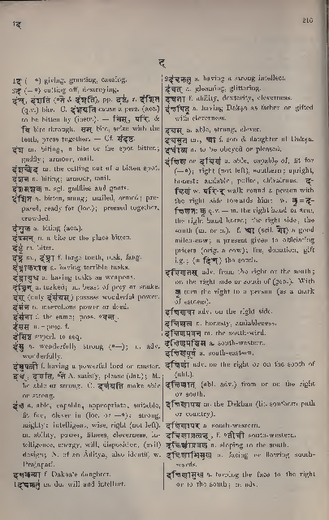
dákṣiṇa ·a. able, capable of, fit for (--°); right (not left), southern; upright, honest; amiable, polite, chivalrous. dakṣiṇaṃ w. pari-i walk round a person with the right side towards him; w. kṛ = dakṣiṇataḥkṛ q.v. --m. the right hand or arm, the right hand horse; the right side, the south (m. or n.). f. ā (scil. go) a good milch-cow; a present given to officiating priests (orig. a cow); fee, donation, gift i.g.; (±diś) the south.
Original text · English · adjective
dakṣiṇá ·a. able, capable of, fit for (--°); right (not left), southern; upright, honest; amiable, polite, chivalrous. dakṣiṇaṃ w. pari-i walk round a person with the right side towards him; w. kṛ = dakṣiṇataḥkṛ q.v. --m. the right hand or arm, the right hand horse; the right side, the south (m. or n.). f. ā (scil. go) a good milch-cow; a present given to officiating priests (orig. a cow); fee, donation, gift i.g.; (±diś) the south.
Monier-Williams 1872 adjective · Word type unspecified
Original text · English · adjective
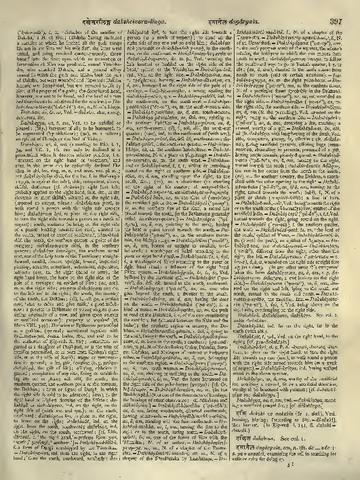
Dakṣiṇa, as, ā, am (according to Pāṇ. I. 1, 34, and VII. 1, 16, can only be declined as a pronominal when it denotes relative position, i. e. ‘situated on the right hand’ or ‘southern,’ and even in this sense can be optionally declined like śiva in abl. loc. sing. m. n. and nom. voc. pl. m.; but dakṣiṇāyāṃ diśi, for the loc. f. in Hari-vaṃśa 12390, is against the rule), able, competent, clever, skilful, dexterous [cf. dakṣa]; right (not left; probably applied to the right hand, foot, &c., as the cleverest or most skilful), situated on the right side, (opposed to savya, vāma; dakṣiṇam parī, to walk round a person with the right side towards him; dakṣiṇaṃ kṛ, to place on the right side, to turn the right side towards a person as a mark of respect); south, southern (as being on the right side of a person looking towards the east), situated to the south, turned or directed southward, (dakṣiṇā diś, the south, the southern quarter or point of the compass; dakṣiṇasyāṃ diśi, in the southern quarter; dakṣiṇa āmnāyas, the southern sacred text, one of the holy texts of the Tāntrikas); straight- forward, candid, sincere, upright, honest, impartial; pleasing, amiable, compliant; submissive, dependent, subject; (as), m. the right (hand or arm); the right hand horse, the horse on the right side of the pole of a carriage; an epithet of Śiva; (as, am), m. n. the right side; savyaṃ dakṣiṇam eva ca, to the left and to the right; the south, the country of the south, the Dekhan; (ā), f., scil. go, a prolific cow, ‘able to calve and give milk,’ a good milch- cow; a present to Brāhmans or young virgins (con- sisting originally of a cow, and given upon solemn or sacrificial occasions); property so acquired [cf. Manu VIII. 349]; Donation to Brāhmans personified as a goddess, (generally mentioned together with Brahmaṇas-pati, Soma, Indra, &c., and said to be the authoress of Ṛg-veda X. 107; sometimes re- garded as a daughter of Prajā-pati, or as the wife of Sacrifice personified, or as born from Kṛṣṇa's right side, or as the wife of Ruci); wages or remunera- tion in general; a fee, gift, donation (e. g. prāṇa- dakṣiṇā, the gift of life); offering, oblation in general; completion of any rite, fixing or establish- ing any act or place; scil. diś, the south; the southern quarter, the southern point of the compass, the Dekhan; a form or figure of Durgā, in which the right side is said to be advanced; (am), n. the right hand or highest doctrine of the Śāktas; da- kṣiṇā or dakṣiṇena, ind. on the right, on the right side of (with acc. and gen.); on the south, southward; dakṣiṇena kṛ, to place on the right, to leave on the right; dakṣiṇāt, ind. on the right, from the south, southward; dakṣiṇe, ind. on the right, on the south, southward; [cf. Lith. dészinê, f. ‘the right hand,’ = perhaps Russ. yug, ‘south;’ yuṣnyĭ, ‘southern.’]
Original text · English · Word type unspecified
dakṣiṇa dakṣiṇa. See col. 1.
Petersburger 1855 adjective · substantive masculine · substantive neuter · Word type unspecified
Original text · German · adjective · substantive masculine · substantive neuter
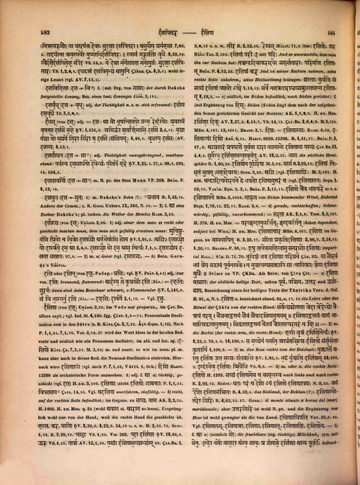
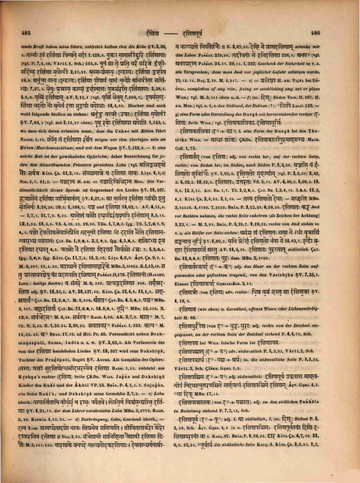
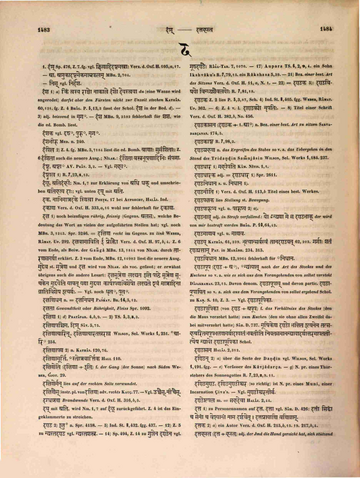
dákṣiṇa (von dakṣ) UṆĀDIS. 2,50. Im Veda nur proparox., im ŚAT. BR. öfters oxyt.; vgl. Ind. St. 4,160. fgg. ŚĀNT. 1,9—ŚĀNT. 1,11. Pronominale Declination erst in den Sūtra (z. B. KĀTY. ŚR. 2,7,22. ĀŚV. GṚHY. 1,13). Nach P. 1,1,34. P. 7,1,16. VOP. 3,12. VOP. 3,37 wird das Wort bloss in der localen Bed. recht und südlich wie ein Pronomen declinirt; im abl. und loc. sg. (dakṣiṇe KĀTY. ŚR. 7,3,31. M. 2,63) m. und neutr. so wie im nom. pl. m. kann aber auch in dieser Bed. die Nominal-Declination eintreten. Hiernach wäre dakṣiṇāyāṃ (vgl. auch P. 7,1,39, Vārtt. 1, Sch.) diśi HARIV. 12390 als archaïstische Form anzusehen. 1〉 adj. f. ā a〉 tüchtig, geschickt (vgl. dakṣa) H. an. 3,206. dakṣiṇā (nicht dakṣiṇe) gāthakāḥ P. 1,1,34. vipakṣakṣaya˚ ŚATR. 14,56. Vgl. adakṣiṇa unerfahren, einfältig. — b〉 recht, auf der rechten Seite befindlich; im Gegens. zu savya, vāma AK. 3,2,34. H. 1466. H. an. MED. ṇ. 51 (wohl avāma st. ārāma zu lesen). Ursprünglich wohl nur von der Hand, weil die rechte Hand die geschickte ist. hasta, kara, pāṇi ṚV. 3,39,6. ṚV. 6,22,9. ṚV. 6,54,10 u. s. w. M. 2,63. M. 2,72. SUND. 4,12. R. 5,20,15. bāhu VS. 1,24. VID. 262. pa̱dā dakṣìṇā ṚV. 10,61,8. ūru VS. 4,27. pārśva AV. 12,1,34. pa̱dbhyāṃ dàkṣiṇasa̱vyābhyā̀m AV. 12,1,28. ŚAT. BR. 1,3,4,13 u. s. w. tīra R. 2,52,86. rodhas MĀLAV. 71,2 (lies: dakṣiṇe). pāra RĀJA-TAR. 3,358. dakṣiṇaṃ parī (i mit pari) Jmd so umwandeln, dass man ihn zur Rechten hat: taccandradivākarādayo graharkṣatārāḥ pariyanti dakṣiṇam BHĀG. P. 4,12,25. dakṣiṇaṃ kar Jmd zu seiner Rechten nehmen, seine rechte Seite zukehren, seine Hochachtung bezeugen: śastāḥ kurvanti māṃ savyaṃ dakṣiṇaṃ paśavo 'pare BHĀG. P. 1,14,13. sarve nakṣatratārādyāścakrustajjanma dakṣiṇam BHĀG. P. 8,18,5. — c〉 südlich, im Süden befindlich, nach Süden gerichtet; f. (mit Ergänzung von diś) Süden (Süden liegt dem nach der aufgehenden Sonne gerichteten Gesicht zur Rechten) AK. 1,1,2,3. H. an. MED. dakṣìṇā̱ dik AV. 3,27,2. AV. 4,14,7. VS. 14,13. ŚAT. BR. 2,6,1,9. M. 3,258. MBH. 4,167. MBH. 13,4661. DRAUP. 3,7. diśaḥ — dakṣiṇasyāḥ RAGH. 6,63. dakṣiṇasyāṃ diśi ARJ. 4,14. HARIV. 8950. HARIV. 12398. R. 1,41,17. BHĀG. P. 5,17,9. agnyagāraṃ prapadyante pūrvayā dvārā yajamāno dakṣiṇayā patnyaḥ ŚAT. BR. 13,4,1,8. sūryàsya̱ dakṣìṇā̱manvā̱vṛtàm AV. 10,5,37. bhāga die südliche Hemisphäre R. 1,60,20. dakṣiṇena pūrdvāreṇa M. 5,92. mārga R. 2,92,13. dakṣiṇaṃ niḥsṛtaṃ mukham (mahādevasya) SUND. 3,25. agni (vgl. dakṣiṇāgni) M. 2,231. H. 826. candrādityayorayane dve bhavato dakṣiṇamuttaraṃ ca (vgl. dakṣiṇāyana) SUŚR. 1,19,11. VARĀH. BṚH. S. 3,1. BHĀG. P. 3,11,11. dakṣiṇe caiva bhāskare so v. a. dakṣiṇāyane MBH. 6,5668. māruta von Süden kommender Wind, Südwind SUŚR. 1,76,12. SUŚR. 1,22,11. RAGH. 4,8. — d〉 gerade, rechtschaffen; liebenswürdig, gefällig, zuvorkommend; = sarala AK. 3,1,8. TRIK. 3,3,131. H. 376. H. an. MED. = paracchandānuvartin, chandavartin (daher dependent, subject bei WILS.) H. an. MED. dakṣiṇācāra MBH. 4,167. dakṣiṇa im Gegens. zu vāmabhāṣin R. 3,23,17. sītā prakṛtidakṣiṇā R. 2,96,7. R. 3,24,13. R. 5,20,15. BRAHMA-P. 56,13. eṣu tvanekamahilāsu samarāgo dakṣiṇaḥ (impartial BALL.) SĀH. D. 71. SĀH. D. 70. bhūyiṣṭhaṃ bhava dakṣiṇā parijane ŚĀK. 93. yā gauravaṃ bhayaṃ prema sadbhāvaṃ pūrvanāyake . na muñcatyanyasaktāpi sā (nāyikā) jñeyā dakṣiṇā budhaiḥ .. SVĀMIN_zu_VP. ŚKDR. Als Beiw. von Śiva, ŚIV. — e〉 dakṣiṇa āmnāyaḥ der südliche heilige Text, neben pūrva, paścima, uttara und ūrdhvāmnāya, Bezeichnung eines der heiligen Texte der Tāntrika Verz. d. Oxf. H. 91,a, N. 3. dakṣiṇa n. bezeichnet ebend. 91,a,17. ebend. 91,a,18 die Lehre oder das Ritual der Śākta von der rechten Hand: sarvebhyaścottamā vedā vedebhyo vaiṣṇavaṃ param . vaiṣṇavāduttamaṃ śaivaṃ śaivāddakṣiṇamuttamam .. dakṣiṇāduttamaṃ vāmaṃ vāmātsiddhāntamuttamam . siddhāntāduttamaṃ kaulaṃ kaulātparataraṃ na hi .. — 2〉 m. die Rechte (der rechte Arm, die rechte Hand): hantā̀ vṛ̱traṃ dakṣìṇe̱nendràḥ ṚV. 8,23,3. ṚV. 8,70,1. ṚV. 8,23,6. ṚV. 10,180,1. sa sa̱vyenà yamati̱ vrādhàtaści̱tsa dàkṣi̱ṇe saṃgṛ̀bhītā kṛ̱tānì ṚV. 1,100,9. — 3〉 m. das Ross rechts von der Deichsel: yu̱ktastè astu̱ dakṣìṇa u̱ta sa̱vyaḥ śàtakrato ṚV. 1,82,5. bha̱draṃ yùñjanti̱ dakṣìṇam ṚV. 10,164,2. indràsyeva̱ dakṣìṇaḥ śri̱yaidhi VS. 9,8. — 4〉 m. oder n. die rechte Seite: dakṣiṇe H. 1295. savyaṃ dakṣiṇameva ca vāhayasva nach links und nach rechts R. 2,92,13. Süden: ataḥ paraṃ ca deśo 'yaṃ dakṣiṇe dakṣiṇāpathaḥ N. 9,23. ayaṃ deśo dakṣiṇasaṃśritaḥ R. 4,52,4. das Südland, der Dekhan (?): dakṣiṇasyottaro giriḥ R. 4,63,22. R. 4,63,27 GORR.: il monte situato a borea del (mar) meridionale; aber uttaragiri ist wohl N. pr. und die Ergänzung von Meer ist wohl gewagter als die von Land. dakṣiṇādhipati VET. 35,9. VET. 35,10. Vgl. dakṣiṇatas, dakṣiṇatrā, dakṣiṇā, dakṣiṇāt, dakṣiṇāhi, dakṣiṇena. — 5〉 f. ā a〉 (nämlich go) die fruchtbare (eig. tüchtige) Milchkuh, syn. mit dhenu. indro̱ bhagò vāja̱dā àsya̱ gāva̱ḥ pra jā̀yante̱ dakṣìṇā asya pū̱rvīḥ befruchtende Kraft haben seine Stiere, zahlreich kalben ihm die Kühe ṚV. 3,36,5. tasmā̀ i̱yaṃ dakṣìṇā pinvate̱ sadā̀ ṚV. 1,125,5. yu̱ktā mā̱tāsī̀ddhu̱ri dakṣìṇāyāḥ (vgl. P. 7,1,39, Vārtt. 1, Sch.) P. 7,164,9. nū̱naṃ sā te̱ prati̱ varàṃ jari̱tre dùhī̱yadìndra̱ dakṣìṇā ma̱ghonī̀ P. 2,11,21. a̱smabhyàmasya̱ (indrasya) dakṣìṇā duhīta P. 2,18,8. anū̀nā̱ yasya̱ (indrasya) dakṣìṇā pī̱pāyà vā̱maṃ nṛbhyò a̱bhivī̀tā̱ sakhìbhyaḥ P. 7,27,4. dhe̱nuḥ pra̱tnasya̱ kāmya̱ṃ duhā̀nā̱ntaḥ pu̱traścàrati̱ dakṣìṇāyāḥ P. 3,58,1. P. 5,1,3. pṛśni̱ṃ dakṣìṇām AV. 5,11,1 (vgl. pṛśniṃ dhenum AV. 7,104,1). eyamàga̱ndakṣìṇā bhadra̱to nò a̱nenà da̱ttā su̱dughā̀ vayo̱dhāḥ AV. 18,4,50. Hierher sind auch wohl folgende Stellen zu ziehen: abhū̀du̱ vasvī̱ (uṣāḥ) dakṣìṇā ma̱ghonī̀ ṚV. 7,64,1 (vgl. mit ṚV. 2,11,21. oben). pṛ̱thū ratho̱ dakṣìṇāyā ayoji ṚV. 1,123,1., wo man sich daran erinnern muss, dass die Uṣas mit Kühen fährt NAIGH. 1,15. jayèma̱ taṃ dakṣìṇayā̱ rathèna mögen wir ihm überlegen sein an Kühen (Heerdenreichthum) und mit dem Wagen ṚV. 1,123,5. — b〉 eine solche Kuh ist der gewöhnliche Opferlohn; daher Bezeichnung für jeden den dienstthuenden Priestern gereichten Lohn (vgl. aliṅgagrahaṇe gauḥ sarvatra KĀTY. ŚR. 15,2,13. saṃkhyāmātre ca dakṣiṇā gāvaḥ LĀṬY. 8,1,2) NIR. 1,7. NIR. 11,2. = yajñadāna H. an. = yajñādividhidāna MED. Die Verdienstlichkeit dieser Spende ist Gegenstand des Liedes ṚV. 10,107. dū̱ṇāśe̱yaṃ dakṣìṇā pārthi̱vānā̀m ṚV. 6,27,8. ā nā̱ryasya̱ dakṣìṇā̱ vyàśvām̐ etu so̱minàḥ ṚV. 8,24,29. ṚV. 8,39,5. ṚV. 1,168,7. yajña und dakṣiṇā ṚV. 10,62,1. AV. 4,11,4. — AV. 5,7,1. AV. 11,7,9. AV. 11,8,22. ā̱mo̱taṃ vāsò dadyā̱ddhiràṇya̱mapi̱ dakṣìṇām AV. 9,5,14. AV. 13,1,52. AV. 18,4,8. VS. 4,19. VS. 4,23. VS. 19,30. TBR. 1,7,3,3. fgg. TS. 1,7,3,1. TS. 1,8,1,1. yajño devalokamevābhipraiti tadanūcī dakṣiṇā yāṃ dadāti saiti dakṣiṇāmanvārabhya yajamānaḥ ŚAT. BR. 1,9,3,1. fgg. ŚAT. BR. 2,2,2,2. fgg. ŚAT. BR. 4,3,3,5. ṛtvigbhya eva dakṣiṇā dadyāt ŚAT. BR. 4,3,4,5. catasro vai dakṣiṇā hiraṇyaṃ gaurvāso 'śvaḥ ŚAT. BR. 7,5,2,5,4. fgg. ŚAT. BR. 7,5,3,1,8. fgg. KĀTY. ŚR. 11,7,2. KĀTY. ŚR. 15,3,16. LĀṬY. 4,9,6. ĀŚV. ŚR. 9,1. ĀŚV. ŚR. 9,4. M. 8,207. M. 11,4. M. 11,38. ṣaḍādhāne dakṣiṇāmāhureke MBH. 3,10663. R. 1,13,48. sa tu prastāvayajñeṣu kāṃ pradāsyati dakṣiṇām PAÑCAT. II, 176. dakṣiṇānāṃ (HAUGHT. LOIS.: heilige Rechte) ca saṃgare M. 8,349. pratyaṅgadakṣiṇā M. 208. sahásradakṣiṇa adj. ṚV. 10,33,5. AV. 20,127,12. KĀTY. ŚR. 13,4,9. KĀTY. ŚR. 15,1,5. sahasraśatá˚ ŚAT. BR. 13,5,4,7. M. 8,306. áśata˚ ŚAT. BR. 4,3,4,3. pañca˚ MBH. 3,107. bahudakṣiṇá ŚAT. BR. 11,6,3,1. ŚAT. BR. 14,6,1,1. bhūri˚ MBH. 15,256. N. 12,9. sarvavedasa˚ M. 6,38. sarvasva˚ RAGH. 4,86. AK. 2,7,9. āpta˚ M. 7,79. N. 5,43. R. 1,53,24. R. 2,30,35. samāptavara˚ PAÑCAT. I, 323. alpa˚ M. 11,39. M. 11,40. a˚ BHAG. 17,13. ad HIT. Pr. 48. Personificirt neben Brahmaṇaspati, Soma, Indra u. s. w. ṚV. 3,62,3. Als Verfasserin des von der dakṣiṇā handelnden Liedes ṚV. 10,107 wird eine Dakṣiṇā, Tochter des Prajāpati, fingirt ṚV. ANUKR. Als Gemahlin des Opfers: (tasya) patnī sudakṣiṇetyāsīdadhvarasyeva dakṣiṇā RAGH. 1,31. entsteht aus Kṛṣṇaʼs rechter (dakṣiṇa) Seite ŚKDR. WILS. Yajña und Dakṣiṇā Kinder des Ruci und der Ākūti VP. 54. BHĀG. P. 4,1,4. BHĀG. P. 4,1,5. Suyajña, ein Sohn Ruciʼs, und Dakṣiṇā seine Gemahlin BHĀG. P. 2,7,2. — c〉 Lohn überh.: yasyāmìtāni vī̱ryā̱3̱̀ na rādha̱ḥ paryètave . jyoti̱rna viśvàma̱bhyasti̱ dakṣìṇā ṚV. 8,21,11. der dem Lehrer verabreichte Lohn MBH. 5,3779. RAGH. 5,20. KATHĀS. 4,93. KATHĀS. 4,94. — d〉 Darbringung, Gabe, Geschenk überh., = dāna TRIK. tvāmapyetādṛśo bhāvaḥ kṣiprameva gamiṣyati . jīvitāntakaro ghoro dātāramiva dakṣiṇā .. DAŚ. 2,54. saṃbhojanī sābhihitā paiśācī dakṣiṇā dvijaiḥ M. 3,141. M. 3,143. nārājake janapade mālyamodakadakṣiṇāḥ . devatābhyarcanārthāya kalpyante niyatairjanaiḥ .. R. 2,67,23. dehi me prāṇadakṣiṇām schenke mir das Leben PAÑCAT. 231,20. taddīyatāṃ me ratidakṣiṇā PAÑCAT. 226,1. abhaya˚ (vgl. abhayapradāna PAÑCAT. 24,21. PAÑCAT. 59,14. PAÑCAT. I, 322) Geschenk der Sicherheit so v. a. ein Versprechen, dass man Jmd vor jeglicher Gefahr schützen werde, PAÑCAT. 25,12. PAÑCAT. 25,214. DAŚ. 2,38. M. 4,247. — e〉 = pratiṣṭhā H. an. VIŚVA_bei_UJJVAL. completion of any rite, fixing or establishing any act or place WILS.; vgl. M. 3,141 oben u. d. — f〉 (sc. diś) Süden TRIK. H. 167. H. an. MED.; vgl. u. 1,c. das Südland, der Dekhan (?): ˚lipi LALIT. 123. — g〉 eine Form oder Darstellung der Durgā mit hervorstehender rechter (dakṣiṇa) Seite WILS.; vgl. dakṣiṇakālikā, dakṣiṇāmūrti.
Original text · German · Word type unspecified
dakṣiṇa 1〉d〉 PRATĀPAR. 4,b,9. — 2〉 TS. 5,3,3,3.
Original text · German · Word type unspecified
dakṣiṇa Sp. 485, Z. 10 lies 6,64,1.
Böhtlingk 1879 adjective · substantive feminine · substantive masculine · substantive neuter
Original text · German · adjective · substantive masculine · substantive neuter
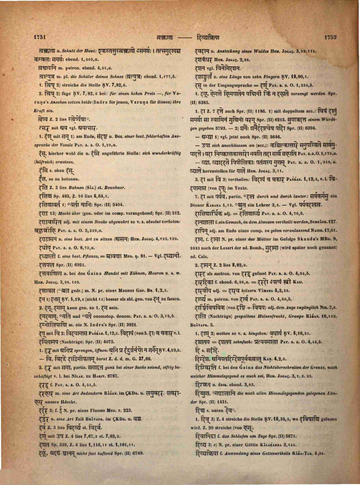
dákṣiṇa und dakṣiṇá — 1〉 Adj. (f. ā) — a〉 tüchtig, geschickt, — zu (im Comp. vorangehend). — b〉 recht, auf der rechten Seite befindlich dakṣiṇaṃ pari-i Jmd so umwandeln, dass man ihn zur Rechten hat. dakṣiṇaṃ kar Jmd zu seiner Rechten nehmen, Jmd seine rechte Seite zukehren (als Zeichen der Achtung). — c〉 südlich, im Süden befindlich, nach Süden gerichtet, von Süden kommend. (Wind). — d〉 gerade, rechtschaffen, offen. — e〉 liebenswürdig, gefällig, zuvorkommend. — f〉 āmnāya m. Bez. eines der heiligen Texte der Tāntrika. — 2〉 m. — a〉 die rechte Hand, der rechte Arm. — b〉 das Ross rechts von der Deichsel. — 3〉 m. oder n. — a〉 die rechte Seite. dakṣiṇam nach rechts. — b〉 Süden. — 4〉 f. ā — a〉 die tüchtige, d. h. fruchtbare Milchkuh. — b〉 ein dem dienstthuenden Priester gereichter Lohn (ursprünglich eine Kuh). Häufig personificirt. — c〉 Lohn überh. — d〉 Darbringung, Gabe, Geschenk überh. — e〉 Süden. — f〉 *eine Form oder Darstellung der Durgā mit hervorstehender rechter Seite. — g〉 *= pratiṣṭhā. — 5〉 n. die Lehre oder das [Page3-062-b] Ritual der Śākta von der rechten Hand.
Original text · German · adjective · substantive masculine · substantive neuter
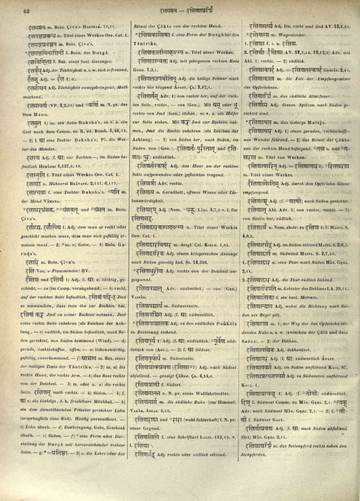
dákṣiṇa und dakṣiṇá — 1〉 Adj. (f. ā) — a〉 tüchtig, geschickt, — zu (im Comp. vorangehend). — b〉 recht, auf der rechten Seite befindlich dakṣiṇaṃ pari-i Jmd so umwandeln, dass man ihn zur Rechten hat. dakṣiṇaṃ kar Jmd zu seiner Rechten nehmen, Jmd seine rechte Seite zukehren (als Zeichen der Achtung). — c〉 südlich, im Süden befindlich, nach Süden gerichtet, von Süden kommend. (Wind). — d〉 gerade, rechtschaffen, offen. — e〉 liebenswürdig, gefällig, zuvorkommend. — f〉 āmnāya m. Bez. eines der heiligen Texte der Tāntrika. — 2〉 m. — a〉 die rechte Hand, der rechte Arm. — b〉 das Ross rechts von der Deichsel. — 3〉 m. oder n. — a〉 die rechte Seite. dakṣiṇam nach rechts. — b〉 Süden. — 4〉 f. ā — a〉 die tüchtige, d. h. fruchtbare Milchkuh. — b〉 ein dem dienstthuenden Priester gereichter Lohn (ursprünglich eine Kuh). Häufig personificirt. — c〉 Lohn überh. — d〉 Darbringung, Gabe, Geschenk überh. — e〉 Süden. — f〉 *eine Form oder Darstellung der Durgā mit hervorstehender rechter Seite. — g〉 *= pratiṣṭhā. — 5〉 n. die Lehre oder das [Page3-062-b] Ritual der Śākta von der rechten Hand.
Original text · German · substantive feminine
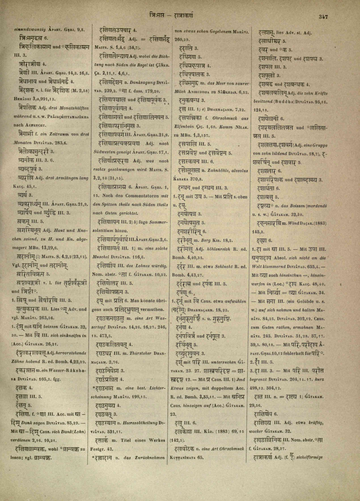
dakṣiṇa , f. ˚ṇā III. Acc. mit ādiś Dank sagen DIVYĀVAD. 85,29. — Mit ā — diś Caus. sich Dank (Lohn) verdienen DIVYĀVAD. 2,16. 10,21. [Nachtrag, Band 7]
Apte 1890 adjective · substantive masculine · substantive neuter
Original text · English · adjective · substantive masculine · substantive neuter
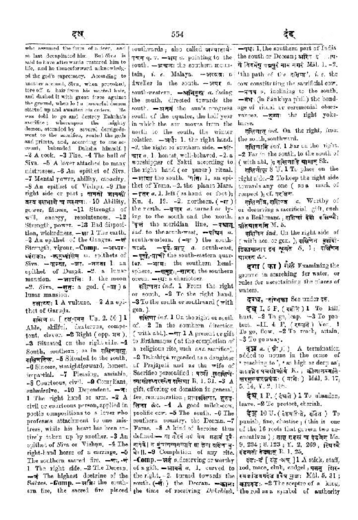
dakṣiṇa a. [dakṣ-inan Uṇ. 2. 50] 1 Able, skilful, dexterous, competent, clever. 2 Right (opp. vāma). 3 Situated on the right side. 4 South, southern; as in dakṣiṇavāyu, dakṣiṇadik. 5 Situated to the south. 6 Sincere, straightforward, honest, impartial. 7 Pleasing, amiable. 8 Courteous, civil. 9 Compliant, submissive. 10 Dependent. — ṇaḥ 1 The right hand or arm. 2 A civil or courteous person, applied in poetic compositions to a lover who professes attachment to one mistress, while his heart has been entirely taken up by another. 3 An epithet of Śiva or Viṣṇu. 4 The right-hand horse of a carriage. 5 The southern sacred fire. — ṇaḥ, -ṇaṃ 1 The right side. 2 The Deccan. — ṇaṃ The highest doctrine of the Śāktas. Comp. — agniḥ the southern fire, the sacred fire placed ([Page 0554-b]) southwards; also called anvāhāryapacana q. v. — agra a. pointing to the south. — acalaḥ the southern mountain, i. e. Malaya. — atyayaḥ a dweller in the south. — apara a. southwestern. — abhimusva a. facing the south, directed towards the south. — ayanaṃ the sun's progress south of the equator, the half year in which the sun moves from the north to the south, the winter solstice. — ardhaḥ 1 the right hand. 2 the right or southern side. — āṃcāra a. 1 honest, well-behaved. 2 a worshipper of Śakti according to the right hand (or purer) ritual. — āśā the south. ˚patiḥ 1 an epithet of Yama. 2 the planet Mars. — itara a. 1 left (as hand or foot); Ku. 4. 19. 2 northern. — (rā) the north. — uttara a. turned or lying to the south and the north. ˚vṛttaṃ the meridian line. — paścāt ind. to the southwest. — paścima a. southwestern. — (mā) the southwest. — pūrva, -prāc a. south-east. — pūrvā, -prācī the south-eastern quarter. — bhāgaḥ the southern hemisphere. — samudraḥ, -sāgaraḥ the southern ocean. — sthaḥ a charioteer.
Cappeller 1887 Word type unspecified
Original text · German · Word type unspecified
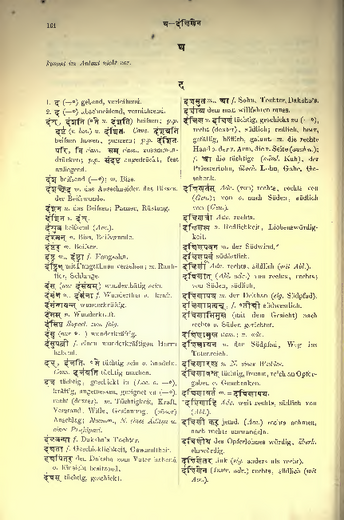
dákṣiṇa u. dakṣiṇá tüchtig, geschickt zu (—˚), recht (dexter), südlich; redlich, brav, gefällig, höflich, galant. m. die rechte Hand o. der r. Arm, die r. Seite (auch n.); f. ā die tüchtige (näml. Kuh), der Priesterlohn, überh. Lohn, Gabe, Geschenk.
Burnouf 1866 adjective
Original text · French · adjective
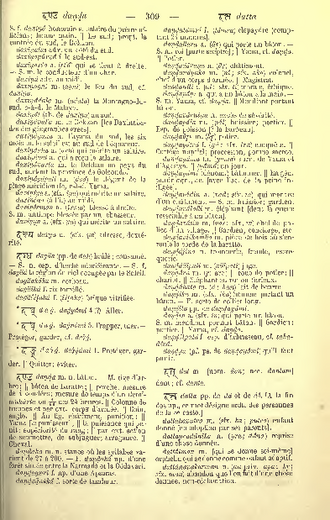
dakṣiṇa dakṣiṇa a. (dakṣa; sfx. ina) droit, qui est à droite. Méridional [les Aryens se tournant vers le soleil levant]. Au fig. [qui se sert de sa main droite] adroit, habile; honnête, probe; qu'on a sous la main, sujet, soumis, subordonné. — S. m. le feu sacré du côté du sud [dans le trivedi] Vd. [Page309-1] — S. f. dakṣiṇā honoraires, salaire du prêtre officiant; bonne-main. Le sud; propt. la contrée du sud, le Dekkan. dakṣiṇatas adv. du côté du sud. dakṣiṇapūrvā f. le sud-est. dakṣiṇastha a. (sthā) qui se tient à droite. — S. m. le conducteur d'un char. dakṣiṇā adv. au midi. dakṣiṇāgni m. (agni) le feu du sud, cf. dakṣiṇa. dakṣiṇācala m. (acala) la Montagne-du-sud, c-à-d. le Malaya. dakṣiṇāt (ab. de dakṣiṇa) au sud. dakṣiṇāpatha m. le Dekkan [les Daxinabades des géographes grecs]. dakṣiṇāyana n. l'ayana du sud, les six mois où le soleil est au sud de l'équateur. dakṣiṇāraha a. (arh) qui mérite un salaire. dakṣiṇāvat a. qui a reçu le salaire. dakṣiṇāvarta m. le Dekkan ou pays du sud, surtout la province de Golconde. dakṣiṇāśāpati m. (āśā) le Régent de la plage méridionale, c-à-d. Yama. dakṣiṇīya a. (sfx. īya) qui mérite un salaire. dakṣiṇena (à l'i.) au midi. dakṣiṇerman a. (īrma) blessé à droite. — S. m. antilope blessée par un chasseur. dakṣiṇya a. (sfx. ya) qui mérite un salaire.

Occurrences in source texts (22)
DYS 4 occurrences
GoS 2 occurrences
HP 10 occurrences
HTK 1 occurrence
HTK 10.26–29*1: Cakra, Śaṅkha, Vāmāvartta, Vartmagati and Gadā 1 occurrence
Direct occurrences
-
HTK 10.26 Segment 25
SiSa 4 occurrences
SiSa 2.6-2.12: Mond und Sonne 2 occurrences
Direct occurrences
SVU 1 occurrence
Continue with AYI Free
Image source: AYI archive.