

kāma काम – desire; love
adjective · substantive masculine · substantive neuter · Word type unspecified
Dictionary sources
AYI dictionary substantive masculine
desire; love
Cappeller 1891 substantive masculine
Original text · English · substantive masculine
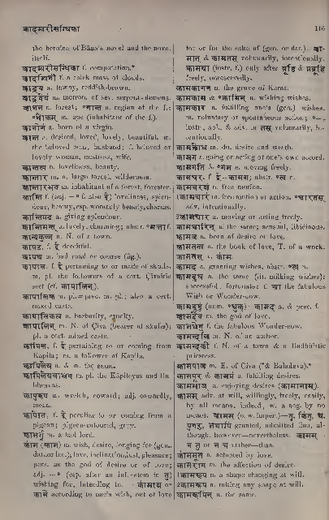
kā́ma ·m. wish, desire, longing for (gen., dat., or loc.); love, inclination, lust, pleasure; pers. as the god of desire or of love; adj. --° (esp. after an inf. stem in tu) wishing for, intending to. -- kā́māya or kāme according to one's wish, out of love for or for the sake of (gen. or dat.) kāmāt & kāmatas voluntarily, intentionally. kāmayā (instr. f.) only after brūhi & prabrūhi freely, unreservedly.
Original text · English · substantive masculine
(kāmá) ·m. wish, desire, longing for (gen., dat., or loc.); love, inclination, lust, pleasure; pers. as the god of desire or of love; adj. --° (esp. after an inf. stem in tu) wishing for, intending to. -- kā́māya or kāme according to one's wish, out of love for or for the sake of (gen. or dat.) kāmāt & kāmatas voluntarily, intentionally. kāmayā (instr. f.) only after brūhi & prabrūhi freely, unreservedly.
Monier-Williams 1872 substantive masculine
Original text · English · substantive masculine
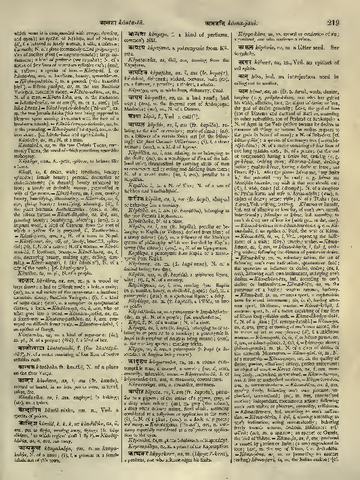
kāma kāma, as, m. (fr. 2. kam), wish, desire, longing (e. g. prāpta-kāma, one who has gained his wish), affection, love, the object of desire or love, the god of desire generally; Love, the god of love (son of Dharma and husband of Rati or, according to other authorities, son of Brahmā or Saṅkalpa); a N. of Agni in the Veda (either because he desires to consume all things or because he makes requests to the gods in behalf of man); a N. of Bala-deva [cf. kāma-pāla]; a species of the mango tree (= mahā- rāja-cūta); N. of a metre consisting of four lines of two long syllables each; N. of a prince; (at the end of compounds) having a desire for, desiring (e. g. go-kāma, desiring cows; dharma-kāma, desiring justice; tyaktu-kāma, having a desire to leave; see Gram. 871). After the phrase kāmo me, ‘my desire is,’ the potential may be used; e. g. kāmo me bhuñjīta bhavān, my wish is that you should eat; (ā), f. wish, desire [cf. kāmayā]; N. of a daughter of Pṛthu-śravas and wife of Ayuta-nāyin; (am), n. object of desire; semen virile; N. of a Tīrtha; (as, ā, am), Ved. wishing, desiring. Kāmena or kāmāt, ind. out of affection or love for, of one's own accord, intentionally; kāmāya or kāme, ind. according to one's desire; out of love for (with gen. or dat. case).
Petersburger 1855 adjective · substantive masculine · substantive neuter · Word type unspecified
Original text · German · adjective
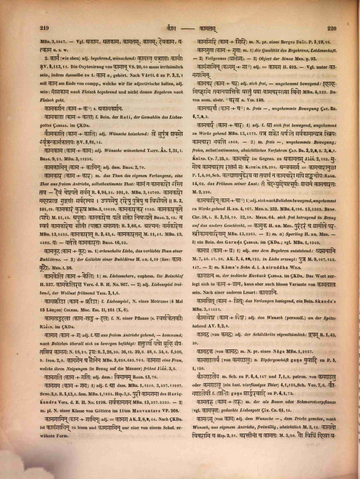
2. kāmá (wie eben) adj. begehrend, wünschend: kā̱masya̱ yatrā̱ptāḥ kāmā̀ḥ ṚV. 9,113,11. Die Oxytonirung von kā̱mān VS. 20,60 muss irrthümlich sein, indem dasselbe zu 1. kāma a〉, gehört. Nach Vārtt. 6 zu P. 3,2,1 soll kāma am Ende von compp., welche wir für adjectivische halten, adj. sein: sāṃsakāma nach Fleisch begehrend und nicht dessen Begehren nach Fleisch geht.
Original text · German · substantive masculine · substantive neuter
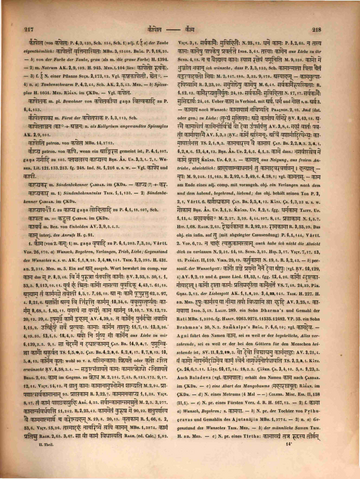
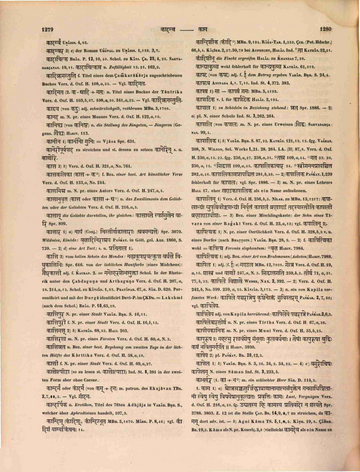
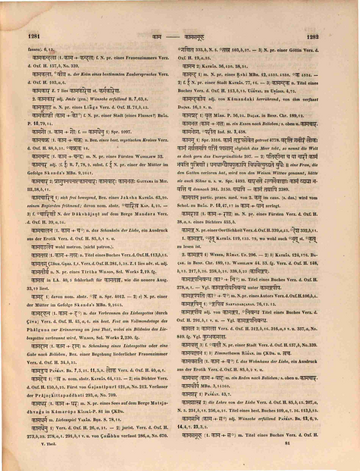
1. kā́ma (von 2. kam) 1〉 m. gaṇa vṛṣādi zu P. 6,1,203. P. 7,3,34, Vārtt. VOP. 26,170. a〉 Wunsch, Begehren, Verlangen, Trieb, Liebe; Gegenstand des Wunsches u. s. w. AK. 1,1,7,28. AK. 3,4,23,141. TRIK. 3,3,295. H. 431. H. an. 2,318. MED. m. 5. Ein auf as ausgeh. Wort bewahrt im comp. vor kāma das s P. 8,3,46. vi mè puru̱trā pàtayanti̱ kāmā̀ḥ ṚV. 3,55,3. ṚV. 3,50,1. ṚV. 1,53,3. ṚV. 9,113,10. ṚV. 9,113,11. yu̱vaṃ hà śri̱taḥ kāmò nāsatyā yuva̱drik ṚV. 4,43,7. ṚV. 4,61,18. a̱śyāma̱ taṃ kāmàmagne̱ tavo̱tī ṚV. 6,5,7. ṚV. 7,16,10. ā na̱ḥ kāmàṃ pūpurantu ṚV. 62,3. ṚV. 97,4. ṚV. 8,21,6. a̱kṣāsò asya̱ vi tìranti̱ kāmàm ṚV. 10,34,6. va̱vṛ̱jyustṛṣyàta̱ḥ kāmàm ṚV. 8,68,5. ṚV. 1,85,11. ya̱masyà mā ya̱myaṃ1̱̀ kāma̱ āgàn ṚV. 10,10,7. VS. 12,72. VS. 20,12. VS. 39,4. iṣa̱mūrja̱ṃ kāmàṃ duhām AV. 4,39,2. na kāmèna̱ punàrmagho bhavāmi AV. 5,11,2. ucchìṣṭe̱ sarvè pra̱tyañca̱ḥ kāmā̱ḥ kāmèna tātṛpuḥ AV. 11,7,13. AV. 12,3,36. AV. 12,4,19. AV. 12,3,35. AV. 13,1,5. AV. 18,4,5. atho̱ ni śùṣya̱ māṃ kāmèna aus Liebe zu mir AV. 6,139,2. AV. 6,139,5. AV. 6,9,1. sā cedasmai na dadyātkāmam ŚAT. BR. 14,9,4,7. pa̱śūnvi̱ttvā kāmā̀m̐ akurvata TS. 1,5,9,3. ŚAT. BR. 4,2,3,6. ŚAT. BR. 6,2,1,17. ŚAT. BR. 8,7,2,19. ŚAT. BR. 10,5,4,15. kāmèna kṛ̱taḥ wohl so v. a. yasminkāmaḥ kriyate oder kṛto 'sti erwünscht ṚV. 6,58,3. ṚV. 6,58,4. — saṅgātsaṃjāyate kāmaḥ kāmātkrodho 'bhijāyate BHAG. 2,62. kāma im Gegens. zu krodha M. 2,214. M. 7,45. M. 8,121. M. 8,175. M. 9,17. M. 12,11. VIŚV. 14,12. na jātu kāmaḥ kāmānāmupabhogena śāmyati M. 2,94. prāpaṇātsarvakāmānām M. 95. prāptakāma R. 3,22,7. kāmamanavāpya R. 1,1,38. VIŚV. 8,17. taṃ kāmaṃ pāṇḍavāpnuhi ARJ. 4,25. sarvānkāmānsamaśnute M. 2,5. M. 3,277. kāmānsaṃvardhayanti M. 11,242. R. 2,25,42. kāmametaṃ kuruṣva me R. 2,90,23. ṛtuparṇasya vai kāmamātmārthaṃ ca karomyaham N. 19,8. N. 20,15. kṛtakāma R. 1,66,6. R. 2,53,6. VIŚV. 15,26. tasmādahaṃ nācariṣye tvayi kāmam MBH. 1,3874. kāmaṃ pratiśru RAGH. 2,65. RAGH. 3,67. sā vāṃ kāmaṃ vidhāsyati RAGH. (ed. Calc.) 1,82. VIŚV. 3,1. sarvakāmaiḥ suvihitaiḥ N. 25,12. dhane kāmaḥ P. 5,2,65. na tasya kāmaḥ kāmeṣu pāpakeṣu pravartate INDR. 5,61. tasyāḥ kāmena aus Liebe zu ihr SUND. 4,18. na ca vaiśyasya kāmaḥ syānna rakṣeyaṃ paśūniti M. 9,328. kāmo me bhuñjīta bhavān ich wünsche, dass P. 3,3,153, Sch. kāmānmātā pitā caitaṃ yadutpādayato mithaḥ M. 2,147. M. 2,180. M. 3,32. M. 9,178. asyāham — kāmamutpādayiṣyāmi R. 3,23,20. samupoḍheṣu kāmeṣu M. 6,41. sarvakāmairupasthitāḥ R. 1,12,12. kāmairapyatulairyutaḥ R. 1,24,19. sarvakāmaiḥ suvihitā N. 17,17. sarvakāmaiḥ susiddhārthaḥ N. 24,46. Ueber kāma in Verbind. mit artha, dharma und mokṣa s. u. artha N. 3. — kāmāya nach Wunsch: kāmāyānnaṃ bhaviṣyati PRAŚNOP. 2,10. Jmd (dat. oder gen.) zu Liebe: (tubhyaṃ sukṣitayaḥ) agne̱ kāmā̀ya yemire ṚV. 8,43,18. a̱smai kāmā̱yopà kā̱minī̱rviśvè vo de̱vā ùpa̱saṃyàntu AV. 3,8,4. mahya̱ṃ vātàḥ pavatā̱ṃ kāmā̀yā̱smai AV. 5,3,3 (ṚV.: kāmè a̱sṃin). avìṃ va̱śāmā̀di̱tyebhya̱ḥ kāmā̱yālàbhanta TS. 2,1,2,3. kāmacārasya vai kāmāya ŚAT. BR. 2,2,3,2. ŚAT. BR. 2,3,4,1. ŚAT. BR. 6,2,1,6. ŚAT. BR. 13,4,1,12. BṚH. ĀR. UP. 2,4,5. BṚH. ĀR. UP. 4,1,3. kāme dass.: bhagavāṃstveva me kāme brūyāt CHĀND. UP. 4,9,2. — kāmāt aus Neigung, aus freiem Antriebe, absichtlich: brāhmaṇānbādhamānaṃ tu kāmādavaravarṇajam . hanyāt — nṛpaḥ M. 9,248. M. 11,162. R. 2,92,1. R. 3,49,6. R. 4,28,1; vgl. kāmatas. — kāma am Ende eines adj. comp. mit vorangeh. obj. ein Verlangen nach dem und dem habend, begehrend, liebend; das obj. behält seinen Ton P. 3,2,1, Vārtt. 6. annā́dyakāma ŚAT. BR. 5,5,1,12. KĀTY. ŚR. 1,3,23 u. s. w. gokāma BṚH. ĀR. UP. 3,1,2. CHĀND. UP. 8,2,1. fgg. dharmakāma TAITT. UP. 1,11,4. brahmavarcasa˚ M. 2,37. M. 3,59. M. 4,44. M. 4,107. M. 8,41. prajākāma N. 1,5. N. 1,7. HIT. I, 68. RAGH. 2,65. aiśvaryakāmā R. 2,92,25. rāmakāmā R. 3,55,29. Das obj. ein infin. auf tu (mit abgelegter Casusendung) P. 6,1,144, Vārtt. 2. VOP. 6,72. na cāhaṃ tyaktukāmastvām auch habe ich nicht die Absicht dich zu verlassen N. 9,31. N. 14,10. SUND. 3,25. HIḌ. 3,17. VIŚV. 7,17. VIŚV. 13,15. PAÑCAT. II, 110. VIKR. 29,19. kartukāmā N. 19,5. R. 5,2,43. — b〉 personif. der Wunschgott: kāmò jajñe pratha̱mo nainàṃ de̱vā ā̀puḥ (vgl. ṚV. 10,129,4) AV. 9,2,19 und d. ganze Lied. AV. 19,52,1. fgg. AV. 12,4,26. kāmò 'dā̱tkāmā̀yādāt . kāmò dā̱tā kāmàḥ pratigrahī̱tā kāmai̱tattè VS. 7,48. VS. 24,39. PĀR. GṚHY. 3,12. der Liebesgott AK. 1,1,1,20. AK. 3,4,23,141. TRIK. H. 227. H. an. MED. iṣu̱ḥ kāmàsya̱ yā bhī̱mā tayā̀ vidhyāmi tvā hṛ̱di AV. 3,25,1. kāmavāṇa INDR. 5,49. LALIT. 289. ein Sohn Dharmaʼs und Gemahl der Rati MBH. 1,2596. fg. HARIV. 9263. HARIV. 9271. HARIV. 11535. HARIV. 12482. VP. 55. ein Sohn Brahmanʼs VP. 50, N. 2. Saṃkalpaʼs BHĀG. P. 6,6,10; vgl. kāmadeva. — Agni führt den Namen kāma, sei es weil er der begehrliche, Alles verzehrende, sei es weil er der bei den Göttern für den Menschen heischende ist, SV. II, 8,2,19,3. yo de̱vo vi̱śvādyamu̱ kāmàmā̱huḥ AV. 3,21,4. yaṃ kāmo̱ nopa̱namèda̱gni̱me̱va kāma̱ṃ svenà bhāga̱dheye̱nopàdhāvati TS. 2,2,3,1. KĀTY. ŚR. 24,6,7. KĀTY. ŚR. 24,6,11. LĀṬY. 10,17,14. LĀṬY. 10,18,2. LĀṬY. 10,17,3. ŚĀṄKH. ŚR. 3,4,10. ŚĀṄKH. ŚR. 3,5,8. ŚĀṄKH. ŚR. 9,23,3. Auch Baladeva (vgl. kāmapāla) erhält den Namen kāma nach ŚABDAR._im_ŚKDR. — c〉 eine Abart des Mangobaums (mahārājacūta) RĀJAN._im_ŚKDR. — d〉 N. eines Metrums (4 Mal – –) COLEBR. Misc. Ess. II, 158 (COLEBR. Misc. Ess. II, 1). — e〉 N. pr. eines Fürsten Verz. d. B. H. 167,12. — 2〉 f. kāmā a〉 Wunsch, Begehren; s. kāmayā. — b〉 N. pr. der Tochter von Pṛthuśravas und Gemahlin des Ayutanāyin MBH. 1,3774. — 3〉 n. a〉 Gegenstand des Wunsches TRIK. MED. — b〉 der männliche Samen TRIK. H. an. MED. — c〉 N. pr. eines Tīrtha: kāmākhyaṃ tatra rudrasya tīrtham MBH. 3,5047. — Vgl. akāma, akṣakāma, kāmatas, kāmam, devakāma, yatkāma u. s. w.
Original text · German · Word type unspecified
1. kāma 1〉a〉 śrotratvakcakṣurjihvāghrāṇānāmātmasaṃyuktena manasādhiṣṭhitānāṃ sveṣu sveṣu viṣayeṣvānukūlyataḥ pravṛttiḥ kāmaḥ Lust, Vergnügen Verz. d. Oxf. H. 216,a,28. fg. udyatasya hi kāmasya prativādo na śasyate Spr. 3788. Spr. 3803. Z. 12 ist die Stelle ŚAT. BR. 14,9,4,7 zu streichen, da kāmam dort adv. ist. — b〉 Agni Kāma TS. 5,1,8,2. KĀṬH. 19,8. ŚĀṄKH. BR. 19,2. Kāma als N. pr. KṢITĪŚ. 5,8 (vielleicht kāmadeva als ein Name zu fassen). KṢITĪŚ. 6,13.
Böhtlingk 1879 substantive masculine · substantive neuter
Original text · German · substantive masculine · substantive neuter
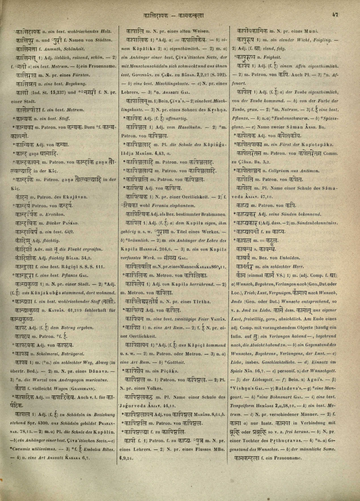
kā́ma (einmal kāmá VS.) — 1〉 m. (adj. Comp. f. ā) — a〉 Wunsch, Begehren, Verlangen nach (Gen., Dat. oder Loc.), Trieb, Lust, Vergnügen. kā́māya nach Wunsch, Jmds (Gen. oder Dat.) Wunsche entsprechend, so v. a. Jmd zu Liebe. kāme dass. kāmāt aus eigener Lust, freiwillig, gern, absichtlich. Am Ende eines adj. Comp. mit vorangehendem Objecte (häufig eine Infin. auf tu) ein Verlangen haben —, begehrend nach, die Absicht habend zu. — b〉 ein Gegenstand des Wunsches, Begehrens, Verlangens, der Lust. — c〉 Liebe, insbes. Geschlechtsliebe. — d〉 Einsatz im Spiele NĀR. 16,7. — e〉 personif. — α〉 der Wunschgott. — β〉 der Liebesgott. — f〉 Bein. — α〉 Agniʼs. — β〉 *Viṣṇuʼs GAL. — γ〉 Baladevaʼs. — g〉 *eine Mangoart. — h〉 *eine Bohnenart GAL. — i〉 eine best. Tempelform HEMĀDRI 2,a,58,10. — k〉 ein best. Metrum. — l〉 N. pr. verschiedener Männer. — 2〉 f. kāmā — a〉 nur Instr. kāmayā in Verbindung mit brūhi oder prabrūhi so v. a. frei heraus. — b〉 N. pr. einer Tochter des Pṛthuśravas. — 3〉 *n. — a〉 Gegenstand des Wunsches. — b〉 der männliche Same.
Original text · German · substantive masculine · substantive neuter
kā́ma (einmal kāmá VS.) — 1〉 m. (adj. Comp. f. ā) — a〉 Wunsch, Begehren, Verlangen nach (Gen., Dat. oder Loc.), Trieb, Lust, Vergnügen. kā́māya nach Wunsch, Jmds (Gen. oder Dat.) Wunsche entsprechend, so v. a. Jmd zu Liebe. kāme dass. kāmāt aus eigener Lust, freiwillig, gern, absichtlich. Am Ende eines adj. Comp. mit vorangehendem Objecte (häufig eine Infin. auf tu) ein Verlangen haben —, begehrend nach, die Absicht habend zu. — b〉 ein Gegenstand des Wunsches, Begehrens, Verlangens, der Lust. — c〉 Liebe, insbes. Geschlechtsliebe. — d〉 Einsatz im Spiele NĀR. 16,7. — e〉 personif. — α〉 der Wunschgott. — β〉 der Liebesgott. — f〉 Bein. — α〉 Agniʼs. — β〉 *Viṣṇuʼs GAL. — γ〉 Baladevaʼs. — g〉 *eine Mangoart. — h〉 *eine Bohnenart GAL. — i〉 eine best. Tempelform HEMĀDRI 2,a,58,10. — k〉 ein best. Metrum. — l〉 N. pr. verschiedener Männer. — 2〉 f. kāmā — a〉 nur Instr. kāmayā in Verbindung mit brūhi oder prabrūhi so v. a. frei heraus. — b〉 N. pr. einer Tochter des Pṛthuśravas. — 3〉 *n. — a〉 Gegenstand des Wunsches. — b〉 der männliche Same.
Apte 1890 substantive masculine · substantive neuter
Original text · English · substantive masculine · substantive neuter
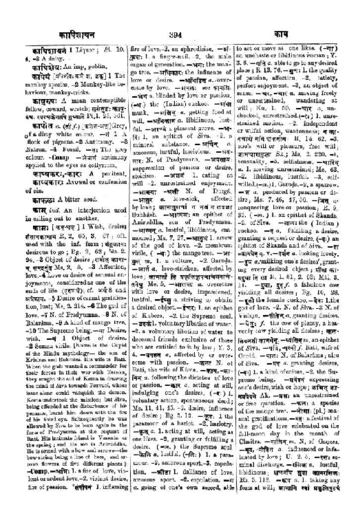
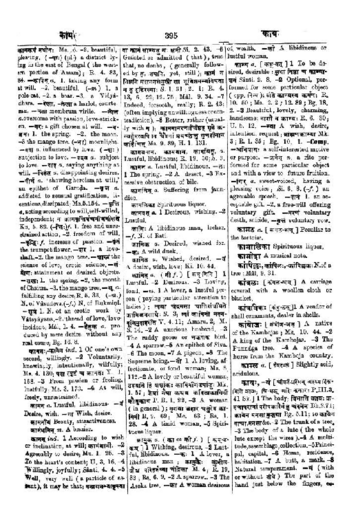
kāmaḥ [kam-ghañ] 1 Wish, desire; saṃtānakāmāya R. 2. 65, R. 2. 3, R. 2. 67; oft. used with the inf. form; gaṃtukāmaḥ desirous to go; Bg. 2. 62; Ms. 2. 94. 2 Object of desire; sarvān kāmān samaśnute Ms. 2. 5. 3 Affection, love. 4 Love or desire of sensual enjoyments, considered as one of the ends of life (puruṣārtha); cf. artha 8 and arthakāma. 5 Desire of carnal gratification, lust; Ms. 2. 214. 6 The god of love. 7 N. of Pradyumna. 8 N. of Balarāma. 9 A kind of mango tree. 10 The Supreme being. — mā Desire, wish. — maṃ 1 Object of desire. 2 Semen virile. [Kāma is the Cupid of the Hindu mythology-the son of Kṛṣṇa and Rukmini. His wife is Rati. When the gods wanted a commander for their forces in their war with Tāraka, they sought the aid of Kāma in drawing the mind of Śiva towards Pārvatī, whose issue alone could vanquish the demon. Kāma undertook the mission; but Śiva, being offended at the disturbance of his penance, burnt him down with the fire of his third eye. Subsequently he was allowed by Śiva to be born again in the form of Pradyumna at the request of Rati. His intimate friend is Vasanta or the spring; and his son is Aniruddha. He is armed with a bow and arrows-the bow-string being a line of bees, and arrows flowers of five different plants]. Comp. — agniḥ 1 a fire of love, violent or ardent love. 2 violent desire, fire of passion. ˚saṃdīpanaṃ 1 inflaming ([Page 0394-b]) fire of love. 2 an aphrodisiac. — aṃkuśaḥ 1 a fingernail. 2 the male organ of generation. — aṃgaḥ the mango tree. — adhikāraḥ the influence of love or desire. — adhiṣṭhita a. overcome by love. — analaḥ see kāmāgni. — aṃdha a. blinded by love or passion. — (dhaḥ) the (Indian) cuckoo. — aṃdhā musk. — annin a. getting food at will. — abhikāma a. libidinous, lustful. — araṇyaṃ a pleasant grove. — ariḥ 1 an epithet of Śiva. 2 a mineral substance. — arthin a. amorous, lustful, lascivious. — avatāraḥ N. of Pradyumna. — avasāyaḥ suppression of passion or desire, stoicism. — aśanaṃ 1 eating at will 2 unrestrained enjoyment. — ākhyā -akṣī N. of Durgā. — ātura a. love-sick, affected by love; kāmāturāṇāṃ na bhayaṃ na lajjā Subhāṣ. — ātmajaḥ an epithet of Aniruddha, son of Pradyumna. — ātman a. lustful, libidinous, enamoured; Ms. 7. 27. — āyudhaṃ 1 arrow of the god of love. 2 membrum virile. — (dhaḥ) the mango tree. — āyus m. 1 a vulture. 2 Garuḍa. — ārta a. love-stricken, affected by love; kāmārtā hi prakṛtikṛpaṇāścetanācetaneṣu Me. 5. — āsakta a. overcome with love or desire, impassioned, lustful. — īpsu a. striving to obtain a desired object. — īśvaraḥ 1 an epithet of Kubera. 2 the Supreme soul. — udakaṃ 1 voluntary libation of water. 2 a voluntary libation of water to deceased friends exclusive of those who are entitled to it by law; Y. 3. 4. — upahata a. affected by or overcome with passion. — kalā N. of Rati, the wife of Kāma. — kāma, — kāmin a. following the dictates of love or passion. — kāra a. acting at will, indulging one's desires. — (raḥ) 1 voluntary action, spontaneous deed; Ms. 11. 41, Ms. 11. 45. 2 desire, influence of desire; Bg. 5. 12. — kūṭaḥ 1 the paramour of a harlot. 2 harlotry. — kṛt a. 1 acting at will, acting as one likes. 2 granting or fulfilling a desire. ( — m.) the Supreme soul. — keli a. lustful. — (liḥ) 1 a paramour. 2 amorous sport. 3 copulation. — krīḍā 1 dalliance of love. amorous sport. 2 copulation. — ga a. going of one's own accord, able ([Page 0394-c]) to act or move as one likes. — (gā) an unchaste or libidinous woman; Y. 3. 6. — gati a. able to go to any desired place; R. 13. 76. — guṇaḥ 1 the quality of passion, affection. 2 satiety, perfect enjoyment. 3 an object of sense. — cara, -cāra a. moving freely or unrestrained, wandering at will; Ku. 1. 50. — cāra a. unchecked, unrestrained. — (raḥ) 1 unrestrained motion. 2 independent or wilful action, wantonness; na kāmacāro mayi śaṃkanīyaḥ R. 14. 62. 3 one's will or pleasure, free will; kāmacārānujñā Sk.; Ms. 2. 220. 4 sensuality. 5 selfishness. — cārin a. 1 moving unrestrained; Me. 63. 2 libidinous, lustful. 3 selfwilled. ( — m.) 1 Garuḍa. 2 a sparrow. — ja a. produced by passion or desire; Ms. 7. 46, Ms. 7. 47, Ms. 7. 50. — jit a. conquering love or passion; R. 9. 33. ( — m.) 1 an epithet of Skanda. 2 of Śiva. — tālaḥ the (Indian) cuckoo. — da a. fulfilling a desire, granting a request or desire. — (daḥ) an epithet of Skanda and of Śiva. — dā = kāmadhenu q. v. — darśana a. looking lovely. — dugha a. ‘milking one's desires’, granting every desired object; prītā kāmadughā hi sā R. 1. 81, R. 2. 63; Māl. 3. 11. — dughā, duh f. a fabulous cow yielding all desires; Bg. 10. 28. — dūtī the female cuckoo. — devaḥ 1 the god of love. 2 N. of Śiva. 3 N. of Viṣṇu. — dohin a. granting desires. — dhenuḥ f. the cow of plenty, a heavenly cow yielding all desires; kalativalatī kāmadhenū. — dhvaṃsin m. an epithet of Śiva. — pati, -patnī f. Rati, wife of Cupid. — pālaḥ N. of Balarāma; also of Śiva. — prada a. granting desires. — (daḥ) 1 a kind of coitus. 2 the Supreme being. — pravedanaṃ expressing one's desire, wish or hope; kaccit kāmapravedane Ak. — praśnaḥ an unrestrained or free question. — phalaḥ a species of the mango tree. — bhogāḥ (pl.) sensual gratifications. — mahaḥ a festival of the god of love celebrated on the full-moon day in the month of Chaitra. — mālin m. N. of Gaṇeśa. — mūḍha, -mohita a. influenced or infatuated by love; U. 2. 5. — rasaḥ seminal discharge. — rasika a. lustful, libidinous; kṣaṇamapi yuvā kāmarasikaḥ Bh. 3. 112. — rūpa a. 1 taking any form at will; jānāmi tvāṃ prakṛtipuruṣaṃ ([Page 0395-a]) kāmarūpaṃ maghonaḥ Me. 6. 2 beautiful, pleasing. — (pāḥ) (pl) a district lying in the east of Bengal (the western portion of Assam); R. 4. 83, R. 4. 84. — rūpin a. 1 taking any form at will. 2 beautiful. ( — m.) 1 a pole-cat. 2 a boar. 3 a Vidyādhara. — rekhā, -lekhā a harlot, courtezan. — latā membrum virile. — lola a. overcome with passion, love-stricken. — varaḥ a gift chosen at will. — vallabhaḥ 1 the spring. 2 the moon. 3 the mango tree. — (bhā) moonlight. — vaśa a. influenced by love. — (śaḥ) subjection to love. — vaśya a. subject to love. — vāda a. saying anything at will. — vihaṃtṛ a. disappointing desires. — vīrya a. ‘showing heroism at will,’ an epithet of Garuḍa. — vṛtta a. addicted to sensual gratification, licentious, dissipated; Ms. 5. 154. — vṛtti a. acting according to will, self-willed, independent; na kāmavṛttirvacanīyamīkṣate Ku. 5. 82. — (ttiḥ) f. 1 free and unrestrained action. 2 freedom of will. — vṛddhiḥ f. increase of passion. — vṛṃtaṃ the trumpet flower. — śara 1 a loveshaft. 2 the mango tree. — śāstraṃ the science of love, erotic science. — saṃyogaḥ attainment of desired objects. — sakhaḥ 1 the spring. 2 the month of Chaitra. 3 the mango tree. — sū a. fulfilling any desire; R. 5. 33. ( — m.) N. of Vāsudeva. ( — f.) N. of Rukmiṇī. — sūtraṃ 1 N. of an erotic work by Vātsyāyana. 2 ‘thread of love,’ loveincident; Māl. 1. 4. — haituka a. produced by mere desire without any real cause; Bg. 16. 8.
Cappeller 1887 Word type unspecified
Original text · German · Word type unspecified
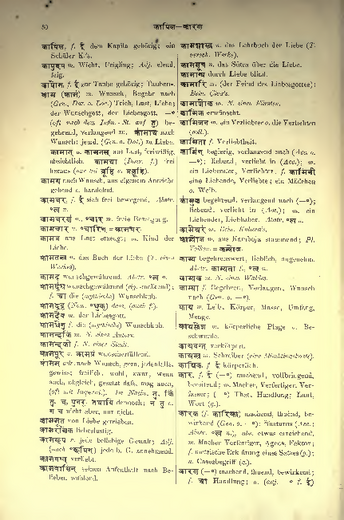
kā́ma (kamá) m. Wunsch, Begehr nach (Gen.,Dat. o. Loc.) Trieb, Lust, Liebe; der Wunschgott, der Liebesgott. —˚ (oft nach dem Infin.-St. auf tu) begehrend, verlangend zu. kā́maya nach Wunsch; jemd. (Gen. o. Dat.) zu Liebe. kāmāt u. kāmatas aus Lust, freiwillig, absichtlich. kāmayā (Instr. f.) frei heraus (nur bei brūhi u. prabrūhi).
Burnouf 1866 substantive masculine
Original text · French · substantive masculine
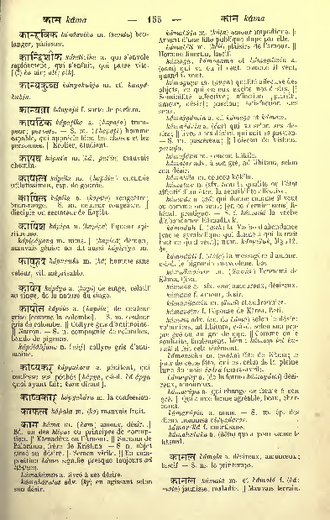
kāma kāma m. (kam) amour, désir. Bd. un des kleśas ou principes de corruption. Kāmadeva ou l'Amour. Surnom de Balarāma, frère de Kṛṣṇa. — S. n. objet aimé ou désiré. Semen virile. En composition kāma signifie presque toujours ad libitum. kāmakāmin a. livré à ses désirs. kāmakāratas adv. (kṛ) en agissant selon son désir. [Page155-2] kāmakūṭa m. (kūṭa) amour impudique. Amant d'une fille publique dupé par elle. kāmakeli m. (keli) plaisirs de l'amour. Homme libertin, lascif. kāmaga, kāmagama et kāmagāmin a. (gam) qui va où il veut, comme il veut, quand il veut. kāmaguṇa m. (guṇa) qualité affective des objets, ce qui en eux excite nos désirs. Sensibilité affective; affection [plaisir, amour, désir]; passion; satisfaction des sens. kāmaṅgāmin a. cf. kāmaga et kāmam. kāmacārin a. (car) qui va selon ses désirs; livré à ses désirs, qui suit sa passion. — S. m. passereau; l'oiseau de Viṣṇu, garuḍa. kāmajāna m. coucou kokila. kāmatas adv. à son gré, ad libitum, selon son désir. kāmatāla m. coucou kokila. kāmatva n. (sfx. tva) la qualité ou l'état affectif d'un être, la sensibilité affective. kāmada a. (dā) qui donne comme il veut ou comme on veut; [en ce dernier sens] libéral, prodigue. — S. f. kāmadā la vache d'abondance Kāmadhuk. kāmaduh f. (duh) la Vache d'abondance [vache symbolique qui donne à qui la trait tout ce qu'il veut]; nom. kāmadhuk, M§ 112, 4°. kāmadūtī f. (dūta) la messagère d'amour, c-à-d. le bignonia suaveolens, bot. kāmadhvaṃsin m. (dhvaṃs) l'ennemi de Kāma, Śiva. kāmana a. (sfx. ana) amoureux, désireux. kāmanā f. amour, désir. kāmandhamin m. (dhmā) chaudronnier. kāmapatnī f. l'épouse de Kāma, Rati. kāmam adv. (ac. de kāma) selon le désir: volontiers, ad libitum, c-à-d. selon son propre gré ou au gré de qqn. Comme on le souhaite, facilement, bien: kāmaṃ tat kurute il fait cela aisément. kāmamaha m. (maha) fête de Kāma; le jour de cette fête, qui est celui de la pleine lune du mois caitra (mars-avril). kāmayitṛ a. (de la forme kāmayāmi) désireux, amoureux. kāmarūpa a. qui change de forme à son gré. Qui a une forme agréable, beau, charmant. kāmarūpin a. mms. — S. m. ép. des dieux nommés vidyadharas. kāmarekhā f. courtisane. kāmahaituka a. (hetu) qui a pour cause le hasard.
Occurrences in source texts (23)
DYS 1 occurrence
HP 1 occurrence
HTK 1 occurrence
MandUp 2 occurrences
SiSa 15 occurrences
5 more source pages
SiSa 5.102-5.107: Svādhiṣṭhāna 2 occurrences
Direct occurrences
-
SiSa 5.104 Segment 9
-
SiSa 5.104 Segment 13
SiSa 5.234-5.252: Tripurā-Mantra 3 occurrences
Direct occurrences
-
SiSa 5.235 Segment 2
-
SiSa 5.240 Segment 12
-
SiSa 5.249 Segment 12
SVU 2 occurrences
VBT 1 occurrence
Continue with AYI Free
Image source: AYI archive.