

puṃs पुंस् – man; person
verbal root · substantive masculine · Word type unspecified
Dictionary sources
AYI dictionary substantive masculine
man; person
Cappeller 1891 Word type unspecified
Original text · English · Word type unspecified
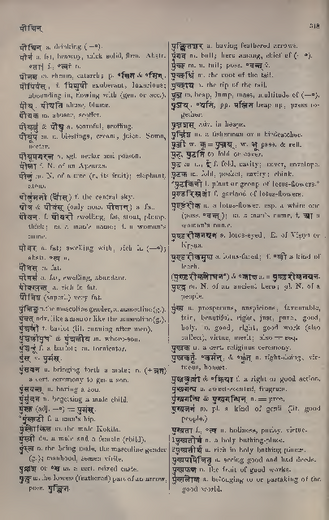
puṃs ·-> púmaṃs.
Monier-Williams 1872 substantive masculine · Word type unspecified
Original text · English · substantive masculine
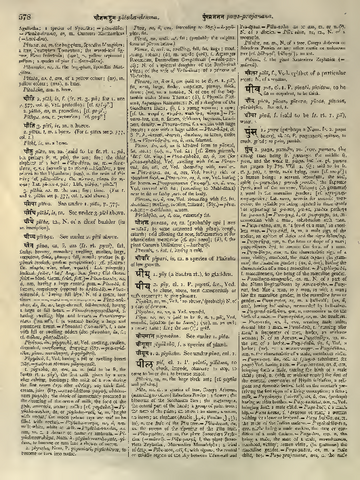
puṃs 2 . puṃs, pumān, m. (voc. puman, the strong cases being fr. pumāṃs, the middle fr. pum, and the weak fr. puṃs, but loc. pl. punsu not puṃsu by Pāṇ. VIII. 2, 65; said to be fr. rt. 3. pā), a male, male being, man [cf. na-p˚]; a human being; a servant, attendant; the soul, spirit (= puruṣa; paraḥ pumān, the Supreme Spirit, soul of the universe, Viṣṇu); (in grammar) a word in the masculine gender; [cf. strī-puṃ- napuṃsaka; Lat. mas, mar-is for mas-is, mas- culus, the syllable pu being rejected in these words but appearing in pu-sus, pu-sa, pu-bes perhaps for pu-mes.]
Original text · English · Word type unspecified
puṃs 1 . puṃs (perhaps a Nom. fr. 2. puṃs below), cl. 10. P. puṃsayati, -yitum, to crush, grind; to pain, punish.
Petersburger 1855 substantive masculine · Word type unspecified
Original text · German · substantive masculine
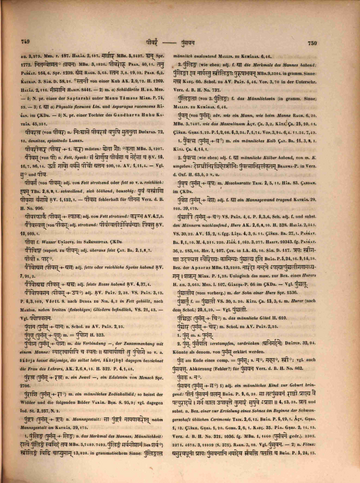
1. puṃs m. s. pumaṃs.
Original text · German · Word type unspecified
2. √puṃs , puṃsáyati zerstampfen, zerdrücken (abhimardane) DHĀTUP. 32,94. Könnte als denom. von pumaṃs erklärt werden.
Böhtlingk 1879 verbal root · substantive masculine
Original text · German · verbal root
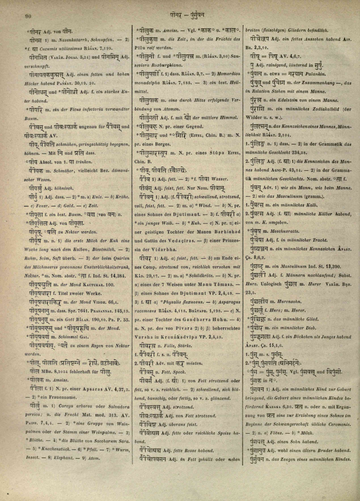
2. *√puṃs puṃsayati (abhimardane).
Original text · German · substantive masculine
1. puṃs m. s. pumaṃs.
Apte 1890 verbal root · substantive masculine
Original text · English · verbal root
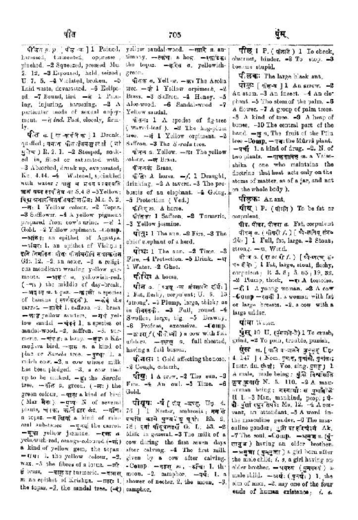
puṃs 10 U. (puṃsayati-te) 1 To crush, grind. 2 To pain, trouble, punish.
Original text · English · substantive masculine
puṃs m. [pāti pā-pālane ḍumsun Uṇ. 4. 147] (Nom. pumān, pumāṃsau, pumāṃsaḥ; Instr. du. puṃbhyāṃ; Voc. sing. puman) 1 A male, male being; puṃsi viśvasiti kutra kumārī N. 5. 110. 2 A man, human being; yasyārthāḥ sa pumām̐lloke H. 1. 3 Man, mankind, people; vaṃdyaiḥ puṃsāṃ raghupatipadaiḥ Me. 12. 4 A servant, an attendant. 5 A word inthe masculine gender. 6 The masculine gender; puṃsi vā haricaṃdanaṃ Ak. 7 The soul. Comp. — anuja a. ( puṃsānuja) having an elder brother. — anujā (pumanujā) a girl born after the male child; i. e. a girl having an elder brother. — apatyaṃ (pumapatyaṃ) a male child. — arthaḥ (pumarthaḥ) 1 the aim of man. 2 any one of the four ends of human existence; i. e. ([Page 0706-a]) dharmaṃ, arthaṃ, kāma and mokṣa; see puruṣārtha. — ākhyā (pumākhyā) a designation of a male being. — ācāraḥ (pumācāraḥ) a usage of men. — kāṃṭaḥ f. a man's hip. — kāmā a woman wishing for a husband. — kokilaḥ a male cuckoo; Ku. 3. 32. — kheṭaḥ (puṃkheṭaḥ) a male plant. — gavaḥ (puṃgavaḥ) 1 a bull, an ox. 2 (at the end of comp.) chief, best, most excellent, distinguished or pre-eminent of any class; vālmīkirmunipuṃgavaḥ Rām.; so gajapuṃgavaḥ Bh. 2. 31; narapuṃgavaḥ &c. ˚ketuḥ an epithet of Śiva; Ku. 7. 77. — calaḥ (puṃścalaḥ) an adulterer. — calī (puṃścalī) a harlot, an unchaste woman; Y. 1. 162 — calīyaḥ (puṃścalīyaḥ) the son of a harlot. — calū f. (puṃścalū) Ved. a harlot. — cihnaṃ (puṃścihna) the characteristic of a male, the membrum virile. — janman (puṃjanman) n. the birth of a male child. ˚karaḥ, ˚daḥ, ˚yogaḥ a constellation under which male children are born. — dāsaḥ ( puṃdāsaḥ) a male slave. — dhvajaḥ (puṃ vajaḥ) 1 the male of any species of animal. 2 a mouse. — nakṣatraṃ (puṃnakṣatraṃ) a male asterism. 2 an asterism under which male children are born. — nāgaḥ (puṃnāgaḥ) 1 ‘an elephant among men’, a distinguished man. 2 a white elephant. 3 a white lotus. 4 nutmeg. 5 N. of a tree called nāgakeśara; R. 4. 57. — nāṭaḥ, — ḍaḥ ( puṃnāṭaḥ, -ḍaḥ) N. of a tree. — nāmadheyaḥ (puṃnāmadheyaḥ) a male. — nāman ( puṃnāman) a. holding a masculine name. ( — m.) 1 the tree called puṃnāga. 2 N. of a hell. — putraḥ a male child. — prajananaṃ the male organ of generation. — bhūman (puṃbhūman) m. a word of the masculine gender used only in the plural number; dārāḥ puṃbhūmni cākṣatāḥ Ak. — yogaḥ (puṃyogaḥ) 1 cohabitation with men. 2 reference to a male or husband; puṃyoge kṣatriyī. — ratnaṃ (puṃratnaṃ) an excellent man. — rāśiḥ (puṃrāśiḥ) a male sign of the zodiac. — rūpaṃ (puṃrūpaṃ) the form of a man. — liṃga a. (puṃliṃga) of the masculine gender, masculine. — (gaṃ) 1 masculine gender. 2 virility, manhood. 3 the male organ. — vatsaḥ ( puṃvatsaḥ) a bull-calf. — vṛṣaḥ (puṃvṛṣaḥ) the musk-rat. — veṣa a. (puṃveṣa) dressed like a male, clad in male, attire. ([Page 0706-b]) — savana (puṃsavana) a. causing the birth of a male child. — (naṃ) the first of the purificatory Saṃskāras: it is a ceremony performed on a woman's perceiving the first signs of a living conception, with a view to the birth of a son; R. 3. 10. 2 fœtus 3 milk
Cappeller 1887 substantive masculine
Original text · German · substantive masculine
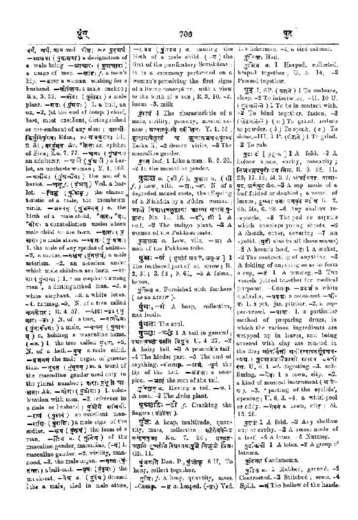
puṃs m. s. pumaṃs.
Burnouf 1866 verbal root · substantive masculine
Original text · French · verbal root
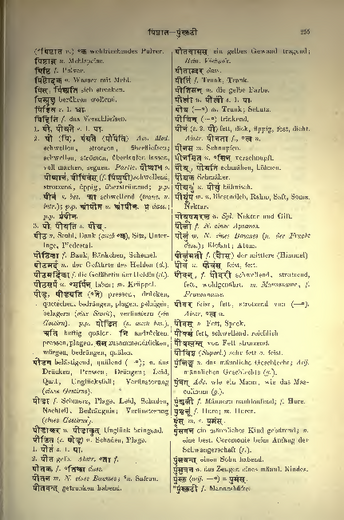
*puṃs puṃs. puṃsayāmi 10. Broyer, triturer; fouler aux pieds; cf. piṣ.
Original text · French · substantive masculine
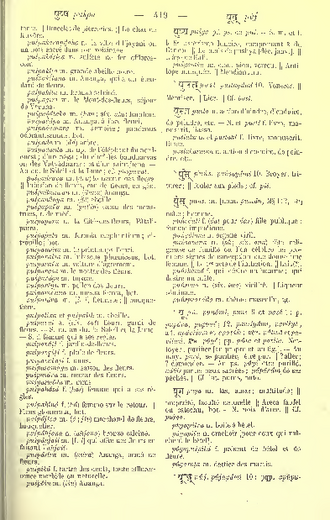
puṃs puṃs. m. [nom. pumān, M§ 112, 3°] mâle; homme. puṃścalī f. (cal pour car) fille publique; femme impudique. puṃścihna n. organe viril. puṃsavana n. (sū; sfx. ana) fête religieuse de famille où l'on célèbre les premiers signes de conception que donne une femme. Le 1ᵉʳ acte de l'initiation. Lait (?). puṃskāmā f. qui désire un homme; qui désire un mâle. puṃstva n. (sfx. tva) virilité. Liqueur séminale. puṃspravāda m. thème masculin, tg.
Occurrences in source texts (19)
DYS 6 occurrences
DYS 150–153*3: Vajrolī: Secret Teaching 4 occurrences
Direct occurrences
GoS 1 occurrence
HP 4 occurrences
HTK 1 occurrence
SiSa 4 occurrences
SVU 2 occurrences
VBT 1 occurrence
Continue with AYI Free
Image source: AYI archive.