

nara नर – Mensch; Mann
Substantiv Maskulin · Substantiv Neutrum · Worttyp nicht bestimmt
Wörterbuchquellen
AYI Wörterbuch Substantiv Maskulin
Mensch; Mann
Cappeller 1891 Substantiv Maskulin
Originaltext · Englisch · Substantiv Maskulin
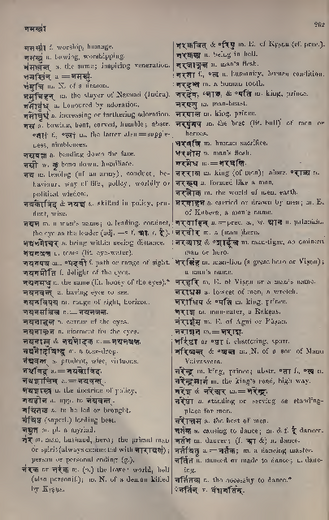
nára ·m. man, husband, hero; the primal man or spirit (always connected with nārāyaṇá) person or personal ending (g.).
Monier-Williams 1872 Substantiv Maskulin · Worttyp nicht bestimmt
Originaltext · Englisch · Substantiv Maskulin
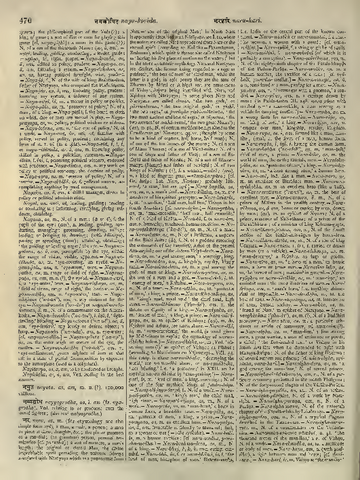
nara nara, as, m. (for etymology see the simple form nṛ), a man, a male, a person; a man or piece at chess, draughts, &c.; the pin or gnomon of a sun-dial; (in grammar) person, personal ter- mination [cf. puruṣa]; a sort of measure, a man's length; the original or eternal Man, the divine imperishable spirit pervading the universe (always associated with Nārāyaṇa which as a patronymic from Nara = ‘son of the original Man;’ in Manu Nara is apparently identified with Nārāyaṇa, see 1. 10, where the waters are called Nārā as produced from Nara or the eternal spirit [according to Kullūka = Paramātman, Brahman], which spirit is thence also called Nārāyaṇa as ‘having his first place of motion on the waters;’ but in the more systematic mythology Nara and Nārāyaṇa are distinct, the former being regarded as a sage or patriarch, ‘the best of men’ or ‘chief man,’ while the latter is a god; in epic poetry they are the sons of Dharma by Mūrti or A-hiṃsā and are emanations of Viṣṇu, Arjuna being identified with Nara, and Kṛṣṇa with Nārāyaṇa; in some places Nara and Nārāyaṇa are called devau, ‘the two gods,’ or pūrva-devau, ‘the two original gods,’ or ṛṣī, ‘the two sages,’ or purāṇāv ṛṣi-sattamau, ‘the two most ancient and best of sages,’ or tāpasau, ‘the two ascetics,’ or mahā-munī, ‘the two great Munis’); (ās), m. pl., N. of certain mythical beings allied to the Gandharvas and Kin-naras, qq. vv. (thought by some to be a kind of centaur, half horse, half man); N. of one of the ten horses of the moon; N. of a son of Manu Tāmasa; of a son of Viśvā-mitra; N. of a son of Gaya and father of Virāj; of a son of Su- dhṛti and father of Kevala; N. of a son of Bhavan- manyu (Manyu) and father of Saṅkṛti; N. of two kings of Kaśmīra; (ī), f. a woman, = nārī; (am), n. a kind of fragrant grass, = rāma-karpūra; [cf. Gr. ἀνήρ; Lat. Nero, Neriene; probably Hib. naoi, ‘a man,’ but see nṛ.]
Originaltext · Englisch · Worttyp nicht bestimmt
Nara; in col. 2, line 3, read, the waters are called Nārā or Nārāḥ.
Petersburger 1855 Substantiv Maskulin · Substantiv Neutrum · Worttyp nicht bestimmt
Originaltext · Deutsch · Substantiv Maskulin · Substantiv Neutrum
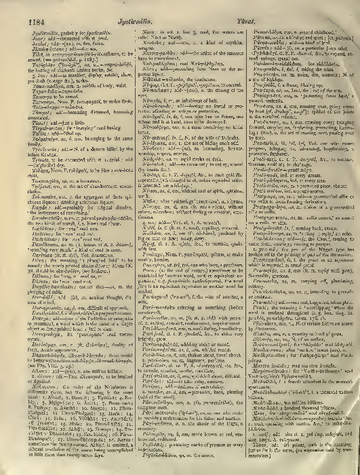
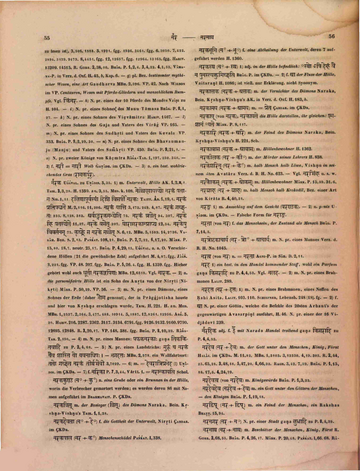
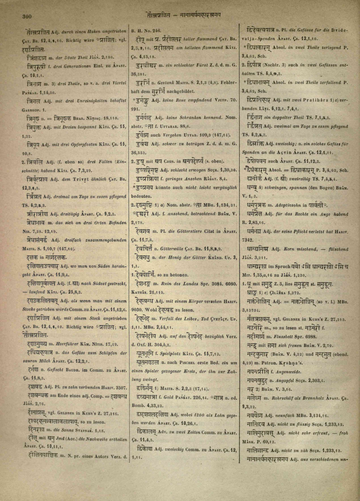
nára P. 6,2,18, Sch. 1〉 m. a〉 = nar 1. NIR. 5,1. AK. 2,6,1,1. TRIK. 3,3,358. H. 337. H. an. 2,433. MED. r. 53. TS. 7,1,12,1. ŚAT. BR. 9,3,1,3. devapitṛnarebhyaḥ ŚĀṄKH. GṚHY. 2,14. buddhimatsu narāḥ śreṣṭhā nareṣu brāhmaṇāḥ smṛtāḥ M. 1,96. svabhāva eva nārīṇāṃ narāṇāmiha dūṣaṇam M. 2,213. dārghām̐llaghūṃścaiva narānagrānīkeṣu yodhayet M. 7,193. īpsito naranārīṇām N. 1,4. R. 1,1,6. R. 1,1,88 TATTVAS. 18. HIT. Pr. 5. Am Ende eines adj. comp. f. ā R. GORR. 2,40,20. Vgl. vaiśvā˚, śikṣā˚, svarṇara. — b〉 Schachfigur u. s. w. WILS. — c〉 Zeiger an der Sonnenuhr SŪRYAS. 13,21. COLEBR. Alg. 106. Vgl. narayantra. — d〉 in der Gramm. Person, Personalendung KĀŚIKĀ_zu_P. 3,1,85. Vgl. puruṣa. — e〉 Mannslänge, ein best. Längenmaass: śirādho naradvaye in einer Tiefe von zwei Nara VARĀH. BṚH. S. 53,8. VARĀH. BṚH. S. 53,11. fgg. Vgl. puruṣa. — f〉 der Urmensch, Urgeist: āpo nārā (v. l. narā) iti proktā āpo vai narasūnavaḥ . tā yadasyāyanaṃ pūrvaṃ tena nārāyaṇaḥ smṛtaḥ .. M. 1,10; vgl. MBH. 3,12952. MBH. 3,15819. MBH. 5,2568. MBH. 12,13168. HARIV. 36. VS. 27. Stets in Verbindung mit nārāyaṇa (patron. von nara) dem Menschensohne genannt; diese beiden mythologischen Personen erhalten die Beiwörter: devau, pūrvadevau, ṛṣī, purāṇāvṛṣisattamau, tāpasau, mahāmunī; bisweilen wird nārāyaṇa als Gott, nara als Weiser und als der beste unter den Menschen bezeichnet; sie sind Söhne des Dharma von der Mūrti oder Ahiṃsā; gelten für Spaltungen eines und desselben Wesens und zwar Viṣṇuʼs (nara = aja, acyuta TRIK. H. an. MED.); mit Nara wird Arjuna (nara = arjuna TRIK. H. 709. H. an. MED.), mit Nārāyaṇa Kṛṣṇa identificirt TRIK. H. an. MED. MBH. 1,1176. fgg. MBH. 1,8301. fgg. MBH. 2,72 (wo naranārāyaṇau zu lesen ist). MBH. 3,506. MBH. 3,1888. MBH. 5,1921. fgg. MBH. 5,1936. MBH. 5,3461. fgg. MBH. 6,3050. MBH. 7,422. MBH. 7,2894. MBH. 7,3139. MBH. 7,9479. MBH. 8,4451. fgg. MBH. 12,12657. fgg. MBH. 12,12964. fgg. MBH. 12,13165. fgg. HARIV. 13209. HARIV. 14515. R. GORR. 2,58,10. BHĀG. P. 1,2,4. BHĀG. P. 3,4,22. BHĀG. P. 4,1,52. VĀMANA-P._in_Verz. d. Oxf. H. 45,b, Kap. 6. — g〉 pl. Bez. bestimmter mythischer Wesen, eine Art Gandharva MBH. 2,396. VP. 42. Nach WILSON_im_VP. Centauren, Wesen mit Pferde-Gliedern und menschlichem Rumpfe. Vgl. kiṃnara. — h〉 N. pr. eines der 10 Pferde des Mondes VYĀḌI_zu_H. 104. — i〉 N. pr. eines Sohnes des Manu Tāmasa BHĀG. P. 8,1,27. — k〉 N. pr. eines Sohnes des Viśvāmitra HARIV. 1467. — l〉 N. pr. eines Sohnes des Gaya und Vaters des Virāj VP. 165. — m〉 N. pr. eines Sohnes des Sudhṛti und Vaters des Kevala VP. 353. BHĀG. P. 9,2,29. BHĀG. P. 9,2,30. — n〉 N. pr. eines Sohnes des Bhavanmanyu (Manyu) und Vaters des Saṃkṛti VP. 450. BHĀG. P. 9,21,1. — o〉 N. pr. zweier Könige von Kāśmīra RĀJA-TAR. 1,197. RĀJA-TAR. 1,250. RĀJA-TAR. 1,340. — 2〉 f. narī = nārī Weib JAṬĀDH._im_ŚKDR. — 3〉 n. ein best. wohlriechendes Gras (rāmakarpūra).
Originaltext · Deutsch · Worttyp nicht bestimmt
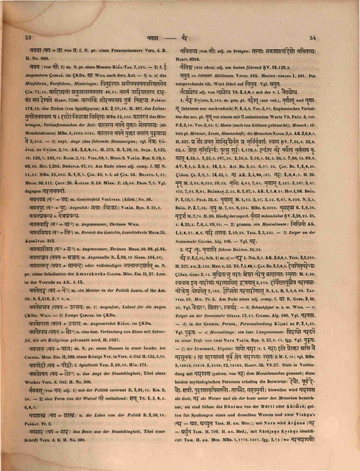
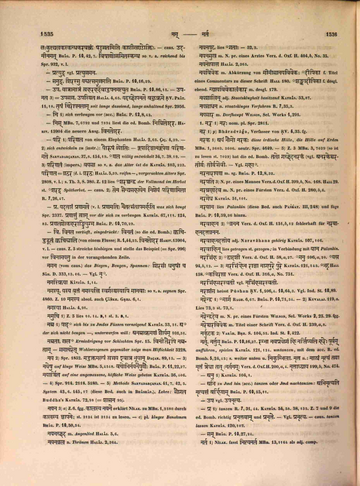
nara 1〉p〉 Bhāradvāja, Verfasser von ṚV. 6,35. fg.
Böhtlingk 1879 Substantiv Maskulin · Substantiv Neutrum · Worttyp nicht bestimmt
Originaltext · Deutsch · Substantiv Maskulin · Substantiv Neutrum
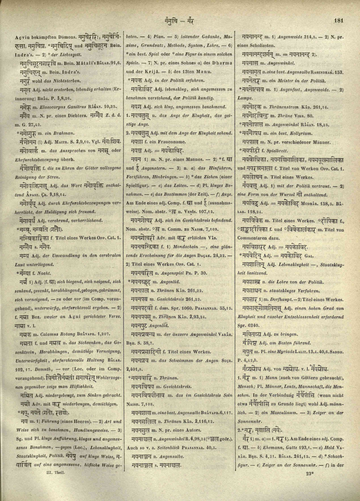
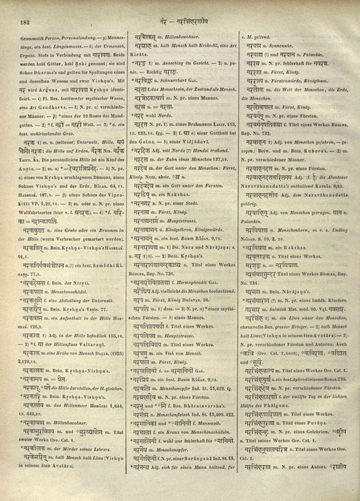
nára — 1〉 m. — a〉 = 1. nar 1〉 Am Ende eines adj. Comp. f. ā. — b〉 Ehemann, Gatte Chr. 193,1. — c〉 Held VARĀH. BṚH. S. 4,31. BĀLAR. 241,12. — d〉 *Schachfigur. — e〉 Zeiger an der Sonnenuhr. — f〉 in der [Page3-182-a] Grammatik Person, Personalendung. — g〉 Manneslänge, ein best. Längenmaass. — h〉 der Urmensch, Urgeist. Stets in Verbindung mit nārāyaṇa. Beide werden bald Götter, bald Ṛṣi genannt; sie sind Söhne Dharmaʼs und gelten für Spaltungen eines und desselben Wesens und zwar Viṣṇuʼs. — Mit nara wird Arjuna, mit nārāyaṇa Kṛṣṇa identificirt. — i〉 Pl. Bez. bestimmter mythischer Wesen, eine Art Gandharva. — k〉 N. pr. — α〉 verschiedener Männer. — β〉 *eines der 10 Rosse des Mondgottes. — 2〉 *f. narī = nārī Weib. — 3〉 *n. ein best. wohlriechendes Gras.
Originaltext · Deutsch · Worttyp nicht bestimmt
nara 2〉 BHĀM. V. 3,16. [Nachtrag, Band 4]
Originaltext · Deutsch · Worttyp nicht bestimmt
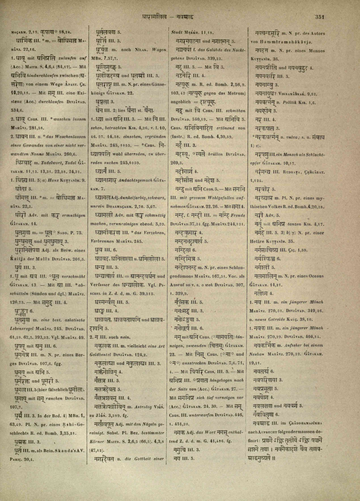
nara III. 4. [Nachtrag, Band 7]
Apte 1890 Substantiv Maskulin
Originaltext · Englisch · Substantiv Maskulin
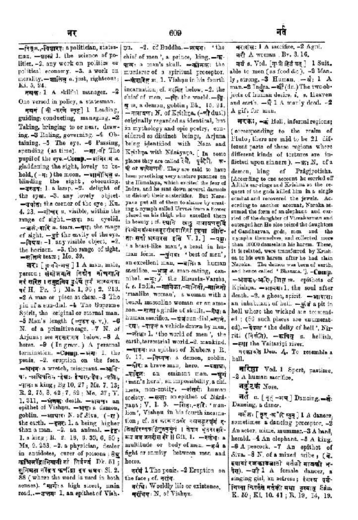
naraḥ [nṝ-naye-ac] 1 A man, male, person; saṃyojayati vidyaiva nīcagāpi naraṃ sarit . samudramiva durdharṣaṃ nṛpaṃ bhāgyamataḥ paraṃ H. Pr. 5; Ms. 1. 96; Ms. 2. 213. 2 A man or piece at chess. 3 The pin of a sun-dial. 4 The Supreme Spirit, the original or eternal man. 5 Man's length (= puruṣa q. v.). 6 N. of a primitive sage. 7 N. of Arjuna; see naranārāyaṇa below. 8 A horse. 9 (In gram.) A personal termination. Comp. — aṃgaḥ 1 the penis. 2 eruption on the face. — adhamaḥ a wretch, miscreant. — adhipaḥ, -adhipatiḥ, -īśaḥ, -īśvaraḥ, -devaḥ, -patiḥ, — pālaḥ a king; Bg. 10. 27; Ms. 7. 13; R. 2. 75, R. 3. 42; R. 7. 62; Me. 37; Y. 1. 311. — aṃtakaḥ death. — ayaṇaḥ an epithet of Viṣṇu. — aśaḥ a demon, goblin. — ādhāraḥ N. of Śiva. — (rā) the earth. — itaraḥ 1 a being higher than a man. 2 an animal. — iṃdraḥ 1 a king; R. 2. 18, R. 3. 33, R. 6. 80; Ms. 9. 253. 2 a physician, dealer in antidotes, curer of poisons; teṣu kaścinnareṃdrābhimānī tāṃ nirvarṇya Dk. 51; sunigrahā nareṃdreṇa phaṇīṃdrā iva śatravaḥ Śi. 2. 88 (where the word is used in both senses). ˚mārgaḥ a high street, main road. — uttamaḥ 1 an epithet of ([Page 0609-b]) Viṣṇu. 2 of Buddha. — ṛṣabhaḥ ‘the chief of men’, a prince, king. — kapālaḥ a man's skull. — kīlakaḥ the murderer of a spiritual preceptor. — keśarin m. 1 Viṣṇu in his fourth incarnation; cf. narasiṃha below. 2 the chief of men. — dhiḥ the world. — dviṣ m. a demon goblin; Bk. 15. 94. — nārāyaṇaḥ N. of Kṛṣṇa. ( — ṇau dual) originally regarded as identical, but in mythology and epic poetry, considered as distinct beings, Arjuna being identified with Nara and Kṛṣṇa with Nārāyaṇa. [In some places they are called devau, pūrvadevau, ṛṣī or ṛṣisattamau. They are said to have been practising very austere penance on the Himālaya, which excited the fear of Indra, and he sent down several damsels to disturb their austerities. But Nārāyaṇa put all of them to shame by creating a nymph called Urvaśī from a flower placed on his thigh who excelled them in beauty; cf. sthāne khalu nārāyaṇamṛṣiṃ vilobhayaṃtyastadūrusaṃbhavāmimāṃ dṛṣṭvā vrīḍitāḥ sarvā apsarasa iti V. 1.] — paśuḥ ‘a beast-like man’, a beast in human form. — puṃgavaḥ ‘best of men’, an excellent man. — baliḥ a human sacrifice. — bhuj a. man-eating, cannibal. — bhūḥ f. the Bharata-Varṣa, i. e. India. — mānikā, -māninī, -mālinī ‘manlike woman’, a woman with a beard, masculine woman or an amazon. — mālā a girdle of skulls. — medhaḥ a human sacrifice. — yaṃtraṃ sun-dial. — yānaṃ, — rathaḥ, -vāhanaṃ a vehicle drawn by men. — lokaḥ 1 ‘the world of men’, the earth, terrestrial world. 2 mankind. — vāhanaḥ an epithet of Kubera; R. 9. 11. — viṣvaṇaḥ a demon, goblin. — vīraḥ a brave man, hero. — vyāghraḥ, — śārdūlaḥ an eminent man. — śṛṃgaṃ ‘man's horn’, an impossibility, a chimera, non-entity. — saṃsargaḥ human society. — sakhaḥ an epithet of Nārāyaṇa; V. 1. 3. — siṃhaḥ, -hariḥ ‘manlion’, Viṣṇu in his fourth incarnation; cf. tava karakamalavare nakhamadbhutaśṛṃgaṃ dalitahiraṇyakaśiputanubhṛṃgaṃ . keśava dhṛtanaraharirūpa jaya jagadīśa hare .. Gīt. 1. — skaṃdhaḥ a multitude or body of men. — hayaṃ a fight or enmity between man and horse.
Cappeller 1887 Substantiv Maskulin
Originaltext · Deutsch · Substantiv Maskulin
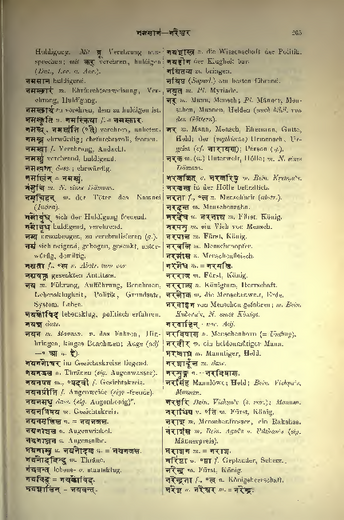
nara m. Mann, Mensch, Ehemann, Gatte, Held; der (mythische) Urmensch, Urgeist (cf. nārāyaṇa); Person (g.).
Burnouf 1866 Substantiv Maskulin
Originaltext · Französisch · Substantiv Maskulin
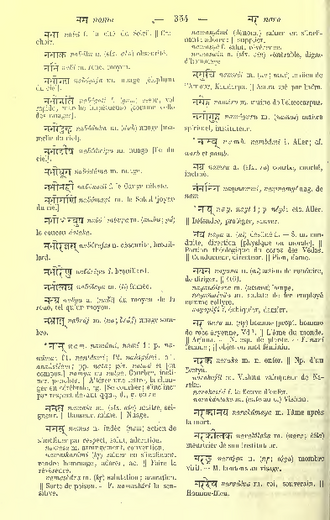
nara nara m. (nṛ) homme [propt. homme de race âryenne, Vd.]. L'âme du monde. Arjuna. — N. esp. de plante. — F. narī femme; object ou mot féminin.
Abgeleitete Wörter
Weitere Ableitungen (1)
Quelltextfundstellen (12)
DYS 2 Fundstellen
HP 4 Fundstellen
HTK 1 Fundstelle
IVU 1 Fundstelle
MandUp 2 Fundstellen
SiSa 2 Fundstellen
Mit AYI Free weitermachen
Bildquelle: AYI Archiv.