

śabda शब्द – sound; word
substantive masculine · Word type unspecified
Dictionary sources
AYI dictionary substantive masculine
sound; word
Cappeller 1891 substantive masculine
Original text · English · substantive masculine
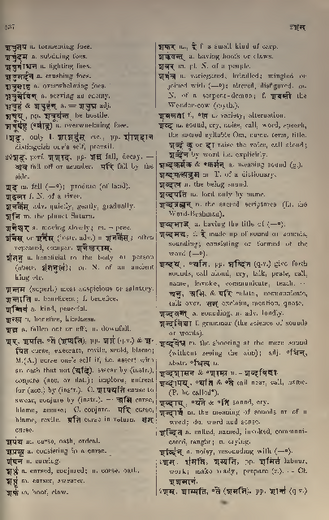
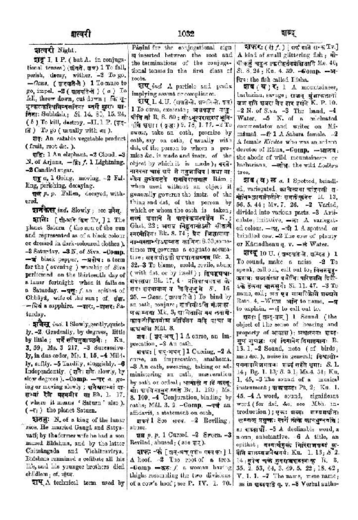
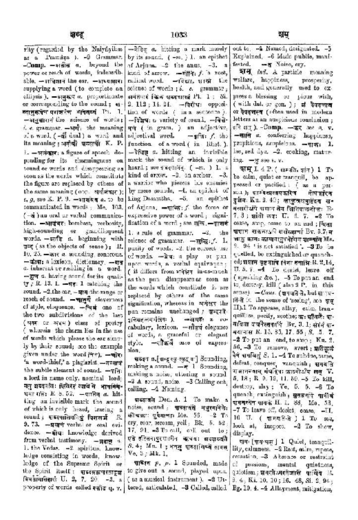
śábda ·m. sound, cry, noise, call, word, speech, the sacred syllable Om, name, term, title. śabdaṃ kṛ or dā raise the voice, call aloud; śabdena by word i.e. explicitly.
Monier-Williams 1872 substantive masculine
Original text · English · substantive masculine
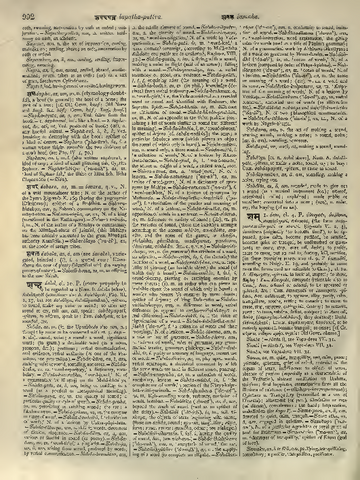
Śabda, as, m. (in the Upaniṣads also am, n.; thought by some to be connected with rt. 3. śap + 2. da), sound, noise; a sound; a word, significant word; (in gram.) a declinable word (as a noun, pronoun, &c.); grammar; verbal communication, oral evidence, verbal authority (as one of the Pra- māṇas, see pra-māṇa).
Petersburger 1855 substantive masculine · Word type unspecified
Original text · German · substantive masculine
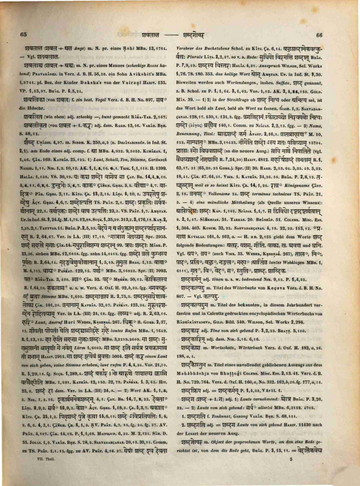
śábda UṆĀDIS. 4,97. m. SIDDH. K. 250,a,3 (n. DHYĀNABINDŪP._in_Ind. St. 2,1). am Ende eines adj. comp. f. ā MBH. 4,932. MBH. 9,3053. KUMĀRAS. 1,1,46. ŚĀK. 169. KATHĀS. 25,125. 1〉 Laut, Schall, Ton, Stimme, Geräusch NAIGH. 1,11. NIR. 1,2. NIR. 10,12. AK. 1,1,4,16. AK. 1,1,6,1 TRIK. 1,1,118. H. 1399. HALĀY. 1,138. VS. 30,19. yaḥ kaśca śabdo vāgeva sā ŚAT. BR. 14,4,3,10. ŚAT. BR. 14,5,4,11. ŚAT. BR. 14,6,2,6. dundubheḥ ŚAT. BR. 14,5,4,7. kāka˚ ŚĀṄKH. GṚHY. 5,5. vīṇā˚ ŚĀṄKH. GṚHY. 4,7. vāditra˚ PĀR. GṚHY. 2,11. KĀTY. ŚR. 13,3,18. LĀṬY. 6,10,8. uparateṣu śabdeṣu ĀŚV. GṚHY. 4,6,7. śabdotpatti TS. PRĀT. 2,1. śabdaḥ prakṛtiḥ sarvavarṇānām TS. PRĀT. 22,1. varṇapṛktaḥ śabdo vāca utpattiḥ TS. PRĀT. 23,3. VS. PRĀT. 1,7. AMṚTAN. UP._in_Ind. St. 9,24. fg. M. 1,75. M. 12,98. SUŚR. 1,35,20. SUŚR. 1,313,2. SUŚR. 2,176,18. KAṆ. 2,1,25. KAṆ. 2,2,1. TATTVAS. 11. BHĀG. P. 2,5,25. vedaye na ca saṃyuktān śabdasparśarasānaham R. 2,64,67. VET. in LA. (III) 17,19. ˚mātrānna bhetavyam Spr. 2955. śabdaṃ sahante mṛgāḥ ŚĀK. 14. madhurānniśamya śabdān ŚĀK. 99. trayaḥ śabdāḥ MĀRK. P. 23,36. sieben MBH. 12,6858. fgg. zehn MBH. 14,1418. fgg. śabdo jale kumbhasya pūryataḥ R. 2,64,14. mṛdaṅgaveṇuvīṇānām R. 1,5,19. tumula BHAG. 1,13. bāṇa˚ M. 4,113. vādya˚ PAÑCAT. 129,15. parṇa˚ MBH. 3,16822. Spr. (II) 3993. pakṣa˚ RĀJA-TAR. 3,400. jyā˚ ŚĀK. 52. pada˚ MṚCCH. 50,12. kokilasya R. 1,64,10. kṛkalāsa˚ u. s. w. Verz. d. Oxf. H. 92,b,32. fgg. bhagavacchabdaṃ śrutvā Stimme MBH. 1,693. śabdamājñāya R. 2,75,5. śabdānusāreṇāvalokya ŚĀK. 101,20. janānām KATHĀS. 32,67. PAÑCAT. 123,24. gurutaraśabdena roditavyam VET. in LA. (III) 21,16. fgg. labdha˚ adj. R. 2,63,10. hari˚ Laut, Ausruf Hari WEBER, KṚṢṆAJ. 267. dhik˚ R. GORR. 2,37,15. gīyatāṃ pīyatāṃ ceti śabdaścāsīdgṛhe gṛhe lautes Rufen MBH. 1,7649. R. 1,13,13. hā heti sahasā muktaḥ śabdaḥ MBH. 3,2219. MBH. 3,2609. mā śabdaḥ sukhasuptānāṃ bhrātṝṇāṃ me bhavet Lärm MBH. 1,6003. mā śabda iti sarvatra pracakrāmātha tāṃ sabhām HARIV. 2911. mā śabda ityevaṃ bruvantaḥ HARIV. 5004. śabdaṃ kar einen Laut von sich geben, seine Stimme erheben, laut rufen P. 4,4,34. VOP. 21,10. R. 5,29,18. fg. SUŚR. 1,289,4. śabdaṃ cakāra . bho āruṇe pāñcālya kvāsi vatsaihīti MBH. 1,691. KATHĀS. 12,153. KATHĀS. 32,79. PAÑCAR. 1,3,62. HIT. 23,8. śabdaṃ dā dass. VET. in LA. (III) 24,8. — 2〉 Wort AK. 1,1,5,2. NIR. 1,2. NIR. 1,16. ekārthamanekaśabdam NIR. 4,1. ŚAT. BR. 14,7,2,23. devatā˚ LĀṬY. 8,9,3. sarva˚ LĀṬY. 10,9,2. keśa˚ ĀŚV. GṚHY. 1,18,3. ŚR. 5,3,7. akāla˚ KĀTY. ŚR. 25,1,2. pitṛśabdaṃ putre kṛtvā KĀTY. ŚR. 15,6,11. śabde 'vipratipattiḥ KĀTY. ŚR. 1,4,9. KĀTY. ŚR. 1,6,6. KĀTY. ŚR. 4,3,1. ŚĀṄKH. ŚR. 6,1,3. ṚV. PRĀT. 4,7. fg. ṚV. PRĀT. 4,15. ṚV. PRĀT. 4,20. fg. ṚV. PRĀT. 4,37. AV. PRĀT. 4,107. ŚĀK. 14,19. P. 1,1,68. MAITRYUP. 6,22. M. 2,124. SĀH. D. 55. YOGAS. 1,9. VARĀH. BṚH. S. 28,2. SARVADARŚANAS. 20,15. SARVADARŚANAS. 30,11. Comm. zu TS. PRĀT. 1,1. TS. PRĀT. 1,15. fgg._zu_AV. PRĀT. 4,16. AV. PRĀT. 4,27. yeṣāṃ śabda eva devatā Verehrer des Buchstabens Schol. zu KĀTY. ŚR. 6,14. bahuśabdānekavatkurvantaḥ Plurale LĀṬY. 2,2,27. so v. a. Rede: sudhiyo viramanti śabdāt BHĀG. P. 7,9,49. śabdasya vistaraḥ HALĀY. 4,81. Ausspruch WILSON, Sel. Works 1,76. WILSON, Sel. Works 1,78. WILSON, Sel. Works 1,180. WILSON, Sel. Works 1,353. das heilige Wort om AMṚTAN. UP._in_Ind. St. 9,30. Bisweilen werden auch Wortendungen, insbes. Suffixe, śabda genannt, z. B. Schol. zu P. 1,1,64. P. 3,1,62. VOP. 1,13. AK. 3,4,24,150. GOLD. MĀN. 39. — 1〉 2〉 in der Streitfrage ob śabda nitya oder anitya sei, ist das Wort bald als Laut, bald als Wort zu fassen. JAIM. 1,9. SARVADARŚANAS. 128,17. SARVADARŚANAS. 130,1. SARVADARŚANAS. 131,3. fgg. jagannidānaṃ sphoṭākhyo niravayavo nityaḥ śabdo (λόγος) brahmaiva SARVADARŚANAS. 140,1. Comm. zu NYĀYAS. 2,2,13. fgg. — 3〉 Name, Benennung, Titel: śrāddhaśabdaṃ karma ĀPAST. 2,16,1. jātabrāhmaṇa˚ M. 10,122. māndhātṛ˚ MBH. 3,10425. bhīmeti śabdo 'sya gataḥ pṛthivyām MBH. 3,15704. prāptāḥ smo vidhavāśabdaṃ (so die neuere Ausg.) tvayi nāthe nipātite (vgl. vaidhavyaśabdaṃ bhokṣyāmi R. 7,24,30) HARIV. 4812. maharṣiśabdaṃ labhatām R. 1,63,17. R. 1,63,21 (R. 65,20. R. 1,25 GORR.). Spr. (II) 30. RAGH. 2,53. RAGH. 2,64. RAGH. 3,35. RAGH. 3,49. RAGH. 5,22. RAGH. 18,41. ŚĀK. 47. ŚĀK. 64,21. VIKR. 1. KATHĀS. 34,36. KATHĀS. 34,58. BHĀG. P. 2,8,12. tacchabdāt weil es so heisst KĀTY. ŚR. 14,1,24. rāja˚ Königsname ŚĀNT. 2,18. janapada˚ Volksname 24. śabda terminus technicus TS. PRĀT. 21,3. — 4〉 eine mündliche Mittheilung (als Quelle unseres Wissens): āptopadeśaḥ śabdaḥ KAP. 1,102. NYĀYAS. 1,1,7. sa dvividho dṛṣṭādṛṣṭārthatvāt NYĀYAS. 8. NYĀYAS. 2,1,47. SĀṂKHYAK. 51. TARKAS. 20. BHĀṢĀP. 51. COLEBR. Misc. Ess. 1,304. COLEBR. Misc. Ess. 1,403. KUSUM. 32,22. SARVADARŚANAS. 4,18. SARVADARŚANAS. 22,22. SARVADARŚANAS. 113,12. ˚pramāṇa KUVALAY. 161,b. 162,a. — H. an. 2,135 giebt dem Worte śabda folgende Bedeutungen: akṣara, yaśas, gīti, vākya, kha, śravaṇa und dhvani. Vgl. apa˚, jaya˚ (auch VIKR. 35. WEBER, KṚṢṆAJ. 267), tāla˚, niḥ˚, pāda˚, prati˚, bahu˚, maṅgala˚, mahā˚ (ārtija lautes Wehklagen MBH. 1,6111), mṛta˚, vi˚, veda˚, sa˚, stuti˚, śābda, śābdika.
Original text · German · Word type unspecified
śabda ein richtiges Wort im Gegens. zu apaśabda PAT. a. a. O. 1,7,a.
Böhtlingk 1879 substantive masculine
Original text · German · substantive masculine
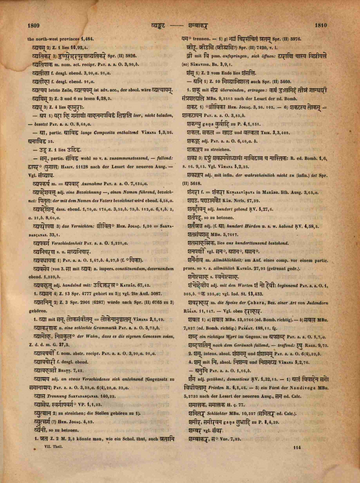
śábda m. (n. sehr verdächtig; adj. Comp. f. ā) — 1〉 Laut, Schall, Ton, Stimme, Geräusch, Lärm. Es werden drei, sieben und zehn Töne angenommen. hari˚ der Laut —, der Ausruf Hari; gīyatāṃ pīyatāṃ ceti śabdaścāsīdgṛhe gṛhe lautes Rufen; śabdaṃ kar einen Laut von sich geben, seine Stimme erheben, laut rufen. — 2〉 Wort. śabdena durch ein Wort, so v. a. ausdrücklich Chr. 230,13. — 3〉 Rede, Ausspruch. — 4〉 ein richtiges Wort (Gegensatz apaśabda). — 5〉 die heilige Silbe om. — 6〉 Wortendung, insbes. Suffix. — 7〉 Name, Benennung, Titel. tacchabdāt weil es so heisst. — 8〉 terminus technicus. — 9〉 eine mündliche Mittheilung (als Quelle unseres Wissens).
Apte 1890 substantive masculine
Original text · English · substantive masculine
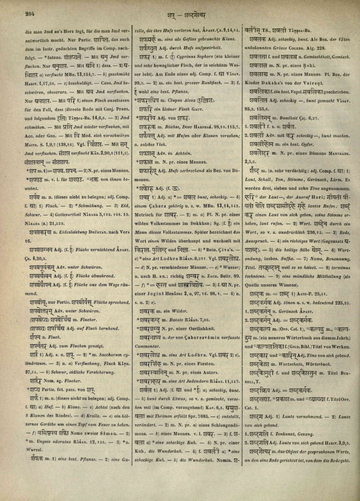
śabdaḥ [śabd-ghañ] 1 Sound (the object of the sense of hearing and property of ākāśa); athātmanaḥ śabdaguṇaṃ guṇajaḥ padaṃ vimānena vigāhamānaḥ R. 13. 1. 2 Sound, note (of birds; men &c.), noise in general; viśvāsopagamādabhinnagatayaḥ śabdaṃ sahaṃte mṛgāḥ Ś. 1. 14; Bg. 1. 13; Ś. 3. 1; Ms. 4. 31; Ku. 1. 45. 3 The sound of a musical instrument; vādyaśabdaḥ Pt. 2; Ku. 1. 45. 4 A word, sound, significant word (for def. &c. see Mbh. introduction); ekaḥ śabdaḥ samyagadhītaḥ samyak prayuktaḥ svarge loke kāmadhugbhavati; so śabdārthau. 5 A declinable word, a noun, substantive. 6 A title, an epithet; yasyārthayuktaṃ girirājaśabdaṃ kurvaṃti ba lavyajanaiścamaryaḥ Ku. 1. 13; Ś. 2. 14; nṛpeṇa cakre yuvarājaśabdabhāk R. 3. 35, R. 2. 53, R. 2. 64, R. 3. 49, R. 5. 22; R. 18. 42; V. 1. 1. 7 The name, mere-name; as in śabdapati q. v. 8 Verbal ([Page 1033-a]) authority (regarded by the Naiyāyikas as a Pramāṇa). 9 Grammar. Comp. — atīta a. beyond the power or reach of words, indescribable. — adhiṣṭhānaṃ the ear. — adhyāhāraḥ supplying a word (to complete an ellipsis). — anurūpa a. proportionate or corresponding to the sound; śabadānurūpeṇa pākrameṇa bhavitavyaṃ Pt. 1. — anuśāsanaṃ the science of words; i. e. grammar. — arthaḥ the meaning of a word. ( — rthau dual) a word and its meaning; adoṣau śabdārthau K. P. 1. — alaṃkāraḥ a figure of speech depending for its charmingness on sound or words and disappearing as soon as the words which constitute the figure are replaced by others of the same meaning (opp. arthālaṃkāra); e. g. see K. P. 9 — ākhayaya a. to be communicated in words; Me. 103. — (yaṃ) an oral or verbal communication. — āḍabaraḥ bombast, verbosity, high-sounding or grandiloquent words. — ādi a. beginning with śabda (as the objects of sense); R. 10. 25. — kāra a. sounding sonorous. — kośaḥ a lexicon, dictionary. — gata a. inherent or residing in a word. — guṇa a. having sound for its quality; R. 13. 1. — grahaḥ 1 catching the sound. 2 the ear. — grāmaḥ the range or reach of sound. — cāturyaṃ cleverness of style, eloquence. — citraṃ one of the two subdivisions of the last (avara or adhama) class of poetry (wherein the charm lies in the use of words which please the ear simply by their sound; see the example given under the word citra). — coraḥ 'a word-thief,’ a plagiarist. — tanmātraṃ the subtle element of sound. — patiḥ a lord in name only, nominal lord; nanu śabdapatiḥ kṣiterahaṃ tvāyi me bhāvanibaṃdhanā ratiḥ R. 8. 52. — pātin a. hitting an invisible mark the sound of which is only heard, tracing a sound; śabdapātinamiṣuṃ visasarja R. 9. 73. — pramāṇaṃ verbal or oral evidence. — bodhaḥ knowledge derived from verbal testimony. — brahman n. 1 the Vedas. 2 spiritual knowledge consisting in words, knowledge of the Supreme Spirit or the Spirit itself; śabdabrahmaṇastādṛśaṃ vivartamitihāsaṃ U. 2, U. 7. 20. 3 a property of words called sphoṭa q. v. ([Page 1033-b]) — bhedin a. hitting a mark merely by its sound. ( — m.) 1 an epithet of Arjuna. 2 the anus. 3 a kind of arrow. — yomiḥ f. a root, radical word. — vidyā, śāstraṃ the science of words; i. e. grammar; anaṃtapāraṃ kila śabdaśāstraṃ Pt. 1; Śi. 2. 112; Śi. 14. 24. — virodhaḥ opposition of words (in a sentence). — viśeṣaḥ a variety of sound. — viśeṣaṇaṃ (in gram.) an adjective, adjectival word. — vṛttiḥ f. the function of a word (in Rhet.). — vedhin a. hitting an invisible mark the sound of which is only heard; see śabdapātin. ( — m.) 1 a kind of arrow. 2 an archer. 3 a warrior who pierces his enemies by mere sounds. 4 an epithet of king Daśaratha. 5 an epithet of Arjuna. — śaktiḥ f. the force or expressive power of a word; signification of a word; see śakti. — śāsanaṃ 1 a rule of grammar. 2 the science of grammar. — śuddhiḥ f. 1 purity of words. 2 the correct use of words. — śleṣaḥ a play or pun upon words, a verbal equivoque; (it differs from arthaśleṣa in-as-much as the pun disappears as soon as the words which constitute it are replaced by others of the same signification, whereas in arthaślaṣa the pun remains unchanged; śabdapari vṛttisahatvamarthaśrleṣaḥ) — saṃgrahaḥ a vocabulary, lexicon. — sauṣṭhavaṃ elegance of words, a graceful or elegant style. — saukaryaṃ ease of expression.
Cappeller 1887 substantive masculine
Original text · German · substantive masculine
śábda m. Laut, Ton, Lärm, Stimme, Rede, Ausspruch, Wort, Name, Titel. śabdena ausdrücklich. śabdaṃ kar o. dā die Stimme erheben, schreien, rufen u. s. w.
Burnouf 1866 substantive masculine
Original text · French · substantive masculine
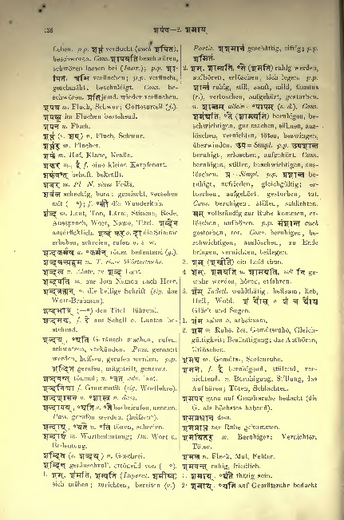
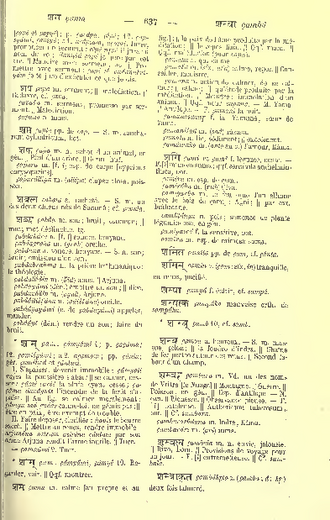
śabda śabda m. son; bruit; clameur; mot; mot déclinable, tg. śabdakāra a. [f. ī] sonore, bruyant. śabdagraha m. (grah) oreille. śabdana a. sonore, bruyant. — S. n. son; bruit; émission d'un son. śabdabrahma n. la prière brâhmanique; la théologie. śabdabhedin m. (bhid) anus. Arjuna. śabdabdayāmi (dén.) émettre un son; dire. śabdavedhin m. (vyadh) Arjuna. śabdādhiṣṭhāna n. (adhiṣṭhāna) oreille. śabdāpayāmi (c. de śabdayāmi) appeler, mander. śabdāye (dén.) rendre un son; faire du bruit.
Occurrences in source texts (29)
GoS 2 occurrences
HP 10 occurrences
HP 4.20-4.27: Four Stages of Nāda 2 occurrences
Direct occurrences
HTK 1 occurrence
HTK 10.6*2–9*1: Ujjāyī / Ujjāyikā and Sūryabheda 1 occurrence
Direct occurrences
-
HTK 10.7 Segment 20
PYS 3 occurrences
SiSa 5 occurrences
SVU 1 occurrence
VBT 7 occurrences
VBT 36–42: Sound and Bindu 3 occurrences
Direct occurrences
Continue with AYI Free
Image source: AYI archive.