

bāhya बाह्य – external; outer
adjective · substantive masculine · substantive neuter · Word type unspecified
Dictionary sources
AYI dictionary adjective
external; outer
Derived from
Cappeller 1891 adjective
Original text · English · adjective
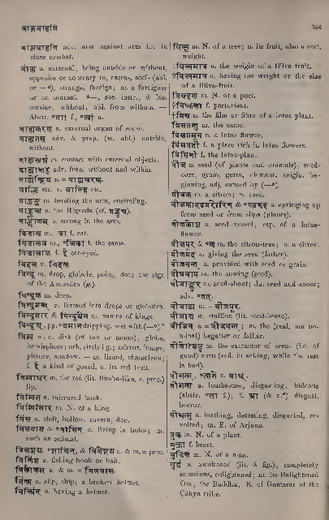
bā́hya ·a. external, being outside or without, opposite or contrary to, extra-, anti- (abl. or --°), strange, foreign; m. a foreigner or an outcast. °--, acc. instr., & loc. outside, without, abl. from without. -- Abstr. °tāÅ f., °tvaÅ n.
Monier-Williams 1872 adjective
Original text · English · adjective
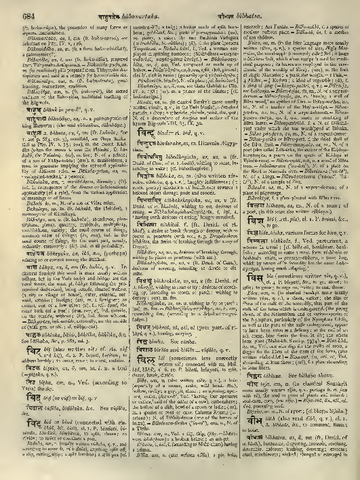
bāhya bāhya, as, ā, am (fr. bahis, q. v. In classical Sanskrit this word is more usually written vāhya, but in the Veda bahis and bāhya are the usual forms, the nom. pl. bāhye following the pro- nominal declension), being outside, situated without (a city or village or house), outer, external, out- ward, exterior; foreign; (as), m. a foreigner; an outcast, one of a low tribe; (ā), f., scil. tvac, the outer bark (of a tree); (am, ena, e), ind. outside, on the outside, without; (āt), ind. from without.
Petersburger 1855 adjective · substantive masculine · Word type unspecified
Original text · German · adjective · substantive masculine
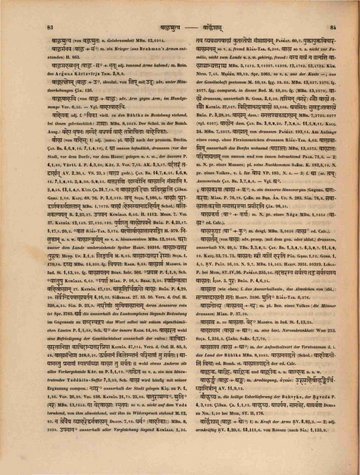
bā́hya (von bahis) 1〉 adj. (masc. pl. bāhye nach der pronom. Declin. ŚAT. BR. 6,6,2,16. ŚAT. BR. 7,1,1,16), f. ā aussen befindlich, draussen (von der Stadt, vor dem Dorfe, vor dem Hause) gelegen u. s. w., der äussere P. 4,1,85, Vārtt. 4. P. 4,3,60. Kār. 3. VOP. 7,16. AK. 3,5,17. yadàntara̱ṃ tadbāhyàm AV. 2,30,4. VS. 25,2 (bāhvya gedr.). ŚAT. BR. 14,7,1,21. ŚAT. BR. 6,6,2,16. ŚAT. BR. 7,1,1,16. ŚAT. BR. 7,2,4,30. ŚAT. BR. 7,5,2,42. antarāṇi hyasthīni bāhyāni māṃsāni ŚAT. BR. 9,2,3,46. ŚAT. BR. 13,4,4,9. KĀTY. ŚR. 26,7,18. na bāhyahutaṃ devāḥ pratigṛhṇanti ŚĀṄKH. GṚHY. 1,10. KAUŚ. 68. KAUŚ. 76. P. 3,1,119. tvac SUŚR. 1,166,5. bāhyāṃ purādbhārgavakarmaśālām MBH. 1,7179. bāhyaṃ (homasthānādvahiryat Schol.) balimakalpayat R. 2,25,27. upavana KUMĀRAS. 6,46. H. 1112. MEGH. 7. VID. 37. KATHĀS. 12,149. KATHĀS. 27,152. KATHĀS. 27,189. puryāstu bāhyopavane BHĀG. P. 4,25,17. BHĀG. P. 5,17,1. BHĀG. P. 5,20,2. ˚kakṣa RĀJA-TAR. 3,174. akṣṇorbāhyāntāvapāṅgau H. 579. bhikṣukān u. s. w. bāhyānkuryāt so v. a. hinausweisen MBH. 12,2646. carāḥ ausser dem Lande umherziehende Späher HARIV. 10316. bāhyābhyantara (puruṣa) MUṆḌ. UP. 2,1,2. liṅgāni M. 8,25. bāhyābhyantarā rogāḥ SUŚR. 1,170,18. dravya MBH. 14,331. fg. viṣayāḥ RAGH. 8,88. bāhyārtha MADHUS._in_Ind. St. 1,13,20. fg. bāhyāyatana BURN. Intr. 501. ˚prayatna P. 1,1,9, Sch. ˚vastuṣu KUMĀRAS. 6,63. ˚sparśa MĀRK. P. 16,5. BHAG. 5,21. sparśānkṛtvā bahirbāhyān BHAG. 27. KATHĀS. 17,121. ākūtirvikramo bāhyaḥ BHĀG. P. 4,29,20. sarvendriyabāhyavartana BHĀG. P. 6,16,33. SĀṂKHYAK. 27. SĀṂKHYAK. 33. SĀṂKHYAK. 50. Verz. d. Oxf. H. 320,a,24. SĀH. D. 23,9. nārīṇāṃ śucibāhyānām deren Aeusseres rein ist Spr. 3765. artha die ausserhalb des Lautcomplexes liegende Bedeutung im Gegensatz zu śabdasvarūpa das Wort selbst mit seinen eigenthümlichen Lauten P. 1,1,68, Sch. a˚ der innere RAGH. 14,50. bāhyarata wohl eine Befriedigung der Geschlechtslust ausserhalb der vulva: kācidbāhyaratābhijñā kācidābhyantarapriyā KATHĀS. 47,114. Verz. d. Oxf. H. 85,b,48. bāhyasaṃbhoga Verz. d. Oxf. H. 218,b,21. ūrdhvamānaṃ kilonmānaṃ parimāṇaṃ tu sarvataḥ . āyāmastu pramāṇaṃ syātsaṃkhyā bāhyā tu sarvatàḥ wohl etwas Anderes als alles Vorhergehende Kār. zu P. 5,1,19. ˚taddhita so v. a. ein neu hinzutretendes Taddhita-Suffix P. 7,3,29, Sch. bāhya wird häufig mit seiner Ergänzung compon.: nagara˚ ausserhalb der Stadt gelegen KĀŚ._zu_P. 1,1,36. VOP. 26,20. VID. 158. KATHĀS. 21,71. KATHĀS. 25,86. cāturāśramya˚, śruti˚ (nara) MBH. 13,1645. yā vedabāhyāḥ smṛtayaḥ so v. a. nicht auf dem Veda beruhend, von ihm abweichend, mit ihm in Widerspruch stehend M. 12,95. na tvevaiṣa vyāhareddharmabāhyam DRAUP. 7,18. dharma˚ (bāhīkāḥ) MBH. 8,2030. upamāna˚ ausserhalb aller Vergleichung liegend KUMĀRAS. 1,36. tava vyavasāyabāhyaṃ kutasteyāṃ māṃsāśanam PAÑCAT. 60,7. yuktāyuktavicārabāhyamanas so v. a. fremd RĀJA-TAR. 6,208. bāhya so v. a. nicht zur Familie, nicht zum Lande u. s. w. gehörig, fremd: yasya mantraṃ na jānanti bāhyāścābhyantarāśca MBH. 5,1412. MBH. 3,14937. MBH. 3,14939. MBH. 12,4782. MBH. 13,4734. KĀM. NĪTIS. 7,46. MṚCCH. 89,19. Spr. 1061. so v. a. aus der Kaste —, aus der Gesellschaft gestossen M. 10,28. fgg. M. 10,39. fgg. M. 10,62. MBH. 13,827. fg. MBH. 13,2570. fg. MBH. 13,2577. fgg. comparat. in dieser Bed. M. 10,30. fg. (MBH. 13,2579). bāhye draussen, ausserhalb R. GORR. 2,1,39. tasmin (nagare) 'sau bāhye tasthau KATHĀS. 37,187. vidiśānagarabāhye KATHĀS. 33,106. avasitaḥ sukhaduḥkhabāhye BHĀG. P. 3,28,36. bāhyam dass.: samantapañcakādbāhyam MBH. 7,2725. MBH. 7,6277 (Vgl. MBH. 7,6267). bāhyena dass. ŚAT. BR. 3,8,2,20. ŚAT. BR. 7,3,1,4. ŚAT. BR. 11,1,2,11. KAUŚ. 24. MBH. 7,5337. bāhyāt von draussen PAÑCAT. 193,14. Am Anfange eines comp. ohne Flexionszeichen draussen RĀJA-TAR. 4,63. bāhyavāsin ausserhalb des Dorfes wohnend (caṇḍāla) MBH. 13,2572. bāhyāntaḥ paripaśyatām von aussen und von innen betrachtend PRAB. 71,6. — 2〉 m. N. pr. eines Mannes; pl. seine Nachkommen SAṂSK. K. 183,b,10. N. pr. eines Volkes, v. l. für bodha VP. 185, N. 4. — 3〉 f. ā (sc. tvac) Aussenrinde ŚAT. BR. 3,7,1,8. — Vgl. a˚.
Original text · German · Word type unspecified
bāhya 1〉 am Ende eines comp.: sadbāhya so v. a. schlecht HEM. YOGAŚ. 3,119. — m. Leichnam nach BÜHLER; s. Spr. (II) 2533, N. diese Bed könnte eher vāhya haben.
Böhtlingk 1879 adjective · substantive masculine · substantive neuter
Original text · German · adjective · substantive masculine · substantive neuter
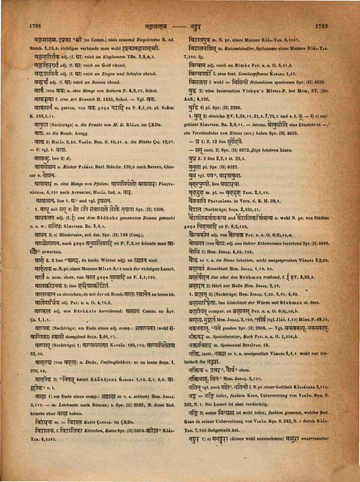
bā́hya, bāhia (AV.) — 1〉 Adj. (f. ā) — a〉 aussen befindlich, draussen (vor der Thür, vor dem Hause, vor dem Dorfe u. s. w.) —, ausserhalb von (Abl. oder im Comp. vorangehend) gelegen u. s. w., der äussere. Acc. mit kar hinausweisen, von sich fern halten. taddhita m. so v. a. ein neu hinzutretendes Taddhita-Suffix. Auch Compar. bāhyatara ŚAṂK. zu BĀLAR. 4,1,2 (S. 1056, Z. 13). — b〉 nicht zur Familie —, nicht zum Lande u. s. w. gehörig, fremd. — c〉 aus der Kaste —, aus der Gesellschaft gestossen ĀPAST. auch Compar. bāhyatara. — d〉 ausserhalb von Etwas (Abl. oder im Comp. vorangehend) liegend, so v. a. abweichend von, im Widerspruch stehend mit, sich nicht fügend in, Nichts zu thun habend mit, sich ablehnend verhaltend, sich nicht eignend zu. artha m. die ausserhalb gelegene, mit dem Lautcomplex zunächst Nichts zu thun habende Bedeutung eines Wortes. — 2〉 verschiedene Casus als Adv. oder Praep. (die Ergänzung im Abl. oder im Comp. vorangehend): báhyena, bāhye und bāhya˚ draussen, ausserhalb; bāhyam dass, und hinaus (Chr. 127,15); bāhyāt von draussen. [Page4-224-c] — 3〉 m. — a〉 Leichnam (?). — b〉 N. pr. — α〉 Pl. eines Volkes VP. 22,156. — β〉 eines Mannes; Pl. seine Nachkommen. — 4〉 f. ā — a〉 Aussenrinde. — b〉 N. pr. eines Flusses VP.² 2,156. — 5〉 n. das Aeussere. Am Ende eines adj. Comp. f. ā.

Apte 1890 adjective · substantive masculine
Original text · English · adjective · substantive masculine
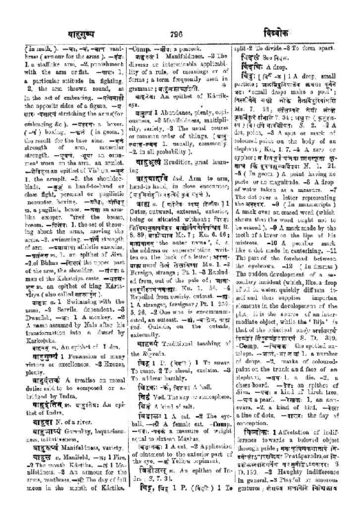
bāhya a. [bahirbhavaḥ ṣyañ ṭilopaḥ] 1 Outer, outward, external, exterior, being or situated without; virahaḥ kimivānutāpayedvada bāhyairviṣayairvipaścitaṃ R. 8. 89; bāhyodyāna Me. 7; Ku. 6. 46; bāhyanāman ‘the outer name’, i. e. the address or superscription written on the back of a letter; adattabāhyatāmānaṃ lekhaṃ lekhayitvā Mu. 1. 2 Foreign, strange; Pt. 1. 3 Excluded from, out of the pale of; jātāstadūrvorupamānabāhyāḥ Ku. 1. 36. 4 Expelled from society, outcast. — hyaḥ 1 A stranger, foreigner; Pt. 1. 259; Pt. 5. 26. 2 One who is excommunicated, an outcast. — hyaṃ, bāhyena, bāhye ind. Outside, on the outside, externally.
Cappeller 1887 Word type unspecified
Original text · German · Word type unspecified
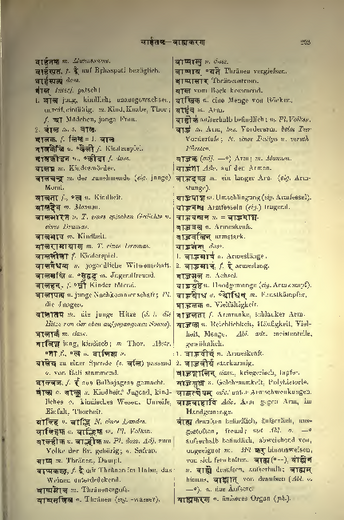
bā́hya draußen befindlich, äußerlich, ausgestoßen, fremd; mit Abl. o. —˚ außerhalb befindlich, abweichend von, ungeeignet zu. Mit kar hinausweisen, von sich fern halten. bāhya (˚—), bā́hyena u. bāhye draußen, außerhalb; bāhyam hinaus, bāhyāt von drausen (Abl. o. —˚). n. das Äußere.
Occurrences in source texts (28)
DYS 1 occurrence
HP 7 occurrences
HP 4.11*15-4.11*28: Space and Laya 3 occurrences
Direct occurrences
-
HP 4.11*15 Segment 10
-
HP 4.11*16 Segment 1
-
HP 4.11*22 Segment 1
HTK 2 occurrences
PYS 2 occurrences
SiSa 10 occurrences
SiSa 1.51-1.64: Selbst als Licht 3 occurrences
Direct occurrences
SiSa 5.191-5.207: Kailāsa und Mahāśūnya 2 occurrences
Direct occurrences
-
SiSa 5.191 Segment 11
-
SiSa 5.201 Segment 2
1 more source page
SS 1 occurrence
VBT 5 occurrences
Continue with AYI Free
Image source: AYI archive.