

abhāva अभाव – Abwesenheit; Nichtsein; Nichtvorhandensein; Vergehen; Vernichtung
Adjektiv · Substantiv Maskulin · Worttyp nicht bestimmt
Wörterbuchquellen
AYI Wörterbuch Substantiv Maskulin
Abwesenheit; Nichtsein; Nichtvorhandensein; Vergehen; Vernichtung
Herkunft
Cappeller 1891 Substantiv Maskulin
Originaltext · Englisch · Substantiv Maskulin
abhāva ·m. not being, non-existence, absence, want, failure, destruction, death. --°vaṃ gam perish, die.*
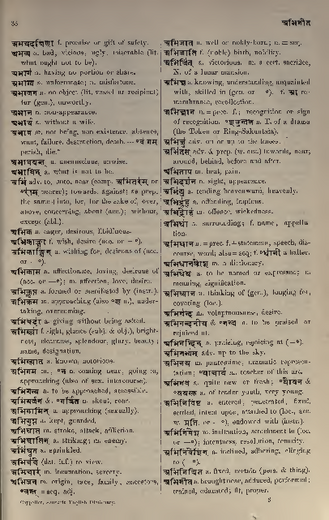
Monier-Williams 1872 Substantiv Maskulin
Originaltext · Englisch · Substantiv Maskulin
abhāva a-bhāva, as, m. non-existence, ab- sence; non-entity, negation, nullity, the seventh cate- gory in Kaṇāda's system; annihilation, death.
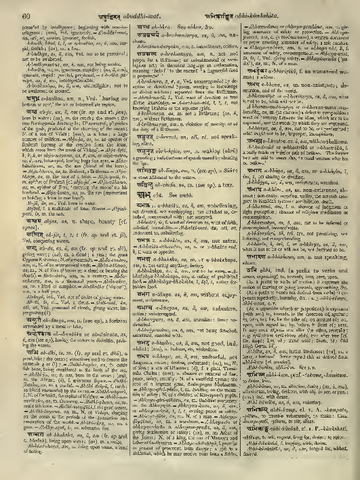
Petersburger 1855 Substantiv Maskulin · Worttyp nicht bestimmt
Originaltext · Deutsch · Substantiv Maskulin
abhāva (3. a + bhāva) m. 1〉 Nichtdasein, Nichtvorhandensein, Abwesenheit; das subj. im gen.: teṣāmabhāve ŚVETĀŚV. UP. 6,4. KĀTY. ŚR. 4,3,23. M. 8,259. M. 9,188. geht im comp. voran: tadabhāve KĀTY. ŚR. 4,3,23. M. 3,212. M. 8,182. M. 8,258. M. 9,189. R. 4,31,6. PAÑCAT. 212,1. — 2〉 Nichtsein, = asattva TRIK. 3,3,411. MED. v. 31. = asattā H. an. 3,693. bhāvābhāvakara ŚVETĀŚV. UP. 5,14. P. 1,1,57, Sch. Die siebente Kategorie in Kaṇādaʼs Systeme MADHUS._in_Ind. St. 1,18, ult. COLEBR. Misc. Ess. I, 264. COLEBR. Misc. Ess. I,288. Z. d. d. m. G. 6,14. — 3〉 Vernichtung, Tod TRIK. 3,3,411. H. 1517. H. an. 3,693. MED. v. 31. kulasya tvamabhāvāya kālarātririvāgatā R. 2,73,4. rākṣasānāmabhāvāya bharturasyā bhavāya ca R. 5,27,6. tadabhāve sobald er stirbt VID. 202. abhāvāya na bhūtaye DRAUP. 5,9. — Vgl. abhava.
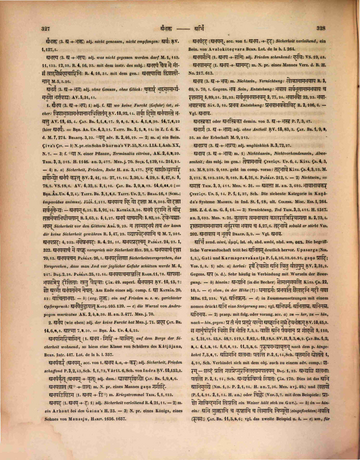
Originaltext · Deutsch · Worttyp nicht bestimmt
abhāva 3〉 SŪRYAS. 7,24. SŪRYAS. 11,3.
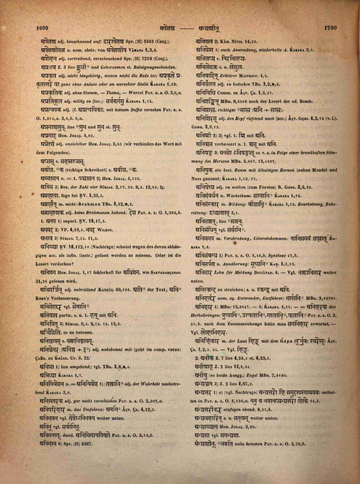
Böhtlingk 1879 Substantiv Maskulin
Originaltext · Deutsch · Substantiv Maskulin
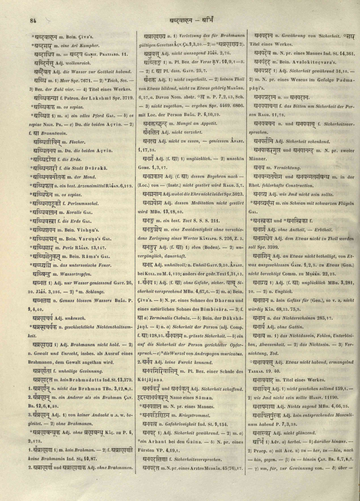
abhāva m. — 1〉 das Nichtdasein, Fehlen, Unterbleiben, Abwesenheit. — 2〉 das Nichtsein. — 3〉 Vernichtung, Tod.
Apte 1890 Adjektiv · Substantiv Maskulin
Originaltext · Englisch · Adjektiv · Substantiv Maskulin
abhāva a. [na. ba.] 1 Without love or affection. 2 Non-existent. — vaḥ 1 Not being or existing, non-existence; gato bhavo'bhāvaṃ Mk. 1 has disappeared. 2 Absence, want, failure; sarveṣāmapyabhāve tu brāhmaṇā rikthabhāginaḥ Ms. 9. 188; mostly in comp.; sarvābhāve harennṛpaḥ Ms. 9. 189 in the absence of all, failing all; toya˚, anna˚, āhāra˚ &c. 3 Annihilation, death, destruction, non-entity; nābhāva upalabdheḥ Ś. B.; Śi. 20. 64; Ki. 18. 10. 4 (In phil.) Privation, non-existence, nullity or negation, supposed to be the seventh category or padārtha in the system of Kaṇāda. Strictly speaking abhāva is not a separate predicament, like dravya, guṇa, but is only a negative arrangement of those predicaments; all nameable things being divided into positive (bhāva) and negative (abhāva), the first division including dravya, guṇa, karma, sāmānya, viśeṣa and samavāya and the second only one abhāva; cf. atra saptamasthābhāvakathanādeva ṣaṇṇāṃ bhāvatvaṃ prāptaṃ ([Page 0126-c]) tena bhāvatvena pṛthagupanyāso na kṛtaḥ Muktā. abhāva is defined as bhāvabhinno'bhāvaḥ ( pratiyogijñānādhīnaviṣayatvaṃ) that whose knowledge is dependent on the knowledge of its pratiyogī. It is of two principal kinds saṃsargābhāva and anyonyābhāva; the first comprising three varieties prāgabhāva, pradhvaṃsābhāva, and atyaṃtābhāva. Comp. — saṃpattiḥ f. false attribution (= adhyāsa q. v.)
Cappeller 1887 Substantiv Maskulin
Originaltext · Deutsch · Substantiv Maskulin
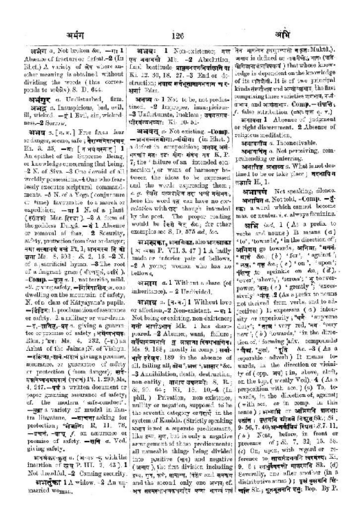
abhāva m. das Nichtdasein, Fehlen, Abwesenheit, Mangel.
Burnouf 1866 Substantiv Maskulin
Originaltext · Französisch · Substantiv Maskulin
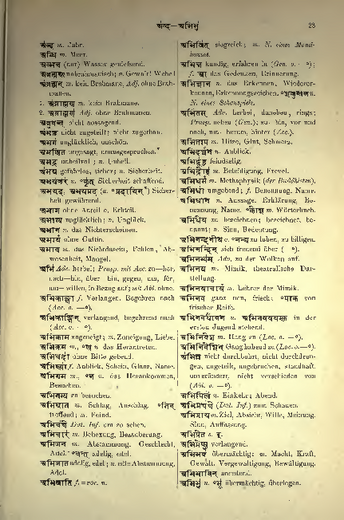
abhava abhava m. et abhāva a. (bhū) qui n'est pas. — S. m. non-existence, néant; destruction, anéantissement; mort.
Quelltextfundstellen (14)
DYS 1 Fundstelle
HP 1 Fundstelle
PYS 6 Fundstellen
PYS 2.23–26: Von Avidyā zu Kaivalya 2 Fundstellen
Direkt belegt
SiSa 1 Fundstelle
SVU 2 Fundstellen
Mit AYI Free weitermachen
Bildquelle: AYI Archiv.