

hasta हस्त – Hand
Adjektiv · Substantiv Maskulin · Substantiv Neutrum
Wörterbuchquellen
AYI Wörterbuch Substantiv Maskulin · Substantiv Neutrum
Substantiv Neutrum
Hand
Cappeller 1891 Substantiv Maskulin
Originaltext · Englisch · Substantiv Maskulin
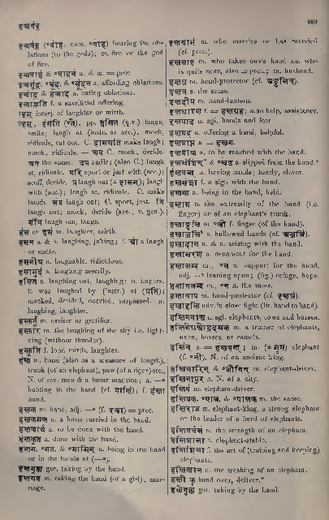
hásta ·m. hand (also as a measure of length), trunk (of an elephant), paw (of a tiger) etc., N. of sev. men & a lunar mansion; a. --° holding in the hand (cf. pāṇí); f. hástā hand.
Monier-Williams 1872 Substantiv Maskulin
Originaltext · Englisch · Substantiv Maskulin
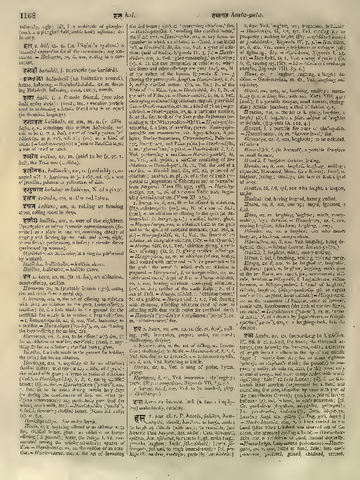
hasta hasta, as, m. (according to Uṇādi-s. III. 86. fr. rt. 1. has), the hand; the thirteenth as- terism, (see below); the fore-arm, cubit; a measure of length from the elbow to the tip of the middle finger (= twenty-four Aṅgulas or about eighteen inches); an elephant's trunk; (in prosody) an ana- pest; quantity, abundance, mass, (in this sense only at end of comps. and when compounded with words signifying ‘hair;’ cf. keśa-hasta); (ā), f. the thir- teenth lunar asterism (represented by a hand and containing five stars, identified by some with part of the constellation Corvus); (am), n. a pair of leather bellows; (e), ind. in hand, in one's possession; [cf. Gr. χανδ-άν-ω (ἔ-χαδ-ον, κέ-χανδ-α, χείσομαι); Lat. pre-hend-o, hed-era (?) ; Goth. bi-git-an, handu; Angl. Sax. gitan (= Eng. get), hand.]
Petersburger 1855 Adjektiv · Substantiv Maskulin · Substantiv Neutrum
Originaltext · Deutsch · Adjektiv · Substantiv Maskulin · Substantiv Neutrum
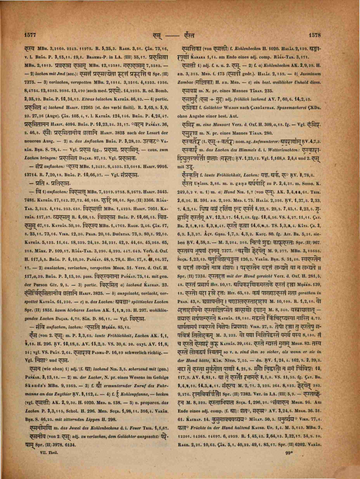
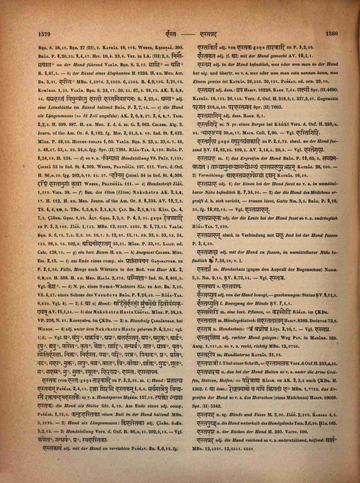
hásta UṆĀDIS. 3,86. m.n. gaṇa ardharcādi zu P. 2,4,31. m. SIDDH. K. 249,b,2 v. u. 1〉 m. a〉 Hand NIR. 1,7 (von han). AK. 3,4,14,61. TRIK. 2,6,26. H. 591. H. an. 2,209. MED. t. 75. HALĀY. 2,356. ṚV. 1,37,3. ṚV. 2,33,7. ṚV. 4,2,14. dhi̱ṣva vajra̱ṃ dakṣìṇa indra̱ hastè ṚV. 6,22,9. ṚV. 6,29,2. ṚV. 7,45,1. ṚV. 8,23,5. gṛ̱hṇāmi̱ hastàm AV. 12,3,17. fgg. AV. 14,1,48. fgg. AV. 18,4,56. VS. 4,27. VS. 11,11. ŚAT. BR. 2,1,2,12. ŚAT. BR. 6,3,1,41. haste kṛtvā ŚAT. BR. 14,6,8,2. TS. 5,3,3,4. KĀTY. ŚR. 3,6,9. KĀTY. ŚR. 5,3,27. ĀŚV. GṚHY. 1,7,5. ĀŚV. GṚHY. 4,3,2. KAUŚ. 80. fg. AIT. BR. 5,21. sieben ṚV. 4,58,3. — M. 3,214. M. 3,216. nityaṃ śuddhaḥ kāruhastaḥ Spr. (II) 967. hastasya bhūṣaṇaṃ dānam Spr. (II) 7377. ˚caraṇau chedayet M. 9,277. MBH. 3,15655. SUŚR. 1,23,13. caturviṃśatyaṅgula SUŚR. 126,2. VARĀH. BṚH. S. 51,40. svahastena ca yaddattaṃ labhyate nātra saṃśayaḥ . parahastena yaddattaṃ labhyate vā na labhyate .. Spr. (II) 7334. hastadatta mit der Hand gereicht Verz. d. Oxf. H. 281,b,48. hastaṃ prasārya HIT. 10,17. adhikaraṇikamastake hastaṃ dattvā MṚCCH. 139,18. hasto yadā ratne dattaḥ HIT. 65,13. kathaṃ pākhaṇḍahastaṃ gatā gerathen in PRAB. 43,8. śvajāghanīm . caṇḍālahastādādāya M. 10,108. R. 1,2,10. yo 'dattādāyino hastāllipseta brāhmaṇo daṇḍam M. 8,340. vastrāñcalāt — jagrāha sarṣapānhaste KATHĀS. 18,181. maddhaste kiṃcidapyasyā nāsti KATHĀS. 4,73. dhāryatāmayaṃ svahaste nikṣepaḥ priyāyāḥ VIKR. 27,3. teṣāṃ dattvā tu hasteṣu sapavitraṃ tilodakam M. 3,223. yo yathā nikṣipeddhaste yamarthaṃ yasya M. 8,180. taṃ ca haste hemaśaraṃ kuru KATHĀS. 39,464. haste nyastaṃ mukham MEGH. 82. tasya haste lokadvayaṃ sthitam so v. a. sind ihm so sicher, als wenn er sie in der Hand hätte, KĀM. NĪTIS. 7,55. — du. ṚV. 1,24,4. ṚV. 1,162,9. ṚV. 2,39,5. bha̱drā te̱ hastā̱ sukṛ̀to̱ta pā̱ṇī ṚV. 4,21,9. sa̱mau ci̱ddhastau̱ na sa̱maṃ vìviṣṭaḥ ṚV. 10,117,9. AV. 6,81,1. ā te̱ hastaù rabhāmahe AV. 8,1,8. VS. 11,55. fg. ŚAT. BR. 9,4,2,10. ŚAT. BR. 14,5,4,11. saṃhatya M. 2,71. M. 3,225. M. 3,264. M. 8,125. chedayet M. 283. M. 9,276. dānavivarjitau Spr. (II) 7382. VET. in LA. (III) 5,9. — hastacchedana M. 8,322. hastābhighāta SUŚR. 1,296,21. ˚saṃvāhana MEGH. 94. Am Ende eines adj. comp. (f. ā): śata˚, sahasra˚ AV. 3,24,5. MEGH. 36. MEGH. 51. MEGH. 61. CAURAP. 14. kusumāvacayavyagra˚ MĀLAV. 50,5. dhanurvyagra˚ VIKR. 77,4. phala˚ Früchte in der Hand haltend KAUṢ. UP. 1,4. M. 5,143. MBH. 3,12201. MBH. 3,14365. MBH. 3,14697. MBH. 6,4959. R. 1,45,42. R. 2,64,13. R. 3,32,17. R. 3,54,9. R. 3,32,10. RAGH. 2,21. RAGH. 10,63. ŚĀK. 5,1. ŚĀK. 40,22. ŚĀK. 49,1. ŚĀK. 85,17. Spr. (II) 6202. VARĀH. BṚH. S. 58,40. BṚH. 27 (25), 3. KATHĀS. 18,116. WEBER, KṚṢṆAJ. 300. BHĀG. P. 8,20,25. BHĀG. P. 9,4,47. HIT. 10,8. HIT. 23,6. VET. in LA. (III) 2,3. nirmāṃsabāla˚ an der Hand führend VARĀH. BṚH. S. 3,13. sāsi˚ = asi˚ R. 5,87,5. — b〉 der Rüssel eines Elephanten H. 1224. H. an. MED. AIT. BR. 5,31. hasti˚ MBH. 1,5970. MBH. 3,2669. MBH. 6,4382. R. 4,9,106. R. 5,21,15. KUMĀRAS. 1,36. VARĀH. BṚH. S. 24,17. VARĀH. BṚH. S. 50,24. VARĀH. BṚH. S. 67,3. VARĀH. BṚH. S. 94,12. AK. 3,4,1,16. agrahastaṃ vidhunvaṃstu hastī hastamivātmanaḥ R. 2,23,4. abja˚ adj. eine Lotusblüthe im Rüssel haltend BHĀG. P. 2,7,15. — c〉 die Hand als Längenmaass (= 18 Zoll ungefähr) AK. 2,6,2,37. AK. 3,4,1,7. TRIK. 2,2,3. H. 599. H. 887. H. an. MED. Z. d. d. m. G. 9,665. COLEBR. Alg. 2. Journ. of the Am. Or. S. 6,182. fg. MIT. 2,41,b,8. MIT. 2,41,b,10. Ind. St. 8,432. MĀRK. P. 49,39. HIOUEN-THSANG 1,60. VARĀH. BṚH. S. 23,2. VARĀH. BṚH. S. 33,6. VARĀH. BṚH. S. 33,7. VARĀH. BṚH. S. 44,3. VARĀH. BṚH. S. 48,47. VARĀH. BṚH. S. 53,4. VARĀH. BṚH. S. 53,92. VARĀH. BṚH. S. 54,6. fgg. Spr. (II) 7381. RĀJA-TAR. 4,199. BHĀG. P. 8,24,19. H. 134. — d〉 so v. a. ˚vinyāsa Handstellung VS. PRĀT. 1,121. ŚIKṢĀ 55_in_Ind. St. 4,369. WEBER, PRATIJÑĀS. 107. WEBER, PRATIJÑĀS. 111. Verz. d. Oxf. H. 86,a,20. fgg. Verz. d. Oxf. H. 202,b,19. Verz. d. Oxf. H. 202,b,24. fgg. Verz. d. Oxf. H. 202,b,27. ˚hīnam ŚIKṢĀ 54_in_Ind. St. 4,368. dṛṣṭiṃ hastānugāṃ kṛtvā WEBER, PRATIJÑĀS. 111. — e〉 Handschrift YĀJÑ. 1,319. VIKR. 38. — f〉 Bez. des 11ten (13ten) Nakṣatra AK. 3,4,1,17. H. 112. H. an. MED. Journ. of the Am. Or. S. 6,334. AV. 19,7,3. TS. 4,4,10,2. TBR. 1,5,2,2. TBR. 3,1,1,9. ŚAT. BR. 2,1,2,12. KĀTY. ŚR. 4,7,3. ŚĀṄKH. GṚHY. 1,26. ĀŚV. GṚHY. 3,5,3. P. 4,3,34. gaṇa devapathādi zu P. 5,3,100. YĀJÑ. 1,142. MBH. 13,3267. MBH. 13,4260. R. 5,73,15. VARĀH. BṚH. S. 6,12. VARĀH. BṚH. S. 7,4. VARĀH. BṚH. S. 9,3. VARĀH. BṚH. S. 9,30. VARĀH. BṚH. S. 10,1. VARĀH. BṚH. S. 10,9. VARĀH. BṚH. S. 12,21. VARĀH. BṚH. S. 15,11. VARĀH. BṚH. S. 15,29. VARĀH. BṚH. S. 23,6. VARĀH. BṚH. S. 53,52. VARĀH. BṚH. S. 54,123. VARĀH. BṚH. S. 98,9. VARĀH. BṚH. S. 98,15. VARĀH. BṚH. S. 102,3. aśvinīhastam VARĀH. BṚH. S. 55,31. MĀRK. P. 33,11. LALIT. ed. Calc. 138,11. — g〉 ein best. Baum H. an. — h〉 Anapaest COLEBR. Misc. Ess. 2,15. — i〉 am Ende eines comp. als praśaṃsāvacana GAṆARATNAM._zu_P. 2,1,66. Fülle Menge nach Wörtern in der Bed. von Haar AK. 2,6,2,49. H. 568. H. an. MED. HALĀY. 2,376. dhammilla˚ Ind. St. 8,401,5. Vgl. keśa˚. — k〉 N. pr. eines Soma — Wächters SĀY._zu_AIT. BR. 3,26. VS. 4,27. eines Sohnes des Vasudeva BHĀG. P. 9,24,48. — RĀJA-TAR. 8,650. Vgl. 4〉. — 2〉 f. ā a〉 Hand: adìte̱rhastā̱ṃ srùcame̱tāṃ dvi̱tīyā̀makṛṇvan AV. 11,1,24. — b〉 das Nakṣatra Hasta UJJVAL. MĀRK. P. 58,29. VP. 226, N. 21. KOṢṬHĪPR._im_ŚKDR. — 3〉 n. Blasebalg ŚABDĀRTHAK._bei_WILSON. — 4〉 adj. unter dem Nakṣatra Hasta geboren P. 4,3,34; vgl. 1〉k〉. — Vgl. a˚, aṃśu˚, akravi˚, agra˚, antarhastam, apa˚, amukta˚, ārdra˚, iṣu˚, ṛju˚, kapota˚, kṛta˚, keśa˚, khādi˚, gandharva˚, gala˚, grāva˚, ghṛta˚, jyotirhastā, nikta˚, nirhasta, pañca˚, pari˚, pātra˚, pināka˚, pra˚, prati˚, bhadra˚, mahā˚, mukta˚, laghu˚, vajra˚, vāla˚, vi˚, vīṇā˚, śakti˚, śuddha˚, śūla˚, sa˚, sahasra˚, su˚, sukha˚, sthūla˚, hiraṇya˚, hāsta, hāstāyana.
Böhtlingk 1879 Adjektiv · Substantiv Maskulin · Substantiv Neutrum
Originaltext · Deutsch · Adjektiv · Substantiv Maskulin · Substantiv Neutrum
hásta — 1〉 m. (adj. Comp. f. ā) — a〉 Hand. tasya haste lokadvayaṃ sthitam so v. a. die zwei Welten sind ihm so sicher, als wenn er sie in der Hand hätte. haste kar in die Hand nehmen (nicht componirt), auch so v. a. in seine Gewalt bringen (HARṢAC. 123,17) und heirathen (componirt) ein Mädchen BHAṬṬ. 5,16. śatruhastaṃ gam so v. a. in die Gewalt des Feindes gerathen R. 7,30,32. Vgl. KĀD. 2,100,24 (124,1). Am Ende eines adj. Comp. nach einem Subst. — in der Hand haltend, — an der Hand führend. — b〉 Elephantenrüssel. Am Ende eines adj. Comp. — im Rüssel haltend. — c〉 die Hand als Längenmaass, ungefähr 48 Zoll HEMĀDRI 1,188,15. fgg. 190,1. AŚVAV. 3,183. — d〉 Handstellung. — e〉 Handschrift. — f〉 das 11te (15te) Mondhaus VĀSAV. 235,2. — g〉 *ein best. Baum. — h〉 Anapaest. — i〉 am Ende eines Comp. nach Wörtern in der Bed. von Haar so v. a. Fülle, Menge. — k〉 N. pr. — α〉 eines Soma-Wächters. — β〉 eines Sohnes des Vasudeva und einer anderen Person. — 2〉 f. hástā — a〉 Hand. — b〉 das Mondhaus hasta. — 3〉 *n. Blasebalg. — 4〉 *Adj. unter dem Mondhaus Hasta geboren.
Apte 1890 Substantiv Maskulin · Substantiv Neutrum
Originaltext · Englisch · Substantiv Maskulin · Substantiv Neutrum
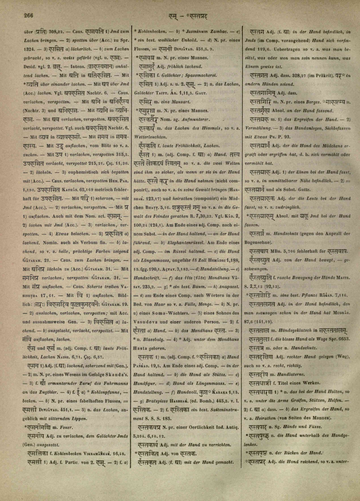
hastaḥ [has-tan na iṭ Uṇ. 3. 86] 1 The hand; hastaṃ gata ‘fallen in the hand or possession of’, gautamīhaste visarjayiṣyāmi Ś. 3 ‘I shall send it by Gautamī’; so haste patitā; hastasaṃnihitāṃ kuru &c.; śaṃbhunā dattahastā Me. 60 ‘leaning on Śambhu's hand’; haste-kṛ 1 (hastekṛtya-kṛtvā) ‘to take or seize by the hand, take hold of the hand, take in hand, take possession of’; Prov.: -hastakaṃkaṇaṃ kiṃ darpaṇe prekṣyate Karpūr. ‘sight requires no mirror’. 2 The trunk of an elephant; Ku. 1. 36. 3 N. of the 13th lunar mansion consisting of five stars. 4 The fore-arm, cubit, a measure of length (equal to 24 angulas or about 18 inches, being the distance between the elbow and the tip of the middle finger). 5 Hand-writing, signature; dhanī vopagataṃ dadyāt svahastaparicihnitaṃ Y. 1. 319; svahastakālasaṃpannaṃ śāsanaṃ Y. 1. 320 ‘bearing date and signature’; dhāryatāmayaṃ priyāyāḥ svahastaḥ V. 2. ‘the autograph of my beloved’; V. 2. 20. 6 (Hence fig.) Proof, indication; Mu. 3. 7 Help, assistance, support; vātyā khedaṃ kṛśāṃgyāḥ suciramavayavairdattahastā karoti Ve. 2. 21. 8 A mass, quantity, abundance (of hair), in comp. ([Page 1168-c]) with keśa, kaca &c.; pāśaḥ pakṣaśca hastaśca kalāpārthāḥ kacātpare Ak.; rativigalitabaṃdhe keśahaste sukeśyāḥ sati kusumasanāthe kaṃ haredeṣa barhaḥ V. 4. 10. — staṃ A pair of leather-bellows. Comp. — akṣaraṃ one's own hand or signature, one's own sign-manual. — agraṃ the finger (being the extremity of the hand). — aṃguli f. any finger of the hand. — abhyāsaḥ contact with the hand. — avalaṃbaḥ, -ālaṃbanaṃ support of the hand; dattahastāvalaṃbe prāraṃbhe Ratn. 1. 8 ‘being aided or helped on’. — āmalakaṃ ‘the fruit of the myrobalan held in the hand’, a phrase used to denote that which can be clearly and easily seen or understood; cf. karatalāmalakaphalavadakhilaṃ jagadālokayatāṃ K. 43. — āvāpaḥ a finger-guard (jyāghātavāraṇaṃ); V. 5, Ś. 6. — kamalaṃ 1 a lotus carried in the hand. 2 a lotus-like hand. — kauśalaṃ manual dexterity. — kriyā manual work or performance, handicraft. — gata, — gāmin a. come to hand, fallen into one's possession, obtained, secured; tvaṃ prārthyase hastagatā mamaubhiḥ R. 7. 67, R. 8. 1. — grāhaḥ taking by the hand. — cāpalyaṃ = hastakauśala q. v. — talaṃ 1 the palm of the hand. 2 the tip of an elephant's trunk. — tālaḥ striking the palms together, clapping the hands. — tulā ‘hand-balance’, weighing in the hand; Pt. 2. 79. — doṣaḥ a slip of the hand. — dhāraṇaṃ -vāraṇaṃ warding off a blow (with the hand). — pādaṃ the hands and feet; na me hastapādaṃ prasarati Ś. 4. — pucchaṃ the hand below the wrist. — pṛṣṭhaṃ the back of the hand. — prāpta, — vartin, -stha, -sthita a. 1 held in the hand. 2 gained, secured. — prāpya a. easily accessible to the hand; that can be reached with the hand, hastaprāpyastabakana mito bālamaṃdāravṛkṣaḥ Me. 75. — biṃbaṃ perfuming the body with unguents. — moṇaḥ a jewel worn on the wrist. — lāghavaṃ 1 manual readiness or skill. 2 a sleight of the hand, legerdemain. — saṃvāhanaṃ rubbing or shampooing with the hands; Me. 96. — siddhiḥ f. 1 manual labour, doing with the hands. 2 hire, wages. — sūtraṃ a bracelet or thread-string worn on the wrist; Ku. 7. 25.
Cappeller 1887 Substantiv Maskulin
Originaltext · Deutsch · Substantiv Maskulin
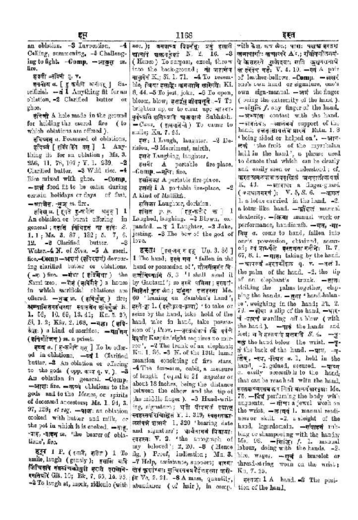
hásta m. Hand (auch als Längenmaß), Rüssel (des Elefanten); adj. —˚ in der Hand haltend.
Burnouf 1866 Substantiv Maskulin
Originaltext · Französisch · Substantiv Maskulin
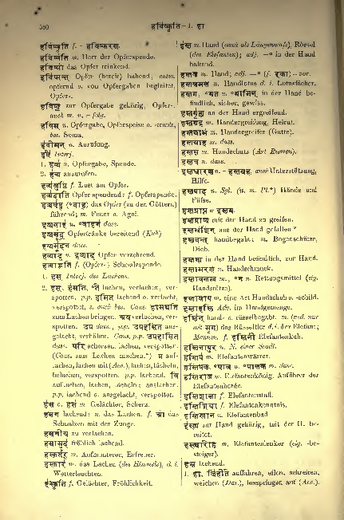
hasta hasta m. main; coudée [du coude au bout du doigt du milieu]. Trompe d'éléphant. Le 13ᵉ astérisme lunaire, contenant γ et δ du Corbeau. Abondance de cheveux. — N. soufflet à souffler le feu. hastadhāraṇa n. (dhṛ) action de parer un coup, de résister à une attaque. hastapuccha n. la main au-dessous du poignet. hastavimba n. action de parfumer qqn. hastasūtra n. bracelet de poignet.
Abgeleitete Wörter
Quelltextfundstellen (14)
AsFu 1 Fundstelle
AsS1 1 Fundstelle
Utthita Hasta Pādāṅguṣṭhāsana A 1 Fundstelle
Direkt belegt
-
AsS1 UtthitaHastaPadangushthasana Segment 2
Utthita Hasta Pādāṅguṣṭhāsana B 1 Fundstelle
Direkt belegt
-
AsS1 UtthitaHastaPadangushthasana Segment 2
DYS 3 Fundstellen
GoS 1 Fundstelle
HP 2 Fundstellen
PYS 1 Fundstelle
SiSa 2 Fundstellen
SVU 1 Fundstelle
Mit AYI Free weitermachen
Bildquelle: AYI Archiv.