

candra चन्द्र – moon
adjective · adverb · substantive feminine · substantive masculine · substantive neuter · Word type unspecified
Dictionary sources
AYI dictionary substantive masculine
Cappeller 1891 adjective
Original text · English · adjective
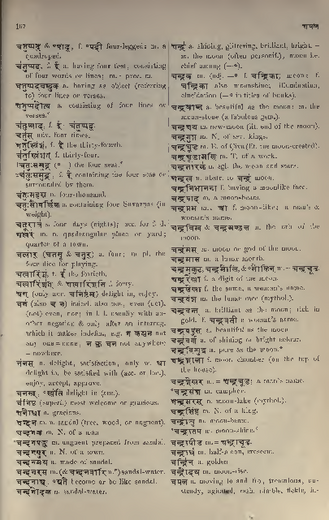
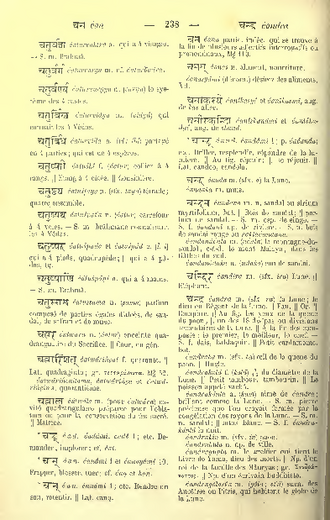
candrá ·a. shining, glittering, brilliant, bright. -- m. the moon (often personif.), moon i.e. chief among (--°).
Monier-Williams 1872 adjective
Original text · English · adjective
Candra, as, ā, am (originally ścandra; cf. aśva- ścandra, puru-śc˚, &c.), Ved. glittering, shining (as gold), having the brilliancy or hue of light; (as), m. the moon (regarded as a planet), the moon personified or regarded as a deity; any eminent or illustrious person (at end of comp., e. g. puruṣa- candra, a moon of men, an excellent or eminent man, the moon being regarded as the most beautiful of the planets); a lovely or agreeable phenomenon of any kind, anything which gives pleasure; a spot similar to the moon; the eye in a peacock's tail; the symbol or mark of the Visarga; gold; a reddish kind of pearl; water; camphor; a particular plant, = kāmpilla; N. of a metre consisting of four lines of nineteen syllables each; N. of a Daitya, = Can- dra-varman, king of the Kāmbojas; also of a son of Viśva-gandhi and father of Yuvanāśva; N. of a grammarian; of a king; of one of the ancestors of the Gauḍa Brāhmans, and of several other men; one of the eighteen minor Dvīpas or divisions of the known continent; N. of one of the principal branches of the river Candra-bhāgā; N. of a mountain; (ā), f. a hall covered only at the top; an awning, a canopy; small cardamoms; Cocculus Cordifolius, = guḍūcī; (ī), f. Serratula Anthelmintica, = vākucī; (am), n. gold; a kind of sour rice-gruel, = cukra; N. of a Sāman; [cf. ardha-candra.]
Petersburger 1855 adjective · adverb · substantive masculine · substantive neuter · Word type unspecified
Original text · German · adjective · substantive masculine · substantive neuter
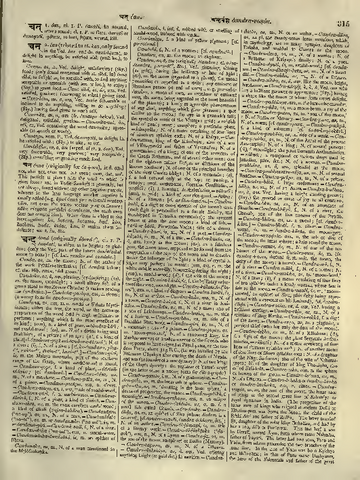
candrá (von cand) Uṇ. 2,13. 1〉 adj. f. ā; die vollständigere Form ścandrá findet sich ṚV. 3,31,15. ṚV. 4,2,13. ṚV. 8,54,11 und in den compp. aśvaścandra, puru˚, viśva˚, su˚, sva˚, hari˚; vgl. ṚV. PRĀT. 4,37. schimmernd, lichtfarbig (die Farbe des Goldes): hiraṇya ṚV. 8,54,11. ṚV. 9,97,50. ṚV. 10,107,7. a̱gne retàśca̱ndraṃ hiràṇyam TBR. 1,2,1,4. bhānu ṚV. 1,48,9. Uṣas ṚV. 1,157,1. Agni ṚV. 3,3,5. die Āditya ṚV. 7,62,3. andere Götter ṚV. 8,20,20. ṚV. 8,4,9. vasū̀ni ṚV. 5,42,3. ṚV. 9,69,10. ca̱ndraṃ ra̱yiṃ pùru̱vīràṃ bṛ̱hanta̱ṃ candrà ca̱ndrābhìrgṛṇa̱te yùvasya ṚV. 6,6,7. ratna ṚV. 4,2,13. vahatu ṚV. 10,85,21. ratha ṚV. 4,48,1. Wasser: yaścā̱paśca̱ndrā bṛ̀ha̱tīrja̱jānà ṚV. 10,121,9. yannakta̱ṃ bhavàtya̱po 'ha̱ḥ pravìśati̱ tasmā̀cca̱ndrā āpo̱ naktàṃ dadṛśre TS. 6,4,2,4. Soma ṚV. 3,40,4. agne̱ yattè śu̱kraṃ yacca̱ndram VS. 12,104. VS. 4,18. VS. 4,21. VS. 8,43. — 2〉 m. a〉 der Mond, der Mondgott AK. 1,1,2,15. TRIK. 3,3,348. H. 105. H. an. 2,417. MED. r. 31. AV. 2,15,2. AV. 2,22,1. AV. 3,31,6 u. s. w. VS. 22,28. VS. 39,2. ŚAT. BR. 6,2,2,16. ŚAT. BR. 14,4,1,20. ŚAT. BR. 14,4,3,20. ŚAT. BR. 14,5,1,3. ˚tārakám ŚAT. BR. 14,6,7,13. ˚lokā́ḥ ŚAT. BR. 14,6,6,1. pūrṇa˚ R. 5,18,26. N. 16,22. paripūrṇa M. 9,309. ˚kṣaya M. 3,122. na hi saṃharate jyotsnāṃ candraścaṇḍālaveśmani HIT. I, 55. Personif. M. 7,4. M. 8,86. M. 9,303. candrasyaiti salokatām M. 11,220. ˚sālokya M. 4,231. Lot. de la b. l. 2. LALIT. 52 u. s. w. Gehört zu den Jyotiṣka H. 92. Am Ende eines adj. comp. f. āḥ naṣṭacandrā yathā rātriḥ MBH. 9,221. MṚCCH. 65,4. hīnacandreva rajanī R. 2,76,9. R. 3,52,18. KUMĀRAS. 7,26. PRAB. 7,6. GĪT. 7,15. — b〉 der Mond als schönstes Gestirn bezeichnet in der Zusammensetzung das Vorzüglichste seiner Art: pārthivacandra gaṇa vyāghrādi zu P. 2,1,56. — c〉 eine liebliche, erfreuliche Erscheinung H. an. VYĀḌI_bei_BHAR._zu_AK. ŚKDR. — d〉 ein mondähnlicher Fleck: daśacandramasim — śatacandram BHĀG. P. 4,15,17. — e〉 das Auge im Pfauenschweife (vgl. candraka) H. an. — f〉 das Visarga-Zeichen ŚKDR. nach einem TANTRA. — g〉 Gold (vgl. n.) AK. 3,4,25,184. H. an. MED. — h〉 eine röthliche Perle VYĀḌI_bei_BHAR._zu_AK. ŚKDR. — i〉 Wasser H. an. MED. — k〉 Kampfer AK. 2,6,3,32. TRIK. H. 643. H. an. MED. — l〉 eine best. Pflanze, = kāmpilla AK. 2,4,5,12. H. an. MED. — m〉 N. eines Metrums (4 Mal ⏑ ⏑ ⏑ ⏑ ⏑ ⏑ ⏑ ⏑ ⏑ ⏑, – ⏑ ⏑ ⏑ ⏑ ⏑ ⏑ ⏑ ⏑) COLEBR. Misc. Ess. II, 163 (COLEBR. Misc. Ess. XIV, 11). — n〉 N. pr. eines Daitya (ident. mit Candravarman, König der Kāmboja; vgl. candramas) MBH. 1,2667. eines Sohnes des Viśvagandhi und Vaters des Yuvanāśva BHĀG. P. 9,6,20. eines Grammatikers (vgl. candragomin) COLEBR. Misc. Ess. II, 6. COLEBR. Misc. Ess. II,20. COLEBR. Misc. Ess. II,39. COLEBR. Misc. Ess. II,48. BÖHTL. in der Einl. zu P. II, xv. fgg. WEST. in der praef. zu den Radd. III. fg. ˚vyākaraṇa WASSILJEW 208. RĀJA-TAR. 1,176. verschiedener Männer RĀJA-TAR. 6,350. RĀJA-TAR. 7,97. RĀJA-TAR. 7,358. RĀJA-TAR. 7,1351. eines Königs PAÑCAT. V, 61. PAÑCAT. V,253,10. eines der Stammväter der Gauḍa- Brahmanen COLEBR. Misc. Ess. II, 188. = candragupta LIA. II, 202. — o〉 N. pr. eines Dvīpa ŚABDAM._im_ŚKDR. TROYER_in_RĀJA-TAR. II, 314. — p〉 N. pr. eines Flusses, des einen Hauptarmes der Candrabhāgā LIA. I, Anh. XLI. — q〉 N. pr. eines Berges R. 6,26,6. ˚parvata R. 6,2,37. — 3〉 f. candrā a〉 eine nur von oben gedeckte Halle ŚABDAR._im_ŚKDR. — b〉 Kardamomen ebend. — c〉 Cocculus cordifolius Dec. (guḍūcī) ŚKDR. (iti kecit). — 4〉 f. candrī Serratula anthelminthica Roxb. (vākucī) RĀJAN._im_ŚKDR. — 5〉 n. a〉 Gold NAIGH. 1,2. H. 1044. RĀJAN._im_ŚKDR. tamu̱kṣamā̀ṇa̱ṃ rajàsi̱ sva ā damè ca̱ndramìva su̱rucàṃ hvā̱ra ā dàdhuḥ ṚV. 2,2,4. ṚV. 3,31,15. sīsàṃ kravyā̱dapì ca̱ndraṃ tà āhuḥ AV. 12,2,53. ca̱ndraṃ (somaṃ) ca̱ndreṇà (krīṇāmi) VS. 4,26. VS. 19,93. ŚAT. BR. 3,3,3,4. KĀTY. ŚR. 7,8,15. PAÑCAV. BR. 6,6. — b〉 eine Art saurer Reisschleim (cukra) RĀJAN._im_ŚKDR. — c〉 N. eines Sāman KĀTY. ŚR. 26,4,1. LĀṬY. 1,6,24. Ind. St. 3,216. — Vgl. ardhacandra.
Original text · German · adverb
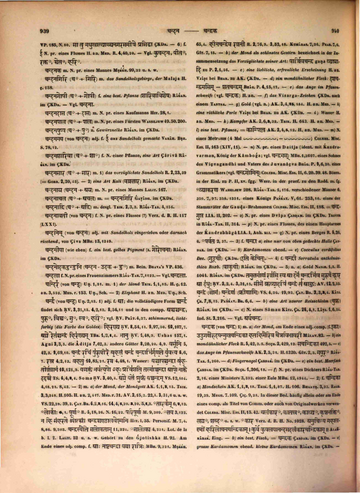
candra 1〉 candrataram adv. lieblicher: strī naktaṃ candrataraṃ vadati KĀṬH. 30,1. — 2〉a〉 der Mond als Bez. der Zahl Eins SŪRYAS. 1,43. SŪRYAS. 2,21. — n〉 ein Sohn Kṛṣṇaʼs BHĀG. P. 10,61,13. Z. 7 streiche 1351. — 5〉a〉 HALĀY. 2,18. hierher etwa auch ṚV. 3,61,7.
Original text · German · Word type unspecified
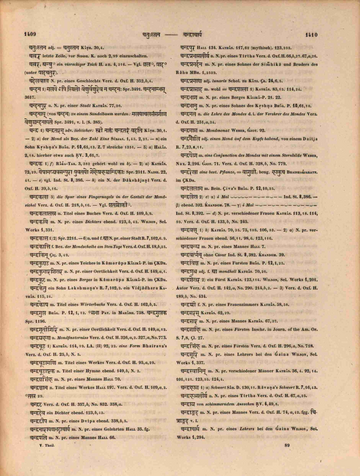
candrá [vgl. [2:940]] Z. 19 steiche {1351}. (revision)

Böhtlingk 1879 adjective · substantive feminine · substantive masculine · substantive neuter
Original text · German · adjective · substantive masculine · substantive neuter
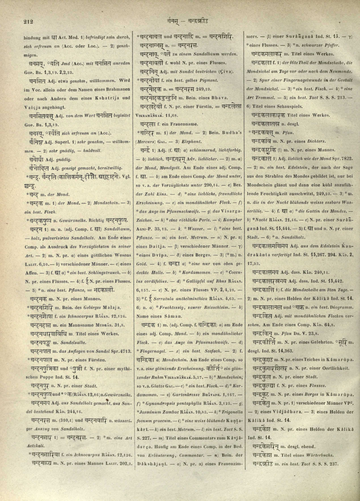
candrá — 1〉 Adj. (f. ā) — a〉 schimmernd, lichtfarbig. — b〉 lieblich. candrataram Adv. lieblicher. — 2〉 m. — a〉 der Mond, Mondgott Am Ende eines adj. Comp. f. ā. — b〉 am Ende eines Comp. der Mond unter, so v. a. der Vorzüglichste unter Chr. 290,14. — c〉 Bez. der Zahl Eins. — d〉 *eine liebliche, freundliche Erscheinung. — e〉 ein mondähnlicher Fleck. — f〉 *das Auge im Pfauenschweife. — g〉 das Visarga-Zeichen. — h〉 *eine röthliche Perle. — i〉 Kampher AGNI-P. 35,15. — k〉 *Wasser. — l〉 *eine best. Pflanze. — m〉 ein best. Metrum. — n〉 N. pr. — α〉 eines Daitya. — β〉 verschiedener Männer. — γ〉 *eines Dvīpa. — δ〉 eines Berges. — 3〉 (*m.) n. Gold. — 4〉 f. candrā — a〉 *eine nur von oben gedeckte Halle. — b〉 *Kardamomen. — c〉 *Cocculus cordifolius. — d〉 *Galläpfel auf Rhus RĀJAN. 6,157. — e〉 N. pr. eines Flusses VP. 2,4,28. — 5〉 *f. ī Serratula anthelmintica RĀJAN. 4,63. — 6〉 n. — a〉 *Fruchtessig, saurer Reisschleim. — b〉 Name eines Sāman.
Original text · German · substantive feminine
candra , f. candrī II. desgl. ebend. [Nachtrag, Band 7]
Cappeller 1887 Word type unspecified
Original text · German · Word type unspecified
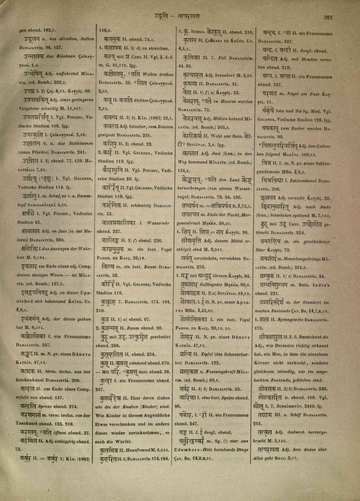
candrá glänzend, licht, lieblich, freundlich; m. Mond, Gott des Mondes; Mond (d. h. vorzüglichster) unter (—˚).
Burnouf 1866 substantive masculine
Original text · French · substantive masculine
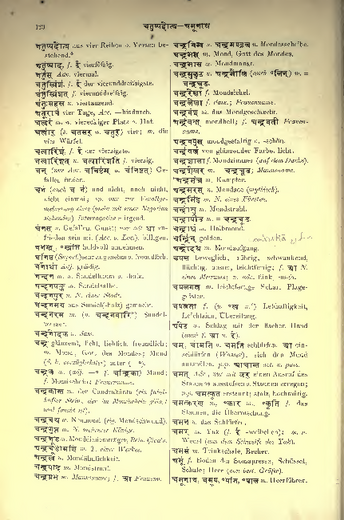
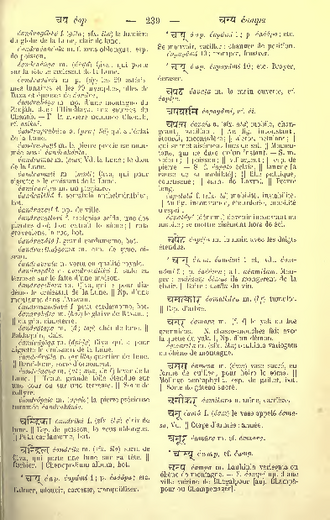
candra candra m. (sfx. ra) la Lune; le dieu ou Régent de la Lune. Eau. Or. Camphre. Au fig. les yeux de la queue du paon; un des 18 dvīpas ou divisions secondaires de la terre. A la fin des composés: le premier, le meilleur, le chef. — S. f. dais, baldaquin. Petit cardamome, bot. candraka m. (sfx. ka) œil de la queue du paon. Ongle. candrakalā f. (kalā) 1/16 du diamètre de la Lune. Petit tambour, tambourin. Le poisson appelé vacā. candrakānta a. (kam) aimé de candra; brillant comme la Lune. — S. m. pierre précieuse que l'on croyait formée par la congélation des rayons de la Lune. — S. m. n. sandal; lotus blanc. — S. f. candrakāntā la nuit. candrakin m. (sfx. in) paon. candrakula n. np. de ville. candragupta m. le greffier qui tient le Livre de Yama, dieu des morts. Np. d'un roi de la famille des Mauryas; gr. Σανδράϰοττος. Np. d'un écrivain buddhiste. candragolastha m. (gola; sthā) surn. des Ancètres ou Pitris, qui habitent le globe de la Lune. [Page239-1] candragolikā f. (gola; sfx. ika) la lumière du globe de la Lune, clair de lune. candracañcala m. f. zeus oblongus, esp. de poisson. candracūḍa m. (cūḍā) Śiva, qui porte sur la tête le croissant de la Lune. candradārās m. pl. (dṛ) les 29 astérismes lunaires et les 29 nymphes, filles de Dakṣa et épouses de candra. candrabhāga m. np. d'une montagne du Panjâb, dans l'Himālaya, aux sources du Chenab. — F. la rivière nommée Chenab, cf. asiknī. candraprabhāva a. (pra; bhā) qui a l'éclat de la Lune. candramaṇi m. la pierre précieuse nommée aussi candrakānta. candramas m. (mas) Vd. la Lune; le dieu de la Lune. candramauli m. (mauli) Śiva, qui pour aigrette a le croissant de la Lune. candrareṇu m. un plagiaire. candralekhā f. serratula anthelminthica, bot. candravatī f. np. de ville. candravallarī f. asclepias acida, une des plantes d'où l'on extrait le soma; ruta graveolens, la rue, bot. candravālā f. grand cardamome, bot. candravihaṅgama m. esp. de grue, oiseau. candravrata n. vertu ou qualité royale. candraśālā et candraśālikā f. salle en terrasse sur le faîte d'une maison. candraśekhara m. Śiva, qui a pour diadême le croissant de la Lune. Np. d'une montagne dans l'Aracan. candrasambhavā f. petit cardamome, bot. candrahāsa m. (has) le glaive de Rāvaṇa; en gén. cimeterre. candrātapa m. (ā; tap) clair de lune. Baldaquin, dais. candrāpīḍa m. (āpiḍa) Śiva qui a pour aigrette le croissant de la Lune. candrārddha n. (arddha) quartier de lune. Demi-lune, sorte d'ornement. candrodaya m. (ul; aya, de i) lever de la Lune. Tente, grande toile étendue sur une cour ou sur une terrasse. Sorte de collyre. candropala m. (upala) la pierre précieuse nommée candrakānta.
Occurrences in source texts (34)
DYS 1 occurrence
GoS 1 occurrence
HP 14 occurrences
HP 3.33-3.48*1: Khecarī and Soma 2 occurrences
Direct occurrences
HP 4.9-4.11*4: Gaze and Lunar Nectar 3 occurrences
Direct occurrences
3 more source pages
HTK 1 occurrence
HTK 10.26–29*1: Cakra, Śaṅkha, Vāmāvartta, Vartmagati and Gadā 1 occurrence
Direct occurrences
-
HTK 10.27 Segment 11
PYS 1 occurrence
SiSa 13 occurrences
SiSa 4.1-4.8: Yonimudrā-Kreislauf 2 occurrences
Direct occurrences
4 more source pages
SiSa 5.182-5.190: Sahasrāra-Mond 2 occurrences
Direct occurrences
-
SiSa 5.182 Segment 12
-
SiSa 5.184 Segment 13
SVU 1 occurrence
Continue with AYI Free
Image source: AYI archive.