

divya दिव्य – subtle; superhuman; divine
adjective · substantive masculine · substantive neuter · Word type unspecified
Dictionary sources
AYI dictionary adjective
subtle; superhuman; divine
Cappeller 1891 adjective
Original text · English · adjective
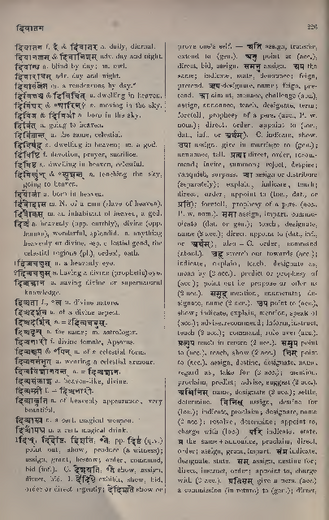
divyá ·a. heavenly (opp. earthly), divine (opp. human), wonderful, splendid. n. anything heavenly or divine, esp. celestial good, the celestial regions (pl.), ordeal, oath.
Monier-Williams 1872 adjective · Word type unspecified
Original text · English · adjective
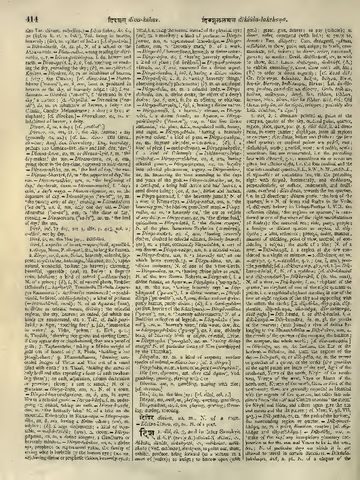
2. divya, as, ā, am, divine, heavenly, celestial, (op- posed to pārthiva, kṣamya, bhauma, &c.); super- natural, wonderful, brilliant (as heaven); charming, beautiful, agreeable; (as), m. barley; a fragrant resin, bdellium; a kind of animal (= dhanvina); N. of a prince; (ā), f., N. of several plants, Emblica Officinalis (= harītakī), Terminalia Chebula, Aspara- gus Racemosus (= śatāvarī); cumin-seed (= mahā- medā, brāhmī, sthūla-jīraka); a kind of perfume (= śveta-dūrvā, surā); N. of an Apsaras; (am), n. divine or celestial nature, divinity; the celestial regions, the sky, heaven; an ordeal, (of which ten kinds are enumerated, viz. 1. Tulā, cf. tulā-parī- kṣā; 2. Agni, ‘touching fire;’ 3. Jala, ‘immersion in water;’ 4. Viṣa, ‘poison;’ 5. Kośa, q. v.; 6. Taṇḍula, ‘chewing rice-grains and ejecting them,’ if they appear dry or blood-stained, they are a proof of guilt; 7. Tapta-māṣa, ‘taking a Māṣa weight of gold out of heated oil;’ 8. Phāla, ‘holding a hot plough-share;’ 9. Dharmādharma, ‘drawing con- cealed images of Virtue and Vice out of a vessel filled with earth;’ 10. Tulasī, ‘holding the leaves of holy basil and after repeating a form of oath swallow- ing them’); an oath, adjuration, solemn declaration or promise; cloves; a sort of sandal; N. of a grammar.
Original text · English · Word type unspecified
1. divya, Nom. P. divyati, &c., to long for heaven.
Petersburger 1855 adjective · substantive masculine · substantive neuter · Word type unspecified
Original text · German · adjective · substantive masculine · substantive neuter
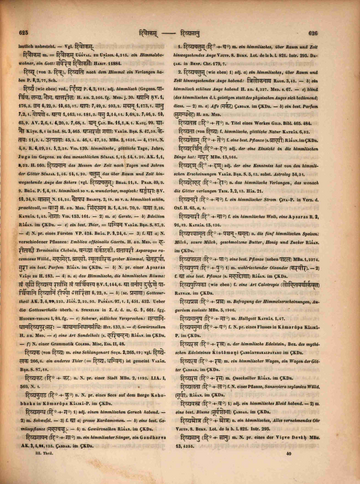
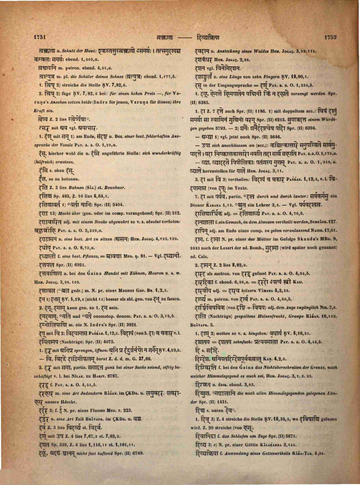
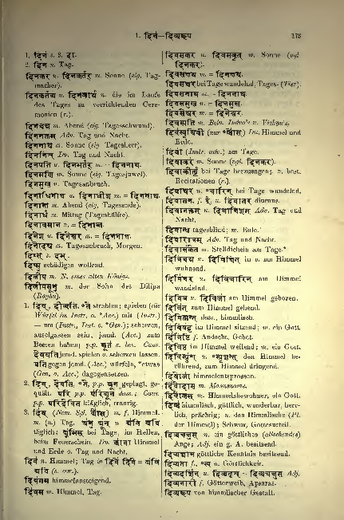
divyá (wie eben) ved., dívya P. 4,2,101. adj. himmlisch (Gegens. pārthiva, kṣamya, bhauma, āntarīkṣa) H. an. 2,366. fg. MED. y. 30. aśani ṚV. 1,176,3. jana ṚV. 6,22,9. ṚV. 10,63,17. āpaḥ ṚV. 7,49,2. ṚV. 7,103,2. sadman ṚV. 1,173,1. sānu ṚV. 7,2,1. yoṣaṇe ṚV. 7,2,6. atya ṚV. 1,163,10. ṚV. 1,181,2. vasu ṚV. 2,14,11. ṚV. 5,68,2. ṚV. 7,46,2. ṚV. 10,65,9. AV. 2,6,1. AV. 4,20,3. AV. 7,68,1. śvan ŚAT. BR. 11,1,5,1. KAUŚ. 99. śvānau KĀṬH. 8,1_in_Ind. St. 3,465. apsarasāṃ gaṇāḥ VARĀH. BṚH. S. 47,58. ketavaḥ VARĀH. BṚH. S. 11,2. VARĀH. BṚH. S. 11,4. utpātāḥ VARĀH. BṚH. S. 45,2. VARĀH. BṚH. S. 45,4. VARĀH. BṚH. S. 46,1. VARĀH. BṚH. S. 47,53. MBH. 2,1636. — MBH. 4,1701. N. 4,8. R. 4,19,31. R. 5,2,28. VID. 139. himmlische, göttliche Tage, Jahre, Yuga im Gegens. zu den menschlichen SŪRYAS. 1,13. SŪRYAS. 14,1. SŪRYAS. 14,20. AK. 1,1,3,22. H. 160. divyamāna das Messen der Zeit nach Tagen und Jahren der Götter SŪRYAS. 1,46. SŪRYAS. 14,1. SŪRYAS. 14,20. cakṣus das über Raum und Zeit hinwegsehende Auge des Sehers (vgl. divyacakṣus) BHAG. 11,8. PRAB. 49,9. PRAB. 49,9. BHĀG. P. 1,4,18. himmlisch so v. a. wunderbar, magisch: aṅgā̀rāḥ ṚV. 10,34,9. vāsas N. 14,24. auṣadha BHARTṚ. 2,18. so v. a. himmlisch schön, prachtvoll, = valgu H. an. MED. siṃhāsana R. 1,4,26. R. 1,70,9. kathā R. 1,2,38. KATHĀS. 1,45. bhogāḥ VID. 153. VID. 161. — 2〉 m. a〉 Gerste. — b〉 Bdellion RĀJAN._im_ŚKDR. — c〉 ein best. Thier, = dhanvina VARĀH. BṚH. S. 87,9. — d〉 N. pr. eines Fürsten VP. 424. BHĀG. P. 9,24,6. — 3〉 f. ā a〉 N. verschiedener Pflanzen: Emblica officinalis Gaertn. H. an. MED. = harītakī Terminalia Chebula, bandhyā karkoṭakī, śatāvarī Asparagus racemosus Willd., mahāmedā, brāhmī, sthūlajīraka grober Kümmel, śvetadūrvā, surā ein best. Parfum RĀJAN._im_ŚKDR. — b〉 N. pr. einer Apsaras VYĀḌI_zu_H. 183. — 4〉 n. a〉 das Himmlische, die himmlischen Räume: tvaṃ hyàgne divyasya̱ rājàsi̱ tvaṃ pārthìvasya ṚV. 1,144,6. ā janā̀ya̱ druhvàṇe̱ pārthìvāni di̱vyānì dīpayo̱ 'ntarìkṣā ṚV. 6,22,8. — b〉 (sc. pramāṇa) Gottesurtheil AK. 3,4,29,223. YĀJÑ. 2,22. YĀJÑ. 2,95. PAÑCAT. 97,1. PAÑCAT. I, 451. PAÑCAT. I,452. Ueber die Gottesurtheile überh. s. STENZLER_in_Z. d. d. m. G. 9,661. fgg. HIOUEN-THSANG. I, 84. fg. — c〉 Schwur, eidliches Versprechen: satyābhidhānadivyapuraḥsaraḥ — kāñcanābhidhānasaṃdhiḥ HIT. 133,3. — d〉 Gewürznelken H. an. MED. — e〉 eine Art Sandelholz (s. haricandana) RĀJAN._im_ŚKDR. — f〉 N. einer Grammatik COLEBR. Misc. Ess. II, 48.
Original text · German · Word type unspecified
divya 2〉d〉 Divya Āṅgirasa, Verfasser von ṚV. 10,107. — 4〉b〉 Verz. d. Oxf. H. 263,a,18. KATHĀS. 60,222.
Original text · German · Word type unspecified
divya 3〉c〉 N. pr. einer Göttin KĀLACAKRA 3,144.
Böhtlingk 1879 adjective · substantive masculine · substantive neuter
Original text · German · adjective · substantive masculine · substantive neuter
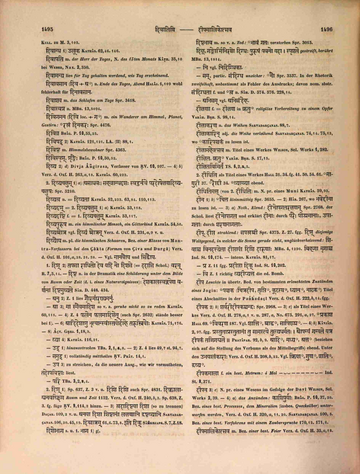
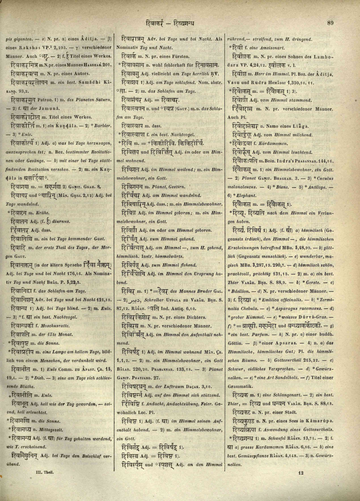
divyá, diviā́ — 1〉 Adj. (f. ā́) — a〉 himmlisch (Gegensatz irdisch), den Himmel —, die himmlischen Erscheinungen betreffend MBH. 5,48,99. — b〉 göttlich (Gegensatz menschlich). — c〉 wunderbar, magisch MBH. 3,287,19. MBH. 3,290,7 — d〉 himmlisch schön, prachtvoll, prächtig Chr. 131,15. — 2〉 m. — a〉 ein best. Thier VARĀH. BṚH. S. 88,9. — b〉 Gerste. — c〉 Bdellion. — d〉 N. pr. verschiedener Männer. — 3〉 f. divyā — a〉 Emblica officinalis. — b〉 Terminalia chebula. — c〉 Asparagus racemosus. — d〉 grober Kümmel. — e〉 weisses Dūrvā-Gras. — f〉 = brāhmī, mahāmedā und vandhyārkoṭakī. — g〉 ein best. Parfum. — h〉 N. pr. — α〉 einer buddh. Göttin. — β〉 einer Apsaras. — 4〉 n. — a〉 das Himmlische, himmlisches Gut; Pl. die himmlischen Räume. — b〉 Gottesurtheil Chr. 215,22. — c〉 Schwur, eidliches Versprechen. — d〉 Gewürznelken. — e〉 eine Art Sandelholz. — f〉 Titel einer Grammatik.
Apte 1890 adjective · substantive masculine · substantive neuter
Original text · English · adjective · substantive masculine · substantive neuter
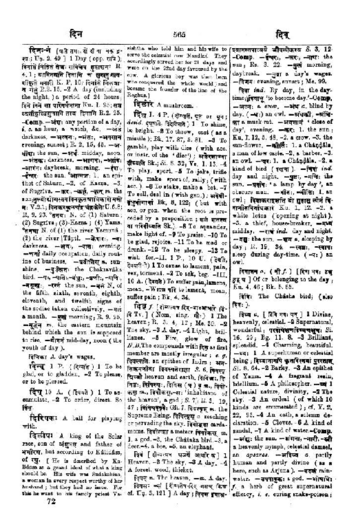
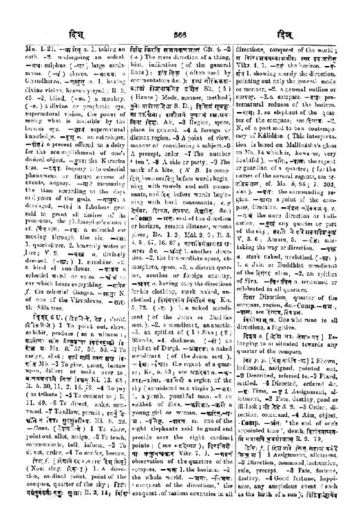
divya a. [divi bhavaḥ yat] 1 Divine, heavenly, celestial. 2 Supernatural, wonderful; paradoṣekṣaṇadivyacakṣuṣaḥ Śi. 16. 29; Bg. 11. 8. 3 Brilliant, splendid. 4 Charming, beautiful. — vyaḥ 1 A superhuman or celestial being; divyānāmapi kṛtavismayāṃ purastāt Śi. 8. 64. 2 Barley. 3 An epithet of Yama. 4 A fragrant resin, bdellium. 5 A philosopher. — vyaṃ 1 Celestial nature, divinity. 2 The sky. 3 An ordeal (of which 10 kinds are enumerated); cf. Y. 2. 22, Y. 2. 95. 4 An oath, a solemn declaration. 5 Cloves. 6 A kind of sandal. 7 A kind of water. Comp. — aṃśuḥ the sun. — aṃganā, -nārī, -strī a heavenly nymph, celestial damsel, an apsaras. — adivya a. partly human and partly divine (as a hero, such as Arjuna). — udakaṃ rainwater. — upapādukaḥ a god. — oṣadhiḥ f. a herb of great supernatural efficacy, i. e. curing snake-poison; ([Page 0566-a]) Mu. 1. 21. — kārin a. 1 taking an oath. 2 undergoing an ordeal. — gaṃdhaḥ sulphur. — (dhā) large cardamoms. — (dhaṃ) cloves. — gāyanaḥ a Gandharva. — cakṣus a. 1 having divine vision, heavenly-eyed; R. 3. 45. 2 blind. ( — m.) a monkey. ( — n.) a divine or prophetic eye, supernatural vision, the power of seeing what is invisible by the human eye. — jñānaṃ supernatural knowledge. — dṛś m. an astrologer. — dohadaṃ a present offered to a deity for the accomplishment of one's desired object. — puṣpaḥ the Karavīra tree. — praśnaḥ inquiry into celestial phenomena or future course of events, augury. — mānaṃ measuring the time according to the days and years of the gods. — mānuṣaḥ a demi-god. — ratnaṃ a fabulous gem said to grant all desires of its possessor, the philosopher's stone; cf. ciṃtāmaṇi. — rathaḥ a celestial car moving through the air. — rasaḥ 1 quicksilver. 2 heavenly water or love; V. 2. — vastra a. divinely dressed. — (straḥ) 1 sunshine. 2 a kind of sun-flower. — vākyaṃ a celestial word or voice. — śrotraṃ an ear which hears everything. — sarit f. the celestial Ganges. — sānuḥ N. of one of the Viśvedevas. — sāraḥ the Śāla tree.
Cappeller 1887 Word type unspecified
Original text · German · Word type unspecified
divyá himmlisch, göttlich, wunderbar, herrlich, prächtig; n. das Himmlische (Pl. der Himmel); Schwur, Gottesurteil.
Burnouf 1866 adjective
Original text · French · adjective
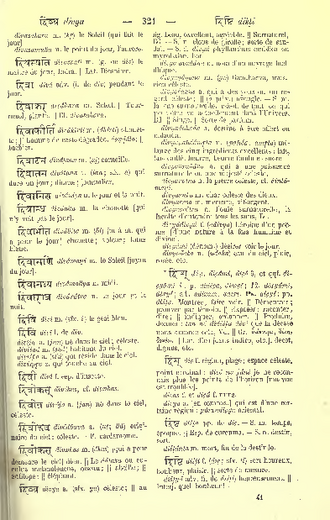
divya divya a. (sfx. ya) céleste; au [Page321-2] fig. beau, excellent, agréable. Surnaturel, Bd. — S. n. clous de girofle; sorte de sandal. — S. f. divyā phyllanthus emblica ou myroblalan, bot. divya avadāna n. nom d'un ouvrage buddhique. divyagāyana m. (gau) Gandharva, musicien céleste. divyacakṣus a. qui a des yeux ou un regard céleste; (a priv.) aveugle. — S. m. la vue surnaturelle, c-à-d. de tout ce qui peut être vu actuellement dans l'Univers, Bd. Singe. Sorte de parfum. divyadohada a. destiné à être offert en oblation. divyapañcāmṛta n. (pañca; amṛta) mélange des cinq ingrédients excellents: lait, lait caillé, beurre, beurre fondu et sucre. divyaprabhāva a. qui a une puissance surnaturelle ou une majesté céleste. divyaratna n. la pierre céleste, cf. cintāmaṇi. divyaratha m. char céleste des dieux. divyarasa m. mercure, vif-argent. divyaśrotra n. l'ouïe surnaturelle, la faculté d'entendrè tous les sons, Bd. divyādivyā f. (adivya) héroïne d'un poème [d'une nature à la fois humaine et divine]. divyāmi (dénom.) désirer voir le jour. divyodaka n. (udaka) eau du ciel, pluie, rosée, etc.
Occurrences in source texts (25)
HP 11 occurrences
HP 3.73-3.78: Viparīta Karaṇī 2 occurrences
Direct occurrences
3 more source pages
PYS 1 occurrence
PYS 3.41–42: Divine Hearing and Travel through Space 1 occurrence
Direct occurrences
-
PYS 3.41 Segment 5
SiSa 11 occurrences
SiSa 3.1-3.10: Herzlotus und Prāṇa 2 occurrences
Direct occurrences
4 more source pages
SVU 1 occurrence
VBT 1 occurrence
Continue with AYI Free
Image source: AYI archive.