

lakṣaṇa लक्षण – appearing as; relating to
adjective · substantive masculine · substantive neuter · Word type unspecified
Dictionary sources
AYI dictionary adjective · substantive neuter
adjective
appearing as; relating to
substantive neuter
sign; temporal determination; characteristic
Cappeller 1891 adjective
Original text · English · adjective
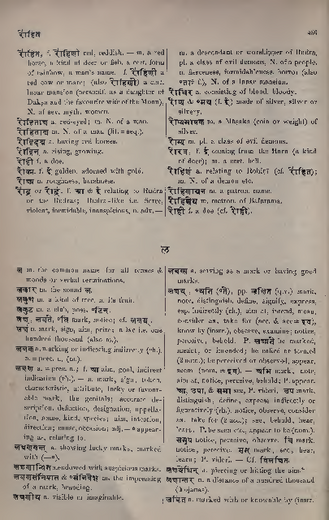
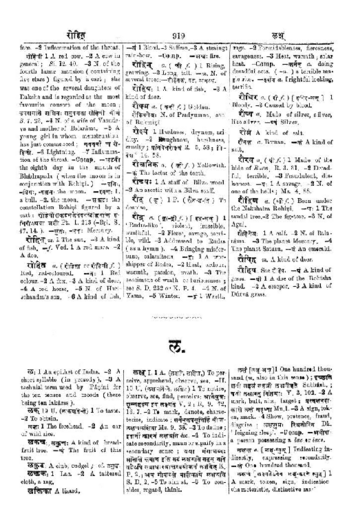
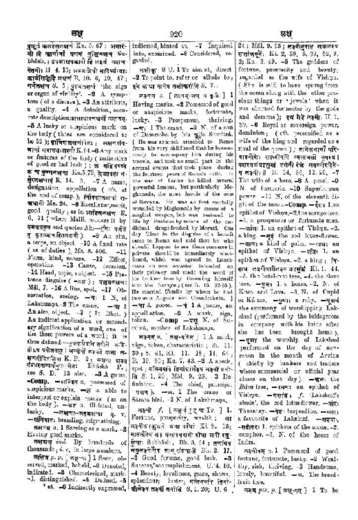
lakṣaṇa ·a. = prec. a.; f. ā aim, goal, indirect indication (rh.). -- n. mark, sign, token, characteristic, attribute, lucky or favourable mark, the genitals; accurate description, definition, designation, appellation, name, kind, species; aim, intention, direction; cause, occasion; adj. --° appearing as, relating to.
Monier-Williams 1872 substantive neuter
Original text · English · substantive neuter
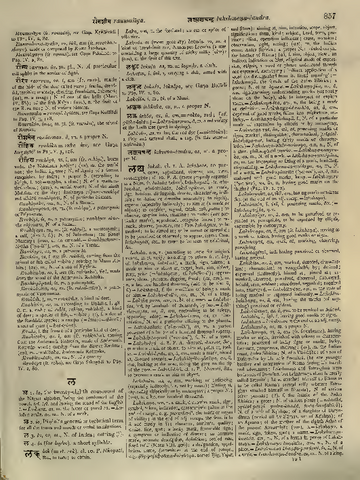
Lakṣaṇa, am, n. a mark, distinctive mark, sign, symbol, token, indication, characteristic (often at the end of comps., e. g. puruṣa-l˚, the mark or organ of virility; at the end of adj. comps. the fem. is in ā and rarely in ī); character, attribute, quality; stroke, line, spot; a lucky mark, favourable sign; a symptom or indication of disease; an accurate mark, accurate description, definition; settled rate, fixed tariff (Manu VIII. 406); a designation, appel- lation, name, (sometimes at the end of comps., e. g. Ṛg-yajuḥ-sāma-lakṣaṇa, named Ṛg, Yajur, and Sāma); aiming at, aim, intention, scope, object, signification; form, kind; subject, head, term, pro- vince; effect, operation influence; cause, occasion; observation, sight, seeing; (as), m. the Indian crane, Ardea Sibirica; a proper N.; = lakṣmaṇa, the brother of Rāma; (ā), f. aim, object, view; an indirect indication or hint, elliptical mode of expres- sion, ellipsis, a word or phrase understood though not expressed, metonymy; indirect application of a word (as distinguished from its literal meaning); = lakṣmaṇā, the female of the Ardea Sibirica; a goose; N. of an Apsaras.
Petersburger 1855 substantive masculine · substantive neuter · Word type unspecified
Original text · German · substantive masculine · substantive neuter
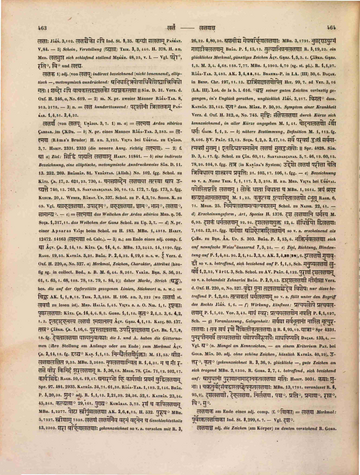
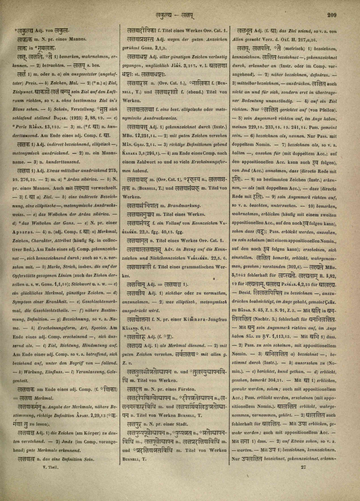
lakṣaṇá (von lakṣay) UṆĀDIS. 3,7. 1〉 m. a〉 = lakṣmaṇa Ardea sibirica ŚABDAR._im_ŚKDR. — b〉 N. pr. eines Mannes RĀJA-TAR. 3,383. = lakṣmaṇa (Rāmaʼs Bruder) H. an. 3,223. VIŚVA_bei_UJJVAL._zu_UṆĀDIS. 3,7. HARIV. 2331. HARIV. 2333 (die neuere Ausg. richtig lakṣmaṇa). — 2〉 f. ā a〉 Ziel: siddhaṃ paśyati lakṣaṇām HARIV. 11841. — b〉 eine indirecte Bezeichnung, eine elliptische, metonymische Ausdrucksweise SĀH. D. 11. SĀH. D. 13. SĀH. D. 252. SĀH. D. 269. BHĀṢĀP. 81. VEDĀNTAS. (Allah.). No. 102. fgg. Schol. zu KĀṬY. ŚR. 17,3. KĀṬY. ŚR. 621,23. KĀṬY. ŚR. 730,4. camasaśabdena lakṣaṇayā tatsthā āpa ucyante KĀṬY. ŚR. 740,13. KĀṬY. ŚR. 763,9. SARVADARŚANAS. 50,10. fgg. SARVADARŚANAS. 50,13. SARVADARŚANAS. 172,7. fgg. SARVADARŚANAS. 173,2. fgg. KUSUM. 20,4. WEBER, RĀMAT. UP. 337. Schol. zu P. 4,3,70. SIDDH. K._zu_P. 4,3,69. Vgl. ajahallakṣaṇā, upādāna˚, jahallakṣaṇā, jñāna˚, bhāga˚, lakṣaṇa˚, sāmānya˚. — c〉 = lakṣmaṇā das Weibchen der Ardea sibirica MED. ṇ. 76. SUŚR. 1,317,11. das Weibchen der Gans Schol. zu Uṇ. 3,7. — d〉 N. pr. einer Apsaras VYĀḌI beim Schol. zu H. 183. MBH. 1,4818. HARIV. 12472. HARIV. 14163 (lakṣmaṇā ed. Calc.). — 3〉 n.; am Ende eines adj. comp. f. ā ĀŚV. ŚR. 2,14,18. KĀTY. ŚR. 16,4,6. MBH. 13,3443. MBH. 14,1190. fgg. RAGH. 19,55. KATHĀS. 5,31. BHĀG. P. 2,4,22. BHĀG. P. 6,19,6 u. s. w. ī Verz. d. Oxf. H. 220,a, No. 527. a〉 Merkmal, Zeichen, Charakter, Attribut (häufig sg. in collect. Bed., z. B. M. 6,44. M. 8,261. VARĀH. BṚH. S. 56,31. VARĀH. BṚH. S. 61,1. VARĀH. BṚH. S. 65,1. VARĀH. BṚH. S. 68,108. VARĀH. BṚH. S. 78,18. VARĀH. BṚH. S. 79,1. VARĀH. BṚH. S. 84,2); daher Marke, Strich (aṅka), bes. die auf der Opferstätte gezogenen Linien, Stichwort u. s. w.; = cihna AK. 1,1,2,18. TRIK. 3,3,258. H. 106. H. an. 3,222 (wo lakṣaṇaṃ st. lavaṇaṃ zu lesen ist). MED. HALĀY. 1,45. VIŚVA a. a. O. NIR. 1,1. iṣṭakāḥ pṛthaglakṣaṇāḥ KĀTY. ŚR. 16,4,6. KĀTY. ŚR. 16,8,3. GOBH. 1,1,10. kṛta˚ GOBH. 2,1,3. GOBH. 2,3,6. GOBH. 4,2,1. GOBH. 4,2,3. etadādahanasya lakṣaṇaṃ śmaśānasya ĀŚV. GṚHY. 4,1,15. KAUŚ. 80. KAUŚ. 137. tantra˚ ŚĀṄKH. ŚR. 1,16,6. purastāllakṣaṇa, upariṣṭāllakṣaṇa ŚAT. BR. 1,7,2,18. fg. devatālakṣaṇā yājyānuvākyāḥ die Y. und A. haben die Götternamen (ihre Stellung am Anfange oder am Ende) zum Merkmal ĀŚV. ŚR. 2,14,18. fg. dravya˚ KAṆ. 1,1,15. nindyairlakṣaṇairyuktāḥ M. 11,53. bījalakṣaṇalakṣita M. 9,35. MBH. 3,2680. nṛpalakṣaṇānvita R. 1,4,31. na ca māṃ rakṣase vīra kimidaṃ śūralakṣaṇam R. 5,36,18. MEGH. 78. ŚĀK. 71,12. ŚĀK. 102,17. kārya siddheḥ RAGH. 10,6. RAGH. 19,47. anārambho hi kāryāṇāṃ prathamaṃ buddhilakṣaṇam Spr. 97. Spr. 481. Spr. 2935. KATHĀS. 34,71. KATHĀS. 61,38. RĀJA-TAR. 1,189. RĀJA-TAR. 2,146. BHĀG. P. 5,20,38. śubha˚ adj. R. 1,1,13. R. 2,21,39. R. 2,24,36. R. 2,52,1. KATHĀS. 23,54. KATHĀS. 45,348. kalyāṇa˚ KATHĀS. 29,161. puṇya˚ KUMĀRAS. 5,73. rathaṃ ca kapilakṣaṇam MBH. 1,2277. poṭā strīpuṃsalakṣaṇā AK. 2,6,1,15. H. 532. puruṣa˚ MBH. 5,7527. strīṇām MBH. 5,7528. lakṣaṇaṃ lakṣaṇenaiva vadanaṃ vadanena ca Geschlechtstheile MBH. 13,2303. śarā barhiṇalakṣaṇāḥ gekennzeichnet so v. a. versehen mit R. 3,26,22. R. 6,80,30. aśanīśca meghabarhiṇalakṣaṇāḥ MBH. 3,1791. bhujadaṇḍayugmaṃ gāṇḍīvalakṣaṇam BHĀG. P. 1,15,13. tulyābhijanalakṣaṇā R. 5,19,32. ein glückliches Merkmal, günstiges Zeichen ĀŚV. GṚHY. 1,5,3. ĀŚV. GṚHY. 1,5,4. ŚĀṄKH. GṚHY. 1,5. M. 3,4. M. 4,68. M. 4,158. M. 7,77. MBH. 1,5905. MBH. 4,70 (sg. st. pl.). R. 1,1,27. RĀJA-TAR. 3,485. AK. 3,4,14,84. BRAHMA-P. in LA. (III) 50,6. DAŚAK._in_BENF. Chr. 197,11. BENF. Chr. 197,13. dvātriṃśallakṣaṇopeta HIT. 99,7. ad VET. 3,16 (LA. III). Lot. de la b. l. 616. ˚bhraṣṭa seiner guten Zeichen verlustig gegangen, inʼs Unglück gerathen, unglücklich YĀJÑ. 3,217. vigata˚ dass. KATHĀS. 25,142. hata˚ dass. MĀRK. P. 50,95. Symptom einer Krankheit Verz. d. Oxf. H. 312,a, No. 745. sṛṣṭiḥ saṃkṣepalakṣaṇā durch Kürze sich kennzeichnend, in aller Kürze angegeben M. 1,41. codanālakṣaṇo 'rtho dharmaḥ JAIM. 1,1,2. — b〉 nähere Bestimmung, Definition M. 1,112. fg. M. 8,406. ṚV. PRĀT. 13,12. SUŚR. 1,2,3. SUŚR. 2,17,10. sarvaṃ paravaśaṃ duḥkhaṃ sarvamātmavaśaṃ sukham . etadvidyātsamāsena lakṣaṇaṃ sukhaduḥ khayoḥ .. Spr. 4828. SĀH. D. 3,4. SĀH. D. 3,17. fg. Schol. zu ŚĀK. 60,11. SARVADARŚANAS. 5,7. SARVADARŚANAS. 46,19. SARVADARŚANAS. 60,15. SARVADARŚANAS. 78,20. SARVADARŚANAS. 104,9. fgg. tatra (in KAṆĀDAʼs System) uddeśo lakṣaṇaṃ parīkṣā ceti trividhāsya śāstrasya pravṛttiḥ SARVADARŚANAS. 104,21. SARVADARŚANAS. 105,17. SARVADARŚANAS. 106,1. fgg. — c〉 Bezeichnung so v. a. Name TRIK. 1,1,117. TRIK. 3,3,258. H. an. MED. VIŚVA_bei_UJJVAL. yayostiṣṭhati lakṣaṇam . loke dhātā vidhātā ca MBH. 1,2614. trayaṃ brahma ṛgyajuḥsāmalakṣaṇam M. 1,23. kakutstha ityāhitalakṣaṇo 'bhūt RAGH. 6,71. MEGH. 25. nimeṣalakṣaṇamatyalpakālam Schol. zu NAIṢ. 22,41. — d〉 Erscheinungsform, Art, Species H. 1376. daśa lakṣaṇāni dharmasya M. 6,93. daśakaṃ dharmalakṣaṇam M. 92. M. 94. daśalakṣaṇayukta M. 12,4. saṃdhirjñeyo dvilakṣaṇaḥ M. 7,163. M. 12,31. fgg. karmaṇā agnihotrādilakṣaṇena so v. a. erscheinend als ŚAṂK._zu_BṚH. ĀR. UP. S. 303. BHĀG. P. 5,15,6. bhaktirnavalakṣaṇā sich auf neunfache Weise äussernd BHĀG. P. 7,5,24. — e〉 Ziel, Richtung, Hindeutung auf P. 1,4,84. P. 1,4,90. P. 2,1,14. P. 3,3,8. AK. 3,4,32 (28), 6. iglakṣaṇe guṇavṛddhī so v. a. betreffend, sich beziehend auf P. 1,1,5, Sch. manuṣyalakṣaṇe lubarthe P. 1,2,52, Vārtt. 3, Sch. Schol. zu AV. PRĀT. 4,122. purāṇaṃ daśalakṣaṇam so v. a. behandelt Zehnerlei BHĀG. P. 2,9,43. dvādaśalakṣaṇī mīmāṃsā Verz. d. Oxf. H. 220,a, No. 527. vṛddho yūnā tallakṣaṇaścedeva viśeṣaḥ nur diese betreffend P. 1,2,65. tatsakalaṃ dharmalakṣaṇam so v. a. fällt unter den Begriff des Rechts YĀJÑ. 1,6. — f〉 Wirkung, Einfluss: pratyayalope pratyayalakṣaṇam P. 1,1,62. VOP. 3,45. nāyaṃ svaraḥ pratyayalakṣaṇena bhavati P. 6,1,197, Sch. — g〉 Veranlassung, Gelegenheit: sarvathā sarvabhūtānāṃ nāsti mṛtyuralakṣaṇaḥ . tava tvayaṃ raṇe maithilīkṛtalakṣaṇaḥ .. R. 6,95,19. yātrā˚ Spr. 4231. punarapīmamarthaṃ labdhalakṣaṇo yathopapannairupāyaiḥ sādhayiṣyati DAŚAK. 135,4. — Vgl. a˚ (n. Mangel an Kennzeichen, — an einem Kriterium PAT._bei_GOLD. MĀN. 50. adj. ohne schöne Zeichen, hässlich KATHĀS. 40,29), uttara˚, kṛta˚ (gekennzeichnet) R. 3,36,9. glückliche —, gute Zeichen an sich tragend MBH. 2,1350. R. GORR. 2,7,4. betreffend, sich beziehend auf: āyudhānāṃ purāṇānāmādānakṛtalakṣaṇā matiḥ HARIV. 5031. kathāḥ śubhāḥ . cakraturvedasaṃbaddhāstaccheṣakṛtalakṣaṇāḥ MBH. 13,1781. veranlasst (R. 6,95,9), daśalakṣaṇī, dehalakṣaṇa, nirlakṣaṇa, pañca˚, prati˚, pramāṇa˚, rāja˚, vi˚, su˚.
Original text · German · Word type unspecified
lakṣaṇa 3〉a〉 alakṣaṇaṃ kāvyam ein sich durch Nichts auszeichnendes —, unbedeutendes Gedicht Spr. (II) 2095.
Böhtlingk 1879 adjective · substantive masculine · substantive neuter
Original text · German · adjective · substantive masculine · substantive neuter
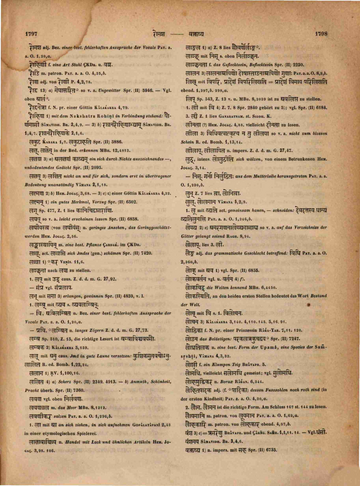
lakṣaṇa — 1〉 Adj. Etwas mittelbar ausdrückend Chr. 275,29. Chr. 276,32. — 2〉 m. — a〉 *Ardea sibirica. — b〉 N. pr. eines Mannes. — Auch mit lakṣmaṇa verwechselt. — 3〉 f. ā — a〉 Ziel. — b〉 eine indirecte Bezeichnung, eine elliptische —, metonymische Ausdrucksweise. — c〉 das Weibchen der Ardea sibirica. — d〉 *das Weibchen der Gans. — e〉 N. pr. einer Apsaras. — 4〉 n. (adj. Comp. f. ā) — a〉 Merkmal, Zeichen, Charakter, Attribut (häufig Sg. in collectiver Bed.). Am Ende eines adj. Comp. gekennzeichnet —, sich kennzeichnend durch; auch so v. a. versehen mit. — b〉 Marke, Strich, insbes. die auf der Opferstätte gezogenen Linien (auch das Ziehen derselben u. s. w. GOBH. 1,1,10); Stichwort u. s. w. — c〉 ein glückliches Merkmal, günstiges Zeichen. — d〉 Symptom einer Krankheit. — e〉 Geschlechtsmerkmal, die Geschlechtstheile. — f〉 nähere Bestimmung, Definition. — g〉 Bezeichnung, so v. a. Name. — h〉 Erscheinungsform, Art, Species. Am Ende eins adj. Comp. erscheinend —, sich äussernd als. — i〉 Ziel, Richtung, Hindeutung auf. Am Ende eines adj. Comp. so v. a. betreffend, sich beziehend auf, unter den Begriff von — fallend. — k〉 Wirkung, Einfluss. — l〉 Veranlassung, Gelegenheit.
Apte 1890 substantive masculine · substantive neuter
Original text · English · substantive masculine · substantive neuter
lakṣaṇaṃ [lakṣyate'nena lakṣ-karaṇe lyuṭ] 1 A mark, token, sign, indication, characteristic, distinctive mark; ([Page 0920-a]) badhūdukūlaṃ kalahaṃsalakṣaṇaṃ Ku. 5. 67; anāraṃbho hi kāryāṇāṃ prathamaṃ buddhilakṣaṇaṃ Subhāṣ.; upakārāpakārau hi lakṣyaṃ lakṣaṇametayoḥ H. 4. 15; avyākṣepo bhaviṣyaṃtyāḥ kāryasiddherhi lakṣaṇaṃ R. 10. 6, R. 19. 47; garbhalakṣaṇa Ś. 5; puruṣalakṣaṇaṃ ‘the sign or organ of virility’. 2 A symptom (of a disease). 3 An attribute, a quality. 4 A definition, accurate description; asādhāraṇadharmo lakṣaṇam. 5 A lucky or auspicious mark on the body (these are considered to be 32); dvātriṃśallakṣaṇopetaḥ; lakṣaṇasaṃpannānāṃ gavāmadhaḥ sasnau K. 64. 6 Any mark or features of the body (indicative of good or bad luck); kva tadvidhastvaṃ kva ca puṇyalakṣaṇā Ku. 5. 73; kleśāvahā bharturalakṣaṇāhaṃ R. 14. 5. 7 A name, designation, appellation (oft. at the end of comp.); vidiśālakṣaṇāṃ rājadhānīṃ Me. 24. 8 Excellence, merit, good quality; as in āhitalakṣaṇa R. 6. 71 (where Malli. renders it by prakhyātaguṇa and quotes Ak: — guṇaiḥ pratīte tu kṛtalakṣaṇāhitalakṣaṇau). 9 An aim, a scope, an object. 10 A fixed rate (as of duties); Ms. 8. 406. 11 Form, kind, nature. 12 Effect, operation. 13 Cause, occasion. 14 Head, topic, subject. 15 Pretence disguise ( = lakṣa); prasuptalakṣaṇaḥ Māl. 7. 16 A line, spot. 17 Observation, seeing. — ṇaḥ 1 N. of Lakṣmaṇa. 2 The crane. — ṇā 1 An aim, object. 2 (In Rhet.) An indirect application or secondary signification of a word, one of the three powers of a word; it is thus defined:-mukhyārthabādhe tadyoge rūḍhito'tha prayojanāt . anyortho lakṣyate yatsā lakṣaṇāropitakriyā K. P. 2; lakṣaṇā śakya saṃbaṃdhastātparyānupapattitaḥ Bhāṣā P.; see S. D. 13 also. 3 A goose. Comp. — anvita a. possessed of auspicious marks. — jña a. able to interpret or explain marks (as on the body). — bhraṣṭa a. ill-fated, unlucky. — lakṣaṇā = jahallakṣaṇā q. v. — saṃnipātaḥ branding, stigmatizing.
Cappeller 1887 Word type unspecified
Original text · German · Word type unspecified
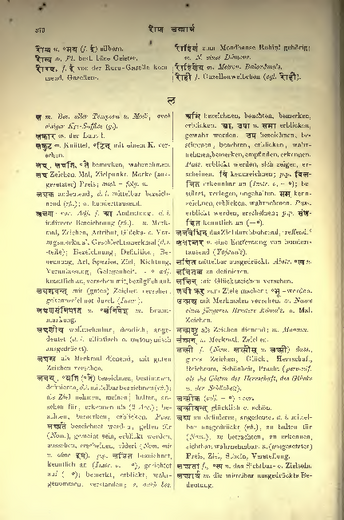
lakṣaṇa = vor. Adj. f. ā Andeutung. d. i. indirecte Bezeichnung (rh.). n. Merkmal, Zeichen, Attribut, Glücks- o. Vorzugsmerkmal, Geschlechtsmerkmal (d. i. -teile); Bezeichnung, Definition, Benennung, Art, Spezies, Ziel, Richtung, Veranlassung, Gelegenheit. —˚ adj. kenntlich an, versehen mit, bezüglich auf.
Burnouf 1866 substantive neuter
Original text · French · substantive neuter
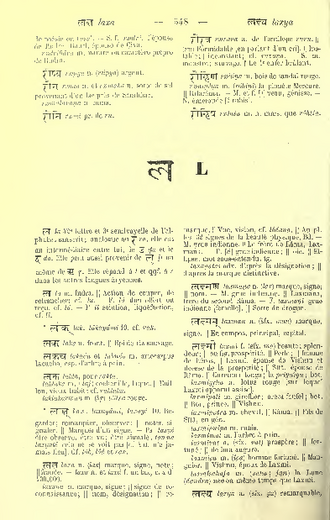
lakṣaṇa n. marque, signe; signe de reconnaissance; nom, désignation; remarque. [Page548a-2] Vue, vision, cf. locana. Au pl. les. 32 signes de la beauté physique, Bd. — M. grue indienne. Le frère de Rāma, Lakṣmaṇa. — F. [ā] grue indienne; oie. Ellipse, mot sous-entendu, tg.
Derived words
Further derivatives (1)
Occurrences in source texts (22)
DYS 3 occurrences
GoS 3 occurrences
HP 5 occurrences
MandUp 1 occurrence
MandUp 3-7: Four modes of awareness 1 occurrence
Occurrences through derived words
-
MandUp 7 Segment 21
PYS 2 occurrences
SiSa 6 occurrences
SiSa 1.71-1.81: Avidyā und Elemente 4 occurrences
Direct occurrences
Continue with AYI Free
Image source: AYI archive.