

vṛj वृज् – avoid; exclude
verbal root · Word type unspecified · verb
Dictionary sources
AYI dictionary verbal root
avoid; exclude
Cappeller 1891 verb
Original text · English · verb
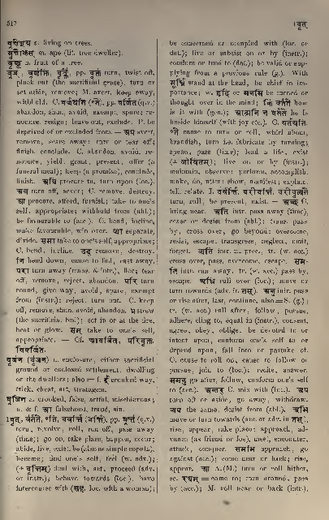
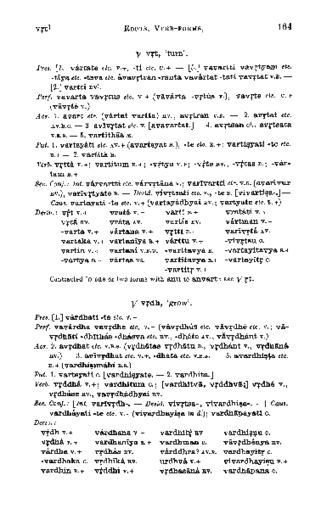
vṛj vṛṇákti vṛṅkté ·v pp. vṛktá turn, twist off, pluck out (the sacrificial grass), turn or set aside, remove; M. avert, keep away, withhold. C. varjayati (°te), pp. varjita (q.v.) abandon, shun, avoid, exempt, spare; renounce, resign; leave out, exclude. P. be deprived of or excluded from. -- apa avert, remove, scare away; turn or tear off; finish, conclude. C. abandon, avoid, renounce, yield, grant, present, offer (a funeral meal); keep (a promise), conclude, finish. api procure to, turn upon (loc.). ava turn off, sever; C. remove, destroy. ā procure, afford, furnish; take to one's self, appropriate; withhold from (abl.); be favourable to (acc.). C. bend, incline, make favourable, win over. vyā separate, divide. samā take to one's self, appropriate; C. bend, incline. ud remove, destroy. ni bend down, cause to fall, cast away. parā turn away (trans. & instr.), flee; tear off, remove, reject, abandon. pari turn round, give way, avoid, spare, exempt from (instr.); reject, turn out. C. keep off, remove, shun, avoid, abandon. pra strew (the sacrificial bed); set in or at the fire, heat or glow. sam take to one's self, appropriate. -- Cf. āvarjita, parivṛkta, vivarjita.
Monier-Williams 1872 Word type unspecified · verb
Original text · English · Word type unspecified
2. vṛj, in Naigh. II. 9. vṛk is enumerated among the bala-nāmāni. (See vṛjana below.)
Original text · English · verb
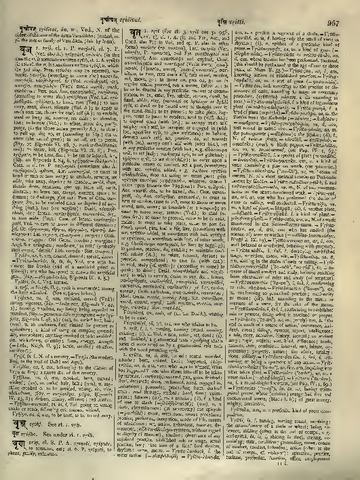
vṛj 1 . vṛj, cl. 1. P. varjati, cl. 7. P. (Ved. also A.) vṛṇakti, vṛṅkte (in this class the rt. is sometimes written vṛc), cl. 2. A. vṛkte (in this cl. the rt. is sometimes written vṛñj, to which the 3rd sing. Pres. vṛṅkte may be referred), va- varja, vavṛje, (according to some also) vavarca, vavṛñje, varjiṣyati, -te (Ved. varkṣyati, -te), avarjīt, avarjiṣṭa (Vedic forms avṛk, vark, varktam; Perf. part. fem. vavarjuṣī), varjitum, (according to some also) vṛñjitum (Ved. Inf. vṛ- jadhyai, vṛñjase), to bend, turn (Ved.); to turn away, avert, divert, alienate (Ved. A.); to apply to one's own use, choose for one's self (A.); to exclude, ward or keep off, remove, set aside; to abandon, lose; to bestow (Ved.); to efface, atone for, purify, purge, (in the above senses generally A.); to clear; to pull up, dig up, or (according to Sāy.) cut or strew (the sacred grass); to cut off, cut to pieces, (Sāy. on Ṛg-veda VI. 26, 3. vark = cheditavān asi); to injure, kill, (Ṛg-veda VI. 18, 8): Pass. vṛjyate, to be bent, &c.; to be cut or injured, &c., (Sāy. on Ṛg-veda 1. 84, 6. vṛjyate = chidyate): Caus. or cl. 10. P. varjayati (sometimes also A. varjayate), -yitum, Aor. avavarjat, to cause to bend or turn or turn away; to exclude, remove, set aside, take away, deprive; to abandon, avoid, shun, abstain from, renounce, give up, leave off, omit, disclaim; to leave out, except, exempt, spare; to dismiss; to discharge, give out: Pass. of Caus. var- jyate, &c., to be excluded from or deprived of any- thing (inst.), lose (see varjita): Desid. vivarji- ṣati, -te: Intens. varīvṛjyate, varvarkti, &c., to turn aside, divert: Caus. of Intens. varīvarja- yati, Ved. to turn or move in different directions; [cf. Gr. εἵργ-νυ-μι, εἴργ-ω, εἱργ-μό-ς, εἱρκ-τή, Λυ-κόοργο-ς: Goth. vrik-a, vruggo: Old Germ. reccheo; wurgjan: Angl. Sax. vring-an; wealc-an, ‘to roll;’ (probably also) wrenc, ‘deceit:’ Lith. verz-iu: Slav. vrag-u.]
Petersburger 1855 Word type unspecified
Original text · German · Word type unspecified
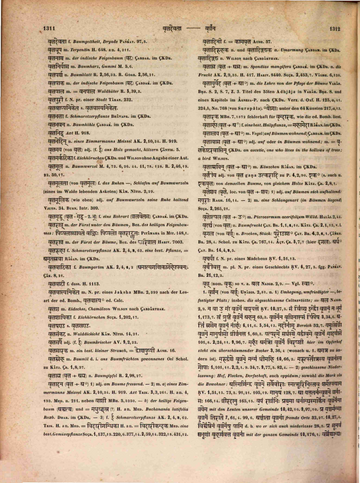
√vṛj (nom. vṛk) so v. a. bala NAIGH. 2,9. — Vgl. svā˚.
Böhtlingk 1879 Word type unspecified
Original text · German · Word type unspecified
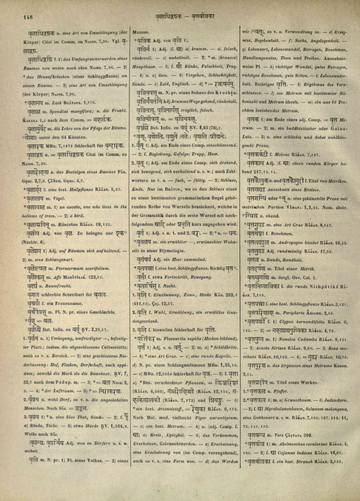
*vṛ́j = bala.
Whitney Roots 1885 verbal root
Original text · English · verbal root
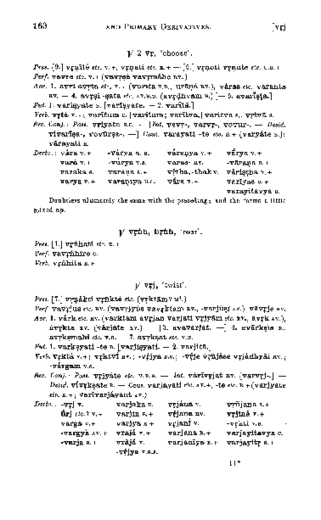
vṛj — twist
Apte 1890 verbal root
Original text · English · verbal root
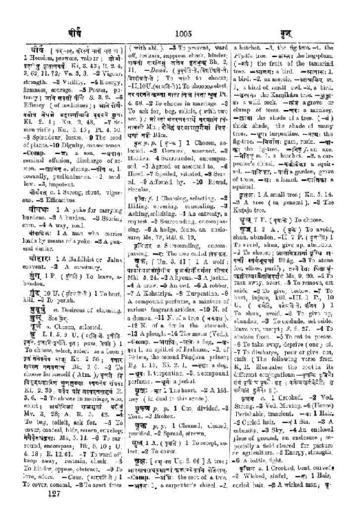
vṛj I. 2 A. (vṛkte) To avoid, shun, abandon. II. 7 P. (vṛṇakti) 1 To avoid, shun, give up, abandon. 2 To choose; āsāmekatamāṃ vṛṃgdhi savarṇāṃ svargabhūṣaṇāṃ Bhāg. 3 To atone for, efface, purify; tanme retaḥ pitā vṛṃktāmityasyaitannidarśanaṃ Ms. 9. 20. 4 To turn away, avert. 5 To remove, set aside. 6 To give, bestow. 7 To hurt, injure, kill. III. 1 P., 10 U. (varjati, varjayati-te, varjita) 1 To shun, avoid. 2 To give up, abandon. 3 To exclude, set aside, leave out, except; Ś. 6. 27. 4 To abstain from. 5 To cut to pieces. 6 To take away, deprive (one) of. 7 To discharge, pour or give out, emit. (The following verse from K.R. illustrates the root in its different conjugations: — vṛṇakti vṛjinaiḥ saṃgaṃ vṛkte ca vṛṣalaiḥ saha . varjatyanārjavopetaiḥ sa varjayati durjanaiḥ ..).
Cappeller 1887 Word type unspecified
Original text · German · Word type unspecified
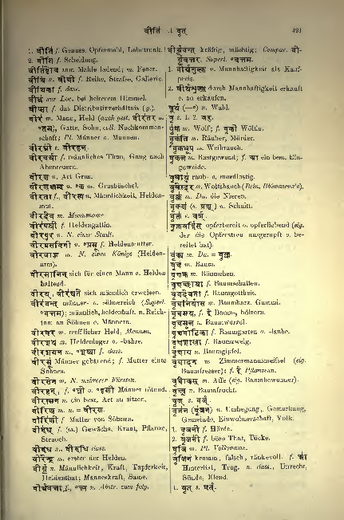
vṛj s. varj.
Burnouf 1866 verbal root
Original text · French · verbal root
*vṛj vṛj. varjāmi 1 et vṛṇajmi 7; p. vavarja; [a2. vd. 2ᵉ et 3ᵉ p. varg] etc. vṛje 2; p. vavṛje; etc. Ps. vṛjye; pp. vṛkta. Quitter; perdre, putrapacūn son fils et son troupeau; abandonner, livrer, donner, remettre. Ecarter, exclure. Purifier, barhis l'enceinte sacrée, Vd. Courber (?); lat. vergere. — varjayāmi 10, éviter; doṣam une faute.
Derived words
Occurrences in source texts (41)
DYS 10 occurrences
DYS 54–59: The Yogi’s Hut 3 occurrences
Direct occurrences
1 more source page
HP 11 occurrences
HP 4.5-4.8: Śāmbhavī and Khecarī 2 occurrences
Direct occurrences
PYS 1 occurrence
PYS 2.18–19: The Evolution of Prakṛti 1 occurrence
Occurrences through derived words
-
PYS 2.18 Segment 9
SiSa 17 occurrences
8 more source pages
SiSa 5.208-5.222: Rājayoga 4 occurrences
Direct occurrences
-
SiSa 5.209 Segment 8
-
SiSa 5.215 Segment 13
-
SiSa 5.218 Segment 15
-
SiSa 5.219 Segment 12
Continue with AYI Free
Image source: AYI archive.