

ādi आदि – beginning with; and so forth; first; original; primordial
adjective · substantive masculine · substantive neuter · Word type unspecified
Dictionary sources
AYI dictionary adjective · substantive masculine · substantive neuter
adjective
beginning with; and so forth; first; original; primordial
substantive masculine
beginning; commencement; and so forth
substantive neuter
beginning; commencement; and so forth
Cappeller 1891 substantive masculine
Original text · English · substantive masculine
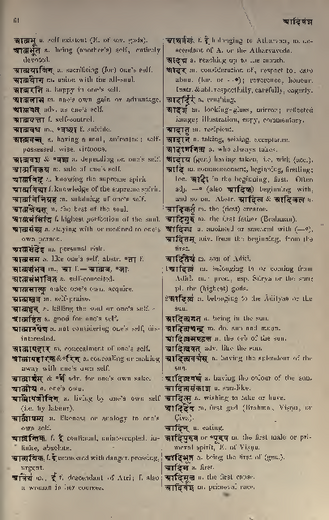
ādi ·m. commencement, beginning, firstling; loc. ādau in the beginning, first. Often adj. --° (also ādika) beginning with, and so on. Abstr. āditva & ādikatva n.
Monier-Williams 1872 substantive masculine
Original text · English · substantive masculine
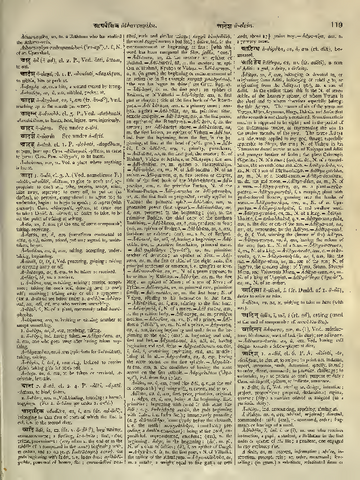
ādi ādi, is, m. (fr. 1. ā-dā ?), beginning, commencement; a firstling, first-fruits; first, prior, prime, pre-eminent; (very often at the end or in the middle of a compound in the sense) beginning with, et cætera, and so on (e. g. Indrādayaḥ surāḥ, the gods beginning with Indra, i. e. Indra &c.; gṛhādi- yukta, possessed of houses, &c.; evam-ādīni vas- tūni, such and similar things; śayyā khaṭvādiḥ, the word śayyā means a bed &c.); ādau, ind. in the commencement or beginning, at first; [with this word has been compared the Slav. jedin, ‘one.’]
Petersburger 1855 adjective · substantive masculine · Word type unspecified
Original text · German · adjective
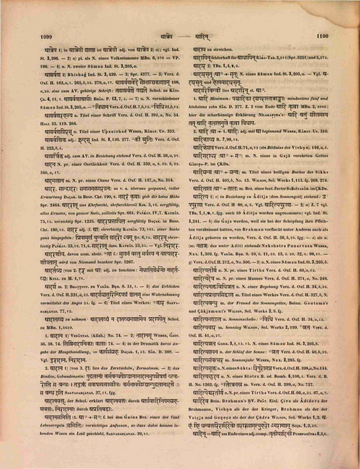
2. ādi (ā + 1. ādi) adj. mit ā beginnend WEBER, RĀMAT. UP. 310.
Original text · German · substantive masculine
ādí m. P. 3,3,108, Vārtt. 6, Sch. Anfang, Beginn; Erstling AK. 3,2,30. H. 1459. ādyantayoḥ KĀTY. ŚR. 1,9,8. KĀTY. ŚR. 24,5,18. KĀTY. ŚR. 26,7,58. ādyante (am Anfange und am Ende) dyuniśoḥ M. 4,25. ādyantau = antādī gaṇa rājadantādi zu P. 2,2,31. ādyavasāne gaṇa dadhipayaādi zu P. 2,4,14. mantrāntaiḥ karmādiḥ KĀTY. ŚR. 1,3,5. fgg. paryāyādiṣu KĀTY. ŚR. 13,3,18. sutyādau KĀTY. ŚR. 14,1,23. ādisāmarthyāt KĀTY. ŚR. 4,2,30. ādiśca bhavati ya evaṃ veda MĀṆḌ. UP. 9. CHĀND. UP. 2,8,1 (vgl. Ind. St. 1,257). lokādimagniṃ tamuvāca KAṬHOP. 1,15. sarvasyādiḥ MBH. 3,153. mām — jñātvā bhūtādim BHAG. 9,13. ādau im Beginn, am Anfange, zuerst M. 1,8. M. 1,21. M. 1,71. M. 2,74 (ādāvante ca). M. 3,85. M. 8,391. BHAG. 3,41. PAÑCAT. I, 182 (ādau — tatas). KATHĀS. 25,153 (ādau — madhyatas — ante). VOP. 25,32 (ādau — atha). Häufig am Ende eines adj. comp.: avyaktādīni bhūtāni vyaktamadhyāni — avyaktanidhanānyeva BHAG. 2,28. daivādyanta mit einem Opfer an die Götter beginnend und endend M. 3,205. niṣekādiśmaśānānta M. 2,16. guṇaśabdo nañādiḥ ein Eigenschaftswort, dem die Neg. a vorangeht H. 16. marīcyādīn — munīn die Weisen, bei denen M. den Anfang macht, d. h. M. und die andern Weisen M. 1,58. śrotrādīni (indriyāṇi) M. 2,91. M. 2,142. garbhiṇī tu dvimāsādiḥ eine Frau, die zwei Monate oder länger schwanger ist M. 8,407. evamādīn solche, deren Anfang der Art ist, d. i. diese und ähnliche M. 9,260. M. 8,329. evamādi vacanam R. 4,12,38. śayyā khaṭvādiḥ śayyā bedeutet khaṭvā u. s. w. P. 3,3,99, Sch. annādidāyin der Speise und Anderes giebt M. 3,104. Sehr oft wie beim letzten Beispiel mit Weglassung des subst., auf welches das adj. zu beziehen ist und welches zum ersten Gliede des comp. sich wie ein Genus zur Species oder eine Species zum Individuum verhält. In einem solchen Falle pflegt das adj. sich im Geschlecht zu richten nach dem im comp. unmittelbar vorangehenden Worte oder nach einem ganz nahe liegenden Ergänzungsworte: annapānendhanādīni Speisen, Getränke, Feuerung u. s. w. M. 7,118. stambo gucchastṛṇādinaḥ AK. 2,9,21. gaṇikādeḥ AK. 2,6,1,22. rasitādi AK. 1,1,2,10. mānalīlāsmarādayaḥ H. 507. tapoyogaśamādayaḥ H. 76. gāmiyānāsanādayaḥ (sc. śabdāḥ) H. 9. evamādīni (sc. vacāṃsi) vilapya N. 13,20. ato 'haṃ bravīmi kaṅkaṇasya tu lobhena ityādi (und so weiter) HIT. 12,16. ŚUK. 39,7. Befremdend ist das Geschlecht in rūpasaṃkhyādīn die Form, die Zahl und Anderes M. 8,31. mātāmahādi AK. 2,6,1,33. Ein solches adj. comp. erhält oft noch das suff. ka, f. kāḥ agniṣṭomādikānmakhān M. 2,143. bāladāyādikaṃ riktham M. 8,26. dānadharmādikaṃ caratu bhavān HIT. 10,21. kriyā vṛṣotsargādikāḥ sarvāścakāra PAÑCAT. 9,3. YĀJÑ. 3,6. jātirgopiṇḍādiṣu gotvādikā SĀH. D. 10,13. ityādikam ŚĀNTIŚ. 1,20. — ādi (sic!) kar = puraskar voranstellen, vorangehen lassen: prāyāt — saha strībhirdraupadīmādi kṛtvā MBH. 2,2008. — Ein nachvedisches Wort, das auch dem ŚAT. BR. noch fremd ist. Es stammt wohl von dā, dadāti mit ā (VOP. 26,181); die urspr. Bed. wäre also Angriff.
Original text · German · Word type unspecified
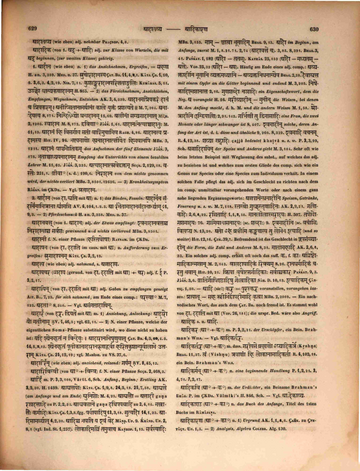
1. ādi Minimum: pañcādikā daśaparāstatrāṅkāḥ mindestens fünf und höchstens zehn SĀH. D. 277. Z. 3 vom Ende ādi kṛtvā MBH. 2,2008; hier die scharfsinnige Erklärung NĪLAKAṆṬHAʼs: ādi attuṃ śīlamasya tat ādi kṛtāntamukhe kṛtvā vidhāya.
Böhtlingk 1879 adjective · substantive masculine · Word type unspecified
Original text · German · adjective
2. ādi Adj. mit ā beginnend.
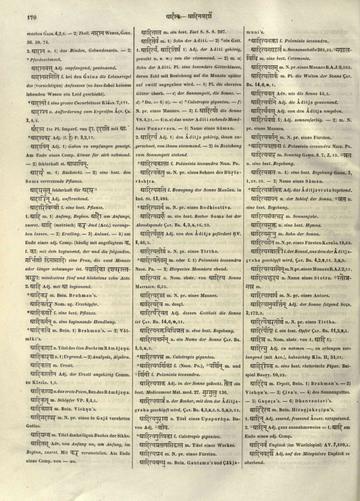
Original text · German · substantive masculine
1. ādi m. — 1〉 Anfang, Beginn. ādau am Anfange, zuerst. ādi (metrisch) kar Jmd (Acc.) vorangehen lassen. — 2〉 Erstling. — 3〉 Anlaut. — 4〉 am Ende eines adj. Comp. (häufig mit angefügtem ka, f. kā). mit dem beginnend, der und die folgenden. garbhiṇī dvimāsādiḥ eine Frau, die zwei Monate oder länger schwanger ist. pañcādikā daśaparāstatrāṅkāḥ mindestens fünf und höchstens zehn Acte.
Original text · German · Word type unspecified
1. ādi I. ādim mit ā-dā Med. den Anfang machen J. A. O. S. 11, CXLVII. fg. [Nachtrag, Band 7]
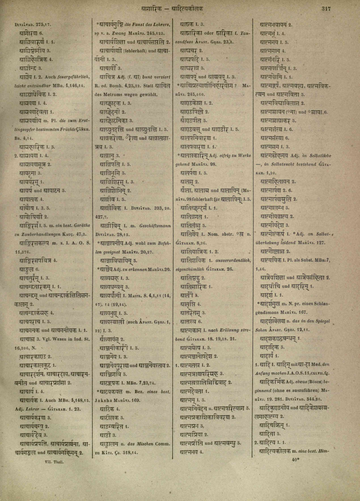
Original text · German · Word type unspecified
1. ādi I. 7. Bez. des 5ten Theils im 7theiligen Sāman CHĀND. UP. 2,8,1. CHĀND. UP. 2,9,5. CHĀND. UP. 2,10,2. [Nachtrag, Band 7]
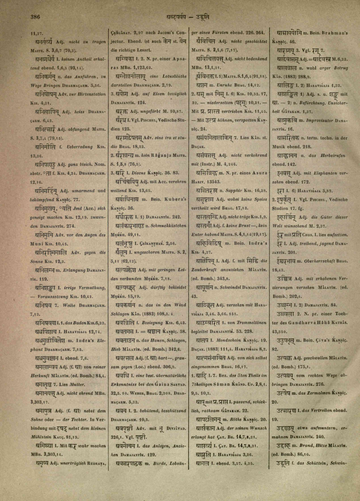
Apte 1890 adjective · substantive masculine
Original text · English · adjective · substantive masculine
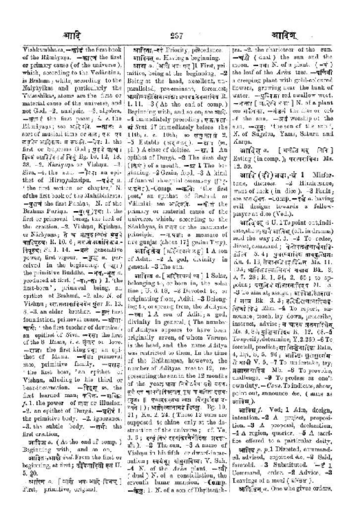
ādi a. 1 First, primary, primitive; nidānaṃ tvādikāraṇaṃ Ak. 2 Chief, first, principal, pre-eminent; oft. at the end of comp. in this sense; see below. 3 First in time, existing before. — diḥ 1 Beginning, commencement (opp. aṃta); apa eva sasarjādau tāsu bījamavāsṛjat Ms. 1. 8; Bg. 3. 41; anādi &c.; jagadādiranādistvaṃ Ku. 2. 9; oft. at the end of comp. and translated by ‘beginning with,’ ‘et cætera’ ‘and others,’ ‘and so on’ (of the same nature or kind), ‘such like’; iṃdrādayo devāḥ the gods Indra and others (iṃdraḥ ādiryeṣāṃ te); evamādi this and the like; bhvādayo dhātavaḥ bhū and others, or words beginning with bhū, are called roots; oft. used by Pāṇini to denote classes or groups of grammatical words; adādi, divādi, svādi &c. 2 First part or portion. 3 A firstling, first-fruits. 4 Prime cause. 5 Nearness. Comp. — aṃta a. 1 having beginning and end. 2 first and last. — (taṃ) beginning and end. ˚vat having beginning and end, finite. ˚aṃtarvartin a. having a beginning, end and middle; being all-in-all. — udātta a. having the acute accent on the first syllable. — upāṃtaṃ ind. from first to last. — karaḥ, -kartṛ, -kṛt m. the creator, an epithet of Brahmā; Bg. 11. 37. — karman n. the beginning of an action. — kaviḥ ‘the first poet’, an epithet of Brahmā and of Vālmīki; the former is so called because he first produced and promulgated the Vedas; and the latter, because he was the first to show to others ‘the path of poets’; when he beheld one of a pair of Krauñca birds being killed by a fowler, he cursed the wretch, and his grief unconsciously took the form of a verse (ślokatvamāpadyata yasya śokaḥ); he was subsequently told by Brahmā to compose the life of Rāma, and he thus gave to the world the first poem in Sanskrit, the Rāmāyaṇa; cf. U. 2 ([Page 0237-a]) Viṣkambhaka. — kāṃḍaṃ the first book of the Rāmāyaṇa. — kāraṇaṃ the first or primary cause (of the universe), which, according to the Vedāntins, is Brahma; while, according to the Naiyāyikas and particularly the Vaiśeṣikas, atoms are the first or material cause of the universe, and not God. 2 analysis. 3 algebra. — kāvyaṃ the first poem; i. e. the Rāmāyaṇa; see ādikavi. — tālaḥ a sort of musical time or tāla; eka eva laghuryatra āditālaḥ sa kathyate. — devaḥ 1 the first or Supreme God; puruṣaṃ śāśvataṃ divyaṃ ādidevamajaṃ vibhuṃ Bg. 10. 12, Bg. 18. 38. 2 Nārāyaṇa or Viṣṇu. 3 Śiva. 4 the sun. — daityaḥ an epithet of Hiraṇyakaśipu. — parvan n. ‘the first section or chapter,’ N. of the first book of the Mahābhārata. — purāṇaṃ the first Purāṇa, N. of the Brahma Purāṇa. — pu(pū)ruṣaḥ 1 the first or primeval being, the lord of the creation. 2 Viṣṇu, Kṛṣṇa, or Nārāyaṇa; te ca prāpurudanvaṃtaṃ bubudhe cādipūruṣaḥ R. 10. 6; tamardhyamarghyādikayādipūruṣaḥ Śi. 1. 14. — balaṃ generative power; first vigour. — buddha a. perceived in the beginning. — (ddhaḥ) the primitive Buddha. — bhava, -bhūta a. produced at first. — (vaḥ, -taḥ) 1 ‘the firstborn’, primeval being, an epithet of Brahmā. 2 also N. of Viṣṇu; rasātalādādibhavena puṃsā R. 13. 8. 3 an elder brother. — mūlaṃ first foundation, primeval cause. — yogācāryaḥ ‘the first teacher of devotion’, an epithet of Śiva. — rasaḥ the first of the 8 Rasas, i. e. śṛṃgāra or love. — rājaḥ the first king pṛthu; an epithet of Manu. — vaṃśaḥ primeval race, primitive family. — varāhaḥ ‘the first boar,’ an epithet of Viṣṇu, alluding to his third or boar-incarnation. — vidvas m. the first learned man; kapila. — śaktiḥ f. 1 the power of māyā or illusion. 2 an epithet of Durgā. — śarīraṃ 1 the primitive body. 2 ignorance. 3 the subtle body. — sargaḥ the first creation.
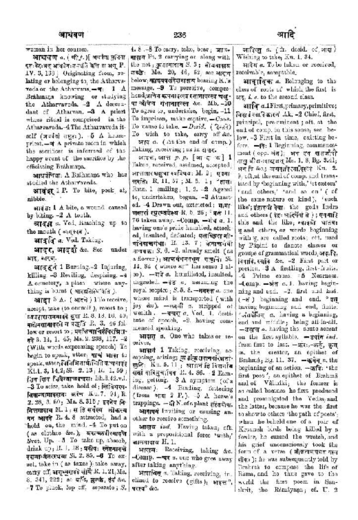
Cappeller 1887 substantive masculine
Original text · German · substantive masculine
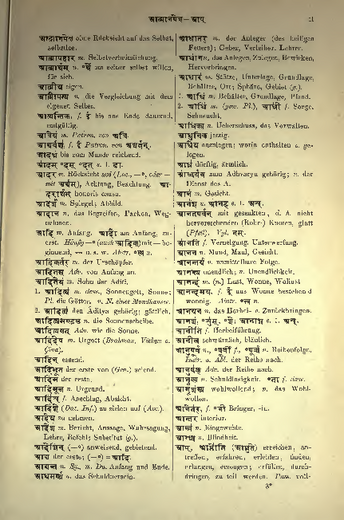
ādi m. Anfang. ādau am Anfang, zuerst. Häufig—˚ (auch ādika) mit—beginnend, —u. s. w. Abstr. ˚tva n.
Burnouf 1866 substantive masculine
Original text · French · substantive masculine
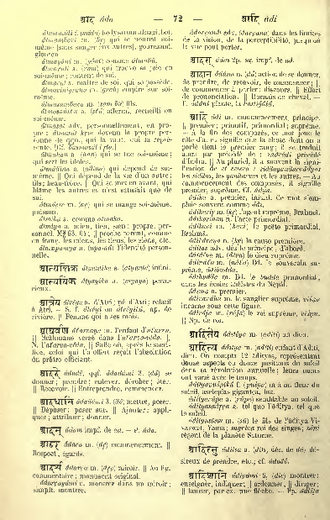
ādi ādi m. commencement, principe. premier; primitif, primordial; suprême. — À la fin des composés, ce mot joue le rôle d'a. et signifie que la chose dont on a parlé tient le premier rang; il se traduit alors par précédé de: indrādi précédé d'Indra. Au pluriel, il a souvent la signification de et cetera: siddhagandharvādyas les siddhas, les gandharvas et les autres. — Au commencement des composés, il signifie premier, suprême. Cf. ādya. ādika a. premier, initial. Ce mot s'emploie souvent comme ādi. ādikartṛ m. (kṛ) l'agent suprême, Brahmā. ādikarman n. l'acte primordial. ādikavi m. (kavi) le poète primordial, Brahmā. ādikāraṇa n. (kṛ) la cause première. āditas adv. dès le principe; d'abord. ādideva m. (deva) le dieu suprême. ādinātha m. (nātha) Bd. le souverain suprême, ādibuddha. ādibuddha m. Bd. le buddha primordial, dans les écoles théistes du Népâl. ādima a. premier. ādivarāha m. le sanglier suprême, viṣṇu incarné sous cette figure. ādirāja m. (rāja) le roi suprême, viṣṇu. Np. de roi.
Derived words
Further derivatives (1)
Occurrences in source texts (140)
DYS 11 occurrences
GoS 9 occurrences
GoS 9–11: Breath and Conditioning 2 occurrences
Direct occurrences
HP 30 occurrences
HP 1.17-1.32: Āsana 3 occurrences
Direct occurrences
HP 1.58-1.63: Mitāhāra 5 occurrences
Direct occurrences
12 more source pages
HP 3.33-3.48*1: Khecarī and Soma 2 occurrences
Direct occurrences
-
HP 3.34 Segment 16
-
HP 3.34*1–34*2 Segment 33
HP 3.103-3.107*2: Conclusion of the Mudrā Teaching 2 occurrences
Direct occurrences
-
HP 3.103 Segment 5
-
HP 3.107*2 Segment 10
HTK 4 occurrences
HTK 10.0*1–5: Sītkā, Śītalī and Sūryabheda 2 occurrences
Direct occurrences
-
HTK 10.0*2 Segment 2
-
HTK 10.1 Segment 16
HTK 10.33*2–34*1: Bhūtaśuddhi: Purifying the elements 1 occurrence
Direct occurrences
-
HTK 10.34 Segment 14
MandUp 1 occurrence
PJH 4 occurrences
PJH 15-16: Attaining Power, the Joy of Awareness (cidānanda), and Liberation While Living (jīvanmukti) 1 occurrence
Direct occurrences
-
PJH 16 Segment 5
PJH 17-19: Simple Means (sukhopāyas) and Samādhi 2 occurrences
Direct occurrences
PYS 3 occurrences
SiSa 44 occurrences
SiSa 1.45-1.50: Rückkehr zum Bewusstsein 2 occurrences
Direct occurrences
SiSa 1.51-1.64: Selbst als Licht 2 occurrences
Direct occurrences
SiSa 1.82-1.90: Guṇas und Gegenstände 2 occurrences
Direct occurrences
21 more source pages
SiSa 2.35-2.40: Jīva und Karma 2 occurrences
Direct occurrences
-
SiSa 2.40 Segment 4
Occurrences through derived words
-
SiSa 2.37 Segment 9
SiSa 3.1-3.10: Herzlotus und Prāṇa 3 occurrences
Direct occurrences
Occurrences through derived words
-
SiSa 3.2 Segment 8
SiSa 3.61-3.67: Paricaya und Niṣpatti 3 occurrences
Direct occurrences
Occurrences through derived words
-
SiSa 3.66 Segment 9
SiSa 3.68-3.80: Vāyusādhana 2 occurrences
Direct occurrences
SiSa 4.1-4.8: Yonimudrā-Kreislauf 2 occurrences
Direct occurrences
SiSa 5.48-5.71: Innere Meditation 3 occurrences
Direct occurrences
SiSa 5.102-5.107: Svādhiṣṭhāna 2 occurrences
Direct occurrences
-
SiSa 5.102 Segment 11
-
SiSa 5.106 Segment 15
SiSa 5.108-5.112: Maṇipūra 2 occurrences
Direct occurrences
-
SiSa 5.108 Segment 10
-
SiSa 5.112 Segment 2
SiSa 5.156-5.181: Sahasrāra 3 occurrences
Direct occurrences
-
SiSa 5.160 Segment 15
-
SiSa 5.179 Segment 11
-
SiSa 5.181 Segment 3
SiSa 5.191-5.207: Kailāsa und Mahāśūnya 2 occurrences
Direct occurrences
-
SiSa 5.202 Segment 1
-
SiSa 5.207 Segment 9
SS 5 occurrences
SVU 5 occurrences
SVU 5.12–5.14: Knowledge and Freedom 1 occurrence
Occurrences through derived words
-
SVU 5.13 Segment 1
VBT 24 occurrences
VBT 57–64: Intervals and Equality 2 occurrences
Direct occurrences
7 more source pages
VBT 93–100: Pain and Desire 4 occurrences
Direct occurrences
VBT 130–138: Name and Fourfoldness 2 occurrences
Direct occurrences
Continue with AYI Free
Image source: AYI archive.