

yad यद् – when; as
adverb · particle · pronoun · pronoun rel · Word type unspecified
Dictionary sources
AYI dictionary adverb · pronoun · pronoun rel
Cappeller 1891 Word type unspecified
Original text · English · Word type unspecified
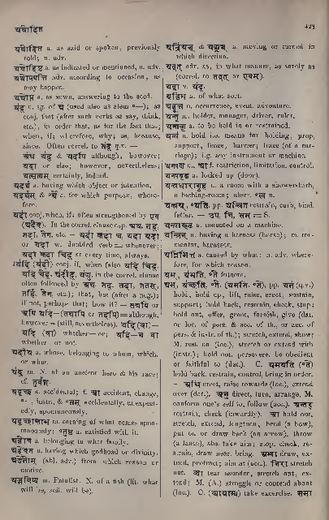
yád ·n. sg. of yá (used also as stem °--); as conj. that (after such verbs as say, think, etc.), in order that, as for the fact that; when, if; wherefore, why; as, because, since. Often correl. to tád q.v. -- ádha yád & yadapi although, however; yadvā or else; however, nevertheless; yatsatyam certainly, indeed.
Monier-Williams 1872 Word type unspecified
Original text · English · Word type unspecified
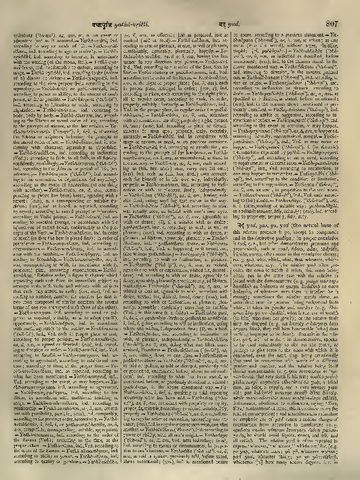
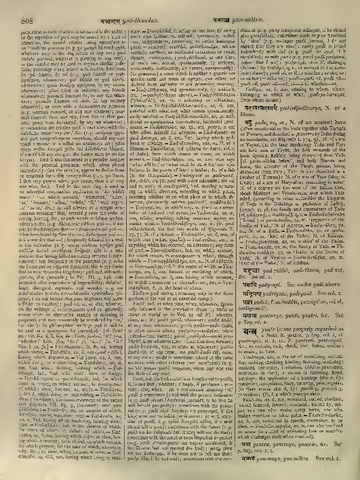
yad yad, yas, yā, yad (the actual base of this relative pronoun is ya, except in compounds and in the derivative yadīya; its proper correlative is tad, q. v., but other demonstrative pronouns and pronominals, such as etad, idam, adas, tādṛśa, īdṛśa, sarva, often occur in the correlative clauses; see 3. ya), who, which, what, that, whoever, which- ever, whatever, any. The relative yad often pre- cedes the noun to which it refers, this noun being either put in the same case with the relative or joined with the demonstrative (e. g. yasya narasya buddhiḥ sa balavān or yasya buddhiḥ sa naro balavān, of whatever man there is intellect he is strong); sometimes the relative stands alone, an antecedent noun or pronoun being understood from which it takes its gender and number (e. g. dha- nena kiṃ yo na dadāti, what is the use of wealth [to him] who does not give?); or the relative itself may be dropped (e. g. na karoty a-kāryaṃ tam āryam āhuḥ, they call him honourable [who] does nothing improper to be done). Sometimes the rela- tive yad, with or without its demonstrative, appears to be used redundantly to eke out the metre, or perhaps to give force to the noun with which it is connected, even the neut. sing. being occasionally thus used in connection with words of a different gender and number, and the relative being itself almost untranslatable (e. g. yan maraṇaṃ so 'sya viśrāmaḥ, that very death is his rest; andho jaḍaḥ pīṭha-sarpī saptatyā sthaviraś-ca yaḥ, a blind man, an idiot, a cripple, and a man seventy years old; yat kṣāntiḥ samaye śrutiḥ Śiva Śivety- uktir mano-nirvṛtir asau mukti-mārge sthitiḥ, forbearance, obedience to ordinances, saying ‘Śiva, Śiva,’ contentment of mind, this is continuance on the road of emancipation); and sometimes this redundant or emphatic use of yad causes a sudden change of construction from accusative to nominative (e. g. apoheta rasān aśmano lavaṇaṃ caiva paśavo ye ca, he should avoid liquids, stones, and salt, and all cattle). The relative yad is often repeated to express ‘whoever,’ ‘whatever,’ ‘whichever,’ &c. (e. g. yo yaḥ, whatever man; yā yā, whatever woman; yad yad, whatever thing; yo yo yāvatithaḥ, whichever [is] how many soever degrees, i. e. in proportion as each of which is advanced in the series); or the repetition of yad may be caused by a kind of attraction, the second relative being equivalent to an indefinite pronoun (e. g. yo yasya bhāvaḥ syāt, whatever may be the disposition of any one; yad rocate yasmai, whatever is pleasing to any one); or the relative may be used to express similar inde- finite meanings when joined with kaścit, kaścana, ko 'pi, kaśca, ko vā (e. g. yaḥ kaścit or yaḥ- kaścana, whosoever; yat kiñcit or yat kiñca, whatsoever; yena kenāpy upāyena, by any means whatsoever; yāni kāni ca mitrāṇi, any friends whatsoever; yasmai kasmai ca, to any one what- ever; yasmin kasmin vā deśe, in any country whatever); or even with a demonstrative pronoun (e. g. yasmai tasmai, to any one whatever; yas- māt tasmāt, from any one, from this or that per- son; yena tena karmaṇā, by any act whatever); or sometimes the relative yad is used alone with the indefinite sense ‘any one,’ &c. (e. g. striyaṃ spṛ- śed yaḥ saṅgrahaṇaṃ smṛtam, should any one touch a woman it is called an adulterous act; yām ajāṃ vṛko hanyāt pāle tat kilviṣam bhavet, if a wolf kill any she-goat the blame must be on the keeper). Yad is also connected in a peculiar manner with the personal pronouns, which, when placed immediately after the relative, appear to derive force or emphasis from this juxtaposition (e. g. yo 'ham, I that very person who; yas tvam, thou that very one who, &c.). Yad in the neut. sing. is used as an adverbial conjunction equivalent to ‘for which reason,’ ‘on which account,’ ‘wherefore,’ ‘since,’ ‘as,’ ‘because,’ ‘when,’ ‘while,’ ‘if,’ ‘with regard to,’ ‘as to,’ &c.; or still oftener as a simple con- junction meaning ‘that,’ especially after the verbs of saying, hearing, &c., or such words as kāma, yukta, āścarya, &c. (e. g. dhīvarair uktaṃ yat — , it was said by the fishermen that — ; śrutaṃ tvayā yat — , it has been heard by thee that — ; āścaryaṃ yat — , it is a wonder that — ); frequently followed by a verb in the indicative (e. g. ayaṃ nūtano nyāyo yad arātiṃ hatvā santāpaḥ kriyate, this is a new doctrine that having killed an enemy remorse is expe- rienced); less frequently in the potential (e. g. eṣa me kāmo yat sa rājyam āpnuyāt, this is my desire that he may obtain the kingdom); yad api, although; yac-ca, that (according to Pāṇ. III. 3, 148, with potential, after expressions of impossibility, disbelief, hope, disregard, reproach, and wonder, e. g. na śrad-dadhe yac-ca tatra-bhavān vṛṣalaṃ yā- jayet, I do not believe that your Highness will allow a Śūdra to sacrifice); yad vā, or, or else, whether, (in the writings of commentators yad vā generally occurs when an alternative reading or meaning is proposed, and may commonly be translated by ‘or,’ ‘or else’): in philosophical writings yaḥ is said to be used as a synonymn for puruṣaḥ: [cf. Zend ya: Gr. ὅ-ς, ἥ, ὅ, ἵνα, ὡς: Goth. ja-bai, ‘if;’ jau, ‘whether:’ Lith. ji-s, ‘he;’ ji, ‘she;’ ju, ‘it:’ Slav. i, ja, je.]
Petersburger 1855 particle
Original text · German · particle
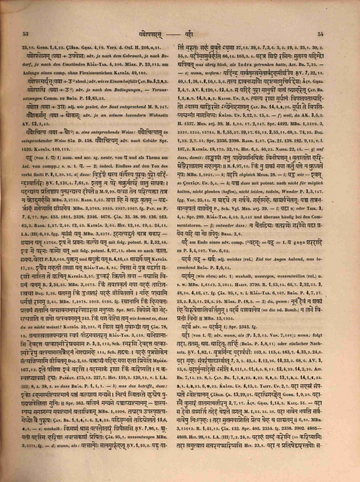
yad (von 1. ya) 1〉 nom. und acc. sg. neutr. von ya und als Thema am Anf. von compp.; s. u. 1. ya. — 2〉 indecl. Einfluss auf den Ton des verbi finiti P. 8,1,30. P. 8,1,56. a〉 dass: vi̱duṣṭè a̱sya vī̱ryàsya pū̱rava̱ḥ puro̱ yadìndrā̱vātìraḥ ṚV. 1,131,4. ṚV. 7,61,2. etattu na pare cakrurnāpare jātu sādhavaḥ . yadanyasya pratijñāya punaranyasya dīyate .. M. 9,99. yatsā tena parityaktā tatra na kroddhumarhasi MBH. 3,2753. RAGH. 1,63. tvayā hi me bahu kṛtam — yadbhartrāhaṃ sameṣyāmi śīghrameva MBH. 3,2763. MBH. 3,2935. MBH. 3,2937. MBH. 3,2967. fg. PAT._zu_P. 7,4,77. Spr. 455. Spr. 1811. Spr. 2338. Spr. 2346. Spr. 4676. ŚĀK. 35. ŚĀK. 38. ŚĀK. 99. ŚĀK. 136. ŚĀK. 163. ŚĀK. 65,3. RAGH. 1,27. RAGH. 2,40. RAGH. 12,43. KATHĀS. 3,64. HIT. 12,10. HIT. 19,4. HIT. 24,11. LA. (III) 6,19. fgg. nṛśaṃsaṃ yat MBH. 3,2371. idamatyadbhutaṃ cātra cakārajaghāna yat MBH. 3,15768. eṣa me prathamaḥ kalpo yat mit folg. potent. R. 2,52,58. eṣa me paramaḥ kāmo yat mit folg. potent. R. 6,97,13, eben so nach kāla, samaya, velā P. 3,3,168. yuktam und ayuktaṃ yat R. 4,16,49. āścaryaṃ yat KATHĀS. 17,28. eṣaiva mahatī lajjā yat RĀJA-TAR. 4,84. cintā me putra yadbhāryā sadṛśī nāsti te kvacit KATHĀS. 3,57. duṣkaraṃ kriyate tvayā — yadyāsi vijanaṃ vanam R. 2,34,35. MBH. 3,2673. kiṃ tavāpakṛtaṃ mayā yadahaṃ tāḍitastvayā DAŚ. 1,36. atastu kiṃ duḥkhataraṃ yadahaṃ jīvitakṣaye . nahi paśyāmi dharmajñaṃ rāmam DAŚ. 2,64. MBH. 1,5878. MBH. 1,5903. MBH. 1,6196. fg. sthānāni kiṃ himavataḥ pralayaṃ gatāni yatsāvamānaparapiṇḍaratā manuṣyāḥ Spr. 807. viyoge ko bhedastyajati na jano yatsvayamamūn Spr. 243. kiṃ yanna vetsi tvam wie kommt es, dass du es nicht weisst? KATHĀS. 52,281. na kila śrutaṃ yuvābhyāṃ yat ŚĀK. 78,18. janāstvalakṣayanyatsa svayaṃ pīṭhamavātarat RĀJA-TAR. 3,458. abhijānāsi devadatta yatkāśmīreṣvavasāma P. 3,2,113, Sch. smarasi devadatta yatkāśmīreṣu vatsyāmastatraudanaṃ bhokṣyāmahe P. 3,2,114, Sch. tadvacaḥ . yadahaṃ putraśokena saṃtyajiṣyāmi jīvitam DAŚ. 2,58. vaktavyaṃ yadiha mayā hatā priyeti MṚCCH. 167,12. ete pakṣiṇa evaṃ vadanti . yadasmākaṃ rājā kiṃ kariṣyati . na kasyāpyāvāsaṃ dadmaḥ PAÑCAT. 175,13. PAÑCAT. 227,7. HIT. 110,3. HIT. 120,12, v. l. LA. (III) 8,2. LA. (III) 38,2. so dass BHĀG. P. 1,1,1. — b〉 was das betrifft, dass: eko 'hamasmītyātmānaṃ yattvaṃ kalyāṇa manyase . nityaṃ sthitaste hṛdyeṣa puṇyapāpekṣitā muniḥ .. Spr. 563. balinaṃ manyase yaccāpyātmānam — jñāsyasyadya samāgamya mayātmānaṃ balādhikam MBH. 1,5996. tadyadapa upaspṛśatyamedhyo vai puruṣaḥ ŚAT. BR. 1,1,1,1. ŚAT. BR. 1,1,1,6. ŚAT. BR. 1,2,1,22. yadvijṛmbhate tadvidyotate ŚAT. BR. 10,6,4,1. — c〉 weshalb: kimāgà āsa̱ yatsto̱tāra̱ṃ jighā̀ṃsasi ṚV. 7,86,4. śrūyatāṃ yadasmi hariṇā bhavatsakāśaṃ preṣitaḥ ŚĀK. 95,1. wessentwegen MBH. 3,2571. fg. — d〉 wann, als: yatsāno̱ḥ sānamu̱rùhat ṚV. 1,10,2. yaddha̱ yāntìṃ ma̱ruta̱ḥ sahà bruva̱te 'dhva̱nnā ṚV. 37,13. ṚV. 39,3. ṚV. 7,3,6. ṚV. 5,3. ṚV. 19,2. ṚV. 25,1. ṚV. 30,3. ṚV. 55,2. yadī̀mā̱śurvahàti ṚV. 66,14. ṚV. 1033,3. ṚV. 7,4. yadatra śiṣṭaṃ rasinaḥ sutasya yadindro apibat was übrig blieb, als: Indra getrunken hatte, AIT. BR. 7,33. — e〉 wenn, wofern: yadìndra̱ yāvàta̱stvame̱tāvàda̱hamīśī̀ya ṚV. 7,32,18. ṚV. 7,40,1. ṚV. 1,38,4. ṚV. 8,10,1. ṚV. 8,5,6. tasya dvāvanadhyāyau yadātmāśuciryaddeśaḥ ĀŚV. GṚHY. 3,4,7. AV. 6,120,1. AV. 12,4,9. sa yadidaṃ purā mānuṣīṃ vācaṃ vyāharet ŚAT. BR. 1,1,4,9. ŚAT. BR. 14,5,4,2. KAUṢ. UP. 3,8. tyasya rājā mūrdhānaṃ vipātayatādyadito 'yāsya āṅgiraso 'nyenodagāyat ŚAT. BR. 14,4,1,26. mūrdhā te vipatiṣyadyanmāṃ nāgamiṣyaḥ CHĀND. UP. 5,12,2. CHĀND. UP. 5,15,2. — f〉 weil, da AK. 3,5,3. H. 1537. MED. avy. 39. M. 1,10. M. 1,17. M. 2,147. Spr. 4492. MBH. 1,5589. MBH. 3,2221. MBH. 3,2244. MBH. 3,15784. R. 1,55,27. R. 1,59,17. R. 1,64,12. R. 2,55,11. R. 2,68,2. R. 2,74,25. DAŚ. 1,39. DAŚ. 2,7. DAŚ. 2,51. Spr. 2336. Spr. 2398. RAGH. 1,87. ŚĀK. 21. ŚĀK. 138. ŚĀK. 182. ŚĀK. 9,13, v. l. ŚĀK. 107,2. KATHĀS. 18,173. KATHĀS. 52,76. HIT. 6,3. HIT. 40,22. NAIṢ. 22,46. — g〉 auf dass, damit: laṅkāyāṃ yattu paśyeyamabhiṣiktaṃ vibhīṣaṇam . vṛtastato hariśreṣṭhairājagāma sahānugaḥ .. R. 6,97,10. kiṃ nu śakyaṃ mayā kartuṃ yatte na krudhyate nṛpaḥ MBH. 1,5921. — h〉 yadapi obgleich MEGH. 28. — i〉 yadu wie — evam so ŚVETĀŚV. UP. 5,4. — k〉 yacca dass mit potent. nach nicht für möglich halten, nicht glauben (hoffen), nicht leiden, tadeln, Wunder P. 3,3,147. fgg. VOP. 25,14. na śraddadhe (na marṣaye, garhāmahe, āścaryametat) yacca tatrabhavānvṛṣalaṃ yājayet P., Sch. Vgl. MED. avy. 39. — l〉 yadvā α〉 oder TRIK. 3. TRIK. 4,4. Spr. 289. RĀJA-TAR. 4,59. RĀJA-TAR. 5,441 und überaus häufig bei den Commentatoren. — β〉 entweder dass: na caitadvidmaḥ kataranno garīyo yadvā jayema yadi vā no jayeyuḥ BHAG. 2,6.
Böhtlingk 1879 particle · Word type unspecified
Original text · German · particle
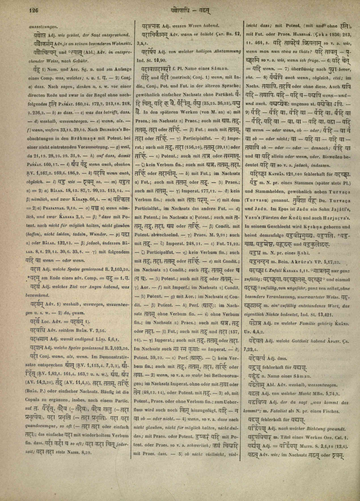
yád — 1〉 Nom. und Acc. Sg. n. und am Anfange eines Comp. was, welches; s. u. 1. ya — 2〉 Conj. — a〉 dass. Nach sagen, denken u. s. w. vor einer directen Rede und zwar in der Regel ohne nachfolgendes iti PAÑCAT. 160,24. PAÑCAT. 172,7. PAÑCAT. 213,18. PAÑCAT. 218,2. PAÑCAT. 236,2. — b〉 so dass. — c〉 was das betrifft, dass. — d〉 weshalb, wessentwegen. — e〉 wann, als. — f〉 wenn, wofern Chr. 33,18. Chr. 39,10. Nach DELBRÜCKʼs Beobachtungen in den Brāhmaṇa mit Potent. bei einer nicht eintretenden Voraussetzung. — g〉 weil, da Chr. 21,19. Chr. 28,25. Chr. 28,29. Chr. 31,9. — h〉 auf dass, damit PAÑCAT. 160,17. — i〉 ádha yád wenn auch, obschon ṚV. 1,167,2. 169,6. 186,9. — k〉 yadapi wenn auch, obgleich. — l〉 yadu wie — evam so. — m〉 yaduta — α〉 = 2〉a〉 BĀLAR. 18,13. 87,7. 99,23. 115,14. — β〉 nämlich, und zwar KĀRAṆḌ. 66,7. — n〉 yatkila = 2〉a〉 PRASANNAR. 9,10. — o〉 yacca — α〉 wenn nämlich, und zwar CARAKA. 2,3. — β〉 *dass mit Potent. nach nicht für möglich halten, nicht glauben (hoffen) nicht leiden, tadeln, Wunder. — p〉 yadvā — α〉 oder BĀLAR. 132,13. — β〉 jedoch, indessen BĀLAR. 8,1. 29,14. 30,6. 35,3. — γ〉 mit folgendem yadi vā wenn — oder wenn.
Original text · German · Word type unspecified
yad V. yacca-yacca sowohl — als auch DIVYĀVAD. 77,7. [Nachtrag, Band 7]
Apte 1890 particle · pronoun
Original text · English · particle · pronoun
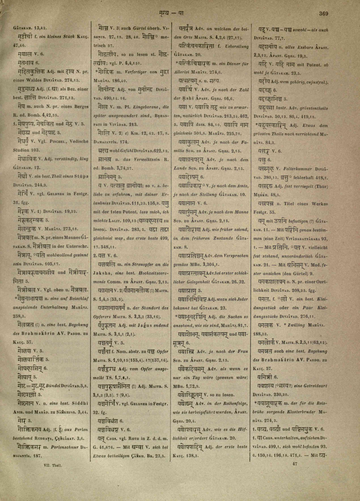
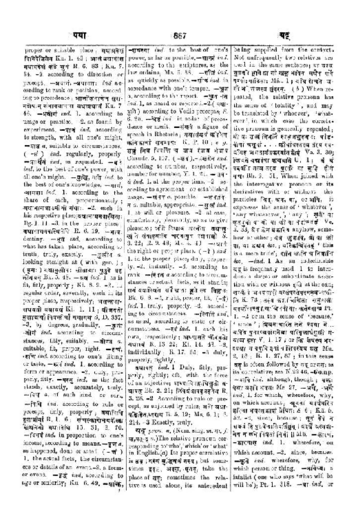
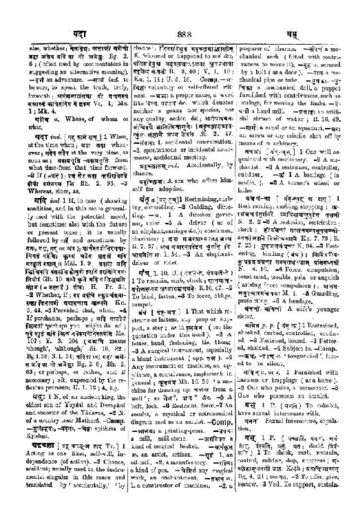
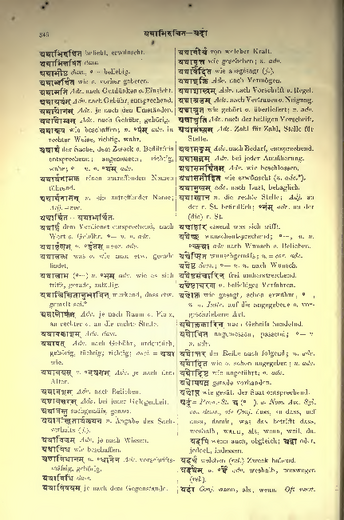
yad pron. a. (Nom. sing. m. yaḥ, f. yā, yat-d n.) The relative pronoun corresponding to ‘who’, ‘which’ or ‘what’ in English. (a) Its proper correlative is tad; yasya buddhibalaṃ tasya; but sometimes idaṃ, adas, etad, take the place of tad; sometimes the relative is used alone, its antecedent ([Page 0887-c]) being supplied from the context. Not unfrequently two relatives are used in the same sentence; yā yasya yujyate bhūmikrā tāṃ khalu bhāve na tathaiva sarve vargyāḥ pāṭhitāḥ Māl. 1; yadeva rocate yasmai bhavet tat tasya suṃdaram. (b) When repeated, the relative pronoun has the sense of ‘totality’, and may be translated by ‘whoever’, ‘whatever’, in which case the correlative pronoun is generally repeated; yo yaḥ śastraṃ vibharti svabhujagurubalaḥ pāṃḍavīnāṃ camūnāṃ… krodhāṃdhastasya tasya svayamiha jagatāmaṃtakasyāṃtakohaṃ Ve. 3. 30; kriyate yadyadeṣā kathayati U. 1; yaṃ yaṃ paśyasi tasya tasya purato mā brūhi dīnaṃ vacaḥ Bh. 2. 51. When joined with the interrogative pronoun or its derivatives with or without the particles cid, cana, vā, or api, it expresses the sense of ‘whatever’, ‘any whatsoever,’, ‘any’; suto vā sūtaputro vā yo vā ko vā bhavāmyahaṃ Ve. 3. 33; yena kena prakāreṇa anyhow, somehow or other; yatra kutrāpi, yo vā ko vā, yaḥ kaścana &c.; yatkiṃcidetad ‘this is a mere trifle’; yāni kāni ca mitrāṇi &c. — ind. As an indeclinable yad is frequently used 1 to introduce a direct or subordinate assertion with or without iti at the end; satyoyaṃ janapravādo yatsaṃpatsaṃpadamanubadhnātīti K. 73; tasya kadācicciṃtā samutpannā yadarthotpattyupāyāściṃtanīyāḥ kartavyāśca Pt. 1. 2 or in the sense of ‘because,’ ‘since’; priyamācarita late tvayā me… yadiyaṃ punarapyapāṃganetrā parivṛttārdhamukhī mayādya dṛṣṭā V. 1. 17; or kiṃ śeṣasya bharavyathā na vaṣuṣi kṣmāṃ na kṣipatyeṣa yat Mu. 2. 18; R. 1. 27, R. 1. 87; in this sense yad is often followed by tad or tataḥ as its correlative; see N. 22. 46. Comp. — api ind. although, though; vakraḥ paṃthā yadapi bhavataḥ Me. 27. — arthaṃ, -arthe ind. 1 for which, wherefore, why, on which account; śrūyatāṃ yadarthamasmi hariṇā bhavatsakāśaṃ preṣitaḥ Ś. 6; Ku. 5. 52. 2 since, because; nūnaṃ daivaṃ na śakyaṃ hi purupeṇātivartitum . yadarthaṃ yatnavāneva na labhe vipratāṃ vibho .. Mb. — kāraṇaṃ, — kāraṇāt ind. 1 wherefore, on which account. 2 since, because. — kṛte ind. wherefore, why, for which person or thing. — bhaviṣyaḥ a fatalist (one who says ‘what will be will be’); Pt. 1. 318. — vā ind. or ([Page 0888-a]) else, whether; naitadvidmaḥ kataranno garīyo yadvā jayema yadi vā no jayeyuḥ Bg. 2. 6; (often used by commentators in suggesting an alternative meaning). — vṛttaṃ an adventure. — satyaṃ ind. to be sure, to speak the truth, truly, forsooth; amaṃgalāśaṃsayā vo vacanasya yatsatyaṃ kaṃpitamiva me hṛdayaṃ Ve. 1; Mu. 1; Mk. 4.
Cappeller 1887 Word type unspecified
Original text · German · Word type unspecified
yad́ = Pron.-St. ya (˚—), u. Nom. Acc. Sgl. von dems., als Conj. dass, so dass, auf dass, damit, was das betrifft dass, weshalb, wann, als, wenn, weil, da. yadapi wenn auch, obgleich; yadvā oder, jedoch, indessen.
Burnouf 1866 Word type unspecified
Original text · French · Word type unspecified
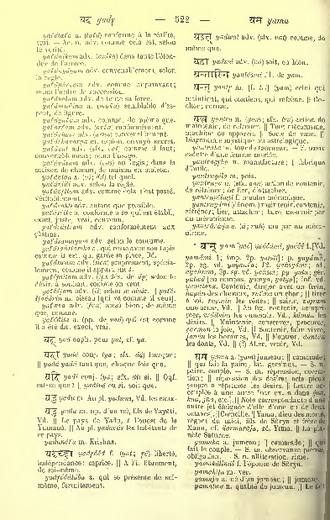
yad yad euph. pour yat, cf. ya.
Derived words
Occurrences in source texts (314)
DYS 33 occurrences
11 more source pages
DYS 89–93: Stages of Development 2 occurrences
Direct occurrences
DYS 94–97: Pratyāhāra 8 occurrences
Direct occurrences
DYS 150–153*3: Vajrolī: Secret Teaching 6 occurrences
Direct occurrences
DYS 168–179*1: Vajrolī for the Yoginī 2 occurrences
Direct occurrences
GoS 13 occurrences
GoS 1–8: Learning and Liberation 3 occurrences
Direct occurrences
GoS 20–28: Setting Sarasvatī in Motion 2 occurrences
Direct occurrences
GoS 81–88: Moon, Fluid and Union 2 occurrences
Direct occurrences
HP 58 occurrences
19 more source pages
HP 3.33-3.48*1: Khecarī and Soma 9 occurrences
Direct occurrences
HP 3.58-3.65: Uḍḍiyāna Bandha 3 occurrences
Direct occurrences
Occurrences through derived words
-
HP 3.58 Segment 7
HP 3.73-3.78: Viparīta Karaṇī 3 occurrences
Direct occurrences
HP 3.87-3.93*7: Sahajolī and Amarolī 5 occurrences
Direct occurrences
HP 3.103-3.107*2: Conclusion of the Mudrā Teaching 2 occurrences
Direct occurrences
-
HP 3.107*1 Segment 4
-
HP 3.107*2 Segment 5
HP 4.0*1-4.0*14: Samādhi and Laya 2 occurrences
Direct occurrences
HP 4.9-4.11*4: Gaze and Lunar Nectar 2 occurrences
Direct occurrences
HP 4.35*1-4.36: Signs of Samādhi 2 occurrences
Direct occurrences
HP 4.47-4.55*4: Nāda Binds the Mind 4 occurrences
Direct occurrences
HP 4.56-4.66: The Middle Path 2 occurrences
Direct occurrences
HTK 4 occurrences
IVU 14 occurrences
IVU 9-11: Insufficiency of Knowledge 4 occurrences
Direct occurrences
IVU 12-14: Insufficiency of Becoming 4 occurrences
Direct occurrences
MAN 7 occurrences
SiSa 93 occurrences
SiSa 1.45-1.50: Rückkehr zum Bewusstsein 2 occurrences
Direct occurrences
SiSa 1.51-1.64: Selbst als Licht 9 occurrences
Direct occurrences
-
SiSa 1.54 Segment 1
-
SiSa 1.56 Segment 1
-
SiSa 1.57 Segment 1
-
SiSa 1.57 Segment 12
-
SiSa 1.59 Segment 1
Occurrences through derived words
SiSa 1.65-1.70: Māyā-Aufhebung 2 occurrences
Direct occurrences
-
SiSa 1.66 Segment 4
Occurrences through derived words
-
SiSa 1.66 Segment 8
SiSa 1.71-1.81: Avidyā und Elemente 3 occurrences
Direct occurrences
Occurrences through derived words
-
SiSa 1.76 Segment 12
28 more source pages
SiSa 1.82-1.90: Guṇas und Gegenstände 3 occurrences
Direct occurrences
SiSa 3.55-3.60: Ghaṭāvasthā 5 occurrences
Direct occurrences
SiSa 3.61-3.67: Paricaya und Niṣpatti 3 occurrences
Direct occurrences
SiSa 3.68-3.80: Vāyusādhana 6 occurrences
Direct occurrences
SiSa 3.84-3.87: Siddhāsana 3 occurrences
Direct occurrences
SiSa 3.92-3.94: Ugrāsana 3 occurrences
Direct occurrences
SiSa 4.9-4.20: Yonimudrā-Geheimnis 5 occurrences
Direct occurrences
SiSa 4.31-4.36: Mahāmudrā-Wirkung 2 occurrences
Direct occurrences
SiSa 4.43-4.50: Mahāvedha 3 occurrences
Direct occurrences
SiSa 4.51-4.59: Khecarīmudrā 5 occurrences
Direct occurrences
SiSa 4.69-4.71: Viparītakṛti 3 occurrences
Direct occurrences
SiSa 4.72-4.77: Uḍḍyānabandha 2 occurrences
Direct occurrences
SiSa 4.95-4.100: Sahajolī und Amarolī 3 occurrences
Direct occurrences
SiSa 4.101-4.104: Bindu-Siddhi 4 occurrences
Direct occurrences
-
SiSa 4.101 Segment 5
-
SiSa 4.102 Segment 5
-
SiSa 4.103 Segment 4
-
SiSa 4.104 Segment 11
SiSa 4.105-4.111: Śakticālana 4 occurrences
Direct occurrences
-
SiSa 4.106 Segment 6
-
SiSa 4.108 Segment 1
-
SiSa 4.108 Segment 9
-
SiSa 4.110 Segment 1
SiSa 5.113-5.120: Anāhata 2 occurrences
Direct occurrences
-
SiSa 5.116 Segment 7
-
SiSa 5.119 Segment 1
SiSa 5.132-5.143: Innere Vārāṇasī 1 occurrence
Occurrences through derived words
-
SiSa 5.134 Segment 6
SiSa 5.223-5.233: Praxis im Leben 4 occurrences
Direct occurrences
-
SiSa 5.223 Segment 4
-
SiSa 5.230 Segment 8
-
SiSa 5.232 Segment 10
-
SiSa 5.233 Segment 1
SiSa 5.234-5.252: Tripurā-Mantra 4 occurrences
Direct occurrences
-
SiSa 5.234 Segment 4
-
SiSa 5.242 Segment 4
-
SiSa 5.243 Segment 5
-
SiSa 5.243 Segment 6
SiSa 5.253-5.260: Haushalter-Abschluss 2 occurrences
Direct occurrences
-
SiSa 5.255 Segment 1
-
SiSa 5.256 Segment 5
SS 1 occurrence
SVU 67 occurrences
SVU 2.17: Reverence for the Presence in All 5 occurrences
Direct occurrences
SVU 3.1-3.4: The One Rudra 5 occurrences
Direct occurrences
16 more source pages
SVU 3.5-3.6: Rudra's Auspicious Form 2 occurrences
Direct occurrences
SVU 3.7-3.9: The Supreme Puruṣa 2 occurrences
Direct occurrences
SVU 3.10-3.12: The Formless Light 3 occurrences
Direct occurrences
SVU 3.13-3.18: In the Heart and in the World 4 occurrences
Direct occurrences
SVU 4.1-4.5: The One in Every Form 2 occurrences
Direct occurrences
SVU 4.6-4.10: Two Birds and Māyā 4 occurrences
Direct occurrences
SVU 4.11-4.16: The Hidden Creator 7 occurrences
Direct occurrences
SVU 4.17-4.22: Knowledge and Protection 4 occurrences
Direct occurrences
SVU 5.1–5.6: The Lord of Cosmic Origins 7 occurrences
Direct occurrences
SVU 5.7–5.11: The Wandering Self 4 occurrences
Direct occurrences
SVU 6.1–6.6: Lord of Cosmic Unfolding 4 occurrences
Direct occurrences
SVU 6.7–6.13: Lord of All Lords 4 occurrences
Direct occurrences
VBT 24 occurrences
8 more source pages
VBT 121–129: Devotion and Release 5 occurrences
Direct occurrences
VBT 139–145: Fruit of the Ways 2 occurrences
Direct occurrences
Continue with AYI Free
Image source: AYI archive.