

abhi अभि – towards; against; upon
adjective · adverb · particle · previx · Word type unspecified
Dictionary sources
AYI dictionary previx
towards; against; upon
Cappeller 1891 adverb
Original text · English · adverb
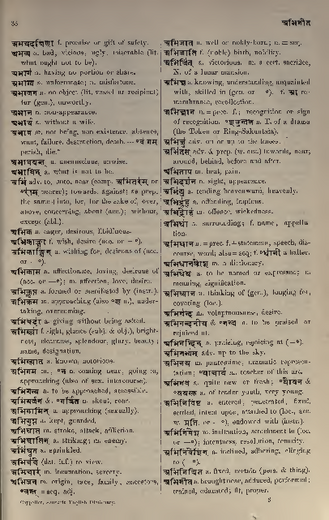
abhí ·adv. to, unto, near (comp. abhitarám or °rā́m nearer); towards, against; as prep. the same + into, for, for the sake of, over, above, concerning, about (acc.); without, except (abl.).
Monier-Williams 1872 particle
Original text · English · particle
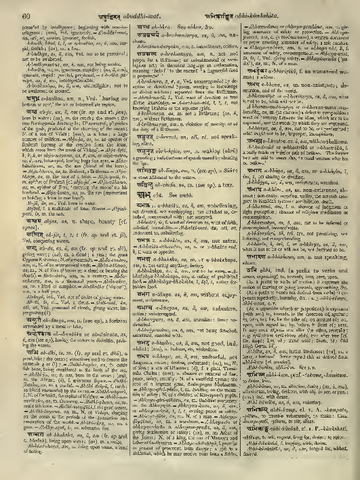
abhi abhi, ind. (a prefix to verbs and nouns, expressing) to, towards, into, over, upon. .(As a prefix to verbs of motion) it expresses the notion of moving or going towards, approaching, &c. .(As a prefix to nouns not derived from verbs) it ex- presses superiority, intensity, &c.; e. g. abhi-tāmra, abhi-nava, q. v. . (As a separable adverb or preposition) it expresses (with acc.) to, towards, in the direction of, against; in, into, to; for, for the sake of; on account of; on, upon, with regard to; by, before, in front of; over. It may even express one after the other, severally; e. g. vṛkṣam vṛkṣam abhi, tree after tree [cf. Gr. ἀμφί Lat. ob; Zend aibi; Goth. bi; Old High Germ. bī].
Petersburger 1855 adverb · Word type unspecified
Original text · German · adverb
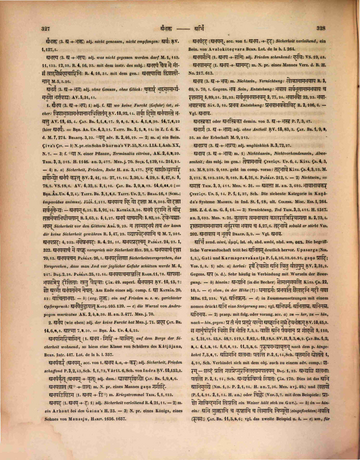
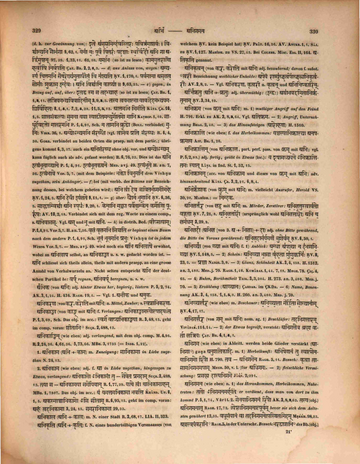
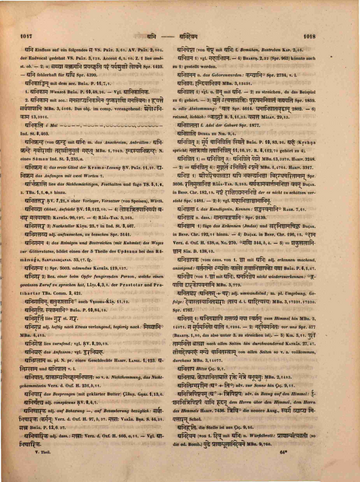
abhí zend. aiwi, ἀμφί, lat. ob, ahd. umbi, nhd. um, объ. Die begriffliche Verwandtschaft tritt bei abhitas deutlich hervor. Upasarga (NIR. 1,3.), Gati und Karmapravacanīya P. 1,4,56. P. 1,4,59. P. 1,4,60. P. 1,4,91. gaṇa prādi; VOP. 1,8. 1〉 adv. a〉 herbei: rathàṃ devāso a̱bhi vi̱kṣu vā̀ja̱yum ṚV. 2,31,2. Gegens. apa (s. d.). Sehr häufig in Verbindung mit Wurzeln der Bewegung. — b〉 hinein: abhyabhi (in die Becher) somānunnayanti KĀTY. ŚR. 22,10,5. — c〉 oben, in der Höhe (?): dhanāddharmaḥ prabhavati śailādabhi nadī yathā MBH. 12,228. Vgl. abhikrama. — d〉 in Zusammensetzungen mit einem nomen drückt abhi eine Steigerung aus; vgl. abhidharma, abhitāmra, abhinamra, abhinava. — 2〉 praep. mit folg. oder vorang. acc. a〉 zu — her, zu — hin, nach — hin, gegen: pra taṃ nàya prata̱raṃ vasyo̱ acchā̱bhi su̱mnaṃ de̱vabhàktam ṚV. 10,45,9. sa mānùṣīra̱bhi viśo̱ vi bhā̀ti ṚV. 7,5,2. vājā̀m̐ a̱bhi pàvamāna̱ pra gā̀hase ṚV. 9,110,2. ṚV. 1,31,18. ṚV. 1,45,8. ṚV. 1,48,7. ṚV. 1,119,1. ṚV. 8,82,4. ṚV. 10,18,8. SV. II, 9,3,6,2. ŚAT. BR. 1,2,3,4. ŚAT. BR. 4,1,5,16. ŚAT. BR. 6,6,1,12. ŚAT. BR. 11,5,5,6. puruṣamabhyāvṛttam nach dem p. hingekehrt ŚAT. BR. 7,5,1,7. agnimabhi śalabhāḥ patanti P. 2,1,14, Sch. vṛkṣamabhi dyotate P. 1,4,91, Sch. Verbindet sich mit dem obj. auch zu einem adv. comp.: śaram — śabdaṃ prati gajaprepsurabhilakṣyamapātayam DAŚ. 1,22. abhyagni śalabhāḥ patanti P. 2,1,14, Sch. abhyarkabimbaṃ sthitaḥ ŚĀK. 170. Dies ist das abhi ābhimukhye (NIR. 1,3. P. 2,1,14. H. an. 7,36. MED. avy. 49.) und lakṣaṇe (P. 1,4,91. P. 2,1,14. H. an.) oder cihne (VOP. 5,7. mit dem Beispiele: prājño govindamabhi tiṣṭhati ein Weiser hält sich zu Gov.). — b〉 in — hinein: abhi śuklāni ca kṛṣṇāni ca lomāni niṣyūto (eingeflochten) bhavati (rukmaḥ) ŚAT. BR. 11,5,5,6; vgl. das zweite Beispiel u. h. — c〉 um, für (d. h. zur Gewinnung von): e̱te àsṛgra̱mindàvasti̱raḥ pa̱vitràmā̱śavàḥ . viśvā̀nya̱bhi saubhàgā ŚAT. BR. 11,9,62,1. yenā̀ na̱ḥ pūrvè pi̱taràḥ pada̱jñāḥ sva̱rvidò a̱bhi gā adrìmu̱ṣṇan ŚAT. BR. 97,39. ŚAT. BR. 1,33,11. ŚAT. BR. 1,61,10. ya̱mabhi (so ist zu lesen) kā̱mamu̱ttarāṇi havī̱ṃṣi nirva̱pati ŚAT. BR. 2,2,1,5. — d〉 aus Anlass von, wegen: a̱nyasyà ci̱ttama̱bhi sàṃca̱reṇyamu̱tādhī̀ta̱ṃ vi nàśyati ṚV. 1,170,1. pavàmānā asṛkṣata̱ somā̀ḥ śu̱krāsa̱ indàvaḥ . a̱bhi viśvā̀ni̱ kāvyā̀ .. ṚV. 9,63,25. — e〉 gegen, in Bezug auf, auf, über: etaddha sma sa tadabhyāha (so ist zu lesen) ŚAT. BR. 1,1,2,11. kṣatriyamabhyavivādinīm ŚAT. BR. 3,9,3,3. tasya tvayamātmā yāvadidamabhyayamagnirvihitaḥ ŚAT. BR. 8,1,4,1. ŚAT. BR. 7,2,4,28. ŚAT. BR. 11,5,5,12. āttamabhi mimīte KĀTY. ŚR. 10,1,5. śāntasaṃkalpaḥ sumanā yathā syādvītamanyurgautamo mābhi KAṬHOP. 1,10. sādhurdevadatto mātaramabhi P. 1,4,91, Sch. na tāmabhi kruddho (BOLL. verbindet) muniḥ VIKR. 36,1. anyo'nyamabhi saṃrabdhau (vgl. tvāmeva prati saṃrabdhaḥ R. 6,4,30. R. 6,4,GORR. verbindet an beiden Orten die praep. mit dem partic.; übrigens kommt GORR. 6,3,17. auch ein abhisaṃrabdha ohne obj. vor, und anyo'nyam kann füglich auch als adv. gefasst werden) R. 6,76,32. Dies ist das abhi itthaṃbhūtākhyāne P. 1,4,91. itthaṃbhūtakathane MED. avy. 49. itthaṃbhūte H. an. 7,36. itthaṃbhāve VOP. 5,7. (mit dem Beispiele: bhakto-vibhumabhi dem Viṣṇu zugethan, sein Anhänger). — f〉 bei (mit verbb. des Bittens. zur Bezeichnung dessen, bei welchem gebeten wird): a̱bhi tvā̀ deva savitarbhā̱gamī̀mahe ṚV. 1,24,3. a̱bhi de̱vām̐ iyàkṣate ṚV. 9,11,1. — g〉 über: dyaurna bhūmā̱bhi ṚV. 6,36,5. sā̱hvānviśvā̀ a̱bhi spṛdhàḥ ṚV. 9,20,1. kenā̱bhi ma̱hnā parvàtā̱nkena̱ karmā̀ṇi̱ pūrùṣaḥ AV. 10,2,18. Verbindet sich mit dem reg. Worte zu einem comp., s. abhivāsas. Vgl. as und bhū mit abhi. — h〉 in distrib. Bed. (vīpsāyām) P. 1,4,91. VOP. 5,7. H. an. 7,36. vṛkṣaṃ vṛkṣamabhi siñcati er begiesst einen Baum nach dem andern P. 1,4,91, Sch. bhūtaṃ bhūtamabhi prabhuḥ Viṣṇu ist in jedem Wesen VOP. 5,7. — MED. avy. 49. wird noch ein abhi abhilāṣe erwähnt, wobei an abhilāṣa selbst, an abhikāṅkṣā u. s. w. gedacht worden ist. — abhi schliesst sich theils allein, theils mit andern praepp. an eine grosse Anzahl von Verbalwurzeln an. Nicht selten entspricht abhi der deutschen Partikel be: varṣ regnen, abhivarṣ beregnen, u. s. w.
Original text · German · Word type unspecified
abhi Einfluss auf ein folgendes sa VS. PRĀT. 3,61. AV. PRĀV. 2,104. der Endvocal gedehnt VS. PRĀT. 3,128. Accent VS. PRĀT. 6,5. VS. PRĀT. 6,10. Z. 1 lies amb- st. ob. — 2〉a〉 sakhyā vaktramabhi prayacchati paraṃ paryaśruṇī locane Spr. 1425. — abhi fehlerhaft für adhi Spr. 4390.
Böhtlingk 1879 adjective · adverb · particle
Original text · German · adjective
2. abhi Adj. furchtlos MBH. 1,221,67. [Nachtrag, Band 7]
Original text · German · adverb · particle
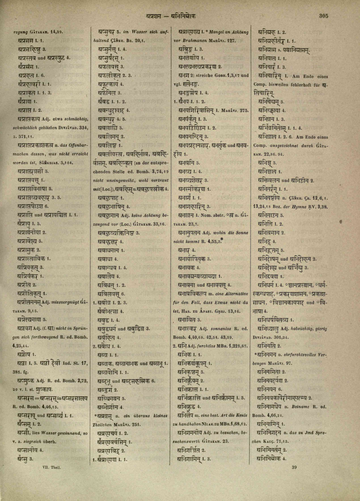
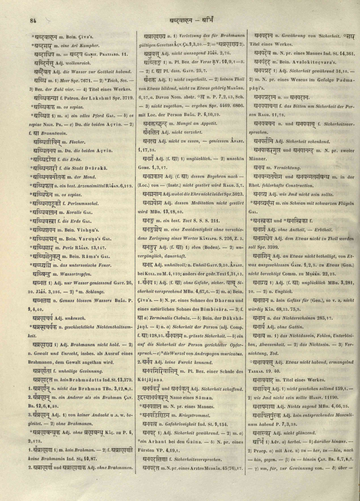
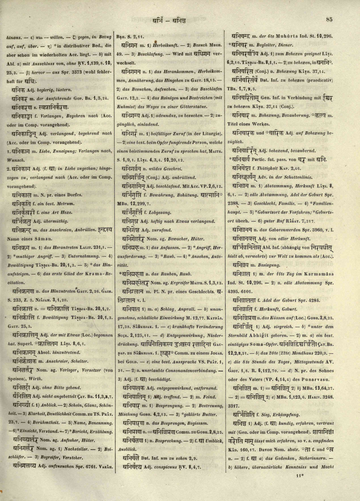
abhí — 1〉 Adv. — a〉 herbei. — b〉 darüber hinaus. — 2〉 Praep. — a〉 mit Acc. — α〉 zu — her, zu — hin, nach — hin, gegen. — β〉 in — hinein ŚAT. BR. 6,7,1,7. — γ〉 um, für, zur Gewinnung von. — δ〉 über — hinaus. [Page1-085-a] — ε〉 um — willen. — ζ〉 gegen, in Bezug auf, auf, über. — η〉 *in distributiver Bed., die aber schon im wiederholten Acc. liegt. — b〉 mit Abl. — α〉 mit Ausschluss von, ohne ṚV. 1,139,8. 10,25,3. — β〉 hervor, — aus Spr. 3573 (wohl fehlerhaft für adhi).
Apte 1890 particle
Original text · English · particle
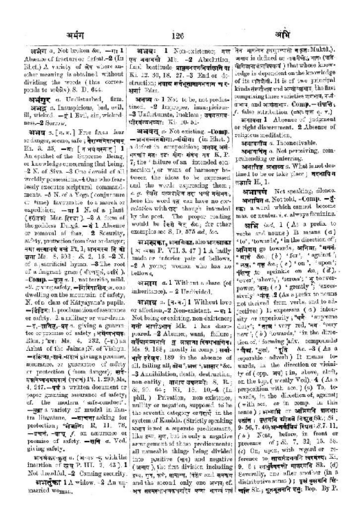
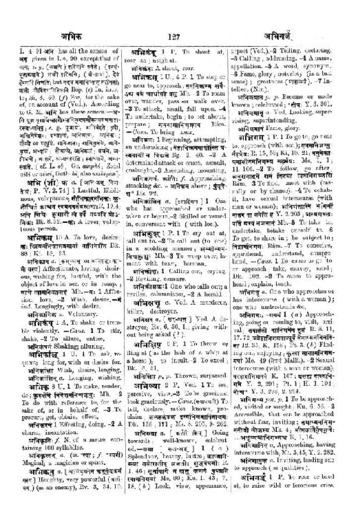
abhi ind. 1 (As a prefix to verbs and nouns) It means (a) ‘to’, ‘towards’, ‘in the direction of’; abhigam go towards, abhiyā, ˚gamanaṃ, ˚yānaṃ &c.; (b) ‘for’, ‘against’; ˚laṣ, ˚pat &c.; (c) ‘on’, ‘upon’; ˚siṃc to sprinkle on &c.; (d), ‘over’, ‘above’, ‘across’; ˚bhū to overpower, ˚tan; (e) ‘greatly’; ‘excessively’ ˚kaṃp. 2 (As a prefix to nouns not derived from verbs, and to adjectives) It expresses (a) intensity or superiority; ˚dharmaḥ ‘supreme duty’; ˚tāmra ‘very red, ˚nava ‘very new’; (b) ‘towards,’ ‘in the direction of,’ forming adv. compounds; ˚caidyaṃ, ˚mukhaṃ, ˚dūti &c. 3 (As a separable adverb) It means towards, in the direction or vicinity of (opp. apa); in, above, aloft, on the top, (mostly Ved). 4 (As a preposition with acc.) (a) To, towards, in the direction of, against; (with acc. or in comp. in this sense); abhyāgni or agnimabhi śalabhāḥ pataṃti; vṛkṣamabhi dyotate vidyut Sk.; Śi. 9. 56, Śi. 7. 40; abhyarkabiṃbaṃ sthitaḥ Ś. 7. 11. (b) Near, before, in front or presence of; Śi. 7. 32; Śi. 15. 58. (c) On, upon, with regard or reference to; sāyamaṃḍanamabhi tvarayaṃtyaḥ Ki. 9. 6; sādhurdevadatto mātaramabhi Sk. (d) Severally, one after another (in a distributive sense); vṛkṣaṃ vṛkṣamabhi siṃcati Sk.; bhūtabhūtamabhi prabhuḥ Bop. By ([Page 0127-a]) P. I. 4. 91 abhi has all the senses of anu given in P. I. 4. 90 except that of bhāga; e. g. (lakṣaṇe) harimabhi vartate; ( itthaṃbhūtākhyāne) bhakto harimabhi; (vīpsāyāṃ), devaṃ devamabhi siṃcati; but yadatra mamābhiṣyāt taddīyatāṃ; prājño goviṃdamabhitiṣṭhati Bop. (e) In, into, to; Śi. 8. 60. (f) For, for the sake of, on account of (Ved.). According to G. M. abhi has these senses: — abhi, pūjābhṛśārthecchāsaumyābhimukhyasaurūpyavacanāhārasvādhyāyeṣu; e. g. pūjāyāṃ, abhivaṃdate; bhṛśe, abhiniveśaḥ; icchāyāṃ, abhilāṣaḥ, abhikaḥ; saumye or mādhurye, abhijātaḥ; ābhimukhye, abhimukhaṃ, abhyagni; saurūpye, abhirūpaṃ; vacane, abhidhatte; āhāre, abhyavaharati; svādhyāye, abhyasyāti. [cf. L. ob; Gr. amphi; Zend aibi or aiwi, Goth. bi; also umbi; um].
Cappeller 1887 adverb · Word type unspecified
Original text · German · adverb
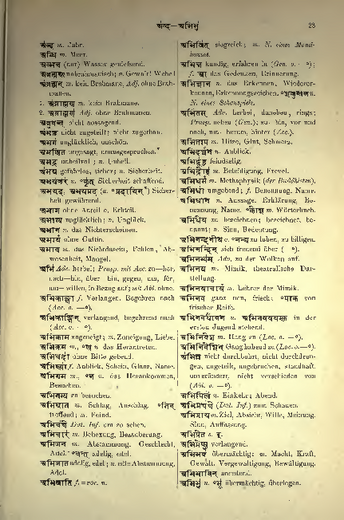
abhí Adv. herbei; Praep. mit Acc. zu—her, nach—hin, über—hin, gegen, um, für, um—willen, in Bezug auf; mit Abl. ohne.
Original text · German · Word type unspecified
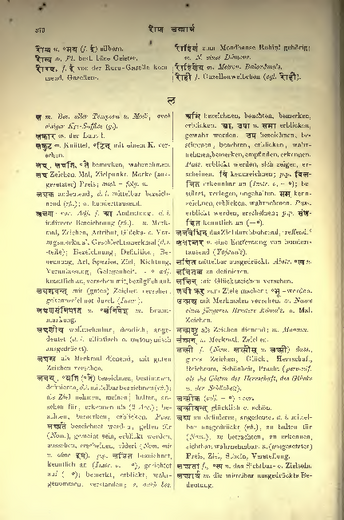
abhi bezeichnen, beachten, bemerken, erblicken. ā, upā u. samā erblicken, gewahr werden. upa bezeichnen, bestimmen, beachten, erblicken, wahr- nehmen, bemerken, empfinden erkennen. Pass. erblickt werden, sich zeigen, er- scheinen. vi kennzeichnen; p. p. vilakṣita erkennbar an (Instr. o. —˚); be- stürzt, verlegen, ungehalten. sam kennzeichnen, erblicken, wahrnehmen. Pass. erblickt werden, erscheinen; p. p. saṃlakṣit kenntlich an (—˚).
Burnouf 1866 previx
Original text · French · previx
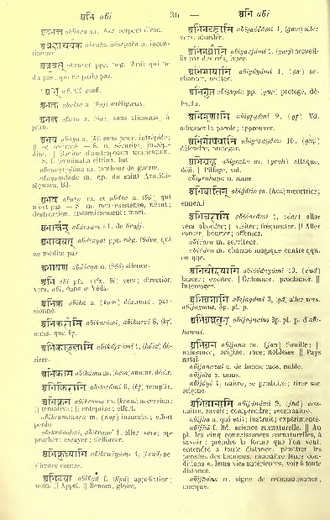
abhi abhi pfx. (sfx. bhi) vers; direction vers. abhī, dans le Veda.
Derived words
Further derivatives (1)
Occurrences in source texts (90)
DYS 18 occurrences
8 more source pages
GoS 1 occurrence
HP 27 occurrences
HP 3.10-3.18: Mahāmudrā 3 occurrences
Direct occurrences
HP 3.19-3.25: Mahābandha 4 occurrences
Direct occurrences
10 more source pages
HP 3.73-3.78: Viparīta Karaṇī 2 occurrences
Direct occurrences
HP 3.103-3.107*2: Conclusion of the Mudrā Teaching 2 occurrences
Direct occurrences
-
HP 3.105 Segment 6
-
HP 3.107*2 Segment 6
HP 4.0*1-4.0*14: Samādhi and Laya 2 occurrences
Direct occurrences
HP 4.11*5-4.11*14: Khecarī in Space 2 occurrences
Direct occurrences
-
HP 4.11*11 Segment 9
-
HP 4.11*12 Segment 1
HP 4.11*15-4.11*28: Space and Laya 2 occurrences
Direct occurrences
-
HP 4.11*17 Segment 2
Occurrences through derived words
-
HP 4.11*15 Segment 11
HTK 4 occurrences
HTK 10.34*2–38*1: Asvaṅgaśṛṅkhalā and Kumbhāntaraśṛṅkhalā 1 occurrence
Direct occurrences
-
HTK 10.37 Segment 31
IVU 1 occurrence
PJH 3 occurrences
PYS 7 occurrences
PYS 2.46–48: Āsana as a Seated Posture 1 occurrence
Occurrences through derived words
-
PYS 2.48 Segment 4
PYS 2.49–51: Prāṇāyāma as Breath Suspension 2 occurrences
Occurrences through derived words
PYS 3.9–12: Three Transformations of Citta 1 occurrence
Occurrences through derived words
-
PYS 3.9 Segment 4
PYS 3.44–46: Mastery over the Elements 1 occurrence
Occurrences through derived words
-
PYS 3.45 Segment 8
SiSa 21 occurrences
SiSa 4.26-4.30: Mahāmudrā-Praxis 2 occurrences
Direct occurrences
12 more source pages
SiSa 5.94-5.101: Mūlādhāra-Siddhis 1 occurrence
Occurrences through derived words
-
SiSa 5.97 Segment 2
SiSa 5.191-5.207: Kailāsa und Mahāśūnya 2 occurrences
Direct occurrences
-
SiSa 5.202 Segment 14
-
SiSa 5.205 Segment 9
SiSa 5.208-5.222: Rājayoga 2 occurrences
Direct occurrences
-
SiSa 5.220 Segment 2
-
SiSa 5.222 Segment 16
SS 1 occurrence
SS 3.40–3.42: Desire and Liberation 1 occurrence
Occurrences through derived words
-
SS 3.40 Segment 1
SVU 6 occurrences
VBT 1 occurrence
Continue with AYI Free
Image source: AYI archive.