

vīra वीर – Held
Adjektiv · Substantiv Maskulin · Substantiv Neutrum · Worttyp nicht bestimmt
Wörterbuchquellen
AYI Wörterbuch Substantiv Maskulin
Held
Cappeller 1891 Substantiv Maskulin
Originaltext · Englisch · Substantiv Maskulin
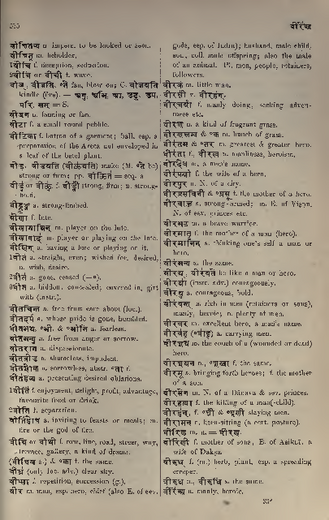
vīrá ·m. man, esp. hero, chief (also E. of sev. gods, esp. of Indra); husband, male child, son, coll. male offspring; also the male of an animal. Pl. men, people, retainers, followers.
Monier-Williams 1872 Adjektiv
Originaltext · Englisch · Adjektiv
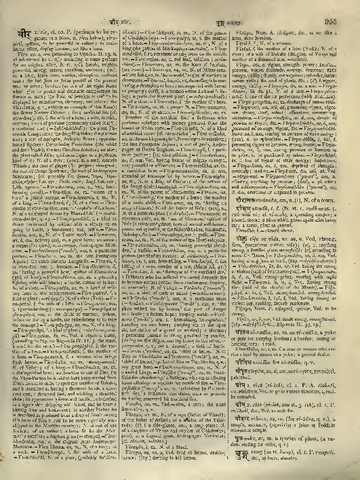
Vīra, as, ā, am (according to Uṇādi-s. II. 13. fr. vī substituted for rt. aj; according to some perhaps for an original vāra, fr. rt. vṛ), heroic, mighty, powerful, strong, robust, excellent, eminent; (as), m. a hero, brave man, warrior, champion, eminent man; the last Jina or Jaina pontiff of the present era; an actor; heroism (as one of the eight Rasas which give to poetic and dramatic composition its flavour or taste; the Rasa of heroism is said to be displayed by munificence, clemency, and valour; the Vīra-carita, q. v., exhibits an example of this Rasa); the flower Nerium Odorum; fire; sacrificial fire [cf. vīra-han]; (ā), f. the wife of a hero; a wife, mother, matron; a sort of perfume (commonly called Murā); a medicinal root (= kṣīra-kākolī); the plant Fla- courtia Cataphracta; the drug Elabāluka; the plantain tree; a sort of Asclepias, Asclepias Rosea; opposite- leaved fig-tree; Convolvulus Paniculatus (the white and dark kinds); the tree Gmelina Arborea; an aloe; the plant called Atis; spirituous liquor or a particular kind of it; N. of a river; (am), n. a reed, Arundo Tibialis; the root of ginger (?); pepper; rice-gruel; the root of Costus Speciosus; the root of Andropogon Muricatus; [cf. probably Gr. ἥρω-ς, Ἥρα, Ἡρακλῆς, εἰρήν; Lat. vir; Goth. vair; Angl. Sax. wer; Lith. vyra-s.]
Petersburger 1855 Substantiv Maskulin · Worttyp nicht bestimmt
Originaltext · Deutsch · Substantiv Maskulin
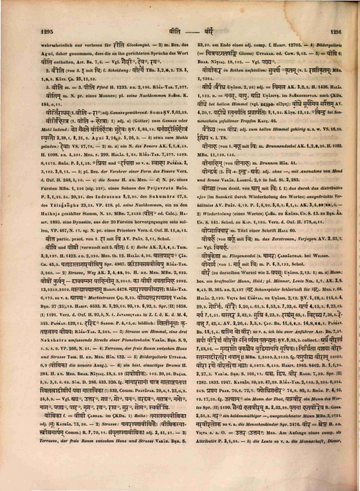
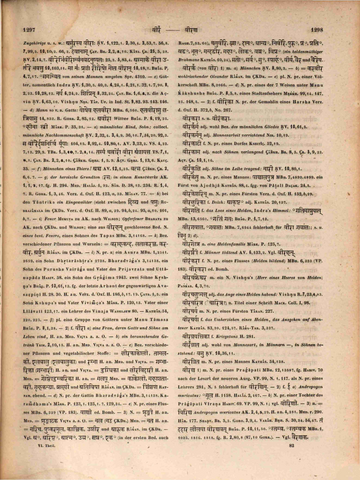
vīrá (zu derselben Wurzel wie 3. vayas) UṆĀDIS. 2,13. 1〉 m. a〉 Mann; bes. ein kraftvoller Mann, Held; pl. Männer, Leute NIR. 1,7. AK. 2,8,2,45. H. 365. H. an. 2,457 (naṭa Schauspieler fehlerhaft für bhaṭa). MED. r. 68. HALĀY. 2,199. VIŚVA_bei_UJJVAL._zu_UṆĀDIS. 2,13. ṚV. 1,18,4. ṚV. 1,114,8. ṚV. 4,29,2. gobhìḥ, vī̱raiḥ ṚV. 5,20,4. ṚV. 5,61,5. ṚV. 6,53,2. ṚV. 7,32,6. martya ṚV. 4,15,5. ṚV. 8,23,19. narya ṚV. 7,1,21. astar ṚV. 2,42,2. suṣvi ṚV. 6,23,3. dāśvaṃs ṚV. 6,65,4. vidathya ṚV. 7,36,8. revant ṚV. 7,42,4. AV. 2,26,4. AV. 3,5,8. ŚAT. BR. 11,4,1,2. ŚAT. BR. 14,8,14,1. PAÑCAV. BR. 19,1,4. asmi vo vīraḥ so v. a. ich bin euer Anführer AIT. BR. 7,27. tvayā̀ vī̱reṇà vīravo̱ 'bhi ṣyā̀ma pṛtanya̱taḥ ṚV. 9,35,3. collect.: a̱rdhaṃ vī̱rasyà ṚV. 7,18,16. — mṛgarājo vṛkaścaiva vuddhimānapi mūṣikaḥ . nirjitā yattvayā vīrāstasmādvīrataro bhavān .. MBH. 1,5589. MBH. 3,2153. fg. paśupāṃśca vīrān MBH. 3,10081. vīrā raṇe vīratareṇa bhagnāḥ MBH. 4,1673. MBH. 8,448. HARIV. 1945. HARIV. 8402. R. 1,1,24. R. 2,27,3. VARĀH. BṚH. S. 101,11. aśva, dvipa, vīra RAGH. 7,39. Spr. (II) 1282. Spr. (II) 1833. Spr. (II) 1947. KATHĀS. 10,29. KATHĀS. 47,93. RĀJA-TAR. 2,103. RĀJA-TAR. 5,234. RĀJA-TAR. 6,284. RĀJA-TAR. 6,349. prathama PRAB. 70,6. PRAB. 72,7. payodhigabhīra˚ PRAB. 74,6. PRAB. 85,3. BHĀG. P. 4,10,19. BHĀG. P. 4,17,35. fg. utthāna˚ ein Mann der That, vāgvīra ein Mann des Wortes Spr. (II) 1199. sainyaṃ hatavīram R. 2,52,38. pṛtanā hatavīreva R. GORR. 2,51,5. nara˚ ein heldenmüthiger —, ausgezeichneter Mann MBH. 3,2722. naravīraloka so v. a. die Menschenkinder Spr. 2476. vīra = śreṣṭha H. an. VIŚVA. a. a. O. = uttara (uttama?) MED. Am Anfange eines comp. als Attributiv P. 2,1,58. — b〉 die Leute so v. a. die Mannschaft, Diener, Zugehörige u. s. w.: asùrasya vī̱rāḥ ṚV. 1,122,1. ṚV. 2,30,4. ṚV. 3,53,7. ṚV. 3,56,8. ṚV. 7,99,5. ṚV. 10,10,2. ṚV. 10,66,2. devānām ŚAT. BR. 2,2,4,10. KĀTY. ŚR. 25,5,28. ṚV. 2,14,7. vī̱rebhìrvī̱rānvànavadvanuṣya̱taḥ ṚV. 25,2. ṚV. 5,85,4. a̱smākàṃ vī̱rā uttàre bhavantu ṚV. 10,103,11. mā nàḥ pra̱jāṃ rī̀riṣo̱ mota vī̱rān ṚV. 10,18,1. BHĀG. P. 4,7,17. ˚samanvita von seinen Mannen umgeben Spr. 4310. — c〉 Götter, namentlich Indra ṚV. 1,30,5. ṚV. 1,40,3. ṚV. 4,24,1. ṚV. 6,21,1. ṚV. 6,32,1. ṚV. 6,7,90. ṚV. 8,2,23. ṚV. 10,28,12. narya ṚV. 6,24,2. śiprin ṚV. 8,32,24. ŚAT. BR. 1,6,4,2. die Aśvin ṚV. 6,63,10. Viṣṇu NṚS. TĀP. UP._in_Ind. St. 9,82. Ind. St. 9,93. Ind. St. 9,143. Ind. St. 9,146. — d〉 Mann so v. a. Gatte: yoṣeva hatavīrā MBH. 6,560. hatavīrāsu kṣatriyāsu MBH. 44,833. R. GORR. 2,85,12. avīrā Wittwe BHĀG. P. 6,19,25. ˚hīnā strī MĀRK. P. 35,31. — e〉 männliches Kind, Sohn; collect. männliche Nachkommenschaft ṚV. 2,32,4. ṚV. 3,4,9. ṚV. 3,36,10. ṚV. 7,34,20. ṚV. 7,92,3. sa vī̱rairda̱śabhi̱rvi yū̀yāḥ ṚV. 104,15. ṚV. 8,92,4. ṚV. 10,80,1. AV. 3,23,2. VS. 4,23. VS. 7,13. VS. 29,9. TBR. 1,3,10,7. TBR. 1,2,1,14. tasyà ca̱tvārò vī̱rā àjāyanta TS. 7,1,8,1. ŚAT. BR. 2,2,4,10. ŚĀṄKH. GṚHY. 1,5. ŚĀṄKH. GṚHY. 1,9. ĀŚV. GṚHY. 1,13,6. KAUŚ. 35. — f〉 Männchen eines Thiers: aśva AV. 12,1,25. vatsa ŚĀṄKH. ŚR. 2,6,6. ŚĀṄKH. ŚR. 2,6,7. — g〉 der heroische Grundton (rasa) in einem Kunstwerke AK. 1,1,7,17. fg. H. 294. MED. HALĀY. 1,92. SĀH. D. 38,13. SĀH. D. 38,234. R. 1,4,7. R. GORR. 1,3,46. Verz. d. Oxf. H. 123,a,33. MĀLAV. 77. — h〉 bei den Tāntrika ein Eingeweihter (steht zwischen divya und paśu) RUDRAYĀMALA_im_ŚKDR. Verz. d. Oxf. H. 89,a,29. Verz. d. Oxf. H. 94,b,24. Verz. d. Oxf. H. 95,a,10. Verz. d. Oxf. H. 101,b,7. — i〉 Feuer MUKUTA_zu_AK. nach WILSON; Opferfeuer BHARATA_zu_AK. nach ŚKDR. und WILSON; eine aus vīrahan geschlossene Bed. N. eines best. Feuers, eines Sohnes des Tapas MBH. 3,14168. — k〉 Bez. verschiedener Pflanzen und Wurzeln: = varāhakanda, latākarañja, karavīra, arjuna RĀJAN._im_ŚKDR. — λ〉 N. pr. α〉 ein Asura MBH. 1,2541. MBH. 1,2659. ein Sohn Dhṛtarāṣṭraʼs MBH. 1,2738. Bharadvājaʼs MBH. 3,14138. ein Sohn des Puruṣa Vairāja und Vater des Priyavrata und Uttānapāda HARIV. 58. ein Sohn des Gṛñjima HARIV. 1943. zwei Söhne Kṛṣṇaʼs BHĀG. P. 10,61,13. fg. der letzte Arhant der gegenwärtigen Avasarpiṇī H. 28. H. 30. H. an. Verz. d. Oxf. H. 186,b,17. Verz. d. Oxf. H. 186,b,19. ŚATR. 1,5. ein Sohn Kṣupaʼs und Vater Viviṃśaʼs MĀRK. P. 120,13. Vater einer Līlāvatī MĀRK. P. 123,17. ein Lehrer des Vinaya WASSILJEW 80. — KATHĀS. 54,220. KATHĀS. 54,225. — β〉 pl. eine Gruppe von Göttern unter Manu Tāmasa BHĀG. P. 8,1,28. — 2〉 f. vīrā a〉 eine Frau, deren Gatte und Söhne am Leben sind, H. an. MED. VIŚVA a. a. O. — b〉 ein berauschendes Getränk TRIK. 2,10,15. H. an. MED. VIŚVA a. a. O. — c〉 Bez. verschiedener Pflanzen und vegetabilischer Stoffe: = kṣīrakākolī, tāmalakī, elavālu (elavālukā) und rambhā H. an. MED. und VIŚVA. = gambhārikā (gambhārī) H. an. und VIŚVA. = dugdhikā und kṣīravidārī H. an. MED. = goṣṭhodumbarikā H. an. = malapū MED. = kākolī, mahāśatāvarī, gṛhakanyā, brāhmī und ativiṣā RĀJAN._im_ŚKDR. = śiṃśapā RATNAM. ebend. — d〉 N. pr. der Gattin Bharadvājaʼs MBH. 3,14138. Karaṃdhamaʼs MĀRK. P. 123,1. MĀRK. P. 125,1. MĀRK. P. 125,7. MĀRK. P. 129,34. — e〉 N. pr. eines Flusses MBH. 6,329 (VP. 183). vāṇī ed. Bomb. — 3〉 N. = śṛṅgī H. an. MED. = śṛṅgāṭaka VIŚVA a. a. O. = nala (naḍa ŚKDR.) MED. = nata H. an. = marica, puṣkaramūla, kāñjika, uśīra und āruka RĀJAN._im_ŚKDR. — Vgl. a˚, ariṣṭa˚, ātma˚, ugra˚, ṛṣva˚, eka˚ (in der ersten Bed. auch RAGH. 7,53. RAGH. 7,60), caturvīra, daśa˚, dāna˚, dhānya˚, nirvīra, puru˚, pra˚, prati˚, baddha˚, bhūta˚, mandadvīra, mahā˚, loka˚, vajra˚, vipra˚ (ein heldenmüthiger Brahmane KATHĀS. 10,24), sato˚, sarva˚, su˚, spārha˚, vīrya, vaira und vaireya.
Originaltext · Deutsch · Worttyp nicht bestimmt
vīra 1〉b〉α〉 ˚jina HEM. YOGAŚ. 1,3.
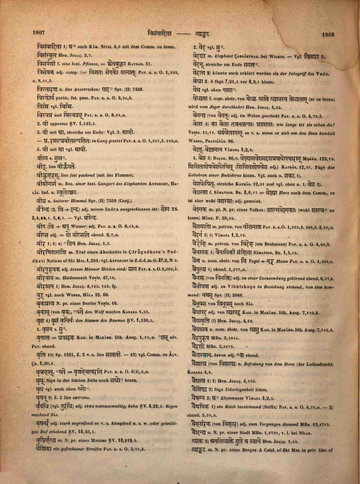
Böhtlingk 1879 Substantiv Maskulin · Substantiv Neutrum · Worttyp nicht bestimmt
Originaltext · Deutsch · Substantiv Maskulin · Substantiv Neutrum
vīrá — 1〉 m. (adj. Comp. f. ā) — a〉 Mann, insbes. ein kraftvoller Mann, Held, ein Held in seiner Art, Vordermann, Anführer. — b〉 Pl. Mannschaft, Diener, Zugehörige u. s. w. — c〉 als Beiw. von Göttern, insbes. von Indra. — d〉 Mann, so v. a. Gatte. — e〉 männliches Kind, Sohn; — f〉 Männchen eines Thieres. — g〉 der heroische Grundton in einem Kunstwerke. — h〉 bei den Tāntrika ein Eingeweihter. — i〉 ein best. Agni, ein Sohn des Tapas. — k〉 Feuer, Opferfeuer. — l〉 *Terminalia arjuna. — m〉 *Nerium odorum. — n〉 *Guilandina bonduc RĀJAN. 8,63. — o〉 *Yamswurzel RĀJAN. 7,86. — p〉 N. pr. — α〉 eines Asura. — β〉 Pl. einer Gruppe von Göttern unter Manu Tāmasa. — γ〉 verschiedener Männer, auch eines Dichters Z. d. d. m. G. 36,557. śrīvīra N. pr. eines Jina HEM. PAR. 1,259. — 2〉 f. vīrā — a〉 *eine Frau, deren Gatte und Söhne am Leben sind. — b〉 *ein berauschendes Getränk. — c〉 *Bez. verschiedener Pflanzen und vegetabilischer Stoffe RĀJAN. 3,13. 16. 4,122. 5,46. 63. 91. 6,137. — d〉 eine best. Śruti S. S. S. 24. — e〉 N. pr. — α〉 der Gattinnen Bharadvājaʼs und Karaṃdhamaʼs. — β〉 eines Flusses. v. l. vāṇī. [Page6-144-b] — 3〉 *n. = śṛṅgī, śṛṅgāṭaka, nala (naḍa), nata, marica, puṣkaramūla, kāñjika, uśīra und āruka.
Originaltext · Deutsch · Worttyp nicht bestimmt
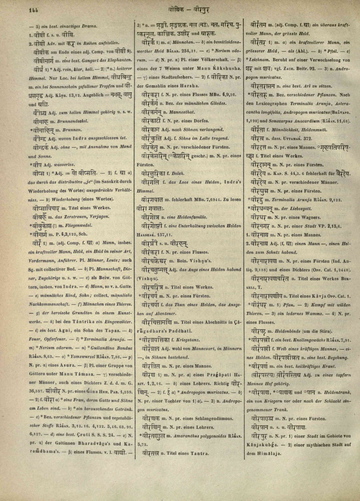
vīra VI. f. vīrā als f. zu vīra 1〉a〉 ŚAT. BR. 14,9,4,27. [Nachtrag, Band 7]
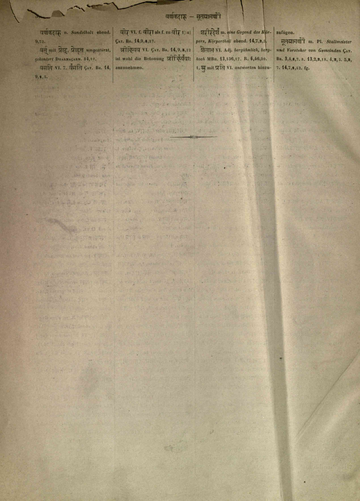
Apte 1890 Adjektiv · Substantiv Maskulin · Substantiv Neutrum
Originaltext · Englisch · Adjektiv · Substantiv Maskulin · Substantiv Neutrum
vīra a. 1 Heroic, brave. 2 Mighty, powerful. 3 Excellent, eminent. — raḥ 1 A hero, warrior, champion; kopyeṣa saṃprati navaḥ puruṣāvatāro vīro na yasya bhagavān bhṛgunaṃdano'pi U. 5. 34. 2 The sentiment of heroism (in rhetoric); it is distinguished under four heads; dānavīra, dharmavīra, dayāvīra, and yuddhavīra, for explanation see these words s. v.. 3 An actor. 4 Fire. 5 The sacrificial fire. 6 A son. 7 A husband. 8 The tree Arjuna. 9 A Jaina. 10 The Karavīra tree. 11 N. of Viṣṇu. — raṃ 1 A reed. 2 Pepper. 3 Rice-gruel. 4 The root of Uśīra q. v. Comp. — amlaḥ a kind of sorrel. — āśaṃsanaṃ 1 keeping watch. 2 the post of danger in battle. 3 a forlorn hope. — āsanaṃ a kind of posture practised in meditation; for definition see paryaṃka (3) 2 kneeling on one knee. 3 a field of battle. 4 the station of a sentinel. — īśaḥ, -īśvaraḥ 1 epithets of Śiva. 2 a great hero. — ujjhaḥ a Brāhmaṇa who omits to offer oblations to the sacrificial fire. — kīṭaḥ an insignificant or contemptible warrior. — jayaṃtikā 1 a war-dance. 2 war, battle. — taruḥ 1 the Bilva tree. 2 the Arjuna tree. — dhanvan m. ([Page 1004-c]) an epithet of the god of love. — paṭṭaḥ a sort of military dress. — pānaṃ (ṇaṃ) an exciting or refreshing drink taken by soldiers either before or after a battle. — bāhuḥ N. of Viṣṇu. — bhadraḥ 1 N. of a powerful hero created by Śiva from his matted hair; see dakṣa. 2 a distinguished hero. 3 a horse fit for the Aśvamedha sacrifice. 4 a kind of fragrant grass. — mudrikā a ring worn on the middle toe. — rajas n. red lead. — rasaḥ 1 the sentiment of heroism. 2 a warlike feeling. — reṇuḥ N. of Bhīmasena. — viplāvakaḥ a Brāhmaṇa who performs sacrifices by means of money got from the lowest castes. — vṛkṣaḥ 1 the Arjuna tree. 2 the marking-nut plant. — sūḥ f. the mother of a hero; (so vīraprasavā, — prasūḥ -prasavinī). 2 the mother of a male child. — senaḥ N. of the father of Nala. — sainyaṃ garlic. — skaṃdhaḥ a buffalo. — hatyā the killing of a man; Ms. 11. 41. — han m. a Brāhmaṇa who has neglected his domestic fire. 2 N. of Viṣṇu.
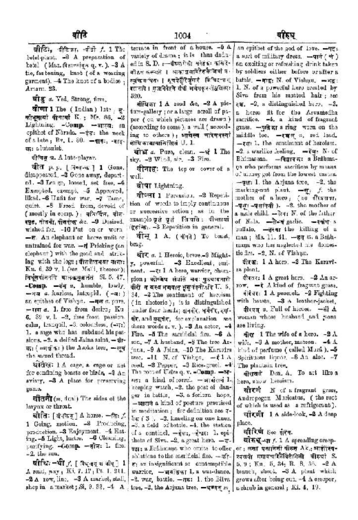
Cappeller 1887 Substantiv Maskulin
Originaltext · Deutsch · Substantiv Maskulin
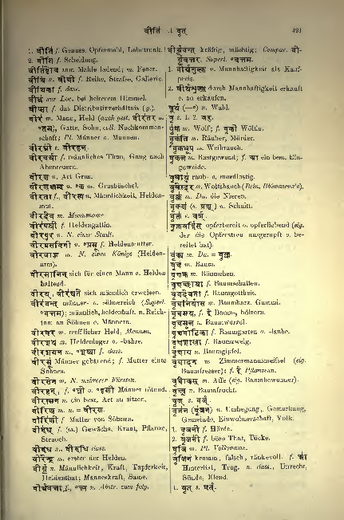
vīrá m. Mann, Held (auch gest. vīrátara u. ˚tama), Gattin, Sohn, coll. Nachkommenschaft; Pl. Männer o. Mannen.
Burnouf 1866 Substantiv Maskulin
Originaltext · Französisch · Substantiv Maskulin
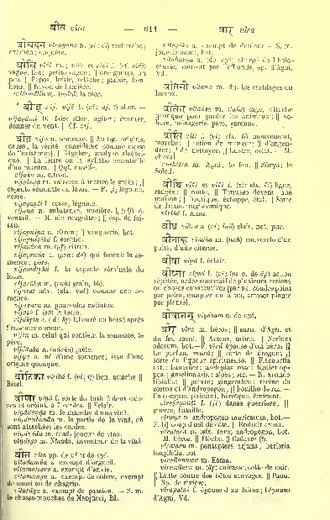
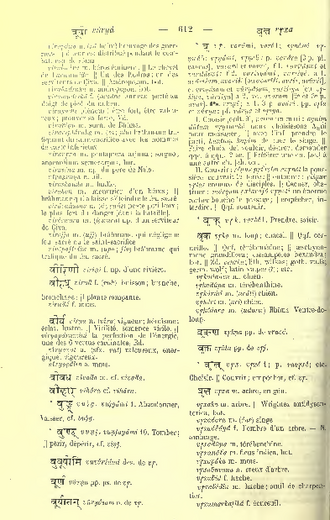
vīra vīra m. héros; surn. d'Agni et du feu sacré. Acteur, mime. Nerium odorum, bot. — F. vīrā épouse d'un héros. Le parfum murā; sorte de drogue; sorte de liqueur spiritueuse. Flacourtia cat.; bananier; asclepias rose; figuier oppos.; gmelina arb.; aloës; etc. — N. arundo tibialis; poivre; gingembre; racine de costus et d'andropogon; bouillie de riz. — En compos. puissant, héroïque, éminent. vīrajayantī f. (ji) danse guerrière; guerre, bataille. vīraṇa n. andropogon muricatum, bot. — F. [ī] coup d'œil de côté. Endroit creux. vīratara n. (sfx. tara) andropogon, bot. — M. héros. Flèche. Cadavre (?). vīrataru m. pentaptera arjuna; barleria longifolia, bot. vīradhanvan m. Kāma. vīrandhara m. (dhṛ) cuirasse, cotte de cuir. Lutte contre des bêtes sauvages. Paon. Np. de rivière. vīrapatnī f. épouse d'un héros; l'épouse d'Agni, Vd. [Page612-1] vīrapāṇa n. (pā boire) breuvage des guerriers, qui leur est distribué pendant le combat, esp. de soma. vīrabhadra m. héros éminent. Le cheval de l'acvamedha. Un des Rudras; un des serviteurs de Śiva. Andropogon, bot. vīrabhadraka n. andropogon, bot. vīramudrikā f. (mudrā,) anneau porté au doigt de pied du milieu. vīrayāmi (dénom.) être fort, être valeureux; prouver sa force, Vd. vīrareṇu m. surn. de Bhīma. vīraviplāvaka m. (vi; plu) brâhmane trafiquant du saint-sacrifice avec les hommes de caste inférieure. vīravṛkṣa m. pentaptera arjuna; sorgho; anacardium semecarpus, bot. vīrasena m. np. du père de Nala. vīrasainya n. ail. vīraskanda m. buffle. vīrahan m. meurtrier d'un héros; brâhmane qui a laissé s'éteindre le feu sacré. vīrāśaṃsana n. (ā; śaṃs) poste périlleux; le plus fort du danger [dans la bataille]. vīreśvara m. (īśvara) np. d'un serviteur de Śiva. vīrojjha m. (ujjh) brâhmane qui néglige le feu sacré ou le saint-sacrifice. vīropajīvika m. (upa; jīv) brâhmane qui trafique du feu sacré.
Abgeleitete Wörter
Quelltextfundstellen (16)
AsS1 1 Fundstelle
DYS 3 Fundstellen
HTK 1 Fundstelle
HTK 10.5*1–6*1: Sūryabhedana / Sūryabheda 1 Fundstelle
Über Ableitungen belegt
-
HTK 10.6*1 Segment 11
MAN 1 Fundstelle
PJH 1 Fundstelle
PYS 2 Fundstellen
SiSa 3 Fundstellen
SS 2 Fundstellen
SVU 1 Fundstelle
VBT 1 Fundstelle
Mit AYI Free weitermachen
Bildquelle: AYI Archiv.