
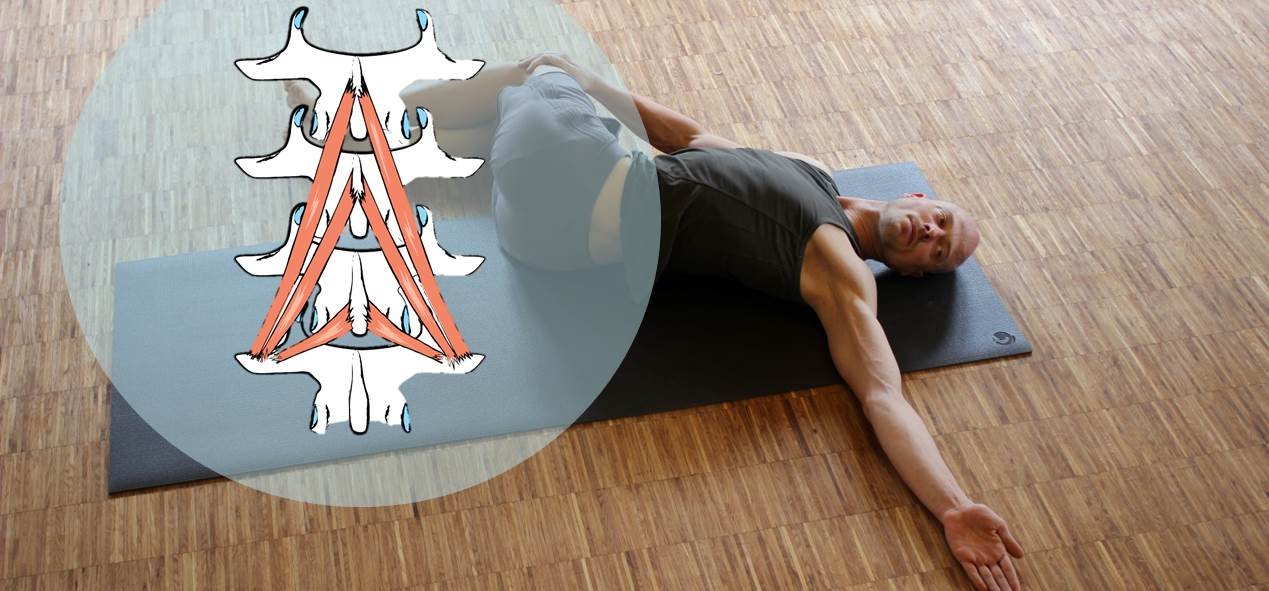

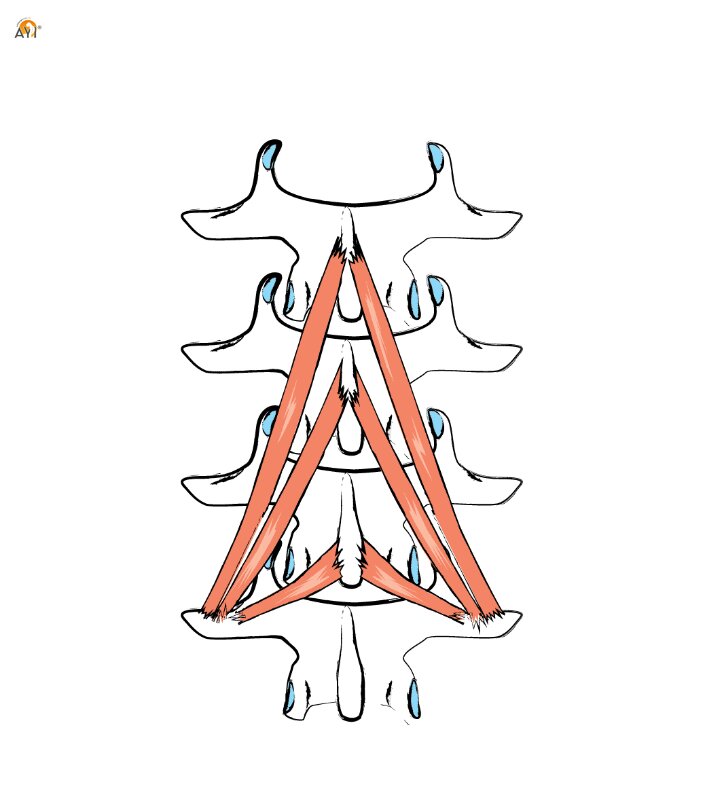
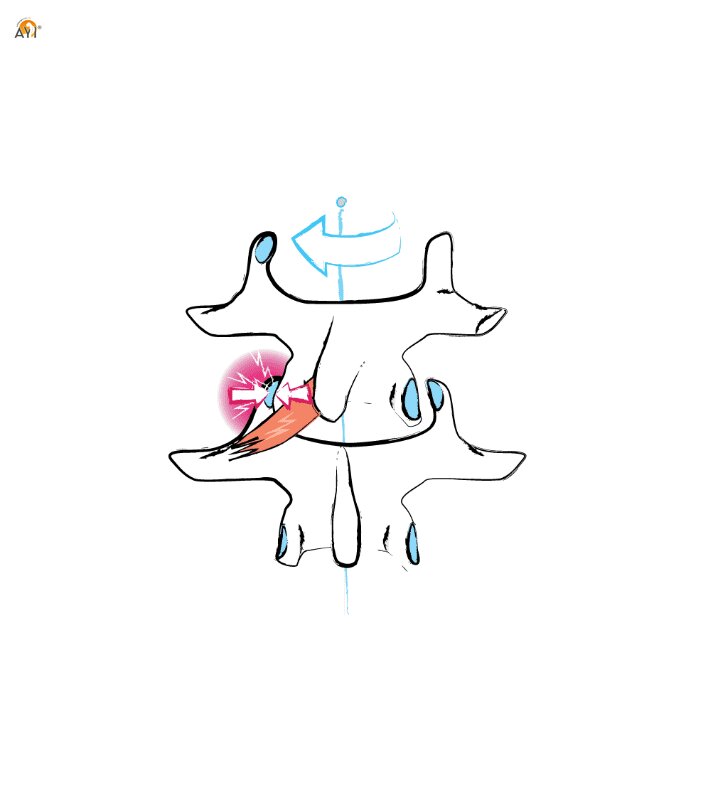
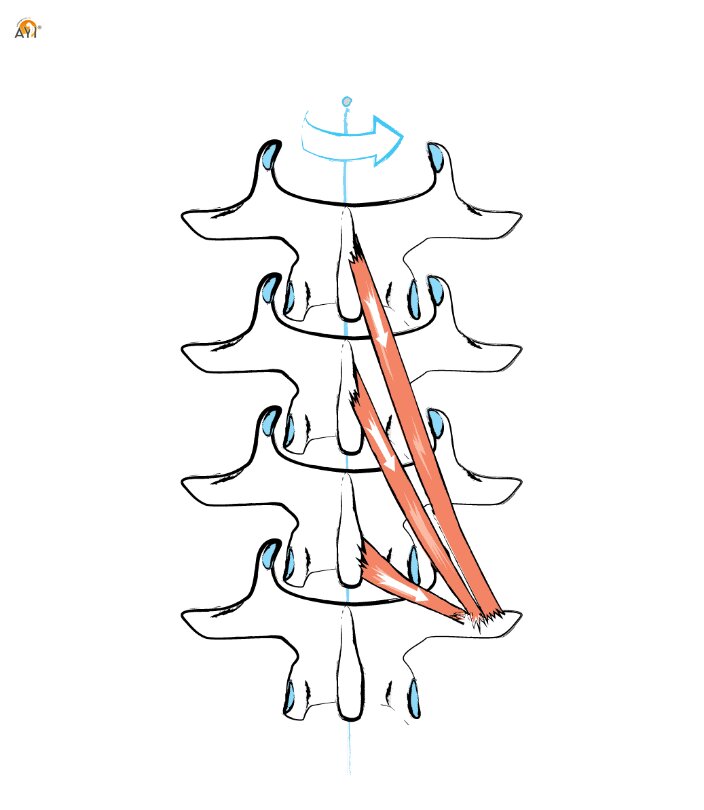
The deepest back muscles are meant to keep the vertebrae in a healthy balance towards each other during the movement - a challenge indeed! It may happen that, during comparatively complex movements, they fail to fulfill this task. As a result, the vertebrae rotate against each other in an uncoordinated way and the deep back muscles activated incorrectly tense up. Now, the vertebrae are locked in a painful turn and tilt against each other by the mm. rotatores brevi and longi and the mm. multifidi.
Yoga therapy
The solution is easy – at least in theory. What needs to be done is to release the muscle cramp by resetting the neuronal activation of the muscle. When the muscle relaxes in this way, the vertebrae can slide back into a neutral position. The pain eases as quickly as it has come.
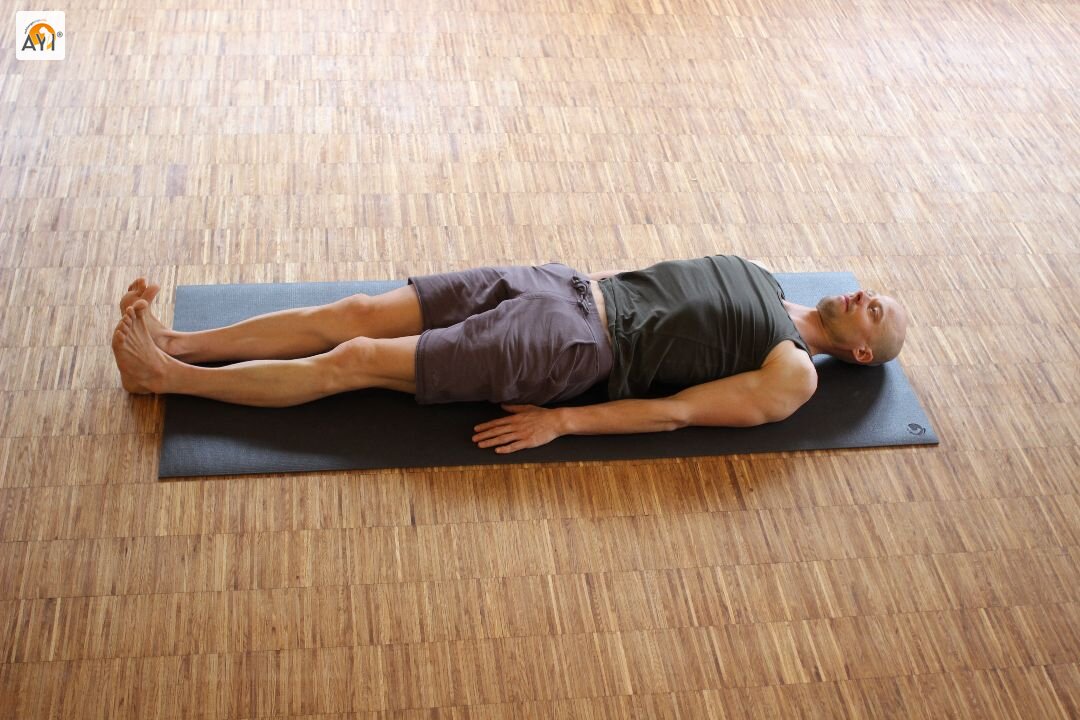
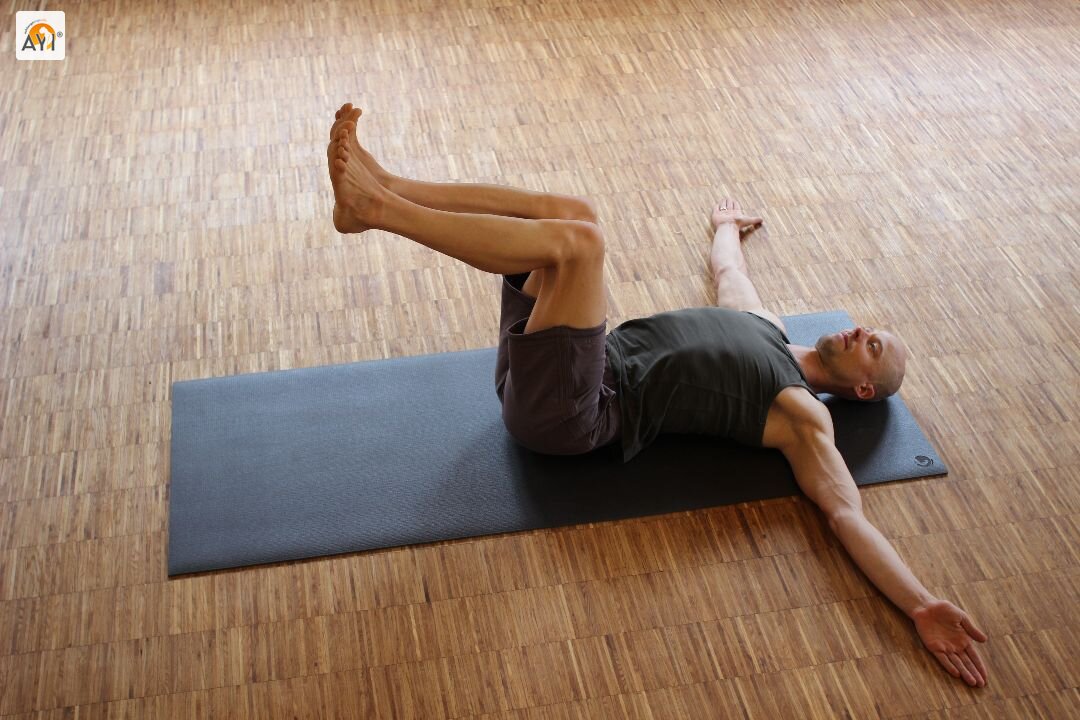
1 Lie down with your back on your yoga mat. Take a couple of deep breaths and let the full weight of your body consciously sink into the mat with each exhalation. Feel how your whole musculoskeletal system relaxes more and more with each breath and how your muscles loosen up.
2 With your next exhalation, pull your legs towards you so that there is a right angle in your hips, knees and ankles. Your arms are stretched out to the sides.
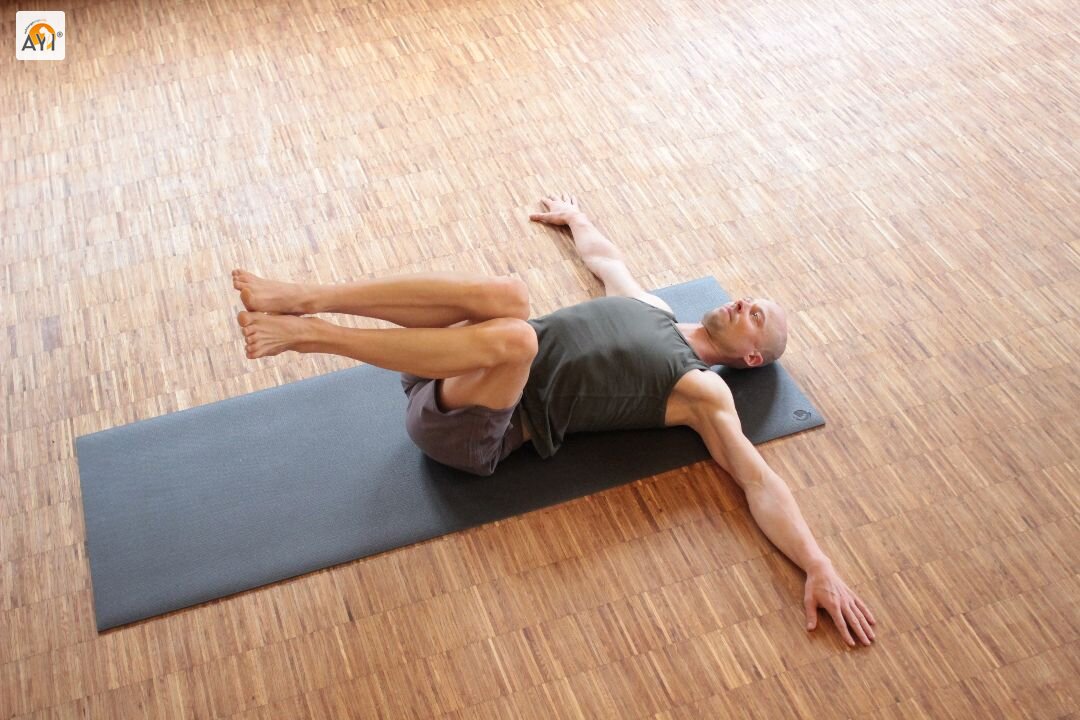
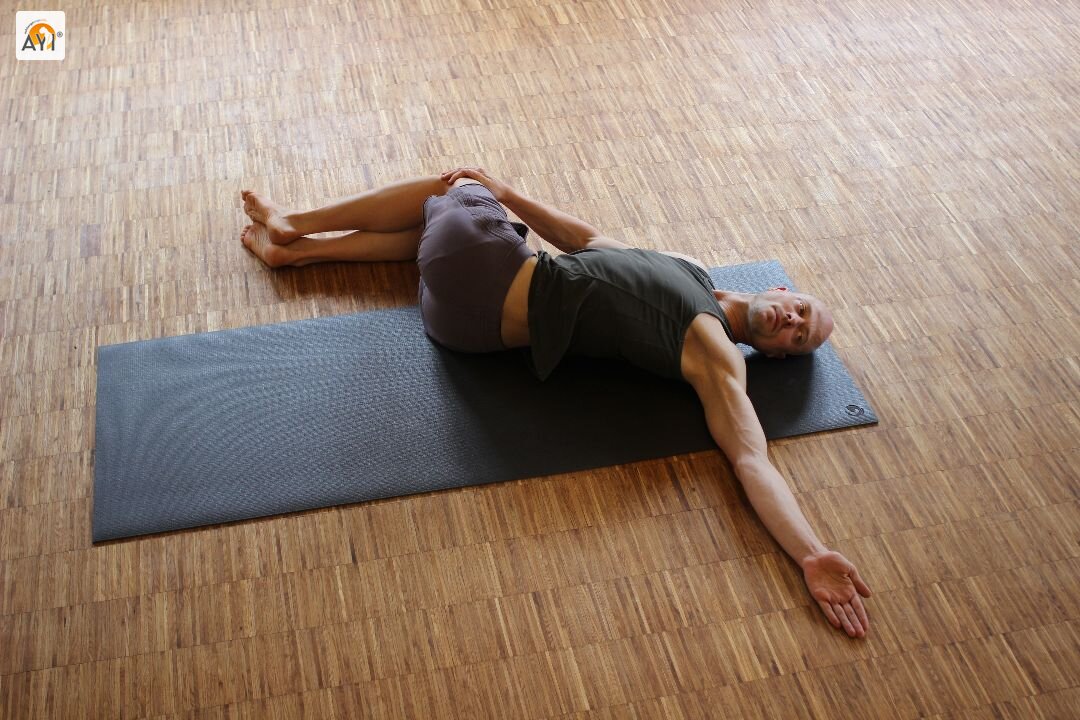
3 With your next inhalation, slightly lift your pelvis from the floor and shift it one hand's breadth to the right. With your next exhalation, let your knees sink a couple of centimetres to the other, i.e. the left side. Inhale and bring your legs back up. Repeat the same movement to the other side. Compare the two sides a couple of times - in case of an actual vertebral blockade, rotating in one direction will be difficult or even painful.
4 Now choose the more comfortable side and let your knees sink towards the floor as far as possible. You may slightly lift the shoulder on the opposite side. What is important is to reach a completely relaxed and comfortable rotation with a long spine. In order to intensify the rotation, you can place your hand on your knees. Feel how the spine gently melts into the rotation. You might even feel how the vertebrae unlock and slide back into their harmonic balance.
It is recommended to perform this exercise only to one side, i.e. the more comfortable one. Only in doing so is it possible to effectively reset the malfunctioning reflex arcs of the back muscles. If the pain is caused by the phenomenon described above, it will ease either immediately or over the course of the next few days. Alternatively, depending on where the vertebral blockage is located, a different twist pose such as the half twist pose (ardha matsyendrasana) may provide a solution.
Improving muscle function
However, resetting the activation of the muscle is not enough - just one single inadvertent movement can cause the next vertebral blockage. Ultimately, the muscle malfunction can result in chronic back pain as the study cited above demonstrates. Therefore, the only effective long-time therapy is to improve the function or neuronal activation of the deep back muscles to enable them to stabilise the vertebrae in their harmonic balance, irrespective of the posture adopted or the complexity of the movement performed.
A surprisingly great number of yogis and yoginis - especially when they are highly flexible - suffer from chronic back pain. For them, stretching only serves to aggravate the situation: the more flexible the back, the greater the strain on the deep muscles to keep a healthy stability.
Therefore, exercises to improve the function of the deep back muscles should be part of any yoga practice.
Yoga therapy
In order to improve the function of the deep back muscles, all types of exercises that coordinatively target the mm. rotatores brevi, longi and multifidi are beneficial – i. e. exercises that strengthen the back muscles and include a rotation or a diagonal force vector.
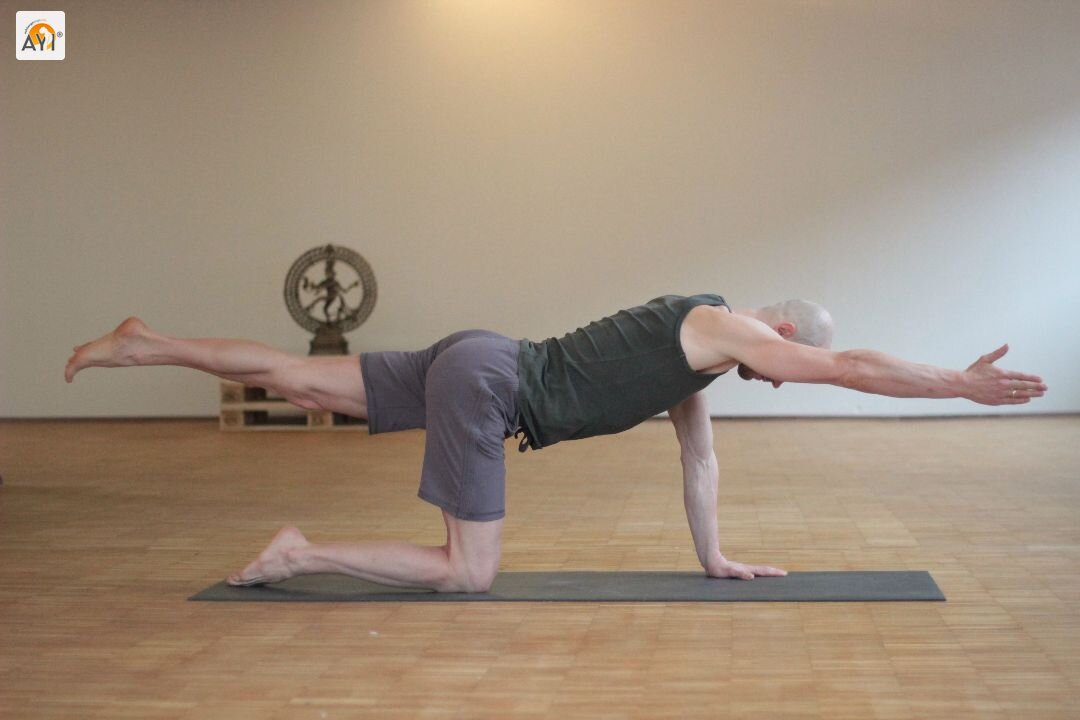
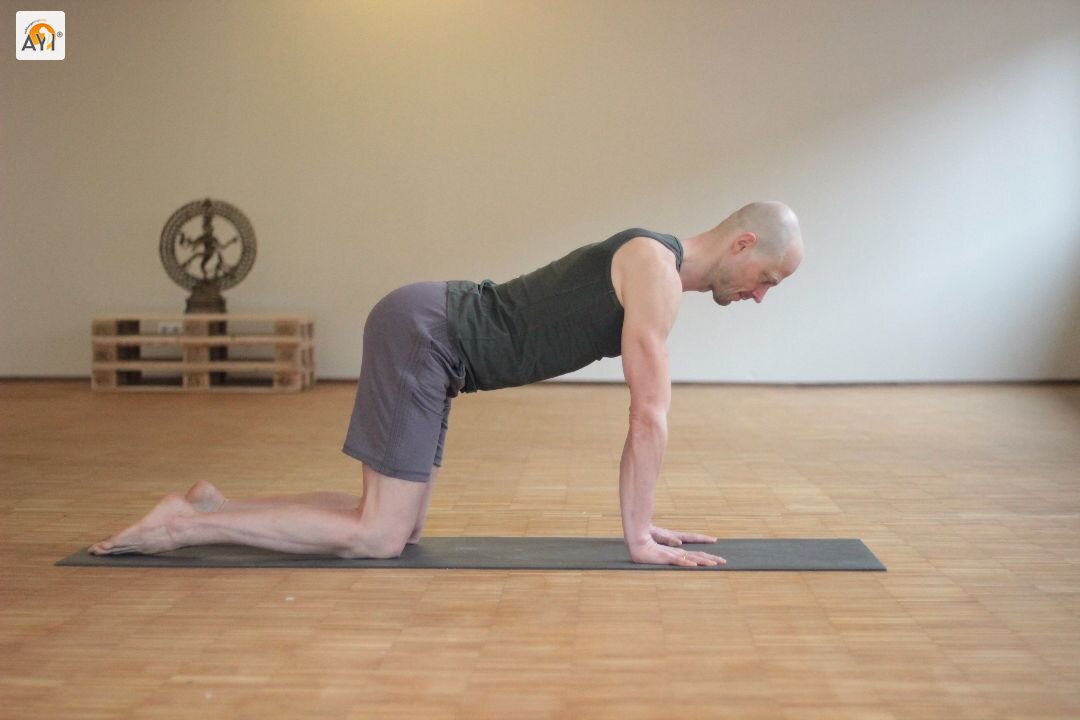
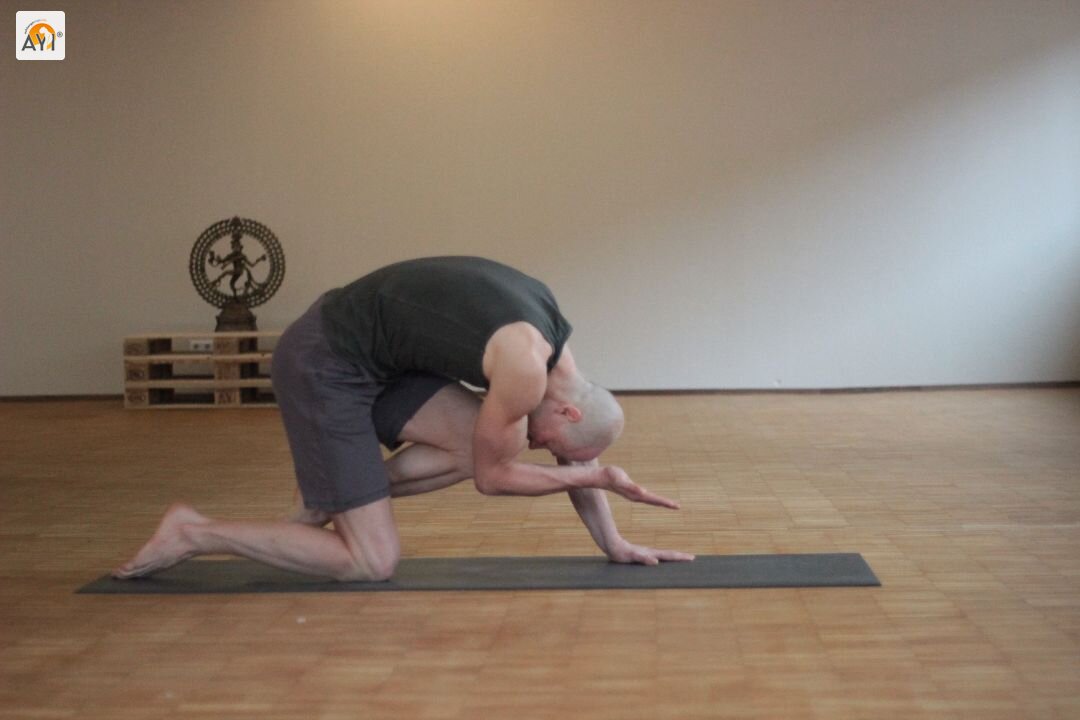
A Start in the all-fours position. Make sure that your hands are below your shoulders and your knees under your hip joints.
B On exhalation, pull your right elbow, your left knee and the tip of your nose together.
C On inhalation, stretch your right hand and your left leg. During the movement, point your thumb upwards so as to keep the humeral head away from the acromion. Make sure that your neck stays long to avoid any unnecessary cramps.
Repeat the same movement several times in your own breathing rhythm. Feel how the deep back muscles described above stabilise the vertebrae against each other during the movement. The exercise is particularly effective due to its balance and coordination component. Always work with attentive, conscious and slow moves rather than opting for quick movements and counting repetitions. When you feel that your back muscles begin to tire, change sides.

Please log in to write a message. Go to login
No messages yet.