


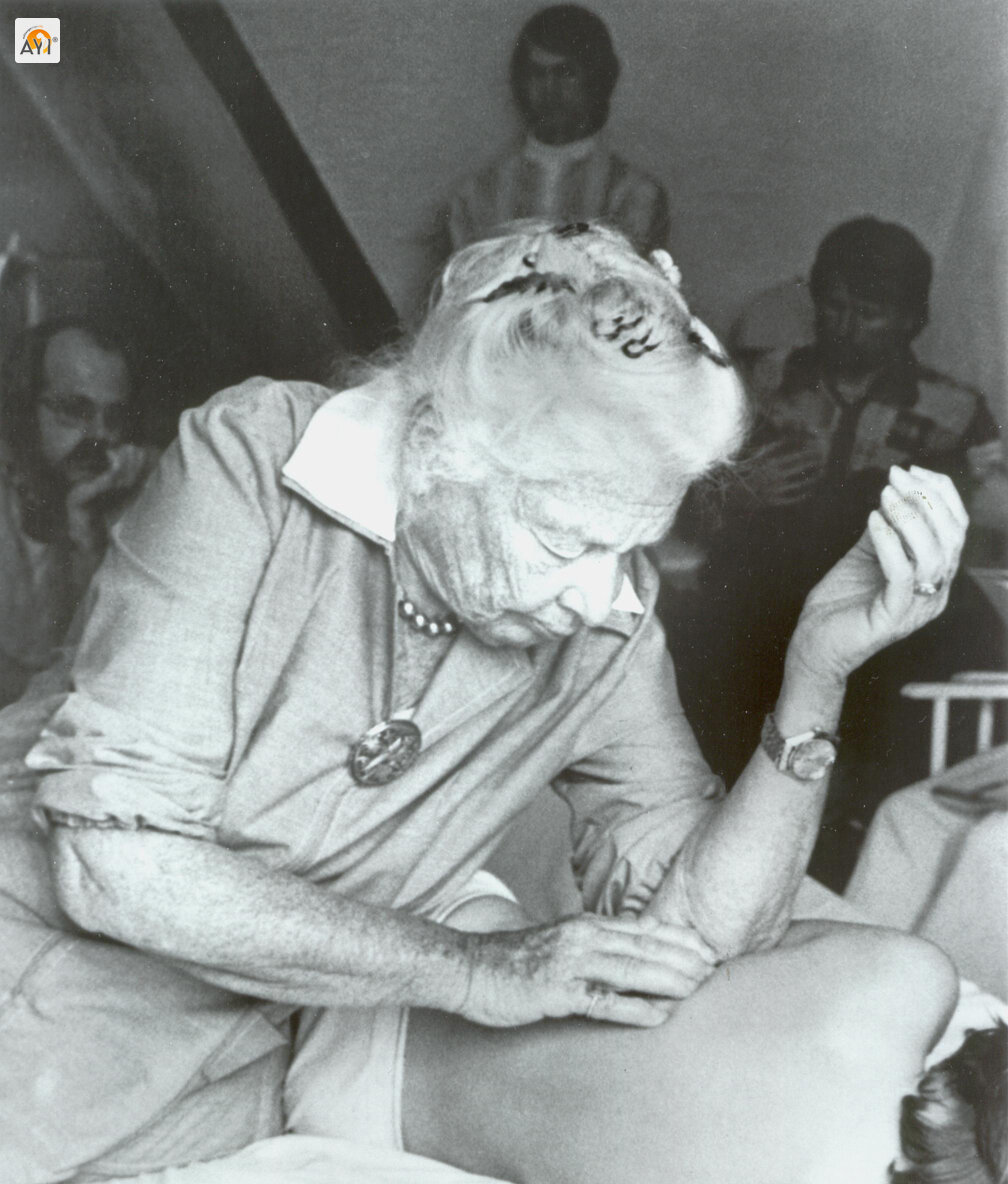
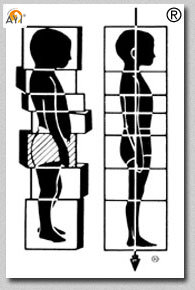
1. Giving the breath freedom
2. Finding the ground
3. Lengthening the sides of the body
4. Opening the gates of the pelvis
5. Creating space for the organs
6. Bringing mobility to the sacrum—the “sacred bone”
7. Balancing the head
8 and 9. Coordinating the pelvic and shoulder girdles
10. Rooting the feet in the earth and opening the eyes to the horizon
Andreas: “Only when therapists fully accept clients as they are in the present moment can they offer an impulse for change. That moment is the result of every experience that has come before it. We cannot undo anything; we can only release the traces those experiences have left in the body. This is impossible without unconditional openness and trust. The therapist opens up that space, and the client enters it when ready.”
Functional Aspects of Rolfing: Working with Fascia
Fascia is everywhere in current discussions. Almost every article about therapy or yoga mentions this tissue, sometimes to excess. Yet the basic distinction is simple: muscles behave more like rubber. They have an elastic quality, returning to their starting position. Fascia, by contrast, is more like modelling clay: it has a plastic quality and can change shape.
In the body, however, these two tissues do not exist separately; that separation is only theoretical. They are closely interwoven. Muscles can move only within the framework of the fascia. In keeping with the saying “Hot glass melts; cold glass breaks”, fascia can change shape only when warmed.
Over many years, habitual posture and movement shape the fascia in an individual way that we no longer consciously notice. A Rolfing practitioner therefore works on areas of fascia that have become hard and restricted, and that we can no longer reach through active movement. This makes “new” movement patterns possible.
Psychological and Emotional Aspects of Rolfing
In his pioneering book “Die Hakomi Methode” (“The Hakomi Method”), Ron Kurtz describes how repeated muscular activity inscribes our character into our bodies over the years. Our habitual beliefs, emotional states and physical activities give rise to corresponding myofascial patterns. Ultimately, everything we think and feel, and the ways we act, shape our bodies.
These character strategies always bring both abilities and limitations, which are also reflected in our mobility. The body is therefore an ideal feedback system: we can work with it without relying on the client's personal, intellectual interpretation. Through intensive touch, the therapist can release blocks, allowing the client to experience a freer body, with its possibilities restored, and to feel at ease in it again.
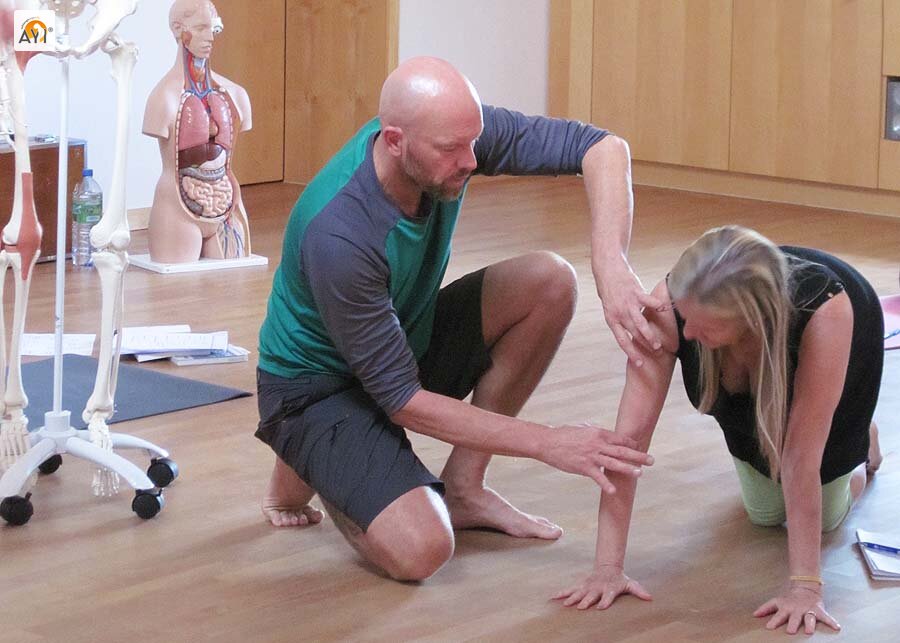
Andreas: “When you reach a painful area during treatment, you sense it not only as firmer tissue beneath your fingers, but also through the client's response. As pain begins, the client turns towards it and breathing becomes more active. At the pain threshold, the client begins to turn away and breathing falters. We do not encourage that response. We keep the intensity below that threshold so that tension can release, breathing can become deep, steady and relaxed, and movement can return to the previously restricted area.”
Andreas: “Fascial work is best illustrated with an example: we release fascial structures on the sole of the foot or around the ankle. This can shift the body's centre of gravity slightly towards the heel. Often, this intervention brings the pelvis a little more upright, and a pronounced curve in the lower back begins to straighten—the beginning of a more upright alignment … without any active effort on the client's part.”
Where Rolfing and Aṣṭāṅga Yoga Meet
Breath connects everything. In Aṣṭāṅga Yoga, we guide the breath with the bandhas and the Ujjāyī sound so that practice develops from the inside out. This brings a sense of release, freeing us from the muscular tension created by our current state of mind.
In Rolfing, deep, intensive touch combined with conscious breathing connects us with our bodily awareness and allows us to sense feelings and emotions held within the body. Even trauma that creates blocks can be uncovered and released. This happens through attentive, non-judgemental communication between therapist and client.
We no longer need to discuss the events of the past. Instead, we sense and release the traces they have left in the body.
These newly available movements should then be put into practice. This is where the Primary Series comes in: it explores the full range of possibilities and allows new qualities of movement to be integrated in ways that everyday life does not. Body, feelings, emotions and mind can come into a state of balance that reflects our true nature as closely as possible.
Andreas: “Reflecting on the response to pain led me naturally to integrate Aṣṭāṅga Yoga. Movement synchronised with the breath is precisely what supports and develops this new, freer bodily awareness. Without it, we risk falling back into old, familiar patterns. Conversely, active movement cannot release these deeply rooted blocks involving thoughts, feelings and the body's fascia, because they are stored in unconscious patterns beyond our awareness. Combining Rolfing with Aṣṭāṅga Yoga Innovation (AYI®) was therefore both inevitable and a logical next step.”

Please log in to write a message. Go to login
No messages yet.