
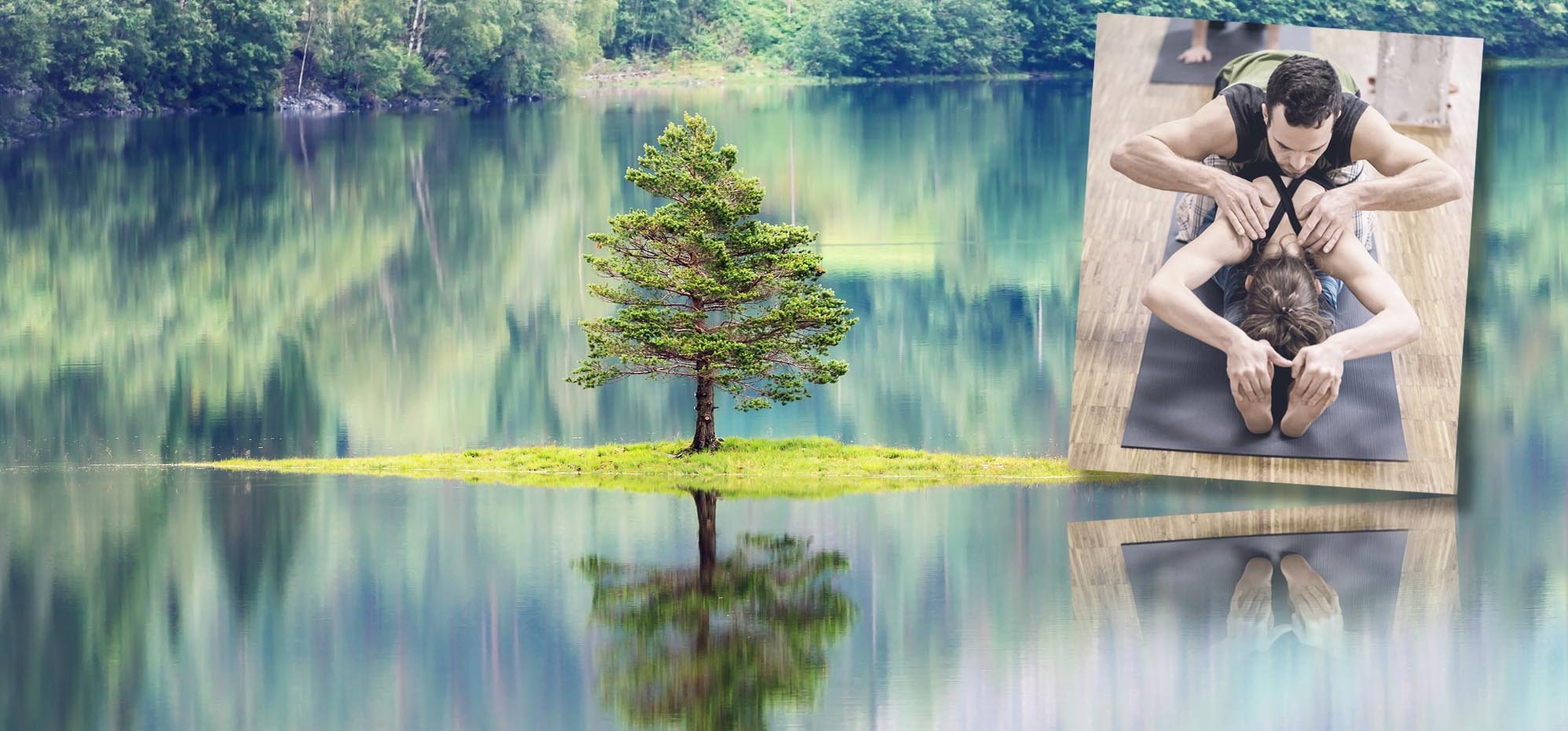


The Receiver is really focusing on sensing as they continue to feel and observe, especially what occurs over time in your mind, in your body, thoughts and ideas that pop up. At this point there is no further plan for either partner. Be receptive to what the contact is bringing up. No pressure, no movement, nothing more than contact. If it feels right, stay for a while, a good 5-7 minutes.
If you are the Giver, you may feel at some point that contact can slowly be dissolved. Lift and remove your hand from your partners space and sit next to them. Give yourself a chance to draw your energy back inwards and wait until your partner comes out of Savasana and sits upright.
My suggestion would be to say nothing and go through the same exercise switching roles.
Afterwards, take a few minutes to write down your observations as each the receiver and giver of touch. Then, take some time to discuss your experience with your partner. Discuss how some elements of this practice can be taken into daily life. What do you think about touch and (non-verbal) communication after this exercise?
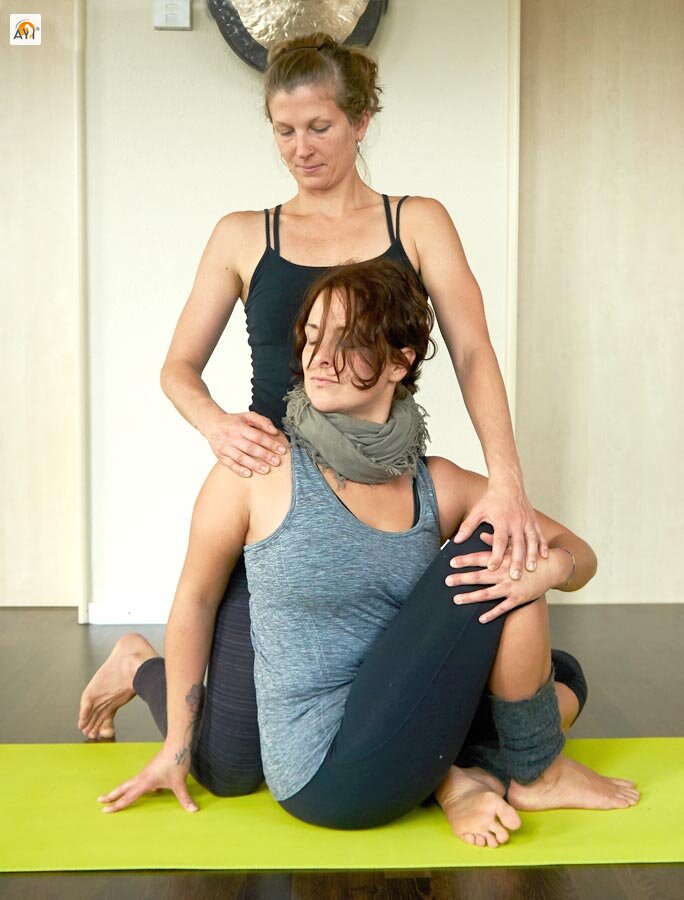
This is what I have determined for myself over time about touch in relation to hands-on assists. I like to consider hands-on assists more like a dialog, a conversation with which you determine the basis for your relationship. By sitting or standing and tuning in, you start to establish a relationship. After creating that safe space, it is important to touch with respect, care and to feel the response of your hands on the students body. By taking the time to listen to the student I try to rid myself of my intention and to respond to what that person’s body may be saying. When the reaction follows with free breathing and easing in the direction my hands are offering, we have come to an understanding. When there is stiffness, the students breath shifts or the person recoils from the direction, there is some disagreement and as a teacher in that students space, my job is to respect that by slowly stepping away from that comment. After all, the topic of the conversation is the students body, not yours.
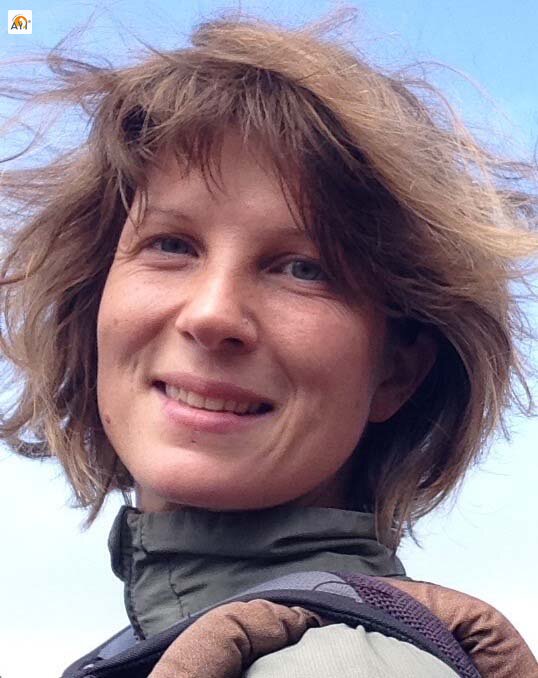
As a yoga teacher I tend to be very hands-on. As a yoga student, I tend to be wary of hands-on assists until I feel that I can trust the person touching me. So this exercise was a real eye-opener for me because I was able to feel into both roles and hash it out with a partner and then in a small group.
As a Giver, first give your partner time to settle into Savasana, has found stillness and closed their eyes. Then, slowly approach them and take a seat next to them. Connect with your partner by observing their breath, their body language, their facial expression and perhaps the energy that is radiating from them in this moment. Close your eyes and tune in more closely to the energy. As a Receiver, as you lie in Savasana, feel your environment through your skin, bringing awareness to how receptive it is. At some point notice if you can feel your partner approaching, and observe how it is that you feel their presence. Sense the energy radiating from your partner, and how this effects you emotionally and physically. Remember, there is nothing more than sensing at this point.
Monthly Exercise 3: The effect of well-intended touch
For this exercise you will need to work with a partner. Each of you will take turns giving and receiving physical contact.
IMPORTANT: If at any time during this exercise either of you feel that what is coming up is so intense that you feel overwhelmed and cannot sit or lie in quiet calm observation, you have the right to end the activity by respectfully breaking physical contact at any time. Our bodies physically store feelings, memories and sensations in the most unforeseen places. Every reaction, emotion or feeling to this exercise is right, valid and has it's place but the purpose of our practice here is nothing more than to observe.
If you know that you might need to feel less vulnerable in this activity, or don't want to use Savasana, choose a pose that you can find full comfort and relaxation in. Balasana, or Child's Pose, is a great alternative.
As the Giver you will give your partner time to find their Savasana (or other comfortable position). Keep some distance as you give them as much time as they need to fall into the pose and wait until they find comfort and/or close their eyes. Here you are making contact through observation.
Slowly, the Giver will come closer and simply take a comfortable seat next to them. Observe their breath, their body, their facial and physical expression and feel the energy that is coming from your partner. Observe your own feelings, energy and reaction to your partner's energy. Again, this is internal sensing.
Our journey started in our first article with looking back at an adjustment in a yoga class and taking time to contemplate the receptive qualities of the skin. In our second article we went deeper into the proprioceptive qualities of the skin and examined how the skin can help us to create movement and understand where we are in space.
It has been well-documented that humans are communal creatures and do not do well in isolation. It is a requirement for babies to be held and caressed by their parents for their physical and developmental growth. Recent studies have also proven that there are long-lasting effects of overall happiness and wellbeing as the result of a good hug. Touch is non-verbal communication at its best, because it tells what often words fail to describe.
As we transition from the cold of winter to spring, it is a nice time to experience the shift in our own emotional state through they way that we perceive touch. January and February are known for months for the 'blues', and depression rates during this period are at their highest. While we are in the beginning of spring and everything seems to be coming back to life, it is also close enough to that period of cold and darkness to be able to make the connection and consider how important touch in the dead of winter can actually be. Perhaps we can even be mindful come next winter of how physical contact allows for interaction and communication, and try to get a feel for how we can apply that in our daily lives in the times where we need that connection most.

Please log in to write a message. Go to login
No messages yet.