


When the muscle relaxes again, the vessels widen. New blood can flow. The muscular activity pumps blood, almost like a second heart, throughout the body.
This mechanism only works so long as we continue contracting and relaxing the muscle. If this muscle is under constant tension, it is going to be starved of necessary nutrients. Depending on the situation, this muscle will either become tired and lose its tension, or connective tissue will fix it in a locked state which leads to chronic tension. One of the most common examples of this is seen in chronic neck tension.
Dynamic core stability through coordinated muscle activity
Many people will try to achieve an upright posture by straightening their spine alone by contracting the erector spinae muscles of the back. This attempt is not going to last long. First of all, these muscles get tired and we will very quickly find ourselves slouching again and again. If we do manage to hold on to this activation, over time the muscles will begin to harden increasingly which tightens the connective tissue and starts to stiffen the back. The result of this over time is painful tension in the cervical, thoracic or lumbar spine. In the neck region, this tension can often be palpated as hardened knots.
In order to find a long-term solution for maintaining good posture, out body uses several muscles that alternate with other muscles. One muscle contracts as the other relaxes and vice versa. Overall, the torso remains stable. In practicing this interplay of tension and relaxation, loading and unloading, we are able to cultivate better posture and core stability over a long period of time without overloading any part or creating premature fatigue of one muscle.
Exercise Sequence
With this exercise sequence, you can systematically activate the four double helices in order to keep your spine healthy, improve your posture and develop a lot of power.
Gecko pivots
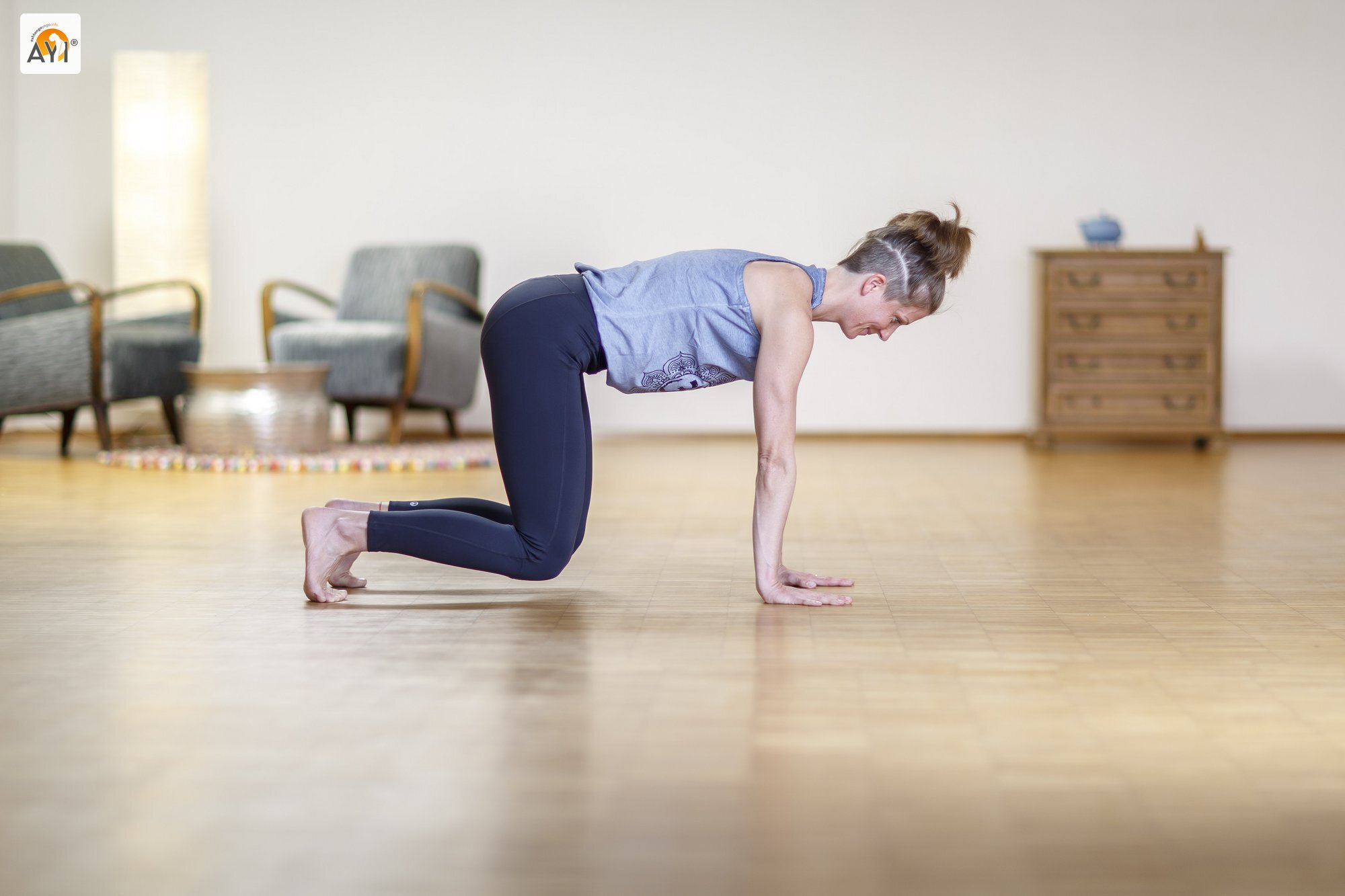
Start on all fours. Place your hands under your shoulder and knees under your hips. Maintain a neutral back. Place the balls of the feet on the ground and lift the knees slightly. Isometrically draw the thigh muscles upwards towards the arms to create a clear and stabilizing tension. Now, really lengthen the arms and push the shoulder blades forward (Fig. 1).
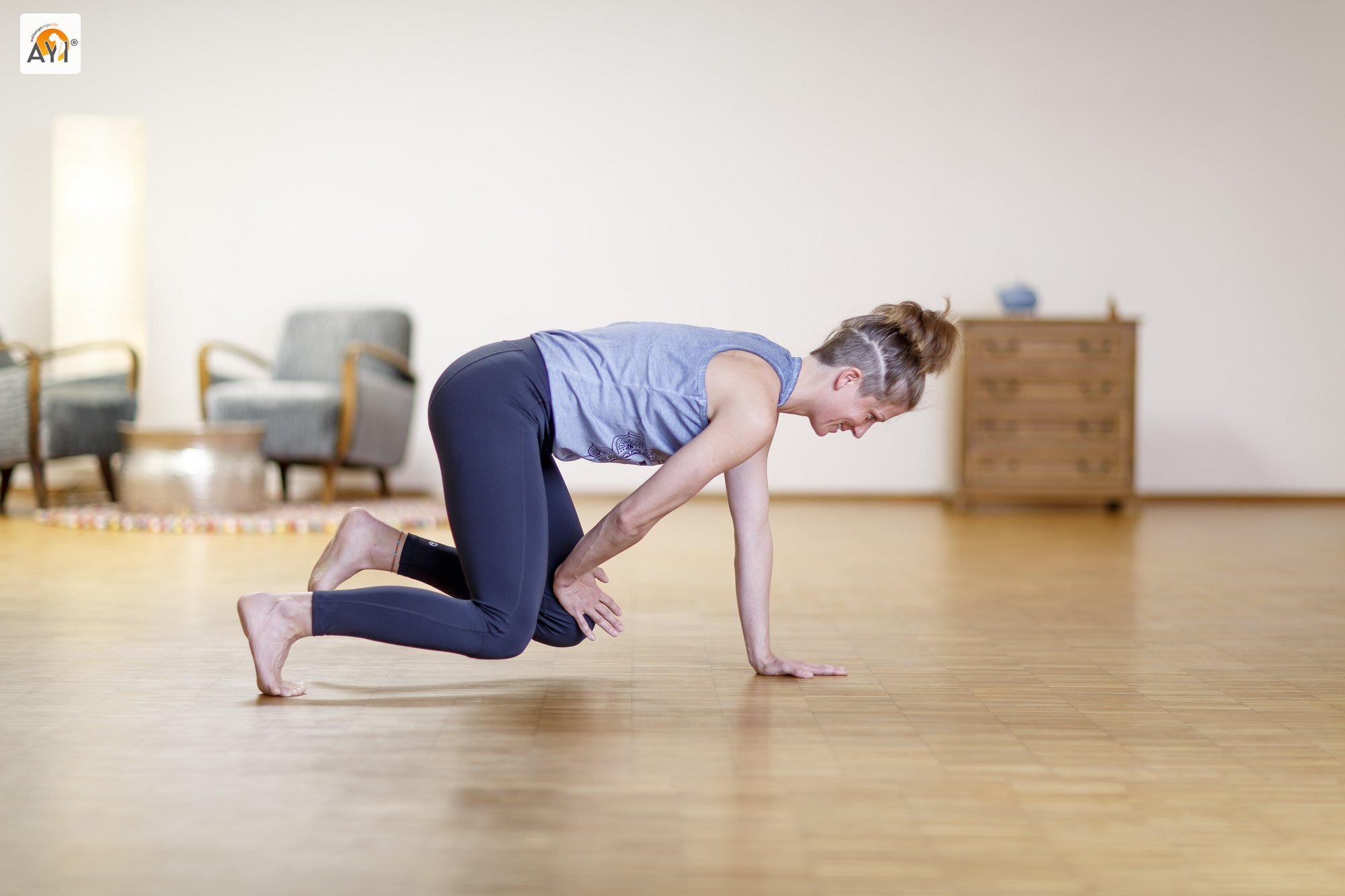
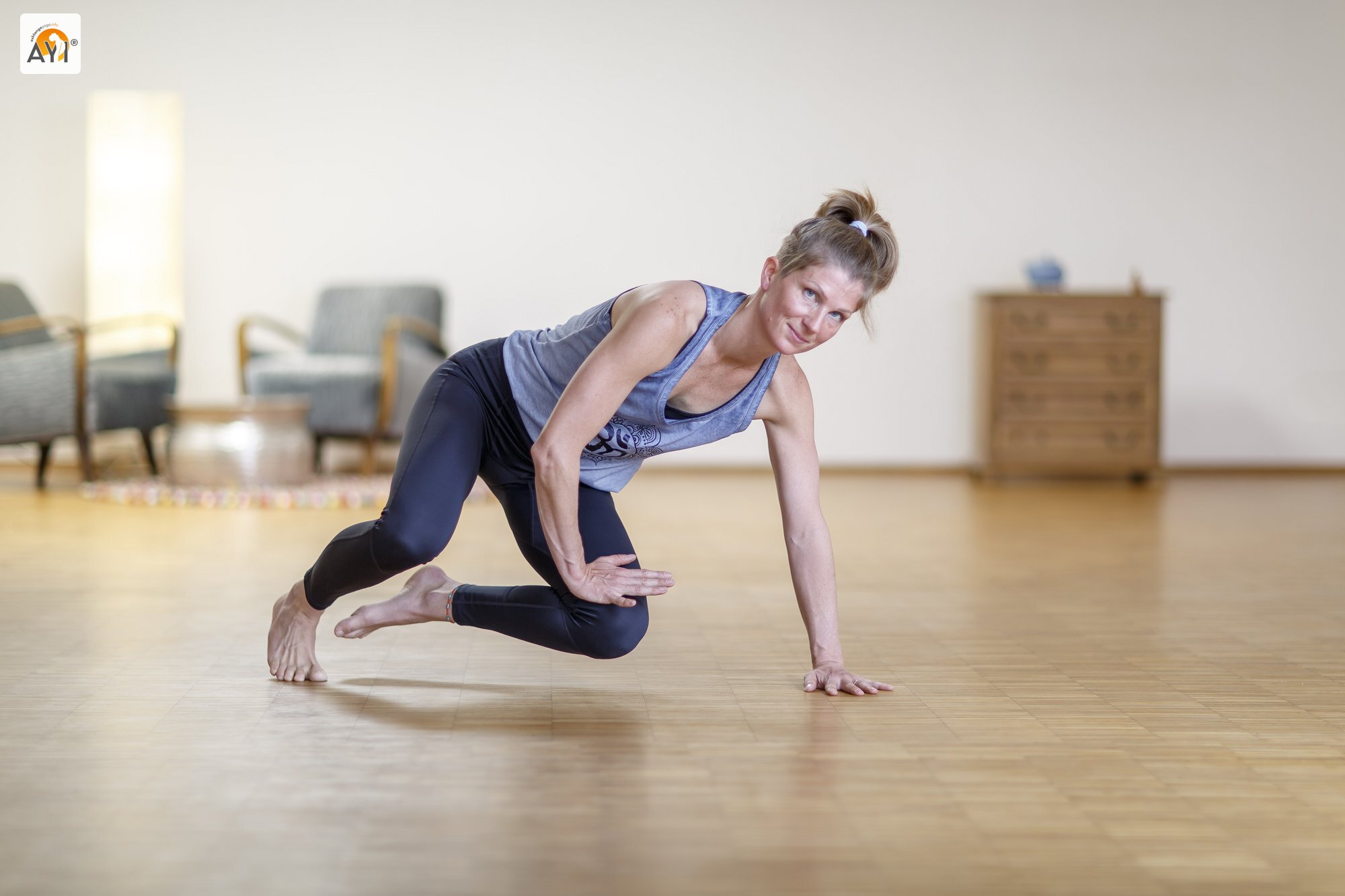
Now lift your right hand and left foot from the ground. Balance here for a few breaths and observe the helical activity in the torso. To intensify the exercise press the right hand against the left knee (Fig. 2).
Taking the exercise a step further, you can add a rotational movement. You pivot on your standing foot and hand without losing contact with the hand and knee that are creating counter pressure (Fig. 3).
Pivot back and repeat the sequence on the other side. Alternate sides and practice for a few more repetitions.
Effect: This exercise involves the shoulder blades (M. Serratus Anterior) and the legs (M. Tensor Fasciae Lata). The stability of the core is made possible via the obliques (M. Obliquus Abdominis internus und externus). The stability in the chest is created by means of the rhomboids (Mm. Rhomboideus minor et major) and neck extensors (Mm. Splenius Capitis et Cervicis). In a nutshell, the entire double helix is activated.
Ant pivots
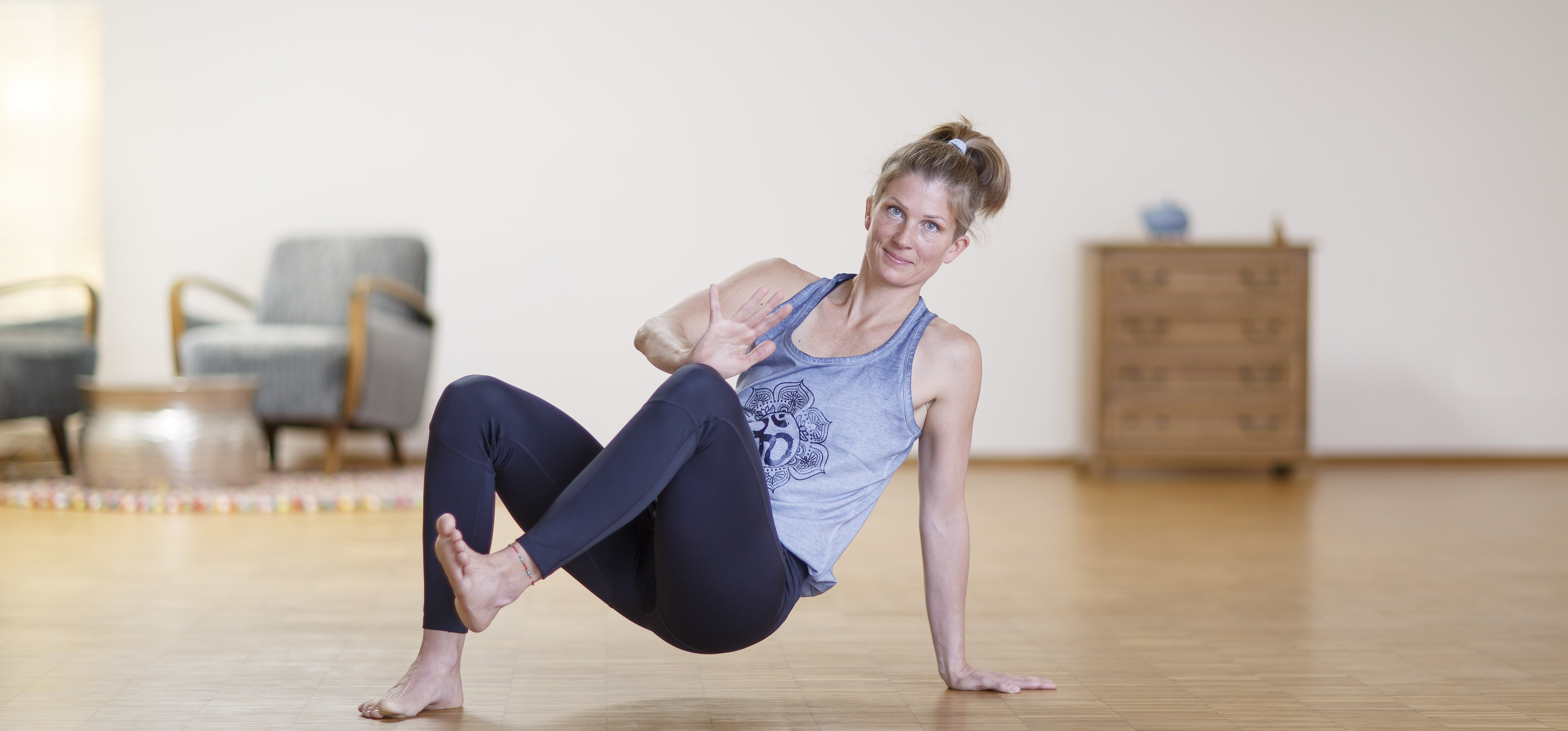
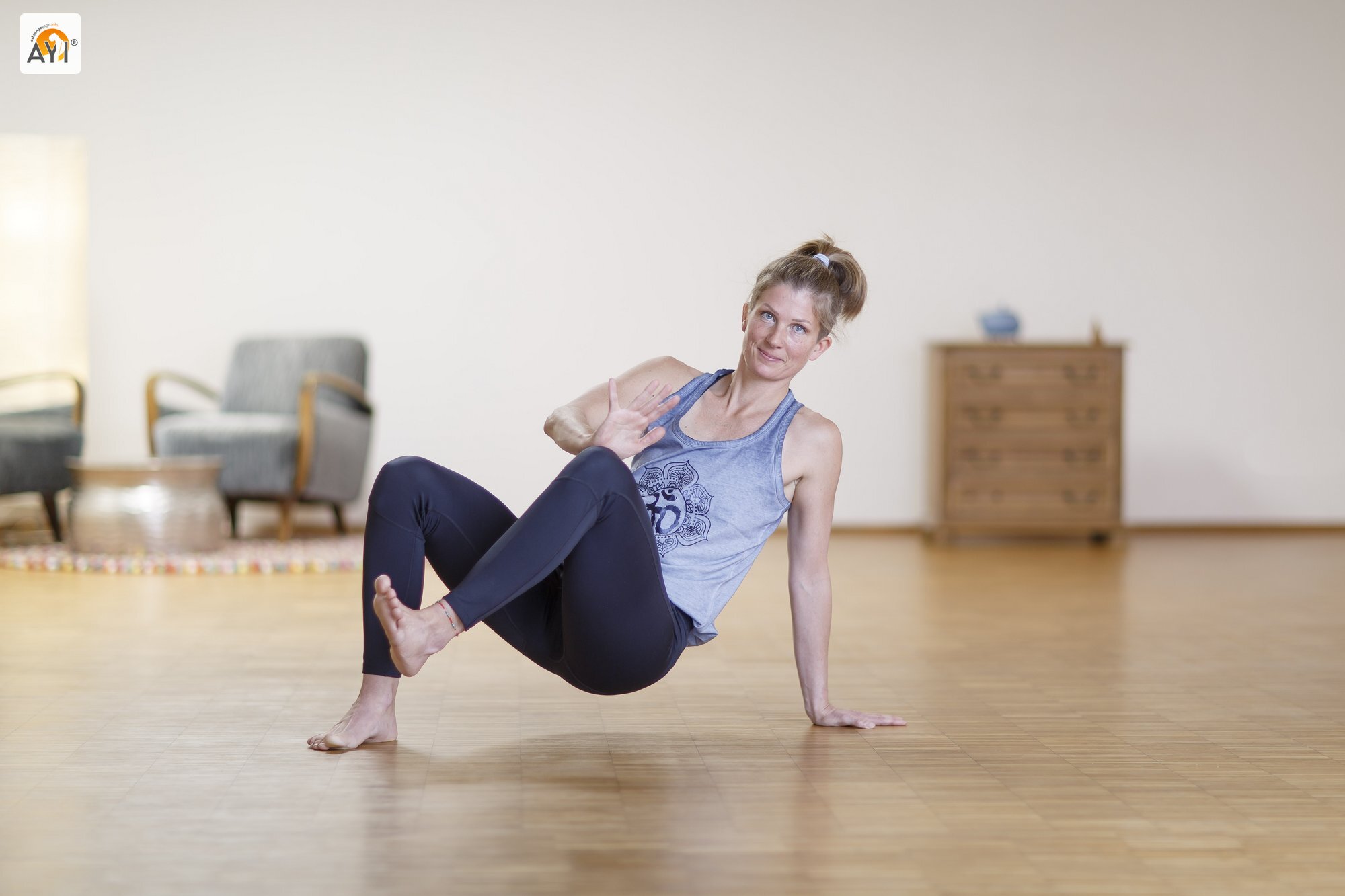
Start in a seated posture. Bend your knees and bring your feet as close to your buttocks as possible. Lift your pelvis until the upper body and the things form a horizontal line. Stretch your arms long by pushing the shoulder blades backwards. Stay for a few breaths.
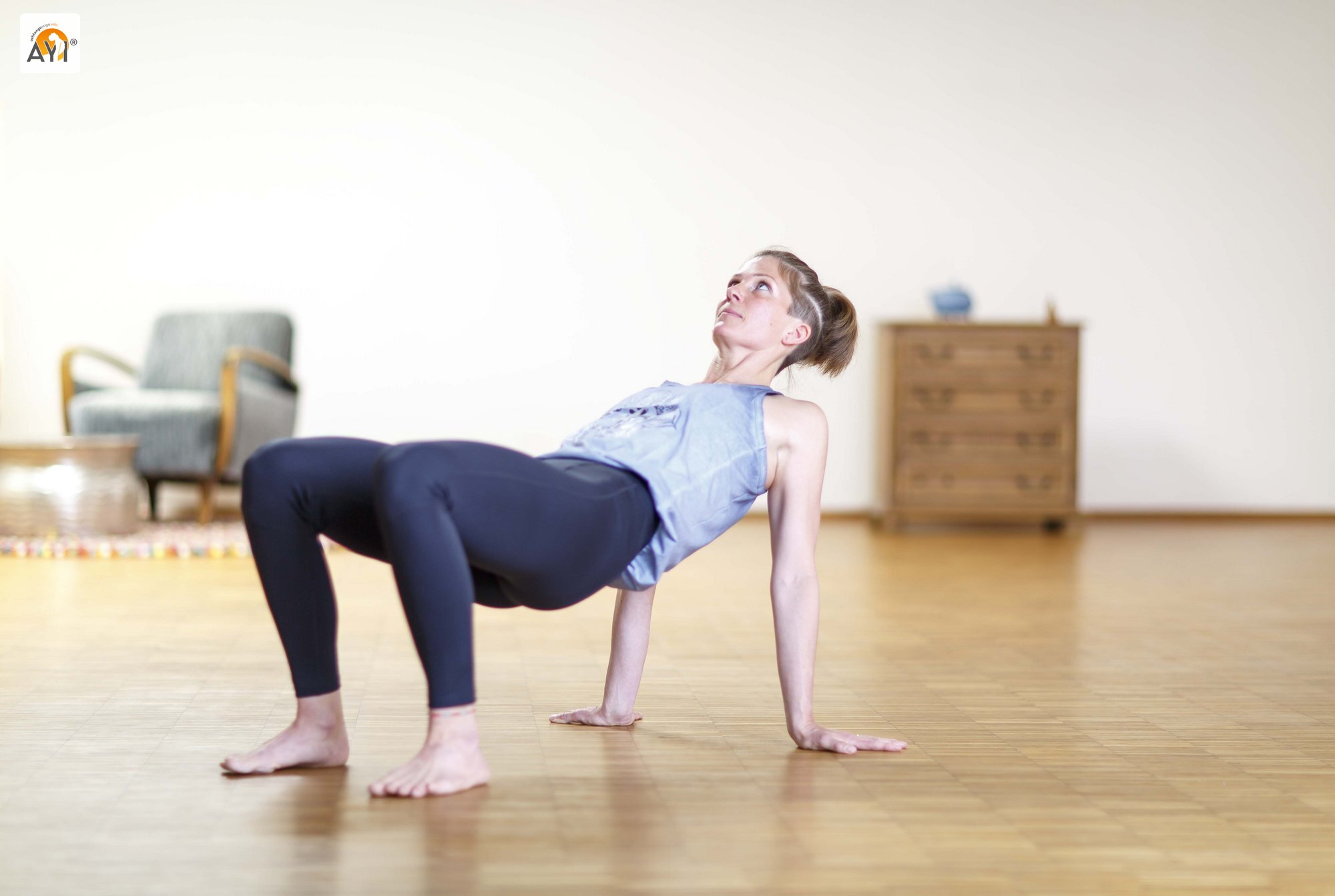
Now lift your left foot and your right hand slightly from the ground. Move the left shoulder blade actively toward the ground. Observe the tension as it spans diagonally across the backside and front side of the torso. To intensify this exercise, press the right hand firmly against the left knee (Fig. 5).
Again here you can pivot which will activate the helical myofasical lines. To do this, pivot on the standing foot and hand downward (Fig. 6).
Alternate from side to side. With a bit of practice you can practice the gecko pivots and the ant pivots together. Together these movements create a coordinatively challenging rotation along the longitudinal axis of the body.
Effect: Again, this exercise is about activating the middle double helix. The lengthening of the shoulder blades and core stability are key in addressing the muscles involved.
Slip and Slide
Fold a blanket longways on a nice and smooth floor that will allow you to slide easily. Stand at the back end of the blanket with the feet hips width apart and scoot your feet forward until most of the blanket is bunched up in front of you.
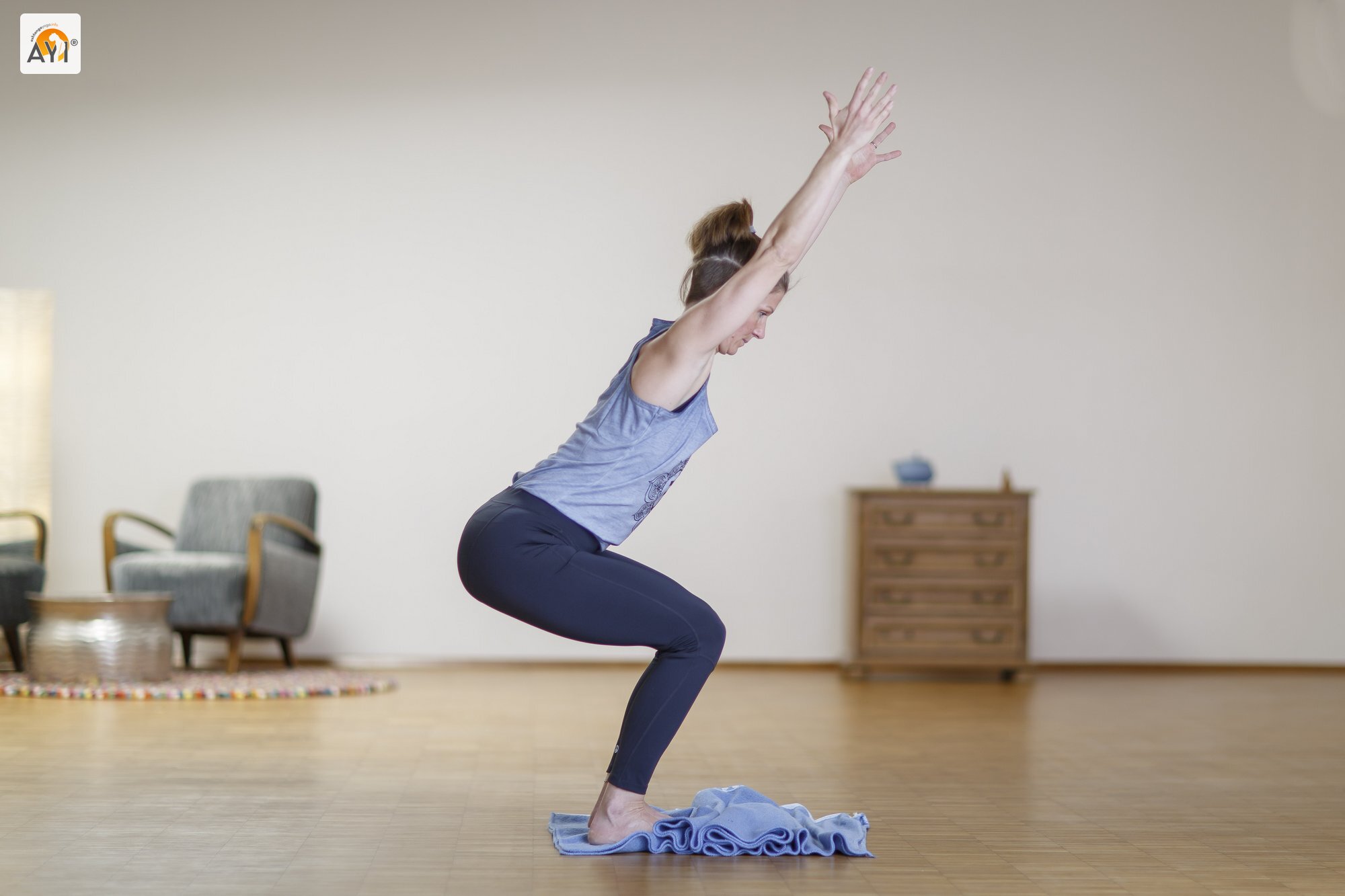
Inhale as you bend your knees until your thighs are almost horizontal and your seat is drawn down and back as much as possible. Here the glutes should clearly fire. Extend your arms diagonally upwards (Fig. 7).
With your next exhale, place your hands on the floor (not on the blanket). Push into the ground transfer your body weight onto the hands as much as possible and point the feet so that you are balancing on the tops of the feet (Fig. 8).
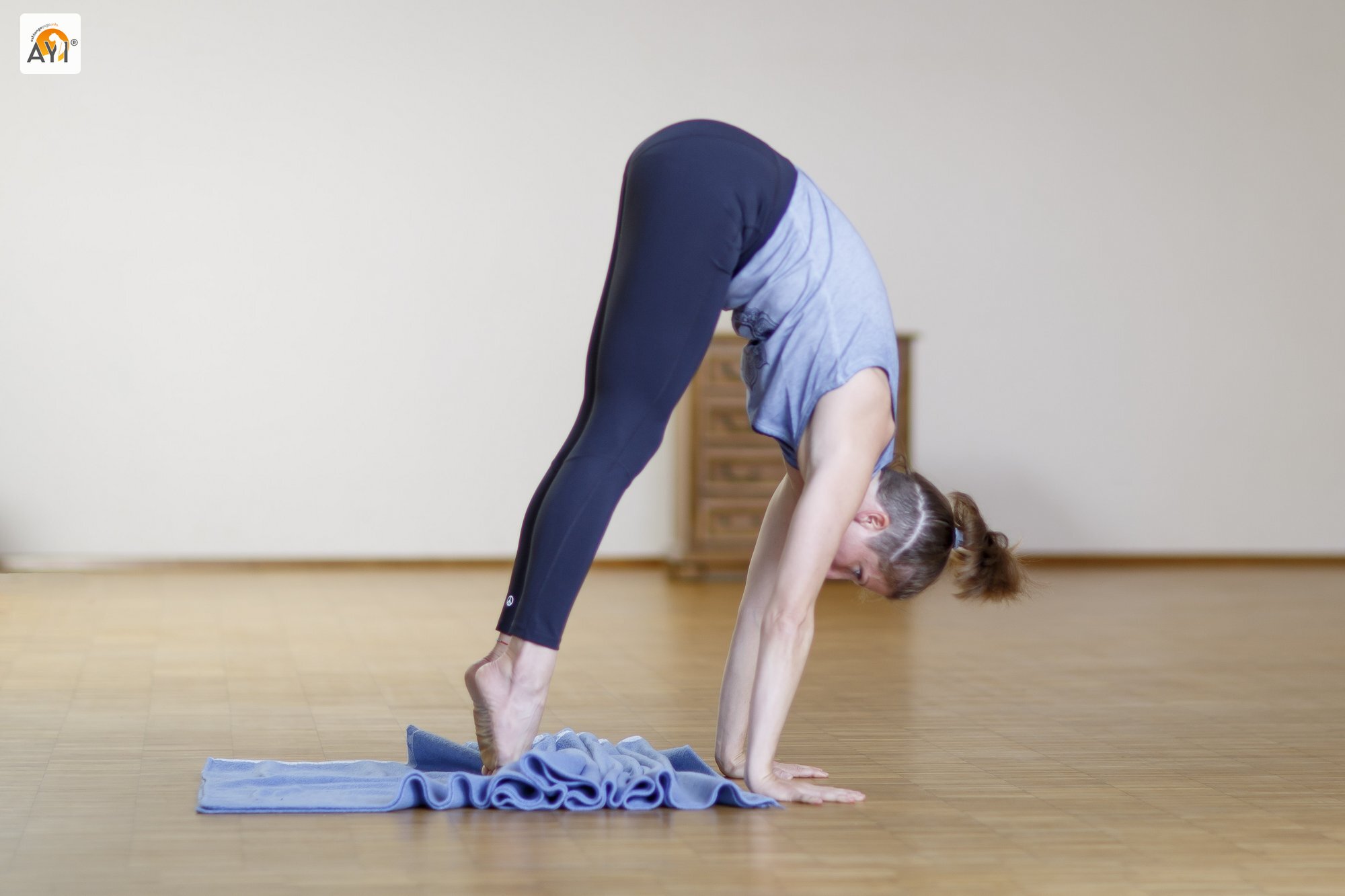
As you exhale, start sliding the tops of the feet backwards. Move slowly and hollow your belly out as much as possible. The rest of the body will be rounded. Once you realize you cannot maintain that activation, set the knees down and possible also the forearms on the blanket and continue pushing backwards. Your navel remains the highest point of the front body for the entire duration of the slide (Fig. 9).
Eventually you will make it to the floor with the arms stretched overhead. Even here, maintain body tension (Fig. 10).
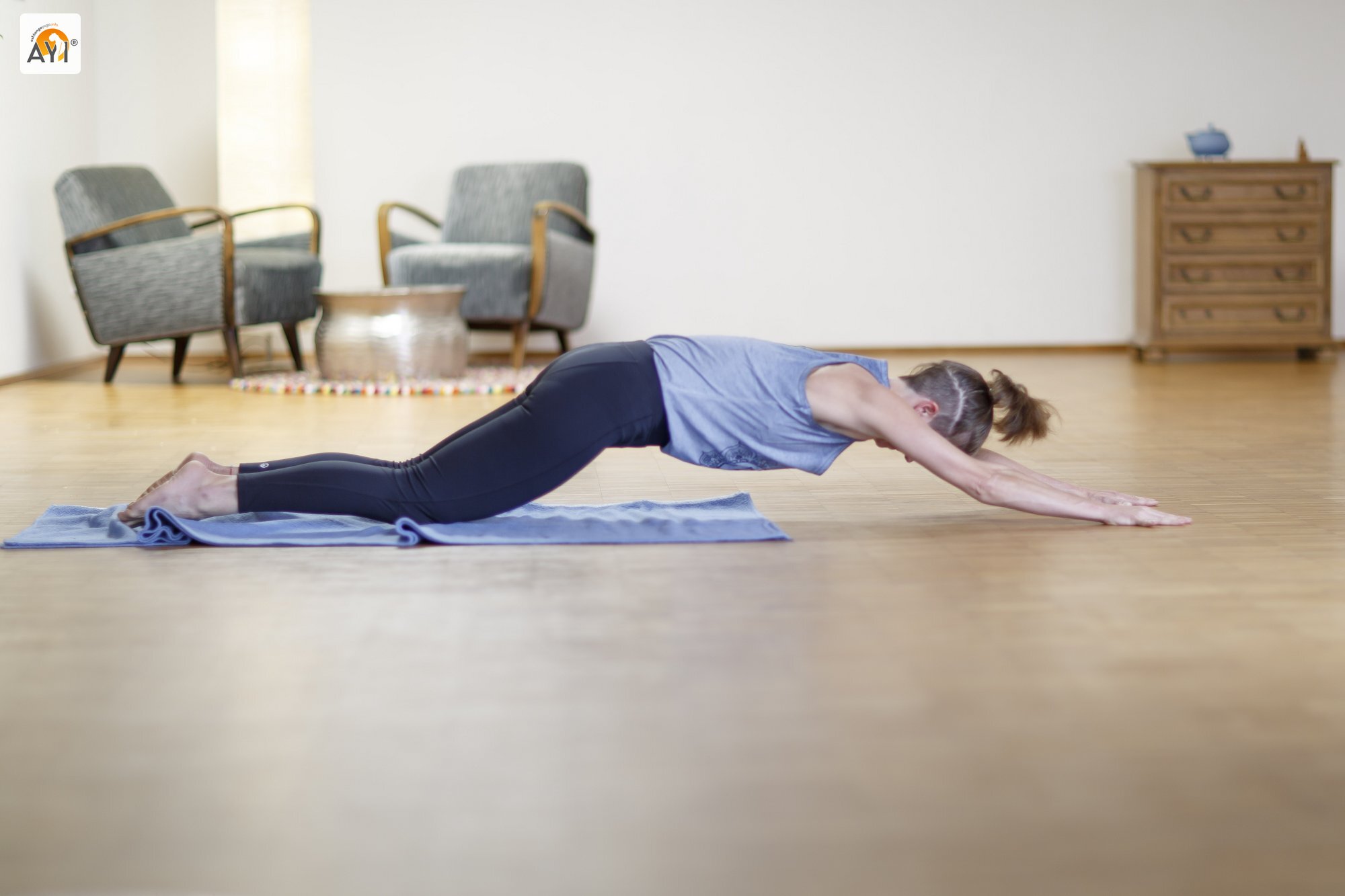
With the next inhale start to lift the navel and start to draw the hands (or forearms) and feet (or knees) toward one another. Keep sliding until you've brought your hands and feet together as in Figure 8. End the movement as you began in chair pose.
Repeat this exercise a few times and work within the range that you can observe the intense effort of the movement.
Effect: This exercise activated and strengthens the superficial double helix. Sliding downwards you will mainly need the front body. The rectus abdominus (M. Rectus Abdominis) keeps the abdominal cavity rounded, the large pectoral muscle (M. Pectoralis Major) and the adductors (M. Adductor Longus) maintain body tension.
The way back is initiated by the pull of the lats (M. Latissimus Dorsi). The glutes are needed for the deep squat (M. Glutaeus Maximus).
Have fun practicing!
Teacher: Dr. Ronald Steiner
Yogini: Kristen Sikorsky Racco
Photographer: Paul Königer
Apparel: OGNX
Continue with AYI Free
Quiz: Dynamic helical tone
3 questions to deepen this article.



Please log in to write a message. Go to login