

Yoga as a means to a longer life expectancy?
When you practice yoga regularly, you are working on your posture, your ability to maintain equilibrium and you build both strength and flexibility. Even from the very beginning of our practice and in the most basic of the fundamental postures, these elements are being practiced. In the case of Padangusthasana and Padahasthasana we lengthen the leg and lower back muscles. When we practice Utthita Parsavakonasana, we are strengthening the thigh muscles, knees and ankles.
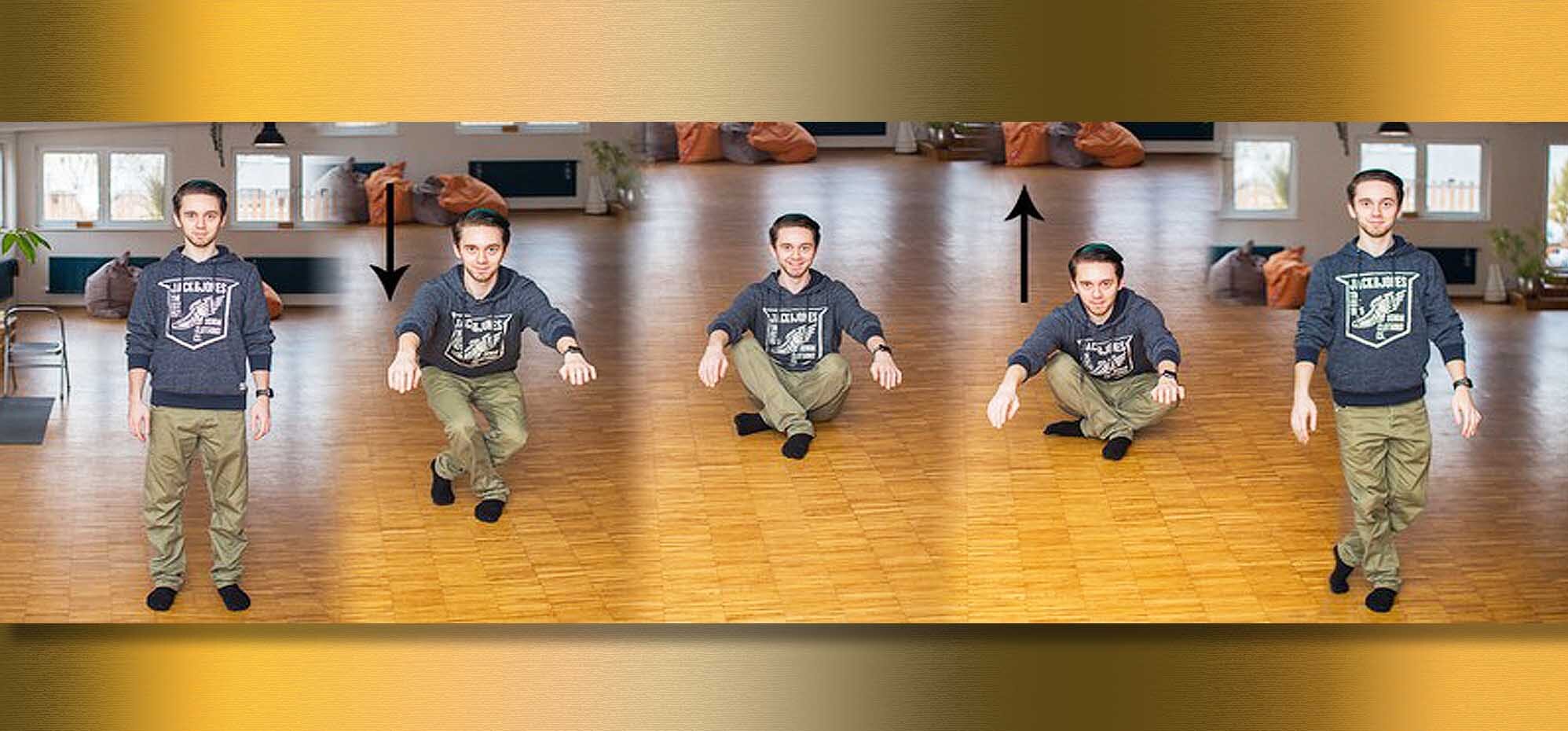
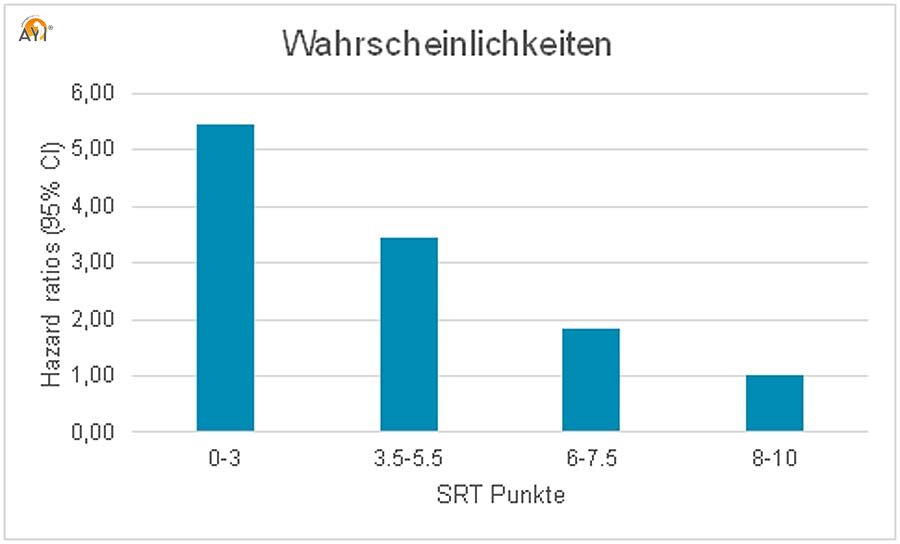
Our orientation in space and as we move through space even helps us in everyday life with common tasks such as tying our shoes, bending over or even reaching over and picking up the remote control from under the coffee table. This agility is exactly what the test is intended to measure: the coordination of flexibility and strength in movement. On the other hand, the test cannot offer us any information about cardiovascular capacity. There were some patients in the study who despite their low SRT test scores according to Dr. Claudio Gil Araújo's metrics, were able to bike to work and appeared to be strong and healthy.
So will we live longer if we practice yoga daily and maintain a high SRT score? The test is too rudimentary to really tell, as there are so many different factors that come into play. Even so, the study shows us how important maintaining our strength and flexibility as we enter our senior years really is, in particular, how we can avoid a serious injury through a fall. What better way can you think of as using a moving meditation as a preventative measure? How beautiful is it that such a practice can not only strengthen our bodies but also brings us to inner balance?
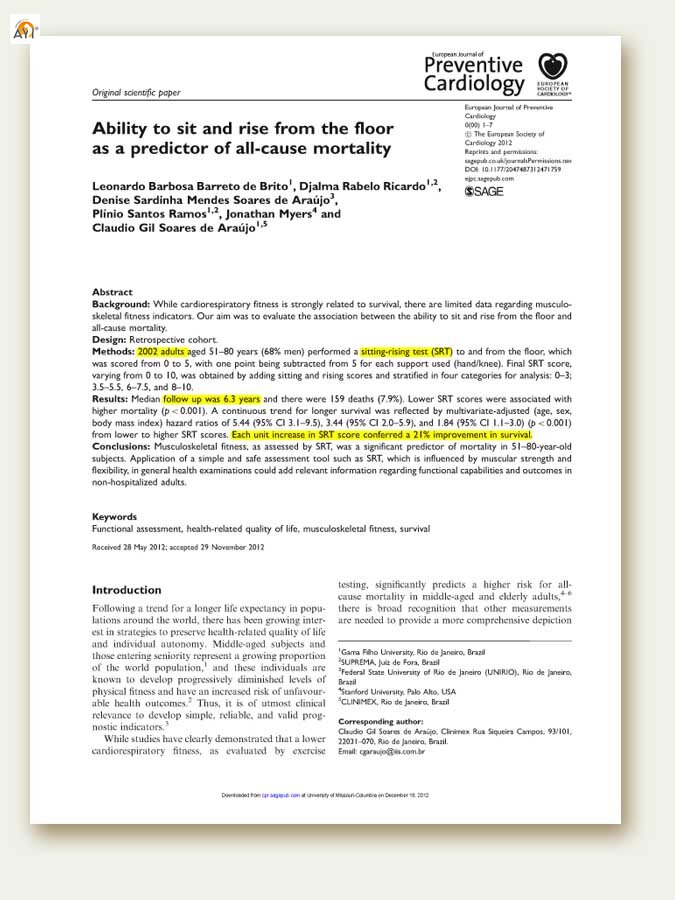
Here is the original study on the SRT
Give the Sitting-Rising Test a try!
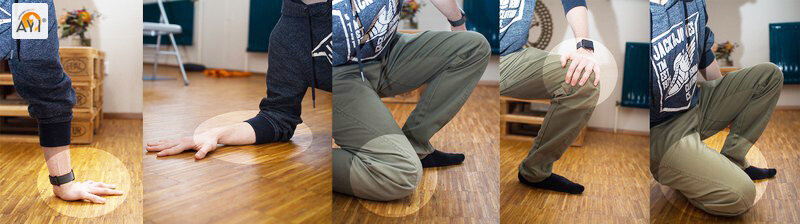
Has your curiosity been piqued? Go ahead and give it a try and see how you do! The best way to work in in pairs, and make sure that you are in a room with ample space, just in case you lose your balance.
Find motivation through progress.
At the end of the day, the SRT will not offer a comprehensive diagnosis or give you the full picture of your fitness level. It is merely an indicator that tends to influence other elements of fitness. Likewise, a low test result doesn't condemn you to an early death. What we can do is set goals to improve the results of the test, therefore improving our overall health. Through targeted exercises which promote flexibility and strength, the right attitude and regular practice the SRT can help you to determine a goal which is both achievable and can help us to take our health more seriously in the future.
Have you tried the test out and set self improvement goals based on your SRT result? Have you implemented some exercises to improve? Are you starting to feel some changes since practicing? Write us an email and send it to: redaktion@ayi.info. We would love to hear about your experience!

Please log in to write a message. Go to login