


Circulation in cartilage is very limited, and this is why damage heals rather poorly. Because the cartilage itself is not innervated, pain is not perceived here. The pain caused in arthritis is a result of the abrasion of the cartilage, because these pieces of worn cartilage attach themselves to the joint capsule and cause painful inflammation. The joint capsule shrinks and thus restricts mobility.
A solution is to use exercises targeted at bringing back the floating tension of the opposing helical fascia. This will create the floating effect again. The situation with the cartilage is no longer crucial to the health of the joint. Studies show that the intensity of pain experienced in osteoarthritis is only loosely associated with the condition of the cartilage.
Heavy work for ankles, knees and hips
The joints of the leg carry a heavy load. Our hips, knees and ankles carry our body weight throughout the entire day. In everyday walking and in some sports, however, we speak mostly about the vertical fascial lines. These allow for walking and running, as well as movements such as squats.
The opposing helical fascia lines are mainly absent in these activities. It's then no surprise that our legs are prone to quite a bit of wear and tear. Cartilage particles that wear down from abrasion attach themselves to the joint capsule. This becomes inflamed and shrinks. The result is the pain of osteoarthritis. In the case of severe arthrosis, an artificial knee or hip joint may be needed.
Perhaps we don't have to get to that point. Through targeted stretching exercises we can create more mobility in the shrunken joint capsule and regain a normal range of motion. Even more important, however, is to tighten up the floating tension of the opposing double helices that wrap around the hip, knee and ankle. As a result, the joints float, the pressure on the cartilage is relieved and can benefit from a greater range of motion. The nutrient rich synovial fluid flows around its surface. This allows small damages to heal over time.
Exercise Sequence
Regardless of whether you have a damaged joint or not, this sequence is going to be of great benefit for you. They all cultivate floating tension across the joints. The exercises systematically address the muscles running diagonally, which are those part of the opposing double helices and they all relieve pressure in the joints.
Junebug - Hand and foot circles
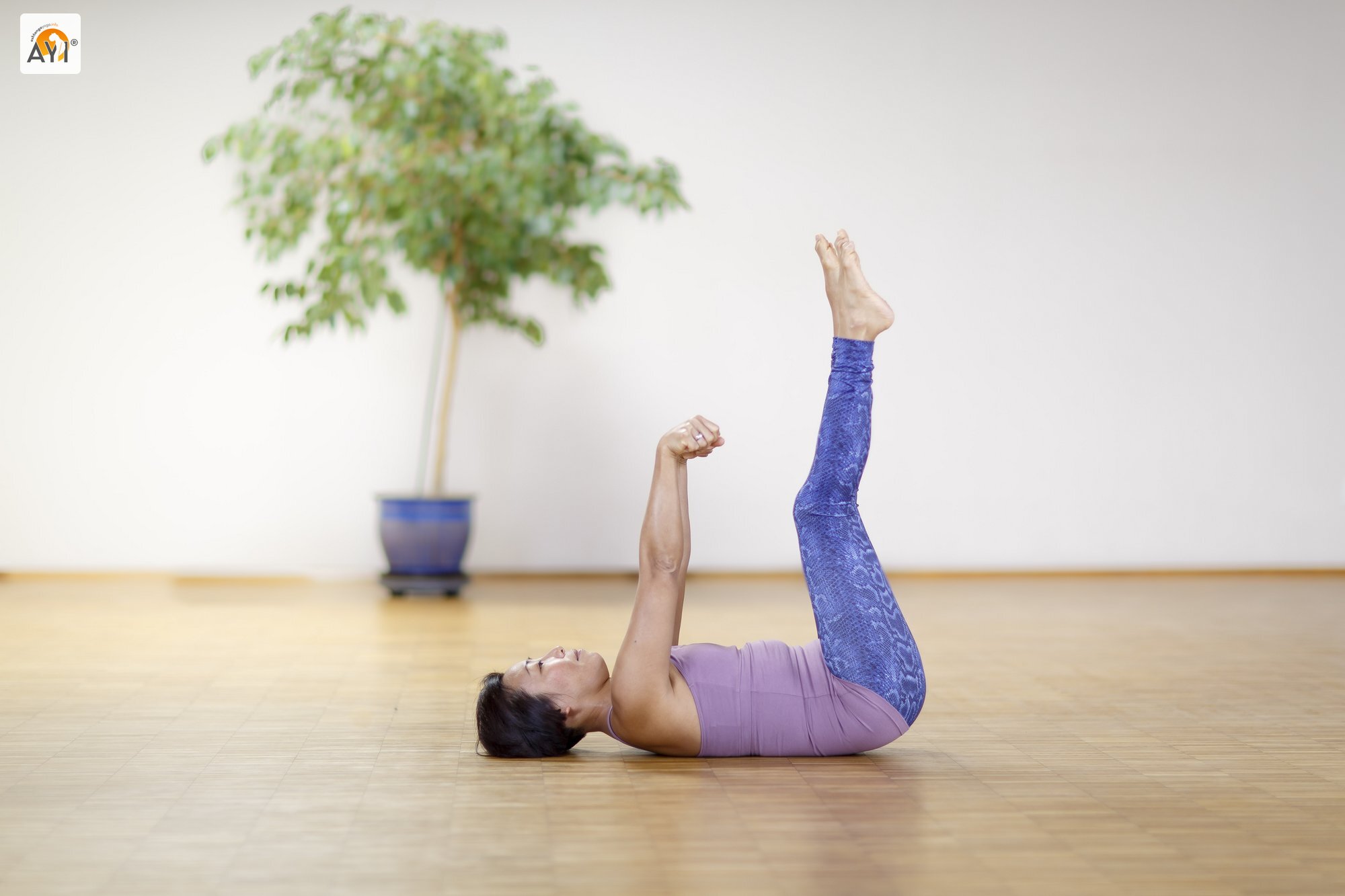
Start supine on the floor. Extend your arms and legs straight up. Begin to circle the feet and hands (Fig.1).
This may seem simple at first. After a while, you will clearly perceive the activation in the forearms and calves. Then change the direction of the circles. Keep going until you feel the intense warmth of the fascial activation.
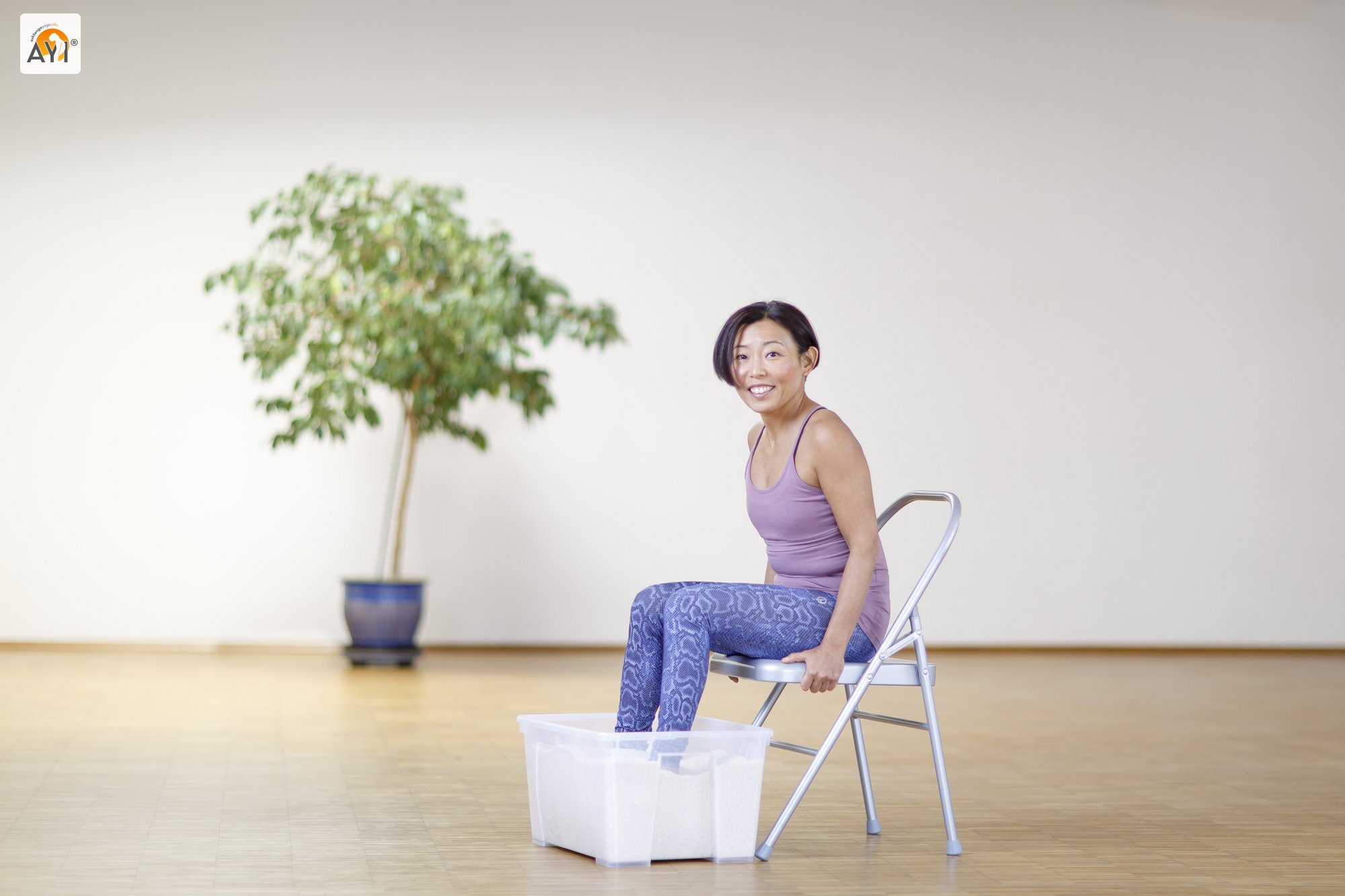
Option: If you want to optimize the efficacy of the exercise and focus on the legs, you will need a chair and a large box of rice. Sit down in front of the rice box and circle the feet (Fig. 2). You can also do the exact same to focus on the wrists as well.
Effect: This exercise activates the helical fascial tension of the wrists and ankles. The wrists and ankles cultivate floating tension.
Foot Windshield Wipers - Knee rotation
Sit comfortably on the floor. Bend the left knee to 90 degrees and place the foot on the floor. Then flex your foot so that the ankle is also approximately at 90 degrees.
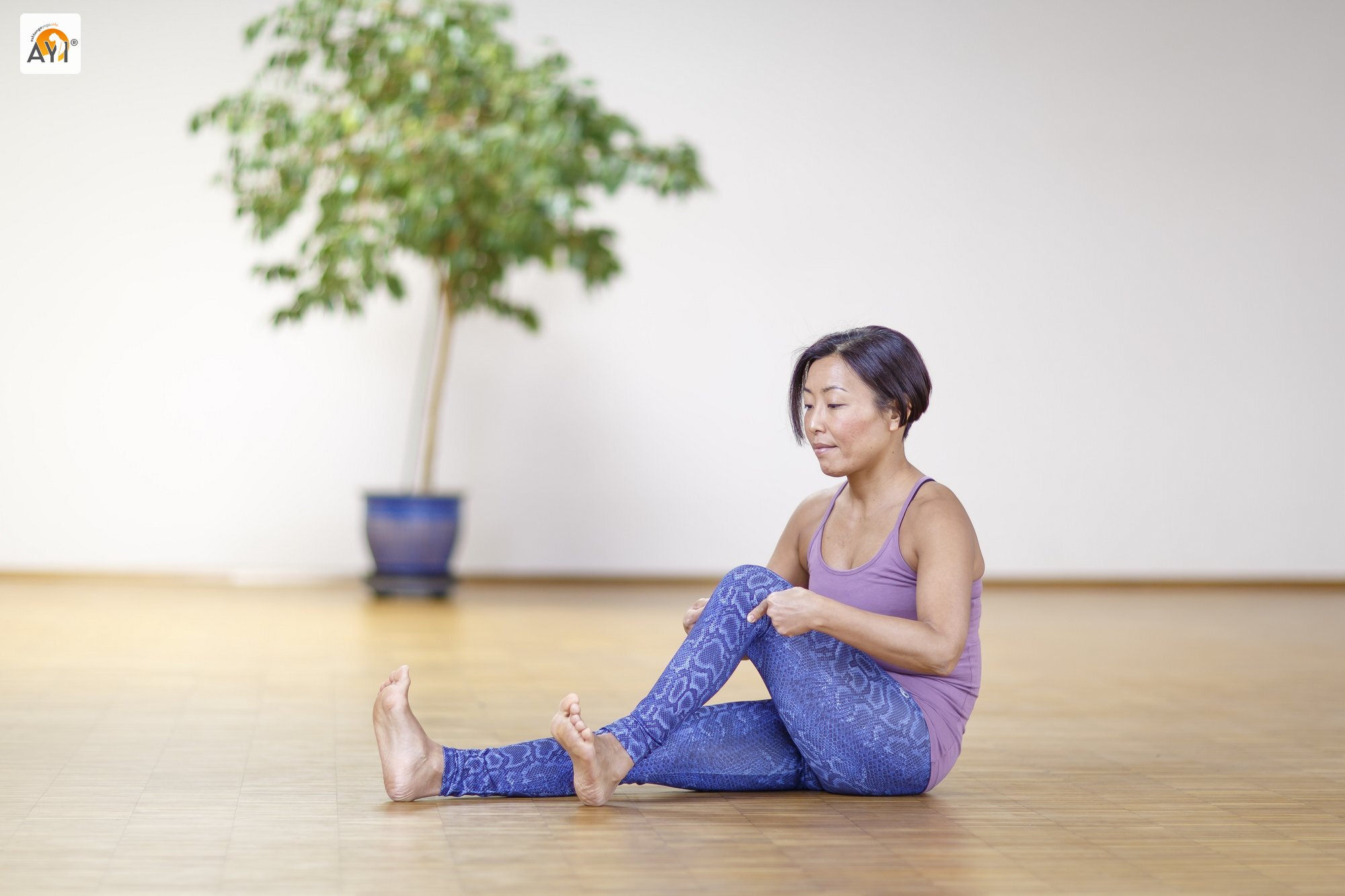
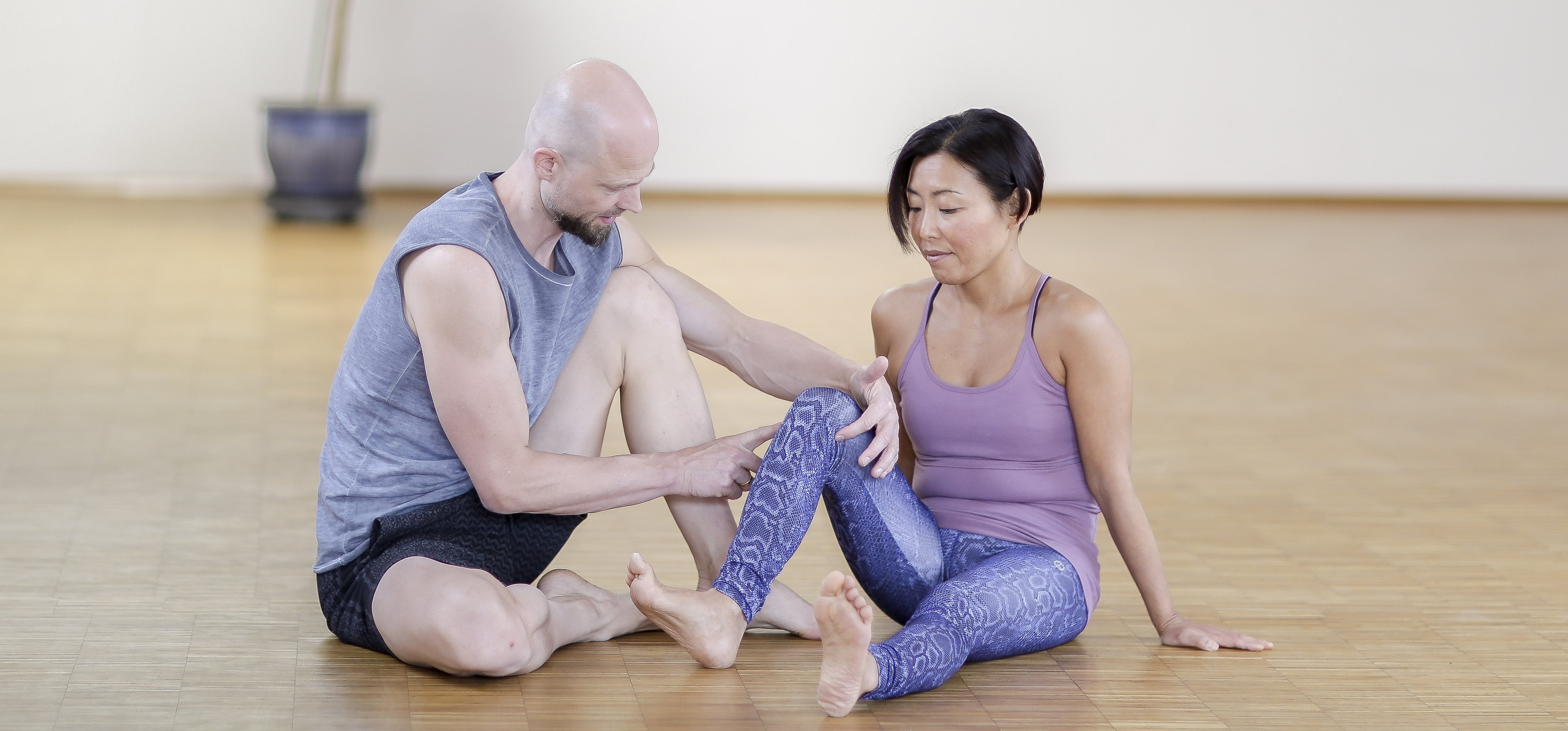
Take both hands to either side of the knee and feel for a joint space between the femur (femur condyle) and the tibial plateau (tibia condulus). In this space the menisci glide with every movement and adapt the two cartilage surfaces to one another.
Rotate the shin bone back and forth. You will feel the movement of the lower leg relative to the thigh and you will be able to palpitate the movement of the menisci with your hands. Your foot moves like a windshield wiper from side to side (Fig. 3).
Continue until the gliding becomes smoother and you can feel the activation of the helices across the knee joint. Repeat on the second side.
Effect: This exercise activates the helical fascia that spans across the knee joint. Roughly speaking they can be divided into an inner helix (vastus lateralus, m. popliteus, medial parapatis fibers, m. adductor longus). If the opposing helices are harmoniously stretched, they will create the floating tension in the knee which will improve the joints overall health.
Leg rotation- seated
Sit comfortably upright, feeling free to use your hands to support your posture. Stretch your leg as long as possible and rotate the femur outward. Extend your leg as far as possible as you rotate the femur inwards. In both movements we are initiating the movement at the hip joint.
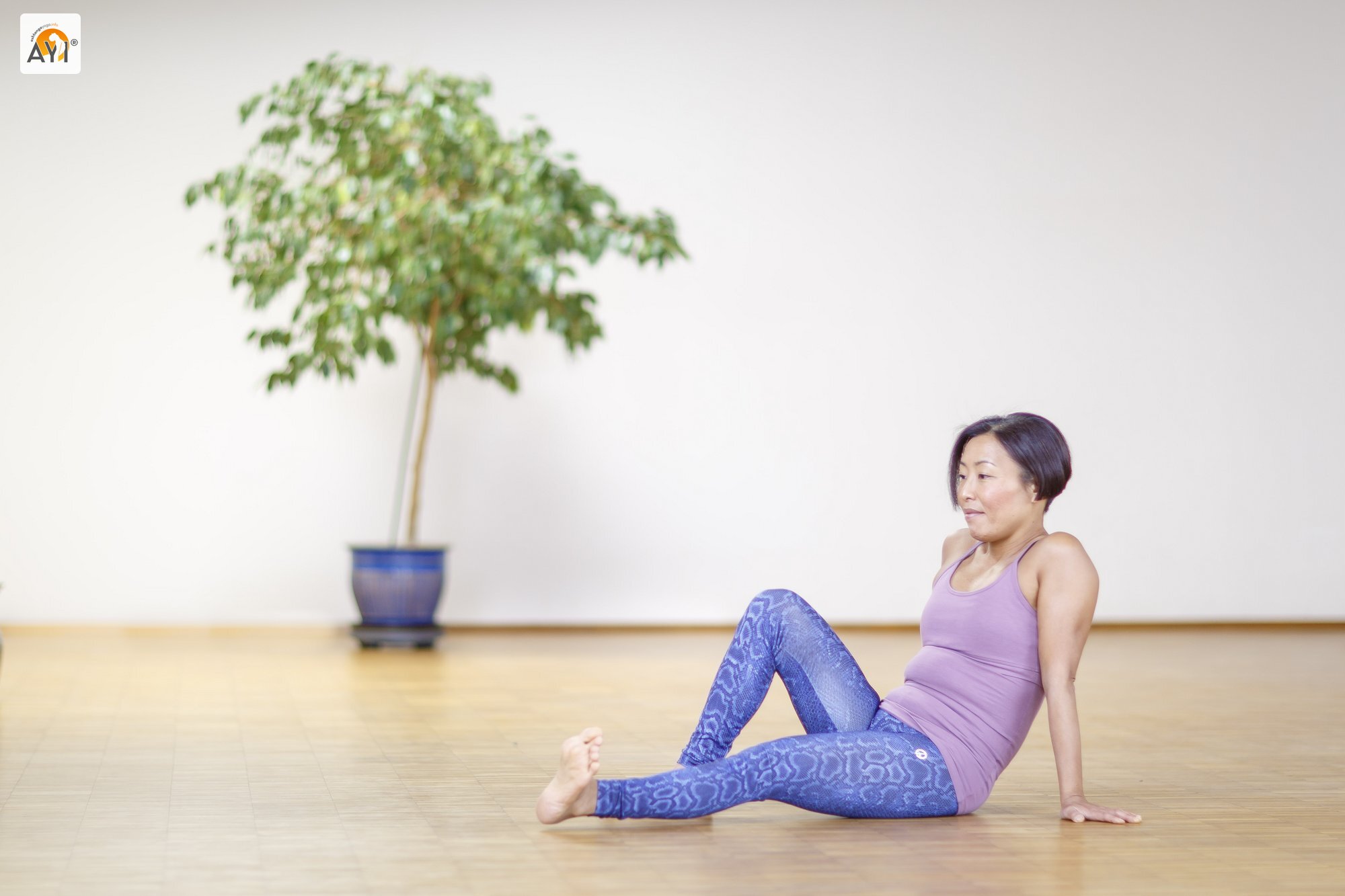
Continue until you sense a light fatigue in the deep muscles of the hip. Then repeat on the other leg.
Effect: Lifting the leg from an upright seat activates the muscles in the anterior side of the hip joint. The rotation activates the diagonal fascia from the hip joint. These are part of the double opposing helix in the region of the hip.
Have fun practicing!
Teacher: Dr. Ronald Steiner
Yogini: Kumiko Weber Sakaguchi
Photographer: Paul Königer
Apparel: OGNX
Continue with AYI Free
Quiz: Helixspannung des Beines
5 questions to deepen this article.


Please log in to write a message. Go to login