


Four tasks
Lengthening, coordinating controlled release, support and cushioning: it seems almost impossible to imagine combining all four tasks. The good news is that hormones help to naturally soften the pelvic floor. By maintaining a good level of physical activity, your pelvic floor can also maintain much of its power.
With a bit of practice you will cultivate more awareness of the change that takes place during contraction and lengthening. This is the best thing you can do to ensure a healthy pelvic floor during your pregnancy and during childbirth.
The following exercises will help to support you in maintaining pelvic floor health. In doing them you will ensure that your pelvic trains all four tasks.
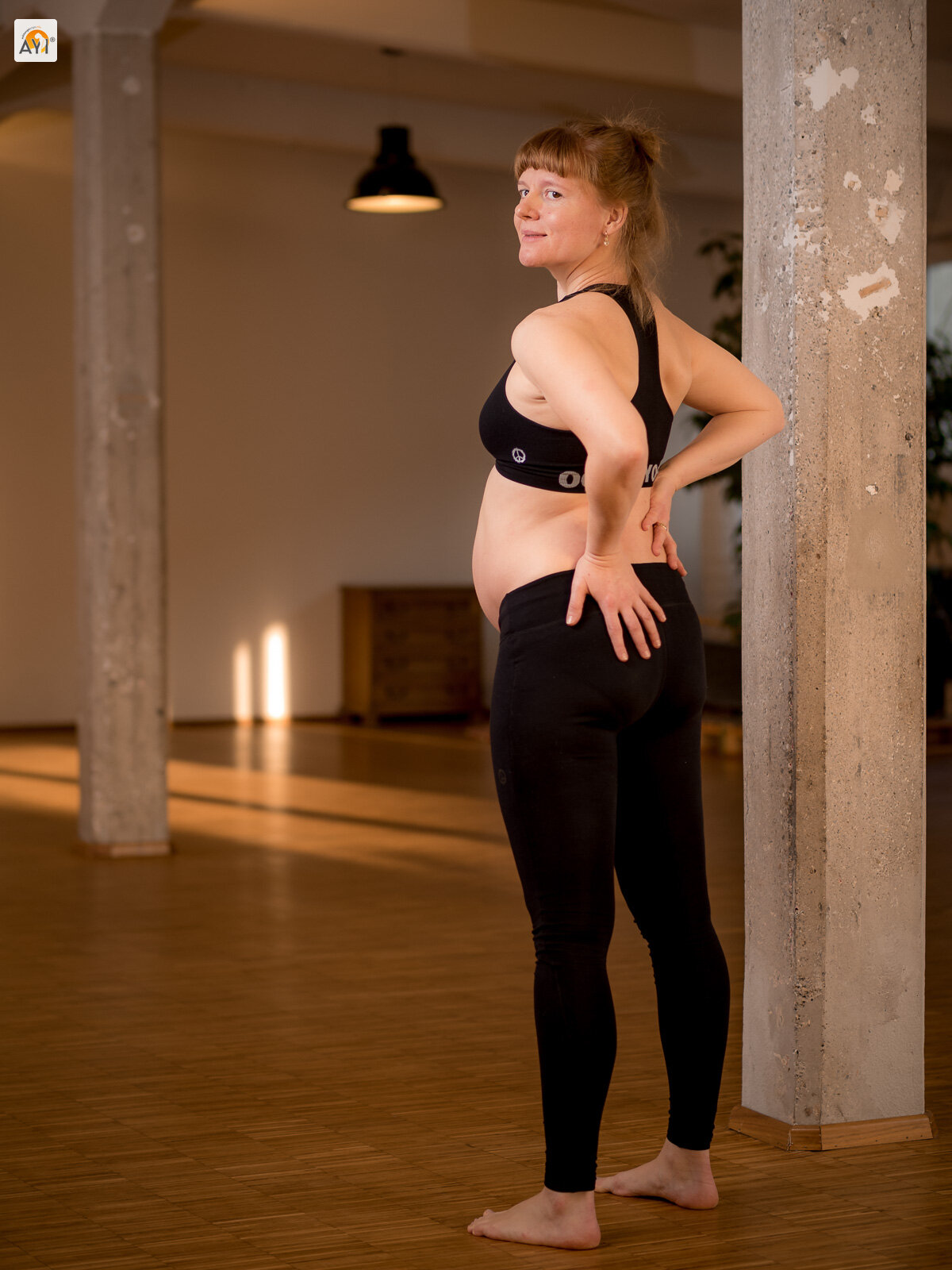
Fascia massage
Place both hands on the lower back at the SI joint and using the palms rub gently up and down. Gradually increase the pressure, continuing until a pleasant warmth under the skin is achieved.
Effect: By practicing this you maintain the suppleness and overall flexibility of the fascia in the area of the SI joint. This is especially important during labor and delivery, because this joint has to be able to move quite a bit.
Pelvic tilts
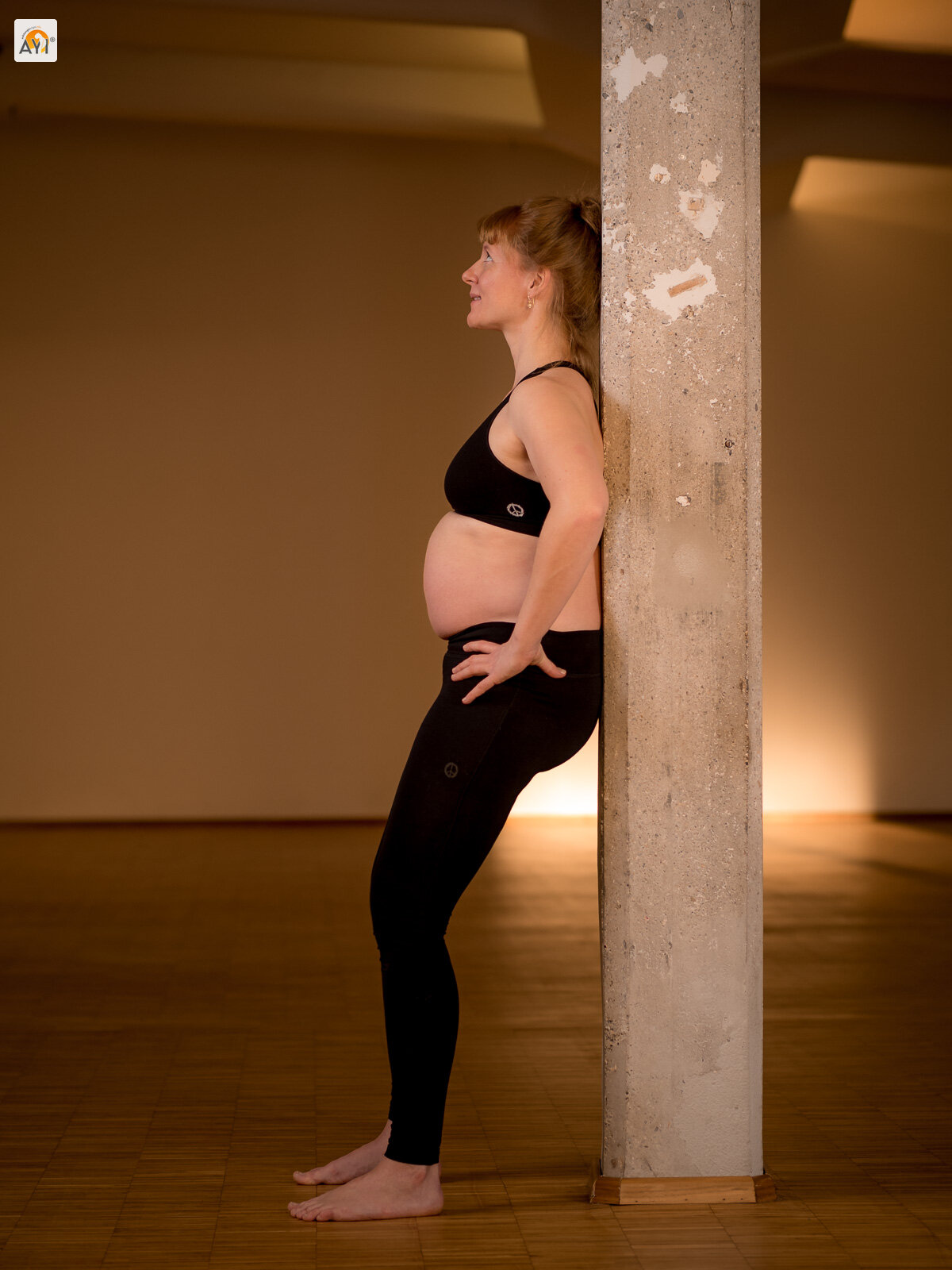
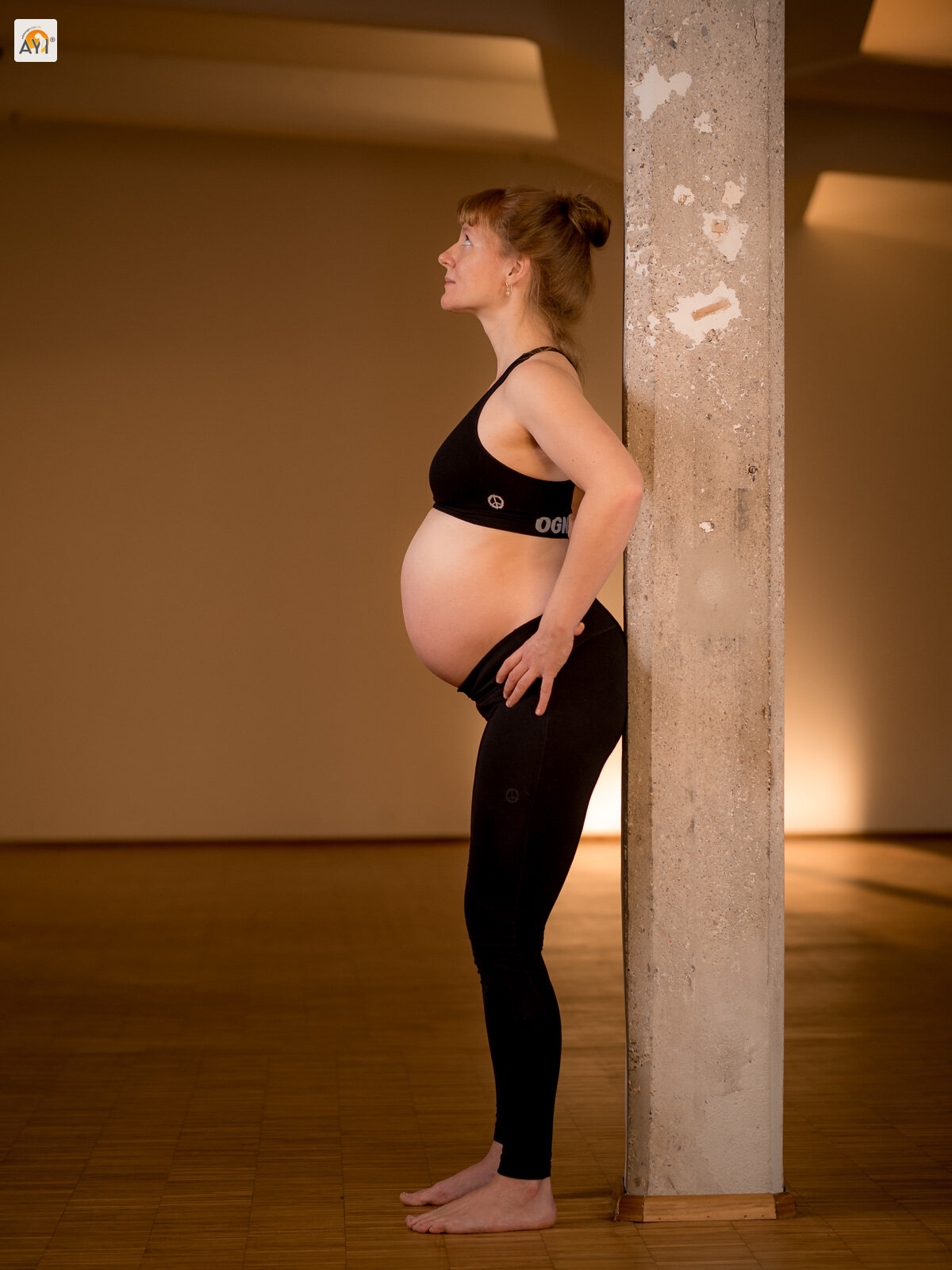
Lean against a wall or flat surface. Tip your pelvis forward and back at a pace that you can bring your awareness to the movement. Observe how the combination of breath and movement arises naturally. Gradually find your center.
Effect: With this exercise you will develop a sense of standing taller as your posture improves through the activation of the pelvic floor muscles. It is a great way to train activation and release.
Mula Bandha
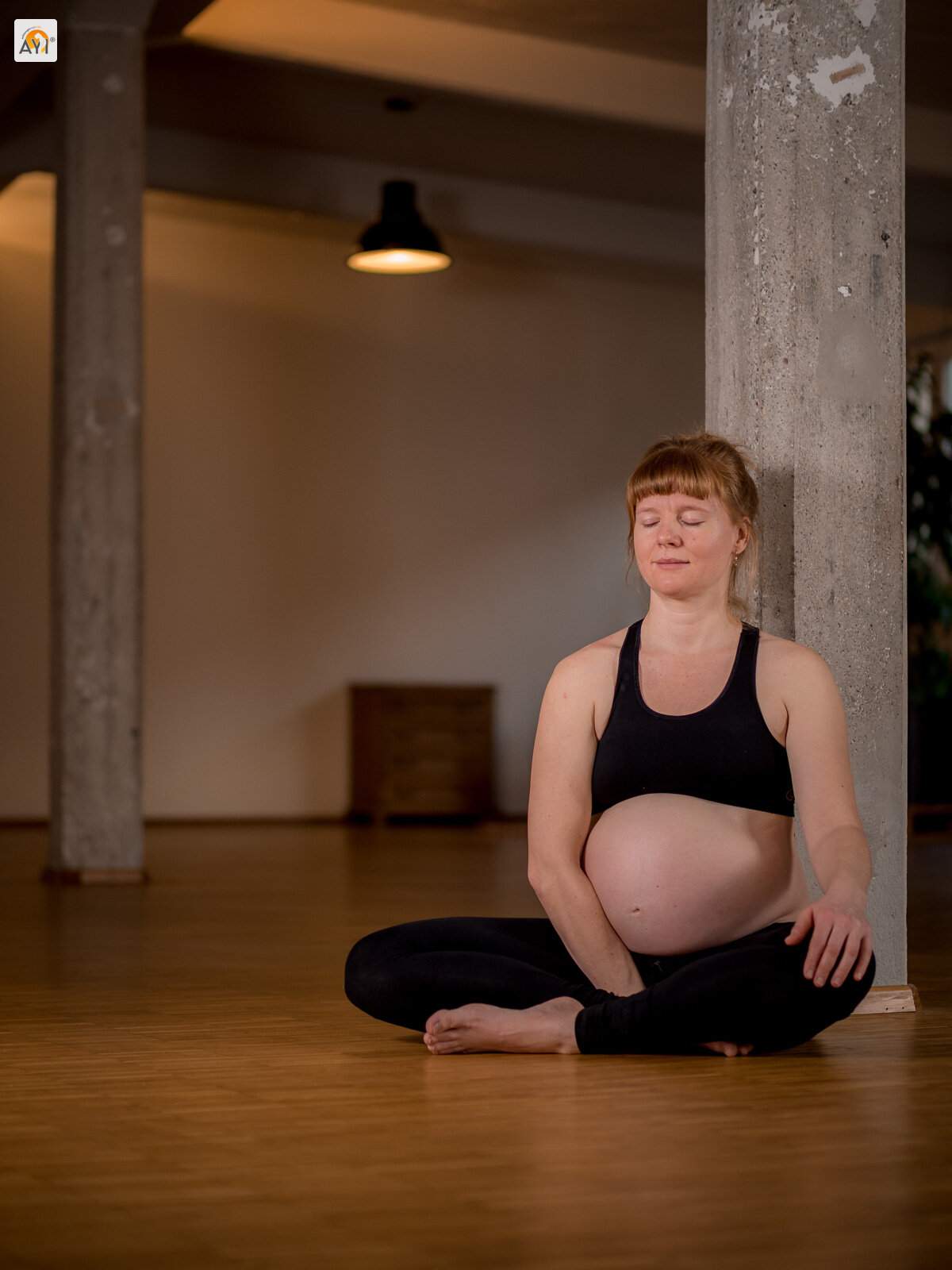
Find a comfortable seat - either on the floor or in a chair. It is important that you can maintain a neutral spine in this exercise.
Place one hand under your pelvic floor. You are in the right place when you can feel your sitz bones to the right and left of the hand. At the front, under your palm is the pubic bone. With your fingertips you can feel the tip of the tailbone.
Draw the pubic bone and tailbone together without creating tension between the sitz bones. This exercise activates the deep layer of your pelvic floor. Relax in a controlled fashion, and then continue activating and releasing until you can achieve a good sense of the actions taking place.
Next, draw your sitz bones together without creating tension from the tailbone to the pubic bone. Again release and rhythmically practice activating and relaxing until you get a good feeling for the actions within the pelvis.
Effect: With this exercise you will cultivate more awareness of the pelvic floor. At the same time you will fine tune your ability to proactively activate and release these muscles individually.
Bridge pose
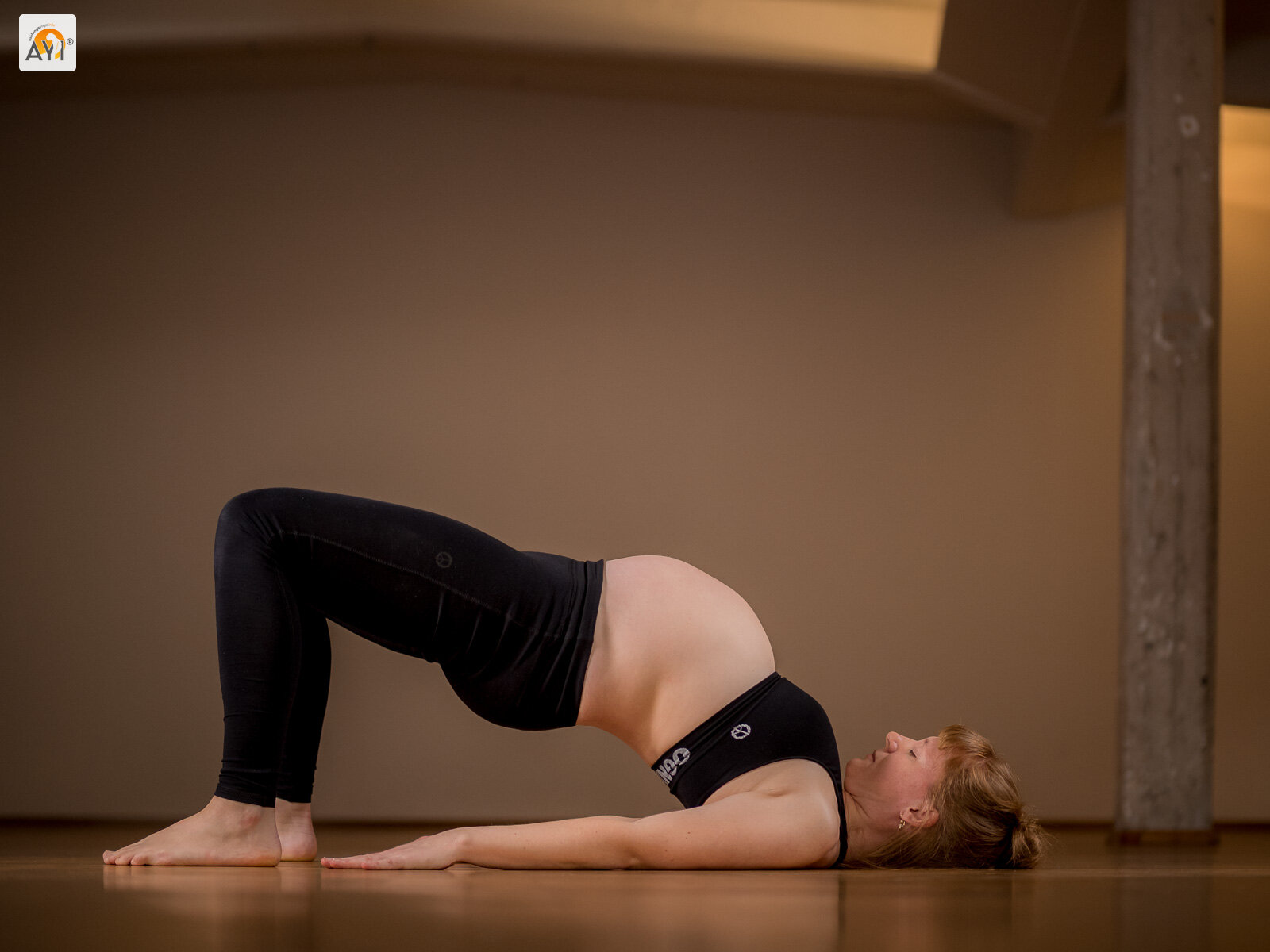
Lay down flat on the floor, and then bend the knees and walk the feel in towards the sitz bones until your fingertips touch your heels. Your weight rests on your feet and shoulders, and no pressure should be felt on the neck.
Then press your palms into the floor and with your next inhale lift your pelvis as high as you can. Stay in this position for a few breaths. To come out of the pose lower the back down to the ground one vertebra at a time. Take a break and repeat if you like.
Effect: With this exercise you relieve the weight on the pelvic floor. Additionally you can offer your baby an opportunity to move into a more optimal position in the womb.
Enjoy your practice!


Please log in to write a message. Go to login