

Protect your knee joint
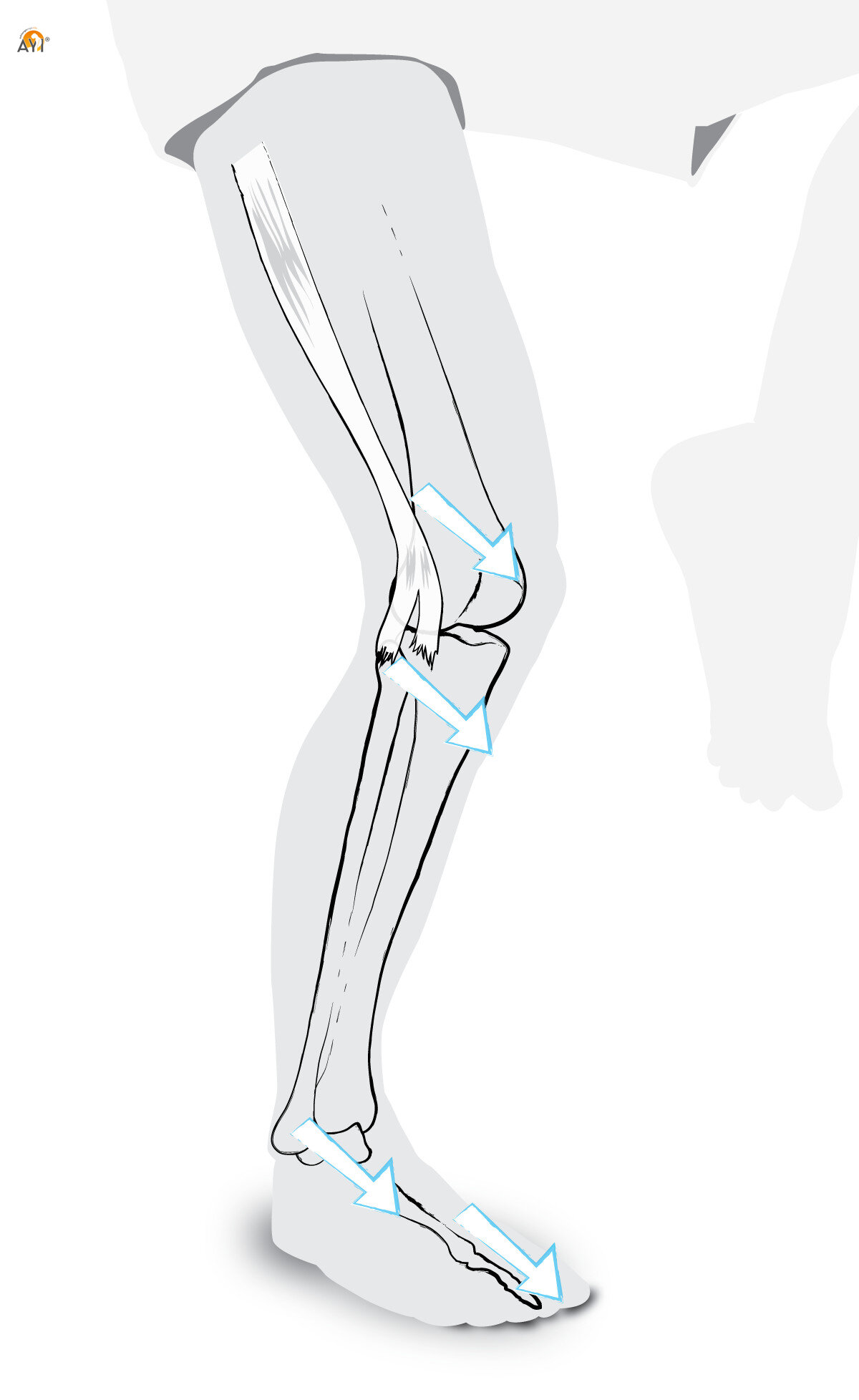
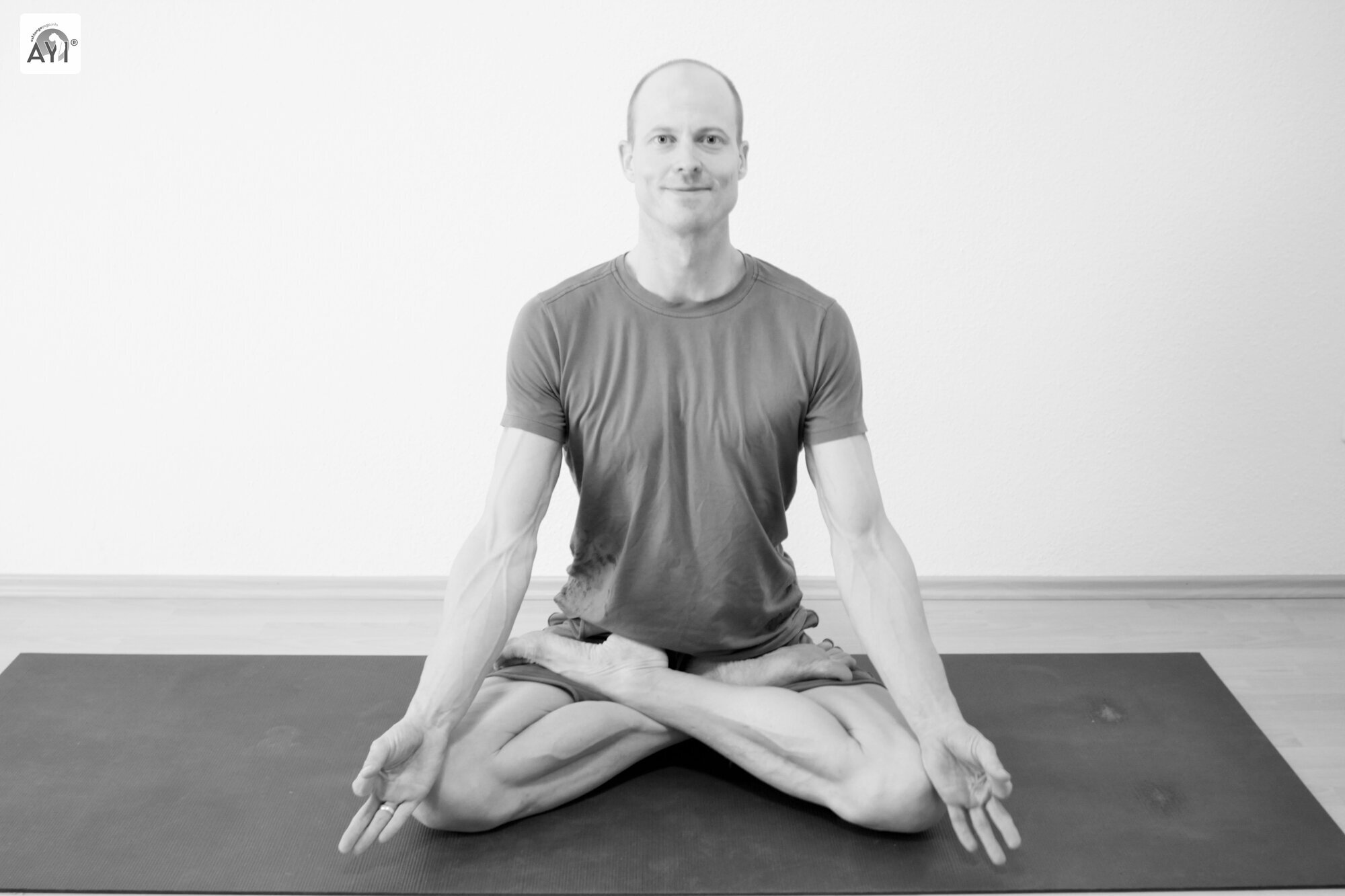
A properly functioning lateral collateral ligament is essential for the health of the medial meniscus. While the ligaments themselves cannot be strengthened by exercise, between 5 and 10 percent of the ligament fibres are so-called dynamic ligament fibres. These are not connected to the thigh bone (femur) but stretch between the muscles at the inside (m. gracilis and vastus medialis) and outside of the thigh (m. tensor fasciae lata and vastus lateralis). This mechanism is especially essential when the knee joint is flexed since the ligaments can only adopt their function when the muscles mentioned are active (Image 3).
As hardly any other joint of the human body, the knee joint is prone to damage caused by disadvantageous yoga exercises. When I encounter such injuries in my yoga therapy clinic, they always make me thoughtful since, to be honest, my main aim in yoga therapy is to contribute to curing injuries and diseases, not to correct a suboptimal yoga practice.
Training the muscles
Your knee joint will profit greatly when you regularly take the time to train the following muscles:
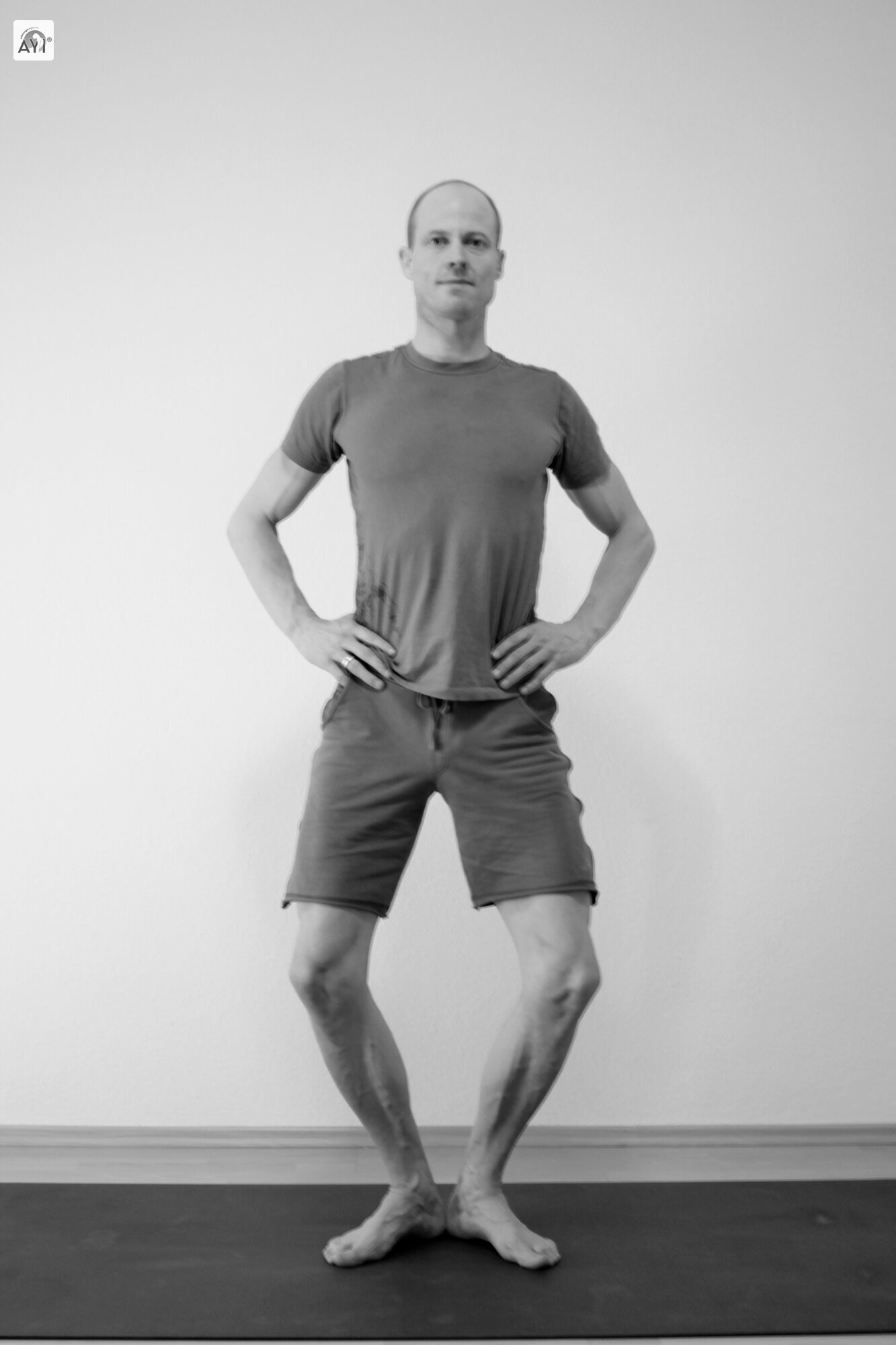
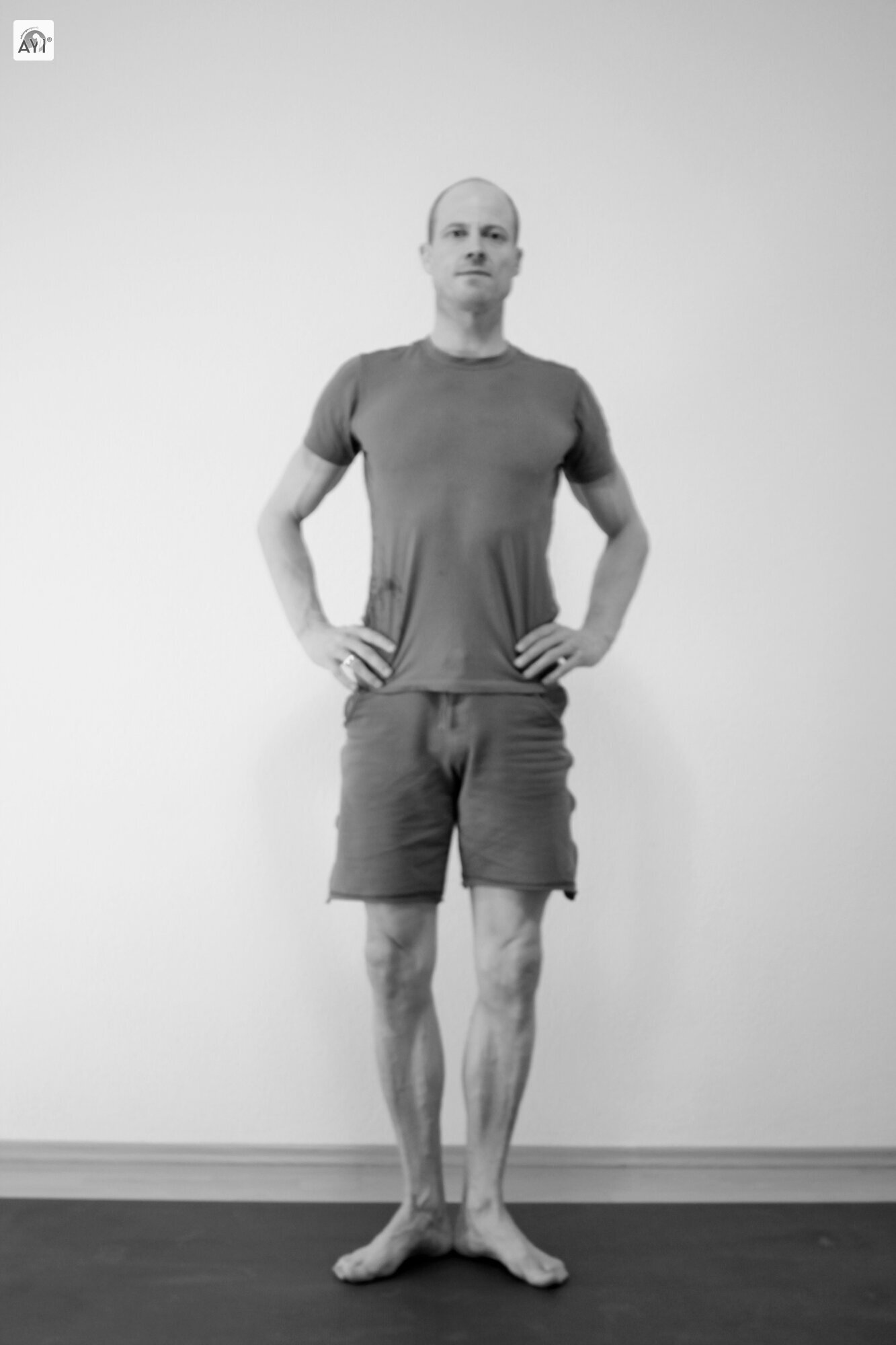
- Place your feet next to each other so that the heels touch and the toes are pointed outwards at a 30- to 45-degree angle. Rotate your thighs outwards to the same degree. The knees now point in the same direction as the second toe (Image A).
- On exhalation, slowly bend both legs. In doing so, sit further back rather than pushing your knees forward. Do make sure that the second toe, the mid-part of the ankle (talus), the mid-part of the tibia (tuberositas tibiae) and the thigh (femur) point in the same direction (Image B).
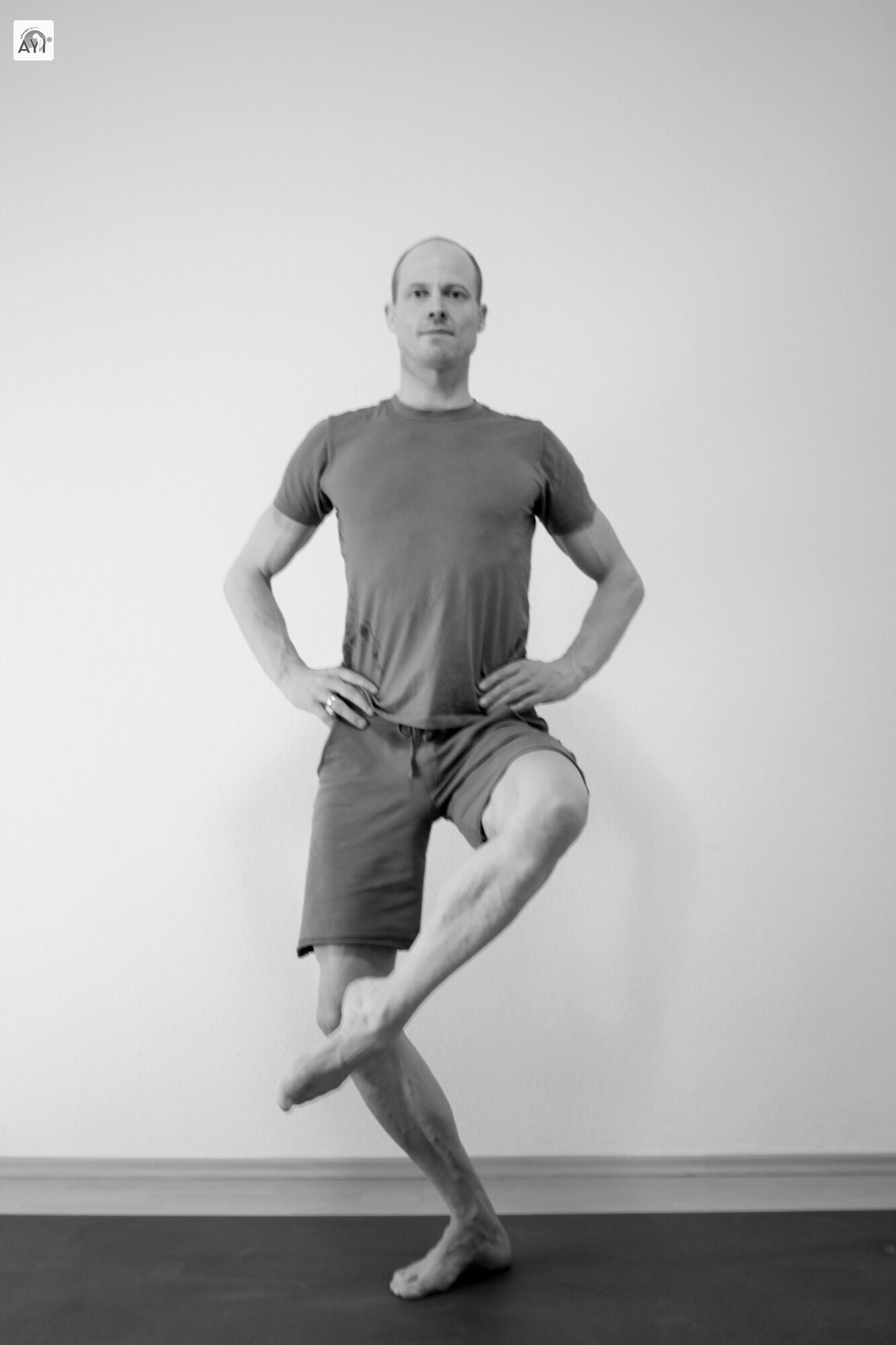
- If you want to challenge yourself a bit, shift your weight onto your right leg with your next inhalation, with the left hip staying in its outward rotation. Lift your left foot from the floor to a position approximately 10 centimetres above and in front of the right knee joint (Image C).
Make sure that the foot arch of your standing leg is slightly raised and that the tibia still does not sink outwards. The dynamic ligament fibres now adopt the function of stabilising your knee joint with the muscles on the inside and outside of your thigh evenly stretching the lateral and medial collateral ligament.
Like a dancing Shiva – Natarajasana, as the exercise is called – you now stand with your hands on your hips and your courageous gaze ahead for a couple of breaths. Feel the small compensation movements of your muscles which are beginning to 'learn' how to stretch the lateral and medial collateral ligaments of your leg evenly.
Leave the position by slowly stretching your right leg on inhalation and bringing your left foot back to its starting position. Here, the orientation of all joints to their axis is of particular importance – since this is the aspect we want to promote by our practice! Continue by practicing Natarajasana on your left leg.
Special tip
Always practice these positions for approximately the same period of time on both sides, even if you're suffering from problems only in one knee joint. As a rule: the more compensation movements you need, the more important this exercise is for you. If, after some time, you feel that the exercise is getting too easy, find a new challenge, for instance by performing it on an uneven, less stable ground such as a yoga mat folded several times.

Please log in to write a message. Go to login
No messages yet.