

samādhi समाधि – samādhi; meditative concentration; perfect concentration; unitive experience
substantive feminine · substantive masculine · Word type unspecified
Dictionary sources
AYI dictionary substantive masculine
samādhi; meditative concentration; perfect concentration; unitive experience
Derived from
Cappeller 1891 substantive masculine
Original text · English · substantive masculine
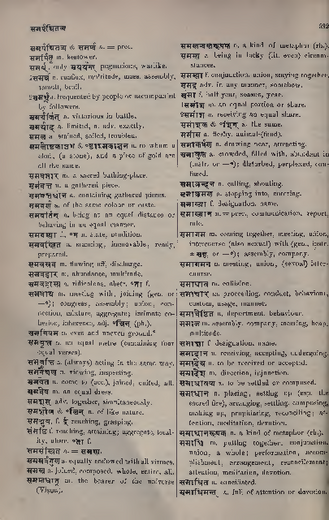
samādhi ·m. putting together, conjunction, union, a whole; performation, accomplishment, arrangement, reconcilement; attention, meditation, devotion.
Monier-Williams 1872 substantive masculine
Original text · English · substantive masculine
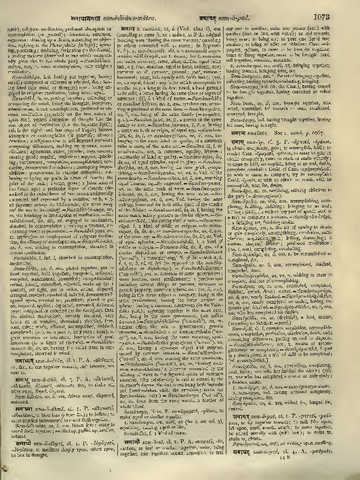
Sam-ādhi, is, m. putting together; collecting or composing the mind, fixing the thoughts, intentness, attentiveness, intent contemplation, profound or ab- stract meditation (especially on the true nature of spirit &c.), perfect absorption of thought into the one object of meditation (i. e. the Supreme Spirit; this is the eighth and last stage of Yoga); intense absorption or contemplation (in general); silence; devotion; a religious vow or self-imposed restraint; composing differences, making up quarrels, recon- cilement; agreement, assent, promise, engagement; making good; requital, retaliation; support, uphold- ing; continuance; completion, accomplishment, con- clusion, demonstrated conclusion; attempting impos- sibilities; perseverance in extreme difficulties; col- lecting or laying up grain in times of dearth; the joint of the neck; a tomb, grave; a Jaina saint of the future age; a particular figure of rhetoric (de- scribed as the coincidence of two events accidentally connected and expressed by a common verb, e. g. sā jagāma astaṃ ca bhānumān, she went away and the sun to its setting).
Petersburger 1855 substantive masculine · Word type unspecified
Original text · German · substantive masculine
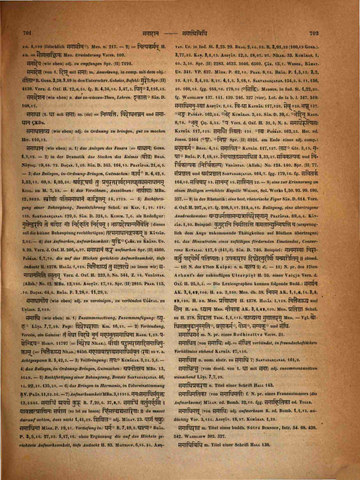
samādhi (wie eben) m. 1〉 Zusammensetzung, Zusammenfügung: vyūha˚ LĀṬY. 7,7,29. Fuge: śirodharāyāḥ KIR. 16,21. — 2〉 Verbindung, Verein, ein Ganzes: taṃ vedhā vidadhe nūnaṃ mahābhūtasamādhinā RAGH. 1,29. pañcendriya˚ HARIV. 11797 (= nirodha NĪLAK.). vīṇāṃ ṣaḍgrāmarāgādisamādhiyuktām (= cittaikāgrya NĪLAK.) HARIV. 8450. mahājavāṣṭāśvasamādhisaṃvṛta (ratha) so v. a. Achtgespann R. 5,42,3. — 3〉 Vollbringung: tapaḥ˚ KUMĀRAS. 3,24. KUMĀRAS. 5,6. — 4〉 das Beilegen, in — Ordnung — Bringen, Gutmachen: apanītasya MBH. 13,4640. — 5〉 Rechtfertigung einer Behauptung, Beweis SARVADARŚANAS. 46,14. SARVADARŚANAS. 92,21. SARVADARŚANAS. 135,20. — 6〉 das Bringen in Harmonie, in Uebereinstimmung ṚV. PRĀT. 11,32. ṚV. PRĀT. 11,36. — 7〉 Aufmerksamkeit MBH. 3,11915. manaḥsamādhisaṃyukta MBH. 13,5535. samādhiṃ śravaṇe kuru R. 7,20,6. R. 37,2,7. samādhiṃ kartumarhasi . yāvattvatprāṇinaḥ sarvānna (so ist zu lesen) hiṃsantyaśvasāriṇaḥ .. du musst darauf achten, dass nicht R. 1,41,29. śithila˚ adj. MĀLAV. 23. yāgaṃ cakruḥ samādhinā MĀRK. P. 19,31. Vertiefung in: dharma˚ R. 7,49,8. ātma˚ BHĀG. P. 3,5,46. BHĀG. P. 3,27,22. BHĀG. P. 5,17,16. ohne Ergänzung die auf das Höchste gerichtete Aufmerksamkeit, tiefe Andacht H. 85. MAITRYUP. 6,18. MAITRYUP. 6,34. AMṚTAN. UP._in_Ind. St. 9,25. Ind. St. 9,29. BHAG. 2,44. BHAG. 2,53. R. 2,91,22 (R. 2,100,19 GORR.). R. 3,77,33. KAṆ. 9,1,13. AṢṬĀV. 12,3. AṢṬĀV. 18,67. AṢṬĀV. 18,97. NĪLAK. 33. KUMĀRAS. 1,60. KUMĀRAS. 3,50. Spr. (II) 2283. Spr. (II) 4633. Spr. (II) 5046. Spr. (II) 6569. ŚĀK. 15,1. WEBER, RĀMAT. UP. 341. VP. 657. MĀRK. P. 62,18. PRAB. 8,14. BHĀG. P. 1,5,13. BHĀG. P. 2,2,23. BHĀG. P. 2,4,21. BHĀG. P. 3,4,32. BHĀG. P. 3,8,21. BHĀG. P. 4,1,3. BHĀG. P. 5,18,1. SARVADARŚANAS. 154,5. fgg. SARVADARŚANAS. 154,9. SARVADARŚANAS. 154,11. fgg. SARVADARŚANAS. 156,20. SARVADARŚANAS. 160,18. fgg. SARVADARŚANAS. 164,10. fgg. SARVADARŚANAS. 178,16 (˚siddhi). MADHUS._in_Ind. St. 1,22,20. fg. WASSILJEW 137. WASSILJEW 141. WASSILJEW 159. WASSILJEW 246. WASSILJEW 327 (vier). Lot. de la b. l. 347. Lot. de la b. l. 519. samādhimanu-sthā AṢṬĀV. 1,14. vi-dhā KATHĀS. 117,126. sev 128. bhañj 137. ˚bhaṅga PAÑCAT. 162,24. ˚bheda KUMĀRAS. 3,40. SĀH. D. 39,4. ˚bhedin RAGH. 8,78. ˚bhṛt ŚIŚ. 4,55. ˚pa Verz. d. Oxf. H. 31,b, N. 3. samādherutthitaḥ KATHĀS. 117,129. samādhau sthitaḥ 131. ˚stha PAÑCAT. 162,23. HIT. ed. JOHNS. 2464 (˚ṣṭha). ˚niṣṭha Spr. (II) 6521. am Ende eines adj. comp.: brahmakarma˚ BHAG. 4,24. samāpita˚ KATHĀS. 117,127. lagna˚ GĪT. 3,15. mṛṣā˚ BHĀG. P. 1,18,31. nityārūḍhasamādhitva BHĀG. P. 3,33,27. savikalpaka und nirvikalpaka (nirvikalpa) VEDĀNTAS. (Allah.) No. 124. VEDĀNTAS. (Allah.) No. 140. Spr. (II) 77. saṃprajñāta und asaṃprajñāta SARVADARŚANAS. 164,7. fgg. SARVADARŚANAS. 179,16. fg. savitarka SARVADARŚANAS. 164,16. savicāra 18. sānanda 19. sāsmita 22. — 8〉 eine zur Erinnerung an einen Heiligen errichtete Kapelle WILSON, Sel. Works 1,50. WILSON, Sel. Works 1,95. WILSON, Sel. Works 1,99. WILSON, Sel. Works 1,180. WILSON, Sel. Works 1,357. — 9〉 in der Rhetorik: eine best. rhetorische Figur SĀH. D. 614. Verz. d. Oxf. H. 207,a,27. fg. Verz. d. Oxf. H. 208,b,17. fg. Verz. d. Oxf. H. 214,a,16. Beilegung, eine übertragene Ausdrucksweise: anyadharmāṇāmanyatrādhirohaṇam PRATĀPAR. 69,a,4. KĀVYĀD. 1,93. Beispiel: kumudāni nimīlanti kamalānyunmiṣanti ca (ursprünglich dem Auge zukommende Thätigkeiten auf Blüthen übertragen) 94. das Hinzutreten eines zufälligen fördernden Umstandes, Concurrenz KUVALAY. 117,b, (KUVALAY. 141,b). SĀH. D. 740. Beispiel: mānamasyā nirākartuṃ pādayorme patiṣyataḥ . upakārāya diṣṭyedamudīrṇaṃ ghanagarjitam .. ebend. — 10〉 N. des 17ten Kalpa; s. u. kalpa 2〉d〉. — 11〉 N. pr. des 17ten Arhantʼs der zukünftigen Utsarpiṇī H. 55. eines Vaiśya Verz. d. Oxf. H. 25,b,4. — Die Lexicographen kennen folgende Bedd.: samarthana AK. 3,4,17,100. H. an. 3,350. MED. dh. 38. niyama AK. 1,1,4,14. AK. 3,4,17,100. H. an. MED. praṇidhāna H. 1378. HALĀY. 1,128. cittaikāgrya und mauna H. an. dhyāna MED. nīvāka AK. 3,4,17,100. MED. pratijñā Schol. zu H. 278. siddhānta TRIK. 1,1,115. kāvyasya guṇāntaram MED. — Vgl. bodhisattvabuddhānusmṛti˚, brahmakarma˚, yoga˚, samyak˚ und saṃdhi.
Original text · German · Word type unspecified
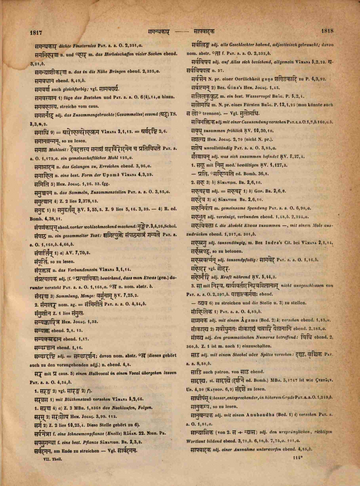
samādhi 9〉 = ārohāvarohakrama VĀMANA 3,1,12. = arthadṛṣṭi VĀMANA 3,2,6.
Böhtlingk 1879 substantive masculine · Word type unspecified
Original text · German · substantive masculine
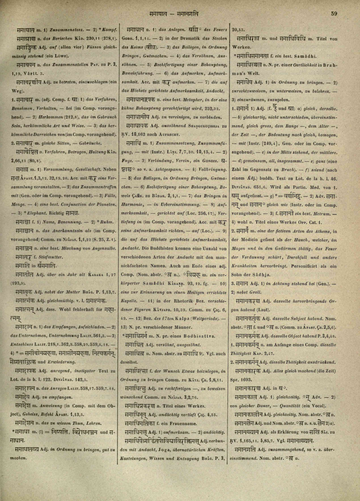
samādhi m. — 1〉 Zusammensetzung, Zusammenfügung, — mit (Instr.) LĀṬY. 7,7,30. 10,15,4. — 2〉 Fuge. — 3〉 Verbindung, Verein, ein Ganzes. — āṣṭāśva˚ so v. a. Achtgespann. — 4〉 Vollbringung. — 5〉 das Beilegen, in Ordnung Bringen, Gutzumachen. — 6〉 Rechtfertigung einer Behauptung, Beweis ŚAṂK. zu BĀDAR. 2,11. — 7〉 das Bringen in Harmonie, — in Uebereinstimmung. — 8〉 Aufmerksamkeit, — gerichtet auf (Loc. Chr. 256,17) Vertiefung in (im Comp. vorangehend). Acc. mit kar seine Aufmerksamkeit richten, — auf (Loc.) — 9〉 die auf das Höchste gerichtete Aufmerksamkeit, Andacht. Die Buddhisten kennen eine Unzahl von verschiedenen Arten der Andacht mit den mannichfachsten Namen. Auch am Ende eines adj. Comp. (Nom. abstr. ˚tva n.). ˚vigraha m. ein verkörperter Samādhi. KĀRAṆḌ. 93,19. fg. — 10〉 eine zur Erinnerung an einen Heiligen errichtet Kapelle. — 11〉 in der Rhetorik Bez. verschiedener Figuren KĀVYAPR. 10,39. Comm. zu ŚIŚ. 6,49. — 12〉 Bez. des 17ten Kalpa (Weltperiode). — 13〉 N. pr. verschiedener Männer.
Original text · German · Word type unspecified
samādhi VII. eine best. Haltung, Stellung (des Halses) KIR. 16,21. [Nachtrag, Band 7]
Apte 1890 substantive masculine
Original text · English · substantive masculine
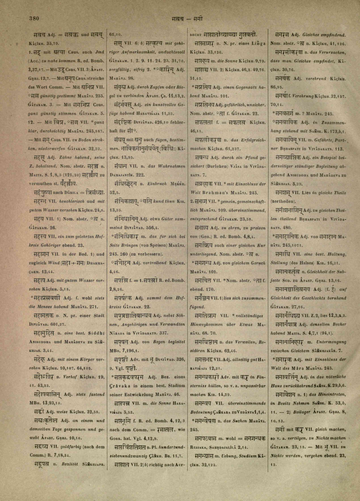
samādhiḥ 1 Collecting, composing, concentrating (as mind). 2 Profound or abstract meditation, concentration of mind on one object, perfect absorption of thought into the one object of meditation, i. e. the Supreme Spirit, (the 8th and last stage of Yoga); ātmeśvarāṇāṃ na hi jātu vighnāḥ samādhibhedaprabhavo bhavaṃti Ku. 3. 40, Ku. 3. 50; Mk. 1. 1.; Bh. 3. 54; R. 8. 79; Śi. 4. 55. 3 Intentness, concentration (in general), fixing of thoughts; tasyāṃ lagnasamādhi (mānasaṃ) Gīt. 3. 4 Penance, religious obligation, devotion (to penance); astyetsamādhibhīrutvaṃ devānāṃ Ś. 1; tapaḥsamādhi Ku. 3. 24; athopayaṃtāramalaṃ samādhinā Ku. 5. 24, Ku. 5. 6; Ku. 1. 59. 5 Bringing together, concentration, combination, collection; taṃ vedhā vidadhe nūnaṃ mahābhūtasamādhinā R. 1. 29. 6 Reconciliation, settling or composing differences. 7 Silence. 8 Agreement, assent, promise. 9 Requital. 10 Completion, accomplishment. 11 Perseverance in extreme difficulties. 12 Attempting impossibilities. 13 Laying up corn (in times of famine), storing grain. 14 A tomb. 15 The joint of the neck; a particular position of the neck; Ki. 16. 21. 16 (In ([Page 1096-c]) Rhet.) A figure of speech thus defined by Mammaṭa; samādhiḥ sukaraṃ kāryaṃ kāraṇāṃtarayogataḥ K. P. 10; see S. D. 614. 17 One of the ten Guṇas or merits of style; see Kāv. 1. 93. 18 A religious vow or self-imposed restraint. 19 Support, upholding. Comp. — bhaṃgaḥ interruption of meditation. — stha a. absorbed in meditation or contemplation.
Cappeller 1887 substantive masculine
Original text · German · substantive masculine
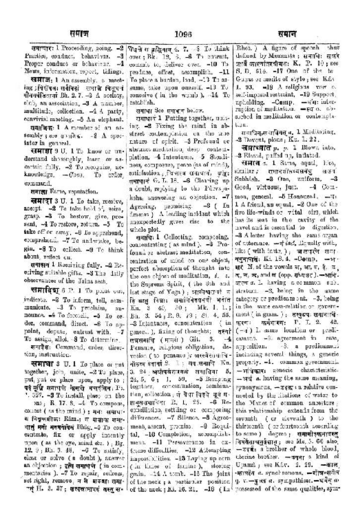
samādhi m. Zusammensetzung, Verbindung, Vollbringung, Beilegung, Gutmachung, Rechtfertigung; Aufmerksamkeit, Vertiefung, Andacht.
Burnouf 1866 substantive feminine
Original text · French · substantive feminine
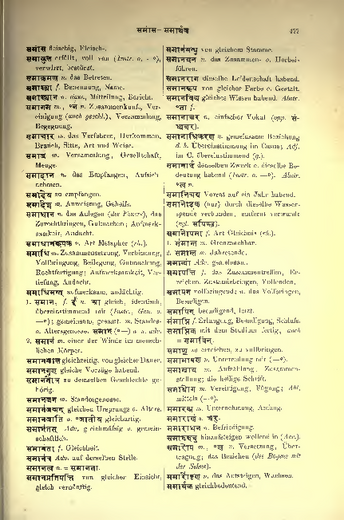
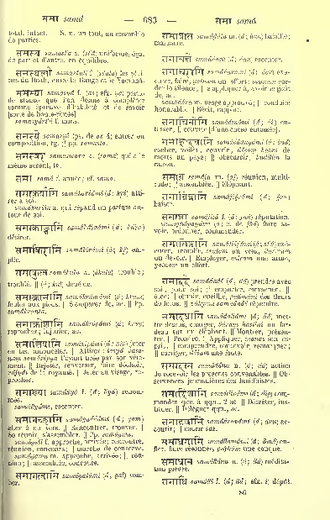
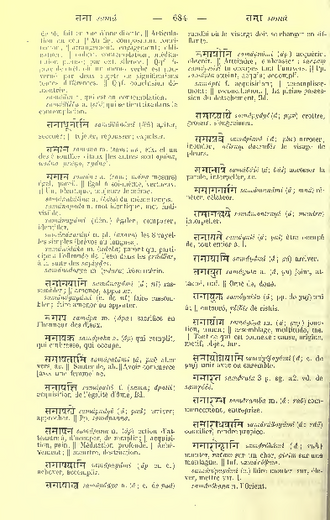
samādhi samādhi f. (ā; dhā; sfx. i) dépot [Page684-1] de blé fait en vue d'une disette. Articulation du cou. Au fig. composition, conciliation; arrangement, engagement; obligation; ordint. contemplation, méditation pieuse; par ext. silence. Qqf. figure de rhét. où un même verbe est gouverné par deux sujets de significations toutes différentes. Qqf. conclusion démontrée. samādhin a. qui est en contemplation. samādhiṣṭha a. (sthā) qui se tient fixe dans la contemplation.
Occurrences in source texts (35)
DYS 4 occurrences
GoS 1 occurrence
HP 10 occurrences
HP 4.0*1-4.0*14: Samādhi and Laya 3 occurrences
Direct occurrences
HP 4.35*1-4.36: Signs of Samādhi 4 occurrences
Direct occurrences
MAN 1 occurrence
PJH 2 occurrences
PYS 11 occurrences
5 more source pages
SiSa 5 occurrences
SiSa 3.61-3.67: Paricaya und Niṣpatti 2 occurrences
Direct occurrences
SS 1 occurrence
Continue with AYI Free
Image source: AYI archive.