DYS 124: Samādhi
DYS 124: Samādhi

Dattātreyayogaśāstra 124: From the Unconditioned to Absorption

Meditation on the unconditioned, compared to space, leads onto the path of liberation; once it is perfected, the practice of samādhi begins.

Dr. Ronald Steiner Dr. Ronald Steiner Nils Jacob Liersch Nils Jacob Liersch
Dattātreyayogaśāstra 124
निर्गुणं खमिव ध्यात्वा मोक्षमार्गं प्रपद्यते |
nir-guṇaṃ kham iva dhyātvā; mokṣa-mārgaṃ prapadyate | Analysis ▾ Analysis ▴
nir
previx
without
guṇam
accusative singular
substantive masculine
attributes
kham
accusative singular
substantive neuter
space
iva
particle
like
dhyātvā
absolutus
verbal root
having meditated
mokṣa
tatpuruṣa-compound genitive
substantive masculine
liberation
margam
accusative singular
substantive masculine
path
prapadyate
3rd person singular medial present
previx
verbal root
he enters
निर्गुणध्यानसंपन्नः समाधिं च ततोऽभ्यसेत् ||124||
nir-guṇa-dhyāna-saṃpannaḥ; samādhiṃ ca tato'bhyaset ||124|| Analysis ▾ Analysis ▴
nir
previx
without
guṇa
tatpuruṣa-compound genitive
substantive masculine
attributes
dhyāna
tatpuruṣa-compound accusative
substantive neuter
meditation
saṃpannaḥ
nominative singular masculine past participle passive
previx
verbal root
perfected
samādhim
accusative singular
substantive masculine
samādhi
ca
particle
and
tataḥ
adverb
then
abhyaset
3rd person singular aktive optative
previx
verbal root
should practise
Metre: Anuṣṭubh
Having meditated (dhyātvā | abs) on the unconditioned (nir-guṇam | acc sg), like (iva) space (kham | acc sg), he enters (prapadyate | 3p sg med pres) the path of liberation (mokṣa-mārgam | acc sg). Perfected in unconditioned meditation (nir-guṇa-dhyāna-saṃpannaḥ | nom sg), he should then (tataḥ) practise (abhyaset | 3p sg act opt) samādhi (samādhim | acc sg).
Dr. Ronald Steiner - 2026 - historically literal
Meditation on the unconditioned, compared here to space, opens the path to liberation. Once it is perfected, the yogi proceeds to samādhi.
Dr. Ronald Steiner - 2026 - modern transfer
nirguṇadhyānasaṃpannaḥ JM2024 ] nirguṇadhyānasampannaḥ DYŚ
Critical Apparatus

Continue with AYI Free

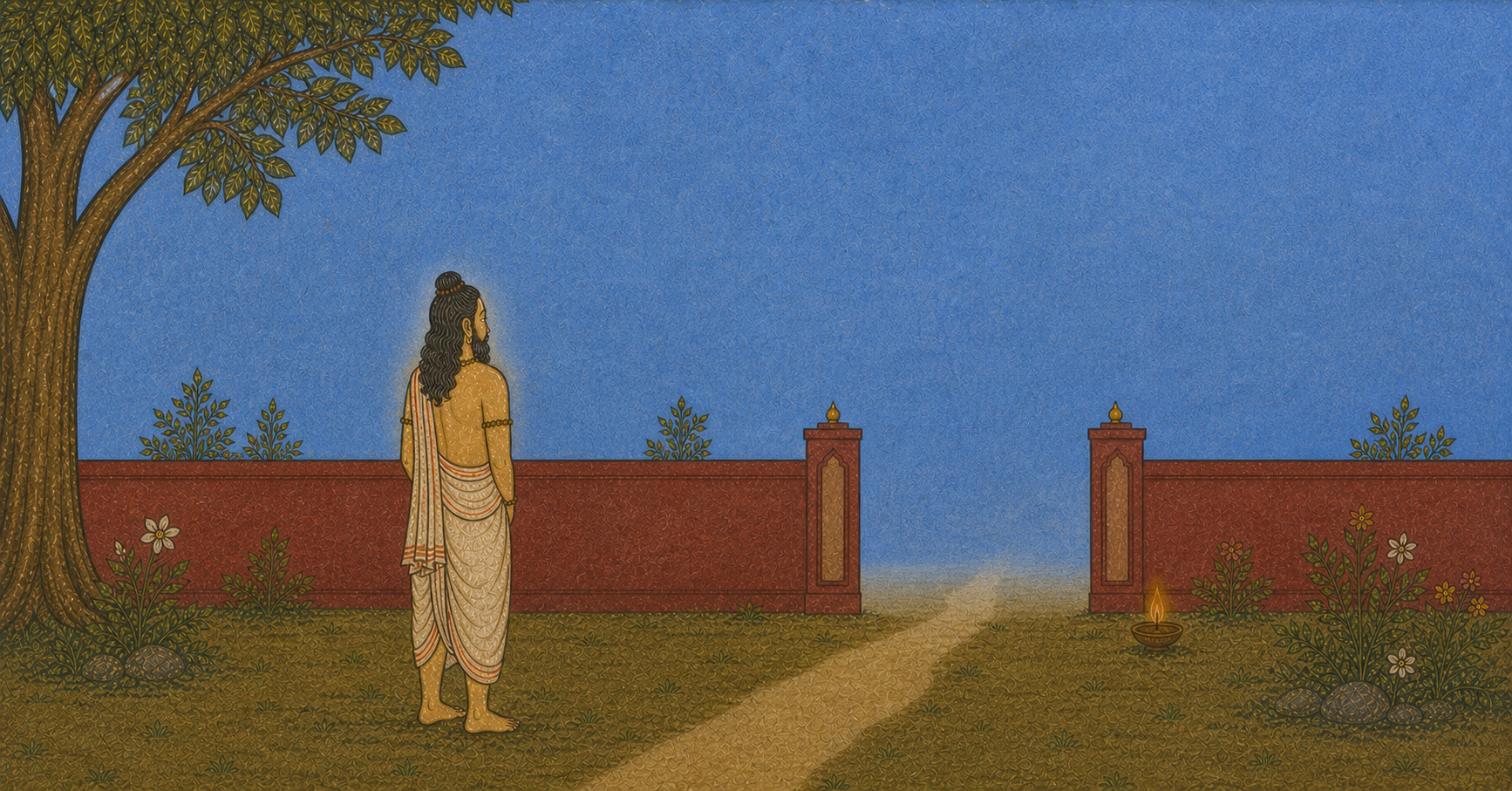
Illustrations: AI-generated.

Editor

Dr. Ronald Steiner

From Ulm

The "Yoga Doc" - Dr. Ronald Steiner is the founder of the AYI method. This method links traditional Ashtanga Yoga with innovative Yogatherapy and living Philosophy. This forms a practice that is personal for each and... more ›

Nils Jacob Liersch

Meine Begeisterung für Yoga, indische Philosophie und Sanskrit führte mich zum Studium der Indologie und Religionswissenschaft an der Universität Heidelberg. Seit 2004 befinde ich mich auf meinem persönlichen Yogaweg... more ›

Messages and ratings
4 messages Ø

Please log in to write a message. Go to login

An den 12 Tagen zweifle ich etwas... aber Versenkung ohne Eigenschaften ist definitiv erstrebenswert, egal wie lange es dauert.......
Die Gesamte Meditation ist ja noch länger:
1) 5 Elemente (i.a. Chakren) je 2,5h => 12,5 Stunden
2) Das göttliche in uns (i.a. im Kopf) 24 Stunden
3) Verbindung mit dem absoluten göttlichen 12 Tage
Mit diesen Zeitangaben meditieren wir also 13 1/2 Tage. Ob das die Yogis damals wirklich so gemacht haben?
Oh, danke für die Antwort. Das bedeutet, dass wir aus heutiger Sicht über ein Ideal sprechen, da es nicht alltagstauglich ist. Wir verbringen unsere Tage ja nicht sitzend auf einem Kissen, sondern mit Beruf, Familie, evtl. sonstigen Verpflichtungen. Kann es trotzdem sein, dass es vereinzelt Yogis gab, die das so praktiziert haben und demnach über eine tatsächliche Erfahrung sprechen?
Ja, das kann man so nicht umsetzen. Ich denke es macht auch aus heutiger Sicht gar keinen Sinn. Wir können mit genau dieser Technik ein wirklich tiefes meditatives Erlebnis haben mit kürzeren Zeiten. Z.B. 2,5 bis 10 Minuten pro Chakra.
- So leite ich die Meditation an und praktiziere sie. So ist sie eine meiner Lieblings-Meditationen.