

sthāna स्थान – place; position; state; abiding
substantive masculine · substantive neuter · Word type unspecified
Dictionary sources
AYI dictionary substantive neuter
place; position; state; abiding
Derived from
Cappeller 1891 substantive neuter
Original text · English · substantive neuter
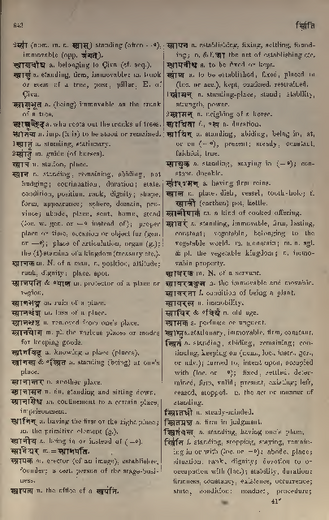
sthā́na ·n. standing, remaining, abiding, not budging; continuation, duration; state. condition, position, rank, dignity; shape, form, appearance; sphere, domain, province; abode, place, seat, home, stead (loc. w. gen. or --° instead of); proper place or time, occasion or object for (gen. or --°); place of articulation, organ (g.); the (4) stamina of a kingdom (treasury etc.).
Monier-Williams 1872 substantive neuter · Word type unspecified
Original text · English · substantive neuter
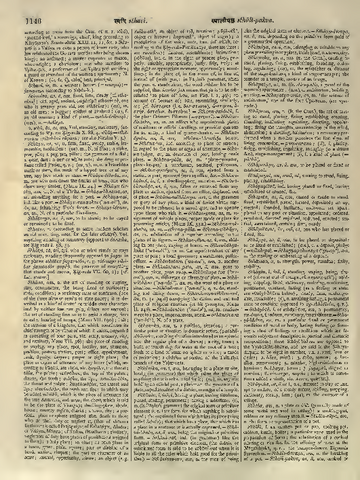
Sthāna, am, n. the act of standing or staying, stay, continuance, the being fixed or stationary; state, condition; a stationary state or condition, (one of the three aims or results of state policy; it is de- scribed as a kind of neutral or middle state character- ized by neither loss nor gain, failure nor success); the act of standing firm so as to resist a charge, firm or calm bearing of troops, (Manu VII. 190); halt; the stamina of a kingdom, that which constitutes its chief strength or by virtue of which it exists, (regarded as consisting of four parts, viz. army, treasury, city, and territory, Manu VII. 56); the place of standing or staying, any place, spot, locality, site, situation, position, posture, station, post; office, appointment, rank, dignity, degree; proper or right place; the place or organ of utterance of any letter (which, ac- cording to Pāṇini, are eight, viz. kaṇṭha, the throat; tālu, the palate; mūrdhan, the top of the palate; danta, the teeth; oṣṭha, the lips; kaṇṭha-tālu, the throat and palate; kaṇṭhoṣṭha, the throat and lips; dantoṣṭha, the teeth and lips; to which may be added nāsikā, which is the place of utterance for the true Anusvāra, and uras, the chest, which is said to be the place of Visarga); dwelling-place, abode, house; country, region, district; a town, city; a par- ticular place or sphere assigned after death to those who do their duty or neglect it, (that of virtuous Brāhmans is called Prājāpatya; of Kṣatriyas, Aindra; of Vaiśyas, Māruta; of Śūdras, Gāndharva; similarly, neglectors of duty have places of punishment assigned to them); a holy place; an altar; an open place in a town, green, plain, square; part or division of a book, section, chapter; the part or character of an actor; interval, opportunity, leisure; an object (e. g. śulka-sth˚, an object of toll, taxation; pūjā-sth˚, object of honour; kopa-sth˚, object of anger); a modulation of the voice, note, tone (of which, ac- cording to the Ṛg-veda-Prātiśākhya, there are three; see mandra); likeness, resemblance; intimation; (sthāne), loc. c. in the right or proper place, pro- perly, suitably, appropriately, justly, fitly, truly; at the right or appropriate moment, opportunely; some- times; in the place of, in the room of, in lieu of, instead of (with gen.; in Pāṇini's grammar, when the gen. c. stands alone, the word sthāne has to be supplied, thus hanter jaḥ means that ja is to be sub- stituted ‘in place of’ han, see Pāṇ. I. 1, 49); on account of, because of; like, resembling, similarly, as; [cf. δύστηνος (i. e. δυσ-στηνος), ἄ-στηνος, ἀστήν, ἀσταίνω, δυσταίνω.]
Original text · English · Word type unspecified
sthāna sthāna, sthānin, &c. See p. 1146.
Petersburger 1855 substantive masculine · substantive neuter
Original text · German · substantive masculine · substantive neuter
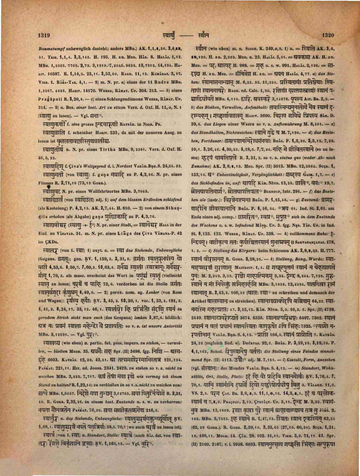
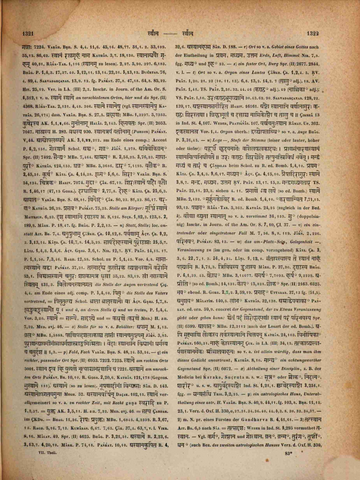
sthā́na (wie eben) m.n. SIDDH. K. 249,a,9. 1〉 n. = sthiti AK. 3,4,18,120. H. an. 2,289. MED. n. 23. HALĀY. 5,51. = avakāśa AK. H. an. MED. = pada, āspada H. 988. = gṛha u. s. w. H. 991. HALĀY. 2,136. = sādṛśya H. an. MED. = saṃniveśa H. an. = ayana HALĀY. 4,77. a〉 das Stehen: sthānāsanābhyām M. 6,22. M. 6,59. M. 11,224. prasthitāyāṃ pratiṣṭhethāḥ sthitāyāṃ sthānamācareḥ RAGH. ed. Calc. 1,90. rakṣiṇāṃ hyāttaśastrāṇāṃ sthānaṃ paścādvidhīyate MBH. 4,110. dvāri, avaskare MBH. 3,14676. yūpasya AIT. BR. 2,3. — b〉 das Bleiben, Verweilen, Aufenthalt: tavāsminyamunātoye naiva sthānaṃ dadāmyaham . gacchārṇavajalam HARIV. 3690. cirāya savidhe priyasya SĀH. D. 59,8. das Liegen einer Waare so v. a. Aufbewahrung M. 8,401. — c〉 das Standhalten, Nichtweichen: sthāne yuddhe ca M. 7,190. — d〉 das Bestehen, Fortdauer: jagatsthānanirodhasaṃbhavāḥ BHĀG. P. 1,5,20. BHĀG. P. 2,5,12. BHĀG. P. 2,7,39. BHĀG. P. 2,10,1. BHĀG. P. 3,26,46. BHĀG. P. 4,30,23. BHĀG. P. 5,18,5. BHĀG. P. 7,7,24. nahi me jīvitasthāne (so zu lesen) hṛdayaṃ cāvatiṣṭhate R. 3,51,2. so v. a. status quo (weder Ab— noch Zunahme) AK. 2,8,1,19. MED. Spr. (II) 5015. MBH. 12,2664. SUŚR. 1,153,10. a˚ Unbeständigkeit, Vergänglichkeit: śabdasya JAIM. 1,7. — e〉 das Sichbefinden in, auf: āpadi KĀM. NĪTIS. 13,28. jāti˚, vayaḥ˚ KĀM. NĪTIS. 19,7. srotaāpattimārga˚, srotaāpattiphala˚ BURNOUF, Intr. 291. — f〉 das Bestehen als (instr.): virajenātmanā BHĀG. P. 1,15,48. — g〉 Zustand: jāgaraṇādīni jīvasthānāni BHĀG. P. 6,16,54. ˚traya BHĀG. P. 61. Ind. St. 2,61. am Ende eines adj. comp.: jāgarita˚, svapna˚, suṣupta˚ sich in dem Zustande des Wachens u. s. w. befindend MĀṆḌ. UP. 3. fgg. NṚS. TĀP. UP._in_Ind. St. 9,125. Ind. St. 9,133. WEBER, RĀMAT. UP. 338. — h〉 vollkommene Ruhe: indriyam . vaśīkṛtya tataḥ kuryāccittasthānaṃ śubhāśrayam .. SARVADARŚANAS. 178,1. SARVADARŚANAS. 178,2. — i〉 Stellung des Körpers: beim Schiessen AK. 2,8,2,53. H. 777. sthānaṃ vīrāsanam R. GORR. 2,28,25. — k〉 Stellung, Rang, Würde: sthānādapasaraṇaṃ surāṇām MAITRYUP. 1,4. sa gacchatyuttamaṃ sthānaṃ na cehājāyate punaḥ M. 2,249. M. 3,93. rājño māhātmikam M. 5,94. aindra M. 8,344. M. 7,125. gurusthāne na māṃ niyoktuṃ tvamihārhasi MBH. 3,1858. MBH. 12,4294. pātayitvā rāmaṃ sthānāt R. 2,43,5. R. 2,106,22 (bālaḥ sthā˚ zu schreiben und demnach der Artikel bālasthāna zu streichen). sthānāccyāvayedapi vajriṇam R. 2,64,22. sthānamasmi mahatprāptaḥ R. 2,106,47. R. 3,15,13. KĀM. NĪTIS. 5,5. KĀM. NĪTIS. 10,3. KĀM. NĪTIS. 10,6. Spr. (II) 4738. Spr. (II) 5149. sthānādvyavaropyate Spr. (II) 5674. Spr. (II) 6336. sthānātparibhraṣṭaḥ Spr. (II) 6497. Spr. (II) 7502. sthānaṃ pradhānaṃ na balaṃ pradhānaṃ sthānasthitaḥ kāpuruṣo 'pi siṃhaḥ Spr. (II) 7525. ˚tyāgo narapatīnām VARĀH. BṚH. S. 4,15. ˚prāpti VARĀH. BṚH. S. 104,5. sthānaṃ prāpnoti VARĀH. BṚH. S. 7. KATHĀS. 24,25 (zugleich Bed. u.) DHŪRTAS. 92,3. BHĀG. P. 3,19,29. BHĀG. P. 5,19,23. P. 4,1,165, Schol. ripusthāneṣu vartantaḥ die Stellung eines Feindes einnehmend Spr. (II) 4113. uccaiḥ˚ adj. M. 7,121. — l〉 Gestalt, Form, Aussehen (vgl. saṃsthānaḥ): des Mondes VARĀH. BṚH. S. 4,12. — m〉 Standort, Wohnstätte, Ort, Stelle, Platz: i̱daṃ hi vā̀ṃ pra̱divi̱ sthāna̱mokàḥ ṚV. 5,76,4. ṚV. 7,70,1. yāni̱ sthānā̀ni da̱dhāthè di̱vo ya̱hvīṣvoṣàdhīṣu vi̱kṣu ṚV. 7,70,3. VĀLAKH. 11,6. VS. 2,8. parama ŚAT. BR. 2,6,4,9. ŚAT. BR. 11,1,6,16. ŚAT. BR. 14,5,4,1. idaṃ ca paralokasthānaṃ ca ŚAT. BR. 14,7,1,9. PRAŚNOP. 3,12. ŚVETĀŚV. UP. 5,11. aindra M. 5,93. svāyaṃbhuva MBH. 13,1809. rājā kṛtvā pure sthānaṃ brāhmaṇānnyasya tatra tu YĀJÑ. 2,185. MBH. 5,7523. iha sthāne R. 1,47,13. sthitaḥ sthāna ekasmin R. 1,63,24 (R. 1,65,29 GORR.). R. GORR. 2,59,10. R. GORR. 3,35,65 (R. GORR. 37,10. R. GORR. 60,30). SUŚR. 1,21,18. SUŚR. 1,169,11. MEGH. 14. ŚĀK. 28. ŚĀK. 102. ŚĀK. 41,11. VIKR. 3,9. VIKR. 71,11. VIKR. 71,43. Spr. (II) 2100. Spr. (II) 2107, v. l. Spr. (II) 5958. Spr. (II) 6033. sthānamutsṛjya gacchanti siṃhāḥ satpuruṣā gajāḥ Spr. (II) 7224. VARĀH. BṚH. S. 4,4. VARĀH. BṚH. S. 11,6. VARĀH. BṚH. S. 45,16. VARĀH. BṚH. S. 48,77. VARĀH. BṚH. S. 51,1. VARĀH. BṚH. S. 51,2. VARĀH. BṚH. S. 53,109. VARĀH. BṚH. S. 55,12. VARĀH. BṚH. S. 86,62. sthānaṃ rājagṛhaṃ nāma KATHĀS. 3,7. KATHĀS. 18,130. sthānādyayau gṛham KATHĀS. 40,31. RĀJA-TAR. 1,116 (sthānam zu lesen). RĀJA-TAR. 2,57. RĀJA-TAR. 5,90. RĀJA-TAR. 5,297. RĀJA-TAR. 6,183. BHĀG. P. 1,4,3. BHĀG. P. 1,17,37. BHĀG. P. 1,4,40. BHĀG. P. 3,12,11. BHĀG. P. 3,13,14. BHĀG. P. 3,22,31. BHĀG. P. 5,13,12. DHŪRTAS. 76,4. DHŪRTAS. 89,4. SARVADARŚANAS. 13,9. SARVADARŚANAS. 13,12. fg. PAÑCAT. 37,8. PAÑCAT. 47,18. PAÑCAT. 64,8. PAÑCAT. 85,22. HIT. 25,19. VET. in LA. (III) 2,2. Inschr. in Journ. of the Am. Or. S. 6,512,1 v. u. sthāne sthāne an verschiedenen Orten, hier und da Spr. (II) 4368. RĀJA-TAR. 2,131. RĀJA-TAR. 4,48. RĀJA-TAR. 4,306. sthāne sthāneṣu (vgl. sthānasthāneṣu KATHĀS. 26,174) dass. VARĀH. BṚH. S. 27,5. brahmaṇaḥ MBH. 1,2297. MBH. 5,7353. kuberasya AK. 1,1,1,66. munīnām HALĀY. 2,143. himavataḥ Spr. (II) 2053. Spr. (II) 7047. nāṭyasya H. 282. vadhasya H. 930. sthānatrayaṃ yatīnām (Pausen) PAÑCAT. V, 44. ādyopalabdhaye AK. 3,4,22,212. am Ende eines comp.; Accent P. 6,2,151. gosthāná Schol. aśva˚, gaja˚ YĀJÑ. 1,278. avivekijana˚ Spr. (II) 7492. sainya˚ MBH. 7,464. āśrama˚ R. 2,54,25. R. 3,76,23. māyāpurī˚ KATHĀS. 124,153. dhvaja˚ MBH. 5,3686. dvāra˚ MBH. 7,1495. vṛkṣaika˚ R. 2,45,31. kūrca˚ KĀTY. ŚR. 4,14,28. idhma˚ KĀTY. ŚR. 5,6,6. sirā˚ VARĀH. BṚH. S. 54,124. citraka˚ HARIV. 7074. mudrā˚ ŚĀK. 67,19. śiraḥsthāne pādau kṛtau R. 1,46,17 (R. 1,47,15 GORR.). dagdhāsthi˚ R. 2,77,8. doha˚ KĀTY. ŚR. 25,6,3. āghāta˚ VARĀH. BṚH. S. 48,81. vinoda˚ ŚĀK. 80,22. ŚĀK. 81,22. ŚĀK. 86,17. caraṇa˚ KATHĀS. 26,29. prasava˚ PAÑCAT. 75,25. Stelle am Körper: mūrdhni sthāne MAITRYUP. 6,23. daśa sthānāni daṇḍasya M. 8,124. SUŚR. 1,82,3. SUŚR. 1,125,8. SUŚR. 2,189,9. MĀRK. P. 18,47. fg. BHĀG. P. 2,2,13. — n〉 Statt, Stelle; loc. anstatt AIT. BR. 7,4. anuṣṭubhām ŚĀṄKH. ŚR. 10,12,8. parvaṇām ĀŚV. ŚR. 9,2,2. ĀŚV. ŚR. 3,13,14. KĀTY. ŚR. 10,7,8. KĀTY. ŚR. 14,5,25. sāyaṃdohasthāne puroḍāśaḥ KĀTY. ŚR. 25,5,7. LĀTY. 1,4,3. LĀTY. 5,4,6. ĀŚV. GṚHY. 3,6,1. NIR. 12,7. ṚV. PRĀT. 14,15. ṚV. PRĀT. 14,17. P. 1,1,50. P. 7,3,46. RAGH. 12,58. Schol. zu P. 1,1,45. VOP. 4,8. māmātmasthāne baddhā PAÑCAT. 37,21. tasmādadya kulīrakaṃ vyañjanasthāne karomi PAÑCAT. 52,1. viśvāsasthāne caturaḥ śaśakānatra dhṛtvā PAÑCAT. 55,22. PAÑCAT. 83,19. tvāṃ bhakṣasthāne sthitam PAÑCAT. 131,3. vilocanasthānagata die Stelle der Augen vertretend ŚIŚ. 4,4. am Ende eines adj. comp. P. 5,4,10. pitṛ˚ die Stelle des Vaters vertretend, = pitṛtulya Schol. bhrātā bhrātṛsthāno vā ĀŚV. GṚHY. 1,7,8. iyaṅuvaṅsthānau yū i und ū, an deren Stelle ij und uv treten, P. 1,4,4. VOP. 3,20. sthāne = sāmye, sādṛśye und = kāraṇe (karaṇe MED.) H. an. 7,32. MED. avy. 46. — o〉 Stelle für so v. a. Behälter: apām M. 1,13. jala˚ MBH. 1,5888. pāṇipādaśalākāśca tāsāṃ sthānacatuṣṭayam YĀJÑ. 3,85. purāṇanyāyamīmāṃsādharmaśāstrāṅgamiśritāḥ . vedāḥ sthānāni vidyānāṃ dharmasya ca caturdaśa .. YĀJÑ. 1,3. — p〉 Feld, Fach VARĀH. BṚH. S. 48,24. VARĀH. BṚH. S. 53,54. — q〉 ein rechter, passender Ort Spr. (II) 6953. Spr. (II) 7222. Spr. (II) 7225. sthāne am rechten Orte Spr. (II) 5001. sthāna eva hi yujyante bhṛtyāścābharaṇāni ca Spr. (II) 7221. asthāne am unrechten Orte PAÑCAV. BR. 10,10. R. GORR. 2,20,6. KATHĀS. 121,178 (Gegens. susthāne 181). asthāne (so zu lesen). bhūṣaṇādīnāṃ vinyāsaḥ SĀH. D. 143. asthānopagatayamunā MEGH. 52. asthānavarṣin DAŚAK. 102,15. sthāne verallgemeinert so v. a. zu rechter Zeit, mit Recht gaṇa svarādi zu P. 1,1,37. = yukta AK. 3,5,11. H. an. 7,32. MED. avy. 46. = satya ŚABDAR._im_ŚKDR. — BHAG. 11,36. roṣaḥ prayuktaḥ MBH. 1,6845. MBH. 4,2339. R. 3,67,12. RAGH. 5,16. RAGH. 7,13. KUMĀRAS. 6,67. KUMĀRAS. 7,65. ŚĀK. 37,4. ŚĀK. 63,7, v. l. VIKR. 8,16. MĀLAV. 49. Spr. (II) 4625. BHĀG. P. 3,21,51. asthāne R. 2,23,6. R. 3,13,7. R. 4,20,10. MĀRK. P. 74,18. PAÑCAT. 10,10. asthānakupita R. 4,32,6. asthānahāsa SĀH. D. 188. — r〉 Ort so v. a. Gebiet eines Gottes nach der Eintheilung in prathama, madhyama, uttama Erde, Luft, Himmel NIR. 7,8. fgg. madhya˚ und iha˚ NIR. 23. — s〉 ein fester Ort, Burg Spr. (II) 2677. Spr. (II) 2844, v. l. — t〉 Ort so v. a. Organ eines Lautes ŚĀṄKH. ŚR. 1,2,4. ŚĀṄKH. ŚR. 1,2,5. ṚV. PRĀT. 1,20. ṚV. PRĀT. 1,21. ṚV. PRĀT. 1,23 (ṚV. PRĀT. 1,10. ṚV. PRĀT. 1,11. ṚV. PRĀT. 1,13). ṚV. PRĀT. 6,8. ṚV. PRĀT. 13,2. ṚV. PRĀT. 14,2. ṚV. PRĀT. 14,7. (tālu˚ adj.). ṚV. PRĀT. 14,18. AV. PRĀT. 1,41. TS. PRĀT. 2,31. TS. PRĀT. 2,33. TS. PRĀT. 2,44. TS. PRĀT. 2,46 (kaṇṭha˚ adj.). TS. PRĀT. 2,49 (nāsikā˚ adj.). VS. PRĀT. 1,10. uraḥkaṇṭhabhrūmaghyāni VS. PRĀT. 1,30. VS. PRĀT. 1,43. VS. PRĀT. 1,62. VS. PRĀT. 1,90. SARVADARŚANAS. 128,22. SARVADARŚANAS. 139,17. aṣṭasthānasamīrita HARIV. 16161. aṣṭau sthānāni varṇānāmuraḥ kaṇṭhaḥ śirastathā . jihvāmūlaṃ ca dantāśca nāsikoṣṭhau ca tālu ca .. ŚIKṢĀ 13_in_Ind. St. 4,107. WEBER, PRATIJÑĀS. 107. varṇacatuḥsthāna RĀMAT. UP. 362. ekasthānatva VOP. 1,4. Organ überh.: dravyopalabdhi˚ so v. a. Auge BHĀG. P. 3,31,45. — u〉 Lage —, Stufe der Stimme (leiser oder lauter, höher oder tiefer): yadūrdhvaṃ hṛdayanābheḥ kapolaphalakādadhaḥ . prāṇasaṃcāraṇasthānaṃ sthānamityabhidhīyate .. uraḥ kaṇṭhaḥ śiraśceti tatpunastrividhaṃ bhavet . mandraṃ madhyaṃ ca tāraṃ ca ŚĀṆḌILYA beim Schol. zu R. ed. Bomb. 1,4,10. prathama˚ KĀTY. ŚR. 3,1,3. KĀTY. ŚR. 9,6,17. madhyama˚ ĀŚV. ŚR. 4,15,10. praiṣādirāguraḥ sthāne ĀŚV. ŚR. 3,8,7. mandra, madhyama, uttama ṚV. PRĀT. 13,17. ṚV. PRĀT. 15,3. mandramadhyamatāra TS. PRĀT. 22,11. TS. PRĀT. 23,2. sieben TS. PRĀT. 23,4. TS. PRĀT. 23,11. pramāṇe 'tha laye (so ed. Bomb.) sthāne MBH. 2,132. ˚mūrchanakovida R. ed. Bomb. 1,4,10. ˚karaṇānvita R. ed. Bomb. 7,71,15. R. ed. Bomb. 7,93,13. pañcama˚ RĀJA-TAR. 5,362. KATHĀS. 24,25 (zugleich in der Bed. k.) vīṇā cyutā sthānāt so v. a. verstimmt KATHĀS. 34,159. su˚ (doppelsinnig) Inschr. in Journ. of the Am. Or. S. 7,10, Śl. 37. — v〉 ein eintretender oder eingetretener Fall M. 7,56. M. 8,8. M. 8,119. YĀJÑ. 2,226. paribhava˚ PAÑCAT. 82,12. — w〉 das am — Platz — Sein, Gelegenheit —, Veranlassung zu (im gen. oder im comp. vorangehend) KĀTY. ŚR. 3,3,6. KĀTY. ŚR. 22,7,1. KĀTY. ŚR. 22,7,2. KĀTY. ŚR. 24,4,24. LĀṬY. 9,12,8. saṃtāpasyāspa te sthānaṃ nāhaṃ paśyāmi R. 5,71,3. trividhasya duḥkhasya MĀRK. P. 37,30. daṇḍasya BHĀG. P. 6,1,39. BHĀG. P. 6,1,43. krodha˚ MBH. 3,14677. amarṣa˚ MBH. 7,7092. harṣa˚ MBH. 9,2229. aprīti˚ (so ed. Bomb.) MBH. 14,131. kopa˚ MBH. 15,821. śoka˚ Spr. (II) 2163. Spr. (II) 6525. bhaya˚ ebend. R. GORR. 2,7,2. R. GORR. 3,59,19. pramāda˚ UTTARAR. 37,13. fg. UTTARAR. (51,5). anuśaya˚ MĀLATĪM. 140,5. lābha˚ KATHĀS. 32,138. aśrāddheyavākya˚ PAÑCAT. ed. orn. 59,9. concret der Gegenstand, der zu Etwas Veranlassung giebt oder geben kann: śvetaṃ padaṃ śiroruhāṇāṃ sthānaṃ paraṃ paribhavasya Spr. (II) 6599. āyāsa˚ MBH. 12,2112 (nach der Lesart der ed. Bomb.). api sūkṣmāṇi lokasya tarkasthānāni cintayan KATHĀS. 24,103. vibhīṣikā˚ PAÑCAT. 160,21. nāhaṃ kopasthānam ŚUK. in LA. (III) 34,15. tatkāvyasyārpaṇasthānamekaḥ śrīsātavāhanaḥ so v. a. ist allein würdig, dass man ihm dieses Gedicht anvertraut, KATHĀS. 8,10. mānya˚ ein achtungswerther Gegenstand Spr. (II) 6072. — x〉 Abtheilung einer Disciplin, z. B. der Medicin bei Caraka, Suśruta u. s. w.: sūtra˚ oder śloka˚, nidāna˚, śārīra˚ u. s. w. āyurvedasyāṣṭau Ind. St. 1,21,1. ṛgvedasyāṣṭau Ind. St. 3,251,1. fgg. = granthasaṃdhi TRIK. 3,2,25. — y〉 ein astrologisches Haus, Unterabtheilung eines astr. H. VARĀH. BṚH. S. 40,9. fg. VARĀH. BṚH. S. 44,11. fg. VARĀH. BṚH. S. 103,8. BṚH. 11,15. BṚH. 23,1. Verz. d. Oxf. H. 330,a,27. Verz. d. Oxf. H. 330,a,31. Verz. d. Oxf. H. 330,a,34. Verz. d. Oxf. H. 330,a,36. Verz. d. Oxf. H. 330,a,40. Verz. d. Oxf. H. 330,a,44. Verz. d. Oxf. H. 330,b,3. Verz. d. Oxf. H. 330,a,8. Verz. d. Oxf. H. 330,a,30. Verz. d. Oxf. H. 330,a,32. Verz. d. Oxf. H. 330,34,37. — 2〉 m. N. pr. eines Fürsten der Gandharva R. 4,41,61. — 3〉 tatsthāna AIT. BR. 6,5 nach SĀY. = tatsadṛśa; WEBER_in_Ind. St. 9,295 vermuthet tasthāna. — Vgl. karma˚, goṣṭhāna und gosthāna, jana˚, janma˚, turaṃga˚, tūṣṇī˚, dhana˚ (auch Bez. des zweiten astrologischen Hauses Verz. d. Oxf. H. 330,a,31), dharmādhikaraṇa˚, nṛtya˚, pari˚, pāka˚, pīḍā˚, puṇya˚, prati˚, prathama˚, phala˚, bandhana˚, brahma˚, bhaya˚, bhartṛ˚, bhāṇa˚, bhīruṣṭhāna, bhūta˚, bhoga˚, mada˚, madhuṣṭhāna und madhusthāna, madhya˚, mahā˚, mūla˚, yathā˚, raṇa˚, rayi˚, lekhya˚, vajra˚, vadha˚, vadhya˚, vayaḥ˚, varṇa˚, vi˚, virāṭ˚, viśvāsa˚, viśveśvara˚, vihāra˚, vīra˚, vyavahāra˚, vyādhi˚, śayana˚, śiraḥ˚, śilpasthānavidyā, śulka˚, sa˚, saṃketa˚, sattva˚, samāna˚, sarvanāma˚, saha˚, sahaika˚, siddhi˚, sura˚, suṣṭhāna und susthāna, sūtra˚, sva˚, hṛdaya˚.
Böhtlingk 1879 substantive masculine · substantive neuter
Original text · German · substantive masculine · substantive neuter
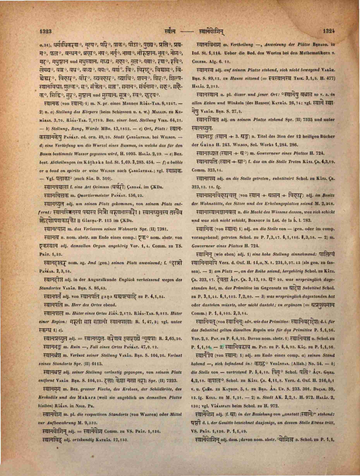
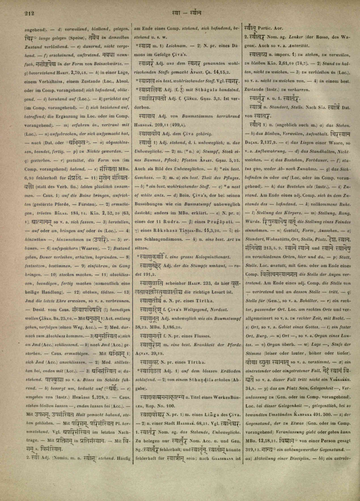
sthā́na — 1〉 n. (angeblich auch m.) — a〉 das Stehen. — b〉 das Bleiben, Verweilen, Aufenthalt. cirasthāna DAŚAK. 2,137,9. — c〉 das Liegen einer Waare, so v. a. Aufbewahrung. — d〉 das Standhalten, Nichtweichen. — e〉 das Bestehen, Fortdauer. — f〉 status quo, weder Ab- noch Zunahme. — g〉 das Sich befinden in oder auf (Loc. oder im Comp. vorangehend). — h〉 das Bestehen als (Instr.). — i〉 Zustand. Am Ende eines adj. Comp. sich in dem Zustande des — befindend. — k〉 vollkommene Ruhe. — l〉 Stellung des Körpers. — m〉 Stellung, Rang, Würde. ripusthāneṣu vart die Stellung eines Feindes einnehmen. — n〉 Gestalt, Form, Aussehen. — o〉 Standort, Wohnstätte, Ort, Stelle, Platz. deśa sthāna saṃniveśa Chr. 215,5. Chr. 215,9. sthāne sthāne und sthāne sthāneṣu an verschiedenen Orten, hier und da. — p〉 Statt, Stelle. Loc. anstatt, mit Gen. oder am Ende eines Comp. vilocanasthānagata die Stelle der Augen vertretend. Am Ende eines adj. Comp. die Stelle von — vertretend und an dessen Stelle — tritt. — q〉 Stelle für (Gen.), so v. a. Behälter. — r〉 ein rechter, passender Ort, Loc. am rechten Orte und verallgemeinert so v. a. zu rechter Zeit, mit Recht. — s〉 Ort, so v. a. Gebiet eines Gottes. — t〉 ein fester Ort, Burg. — u〉 Ort —, so v. a. Organ eines Lautes. — v〉 Organ überh. — w〉 Lage —, Stufe der Stimme (leiser oder lauter, höher oder tiefer) vīṇā cyutā sthānāt so v. a. verstimmt. — x〉 ein eintretender oder eingetretener Fall. nedaṃ sthānaṃ vidyate so v. a. dieser Fall tritt nicht ein VAJRACCH. 34,8. — y〉 das am Platz Sein, Gelegenheit —, Veranlassung zu (Gen. oder im Comp. vorangehend). Loc. bei dieser Gelegenheit —, gelegentlich, bei so bewandten Umständen CAMPAKA. 491. 500. — z〉 der Gegenstand, der zu Etwas (Gen. oder im Comp. vorangehend) Veranlassung giebt oder geben kann MBH. 12,58,21. viśrāma˚ von einer Person gesagt Chr. 319,12. mānya˚ ein achtungswerther Gegenstand. — aa〉 Abtheilung einer Disciplin. — bb〉 ein [Page7-213-a] astrologisches Haus, Unterabtheilung eines solchen Hauses. — cc〉 = kāyotsarga ŚĪLĀṄKA 2,97. — 2〉 m. N. pr. eines Fürsten der Gandharva.
Apte 1890 substantive neuter
Original text · English · substantive neuter
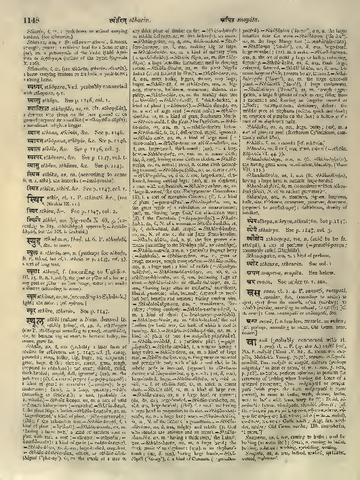
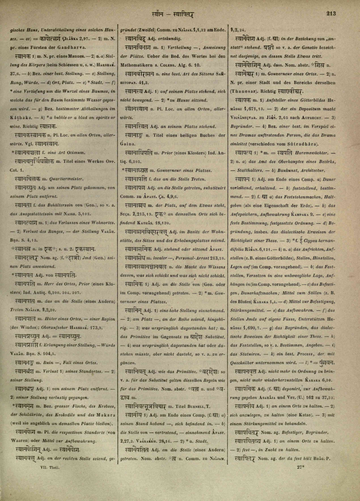
sthānaṃ [sthā-lyuṭ] 1 The act of standing or remaining, stay, continuance, residence; U. 3. 32. 2 Being fixed or stationary. 3 A state, condition. 4 A place, spot, site, locality; akṣamālāmadattvāsmātsthānātpadātpadamapi na gaṃtavyaṃ K. 5 Station, situation, position. 6 Relation, capacity; pitṛsthāne ‘in the place or capacity of a father’; bhakṣyasthāne Pt. 2. 26. 7 An abode, a house, dwelling-house; sa eva (nakraḥ) pracyutaḥ sthānācchunāpi paribhūyate Pt. 3. 46. 8 (a) A country, region, district. (b) A town, city. 9 Office, rank, dignity; amātyasthāne niyojitaḥ. 10 Object; guṇāḥ pūjāsthānaṃ guṇiṣu na ca liṃgaṃ na ca vayaḥ U. 4. 11. 11 An occasion, a matter, subject, cause; parābhyūhasthānānyapi tanutarāṇi syagayati Māl. 1. 14; sthānaṃ jarāparibhavasya tadeva puṃsāṃ Subhāṣ.; so kalaha˚, kopa˚, vivāda˚ &c. 12 A fit or proper place; sthāneṣveva niyojyaṃte bhṛtyāścābharaṇāni ca Pt. 1. 72. 13 A fit or worthy object; sthāne khalu sajjati dṛṣṭiḥ M. 1; see sthāne also. 14 The place or organ of utterance of any letter, (these are eight: -aṣṭau sthānāni varṇānāmuraḥ kaṃṭhaḥ śirastathā . jihvāmūlaṃ ca daṃtāśca nāsikauṣṭhau ca tālu ca Śik. 13.). 15 A holy place. 16 An altar. 17 Aplace in a town, square, court. 18 The place or ([Page 1148-b]) sphere assigned after death to persons according as they perform or neglect their prescribed duties. 19 (In politics, war &c.) The firm attitude or bearing of troops, standing firm so as to repel a charge; Ms. 7. 190. 20 A halt. 21 A stationary condition, a neutral or middle state. 22 That which constitutes the chief strength or the very existence of a kingdom, a stamina of a kingdom; i. e. army, treasure, town, and territory; Ms. 7. 56 (where Kull. renders sthānaṃ by daṃḍakoṣapurarāṣṭrātmakaṃ caturvidhaṃ). 23 Likeness, resemblance. 24 Part or division of a work, section, chapter &c. 25 The character or part of an actor. 26 Interval, opportunity, leisure. 27 (In music) A note, tone, modulation of the voice. Comp. — adhyakṣaḥ 1 a local governor. 2 the superintendent of a place. 3 a watchman. police-officer. — āsanaṃ n. du. standing and sitting down. — āsedhaḥ confinement to a place, imprisonment, arrest; cf. āsedha. — ciṃtakaḥ a kind of quarter-master. — cyuta see sthānabhraṣṭa. — pālaḥ a watchman, sentinel, policeman. — bhūmi f. a dwelling-place, mansion. — bhraṣṭa a. ejected from an office, displaced, dismissed, out of employ. — māhātmyaṃ 1 the greatness or glory of any place. 2 a kind of divine virtue or uncommon sanctity supposed to be inherent in a sacred spot. — yogaḥ assignment of proper places; dravyāṇāṃ sthānayogāṃśca krayavikrayameva ca Ms. 9. 332. — stha a. being in one's abode, at home.
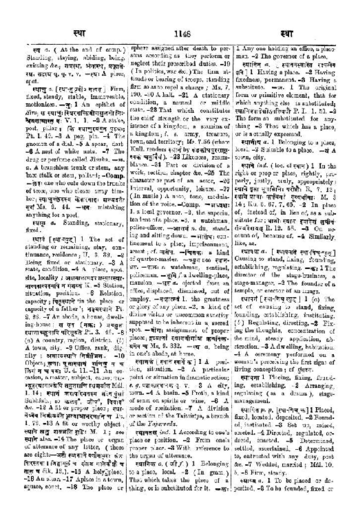
Cappeller 1887 substantive neuter
Original text · German · substantive neuter
sthā́na n. das Stehen, Bestehen, Verweilen; Zustand, Stellung, Würde; Standort, Wohnsitz, Aufenthalt, Behälter, Ort, Stelle, Statt (Loc. anstatt); rechter Ort (Loc. auch zur Zeit, mit Recht); Articulationsstelle, Organ (g.); eintretender Fall, Gelegenheit; Veranlassung, Mittel, Grund zu (Gen. o. —˚).

Burnouf 1866 substantive neuter
Original text · French · substantive neuter
sthāna sthāna n. (sfx. ana) action de se tenir debout, de s'arrêter, halte. Point où l'on se tient, place, lieu, site, station: maison, demeure; place publique; section d'un livre; les degrés d'acuité ou de gravité de la voix: trīṇi sthānāni la basse, le médium et la haute; l'organe c-à-d. la partie de l'organe vocal où s'articule une lettre, tg. Au 1. sthāne au lieu de, à la place de. Gr. σθένος, cf. sthāman. sthānaka n. ville. Bassin d'arrosage au pied d'un arbre. Bulle ou chapelet [sur un verre de vin ou d'une autre liqueur]. sthānacañcalā f. ocymum pilosum, bot. sthānapāla m. garde de ville, patrouille. sthānādhyakṣa m. (adhyakṣa) chef d'un poste, gouverneur d'une place. sthānāsthāna a. (a priv.) stable et instable. sthānika a. local. — S. m. gouverneur d'une place, d'un district. sthānin a. qui a une place fixe; permanent. sthānīya a. local, fait pour une certaine place. — S. n. ville.
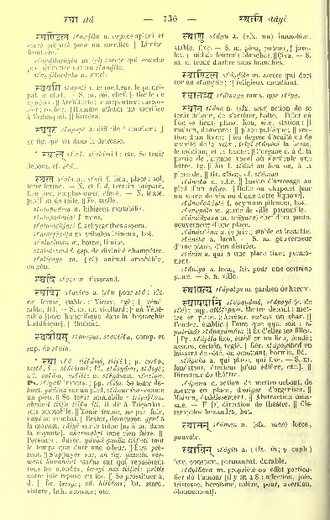
Derived words
Occurrences in source texts (36)
DYS 3 occurrences
GoS 3 occurrences
HP 6 occurrences
HP 4.11*5-4.11*14: Khecarī in Space 2 occurrences
Direct occurrences
-
HP 4.11*6 Segment 13
-
HP 4.11*13 Segment 4
MandUp 6 occurrences
PYS 1 occurrence
PYS 3.49–51: Omniscience or Kaivalya 1 occurrence
Occurrences through derived words
-
PYS 3.51 Segment 1
SiSa 15 occurrences
SiSa 2.35-2.40: Jīva und Karma 2 occurrences
Direct occurrences
SiSa 5.121-5.127: Viśuddha 3 occurrences
Direct occurrences
-
SiSa 5.121 Segment 2
-
SiSa 5.124 Segment 2
-
SiSa 5.125 Segment 2
4 more source pages
SiSa 5.191-5.207: Kailāsa und Mahāśūnya 2 occurrences
Direct occurrences
-
SiSa 5.193 Segment 1
-
SiSa 5.194 Segment 1
SVU 1 occurrence
VBT 1 occurrence
Continue with AYI Free
Image source: AYI archive.