

uttama उत्तम – highest; best
adjective · adverb · substantive masculine · substantive neuter · Word type unspecified
Dictionary sources
AYI dictionary adjective
highest; best
Cappeller 1891 Word type unspecified
Original text · English · Word type unspecified
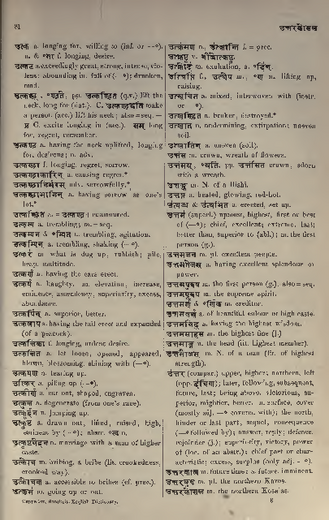
uttamá ·(superl.) upmost, highest, first or best of (--°); chief, excellent; extreme, last; better than, superior to (abl.); m. the first person (g.).
Monier-Williams 1872 adjective
Original text · English · adjective
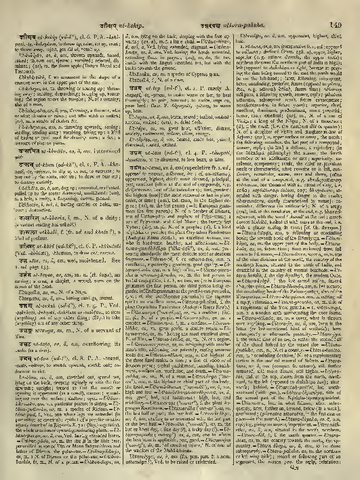
uttama ut-tama, as, ā, am (superlative fr. 1. ud; opposed to avama, adhama, &c.; cf. an-uttama), uppermost, highest, chief; most elevated, principal; best, excellent (often at the end of compounds, e. g. dvijottamas, best of the twice-born); first, greatest; the highest (tone); the most removed or last in place, order, or time; (am), ind. most, in the highest de- gree; (as), m. the last person (= in European gram- mars the first person); N. of a brother of Dhruva, son of Uttāna-pāda and nephew of Priya-vrata; a son of Priya-vrata and third Manu; the twenty-first Vyāsa; (ās), m. pl., N. of a people; (ā), f. a kind of piḍakā or pustule; the plant Oxystelma Esculentum (Asclepias Rosea Roxb.); an excellent woman, one who is handsome, healthy, and affectionate.
Petersburger 1855 adjective · substantive masculine · substantive neuter
Original text · German · adjective · substantive masculine
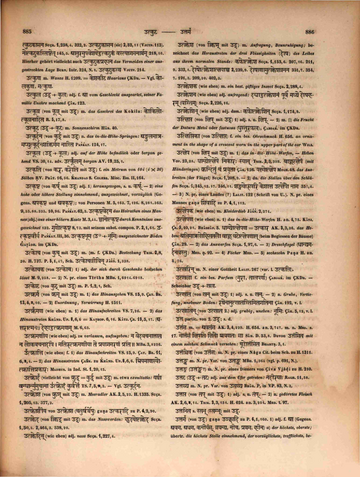
uttamá (von ud) gaṇa uñchādi zu P. 6,1,160. 1〉 adj. f. ā (Gegens. avama, adhama, kanīyaṃs, jaghanya, nīca, prathama, hīna) a〉 der höchste, oberste; übertr. die höchste Stelle einnehmend, der vorzüglichste, trefflichste, beste, ausgezeichnet, vortrefflich AK. 3,2,6. AK. 3,4,193. H. 1438. H. an. 3,462. MED. m. 40. yadùtta̱me màruto madhya̱me vā̱ yadvā̀va̱me di̱vi ṣṭhà ṚV. 5,60,6. ṚV. 1,24,15. ṚV. 1,25,21. di̱vo vìṣṭa̱mbha ùtta̱maḥ ṚV. 9,108,16. nākàm AV. 1,9,2. AV. 4,14,6. AV. 4,14,9. divàm AV. 9,5,29. rājñā̀mutta̱mam AV. 4,22,5. aditi AIT. BR. 1,7. ŚAT. BR. 9,4,2,23. ŚAT. BR. 13,6,2,7. uttame sthāne NIR. 7,11. KAUŚ. 55. M. 2,249. gati M. 5,42. M. 12,3. M. 12,44. M. 12,47. M. 12,50. dharma M. 9,6. uttama — adhama M. 4,244. M. 6,65. R. 5,77,7. SĀH. D. 35,1. — kanīyaṃs PAÑCAT. 16,7. — hīna M. 3,107. M. 4,245. yaccāvivekatayā rājā bhṛtyānuttamapadayojyānhīnādhamasthāne niyojayati PAÑCAT. 16,20. uttamasyāpi varṇasya nīco 'pi gṛhamāgataḥ HIT. I, 57. — jaghanya M. 8,366. — prathama (sāhasa Strafe) M. 8,138 (vgl. M. 9,240. M. 9,279. YĀJÑ. 1,365). di̱vaḥ pī̱yūṣàmutta̱mam ṚV. 9,51,2. a̱mṛ̱ta̱tve ṚV. 1,31,7. dakṣàm ṚV. 1,156,4. dyu̱mne ṚV. 9,61,29. ṚV. 5,28,3. vayàḥ ṚV. 2,1,12. ṚV. 2,23,10. de̱vebhyà utta̱maṃ ha̱viḥ ṚV. 9,67,28. indràsya bhavasi dhā̱sìrutta̱maḥ ṚV. 9,85,3. patyaù me̱ ślokà utta̱maḥ ṚV. 10,159,3. bhe̱ṣa̱jam AV. 2,3,2. AV. 6,21,1. sākṣin M. 8,84. cakṣus M. 4,229. rūpa M. 4,230. vāsas M. 8,321. rati M. 9,28. vana N. 13,4. duḥkha das grösste Leid R. 5,33,35. yatna M. 9,252. M. 9,333. — N. 5,38. N. 10,18. N. 17,5. VIŚV. 15,25. R. 1,1,62. R. 1,2,8. KATHĀS. 25,80. dhanyānāmuttamaṃ kiṃ svit MBH. 3,17358. fg. R. 1,1,27. uttamā goṣu AK. 2,9,67. H. 1270. VOP. 6,52. wird mit dem hervorgehobenen Gegenstande comp. P. 2,1,61. uttamadarśana MBH. 3,14712. R. 2,65,2. R. 4,44,104. am Ende eines comp.: dvijottamaḥ der höchste, beste unter den Zweimalgeborenen, ein Brahman M. 2,49. M. 2,166. M. 3,124. u. s. w. R. 1,5,21. R. 1,8,15. surottama N. 4,7. narottama N. 2,30. N. 9,34. VIŚV. 10,33. purottama R. 1,6,18. R. 1,17,40. vastrottama R. 3,18,47. rathottama BHAG. 1,24. PAÑCAT. I, 333. VID. 32. VID. 42. in der Bed. eines compar. (s. uttara): indriyebhyaḥ paraṃ mano manasaḥ sattvamuttamam . sattvādadhi mahānātmā mahato 'vyaktamuttamam .. KAṬHOP. 6,7. yasmātkṣaramatīto 'hamakṣarādapi cottamaḥ BHAG. 15,18. nātaḥ paraṃ kiṃciduttamamasti PAÑCAT. 241,24. PAÑCAT. V, 31. samottamādhamai (von Gleichen, Ueberlegenen oder Schwächern) rājā tvāhūtaḥ M. 7,87. caṇḍālaścottamānspṛśan YĀJÑ. 2,234. uttamam adv. aufʼs Höchste; am Anf. eines comp. ohne Flexionszeichen: uttamasaṃvignā R. 2,30,2. — b〉 der höchste (vom Tone): uttamasvareṇa ĀŚV. ŚR. 5,17. KĀTY. ŚR. 3,1,3. KĀTY. ŚR. 3,1,4. KĀTY. ŚR. 3,1,5. KĀTY. ŚR. 9,6,19. — c〉 der äusserste, letzte (im Raume, in der Reihenfolge oder in der Zeit; Gegens. pūrva, prathama): spṛśankareṇottamadakṣiṇena R. 2,52,12. die Nasale sind die letzten der Varga VS. PRĀT. 1,90. VS. PRĀT. 4,115. ṚV. PRĀT. 4,1. prathamottame akṣare BṚH. ĀR. UP. 5,5,1. uttamāddevarātpuṃsaḥ kāṅkṣante putramāpadi MBH. 1,4674. teṣāṃ vā unnetottamo dīkṣate ŚAT. BR. 12,1,1,11. ŚAT. BR. 1,6,1,9. ŚAT. BR. 3,7,2,5. ŚAT. BR. 4,3,4,22. ŚAT. BR. 9,3,4,9. ĀŚV. ŚR. 9,1. uttame vayasi ŚAT. BR. 11,4,1,5. KĀTY. ŚR. 17,7,29. KĀTY. ŚR. 19,6,25. uttamavayasá ŚAT. BR. 12,9,1,18. — 2〉 m. a〉 näml. puruṣa gramm. die letzte (nach unserer Anschauung die erste) Person P. 1,4,101. P. 1,4,106. P. 1,4,107. P. 3,4,92. — b〉 N. pr. ein Bruder Dhruvaʼs, Sohn Uttānapādaʼs und Neffe Priyavrataʼs VP. 86. ein Sohn Priyavrataʼs und 3ter Manu VP. 162, N. 2. VP. 261, N. 6. der 21ste Vyāsa VP. 273. m. pl. N. eines Volkes VP. 186. Vgl. auttami. — 3〉 f. ā a〉 näml. piḍakā eine bes. Art Pustel SUŚR. 1,299,7. SUŚR. 2,124,12. — b〉 N. einer Staude, Oxystelma esculentum R. Br. (Asclepias rosea Roxb.), H. an. 3,462. MED. m. 40. SUŚR. 1,133,1. — Vgl. anuttama, upottama.
Original text · German · substantive neuter
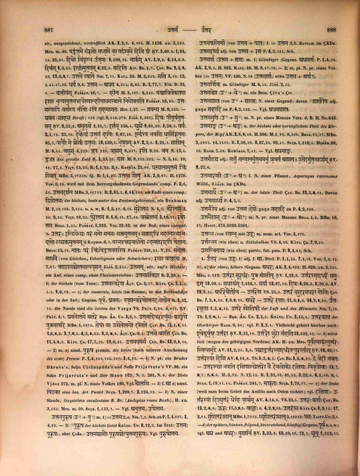
uttama 1〉a〉 uttamottama der vorzüglichste unter den vorzüglichen WEBER, RĀMAT. UP. 355. PRASAṄGĀBH. 13,a. atyuttamā ganz vorzüglich KATHĀS. 87,4. — b〉 trīṇi mandraṃ madhyamamuttamaṃ ca sthānānyāhuḥ saptayamāni vācaḥ ṚV. PRĀT. 13,17. BENFEY fasst uttamam MBH. 5,7109 als adv. in der Bed. very loudly, aber es ist als acc. mit śaṅkhapravaram zu verbinden und gehört zu a〉. — c〉 ṚV. PRĀT. 1,25. ṚV. PRĀT. 5,21. Bez. der Nasale ṚV. PRĀT. 4,11 (so zu lesen). VS. PRĀT. 1,85. VS. PRĀT. 1,89. VS. PRĀT. 4,113. VS. PRĀT. 7,11. (dieses die richtigen Zahlen). AV. PRĀT. 1,6. AV. PRĀT. 1,11. AV. PRĀT. 1,99. AV. PRĀT. 2,5. AV. PRĀT. 2,20. — 2〉b〉 älterer Bruder Dhruvaʼs Verz. d. Oxf. H. 69,b,7. ein Muni Verz. d. Oxf. H. 80,a,14. — 4〉 n. = uttamāṅga Kopf in mṛgottama (s. d.) = mṛgaśiras.
Böhtlingk 1879 adjective · adverb · substantive masculine · substantive neuter · Word type unspecified
Original text · German · adjective · substantive masculine · substantive neuter
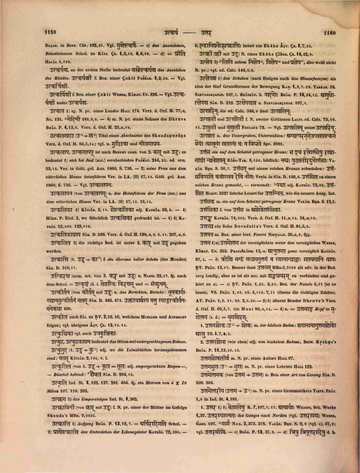
uttama — 1〉 Adj. (f. ā) — a〉 der höchste, oberste. — b〉 die höchste Stelle einnehmend, der vorzüglichste, trefflichste, beste, summus. Am Ende eines Comp. der trefflichste unter. — c〉 höher stehend, vorzüglicher als (Abl.). — d〉 der höchste (vom Tone). — e〉 der äusserste, letzte (im Raume, in der Reihenfolge, in der Zeit). — 2〉 m. — a〉 die erste Person Chr. 241,27. Chr. 241,29. — b〉 der letzte Laut in einem Varga, ein Nasal. — c〉 N. pr. — α〉 eines Bruders des Dhruva, eines Vyāsa, eines Manu und eines Ṛṣi unter dem 6ten Manu (VP. 3,1,28). — β〉 Pl. eines Volkes MBH. 6,9,41. — γ〉 eines Berges Ind. St. 10,281. — 3〉 f. ā — a〉 eine Art Pustel. — b〉 Oxystelma esculentum R. Br. — c〉 die drei Myrobalanen BHĀVAPR. 3,98. — d〉 die erste Nacht im Karmamāsa Ind. St. 10,296. — 4〉 n. = uttamāṅga Kopf, in mṛgottama.
Original text · German · adverb
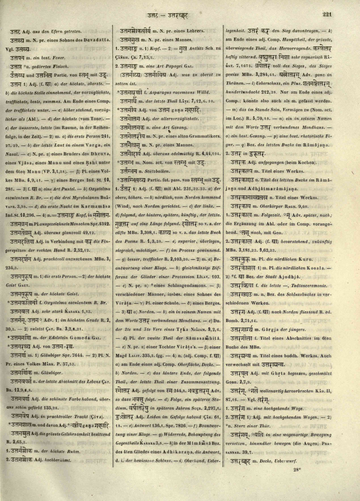
uttamám, uttama˚ Adv. — 1〉 im höchsten Grade. R. 2,30,2. — 2〉 zuletzt ŚAT. BR. 3,2,1,21.
Original text · German · Word type unspecified
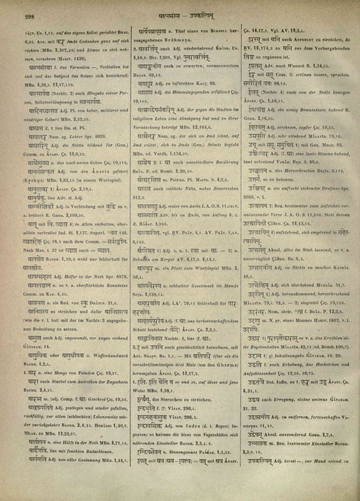
uttamá , so zu betonen. [Nachtrag, Band 6]
Original text · German · Word type unspecified
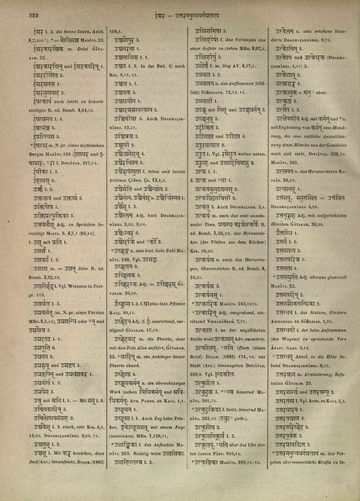
uttamá I. 6. [Nachtrag, Band 7]
Apte 1890 adjective · substantive masculine
Original text · English · adjective · substantive masculine
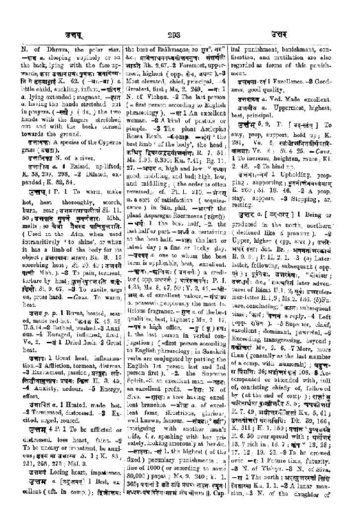
uttama a. [ud-tamap] 1 Best, excellent (oft. in comp.); dvijottamaḥ ([Page 0293-b]) the best of Brāhmaṇas; so sura˚, nara˚ &c.; prāyeṇādhamamadhyamottamaguṇaḥ saṃsargato jāyate Bh. 2. 67. 2 Foremost, uppermost, highest (opp. hīna, jaghanya). 3 Most elevated, chief, principal. 4 Greatest, first; Ms. 2. 249. — maḥ 1 N. of Viṣṇu. 2 The last person (= first person according to English phraseology). — mā 1 An excellent woman. 2 A kind of pustule or pimple. 3 The plant Asclepias Rosea Roxb. Comp. — aṃgaṃ ‘the best limb ‘of the body’, the head; kaścid dviṣatkhaḍgahṛtottamāṃgaḥ R. 7. 51; Ms. 1. 93, Ms. 8. 300; Ku. 7. 41; Bg. 11. 27. — adhama a. high and low ˚madhyama good, middling, and bad; high, low, and middling; (the order is often reversed); cf. Pt. 1. 210. — aṃbhas n. a sort of satisfaction (acquiescence) in Sān. phil. — araṇī the plant Asparagus Racemosus (iṃdīvarī). — ardhaḥ 1 the best half. 2 the last half or part. — ardhya a. pertaining to the best half. — ahaḥ the last or latest day; a fine or lucky day. — upapada a. one to whom the best term is applicable, best, excellent. — ṛṇaḥ, -ṛṇikaḥ (uṃttamarṇaḥ) a creditor (opp. adhamarṇaḥ) dhāreruttamarṇaḥ P. I. 4. 35; Ms. 8. 47, Ms. 8. 50; Y. 2. 42. — ojas a. of excellent valour. — gaṃdhāḍhya a. possessing copiously the most delicious fragrance. — guṇa a. of the best qualities, best, highest; Mu. 2. 17. — padaṃ a high office. — pu(pū)ruṣaḥ 1 the last person in verbal conjugation; (=first person according to English phraseology; in Sanskrit verbs are conjugated by putting the English 1st person last and 3rd person first). 2 the Supreme Spirit. 3 an excellent man. — lābhaḥ an excellent profit. — veśaḥ N. of Śiva. — śākhaḥ a tree having excellent branches. — śloka a. of excellent fame, illustrious, glorious, well-known, famous. — saṃgrahaḥ (˚strī˚) intriguing with another man's wife, i. e. speaking with her privately, looking amorously at her &c. — sāhasaḥ, -saṃ 1 the highest (of the fixed) pecuniary punishments; a fine of 1000 (or according to some 80,000) paṇas; Ms. 9. 240; Y. 1. 365; paṇānāṃ dve śate sārdhe prathamaḥ sāhasaḥ smṛtaḥ . madhyamaḥ paṃcavijñeyaḥ sahasraṃ tveṣa cottamaḥ ... ([Page 0293-c]) Capital punishment, banishment, confiscation, and mutilation are also regarded as forms of this punishment.
Cappeller 1887 Word type unspecified
Original text · German · Word type unspecified
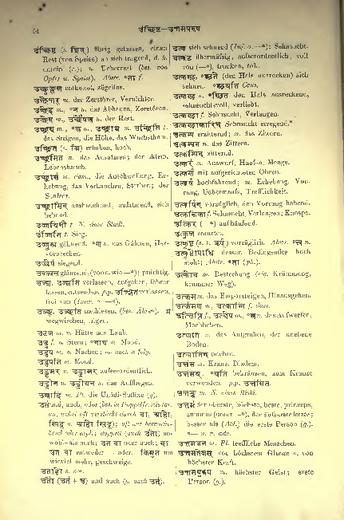
uttamá der Oberste, höchste, beste, princeps, summus (unter —˚) der äußerste letzte; besser als (Abl.) die erste Person (g.) °— u. n. adv.
Burnouf 1866 adjective
Original text · French · adjective
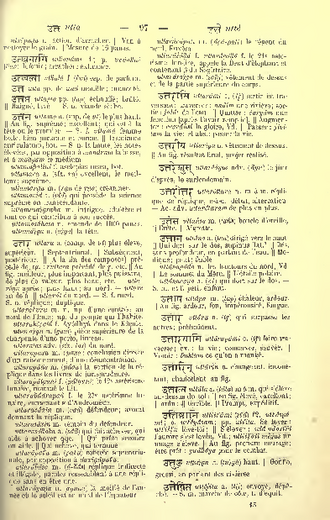
uttama uttama a. (sup. de ut) le plus haut. Au fig. suprême; excellent; qui est à la tête ou le premier. — S. f. uttamā femme belle, bien portante et bonne. Jasminum auriculatum, bot. — S. n. la haute, les notes élevées, par opposition à mandram la basse, et à madhyam le médium. uttamaphalinī f. asclepias rosea, bot. uttamara a. (sfx. ra) excellent, le meilleur; suprême. uttamarṇa m. (rṇa de ṛṇa) créancier. uttamavid a. (vid) qui possède la science suprême ou transcendante. uttamasaṅgraha m. intrigue, adultère et tout ce qui contribue à son succès. uttamasāhasa n. amende de 1000 panas. uttamāṅga n. (aṅga) la tête.
Derived words
Occurrences in source texts (29)
DYS 6 occurrences
GoS 2 occurrences
HP 7 occurrences
1 more source page
PYS 1 occurrence
SiSa 11 occurrences
SiSa 4.21-4.25: Zehn Mudrās 2 occurrences
Direct occurrences
SiSa 4.91-4.94: Vajrolī-Siddhi 2 occurrences
Direct occurrences
3 more source pages
Continue with AYI Free
Image source: AYI archive.