

liṅga लिङ्ग – Merkmal; Kennzeichen; Zeichen; Geschlechtsglied; Penis
Substantiv Neutrum
Wörterbuchquellen
AYI Wörterbuch Substantiv Neutrum
Merkmal; Kennzeichen; Zeichen; Geschlechtsglied; Penis
Cappeller 1891 Substantiv Neutrum
Originaltext · Englisch · Substantiv Neutrum
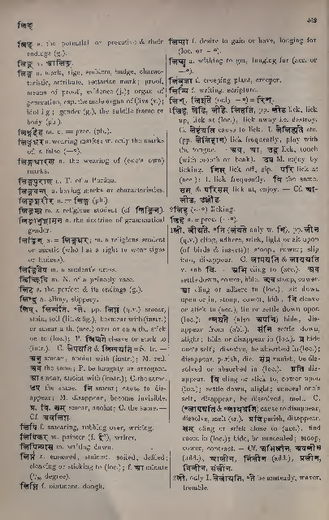
liṅga ·n. mark, sign, emblem, badge, characteristic, attribute, sectarian mark; proof, means of proof, evidence (j.); organ of generation, esp. the male organ of Śiva (r.); idol i.g.; gender (g.), the subtile frame or body (ph.).
Monier-Williams 1872 Substantiv Neutrum
Originaltext · Englisch · Substantiv Neutrum
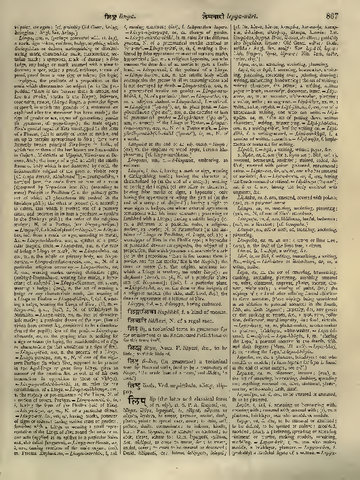
Liṅga, am, n. (perhaps connected with rt. lag), a mark, sign, token, emblem, badge, anything which distinguishes or defines, distinguishing or discrimi- nating mark, characteristic mark, characteristic, sec- tarian mark; a symptom, mark of disease; a false badge, any badge or mark assumed with a view to deceive; a spot, stain; a proof, evidence, means of proof, proof from a sure sign or token; (in logic) = vyāpya, the predicate of a proposition or the mark which characterizes the subject (as in the pro- position ‘there is fire because there is smoke, and fire has smoke, ‘smoke is the liṅga), inference, conclusion, reason, (kāvya-liṅga, a particular figure of speech in which the grounds of a statement are explained after the statement has been made); the sign of gender or sex, organ of generation; gender (in grammar, cf. puṃ-liṅga); the male organ; Śiva's genital organ or Śiva worshipped in the form of a Phallus, (this is usually of stone or marble, and set up in temples appropriated to Śiva; there were formerly twelve principal Śiva-liṅgas in India, of which two or three of the best known are Soma-nātha in Gujarāt, Mahākāla at Ujjayinī, Viśveśvara at Be- nares, &c.); the image of a god, an idol; the subtile frame or body which is not destroyed by death, the indestructible original of the gross or visible body [cf. liṅga-śarīra, sūkṣma-ś˚]; = prātipadika, a nominal base, the crude form or base of a noun (shortened by Vopa-deva into li); (according to some) Prakṛti or Pradhāna (i. e. the primary germ out of which all phenomena are evolved in the Sāṅkhya phil.); the effect or product (i. e. according to others, that which is evolved out of a primary cause, and becomes in its turn a producer, = vyakta in the Sāṅkhya phil.); the order of the religious student; N. of a Purāṇa, (see liṅga-purāṇa.)
Petersburger 1855 Substantiv Neutrum
Originaltext · Deutsch · Substantiv Neutrum
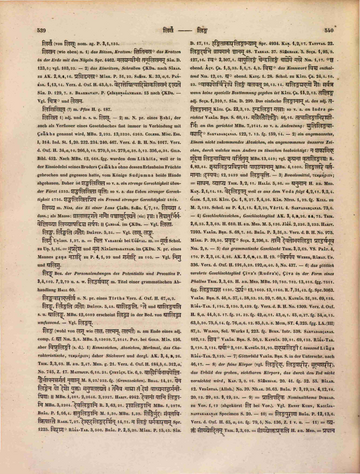
liṅga (wohl von lag wie lakṣa, lakṣman, lakṣmī) n. am Ende eines adj. comp. f. ā NIR. 2,8. MBH. 3,13059. MBH. 7,2141. PAT._bei_GOLD. MĀN. 156. aber viṣṇuliṅgī (s. d.). 1〉 Kennzeichen, Abzeichen, Merkmal, das Charakteristische, τεϰμήριον; daher Stichwort und dergl. AK. 3,4,3,26. TRIK. 3,3,69. H. an. 2,47. MED. g. 21. Verz. d. Oxf. H. 184,b,6. Verz. d. Oxf. H. 312,a, No. 745, Z. 17. MAITRYUP. 6,10. MAITRYUP. 6,31. ŚVETĀŚV. UP. 6,9. bāhyairvibhāvayelliṅgairbhāvamantargataṃ nṛṇām M. 8,25. M. 8,252. fg. (Grenzzeichen). BHAG. 14,21. yena liṅgena yo deśo yuktaḥ samupalakṣyate . tenaiva nāmnā taṃ deśaṃ vācyamāhurmanīṣiṇaḥ .. MBH. 1,281. MBH. 2,2646. MBH. 3,2927. HARIV. 4942. devānāṃ yāni liṅgāni MBH. 3,2204. devaliṅgāni R. 3,63,21. rājaliṅgāni MBH. 1,2878. BHĀG. P. 1,16,4. ṛtuliṅgāni M. 1,30. MBH. 1,39. liṅgairmudaḥ saṃvṛtavikriyāste RAGH. 7,27. dohadaliṅgadarśin RAGH. 14,71. na liṅgaṃ dharmakāraṇam Spr. 1225. virāga˚ RĀJA-TAR. 3,500. BHĀG. P. 2,5,20. MĀRK. P. 15,45. SĀH. D. 17,11. iṅgitākāraliṅgābhyām Spr. 4934. KAṆ. 1,2,17. TATTVAS. 22. liṅgadarśane jāyamānaṃ jñānam TATTVAS. 48. TARKAS. 37. SĀṂKHYAK. 5. SUŚR. 1,95,9. SUŚR. 1,127,16. sva˚ SUŚR. 2,307,1. vāyuliṅgaṃ cendraliṅgaṃ cāgneye mantre NIR. 1,17. ˚jña ebend. ĀŚV. ŚR. 1,5,33. ĀŚV. ŚR. 5,1,7. ĀŚV. ŚR. 5,4,3. viśva˚ das Kennwort viśva enthaltend NIR. 12,40. a˚ ebend. KAUŚ. 1. KAUŚ. 28. Schol. zu KĀTY. ŚR. 24,4. KĀTY. ŚR. 24,10. KĀTY. ŚR. 24,23. ˚vākyayorvirodhe liṅgaṃ balavat KĀTY. ŚR. 26,13. KĀTY. ŚR. 26,14. aliṅgagrahaṇe gauḥ sarvatra wenn keine specielle Bestimmung gegeben ist KĀTY. ŚR. 15,2,13. talliṅga adj. SUŚR. 1,310,7. SĀH. D. 299. Das einfache liṅgānām st. des adj. talliṅgānām KĀTY. ŚR. 22,3,19. indraliṅgā mantrāḥ so v. a. an Indra gerichtet VARĀH. BṚH. S. 60,11. mantraistailliṅgaiḥ VARĀH. BṚH. S. 46,16. tatsaliṅgābhirāśīrbhiḥ an ihn gerichtet MBH. 7,2141. so v. a. Andeutung: śrutiliṅgavākyādi˚ SARVADARŚANAS. 122,7. fg. SARVADARŚANAS. 122,13. fg. SARVADARŚANAS. 159,14. — 2〉 ein angemaasstes, Einem nicht zukommendes Abzeichen, ein angenommenes äusseres Zeichen, durch welches man Andere zu täuschen beabsichtigt: na śakyamiha śūdreṇa liṅgamāśritya vartitum MBH. 13,449; vgl. chadmanā kṛtaliṅgasthaḥ R. 6,82,84. chadmaliṅgapraviṣṭānāṃ pāṇḍavānām MBH. 4,1000. liṅgāntare vartamānāḥ (dasyavaḥ) MBH. 12,2439 und liṅgavṛtti. — 3〉 Beweismittel, τεϰμήριον; = sādhana, vyāpya TRIK. 3,2,11. HALĀY. 5,86. = anumāna H. an. MED. KAṆ. 2,1,14. KAṆ. 2,1,18. vedaliṅgāt weil es aus dem Veda folgt KAṆ. 4,2,11. KAṆ. 9,2,4. JAIM. 1,3,23. KĀTY. ŚR. 1,8,37. KĀTY. ŚR. 9,4,26. KĀM. NĪTIS. 1,29. fg. KULL._zu_M. 3,152. Schol. zu P. 4,1,15. P. 6,3,35, Vārtt. 4. SARVADARŚANAS. 73,6. — 4〉 Geschlechtszeichen, Geschlechtsglied AK. 3,4,3,26. AK. 3,4,14,75 TRIK. 2,6,23. TRIK. 3,3,69. H. 610. H. an. MED. M. 5,136. YĀJÑ. 2,226. YĀJÑ. 3,233. HARIV. 7593. VARĀH. BṚH. S. 68,7. VARĀH. BṚH. S. 68,86. BHĀG. P. 3,31,3. Verz. d. B. H. No. 975. MĀRK. P. 39,30. pravṛddha˚ SUŚR. 2,396,3. tasmai devatobhayaliṅgā prādurbabhūva NIR. 2,8. — 5〉 das grammatische Geschlecht TRIK. 3,3,69. VS. PRĀT. 4,170. P. 2,3,46. P. 2,4,26. AK. 3,6,8,42. H. 19. ˚viparyaya WEBER, RĀMAT. UP. 336. Verz. d. Oxf. H. 191,b,28. Verz. d. Oxf. H. b, No. 192,a,40. Verz. d. Oxf. H. b, No. 192,a,437. — 6〉 das göttlich verehrte Geschlechtsglied Śivaʼs (Rudraʼs), Śiva in der Form eines Phallus TRIK. 3,3,69. H. an. MED. MBH. 10,780. fgg. MBH. 10,782. MBH. 13,818. fgg. MBH. 13,7511. fgg. liṅgādhyakṣa MBH. 13,1191. ūrdhva˚ MBH. 12,1669. MBH. 13,1160. R. 7,31,42. fg. Spr. 3063. VARĀH. BṚH. S. 46,8. VARĀH. BṚH. S. 57,4. VARĀH. BṚH. S. 58,53. VARĀH. BṚH. S. 58,55. VARĀH. BṚH. S. 59,7. VARĀH. BṚH. S. 60,5. KATHĀS. 51,98. KATHĀS. 69,155. RĀJA-TAR. 1,194. RĀJA-TAR. 2,130. RĀJA-TAR. 3,439. fg. Verz. d. B. H. No. 1309. Verz. d. Oxf. H. 8,a. 44,b,5. fg. Verz. d. Oxf. H. 8,a. 44,b,17. Verz. d. Oxf. H. 8,a. 44,b,21. fg. Verz. d. Oxf. H. 8,a. 44,b,32. Verz. d. Oxf. H. 8,42,a,11. fg. Verz. d. Oxf. H. 8,43,a,1. Verz. d. Oxf. H. 8,45,a,27. fg. Verz. d. Oxf. H. 8,54,a,15. Verz. d. Oxf. H. 8,63,b,30. fg. Verz. d. Oxf. H. 8,75,b,14. Verz. d. Oxf. H. 8,76,a,6. fg. Verz. d. Oxf. H. 8,a. 44,b,12. Verz. d. Oxf. H. 8,85,b,3. fg. Verz. d. Oxf. H. 8,a. 44,b,8. MUIR, ST. 4,325. fgg. LA. (III) 87,3. WILSON, Sel. Works I, 223. fg. BURN. Intr. 538. SARVADARŚANAS. 102,12. śiva˚ VARĀH. BṚH. S. 50,2. KATHĀS. 59,81. KATHĀS. 69,153. RĀJA-TAR. 2,128. RĀJA-TAR. 3,114. arcā˚ RĀJA-TAR. 2,161. KATHĀS. 51,95. sahasraliṅgī f. tausend Liṅga RĀJA-TAR. 2,129. — 7〉 Götterbild VARĀH. BṚH. S. in der Unterschr. nach VARĀH. BṚH. S. 46,17. — 8〉 der feine Körper (vgl. liṅgadeha, liṅgaśarīra, sūkṣmaśarīra), das Urbild des groben, sichtbaren Körpers, das durch den Tod nicht vernichtet wird, KAP. 3,9. KAP. 3,16. SĀṂKHYAK. 20. fg. SĀṂKHYAK. 41. SĀṂKHYAK. 52. fg. SĀṂKHYAK. 55. BĀLAB. 12. VEDĀNTAS. (Allah.) No. 39. NĪLAK. 36. NĪLAK. 63. BHĀG. P. 3,19,28. BHĀG. P. 4,12,18. BHĀG. P. 4,20,12. BHĀG. P. 4,29,83. BHĀG. P. 9,19,28. — 9〉 = prātipadika Nominalthema DURGAD._zu_VOP. 1,12 (abgekürzt li bei VOP.). Vgl. ERNST KUHN, KACCĀYANAPPAKARAṆAE Specimen S. 20. — 10〉 = liṅgapurāṇa BHĀG. P. 12,13,6. Verz. d. Oxf. H. 65,a,40. fg. Verz. d. Oxf. H. 79,b, No. 136, Z. 1 v. u. — 11〉 = vyaktaṃ sāṃkhyoditam TRIK. 3,3,69. = sāṃkhyoktaprakṛti H. an. MED. = pradhāna LIṄGA-P._bei_MUIR, ST. 4,325. ˚mātra = buddhi YOGAS. 2,19. a˚ = avyakta ebend. KAP. 1,125 erklärt der Comm.: liṅgaṃ svakāraṇe layaṃ gacchatīti, KAP. 1,137.: layaṃ gacchatīti liṅgaṃ kāryam; vgl. GAUḌAP._zu_SĀṂKHYAK. 10. SĀṂKHYAK. 40. — Vgl. a˚ (adj. keine Merkmale habend BHĀG. P. 1,6,26. aliṅgatva n. das Fehlen aller Kennzeichen MBH. 12,7431), abliṅga, ku˚, tri˚, triliṅgī, devaliṅga, nirliṅga, puṃ˚, pratiliṅgam, bāṇaliṅga, bhinna˚, bhū˚, yathāliṅgam, yoniliṅga, rāja˚, viṣṇuliṅgī, sīmaliṅga, sīmā˚, strī˚.
Böhtlingk 1879 Substantiv Neutrum
Originaltext · Deutsch · Substantiv Neutrum
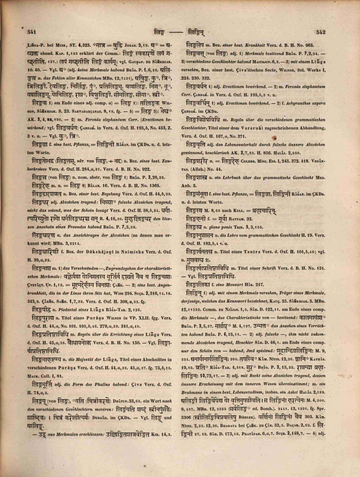
liṅga n. (m. NṚS. UP. 1,3 in der Bibl. ind.; adj. Comp. f. ā, ī in *viṣṇuliṅgī) — 1〉 Kennzeichen, Abzeichen, Merkmal, das Charakteristische, τεϰμήριον; daher Stichwort, Kennwort, Andeutung und desgl. indra˚ Adj. so v. a. an Indra gerichtet. — 2〉 ein angemaasstes, Einem nicht zukommendes Abzeichen, ein angenommenes äusseres Zeichen, durch welches man Andere zu täuschen beabsichtigt. — 3〉 Beweismittel, τεϰμήριον (ĀPAST. 2,29,6), corpus delicti (Chr. 212,14). — 4〉 Geschlechtszeichen, Geschlechtsglied. — 5〉 das grammatische Geschlecht. — 6〉 das göttlich verehrte Geschlechtsglied Śivaʼs (Rudraʼs), Śiva in der Form eines Phallus. — 7〉 Götterbild. — 8〉 der feine Körper, das Urbild des groben, sichtbaren Körpers, das durch den Tod nicht vernichtet wird. — 9〉 etwas Entstandenes und daher wieder zu Nichte werdendes KAP. 1,124. 136. — 10〉 = ākāśa KĀRAṆḌ. 15,9. — 11〉 *der Urstoff. — 12〉 Nominalthema. — 13〉 = liṅgapurāṇa. — 14〉 so v. a. talliṅga Adj. solche Abzeichen habend KĀTY. ŚR. 22,3,19.
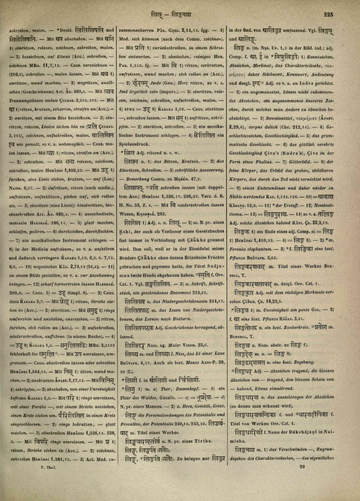
Cappeller 1887 Substantiv Neutrum
Originaltext · Deutsch · Substantiv Neutrum
liṅga n. Kennzeichen, Abzeichen, Merkmal, Sympton; Beweismittel, Corpus delicti (j.); Geschlechtszeichen o. -glied, Phallus (r.), Genus (g.), der feine Körper (ph.).
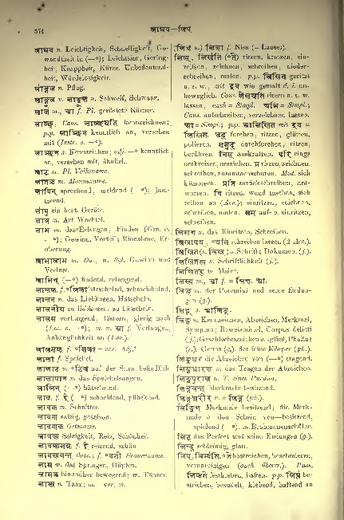
Burnouf 1866 Substantiv Neutrum
Originaltext · Französisch · Substantiv Neutrum
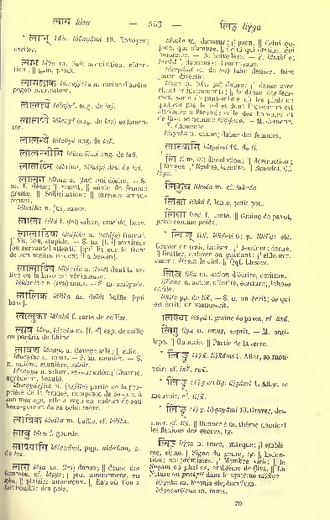
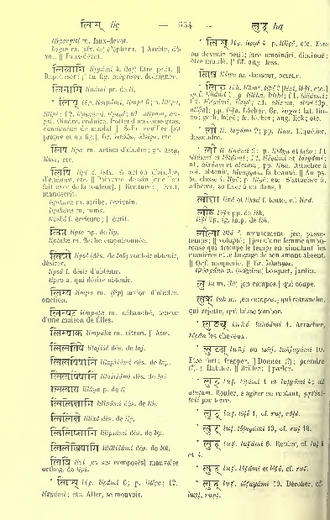
liṅga liṅga n. trace, marque; emblême, signe. Signe du genre, tg. Induction; ses prémisses. Membre viril; le lingam ou phallus, emblême de Śiva. La Nature ou prakṛti dans le système sāṅkhya. liṅgaka m. féronia elephantium. liṅgavardhana m. mms. [Page554-1] liṅgavṛtti m. faux-devot. liṅgin m. (sfx. in) éléphant. Ascète, dévot. Faux-dévot.
Abgeleitete Wörter
Quelltextfundstellen (25)
DYS 1 Fundstelle
HP 2 Fundstellen
PYS 3 Fundstellen
SiSa 17 Fundstellen
SiSa 4.81-4.90: Bindu-Bewahrung 3 Fundstellen
Direkt belegt
Weitere 6 Quelltextseiten
SiSa 5.94-5.101: Mūlādhāra-Siddhis 2 Fundstellen
Direkt belegt
Mit AYI Free weitermachen
Bildquelle: AYI Archiv.