

nābhi नाभि – Nabel
Substantiv Feminin · Substantiv Maskulin · Worttyp nicht bestimmt
Wörterbuchquellen
AYI Wörterbuch Substantiv Feminin · Substantiv Maskulin
Cappeller 1891 Substantiv Feminin
Originaltext · Englisch · Substantiv Feminin
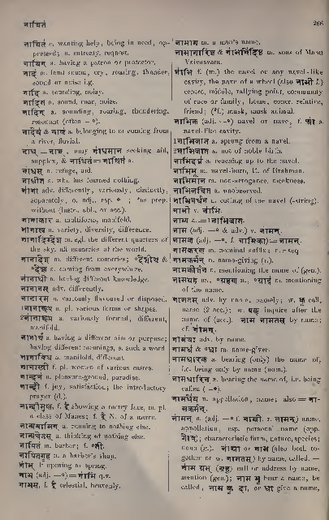
nā́bhi ·f. (m.) the navel or any navel-like cavity, the nave of a wheel (also nābhī f.) centre, middle, rallying point, community of race or family, home, concr. relative, friend; (*f.) musk, musk animal.
Monier-Williams 1872 Worttyp nicht bestimmt
Originaltext · Englisch · Worttyp nicht bestimmt
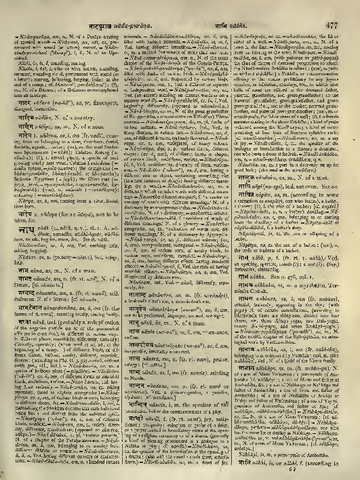
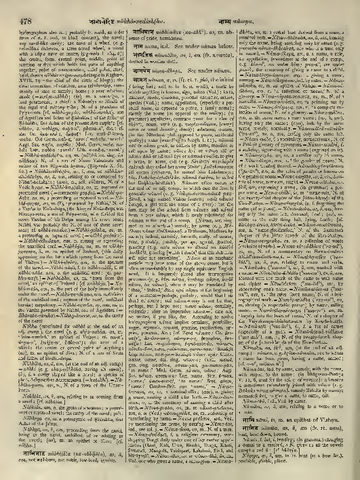
nābhi nābhi, is, or nābhī, f. (according to lexicographers also m.; probably fr. nabh, an older form of rt. 1. nah, to bind, connect), the navel; any navel-like cavity; the nave of a wheel (e. g. tri-nābhi cakram, a three-naved wheel, a wheel with a triple nave or centre, Ṛg-veda I. 164, 2); the centre, focus, central point, middle, point of junction or that which holds the parts of anything together, point of concentration, chief point, chief, head, (hence nābhir nṛpa-maṇḍalasya in Raghu-v. XVIII. 19 = the chief of the circle of kings); the close connection of relations, near relationship, com- munity of race or family; home; a near relation; musk (= mṛga-nābhi); (is), m. a sovereign, a lord paramount; a chief; a Kṣatriya or Hindū of the regal and military tribe; N. of a grandson of Priya-vrata [cf. nābhi-gupta, nābhi-varṣa], son of Agnīdhra and father of Ṛṣabha; of the father of Ṛṣabha, first Arhat of the present Ava-sarpiṇī; [cf. nābha, 2. nabhya, anya-n˚, ghana-n˚, &c.: cf. also Gr. ὀμφ-αλό-ς, ὅμφαξ: Lat. umb-il-īcu-s, umbo: Old Germ. nab-a, ‘nave;’ nabulo, ‘navel:’ Angl. Sax. nafu, nafela: Mod. Germ. nabe, na- bel: Lett. nabba, ‘navel:’ Lith. namba, ‘navel.’]
Petersburger 1855 Substantiv Feminin · Substantiv Maskulin · Worttyp nicht bestimmt
Originaltext · Deutsch · Substantiv Feminin · Substantiv Maskulin
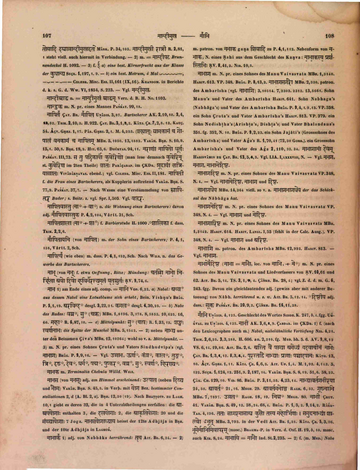
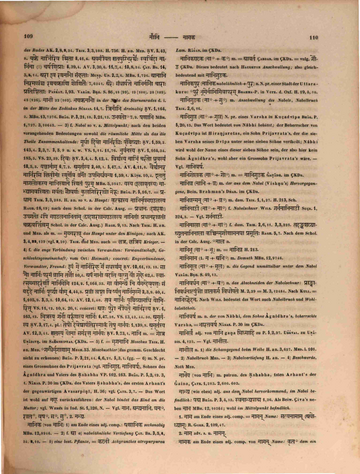
nā́bhi UṆĀDIS. 4,125. Geschlecht des Wortes SIDDH. K. 247,b,4. fgg. UJJVAL._zu_UṆĀDIS. 4,125. nābhī AK. 3,6,1,9. ŚABDAR._im_ŚKDR. 1〉 f. (nach den Lexicographen auch m.) Nabel, nabelähnliche Vertiefung NIR. 4,21. TRIK. 2,6,25. TRIK. 3,3,288. H. 606. H. an. 2,310. fg. MED. bh. 5. MED. bh. 6. AV. 9,8,12 VS. 6,14. VS. 19,86. AIT. BR. 2,6. asti vai patnyā amedhyaṃ yadavācīnaṃ nābheḥ ŚAT. BR. 1,3,1,13. ŚAT. BR. 8,3,4,4. purastādvai nābhyāḥ prāṇaḥ paścādapānaḥ KĀṬH. 13,10. ĀŚV. GṚHY. 1,11. KĀTY. ŚR. 6,6,3. AIT. UP. 1,4. M. 1,92. M. 4,143. M. 5,132. SUŚR. 1,124,12. SUŚR. 1,251,9. SUŚR. 2,187,14. VARĀH. BṚH. S. 8,19. VARĀH. BṚH. S. 51,6. VARĀH. BṚH. S. 58,23. ŚĀK. CH. 129,10. VID. 86. BHĀG. P. 3,11,35. BHĀG. P. 4,23,14. nābhyāvartagabhīrayā BHĀG. P. 24,50. āvarta˚ BHĀG. P. 21,16. MEGH. 29. āvartamanojña RAGH. 6,52. gūḍhanābhi MBH. 7,7897. unnata˚ RAGH. 18,19. nimna˚ MEGH. 80. nābhī ŚRUT. 41. VARĀH. BṚH. S. 49,13. VARĀH. BṚH. S. 58,24. VARĀH. BṚH. S. 68,4. BHĀG. P. 1,3,2. BHĀG. P. 9,14,2. RĀJA-TAR. 4,196. tataḥ sāgaramāsādya kukṣau tasya mahormiṇaḥ . samudranābhyāṃ śālvo 'bhūt MBH. 3,793. in der Vedī AIT. BR. 1,28. KĀTY. ŚR. 5,3,36. bhūmernābhimivāparam (masc.) BRAHMA-P._in_Verz. d. Oxf. H. 19,b,10. masc. auch KIR. 8,24. nābhāyi = nābhau Ind. St. 2,235. — 2〉 f. (m. MED.) Nabe des Rades AK. 2,8,2,24. TRIK. 3,3,288. H. 756. H. an. MED. ṚV. 5,43,8. ca̱kre nābhìriva śri̱tā ṚV. 8,41,6. a̱yamī̀yata ṛta̱yugbhi̱raśvaìḥ sva̱rvidā̱ nābhìnā (!) carṣaṇi̱prāḥ ṚV. 6,39,4. AV. 3,30,6. AV. 11,7,4. AV. 10,8,34. ŚAT. BR. 14,5,5,14. arā iva rathanābhau saṃhatāḥ MUṆḌ. UP. 2,2,6. MBH. 1,726. ānābhi niramajjaṃśca rathacakrāṇi śoṇitaiḥ MBH. 7,6241. araiḥ saṃdhāryate nābhirnābhau cārāḥ pratiṣṭhitāḥ PAÑCAT. I, 93. VARĀH. BṚH. S. 86,18 (99). 19 (100). 28 (109). 45 (126). nābhī VARĀH. BṚH. S. 22 (103). bhacakranābhau in der Nabe des Sternenrades d. i. in der Mitte des Zodiakus SŪRYAS. 14,7. trinā́bhi dreinabig ṚV. 1,164,2. MBH. 13,7376. BHĀG. P. 3,21,18. BHĀG. P. 5,21,13. ubhayato˚ BHĀG. P. 7,9. ṣaṇṇābhi MBH. 1,727. MBH. 3,10645. — 3〉 f. Nabel so v. a. Mittelpunkt; nach den beiden vorangehenden Bedeutungen sowohl die räumliche Mitte als das die Theile Zusammenhaltende: mū̱rdhā di̱vo nābhìra̱gniḥ pṛ̀thi̱vyāḥ ṚV. 1,59,2. ṚV. 1,143,4. ṚV. 2,3,7. ṚV. 3,5,9 u. s. w. VS. 1,11. VS. 11,76. bhuvànasya ṚV. 1,164,34. ṚV. 1,185,5. VS. 23,59. di̱vaḥ ṚV. 3,4,4. ṚV. 9,12,4. viśvàsya̱ nābhi̱ṃ caràto dhru̱vasyà ṚV. 10,5,3. ya̱jñānā̀m ṚV. 6,7,2. a̱mṛtàsya ṚV. 2,40,1. ṚV. 5,47,2. AV. 4,11,6. vaiśvā̀nara̱ nābhìrasi kṣitī̱nāṃ sthūṇèva̱ jànā̀m̐ upa̱midyàyantha AV. 1,59,1. KĀṬH. 10,4. etattu nāgalokasya nābhisthāne sthitaṃ puram MBH. 5,3547. yasya (ilāvṛtasya) nābhyāmavasthitaḥ sarvataḥ sauvarṇaḥ kulagirirājo meruḥ BHĀG. P. 5,16,7. = pradhāna TRIK. 3,3,288. H. an. so v. a. Haupt: kṛtsnasya nābhirnṛpamaṇḍalasya RAGH. 18,19; nach dem Schol. in der Calc. Ausg. = pradhāna. (daśarathaḥ) upagato 'pi maṇḍalanābhitām (dvādaśarājamaṇḍalasya nābhitāṃ pradhānarājatāṃ cakravartitvam Schol. in der Calc. Ausg.) RAGH. 9,15. Nach TRIK. H. an. und MED. als m. = mukhyarāj das Haupt unter den Königen; nach AK. 3,4,22,139 (vgl. AK. 3,4,2,20). TRIK. und MED. auch = kṣatra, kṣatriya Krieger. — 4〉 f. die enge Verbindung zwischen Verwandten: Verwandtschaft, Geschlechtsgemeinschaft; vom Ort: Heimath; concret: Engverbundener, Verwandter, Freund: i̱yaṃ me̱ nābhìri̱ha mè sa̱dhasthàm ṚV. 10,61,19. ṚV. 10,61,18. sā nau̱ nābhìḥ paramaṃ jā̱mi tannaù ṚV. 10,10,4. a̱yaṃ nābhā̀ vadati va̱lgu vò gṛ̱he ṚV. 10,62,4. svātsa̱khyādaràṇī̱ṃ nābhìmemi ṚV. 124,2. ṚV. 1,164,33. mā vā̀ma̱nye ni yàmandeva̱yanta̱ḥ saṃ yadda̱de nābhìḥ pū̱rvyā vā̀m ṚV. 4,44,5. pra̱jāṃ tvaṣṭā̱ vi ṣyàtu̱ nābhìma̱sme ṚV. 2,3,9. ṚV. 2,40,4. ṚV. 1,105,9. ṚV. 3,5,5. ṚV. 10,64,13. AV. 12,1,40. tava̱ nābhìḥ pṛthi̱vyāmadhi̱ yoni̱rit VS. 11,12. VS. 10,8. VS. 20,1. concret: aja̱ḥ pu̱ro nī̀yate̱ nābhìrasya ṚV. 1,163,12. mi̱trasya̱ garbho̱ varùṇasya̱ nābhìḥ ṚV. 6,47,28. VS. 13,42. VS. 13,44. VS. 13,50. a̱mṛtàsya ṚV. 3,17,4. pl.: teṣā̀ṃ de̱veṣvāyàtira̱smāka̱ṃ teṣu̱ nābhàyaḥ ṚV. 1,139,9. a̱mṛtàsya AV. 12,3,41. ṛ̱tasya̱ yonā̱ samàranta̱ nābhàyaḥ ṚV. 9,73,1. nābhi m. = gotra UṆĀDIVṚ._im_SAṂKṢIPTAS. ŚKDR. — 5〉 f. = mṛganābhi Moschus TRIK. H. an. MED. ˚gandhairmṛgāṇām MEGH. 53. Moschusthier (das gramm. Geschlecht nicht zu erkennen) BHĀG. P. 3,21,44. BHĀG. P. 4,6,21. BHĀG. P. 5,3,1. fgg. — 6〉 m. N. pr. eines Grossohnes des Priyavrata (vgl. nābhigupta, nābhivarṣa), Sohnes des Āgnīdhra und Vaters des Ṛṣabha VP. 162. VP. 163. BHĀG. P. 5,2,19. BHĀG. P. 5,3,1. NĀRAS. P. 30_im_ŚKDR. des Vaters Ṛṣabhaʼs, des ersten Arhantʼs der gegenwärtigen Avasarpiṇī, H. 36; vgl. ŚATR. 3,7. — Das Wort ist wohl auf nah zurückzuführen: der Nabel bindet das Kind an die Mutter; vgl. WEBER_in_Ind. St. 1,326, N. — Vgl. nābha, anyanābhi, ghana˚, rajata˚, vṛṣa˚, sa˚, su˚, 2. nabhya.
Originaltext · Deutsch · Worttyp nicht bestimmt
nābhi vgl. auch śaṅkha˚.
Böhtlingk 1879 Substantiv Feminin · Substantiv Maskulin · Worttyp nicht bestimmt
Originaltext · Deutsch · Substantiv Feminin · Substantiv Maskulin
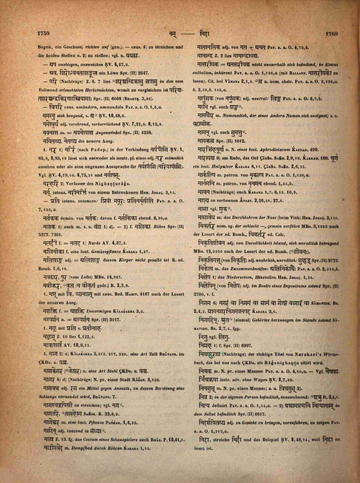
nā́bhi — 1〉 m. (nicht in der älteren Sprache) und f. (adj. Comp. f. i VĀMANA 5,39) — a〉 Nabel, eine nabelähnliche Vertiefung. Auch nābhī. — b〉 Nabe des Rades. Auch nābhī; *m. — c〉 Mittelpunct, die räumliche Mitte und auch das die Theile Zusammenhaltende. *m. — d〉 die enge Verbindung zwischen Verwandten; Verwandtschaft, Geschlechtsgemeinschaft; vom Ort; Heimat; concret: ein Engverbundener, Verwandter, [Page3-195-b] Freund. *m. — 2〉 m. — a〉 Moschusthier. Geschlecht unsicher. — b〉 das Haupt, der Oberste, insbes. unter Fürsten. — c〉 N. pr. verschiedener Männer. — 3〉 (*f.) Moschus.
Originaltext · Deutsch · Worttyp nicht bestimmt
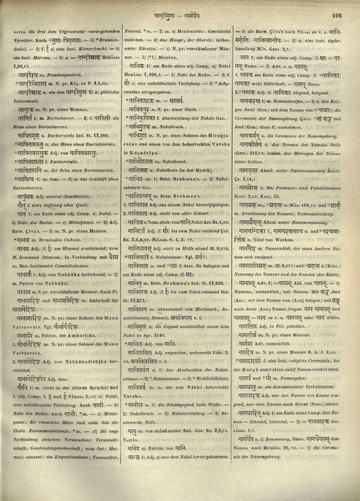
nābhi 1〉a〉 auch Nabelschnur. ˚kṛntana n. das Abschneiden d. N. GOBH. 2,7,17. [Nachtrag, Band 4]
Originaltext · Deutsch · Worttyp nicht bestimmt
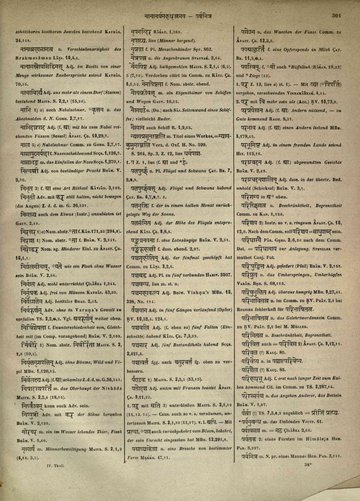
nābhi III. 4. [Nachtrag, Band 7]

Apte 1890 Substantiv Feminin · Substantiv Maskulin
Originaltext · Englisch · Substantiv Feminin · Substantiv Maskulin
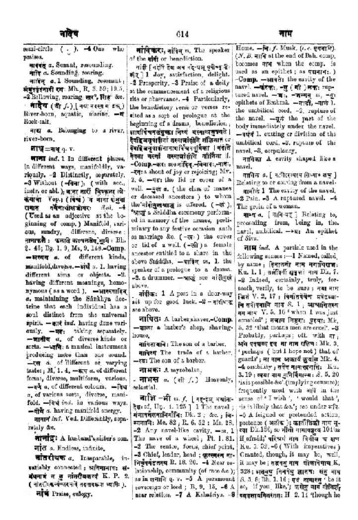
nābhi -bhī m. f. [nah-iñ bhaścāṃtādeśaḥ cf. Uṇ. 4. 125] 1 The navel; gaṃgāvartasanābhirnābhiḥ Dk. 2; &c.; nimnanābhiḥ Me. 82; R. 6. 52; Me. 28. 2 Any navel-like cavity. — m. 1 The nave of a wheel; Pt. 1. 81. 2 The centre, focus, chief point. 3 Chief, leader, head; kṛtsnasya nābhirnṛpamaṃḍalasya R. 18. 20. 4 Near relationship, community (of race &c.); as in sanābhi q. v. 5 A paramount sovereign or lord; R. 9. 15. 6 A near relation. 7 A Kṣatriya. 8 ([Page 0614-c]) Home. — bhiḥ f. Musk. (i. e. mṛganābhi). (N. B. nābhi at the end of Bah. comp. becomes nābha when the comp. is used as an epithet; as padmanābhaḥ.) Comp. — āvartaḥ the cavity of the navel. — kaṃṭakaḥ, -gu (go) lakaḥ ruptured navel. — jaḥ, -janman m., — bhūḥ epithets of Brahmā. — nāḍī, -nālaṃ 1 the umbilical cord. 2 rupture of the navel. — mūlaṃ the part of the body immediately under the navel. — vardhanaṃ 1 cutting or division of the umbilical cord. 2 rupture of the navel. 3 corpulency.
Cappeller 1887 Substantiv Feminin
Originaltext · Deutsch · Substantiv Feminin
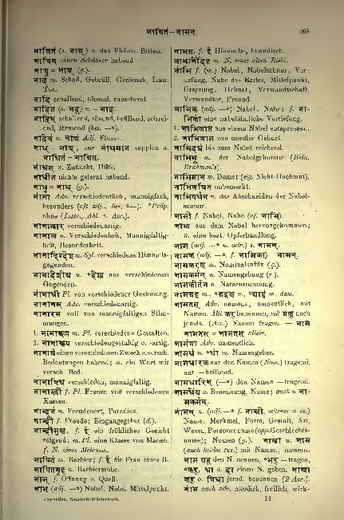
nā́bhi f. (m) Nabel, Nabelschnur, Vertiefung, Nabe des Rades, Mittelpunkt, Ursprung, Heimat, Verwandtschaft, Verwandter, Freund.
Burnouf 1866 Substantiv Feminin · Substantiv Maskulin
Originaltext · Französisch · Substantiv Feminin · Substantiv Maskulin
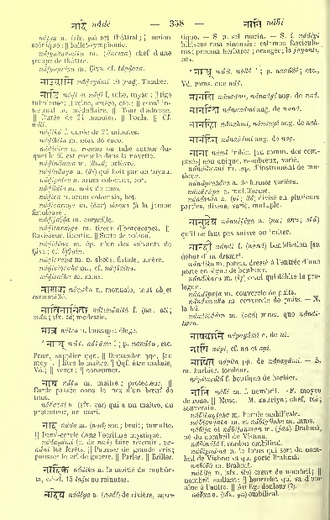
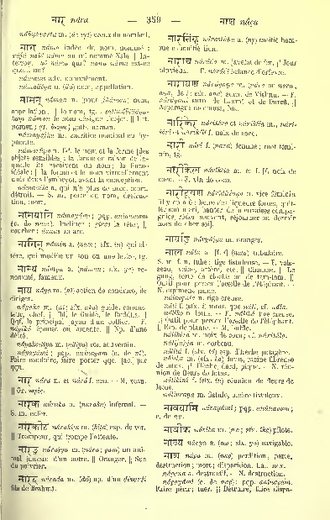
nābhi nābhi m. f. nombril. — F. moyeu de roue. Musc. — M. kṣatriya; chef, roi; souverain. nābhikaṇṭaka m. hernie ombilicale. nābhiguḍaka m. et nābhigolaka m. mms. nābhija et nābhijanman m. (jan) Brahmā, né du nombril de Viṣṇu. nābhinālā f. cordon ombilical. nābhipadma n. le lotus qui sort du nombril de Viṣṇu et qui porte Brahmā. nabhibhū m. Brahmā. nābhīla n. (sfx. ila) creux du nombril; nombril saillant; bourrelet qui va d'une aine à l'autre. Au fig. douleur (?) nābhya a. (sfx. ya) ombilical. [Page359-1] nābhyāvarta m. (ā; vṛt) creux du nombril.
Quelltextfundstellen (21)
DYS 6 Fundstellen
HP 5 Fundstellen
HTK 1 Fundstelle
HTK 10.30–33*1: Nāḍī-viśudhy-ākhyaka-kumbha und Nāḍīśuddhi 1 Fundstelle
Direkt belegt
-
HTK 10.31 Segment 5
PYS 1 Fundstelle
SiSa 7 Fundstellen
SiSa 4.72-4.77: Uḍḍyānabandha 3 Fundstellen
Direkt belegt
SVU 1 Fundstelle
Mit AYI Free weitermachen
Bildquelle: AYI Archiv.