

ūrdhva ऊर्ध्व – aufwärts gerichtet; oberer; aufrecht
Adjektiv · Adverb · Substantiv Neutrum · Worttyp nicht bestimmt
Wörterbuchquellen
AYI Wörterbuch Adjektiv
aufwärts gerichtet; oberer; aufrecht
Cappeller 1891 Adjektiv
Originaltext · Englisch · Adjektiv
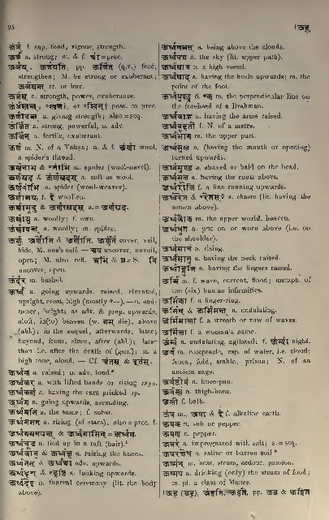
ūrdhvá ·a. going upwards, raised, elevated, upright, erect, high (mostly °--). -- n. eminence, height; as adv. & prep. upwards, aloft, in(to) heaven (w. gam die), above (abl.); in the sequel, afterwards, later; beyond, from, since, after (abl.); later than i.e. after the death of (gen.); in a high tone, aloud. -- Cf. átas & itás.
Monier-Williams 1872 Adjektiv
Originaltext · Englisch · Adjektiv
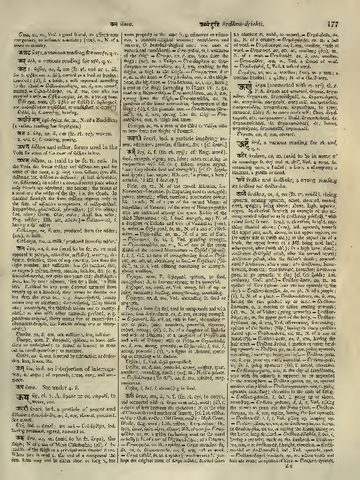
ūrdhva ūrdhva, as, ā, am (fr. rt. vṛdh), rising upwards, tending upwards, raised, elevated, erected, erect, upright; being above; above, high, superior, upper. In classical Sanskrit an example of the un- compounded adjective as in ūrdhvaiḥ pādaiḥ, ‘with raised feet,’ is rare. (am), n. elevation, height, any- thing situated above; (am), ind. upwards, towards the upper part, aloft, above, in the upper regions, on the upper side of (with abl.); in the sequel (as of a book, the upper leaves of a MS. being read last); subsequent, after (with abl.); in a high tone, aloud; ūrdhvaṃ dvitīyād acaḥ, after the second vowel; ūrdhvam pituḥ, after the father's death; saṃvat- sarād ūrdhvam, after a year; ata ūrdhvam, hence- forward, from that time forward, hereafter; ūrdhvaṃ gam, to go upwards, to die; [cf. Gr. ὀρθός; Lat. arduus; Gaël. ard.]
Petersburger 1855 Adjektiv · Adverb
Originaltext · Deutsch · Adjektiv
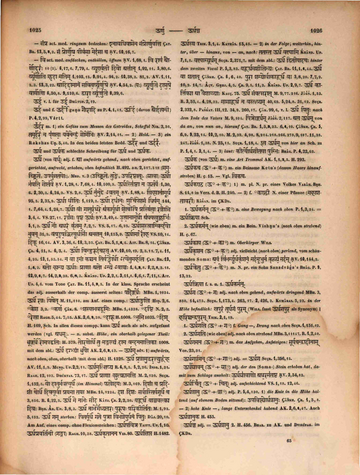
ūrdhvá (von vardh) adj. f. ā aufwärts gehend, nach oben gerichtet, aufgerichtet, aufrecht, erhoben, oben befindlich H. 492. H. an. 2,517. H. an. 2,518 (samucchrite, uparyunnatayoḥ). MED. v. 3 (ucchrite, tuṅge, upariṣṭāt). (grāvā) ū̱rdhvo bhàvati̱ sotàve ṚV. 1,28,1. ṚV. 7,68,4. ṚV. 10,100,9. ū̱rdhvastìṣṭhā na ū̱tayè ṚV. 1,30,6. ṚV. 2,30,3. ṚV. 6,24,9. VS. 2,8. ū̱rdhvaṃ nùnudre 'va̱tam ṚV. 1,88,4. ji̱hmānā̀mū̱rdhva ṚV. 95,5. ṚV. 2,35,9. ū̱rdhvā dhī̱tiḥ ṚV. 1,119,2. ū̱rdhvāṃ dadhā̀na̱ḥ śucìpeśasa̱ṃ dhiyàm ṚV. 144,1. ṚV. 7,64,4. ṚV. 1,24,7. ū̱rdhvo vāṃ gā̱turàdhva̱re àkāryū̱rdhvā śo̱cīṃṣi̱ prasthìtā̱ rajā̀ṃsi ṚV. 3,4,4. VS. 27,11. rajàsaḥ pṛ̱ṣṭa ū̱rdhvaḥ ṚV. 3,49,4. u̱ttā̱nāmū̱rdhvo àdhayajju̱hūbhìḥ ṚV. 5,1,3. ū̱rdhvaṃ nò adhva̱raṃ kṛ̀tam ṚV. 7,2,7. VS. 5,17. VS. 6,25. ū̱rdhvāsa̱stvānvindàvo bhuvan VS. 31,9. vaṣa̱ḍvaṣa̱ḻityū̱rdhvāsò anakṣan VS. 10,115,9. ū̱rdhvāmā ròha VS. 10,14. dik VS. 16,64. AV. 3,36,6. AV. 18,3,35. ŚAT. BR. 5,1,1,4. AIT. BR. 8,14. ŚĀṄKH. ŚR. 4,11,8. ŚĀṄKH. ŚR. 6,3,4. ū̱rdhvo bi̱ndurudàcarat AV. 10,10,19. AV. 10,2,3. AV. 10,10,11. AV. 10,7,4. AV. 11,4,25. AV. 13,1,53. AV. 13,1,54. na vā imāṃ kaścana tiryaṅnordhvo 'tyetumarhati ŚAT. BR. 13,1,4,2. ato hyanya ūrdhvāḥ prāṇā ato 'nye 'vāñcaḥ ŚAT. BR. 1,4,3,8. ŚAT. BR. 8,2,1,2. ŚAT. BR. 8,2,1,18. ŚAT. BR. 12,9,1,7. ŚAT. BR. 14,2,2,28. ŚAT. BR. 14,6,8,3. CHĀND. UP. 2,2,1. CHĀND. UP. 3,11,1. CHĀND. UP. 6,6,1. CHĀND. UP. 7,11,1. AIT. UP. 4,6. vom Tone ŚAT. BR. 11,4,2,5. In der klass. Sprache erscheint das adj. ausserhalb der comp. äusserst selten: pādairūrdhvaiḥ MBH. 1,1034. ūrdhvaṃ rajaḥ pivet M. 11,110. am Anf. eines comp.: ūrdhvāṅguli HIḌ. 2,6. ˚keśa HIḌ. 3,2. ˚karṇa ŚĀK. 8. ˚śasyābhavadbhūmiḥ MBH. 1,4338. ˚dṛṣṭi N. 2,3. ˚rekhā RAGH. 5,44. RAGH. 7,55. AK. 2,6,2,38. ˚dāru H. 1008. ˚bhūmi H. 1035. ˚diś H. 169, Sch. In allen diesen compp. kann ūrdhva auch als adv. aufgefasst werden (vgl. adhas). — n. subst. Höhe, ein oberhalb gelegener Theil: bhrūrūrdhve romapaddhatiḥ H. 579. toraṇordhve tu maṅgalyaṃ dāma vandanamālikā H. 1008. mit dem abl.: ūrdhve dṛgbhyāṃ bhruvau AK. 2,6,2,43. — ūrdhvam adv. 1〉 aufwärts, nach oben, oben, oberhalb (mit dem abl.) H. 1526. ū̱rdhvaṃ pra̱jāmu̱dbhara̱ntyudū̀ha AV. 11,1,9. MUṆḌ. UP. 2,2,11. ūrdhvamutkṣipya R. 4,8,5. R. 5,2,26. INDR. 1,31. RAGH. 12,103. DHŪRTAS. 73,17. ūrdhvaṃ prāṇā hyutkrāmanti M. 2,120. SUŚR. 1,152,5. yo dāturbhavatyūrdhvaṃ (im Himmel) phalodayaḥ M. 3,169. diśāṃ ca pradiśāṃ cordhvaṃ dikpūrvā prathamā tathā MBH. 14,1224. daśa diśaḥ sarvāstiryagūrdhvaṃ ca MBH. 3,856. R. 6,22,5. ūrdhvaṃ me nābheḥ sīda KĀTY. ŚR. 2,2,20. yadūrdhvaṃ yājñavalkya divaḥ BṚH. ĀR. UP. 3,8,3. ūrdhvaṃ nābhermedhyataraḥ puruṣaḥ parikīrtitaḥ M. 1,92. M. 5,132. ūrdhvaṃ gam sterben: pitaryūrdhvaṃ gate putrā vibhajeyurdhanaṃ pituḥ DĀY. 20,10. Am Anf. eines comp. ohne Flexionszeichen: ūrdhvapavitra TAITT. UP. 1,10. ūrdhvapravartinī (gaṅgā) RAGH. 10,38. ūrdhvakṛtānana VID. 80. ūrdhvakṣipta H. 1482. ūrdhvastha TRIK. 3,1,4. KATHĀS. 15,45. — 2〉 in der Folge, weiterhin, hinter, über — hinaus, von — an, nach: tatasta ūrdhvaṃ vakṣyāmi CHĀND. UP. 7,1,1. vakṣyāmyūrdhvam SUŚR. 2,371,7. mit dem abl.: ūrdhvaṃ dvitīyādacaḥ hinter dem zweiten Vocal P. 5,3,83. yadūrdhvamaśītibhyaḥ ŚAT. BR. 11,1,1,44. ūrdhvaṃ vā śatāt ŚĀṄKH. ŚR. 6,6,40. purā śamyorvākādūrdhvaṃ vā ŚĀṄKH. ŚR. 3,8,20. ŚĀṄKH. ŚR. 7,7,9. ŚĀṄKH. ŚR. 7,10,2. ŚĀṄKH. ŚR. 7,14,7. ĀŚV. GṚHY. 4,5. ŚR. 9,5. ŚR. 11,2. CHĀND. UP. 2,9,7. ūrdhvaṃ kārttikyā ā vaiśākhyāḥ KAUŚ. 75. ūrdhvaṃ saṃvatsarāt M. 9,77. M. 9,216. YĀJÑ. 1,53. R. 3,53,4. R. 4,28,32. māsādūrdhvaṃ na vastavyam R. 40,69. R. 5,24,8. R. 31,12. SUŚR. 2,332,8. PAÑCAT. III, 12. PAÑCAT. III,34,9. PAÑCAT. III,260,17. ŚĀK. 99,6, v. l. ūrdhvaṃ pituḥ nach dem Tode des Vaters M. 9,104. pitrorūrdhvam YĀJÑ. 2,117. ata ūrdhvam von da an, von nun an, hierauf ŚAT. BR. 1,5,3,23. ŚAT. BR. 1,6,1,10. ŚĀṄKH. ŚR. 5,6,9. ŚĀṄKH. ŚR. 9,23,14. ŚĀṄKH. ŚR. 10,2,10. M. 2,39. M. 4,98. M. 8,214. M. 8,218. M. 8,266. M. 8,278. M. 9,187. M. 11,98. M. 11,247. YĀJÑ. 1,38. N. 25,11. SUŚR. 1,18,4. ita ūrdhvam von hier an Sch. zu P. 1,4,1. P. 2,1,4. — 3〉 laut: kīrtyordhvagītayā pumbhiḥ BHĀG. P. 4,22,63.
Originaltext · Deutsch · Adverb
ūrdhva , ūrdhvam adv. 2〉 ūrdhvaṃ dehāt nach dem Körper so v. a. nach dem Tode MBH. 1,3606. Vgl. ūrdhvadeha, aurdhvadeha fgg. — 3〉 aufwärts so v. a. niedrig anfangend und hoch schliessend (eine Recitation) ŚAT. BR. 11,4,2,8.
Böhtlingk 1879 Adjektiv · Substantiv Neutrum
Originaltext · Deutsch · Adjektiv · Substantiv Neutrum
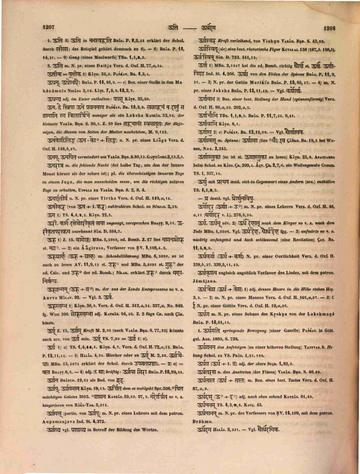
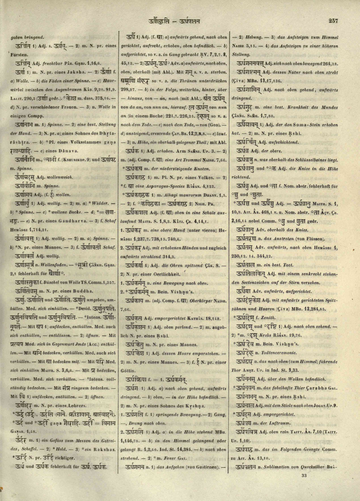
ūrdhvá — 1〉 Adj. (f. ā) — a〉 aufwärts gehend, nach oben gerichtet, aufrecht, erhoben, oben befindlich. — b〉 aufgerichtet, so v. a. in Gang gebracht ṚV. 7,2,7. 8,45,12. — 2〉 ūrdhvam, ūrdhva˚ Adv. — a〉 aufwärts, nach oben, oben, oberhalb (mit Abl.). Mit gam s. v. a. sterben. aśuṇi saṃhar so v. a. die Thränen unterdrücken Chr. 298,27. — b〉 in der Folge, weiterhin, hinter, über — hinaus, von — an, nach (mit Abl.). áta ūrdhvám von da an, von nun an, hierauf ita ūrghvam von nun an (in einem Buche) Chr. 221,7. Chr. 226,25. dehāt so v. a. nach dem Tode. — c〉 nach dem Tode, — von (Gen.) — d〉 ansteigend, crescendo ŚAT. BR. 12,2,3,8. — e〉 laut. — 3〉 n. Höhe, ein oberhalb gelegener Theil; mit Abl.
Apte 1890 Adjektiv · Substantiv Neutrum
Originaltext · Englisch · Adjektiv · Substantiv Neutrum
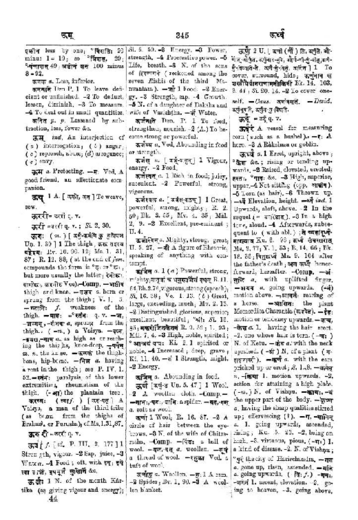
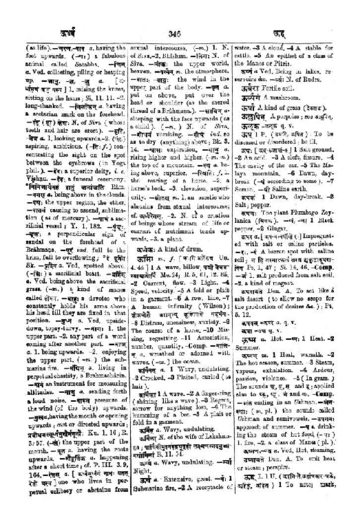
ūrdhva a. 1 Erect, upright, above; ˚keśa &c.; rising or tending upwards. 2 Raised, elevated, erected; hastaḥ, ˚pādaḥ &c. 3 High, superior, upper. 4 Not sitting (opp. āsīna). 5 Torn (as hair). 6 Thrown up. — rdhvaṃ Elevation, height. — rdhvaṃ ind. 1 Upwards, aloft, above. 2 In the sequel (= upariṣṭāt). 3 In a high tone, aloud. 4 Afterwards, subsequent to (with abl.); te tryahādūrdhvamākhyāya Ku. 6. 93; ūrdhvaṃ saṃvatsarāt Ms. 9. 77; Y. 1. 53; R. 14. 66; Bk. 18. 36; piturūrdhvaṃ Ms. 9. 104 after the father's death; ata ūrdhvaṃ henceforward, hereafter. Comp. — aṃguli a. with uplifted finger. — ayana a. going upwards. — (naṃ) motion above. — āvartaḥ rearing of a horse. — āsitaḥ the plant Momordica Charantia (kāravella). — īhaḥ motion or tendency upwards. — kaca, — keśa a. 1 having the hair erect. 2 one whose hair is torn. — (caḥ) N. of Ketu. — kaṃṭha a. with the neck upraised. — (ṭhī) N. of a plant ( mahāśatāvarī). — karṇa a. with the ears pricked up or erect; Ś. 1. 8. — karman n. — kriyā 1 motion upwards. 2 action for attaining a high place. ( — m.) N. of Viṣṇu. — kāyaḥ, -yaṃ the upper part of the body. — kṛṣṇa a. having the sharp qualities stirred up; effervescing (?). — ga, -gāmin a. 1 going upwards, ascended, rising; Ku. 5. 23. 2 being on high. 3 virtuous, pious. — (gaḥ) 1 a kind of disease. 2 N. of Viṣṇu; ˚puraṃ the city of Hariścandra. — gata a. gone up, risen, ascended. — gati a. going upwards. ( — tiḥ f.) — gamaḥ, — gamanaṃ 1 ascent, elevation. 2 going to heaven. 3 going above. ([Page 0346-a]) (as life). — caraṇa, -pāda a. having the feet upwards. — (ṇaḥ) a fabulous animal called Śarabha. — cit a. Ved. collecting, piling or heaping up. — jānu, -jña, -jñu a. [ ūrdhvamuccaṃ jānu yasya] 1 raising the knees, sitting on the hams; Śi. 11. 11. 2 long-shanked. — tilakin a. having a sectarian mark on the forehead. — daṃṣṭra(ṣṭrā)keśaḥ N. of Śiva (whose teeth and hair are erect). — dṛṣṭi, — netra a. 1 looking upwards. 2 (fig.) aspiring, ambitious. ( — ṣṭiḥ f.) concentrating the sight on the spot between the eyebrows (in Yoga phil.). — devaḥ a superior deity, i. e. Viṣṇu. — dehaḥ a funeral ceremony; ˚nimittārthamahaṃ dātuṃ jalāṃjaliṃ Rām. — nabhas a. being above in the clouds. — pathaḥ the upper region, the ether. — pātanaṃ causing to ascend, sublimation (as of mercury). — pātraṃ a sacrificial vessel; Y. 1. 182. — puṃḍraḥ, — ḍrakaḥ a perpendicular sign of sandal on the forehead of a Brāhmaṇa. — pūraṃ ind. full to the brim, full to overflowing; ˚raṃ pūryate Sk. — pṛśina a. Ved. spotted above. — (śniḥ) a sacrificial beast. — barhis a. Ved. being above the sacrificial grass. ( — m.) a kind of manes called somapa. — bāhuḥ a devotee who constantly holds his arms above his head till they are fixed in that position. — budhna a. Ved. upsidedown, topsy-turvy. — bhāgaḥ 1 the upper part. 2 any part of a word coming after another part. — bhāj a. 1 being upwards. 2 enjoying the upper part. ( — m.) the submarine fire. — maṃthin a. living in perpetual chastity, a Brahmacārin. — mānaṃ an instrument for measuring altitudes. — māyu a. sending forth a loud noise. — mārutaṃ pressure of the wind (of the body) upwards. — mukha a. having the mouth or opening upwards; cast or directed upwards; prabodhayatyūrdhvamukhairmayūkhaiḥ Ku. 1. 16; R. 3. 57. — (khaṃ) the upper part of the mouth. — mūla a. having the roots upwards. — mauhūrtika a. happening after a short time; cf. P. III. 3. 9, P. III. 3. 164. — retas a. [ūrdhvamūrdhvagaṃ nādhaḥ patat reto yasya] one who lives in perpetual celibacy or abstains from ([Page 0346-b]) sexual intercourse. ( — m.) 1 N. of Śiva. 2 Bhīṣma. — liṃgaḥ N. of Śiva. — lokaḥ the upper world, heaven. — vartman m. the atmosphere. — vātaḥ, -vāyuḥ the wind in the upper part of the body. — vṛta a. put on above, put over the head or shoulder (as the sacred thread of a Brāhmaṇa.). — śāyin a. sleeping with the face upwards (as a child). ( — m.) N. of Śiva. — śodhanaṃ vomiting. — śoṣaṃ ind. so as to dry (anything) above; Bk. 3. 14. — śvāsaḥ expiration. — sānu a. rising higher and higher. ( — m. — n.) the top of a mountain. — stha a. being above, superior. — sthitiḥ f. 1 the rearing of a horse. 2 a horse's back. 3 elevation, superiority. — srotas m. 1 an ascetic who abstains from sexual intercourse; cf. ūrdhvaretas. 2 N. of a creation of beings whose stream of life or current of nutriment tends upwards. 3 a plant.
Cappeller 1887 Worttyp nicht bestimmt
Originaltext · Deutsch · Worttyp nicht bestimmt
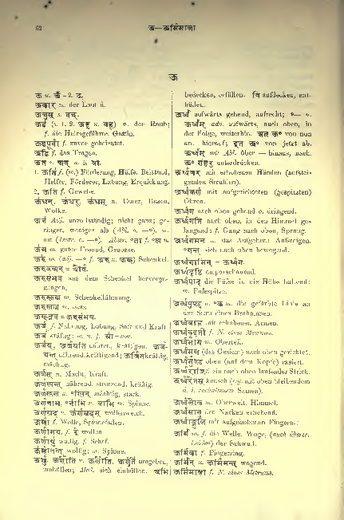
ūrdhvá aufwärts gehend, aufrecht; ˚— u. ūdhrvam adv. aufwärts, nach oben, in der Folge, weiterhin. ata ū˚ von nun an, hierauf; ita ū˚ von jetzt ab. ūrdhvam mit Abl. über — hinaus, nach. ū˚ saṃhar unterdrücken.
Quelltextfundstellen (29)
AsS1 2 Fundstellen
Ūrdhva Mukha Paścimottānāsana 1 Fundstelle
Direkt belegt
-
AsS1 UrdhvaMukhaPashchimottanasana Segment 1
DYS 2 Fundstellen
GoS 7 Fundstellen
HP 8 Fundstellen
HP 3.33-3.48*1: Khecarī und Soma 3 Fundstellen
Direkt belegt
-
HP 3.34*1–34*2 Segment 19
-
HP 3.40 Segment 1
-
HP 3.46 Segment 9
SiSa 6 Fundstellen
SVU 1 Fundstelle
Mit AYI Free weitermachen
Bildquelle: AYI Archiv.