

deśa देश – place
substantive masculine · substantive neuter · Word type unspecified
Dictionary sources
AYI dictionary substantive masculine · substantive neuter
substantive masculine
place
Derived from
substantive neuter
region; place
Cappeller 1891 substantive masculine
Original text · English · substantive masculine
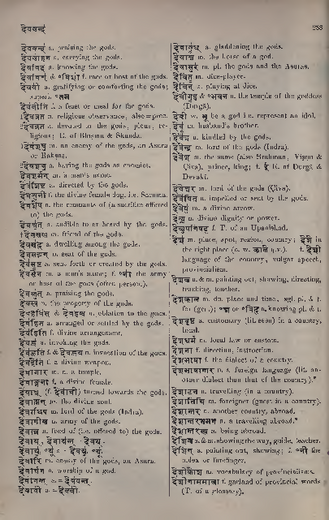
deśá ·m. place, spot, region, country; deśe in the right place (o. w. kāle q.v.). --f. deśī language of the country, vulgar speech, provincialism.
Monier-Williams 1872 substantive masculine
Original text · English · substantive masculine
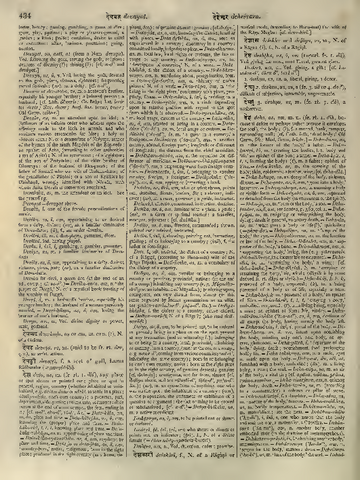
deśa deśa, as, m. (fr. rt. 1. diś), any place or spot shown or pointed out; place or spot in general, region, country (whether inhabited or unin- habited, e. g. deśam āvas or niviś, to settle in a place; ātmīya-deśa, one's own country); a province, part, department, side, portion; an institute, ordinance; deśa occurs at the end of some comps., the fem. ending in ā; [cf. a-d˚, eka-d˚, vi-d˚, &c.]
Petersburger 1855 substantive masculine · Word type unspecified
Original text · German · substantive masculine
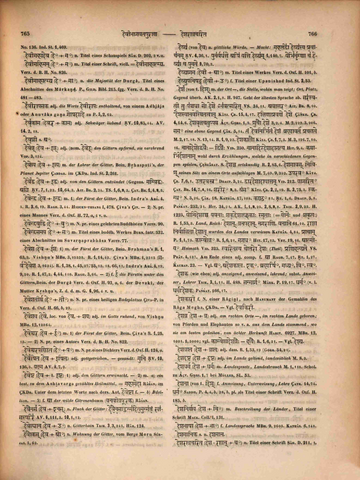
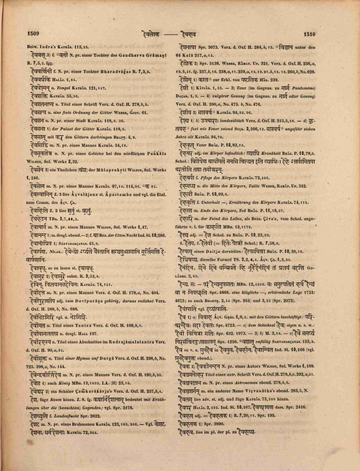
deśá (von 1. diś) m. der Ort —, die Stelle, wohin man zeigt; Ort, Platz, Gegend überh. AK. 2,1,8. H. 947. Geht der ältesten Sprache ab. saràsvatī̱ tu pàñca̱dhā so de̱śe 'bhàvatsa̱rit VS. 34,11. avāntara˚ AIT. BR. 8,10. deśasyānavasthitatvāt KĀTY. ŚR. 15,4,17. dakṣiṇāpravaṇe deśe ŚĀṄKH. ŚR. 4,14,6. deśavṛkṣacatuṣpatha ĀŚV. GṚHY. 1,9. śucau deśe ĀŚV. GṚHY. 3,2. ĀŚV. GṚHY. 3,4. M. 2,222. M. 3,206. sama˚ eine ebene Gegend ŚĀK. 5,14. taṃ devanirmitaṃ deśaṃ brahmāvartaṃ pracakṣate M. 2,17. M. 2,18. N. 13,14. R. 1,9,23. deśakālau KĀTY. ŚR. 1,7,5. M. 3,126. M. 7,10. M. 7,16. nānādeśodbhavaiḥ — dvijaiḥ VID. 250. nānādigdeśādāgatya HIT. 9,4. kathābhirdeśānām wohl durch Erzählungen, welche in verschiedenen Gegenpen spielen, ŚṚṄGĀRAT. 8. deśajña ortskundig R. 2,85,6. deśamāvas, niviś seinen Sitz an einem Orte aufschlagen M. 7,69. M. 9,252. uparava˚ KĀTY. ŚR. 7,6,1. uttaravastra˚ DRAUP. 5,24. dvāradeśādāyāntam VID. 212. jāgarita˚ ŚAT. BR. 14,7,1,16. śarīra˚ ŚAT. BR. 14,7,2,3. aṃsa˚ KĀTY. ŚR. 2,2,19. R. 3,75,5. skandha˚ N. 5,26. ŚĀK. 18. KATHĀS. 17,108. kaṇṭha˚ KATHĀS. 81. ṚT. 1,6. DRAUP. 5,8. PAÑCAT. 252,21. HIT. 34,21. AK. 1,1,2,25. AK. 2,8,2,8. TRIK. 2,9,22. H. 1225. yonideśācca yavanāḥ śakṛddeśācchakāḥ smṛtāḥ (= yoneḥ und śakṛtaḥ) R. 1,55,3. Land, Reich: deśān, janapadān, nagarāṇi, vanāni R. 1,61,10. rājñā nirvāsitā deśāt wurden des Landes verwiesen KATHĀS. 4,84. prācām P. 1,1,75. kāmboja˚ R. 1,6,21. magadha˚ HIT. 17,13. VET. 19,16. ātmīya˚ Heimath VID. 325. svaritasya cottaro deśaḥ (Theil) praṇihanyate VS. PRĀT. 4,137. Am Ende eines adj. comp. f. ā RAGH. 7,47. ṚT. 1,27. CAURAP. 23. — Vgl. a˚, adeśakāla, eka˚, brahmarṣi˚, madhya˚, vi˚, sva˚.
Original text · German · substantive masculine
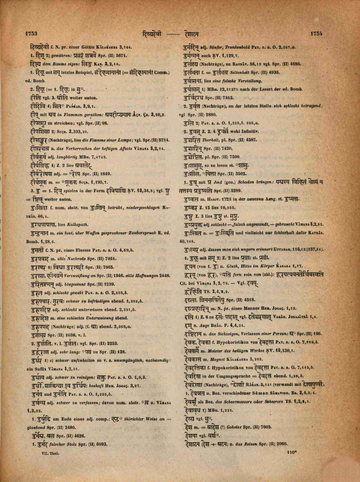
deśa m. = ādeśa (?) Geheiss Spr. (II) 7005.
Original text · German · Word type unspecified
deśa , füge Raum hinzu. Z. 8. fg. kathābhirdeśānām bedeutet mit Erzählungen über die (besuchten) Gegenden; vgl. Spr. 3178.
Böhtlingk 1879 substantive masculine
Original text · German · substantive masculine
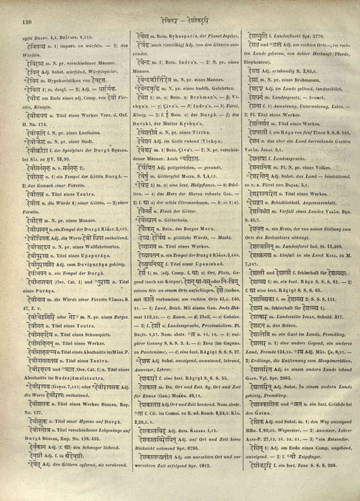
deśá — 1〉 m. (adj. Comp. f. ā) — a〉 Ort, Platz, Gegend (auch am Körper). deśam ā-vas oder ni-viś seinen Sitz an einem Orte aufschlagen. deśe (insbes. mit kāle verbunden) am rechten Orte Chr. 45,4. Chr. 140,31. — b〉 Land, Reich. Mit einem Gen. Jmds Heimat Chr. 113,28. — c〉 Raum. — d〉 Theil. — e〉 Geheiss. — 2〉 f. deśī — a〉 Landessprache, Provincialism. Pl. DEŚĪN. 1,37. Nom. abstr. ˚tva n. Chr. 15,18. — b〉 vulgärer Gesang S. S. S. 3. 4. — c〉 Tanz (im Gegens. zu Pantomime). — d〉 eine best. Rāgiṇī S. S. S. 37.
Apte 1890 substantive masculine
Original text · English · substantive masculine
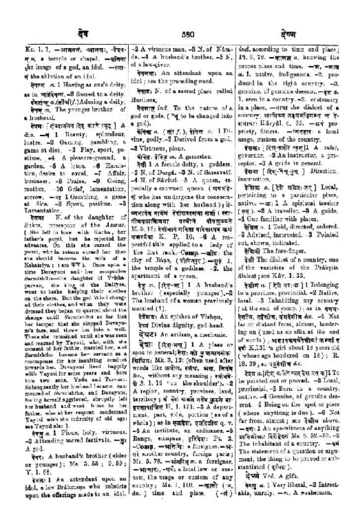
deśaḥ [diś-ac] 1 A place or spot in general; deśaḥ ko nujalāvaseka śithilaḥ Mk. 3. 12; (often used after words like kapola, skaṃdha, aṃsa, nitaṃba &c., without any meaning; skaṃdhadeśe Ś. 1. 19 ‘on the shoulder’). 2 A region, country, province, land, territory; yaṃ deśaṃ śrayate tameva kurute bāhupratāpārjitaṃ H. 1. 171. 3 A department, part, side, portion (as of a whole); as in ekadeśa, ekadeśīya q. v. 4 An institute, an ordinance. 5 Range, compass; dṛṣṭideśaḥ Pt. 2. Comp. — atithiḥ a foreigner. — aṃtaraṃ another country, foreign parts; Ms. 5. 78. — aṃtarin m. a foreigner. — ācāraḥ, -dharmaḥ a local law or custom, the usage or custom of any country; Ms. 1. 118. — kālau (m. du.) time and place. — (laṃ) ([Page 0580-c]) ind. according to time and place; Pt. 2. 72. — kālajña a. knowing the proper place and time. — ja, -jāta a. 1 native, indigenous. 2 produced in the right country. 3 genuine, of genuine descent. — dṛṣṭa a. 1 seen in a country. 2 customary in a place. — bhāṣā the dialect of a country; ālocya lakṣyamadhigamya ca deśabhāṣāḥ Kāvyāl. 4. 35. — rūpaṃ propriety, fitness. — vyavahāraḥ a local usage, custom of the country.
Cappeller 1887 substantive masculine
Original text · German · substantive masculine
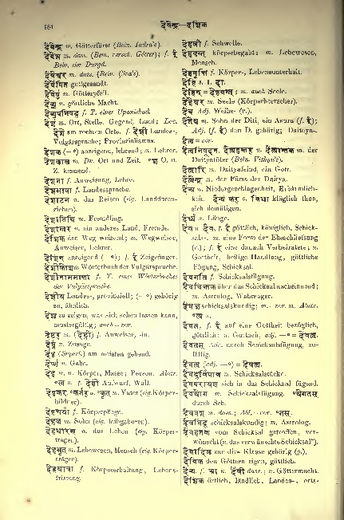
deśá m. Ort, Stelle, Gegend, Land; Loc. deśe am rechten Orte. f. deśī Landes-, Vulgärsprache; Provinzialismus.
Burnouf 1866 substantive masculine
Original text · French · substantive masculine
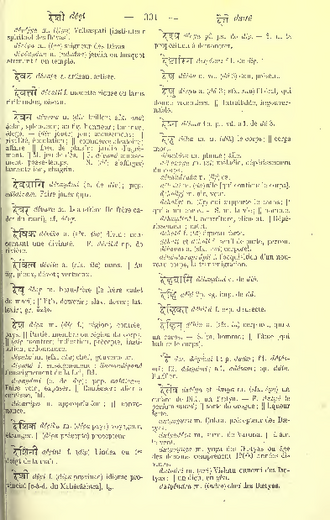
deśa deśa m. (diś f.) région; contrée, pays. Partie, membre ou région du corps. (diś montrer) indication, précepte, institution, ordonnance. deśaka m. (sfx. aka) chef, gouverneur. deśanā f. enseignement: dharmadeśanā l'enseignement de la Loi, Bd. deśayāmi (c. de diś); pqp. adīdiśam. Faire voir, exposer. Confesser; aller à confesse, Bd. deśarūpa n. appropriation; convenance.
Occurrences in source texts (25)
DYS 1 occurrence
GoS 2 occurrences
HP 3 occurrences
HTK 1 occurrence
HTK 10.26–29*1: Cakra, Śaṅkha, Vāmāvartta, Vartmagati and Gadā 1 occurrence
Direct occurrences
-
HTK 10.27 Segment 22
PYS 5 occurrences
SiSa 7 occurrences
1 more source page
VBT 6 occurrences
Continue with AYI Free
Image source: AYI archive.