

cakra चक्र – center; wheel; circle; assembly
substantive masculine · substantive neuter
Dictionary sources
AYI dictionary substantive neuter
center; wheel; circle; assembly
Cappeller 1891 substantive masculine · substantive neuter
Original text · English · substantive masculine · substantive neuter
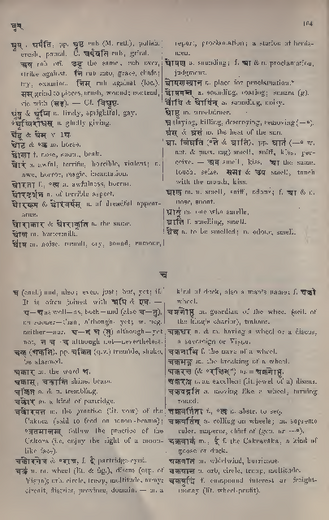
cakrá ·n. m. wheel (lit. & fig.), discus (esp. of Viṣṇu); orb, circle; troop, multitude, army; circuit, district, province, domain. --m. a kind of duck, also a man's name; f. cakrī́ wheel.
Monier-Williams 1872 substantive neuter
Original text · English · substantive neuter
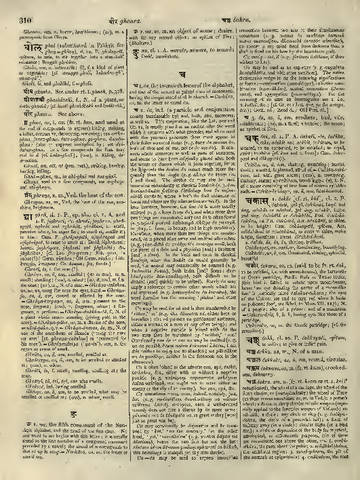
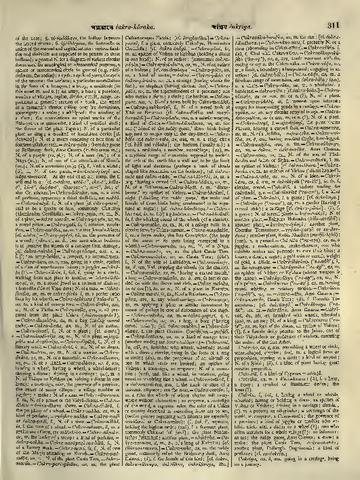
cakra cakra, am, n. (fr. rt. kram or rt. 1. kṛ? reduplicated), the wheel of a carriage, the wheel of the Sun's chariot, or (metaphorically) the wheel of Time (in these senses sometimes as, m. in Ved.); a potter's wheel; a discus or sharp circular missile weapon (espe- cially applied to the favourite weapon of Viṣṇu); an oil-mill; a circle; any circle or ring (e. g. kalāpa- cakra, the circle of a peacock's tail); a form of military array (in a circle); circular flight (of a bird &c.); a circle or depression of the body for mystical, astrological, or chiromantic purposes, (six of these are enumerated one above the other, viz. 1. mūlā- dhāra, the parts about the pubis; 2. svādhiṣṭhāna, the umbilical region; 3. maṇi-pūram, the pit of the stomach or epigastrium; 4. anāhatam, the root of the nose; 5. vi-śuddham, the hollow between the frontal sinuses; 6. ājñākhyam, the fontenelle or union of the coronal and sagittal sutures: various facul- ties and divinities are supposed to be present in these hollows); a general N. for a diagram of various circular forms used for astrological or astronomical purposes, a sphere or astronomical circle in general (e. g. rāśi- cakram, the zodiac); a cycle, a cycle of years, the cycle of the seasons; the horizon; a particular constellation in the form of a hexagon; a troop, a multitude (in this sense m. and n.); an army, a host; a province, number of villages, region, district, circuit; range, de- partment in general; section of a book; the wheel of a monarch's chariot rolling over his dominions, sovereignty; a realm; a whirlpool; the winding of a river; the convolutions or spiral marks of the Śāla-grāma or ammonite, a kind of petrified shell; the flower of the plant Tagara; N. of a particular plant or drug; a crooked or fraudulent device [cf. cakrikā]; N. of a metre consisting of four lines of fourteen syllables each, = cakra-pāta; the ruddy goose or Brāhmany duck, Anas Casarca (in this sense m.); N. of a people (m. pl.); N. of a man (m.); of a Nāga (m.); N. of one of the attendants of Skanda (m.); N. of a mountain (m.); (ī), f., Ved. a wheel; (ā), f., N. of two plants, = karkaṭa-śṛṅgī and nāgara-mustā. At the end of an adj. comp. the f. will end in ā; [cf. a-cakra, uccā-c˚, eka-c˚, kāla- c˚, kū-c˚, daṇḍa-c˚, dharma-c˚, sa-c˚, &c.; cf. also Gr. κύκλος.]
Petersburger 1855 substantive masculine · substantive neuter
Original text · German · substantive masculine · substantive neuter
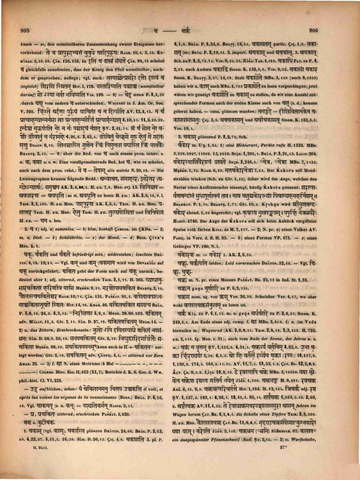
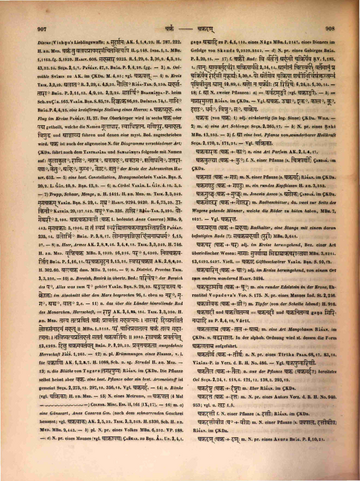
cakrá KĀŚ._zu_P. 6,1,12. m.n. gaṇa ardharcādi zu P. 2,4,31. SIDDH. K. 249,b. 4. Am Ende eines adj. comp. f. ā MBH. 3,640. 1〉 n. (im Veda bisweilen m.) Wagenrad (AK. 2,8,2,24. TRIK. 2,8,48. TRIK. 3,3,349. H. 755. H. an. 2,415. fg. MED. r. 31), auch vom Rade der Sonne, des Jahres u. s. w.: ca̱kraṃ na vṛ̱ttam ṚV. 1,155,6. ṚV. 4,31,4. ca̱krasyà varta̱nim ṚV. 8,52,8. u̱bhā ca̱krā hìra̱ṇyayā̀ ṚV. 5,29. ṚV. 4,1,3. o hi vartànte̱ rathyèva ca̱krā (rāyaḥ) ṚV. 10,117,5. ṚV. 1,130,9. ṚV. 1,174,5. ṚV. 1,164,2. ṚV. 1,130,11. ṚV. 1,130,14. AV. 11,7,4. AV. 19,53,1. AV. 19,53,2. ŚAT. BR. 12,2,2,2. ĀŚV. ŚR. 9,3. ĀŚV. ŚR. 9,9. LĀṬY. 10,5,13. dve rathasyāpi cakre MBH. 3,10659. yathā hyekena cakreṇa rathasya gatirna bhavet YĀJÑ. 1,350. cakrabhaṅga M. 8,291. rathacakra ARJ. 6,15. ARJ. 9,8. cakravatparivartante HIT. I, 164. M. 12,124. tricakrá adj. ratha ṚV. 1,157,3. ṚV. 1,183,1. ṚV. 4,36,1. ṚV. 10,41,1. ṚV. 10,85,14. saptácakra ṚV. 1,164,3. ṚV. 1,164,12. ṚV. 2,40,3. aṣṭā́cakra AV. 11,4,22. te devāścakramacarañchālāmasurā āsan fuhren im Wagen herum ŚAT. BR. 6,1,1,1. die Scheibe eines Töpfers TRIK. 3,3,350. H. an. MED. kaulālacakra ŚAT. BR. 11,8,1,1. mṛddaṇḍacakrasaṃyogātkumbhakāro yathā ghaṭam . karoti YĀJÑ. 3,146. cakrabhrama (˚bhrami) SĀṂKHYAK. 67. kalāpa˚ ein ausgespannter Pfauenschweif (Rad) ṚT. 2,14. — 2〉 n. Wurfscheibe, Discus (Viṣṇuʼs Lieblingswaffe; s. sudarśana) AK. 1,1,1,23. H. 787. H. 222. H. an. MED. cakraṃ tu valayaprāyamarasaṃcitamityapi H. ś. 148. INDR. 1,5. MBH. 1,1163. fg. MBH. 5,1939. HARIV. 608. sahasrāra HARIV. 9325. R. 1,29,6. R. 3,36,9. R. 4,5,25. R. 4,43,33. R. 4,5,34. SUŚR. 2,1,7. PAÑCAT. 47,5. BHĀG. P. 9,4,28. fgg. — 3〉 n. Oelmühle SVĀMIN_zu_AK._im_ŚKDR. M. 4,85; vgl. cakravant. — 4〉 n. Kreis TRIK. 3,2,29. alāta˚ R. 3,29,4. R. 4,5,25. mauli˚ RĀJA-TAR. 5,230. graharkṣatārā˚ BHĀG. P. 3,11,13. BHĀG. P. 4,9,20. BHĀG. P. 2,2,24. saptarṣi˚ BRAHMĀṆḌA-P. beim Sch. zu ŚĀK. 165. VARĀH. BṚH. S. 85,78. dikcakra VARĀH. BṚH. S. 86,99. DHŪRTAS. 74,1. nābhi˚ BHĀG. P. 4,4,25. eine kreisförmige Stellung eines Heeres; s. cakravyūha. ein Flug im Kreise PAÑCAT. II, 57. Der Oberkörper wird in sechs cakra oder padma getheilt, welche die Namen mūlādhāra, svādhiṣṭhāna, maṇipūra, anāhata, viśuddha und ājñākhya führen und denen eine myst. Bed. zugeschrieben wird. cakra ist auch der allgemeine N. für Diagramme verschiedener Art; ŚKDR. führt nach dem TANTRASĀRA und SAMAYĀMṚTA folgende mit Namen auf: kulākula˚, rāśi˚, nakṣatra˚, akathaha˚, akaḍama˚, ṛṇighani˚, uttarāyaṇa˚, ketu˚, ahi˚, kumbha˚, koṭa˚. ṛtu˚ der Kreis der Jahreszeiten HARIV. 652. — 5〉 eine best. Constellation, Hexagonalschein VARĀH. BṚH. S. 20,2. L. JĀT. 10,9. BṚH. 12,9. — 6〉 n. Cirkel VARĀH. L. JĀT. 4. VARĀH. L. JĀT. 10. VARĀH. L. JĀT. 5,5. — 7〉 Trupp, Schaar, Menge, n. H. 1411. H. an. MED. m. TRIK. 3,3,349. mṛgacakram VARĀH. BṚH. S. 29,4. gṛdhra˚ HARIV. 9294. HARIV. 9420. R. 6,75,39. ḍākinī˚ KATHĀS. 20,137. KATHĀS. 20,142. badhū˚ VID. 326. tantri˚ RĀJA-TAR. 5,295. yogeśvarī˚ RĀJA-TAR. 2,108. cakracakrāvalī (cakra 1. bedeutet Anas Casarca) MBH. 9,443. mṛgacakrāḥ MBH. 5,1906. saṃ taṃ svapnaṃ smaraṃścintācakramārūḍhastiṣṭhati PAÑCAT. 235,14. jalormi˚ BHĀG. P. 3,8,17. lobhānṛtajihmahiṃsanādyadharma˚ BHĀG. P. 1,15,37. — 8〉 n. Heer, Armee AK. 2,8,2,46. AK. 3,4,1,18. TRIK. 3,3,349. H. 746. H. an. MED. vṛṣṇicakra MBH. 5,1939. MBH. 16,216. para˚ MBH. 1,6209. nijacakravartita BHĀG. P. 1,16,11. paracakrasūdana BHĀG. P. 9,15,31. svaparacakraja AK. 2,8,1,30. H. 302. H. 60. balacakra dass. MBH. 2,1060. — 9〉 n. District, Provinz TRIK. 3,3,350. — 10〉 n. Bereich, Bezirk in übertr. Bed.: pariveṣa˚ der Bereich des pa˚, Alles was zum pa˚ gehört VARĀH. BṚH. S. 29,33. aṅgārakasya cakroktaḥ im Abschnitt über den Mars besprochen VARĀH. BṚH. S. 96,1. eben so nara˚, mṛga˚, aśva˚, vāta˚ 2,e. — 11〉 n. das über die Länder hinrollende Rad des Monarchen, Herrschaft, = rāṣṭra AK. 3,4,25,184. TRIK. 3,3,350. H. an. MED. tasya tatprathitaṃ cakraṃ prāvartata mahātmanaḥ . bhāsvaraṃ divyamajitaṃ lokasaṃnādanaṃ mahat .. MBH. 1,3118. paraṃ cābhiprayātasya cakraṃ tasya mahātmanaḥ . bhaviṣyatyapratihataṃ satataṃ cakravartinaḥ .. MBH. 1,2983. rājacakraṃ pravartayet MBH. 13,4262. dikṣu cakramavartayat BHĀG. P. 9,20,32. pravṛttacakratā ausgedehnte Herrschaft YĀJÑ. 1,265. — 12〉 n. pl. Krümmungen eines Flusses, v. l. für vakrāṇi AK. 1,2,3,7. H. 1088, Sch. n. sg. Strudel H. an. MED. — 13〉 n. die Blüthe von Tagara (tagarapuṣpa) RĀJAN._im_ŚKDR. Die Pflanze selbst heisst aber vakra. eine best. Pflanze oder ein best. Arzeneistoff ist gemeint SUŚR. 2,275,12. SUŚR. 2,297,10. SUŚR. 2,356,18. Vgl. cakramarda. — 14〉 n. Ränke (vgl. cakrikā) H. an. MED. — 15〉 N. eines Metrums, = cakrapāta (4 Mal – ⏑ ⏑ ⏑ ⏑ ⏑ ⏑ ⏑ ⏑ ⏑ ⏑ ⏑ ⏑ –) COLEBR. Misc. Ess. II, 161 (COLEBR. Misc. Ess. IX, 17). — 16〉 m. a〉 eine Gänseart, Anas Casarca Gm. (nach dem schnarrenden Geschrei benannt; vgl. cakravāka) AK. 2,5,22. TRIK. 3,3,349. H. 1330, Sch. H. an. MED. MBH. 9,443. — b〉 pl. N. pr. eines Volkes MBH. 6,352. VP. 188. — c〉 N. pr. eines Mannes (vgl. cākrāyaṇa) ŚAṂK._zu_BṚH. ĀR. UP. 3,4,1. gaṇa aśvādi zu P. 4,1,110. eines Nāga MBH. 1,2147. eines Dieners im Gefolge von Skanda MBH. 9,2539. MBH. 9,2542. — d〉 N. pr. eines Gebirges BHĀG. P. 5,20,15. — 17〉 f. cakrī́ Rad: vi vàrtete̱ ahànī ca̱kriyèva ṚV. 1,185,1. (yān) ā̱va̱varta̱davàrāṃ ca̱kriyāvàse ṚV. 2,34,14. aśmā̀naṃ citsva̱ryaṃ1̱̀ vartàmāna̱ṃ pra ca̱kriyèva̱ rodàsī ma̱rudbhyàḥ ṚV. 5,30,8. yo akṣèṇeva ca̱kriyā̱ śacī̀bhi̱rviṣvàkta̱stambhà pṛthi̱vīmu̱ta dyām ṚV. 10,89,4. akṣo̱ na ca̱kryòḥ (pra ririce) ṚV. 6,24,3. ṚV. 1,30,14. — 18〉 f. ā N. zweier Pflanzen: a〉 = karkaṭaśṛṅgī (vgl. cakrāṅgī). — b〉 = nāgaramustā RĀJAN._im_ŚKDR. — Vgl. acakra, uccā˚, eka˚, kāla˚, kū˚, daṇḍa˚, dharma˚, viṣṇu˚, sa˚, cākreya.
Original text · German · substantive neuter
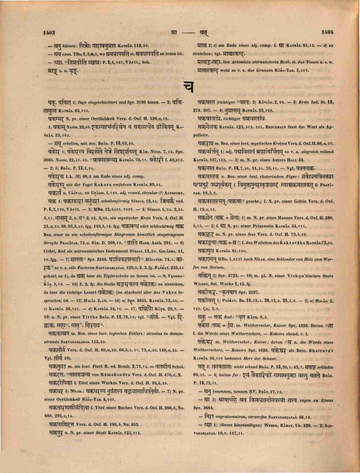
cakra 1〉 cakrākārā vasuṃdharā scheibenförmig SŪRYAS. 12,54. tricakrá ved. P. 6,2,199, Vārtt. — 3〉 MBH. 12,6481. MBH. 12,7697. — 4〉 SŪRYAS. 1,54. SŪRYAS. 2,54. SŪRYAS. 3,11. bhānām SŪRYAS. 3,9. bha˚ SŪRYAS. 2,46. SŪRYAS. 3,50. ein mystischer Kreis Verz. d. Oxf. H. 24,a,25. fgg. Verz. d. Oxf. H. 24,a,88. Verz. d. Oxf. H. 95,b,40. fgg. Verz. d. Oxf. H. 149,b,16. fgg. cakrabandha oder schlechtweg cakra Bez. einer in ein scheibenförmiges Diagramm künstlich eingetragenen Strophe PRATĀPAR. 73,a. SĀH. D. 268,13. ˚jāti HAEB. Anth. 291. — 6〉 Cirkel, Rad als astronomisches Instrument SŪRYAS. 13,20. GOLĀDHY. 11,10. fgg. — 7〉 sāmanta˚ Spr. 3246. ṣaḍadhikadaśanāḍī˚ MĀLATĪM. 74,4. kāraka˚ so v. a. alle Factoren SARVADARŚANAS. 120,3. Z. 5. fg. PAÑCAT. 235,14 gehört zu 1〉, da cakra hier als Töpferscheibe zu fassen ist. — 8〉 VṚDDHACĀṆ. 3,19. — 10〉 Z. 2. fg. die Stelle aṅgārakasya cakroktaḥ zu streichen, da hier die richtige Lesart vakroktaḥ (im Abschnitt über das Vakra besprochen) ist. — 12〉 HALĀY. 3,49. — 16〉a〉 Spr. 3655. KATHĀS. 72,40. — c〉 KATHĀS. 56,141. — d〉 KATHĀS. 54,16. — 17〉 cakriyau KĀṬH. 29,7. — 19〉 n. N. pr. eines Tīrtha BHĀG. P. 10,78,19; vgl. ˚tīrtha. — Vgl. dikcakra, mahā˚, mātṛ˚, hiraṇya˚.
Böhtlingk 1879 substantive masculine · substantive neuter
Original text · German · substantive masculine · substantive neuter
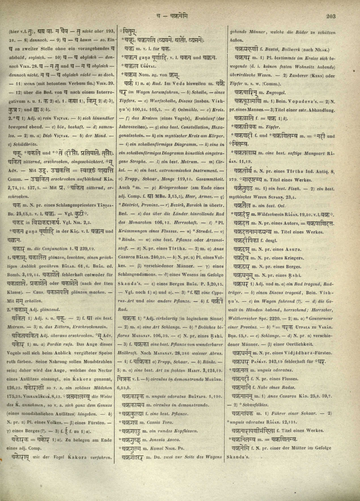
cakrá — 1〉 n. — a〉 Rad. Im Veda bisweilen m. cakráṃ car im Wagen herumfahren. — b〉 Scheibe, — eines Töpfers. — c〉 Wurfscheibe, Discus (insbes. Viṣṇuʼs). Chr. 108,24. Chr. 105,5. — d〉 Oelmühle. — e〉 Kreis. — f〉 das Kreisen (eines Vogels), Kreislauf (der Jahreszeiten). — g〉 eine best. Constellation, Hexagonalschein. — h〉 ein mystischer Kreis am Körper. — i〉 ein scheibenförmiges Diagramm. — k〉 eine in ein scheibenförmiges Diagramm künstlich eingetragene Strophe. — l〉 ein best. Metrum. — m〉 Zirkel. — n〉 ein best. astronomisches Instrument. — o〉 Trupp, Schaar, Menge Chr. 119,10. Gesammtheit. Auch *m. — p〉 Kriegerschaar (am Ende eines adj. Comp. f. ā MBH. 3,15,5), Heer, Armee. — q〉 *District, Provinz. — r〉 Bezirk, Bereich in übertr. Bed. — s〉 das über die Länder hinrollende Rad des Monarchen Chr. 106,12. Herrschaft. — t〉 *Pl. Krümmungen eines Flusses. — u〉 *Strudel. — v〉 *Ränke. — w〉 eine best. Pflanze oder Arzeneistoff. — x〉 N. pr. eines Tīrtha. — 2〉 m. — a〉 Anas casarca BĀLAR. 240,20. — b〉 N. pr. — α〉 Pl. eines Volkes. — β〉 verschiedener Männer. — γ〉 eines Schlangendämons. — δ〉 eines Wesens im Gefolge Skandaʼs. — ε〉 eines Berges BHĀG. P. 5,20,15. Vgl. noch 1〉a〉 und o〉. — 3〉 *f. ā eine Cyperus-Art und eines andere Pflanze. — 4〉 f. cakrī́ Rad.
Apte 1890 substantive masculine · substantive neuter
Original text · English · substantive masculine · substantive neuter
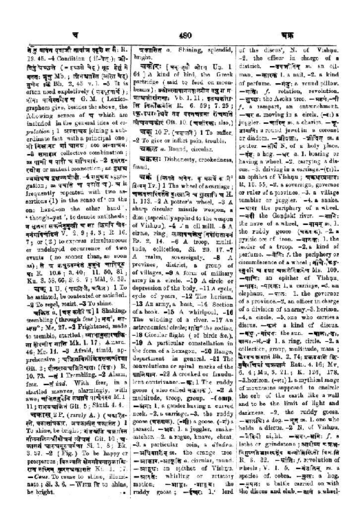
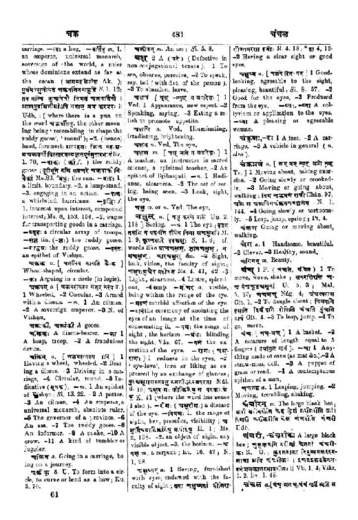
cakraṃ [kriyate anena, kṛ ghañarthe ka ni˚ dvitvam Tv.] 1 The wheel of a carriage; cakravatparivartaṃte duḥkhāni ca sukhāni ca H. 1. 173. 2 A potter's wheel. 3 A sharp circular missile weapon, a disc (especially applied to the weapon of Viṣṇu). 4 An oil mill. 5 A circle, ring; kalāpacakreṣu niveśitānanaṃ Rs. 2. 14. 6 A troop, multitude, collection, Śi. 20. 17. 7 A realm, sovereignty. 8 A province, district, a group of of villages. 9 A form of military array in a circle. 10 A circle or depression of the body. 11 A cycle, cycle of years. 12 The horizon. 13 An army, a host. 14 Section of a book. 15 A whirlpool. 16 The winding of a river. 17 An astronomical circle; rāśi˚ the zodiac. 18 Circular flight (of birds &c.). 19 A particular constellation in the form of a hexagon. 20 Range, department in general. 21 The convolutions or spiral marks of the śāligrāma. 22 A crooked or fraudulent contrivance. — kraḥ 1 The ruddy goose (also called cakravāka). 2 A multitude, troop, group. Comp. — aṃgaḥ 1 a gander having a curved neck. 2 a carriage. 3 the ruddy goose (cakravāka). — (gī) a goose. — (gaṃ) a parasol. — aṭaḥ 1 a juggler, snakecatcher. 2 a rogue, knave, cheat. 3 a particular coin, a dīnāra. — adhivāsin m. the orange tree — ākāra, -ākṛti a. circular, round. — āyudhaḥ an epithet of Viṣṇu. — āvartaḥ whirling or rotatory motion. — āhvaḥ, -āhvayaḥ the ruddy goose; — īśvaraḥ 1 ‘lord ([Page 0480-c]) of the discus’, N. of Viṣṇu. 2 the officer in charge of a district. — upajīvin m. an oilman. — kārakaṃ 1 a nail. 2 a kind of perfume. — gaṃḍuḥ a round pillow. — gatiḥ f. rotation, revolution. — gucchaḥ the Aśoka tree. — grahaṇaṃ, -ṇī f. a rampart, an entrenchment. — cara a. moving in a circle. — (raḥ) a juggler. — cārin m. a chariot. — cūḍāmaṇiḥ a round jewel in a coronet or diadem. — jīvakaḥ, -jīvin m. a potter. — tīrthaṃ N. of a holy place. — daṃṣṭraḥ a hog. — dhara a. 1 bearing or having a wheel. 2 carrying a discus. 3 driving in a carriage. — (raḥ) 1 an epithet of Viṣṇu; cakradharaprabhāvaḥ R. 16. 55. 2 a sovereign, governor or ruler of a province. 3 a village tumbler or juggler. 4 a snake. — dhārā the periphery of a wheel. — nadī the Gaṇḍakī river. — nābhiḥ the nave of a wheel. — nāman m. 1 the ruddy goose (cakravāka). 2 a pyritic ore of iron. — nāyakaḥ 1 the leader of a troop. 2 a kind of perfume. — nemiḥ f. the periphery or circumference of a wheel; nīcairgacchavyupari ca daśā cakranemikrameṇa Me. 109. — pāṇiḥ an epithet of Viṣṇu. — pādaḥ, -pādakaḥ 1 a carriage. 2 an elephant. — pālaḥ 1 the governor of a province. 2 an officer in charge of a division of an army. 3 horizon. 4 a circle. 5 one who carries a discus. — phalaṃ a kind of discus. — baṃdhuḥ, -bāṃdhavaḥ the sun. — bālaḥ, -ḍaḥ, vālaḥ, -laṃ, -ḍaṃ 1 a ring, circle. 2 a collection, group, multitude, mass; kairavacakravālaṃ Bh. 2. 74; prakaṭayasi kimuccairarciṣāṃ cakravālaṃ Ratn. 4. 16; Mv. 6. 4; Mu. 3. 21.; K. 126, K. 178. 3 horizon. — (laḥ) 1 a mythical range of mountains supposed to encircle the orb of the earth like a wall and to be the limit of light and darkness. 2 the ruddy goose. — bāladhiḥ a dog. — bhṛt m. 1 one who holds a discus. 2 N. of Viṣṇu. — bhedinī night. — bhramaḥ, -bhramiḥ f. a lathe or grindstone; āropya cakrabhramimuṣṇatejāstvaṣṭreva yatnollikhito vibhāti R. 6. 32. — bhrāṃtiḥ f. revolution of wheels; V. 1. 5. — maṃḍalin m. a species of cobra. — mukhaḥ a hog. — muṣalaḥ a battle carried on with the discus and club. — yānaṃ a ([Page 0481-a]) wheelcarriage. — radaḥ a hog. — vartin m. 1 an emperor, universal monarch, sovereign of the world, a ruler whose dominions extend as far as the ocean (āsamudrakṣitīśa Ak.); putramevaṃguṇopetaṃ cakravartinamāptuhi Ś. 1. 12; tava tanvi kucāvetau niyataṃ cakravartinau . āsamudrakṣitīśo'pi bhavān yatra karapradaḥ .. Udb.: (where there is a pun on the word cakavartin. the other mean ing being ‘resembling in shape the ruddy goose’, ‘round’); 2 (hence) head, foremost; āpadgataḥ kila maha śayacakravartī vistārayatyakṛtapūrvamudārabhāvaṃ Bv. 1. 70. — vākaḥ (kī f.) the ruddy goose; dūrībhūte mayi sahacare cakravākīmivaikāṃ Me. 83. ˚baṃdhuḥ the sun. — vāṭaḥ 1 a limit, boundary. 2 a lamp-stand. 3 engaging in an action. — vātaḥ a whirlwind, hurricane. — vṛddhiḥ f. 1 interest upon interest, compound interest; Ms. 8. 153, Ms. 8. 156. 2 wages for transporting goods in a carriage. — vyūhaḥ a circular array of troops. — saṃjñaṃ tin. — (jñaḥ) the ruddy goose. — sāhvayaḥ the ruddy goose. — hastaḥ an epithet of Viṣṇu.
Cappeller 1887 substantive masculine · substantive neuter
Original text · German · substantive masculine · substantive neuter
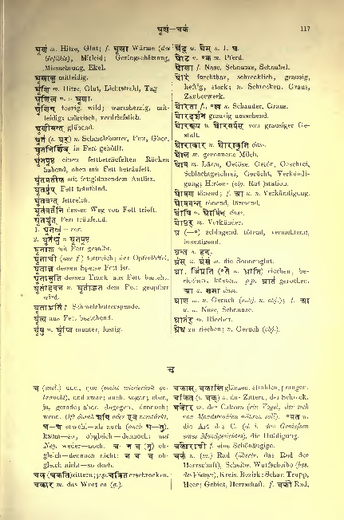
cakrá n. (m.) Rad (übertr. das Rad der Herrschaft), Scheibe, Wurßcheibe (bes. des Viṣṇu) Kreis, Bezirk; Schar, Trupp, Heer; Gebiet, Herrschaft. f. cakrī́ Rad,
Burnouf 1866 substantive masculine · substantive neuter
Original text · French · substantive masculine
cakra cakra m. anas casarca, esp. de cygne. Gr. ϰύϰνος; lat. cygnus.
Original text · French · substantive masculine · substantive neuter
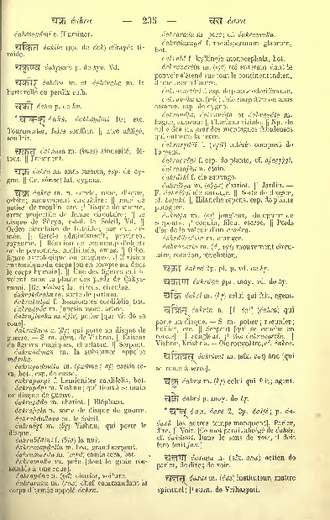
cakra cakra m. n. cercle, roue, disque, orbité; mouvement circulaire; roue de potier, de moulin, etc. Disque de guerre, arme projectile de forme circulaire; le disque de Sūrya, c-à-d. le Soleil, Vd. Ordre circulaire de bataille; par ext. armée. Cercle administratif, province, royaume. Réunion de beaucoup d'objets ou de personnes, multitude, amas. Orbe, figure astrologique ou magique. Division anatomique du corps [on en compte six dans le corps humain]. Une des figures qui se voient sous la plante des pieds de Śākyamuni. Gr. ϰύϰλος; lat. circus, circulus. cakrakāraka m. sorte de parfum. cakrakulyā f. hemionites cordifolia, bot. cakragucha m. jonesia asoca, arbre. cakrajīvaka m. (jīv) potier [qui vit de sa roue]. cakradhara a. (dhṛ) qui porte un disque de guerre. — S. m. surn. de Viṣṇu. Faiseur de figures magiques, charlatan. Serpent. cakranāman m. la substance appelée mākṣika. cakrapadmāṭa m. (padma; aṭ) cassia tora, bot., esp. de casse. cakraparṇī f. hemionites cordifolia, bot. cakrapāṇi m. Viṣṇu; qui tient à sa main un disque de guerre. cakrapāda m. chariot. Eléphant. cakraphala n. sorte de disque de guerre. cakrabāndhava m. le Soleil. cakrabhṛt m. (bhṛ) Viṣṇu, qui porte le disque. cakrabhedinī f. (bhid) la nuit. cakramaṇḍalin m. boa, grand serpent. cakramarda m. (mṛd) cassia tora, bot. cakramukha m. porc [dont le groin ressemble à une roue]. cakrayāna n. (yā) chariot, voiture. cakrarakṣa m. (rakṣ) chef commandant le corps d'armée appelé cakra. [Page235-2] cakrarada m. porc; cf. cakramukha. cakralakṣaṇā f. menispermum glabrum, bot. cakralā f. kyllingia monocephala, bot. cakravartin m. (vṛt) roi suzerain dont le pouvoir s'étend sur tout le continent indien, d'une mer à l'autre. cakravartinī f. esp. de plante odoriférante. cakravāka m. (vāc) l'oie rougeâtre ou anas casarca, esp. de cygne. cakravāṭa, cakravāḍa et cakravāla m. bague, anneau; l'horizon visible. Np. de celle des six grandes montagnes fabuleuses qui entoure la terre. cakravṛddhi f. (vṛdh) intérêt composé de l'argent. cakraśreṇī f. esp. de plante, cf. ajaśṛṅgī. cakrasajña n. étain. cakrāṅkī f. oie sauvage. cakrāṅga m. (aṅga) chariot. Jardin. — F. cakrāṅgī oie sauvage. Sorte de drogue, cf. kaṭukī. Hilancha repens, esp. de plante potagère. cakrāṭa m. (aṭ) jongleur, dompteur de serpents; coquin, filou, escroc. Poids d'or de la valeur d'un dīnāra. cakrādhivāsin m. oranger. cakrāvarta m. (ā; vṛt) mouvement circulaire, rotation, révolution.
Occurrences in source texts (34)
GoS 2 occurrences
HP 8 occurrences
HP 4.11*5-4.11*14: Khecarī in Space 2 occurrences
Direct occurrences
-
HP 4.11*9 Segment 11
-
HP 4.11*14 Segment 14
1 more source page
HTK 5 occurrences
HTK 10.26–29*1: Cakra, Śaṅkha, Vāmāvartta, Vartmagati and Gadā 4 occurrences
Direct occurrences
-
HTK 10.26 Segment 5
-
HTK 10.27 Segment 3
-
HTK 10.27*1 Segment 1
-
HTK 10.29*1 Segment 2
MAN 3 occurrences
PJH 1 occurrence
PYS 1 occurrence
SiSa 6 occurrences
SiSa 3.61-3.67: Paricaya und Niṣpatti 2 occurrences
Direct occurrences
SS 3 occurrences
SVU 2 occurrences
Continue with AYI Free
Image source: AYI archive.