

bahu बहु – much; many
adjective · particle · substantive neuter · Word type unspecified
Dictionary sources
AYI dictionary adjective
much; many
Cappeller 1891 Word type unspecified
Original text · English · Word type unspecified
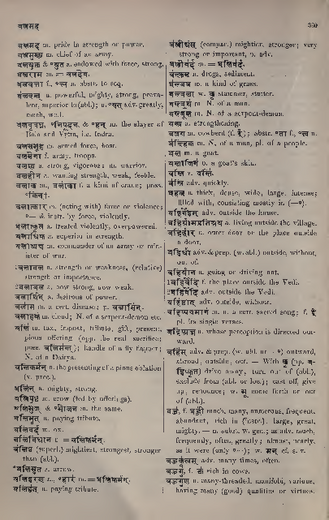
bahú ·f. bahvī́ much, many, numerous, frequent, abundant, rich in (instr.), large, great, mighty. -- n. subst. w. gen.; as adv. much, frequently, often, greatly; almost, nearly, as it were (only °--); w. man cf. s. ->
Monier-Williams 1872 Word type unspecified
Original text · English · Word type unspecified
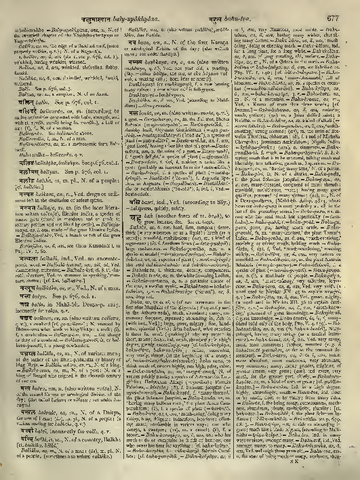
Bahu, us, us or vī, u (of rare occurrence in the first nine Maṇḍalas of the Ṛg-veda; frequently used in the Atharva-veda), much, abundant; many, nu- merous; frequent, repeated; abounding in, rich in (with inst., Ved.); large, great, mighty; fine, hand- some, splendid (Ved.); kim bahunā, what occasion is there for much (speaking)? why say more? in short, in fine; bahu, ind. much, abundantly; in a high degree, greatly, exceedingly, very [cf. bahu-kalyāṇa, bahu-citra, bahu-sadṛśa]; rather, somewhat, very nearly, almost, (at the beginning of a comp.; cf. bahu-tṛṇa, bahu-trivarṣa); bahu man, to think much of, esteem highly, rate high, prize, value.
Original text · English · Word type unspecified
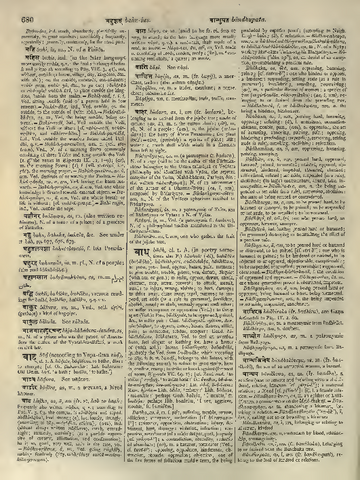
bahu bahu, bahuka, bahula, &c. See under rt. bah, pp. 677, 678, 679.
Petersburger 1855 adjective · Word type unspecified
Original text · German · adjective
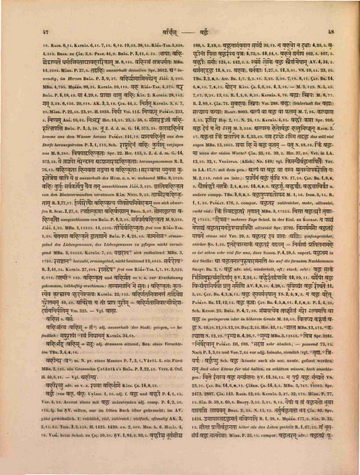
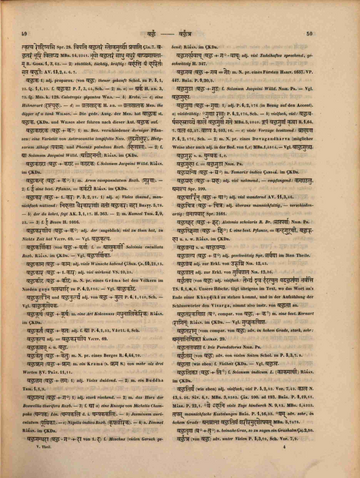
bahú (von bah, baṃh) UṆĀDIS. 1,30. adj. f. bahu und bahvī P. 4,1,45. VOP. 4,28. Accent eines mit bahu anlautenden adj. comp. P. 6,2,30. P. 6,2,175. fg._im_ṚV. selten, nur im 10ten Buch öfter gebraucht; im AV. ganz gewöhnlich. 1〉 reichlich, viel, zahlreich; vielfach, oftmalig AK. 3,2,12. AK. 3,2,62. TRIK. 3,3,458. H. 1425. H. 1430. H. an. 2,600. MED. h. 6. HALĀY. 4,16. VAIJ. beim Schol. zu ŚIŚ. 10,50. ṚV. 1,84,9. ṚV. 1,93,4. ba̱hvīśca̱ bhūyàsīśca ṚV. 188,5. ṚV. 2,18,3. ba̱hū̱nāmàva̱māya̱ sakhyè ṚV. 2,35,12. na ba̱havo̱ na da̱bhrāḥ ṚV. 4,25,5. ba̱hvī̱nāṃ pi̱tā ba̱huràsya pu̱traḥ ṚV. 6,75,5. ṚV. 10,14,1. ba̱have̱ janā̀ya ṚV. 102,8. ṚV. 107,3. ba̱hvīḥ samā̀ḥ ṚV. 124,4. ṚV. 142,3. ṚV. 10,5. sva̱rge lo̱ke ba̱hu straiṇàmeṣām AV. 4,34,2. annàmadadba̱hu AV. 10,8,22. bahavaḥ, arbhakāḥ AV. 1,27,3. AV. 18,3,61. VS. 19,44. VS. 23,25. TBR. 2,2,3,3. AIT. BR. 1,7. AIT. BR. 2,2. AIT. BR. 2,11. AIT. BR. 3,23. AIT. BR. 5,30. AIT. BR. 7,18. AIT. BR. 8,11. ŚAT. BR. 14,6,8,10. ŚAT. BR. 14,7,1,14. odana KĀTY. ŚR. 5,6,30. KĀTY. ŚR. 6,3,18. — M. 3,129. N. 5,43. N. 7,17. N. 9,21. N. 13,13. R. 1,1,9. R. 1,8,21. KATHĀS. 4,76. bahvyaḥ striyaḥ M. 8,77. R. 2,89,8. ŚĀK. 71. subahavaḥ striyaḥ VID. 288. bahvaḥ (fehlerhaft für bahvyaḥ) santyasya kanyāḥ HARIV. 8003. alpaṃ vā bahu vā phalam M. 7,86. kalyāṇa M. 3,55. rudhira HIḌ. 2,11. N. 24,15. KATHĀS. 4,85. bahvī kathā Spr. 916. bahu deyaṃ ca no 'stu M. 3,259. alpasya hetorbahu hātumicchan RAGH. 2,47. bahunā kiṃ pralāpena R. 1,53,25. yanna dagdho 'smi tadbahu das will viel sagen MBH. 13,2863. tvayā hi me bahu kṛtam — yat N. 18,18. kiṃ bahunā wozu der vielen Worte? ŚĀK. 25,16. ŚĀK. 39,2. HIT. 37,20. VET. in LA. 12,20. VET. in LA. 32,1. VEDĀNTAS. (Allah.) No. 149; vgl. kimanyairbahubhāṣitaiḥ VET. in LA. 17,7. mit dem gen.: alpaṃ vā bahu vā yasya śrutasyopakaroti yaḥ M. 2,149. reich an (intr.): pra̱jayaìnaṃ ba̱huṃ kṛ̀dhi VS. 17,50. ŚAT. BR. 1,8,1,9. dyaurbahvī nakṣatraiḥ ŚAT. BR. 2,1,4,28. ŚAT. BR. 10,6,1,6. bahugū́, bahvaśvā́, bahvajāvikā́ u. andere compp. TBR. 3,8,5,3. bahupuṣpaphalopaga M. 1,46. INDR. 5,14. R. 1,1,30. PAÑCAT. 176,3. compar. bahutara zahlreicher, mehr, allzuviel, recht viel: kiṃ svidbahutaraṃ tṛṇāt MBH. 3,17344. cintā bahutarī tṛṇāt MBH. 3,17345. ˚divasa˚ mehrere Tage Schol. in der Einl. zu CAURAP. na pathyaṃ nepathyaṃ bahutaramanaṅgotsavavidhau allzuviel Spr. 2792. kimarthamasau bahutaraṃ yācate etwas viel VET. 29,3. bahutara iva jātaḥ (agniḥ) umfangreicher, stärker ṚT. 1,26. etadevāsmākaṃ bahutaraṃ yadvayam — nirvāṇaṃ pratilabhāmahe es ist schon sehr viel für uns, dass SADDH. P. 4,28,b. superl. bahutama in der Stelle: ā bahutamātpuruṣādannamatti bis auf die fernsten Nachkommen ṢAḌV. BR. 2,1. bahu adv. viel, wiederholt, oft; stark, sehr: ba̱hu sā̱kaṃ sìsicu̱rutsàmu̱driṇàm ṚV. 2,24,4. ba̱hve̱3̱̀tadràpāmi ṚV. 10,10,11. athaìṣāṃ ba̱hu bibhyàtā̱miṣàvo ghnantu̱ marmàṇi AV. 8,8,20. AV. 4,28,4. pṛ̱thi̱vyāṃ ba̱hu ròcate AV. 11,5,26. ŚAT. BR. 4,1,5,14. ba̱hu hā̱yamàvṛṣāt TS. 2,4,7,2. na bahu vadet PAÑCAV. BR. 13,12,14. bahu kṛtvaḥ ŚAT. BR. 6,5,3,11. ŚAT. BR. 8,1,1,2. P. 5,4,20, Sch. KENOP. 25. BHĀG. P. 4,7,39. saṃśrayatyeva tacchīlaṃ naro 'lpamapi vā bahu in geringerem oder in höherem Grade M. 10,60. vilapya karuṇaṃ bahu N. 10,28. N. 11,19. N. 13,38. DAŚ. 2,55. HIT. 43,12. ˚śasta MBH. 13,475. ˚ka- lyāṇa N. 12,29. ˚ramya R. 4,26,7. ˚śūnya MBH. 3,12842. ˚citra Spr. 3161. ˚nirvedavān PAÑCAT. III, 188. ˚sadṛśa sehr ähnlich, — passend PAÑCAT. 75,15. Nach P. 5,3,68 und VOP. 7,64 vor adjj. beinahe, ziemlich (vgl. ˚tṛṇa, ˚trivarṣa): bahúpaṭu Sch. bahu (könnte auch als acc. neutr. gefasst werden) man Jmd oder Etwas für viel halten, zu schätzen wissen, hoch anschlagen: vi̱tte ràmasva ba̱hu manyàmānaḥ ṚV. 10,34,13. na pu̱ṣṭaṃ ba̱hu mànyate VS. 23,31. ŚAT. BR. 14,6,8,12. ŚĀṄKH. ŚR. 16,4,4. MBH. 3,747. MBH. 3,10063. Spr. 2473. Spr. 2887. ŚĀK. 143. RAGH. 12,89. KATHĀS. 5,27. KATHĀS. 32,178. MĀRK. P. 77,10. SĀH. D. 59,8. SĀH. D. 60,8. BHAṬṬ. 3,53. BHAṬṬ. 5,84. BHAṬṬ. 8,12. yeṣāṃ ca tvaṃ bahumato bhūtvā yāsyasi lāghavam BHAG. 2,35. N. 15,12. bharturbahumatā bhava ŚĀK. 82. Spr. 1434. umāyāstadbahumataṃ bhaviṣyati R. 1,38,8. MṚCCH. 177,9. SĀH. D. 35,13. sītā prāṇairbahumatā höher als das Leben gestellt R. 1,67,23. tvaṃ bhūtasaṃghaṃ bahu mānayethāḥ MĀRK. P. 25,15. compar. bahutaram adv.: bahutaraṃ phūtkṛtya rodiṣyasi Spr. 28. viyati bahutaraṃ stokamurvyāṃ prayāti ŚĀK. 7. bahutaraṃ bhūri vilapya MBH. 14,2341. bhūyo bahutaraṃ sādhu madhuraṃ cāpyagāyatām R. GORR. 1,3,62. — 2〉 stattlich, tüchtig, kräftig: vahànti̱ yaṃ ha̱ritàḥ sa̱pta ba̱hvīḥ AV. 13,2,4. AV. 13,2,6. AV. 13,2,7.
Original text · German · Word type unspecified
bahu 1〉 so v. a. Plural AIT. BR. 5,2. AIT. BR. 5,15. AIT. BR. 6,12.
Böhtlingk 1879 adjective · substantive neuter
Original text · German · adjective · substantive neuter
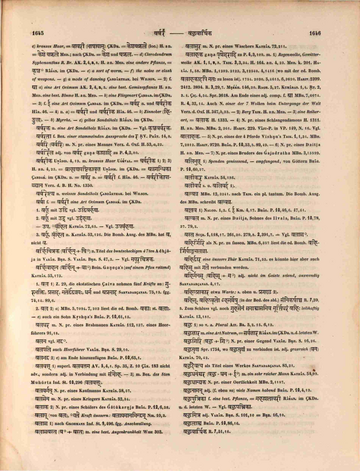
bahú — 1〉 Adj. (f. bahvī́ und *bahu) — a〉 reichlich, viel, zahlreich, vielfach, oftmalig; reich an (Instr.). yad — tadbahu so v. a. das will viel sagen, dass; tvayā hi me bahu kṛtam — yad so v. a. du hast mir einen grossen Dienst dadurch erwiesen, dass; kiṃ bahunā so v. a. wozu der vielen Worte? Das Neutrum auch substantivisch mit einem Gen. construirt. Compar. bahutara zahlreicher, mehr, — als (Abl.), allzuviel, recht viel, mehrere; umfangreicher, [Page4-215-b] stärker (Feuer). etadevāsmākaṃ, bahutaraṃ yad es ist schon sehr viel für uns, dass. Superl. in der Verbindung ā bahutamātpurusāt bis auf den entferntesten Nachkommen. — b〉 stattlich, tüchtig, kräftig. — 2〉 bahu Adv. — a〉 viel, wiederholt, oft stark, sehr, in hohem Grade. Mit man Jmd oder Etwas für viel halten, zu schätzen wissen, hoch anschlagen, höher stellen als (prāṇais das Leben). Compar. bahutaram mehr, wiederholt, oft. — b〉 am Anf. einiger Comp. zum grössten Theil, so v. a. beinahe, ziemlich. — 3〉 n. Plural.
Apte 1890 adjective · particle
Original text · English · adjective · particle
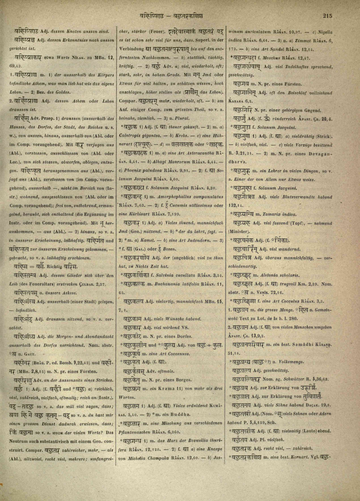
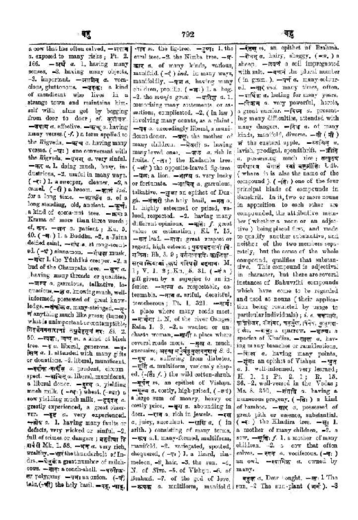
bahu a. (hu or hvī f.; compar. bhūyas; superl. bhūyiṣṭha) 1 Much, plentiful, abundant, great; tasminbahu etadapi Ś. 4 ‘even this was much for him’ (was too much to be expected of him); bahu praṣṭavyamatra Mu. 3; alpasya hetorbahu hātumicchan R. 2. 47. 2 Many, numerous; as in bahvakṣara, bahuprakāra. 3 Frequented, repeated. 4 Large, great. 5 Abounding or rich in (as first member of comp.); bahukaṃṭako deśaḥ &c. — ind. 1 Much, abundantly, very much, exceedingly, greatly, in a high degree. 2 Somewhat, nearly, almost; as in bahutṛṇa. (kiṃ bahunā ‘why say much’, ‘in short’; bahu man to think or esteem highly, rate high, prize, value; tvatsaṃbhāvitamātmānaṃ bahu manyāmahe vayaṃ Ku. 6. 20; yayāteriva śarmiṣṭhā bharturbahumatā bhava Ś. 4. 6; Ś. 7. 1; R. 12. 89; Bg. 2. 35 Bk. 3. 53; Bk. 5. 84. Bk. 8. 12). Comp. — akṣara a. having many syllables, polysyllabic (as a word). — ac, acka a. having many vowels, polysyllabic. — anartha a. fraught with many evils. — ap, -apa a. watery. — apatya a. 1 having a numerous progeny. 2 (in astrol.) promising a numerous progeny. — (tyaḥ) 1 a hog. 2 a mouse, rat. — (tyā) ([Page 0792-a]) a cow that has often calved. — apāya a. exposed to many risks; Pt. 2. 166. — artha a. 1 having many senses. 2 having many objects. 3 important. — āśin a. voracious, gluttonous. — udakaḥ a kind of mendicant who lives in a strange town and maintains himself with alms got by begging from door to door; cf. kuṭīcaka. — upāya a. effective. — ṛc a. having many verses. ( — f.) a term applied to the Ṛgveda. — ṛca a. having many verses. (-caḥ) one conversant with the Ṛgveda. — enas a. very sinful. — kara a. 1 doing much, busy, industrious. 2 useful in many ways. — (raḥ) 1 a sweeper, cleaner. 2 a camel. — (rī) a broom. — kālaṃ ind. for a long time. — kālani a. of a long standing, old, ancient. — kūrcaḥ a kind of cocoa-nut tree. — kramaḥ a Krama of more than three words; cf. krama. — kṣama a. patient; Ku. 5. 40. — (maḥ) 1 a Buddha. 2 a Jaina deified saint. — gaṃdha a. strong-scented. — (dhaṃ) cinnamon. — gaṃdhadā musk. — gaṃdhā 1 the Yūthikā creeper. 2 a bud of the Campaka tree. — guṇa a. having many threads or qualities. — jalpa a. garrulous, talkative, loquacious. — jña a. knowing much, wellinformed, possessed of great knowledge. — taṃtrīka a. many-stringed. — tṛṇaṃ anything much like grass; (hence) what is unimportant or contemptible; nidarśanamasārāṇāṃ laghurbahutṛṇaṃ naraḥ Śi. 2. 50. — tvakkaḥ, tvac m. a kind of birch tree. — da a. liberal, generous. — dakṣiṇa a. 1 attended with many gifts or donations. 2 liberal, munificent. — darśaka, -dārśin a. prudent, circumspect. — dāyin a. liberal, munificent, a liberal donor. — dugdha a. yielding much milk. — (gdhaḥ) wheat. — (gdhā) a cow yielding much milk. — dṛśvan a. greatly experienced, a great observer. — dṛṣṭa a. very experienced. — doṣa a. 1 having many faults or defects, very wicked or sinful. 2 full of crimes or dangers; bahudoṣā hi śarvarī Mk. 1. 58. — dhana a. very rich, wealthy. — dhāraṃ the thunderbolt of Indra. — dhenukaṃ a great number of milchcows. — nādaḥ a conch-shell. — patnīkatā polygamy — patraḥ an onion. — (traṃ) talc. — (trī) the holy basil. — pad, -pād, ([Page 0792-b]) — pāda m. the fig-tree. — puṣpaḥ 1 the coral tree. 2 the Nimba tree. — prakāra a. of many kinds, various, manifold. — (raṃ) ind. in many ways, manifoldly. — praja a. having many children, prolific. — (jaḥ) 1 a hog. 2 the munja grass. — pratijña a. 1 comprising many statements or assertions, complicated. 2 (in law) involving many counts, as a plaint. — prada a. exceedingly liberal, a munificent donor. — prasūḥ the mother of many children. — preyasī a. having many loved ones. — phala a. rich in fruits. — (laḥ) the Kadamba tree. — (lī) the opposite-leaved fig-tree. — balaḥ a lion. — bhāgya a. very lucky or fortunate. — bhāṣin a. garrulous, talkative. — bhujā an epithet of Durgā. — maṃjarī the holy basil. — mata a. 1 highly esteemed or prized, valued, respected. 2 having many different opinions. — matiḥ f. great value or estimation; Ki. 7. 15. — malaṃ lead. — mānaḥ great respect or regard, high esteem; puruṣabahumāno vigalitaḥ Bh. 3. 9; vartamānakaveḥ kālidāsasya kriyāyāṃ kathaṃ pariṣado bahumānaḥ M. 1; V. 1. 2; Ku. 5. 31. ( — naṃ a) gift given by a superior to an inferior. — mānya a. respectable, esteemable. — māya a. artful, deceitful, treacherous; Pt. 1. 321. — mārgaḥ a place where many roads meet. — mārgagā 1 N. of the river Ganges; Ratn. 1. 3. 2 a wanton or unchaste woman. — mārgī a place where several roads meet. — mukha a. much, excessive; asyā bharturbahumukhamanurāgaṃ Ś. 6. — mūtra a. suffering from diabetes. — mūrti a. multiform, variously shaped. ( — rtiḥ f.) the wild cotton-shrub. — mūrdhan m. an epithet of Viṣṇu. — mūlya a. costly, high-priced. — (lyaṃ) a large sum of money, heavy or costly price. — mṛga a. abounding in deer. — ratna a. rich in jewels. — rasa a. juicy, succulent. — rāśi a. (in arith.) consisting of many terms. — rūpa a. 1 many-formed, multiform, manifold. 2 variegated, spotted, chequered. — (paḥ) 1 a lizard, chameleon. 2 hair. 3 the sun. 4 N. of Śiva. 5 of Viṣṇu. 6 of Brahmā. 7 of the god of love. — rūpaka a. multiform, manifold ([Page 0792-c]) — retas m. an epithet of Brahmā. — roman a. hairy, shaggy. ( — m.) a sheep. — lavaṇaṃ a soil impregnated with salt. — vacanaṃ the plural number (in gram.). — varṇa a. many-coloured. — vāraṃ ind. many times, often. — vārṣika a. lasting for many years. — vikrama a. very powerful, heroic, a great warrior. — vidhna a. presenting many difficulties, attended with many dangers. — vidha a. of many kinds, manifold, diverse. — vī (bī) jaṃ the custard apple. — vyayin a. lavish, prodigal, spendthrift. — vrīhi a. possessing much rice; tatpuruṣa karmadhāraya yenāhaṃ syāṃ bahuvrīhiḥ Udb. (where it is also the name of the compound). — (hiḥ) one of the four principal kinds of compounds in Sanskrit. In it, two or more nouns in apposition to each other are compounded, the attributive member (whether a noun or an adjective) being placed first, and made to qualify another substantive, and neither of the two members separately, but the sense of the whole compound, qualifies that substantive. This compound is adjectival in character, but there are several instances of Bahuvrīhi compounds which have come to be regarded and used as nouns (their application being restricted by usage to particular individuals); i. e. cakrapāṇi, śaśiśekhara, pītāṃbara, caturmukha, trinetra, kusumaśara &c. — śatruḥ a sparrow. — śalyaḥ a species of Khadira. — śākha a. having many branches or ramifications. — śikha a. having many points. — śṛṃgaḥ an epithet of Viṣṇu. — śruta a. 1 well-informed, very learned; H. 1. 1; Pt. 2. 1; R. 15. 36. 2 well-versed in the Vedas; Ms. 8. 350. — saṃtati a. having a numerous progeny. — (tiḥ) a kind of bamboo. — sāra a. possessed of great pith or essence, substantial. — (raḥ) the Khadira tree. — sūḥ 1 a mother of many children. 2 a sow. — sūtiḥ f. 1 a mother of many children. 2 a cow that often calves. — svana a. vociferous. — (naḥ) an owl. — svāmika a. owned by many.
Cappeller 1887 Word type unspecified
Original text · German · Word type unspecified
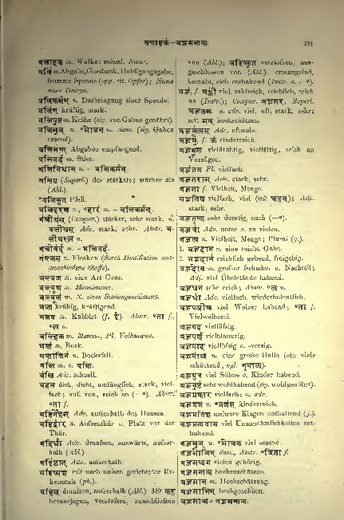
bahú, f. bahvī́ viel, zahlreich, reichlich, reich an (Instr.); Compar. bahutara, Superl. bahutama. n. adv. viel, oft, stark, sehr; mit man hochschätzen.
Burnouf 1866 adjective
Original text · French · adjective
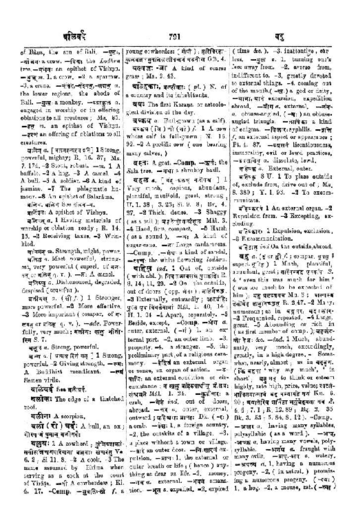
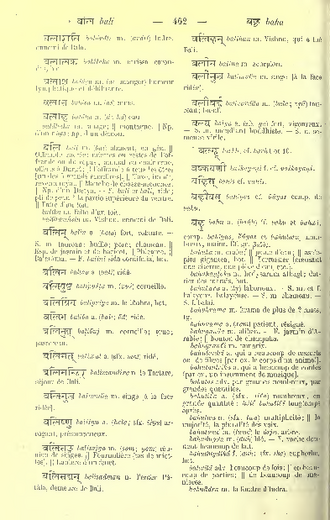
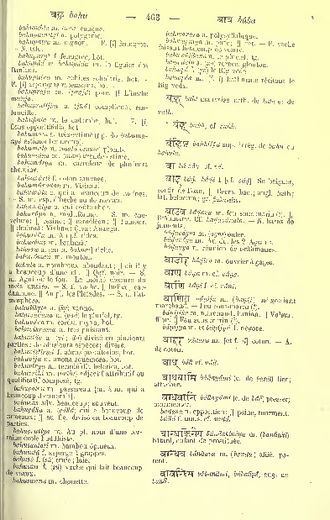
bahu bahu a. (baṃh) [f. bahu et bahvī; comp. bahīyas, bhūyas et bahutara] nombreux, maint. Cf. gr. βαθύς. bahuka m. crabe; poule d'eau; asclepias gigantea, bot. Terrassier [creusant une citerne, une pièce d'eau, etc.]. bahukaṇṭaka m. hedysarum alhagi; dattier des marais, bot. bahukara a. (kṛ) laborieux. — S. m. et f. balayeur, balayeuse. — S. m. chameau. — S. f. balai. bahukrama m. krama de plus de 2 mots, tg. bahukṣama a. (kṣam) patient, résigné. bahugandha m. oliban. — F. jasmin d'Arabie; bouton de champaka. bahugranthi m. tamarix. bahutantri a. qui a beaucoup de ressorts ou de fibres [par ex. le corps d'un animal]. bahutantrīka a. qui a beaucoup de cordes [par ex. un instrument de musique]. bahutas adv. par groupes nombreux, par grandes quantités. bahutitha a. (sfx. titha) nombreux, en grande quantité: kāle bahutithe longtemps après. bahutva n. (sfx. tva) multiplicité; la majorité, la pluralité des voix. bahutvac m. (tvac) le ūrja, arbre. bahudugdha m. (duh) blé. — F. vache donnant beaucoup de lait. bahudugdhikā f. (duh; sfx. ika) euphorbe, bot. bahudhā adv. beaucoup de fois; en beaucoup de parties; de beaucoup de manières. bahudhāra m. la foudre d'Indra. [Page463-1] bahunāda m. (nad) conque. bahupatnīkṛt a. polygame. bahupatra m. oignon. — F. [ī] fenugrec. — N. talc. bahuparṇī f. fenugrec, bot. bahupād et bahupāda m. le figuier des Banians. bahuputra m. echites scholaris, bot. — F. [ī] asparagus racemosus, bot. bahupraja m. (prajā) porc. L'herbe muñja. bahupratijña a. (jñā) compliqué, embrouillé. bahuphala m. le cadamba, bot. — F. [ī] ficus oppositifolia, bot. bahumata a. très-estimé (pp. de bahumanye estimer beaucoup). bahumala n. (mala crasse) plomb. bahumāna m. (man) grande estime. bahumārga m. carrefour de plusieurs chemins. bahumūrti f. coton sauvage. bahumūrddhan m. Viṣṇu. bahumūla a. qui a beaucoup de racines. — S. m. esp. d'herbe ou de roseau. bahumūlya a. qui coûte cher. bahurūpa a. multiforme. — S. m. chevelure; résine; caméléon; l'amour. Brahmā; Viṣṇu; Śiva; Anaṅga. bahurekha m. Au pl. rides. bahuretas m. Brahmā. bahurai a. [au n. bahuri] riche. bahuroman m. mouton. bahula a. nombreux, abondant; où il y a beaucoup d'une ch. Qqf. noir. — S. m. Agni ou le feu. La moitié obscure du mois lunaire. — S. f. vache. Indigo; cardamome. Au pl. les Pleïades. — S. n. l'atmosphère. bahulikṛta a. (kṛ) vanné. bahuvacana n. (vac) le pluriel, tg. bahuvāra m. cordia myxa, bot. bahuvikrama a. très-puissant. bahuvidha a. (vi; dhā) divisé en plusieurs parties; de plusieurs espèces; divers. bahuvistīrṇā f. abrus precatorius, bot. bahuvīja n. anona squamosa, bot. bahuvīrya m. terminalia belerica, bot. bahuvrīhi m. (vrīhi) adjectif attributif ou qualificatif composé, tg. bahuśatru m. passereau [m à m. qui a beaucoup d'ennemis]. bahuśas adv. beaucoup; souvent. bahuśākha a. (śākhā) qui a beaucoup de rameaux; au fig. divisé en beaucoup de parties. bahuśrutīya m. Au pl. nom d'une certaine école buddhiste. bahusantati m. bambou épineux. bahusutā f. asperge à grappes. bahusū f. (sū) truie; laie. bahusūti f. (sū) vache qui fait beaucoup de veaux. bahusvana m. chouette. [Page463-2] bahvakṣara a. polysyllabique. bahvapatya m. porc; rat. — F. vache faisant beaucoup de veaux. bahvabhidhāna n. le pluriel, tg. bahvāśin a. (aś) vorace, glouton. bahvṛc f. (ṛc) le Ṛg-veda. bahvṛca m. [f. i] brâhmane récitant le Ṛg-veda.
Derived words
Occurrences in source texts (31)
DYS 8 occurrences
1 more source page
GoS 2 occurrences
HP 4 occurrences
HTK 2 occurrences
IVU 2 occurrences
SiSa 9 occurrences
3 more source pages
Continue with AYI Free
Image source: AYI archive.