

karman कर्मन् – action; work; karma; karmic effect
substantive masculine · substantive neuter · Word type unspecified
Dictionary sources
AYI dictionary substantive neuter
action; work; karma; karmic effect
Derived from
Cappeller 1891 substantive neuter
Original text · English · substantive neuter
kárman ·n. action, deed, work, esp. holy work, sacrifice, rite; result, effect; organ of sense; the direct object (g.); fate, destiny.
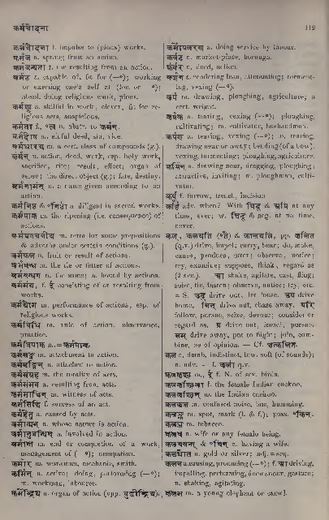
Monier-Williams 1872 substantive neuter
Original text · English · substantive neuter
karman karman, a, n. (fr. rt. 1. kṛ; according to some also m.), action, work, deed; performance, business; office; specific action, moral duty, the obligation imposed by peculiarities of tribe, occupa- tion, &c.; labour (as opposed to rest, praśānti); any religious action or rite (as sacrifice, ablution, &c., especially as originating in the hope of future re- compense and as opposed to speculative religion or knowledge of spirit); action consisting in motion as the third among the seven categories of the Nyāya philosophy, (of these motions there are five, viz. ut-kṣepaṇa, throwing upwards; ava-kṣepaṇa, throwing downwards; ā-kuñcana, contraction; pra- sāraṇa, extension or dilatation; and gamana, going or motion in general); product, result, effect; organ of sense [cf. karmendriya]; natural or active pro- perty (as maturity, of heat; support, of earth; disper- sion, of wind, &c.); the immediate object of an agent or act; (in grammar) the idea or notion expressed by the acc. case, (this object is of four kinds, viz. a. nirvartya, when anything new is produced, e. g. kaṭaṃ karoti, ‘he makes a mat;’ putram prasūte, ‘she bears a son:’ b. vikārya, when change is implied either of the substance and form, e. g. kāṣṭham bhasma karoti, ‘he makes ashes out of fuel;’ or of the form only, e. g. suvarṇaṃ kuṇḍalaṃ ka- roti, ‘he fashions gold into an ear-ring:’ c. prāpya, when any desired object is attained, e. g. grāmaṃ gacchati, ‘he goes to the village;’ candram paśyati, ‘he sees the moon:’ d. anīpsita, when an undesired object is abandoned, e. g. pāpaṃ tyajati, ‘he leaves the wicked’); fate, the certain consequence of previous acts [cf. karma-pāka and karma-vipāka]; (in as- tronomy) the tenth lunar mansion.
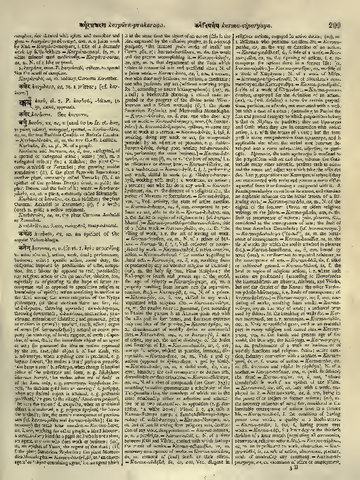
Petersburger 1855 substantive masculine · substantive neuter · Word type unspecified
Original text · German · substantive masculine · substantive neuter
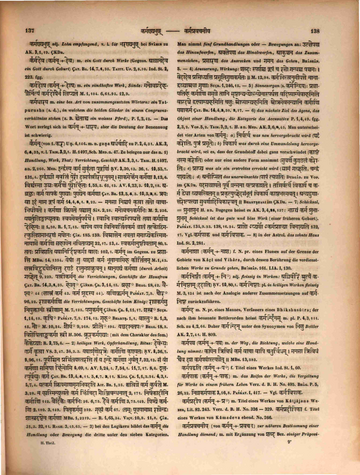
kárman (von 1. kar) Uṇ. 4,146. m.n. gaṇa ardharcādi zu P. 2,4,31. AK. 3,6,4,35, v. l. TRIK. 3,2,1. H. 1497, Sch. MED. n. 47. Zu belegen nur das n. 1〉 Handlung, Werk, That; Verrichtung, Geschäft AK. 3,3,1. TRIK. H. 1497. H. an. 2,260. MED. indràsya̱ karma̱ sukṛ̀tā pu̱rūṇì ṚV. 3,30,13. ṚV. 3,36,1. ṚV. 10,55,7. ṚV. 10,131,4. indrā̀gnī nava̱tiṃ purò dā̱sapàtnīradhūnutam . sā̱kamekèna̱ karmàṇā ṚV. 3,12,6. viśvàsmā u̱graḥ karmàṇe pu̱rohìtaḥ ṚV. 1,55,3. ṚV. 1,61,13. AV. 6,23,3. AV. 10,2,18. ajahuḥ karma pāpakaṃ puṇyāḥ puṇyena karmaṇā ŚAT. BR. 13,5,4,3. ŚAT. BR. 10,5,3,8. trayaḥ vā idaṃ nāma rūpaṃ karma ŚAT. BR. 14,4,4,1. ŚAT. BR. 14,4,2,23. — manasā niścayaṃ kṛtvā tato vācābhidhīyate . karmaṇā kriyate paścāt SĀV. 2,28. manovacanakarmabhiḥ M. 2,236. yathartuliṅgānyṛtavaḥ svayamevartuparyaye . svāni svānyabhipadyante tathā karmāṇi dehinaḥ .. M. 1,30. R. 1,7,15. cāpena yasya vinivartitakarma jātaṃ tatkoṭimatkuliśamābharaṇaṃ maghonaḥ ŚĀK. 185. ŚĀK. 159. viśrāntena bhavatā mamāpyekasminnanāyāse karmaṇi sahāyena bhavitavyam ŚĀK. 22,17. ŚĀK. 13,4. svakarmānuṣṭhīyatām ŚĀK. 80,3. tataḥ praviśati yathānirdiṣṭakarmā bālaḥ ŚĀK. 102,1. karman im Gegens. zu praśānti MBH. 14,1354. yeṣāṃ tu yādṛśaṃ karma bhūtānāmiha kīrtitam M. 1,42. kṣattraviṭśūdrayonistu daṇḍaṃ dātumaśaknuvan . ānṛṇyaṃ karmaṇā (durch Arbeit) gacchet M. 9,229. patnīkarman die Verrichtungen, Geschäfte der Hausfrau ŚAT. BR. 14,3,1,35. hotṛ˚ ŚĀṄKH. ŚR. 3,14,15. brahma˚ BHAG. 18,42. vaiśya˚ BHAG. 18,44 (kṣāttraṃ karma BHAG. 18,43. karma śūdrasya BHAG. 18,44). vaṇikkarman PAÑCAT. 7,9. caura˚ PAÑCAT. 96,22. rājakarmāṇi die Verrichtungen, Geschäfte beim König: rājakarmasu niyuktānāṃ strīṇām M. 7,125. paśukarman ŚĀṄKH. ŚR. 6,11,17. śastra˚ SUŚR. 1,14,18. kṛṣi˚ PAÑCAT. 7,9. PAÑCAT. 174,12. gṛha˚ BHARTṚ. 1,1. vāstu˚ R. 1,3,15. nau˚ M. 10,34. śaurya˚ M. 9,268. prīti˚ M. 9,194. yajñadānatapaḥ˚ BHAG. 18,3. viśeṣitāṅkakarmā strī H. 506. krūrakarmaṇyāḥ (mit dem Charakter des fem.) kaikeyyāḥ R. 2,75,6. — 2〉 heiliges Werk, Opferhandlung, Ritus: de̱vebhya̱ḥ karmà kṛ̱tvā VS. 3,47. VS. 34,2. VS. 34,3. yathāśṛ̀ṇo̱ratre̱ḥ karmā̀ṇi kṛṇva̱taḥ ṚV. 8,36,7. ṚV. 9,96,11. pū̱rvīśca̱na prasìtayastaranti̱ taṃ ya indre̱ karmàṇā̱ bhuvàt ṚV. 7,32,13. saṃ vā̱ṃ karmàṇā̱ sami̱pā hìnomi ṚV. 6,69,1. AV. 5,24,1. AV. 7,54,1. AV. 11,7,17. AV. 11,8,6. etatpūrvedyuḥ karma ŚAT. BR. 13,4,4,11. ŚAT. BR. 13,5,1,7. ŚAT. BR. 13,4,3,11. KĀTY. ŚR. 1,1,2. KĀTY. ŚR. 1,1,24. KĀTY. ŚR. 4,3,1. KĀTY. ŚR. 5,7,4. yatkarma kriyamāṇamṛgabhivadati AIT. BR. 1,25. ṛtvije karma kurvate M. 3,28. na hyasminyujyate karma kiṃcidā mauñjibandhanāt M. 2,171. niṣekādīni karmāṇi M. 142. vaidikaiḥ karmabhiḥ M. 26. M. 6,75. daive karmaṇi M. 3,75. M. 3,149. pitrye karmaṇi M. 2. M. 189. M. 3,149. pitṛkarmasu M. 252. gṛhyaṃ karma M. 67. (tam) pūjayāmāsa rājendraḥ śāstradṛṣṭena karmaṇā MBH. 1,2219. — R. 1,65,34. VIŚV. 10,9. VIŚV. 11,8. ŚĀK. 31,3. ŚĀK. 32,11. RAGH. 3,45. RAGH. 3,65. — 3〉 bei den Logikern bildet das karman die Handlung oder Bewegung die dritte unter den sieben Kategorien. Man nimmt fünf Grundhandlungen oder — Bewegungen an: utkṣepaṇa das Hinaufwerfen, avakṣepaṇa das Hinabwerfen, ākuñcana das Zusammenziehen, prasāraṇa das Ausrecken und gamana das Gehen, BHĀṢĀP. 5. — 4〉 Aeusserung, Wirkung: śabdaḥ sparśaśca rūpaṃ ca raso gandhaśca pañcamaḥ . vedādeva prasidhyanti prasūtiguṇakarmataḥ .. M. 12,98. karmabhistvanumīyante nānādravyāśrayā guṇāḥ SUŚR. 1,246,15. — 5〉 Sinnesorgan (s. karmendriya): prajāpatirha karmāṇi sasṛje tāni sṛṣṭānyanyo'nyenāspardhanta vadiṣyāmyevāhamiti vāgdadhre drakṣyāmyahamiti cakṣuḥ śroṣyāmyahamiti śrotramevamanyāni karmāṇi yathākarma ŚAT. BR. 14,4,3,30. ŚAT. BR. 14,4,2,17. — 6〉 das nächste Ziel des Agens, das Object einer Handlung, die Kategorie des Accusativs P. 1,4,49. fgg. P. 2,3,2. VOP. 5,2. TRIK. 3,2,1. H. an. MED. AK. 3,6,8,45. Man unterscheidet vier Arten von karman: a〉 nirvartya was neu hervorgebracht wird (ghaṭaṃ karoti, putraṃ prasūte); b〉 vikārya was durch eine Umwandelung hervorgebracht wird, sei es, dass der Grundstoff dabei ganz verschwindet (kāṣṭhaṃ bhasma karoti) oder nur eine andere Form annimmt (suvarṇaṃ kuṇḍalaṃ karoti); c〉 prāpya was als ein erstrebtes erreicht wird (grāmaṃ gacchati, candraṃ paśyati); d〉 anīpsita das unerwünschte (pāpaṃ tyajati) DURGĀD._zu_VOP._im_ŚKDR. yadasajjāyate pūrvaṃ janmanā yatprakāśate . tannirvartyaṃ vikāryaṃ ca karma dvedhā vyavasthitam .. prakṛtyucchedasaṃbhūtaṃ vikāryaṃ kāṣṭhabhasmavat . anyadguṇāntarotpattyā suvarṇādivikāravat .. BHARTṚHARI_im_ŚKDR. — 7〉 Schicksal, = śubhāśubha H. an. Dagegen heisst es AK. 3,4,21,157: bhāgyaṃ karma śubhāśubham Schicksal ist das gute und böse Werk (einer früheren Geburt). PAÑCAT. 134,9. PAÑCAT. 134,23. PAÑCAT. 138,16. PAÑCAT. 138,24. prāpto 'pyartho 'karmaprāptyā vinaśyati PAÑCAT. 132,17. Vgl. karmapāka und karmavipāka. — 8〉 in der Astrol. das zehnte Haus Ind. St. 2,281.
Original text · German · Word type unspecified
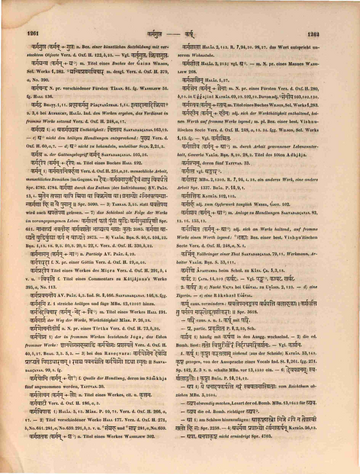
karman 1〉 karmamatanibarhaṇa Verz. d. Oxf. H. 251,a,31. menschliche Arbeit, menschliches Bemühen (im Gegens. zu daiva): karmasamāyuktaṃdaivaṃ sādhu vivardhate Spr. 4782. Spr. 4784. karmaṇā durch das Zuthun (des Individuums) ṚV. PRĀT. 13,4. śrutena tapasā vāpi śriyā vā vikrameṇa vā . janānyo 'bhibhavatyanyānkarmaṇā hi sa vai pumān .. Spr. 5090. — 3〉 TARKAS. 3,55. statt avakṣepaṇa wird auch apakṣepaṇa gelesen. — 7〉 das Schicksal als Folge der Werke im vorangegangenen Leben: karmāyattaṃ phalaṃ puṃsāṃ buddhiḥ karmānusāriṇī Spr. 611. nābhāvyaṃ bhavatīha karmavaśato bhāvyasya nāśaḥ kutaḥ Spr. 2085. karmaṇā bādhyate buddhirbuddhyā karma na bādhyate Spr. 3875. — 8〉 VARĀH. BṚH. S. 40,6. VARĀH. BṚH. S. 104,23. BṚH. 1,15. BṚH. 1,18. BṚH. 9,3. BṚH. 10,3. BṚH. 20,5. BṚH. 22,1. Verz. d. Oxf. H. 330,b,32.
Original text · German · Word type unspecified
karman 1〉 so v. a. Berechnung SŪRYAS. 2,37. fg. SŪRYAS. 2,42. SŪRYAS. 2,45. fg. SŪRYAS. 2,48. SŪRYAS. 5,9. fg. SŪRYAS. 11,11.
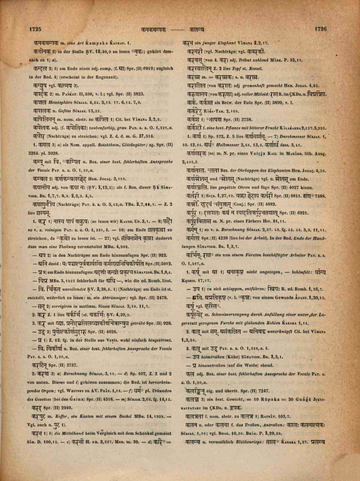
Böhtlingk 1879 substantive masculine · substantive neuter · Word type unspecified
Original text · German · substantive masculine · substantive neuter
kárman (*m.) n. — 1〉 Handlung, Thätigkeit, Arbeit, [Page2-029-c] Werk, That, Verrichtung, Geschäft. Wird componirt mit dem, der die Handlung oder Verrichtung vollführt, mit dem, für den oder woran d. H. oder V. v. wird und mit dem, was verrichtet wird. Statt krūrakarmanyāḥ R. 2,75,6. liest ed. Bomb. ˚kāryāyāḥ. — 2〉 heiliges Werk, Opferhandlung, Ritus. — 3〉 ärztliche Behandlung, Cur CARAKA. 6,11. — 4〉 Berechnung. — 5〉 Aeusserung, Wirkung. — 6〉 Sinnesorgan. — 7〉 in der Gramm. das nächste Object des Agens, das Object einer Handlung. — 8〉 Schicksal (die Folge der Handlungen in einem frühern Leben). — 9〉 in der Astrol. das zehnte Haus.
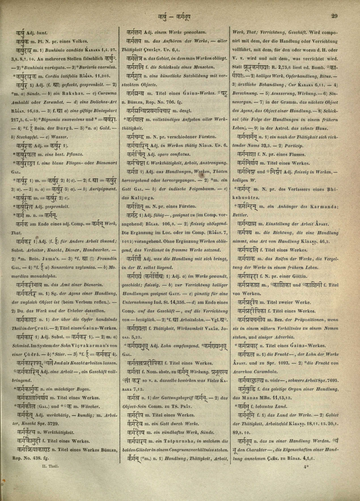
Original text · German · Word type unspecified
karman auch so v. a. Abbildung, Bild. pakṣi˚, druma˚ R. ed. Bomb. 4,25,22. R. ed. Bomb. 4,25,24. [Nachtrag, Band 7]
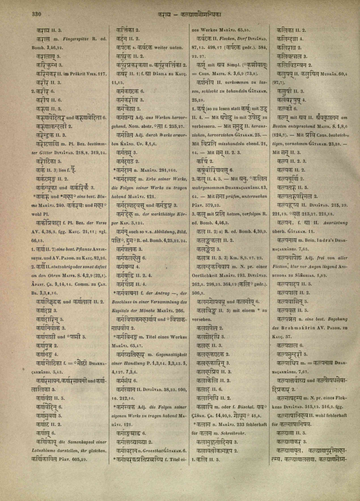
Apte 1890 substantive neuter
Original text · English · substantive neuter
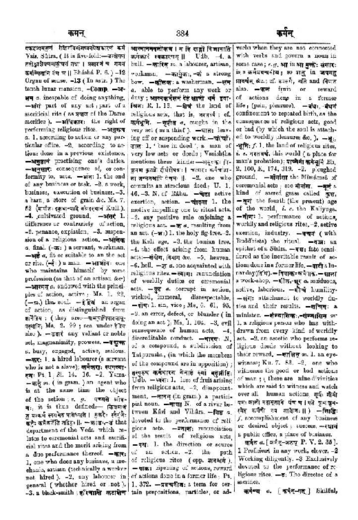
karman n. [kṛ-manin Uṇ. 4. 144] 1 Action, work, deed. 2 Execution, performance. 3 Business, office, duty; saṃprati viṣavaidyānāṃ karma M. 4. 4 A religious rite (it may be either nitya, naimittika or kāmya). 5 A specific action, moral duty. 6 (a) Performance of religious rites as opposed to speculative religion or knowledge of Brahman (opp. jñāna); R. 8. 20. (b) Labour, work. 7 Product, result. 8 A natural or active property (as support of the earth). 9 Fate, the certain consequence of acts done in a former life; karmāyattaṃ phalaṃ puṃsāṃ buddhiḥ karmānusāriṇī Bh. 2. 89, Bh. 2. 94. 10 (In gram.) The object of an action; karturīpsitatamaṃ karma P. I. 4. 49. 11 (In Vaiś. phil.) Motion considered as one of the seven categories of things; thus defined: ([Page 0384-a]) -ekadravyamaguṇaṃ saṃyogavibhogaṣvanapekṣakāraṇaṃ karma Vaiś. Sūt. (It is five-fold: — utkṣepaṇaṃ tato'vakṣepaṇamākuṃcanaṃ tathā . prasāraṇaṃ ca gamanaṃ karmāṃṇyetāni paṃca ca .. Bhāṣā P. 6.) 12 Organ of sense. 13 (In astr.) The tenth lunar mansion. Comp. — akṣama a. incapable of doing anything. — aṃgaṃ part of any act; part of a sacrificial rite (as prayāja of the Darśā sacrifice). — adhikāraḥ the right of performing religious rites. — anurūpa a. 1 according to action or any particular office. 2 according to actions done in a previous existence. — anuṣṭhānaṃ practising one's duties. — anusāraḥ consequence of, or conformity to, acts. — aṃtaḥ 1 the end of any business or task. 2 a work, business, execution of business. 3 a barn, a store of grain &c. Ms. 7. 62 (karmātaḥ ikṣudhānyādi saṃgrahasthānaṃ Kull.). 4 cultivated ground. — aṃtaraṃ 1 difference or contrariety of action. 2 penance, expiation. 3 suspension of a religious action. — aṃtika a. final. — (kaḥ) a servant, workman. — arha a. fit or suitable to an the act or rite. — (rhaḥ) a man. — ājīvaḥ one who maintains himself by some profession (as that of an artisan &c.) — ātman a. endowed with the principles of action, active; Ms. 1. 22. ( — m.) the soul. — iṃdriyaṃ an organ of action, as distinguished from jñāneṃdriya; (they are: — vākpāṇipādapāyūpasthāni; Ms. 2. 99; see under iṃdriya also). — udāraṃ any valiant or noble act, magnanimity, prowess. — udyukta a. busy, engaged, active, zealous. — karaḥ 1 a hired labourer (a servant who is not a slave); karmakarāḥ sthapatyādayaḥ Pt. 1; Śi. 14. 16. 2 Yama. — kartṛ m. (in gram.) an agent who is at the same time the object of the action; e. g. pacyate odanaḥ, it is thus defined: — kriyamāṇaṃ tu yatkarma svayameva prasidhyati . sukaraiḥ svairguṇaiḥ kartuḥ karmakarteti tadviduḥ ... — kāṃḍaḥ, -ḍaṃ that department of the Veda which relates to ceremonial acts and sacrificial rites and the merit arising from a due performance thereof. — kāraḥ 1 one who does any business, a mechanic, artisan (technically a worker not hired). 2 any labourer in general (whether hired or not). 3 a black-smith; hariṇākṣi kaṭākṣeṇa ([Page 0384-b]) ātmānamavalokaya . na hi khaḍgo vijānāti karmakāraṃ svakāraṇam .. Udb. 4 a bull. — kārin m. a labourer, artisan, workman. — kārmukaḥ, -kaṃ a strong bow. — kīlakaḥ a washerman. — kṣama a. able to perform any work or duty; ātmakarmakṣamaṃ dehaṃ kṣātro dharma ivāśritaḥ R. 1. 13. — kṣetraṃ the land of religious acts, that is, bharatavarṣa; cf. karmabhūmi. — gṛhīta a. caught in the very act (as a thief). — ghātaḥ leaving off or suspending work. — caṃ(cāṃ) ḍālaḥ 1 ‘base in deed’, a man of very low acts or deeds; Vasiṣṭha mentions these kinds: — asūyakaḥ piśunaśca kṛtaghno dīrgharoṣakaḥ . catvāraḥ karmacāṃḍālā janmataścāpi paṃcamaḥ ... 2 one who commits an atrocious deed; U. 1. 46. 3 N. of Rāhu. — ceṣṭā active exertion, action. — codanā 1 the motive impelling one to ritual acts. 2 any positive rule enjoining a religious act. — ja a. resulting from an act. — (jaḥ) 1 the holy fig-tree. 2 the Kali age. 3 the banian tree. 4 the effect arising from human acts: — saṃyoga, vibhāga &c. 5 heaven. 6 hell. — jña a. one acquainted with religious rites. — tyāgaḥ renunciation of worldly duties or ceremonial acts. — duṣṭa a. corrupt in action, wicked, immoral, disrespectable. — doṣaḥ 1 sin, vice; Ms. 6. 61, Ms. 6. 95. 2 an error, defect, or blunder (in doing an act); Ms. 1. 104. 3 evil consequence of human acts. 4 discreditable conduct. — dhārayaḥ N. of a compound, a subdivision of Tatpuruṣa, (in which the members of the compound are in apposition); tatpuruṣa karmadhāraya yenāhaṃ syāṃ bahuvrīhiḥ Udb. — dhvaṃsaḥ 1 loss of fruit arising from religious acts. 2 disappointment. — nāman (in gram.) a participial noun. — nāśā N. of a river between Kāśī and Vihāra. — niṣṭha a. devoted to the performance of religious acts. — nyāsaḥ renunciation of the result of religious acts. — pathaḥ 1 the direction or source of an action. 2 the path of religious rites (opp. jñānamārga). — pākaḥ ripening of actions, reward of actions done in a former life; Pt. 1. 372. — pravacanīyaḥ a term for certain prepositions, particles, or ([Page 0384-c]) adverbs when they are not connected with verbs and govern a noun in some case; e. g. ā in ā mukteḥ saṃsāraḥ is a karmapravacanīya; so anu in japamanu prāvarṣat &c.; cf. upasarga, gati and nipāta also. — phalaṃ fruit or reward of actions done in a former life; (pain, pleasure). — baṃdhaḥ, -baṃdhanaṃ confinement to repeated birth, as the consequence of religious acts, good or bad (by which the soul is attached to worldly pleasures &c.). — bhūḥ, bhūmiḥ f. 1 the land of religious rites, i. e. bharatavarṣa, this world (a place for man's probation); prāpyemāṃ karmabhūmiṃ Bh. 2. 100, K. 174, K. 319. 2 ploughed ground. — mīmāṃsā the Mīmāṃsā of ceremonial acts; see mīmāṃsā. — mūlaṃ a kind of sacred grass called kuśa. — yugaṃ the fourth (the present) age of the world, i. e. the Kaliyuga. — yogaḥ 1 performance of actions, worldly and religious rites. 2 active exertion, industry. — vacanaṃ (with Buddhists) the ritual. — vajraḥ an epithet of a Śūdra. — vaśaḥ fate considered as the inevitable result of actions done in a former life. — vāṭī a lunar day (tithi). — vipāka = karmapāka. — śālā a work-shop. — śīla, -śūra a. assiduous, active, laborious. — śaucaṃ humility. — saṃgaḥ attachment to worldly duties and their results. — sacivaḥ a minister. — saṃnyāsikaḥ, -saṃnyāsin m. 1 a religious person who has withdrawn from every kind of worldly act. 2 an ascetic who performs religious deeds without looking to their reward. — sākṣin m. 1 an eye-witness; Ku. 7. 83. 2 one who witnesses the good or bad actions of man; (there are nine divinities which are said to witness and watch over all human actions; sūryaḥ somo yamaḥ kālo mahābhūtāni paṃca ca . ete śubhāśubhasyeha karmaṇo nava sākṣiṇaḥ ..) — siddhiḥ f. accomplishment of any business or desired object; success. — sthānaṃ a public office, a place of business.
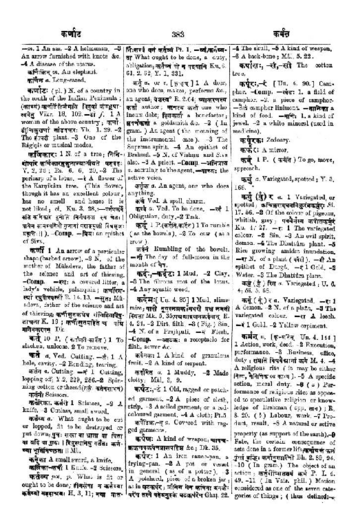
Cappeller 1887 substantive neuter
Original text · German · substantive neuter
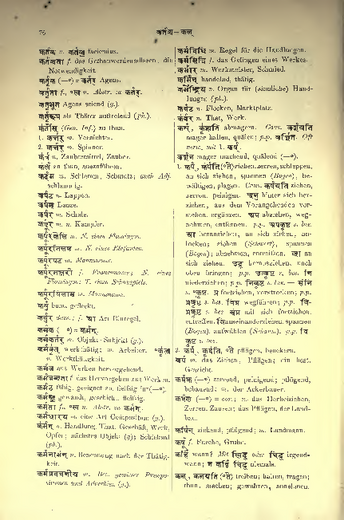
kárman n. Handlung, That, Geschart, Werk, Opfer; nächstes Objekt (g); Schicksa (ph.).
Burnouf 1866 substantive neuter
Original text · French · substantive neuter
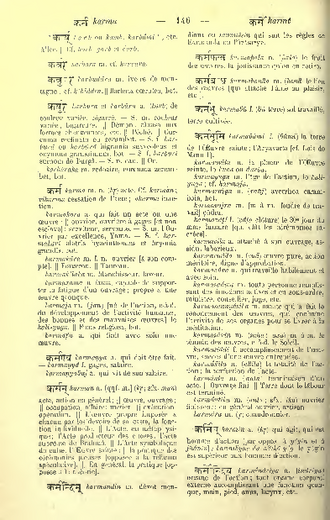
karman karman n. [qqf. m.] (kṛ; sfx. man) acte, action en général; œuvre, ouvrage; occupation, affaire; métier; exécution, opération. L'œuvre propre imposée à chacun par les devoirs de sa caste, la fonction individuelle. L'Acte, en métaphysique; l'Acte producteur des choses, l'acte suprême de Brahmā. L'Acte symbolique du culte, l'Œuvre sainte; la pratique des cérémonies pieuses [opposée à la religion spéculative]. En genéral, la pratique [opposée à la théorie].
Occurrences in source texts (80)
DYS 2 occurrences
GoS 1 occurrence
HP 3 occurrences
IVU 2 occurrences
MAN 1 occurrence
PYS 5 occurrences
SiSa 53 occurrences
SiSa 1.4-1.9: Begrenzte Wege 5 occurrences
Direct occurrences
SiSa 1.20-1.31: Karma und Erkenntnis 13 occurrences
Direct occurrences
SiSa 1.65-1.70: Māyā-Aufhebung 2 occurrences
Direct occurrences
SiSa 1.93-1.99: Karmische Verkörperung 4 occurrences
Direct occurrences
SiSa 2.35-2.40: Jīva und Karma 5 occurrences
Direct occurrences
SiSa 2.41-2.43: Māyā-Projektion 2 occurrences
Direct occurrences
11 more source pages
SiSa 2.49-2.54: Befreiungswissen 4 occurrences
Direct occurrences
SiSa 3.1-3.10: Herzlotus und Prāṇa 2 occurrences
Direct occurrences
SiSa 3.61-3.67: Paricaya und Niṣpatti 5 occurrences
Direct occurrences
SiSa 5.144-5.155: Ājñā und Khecarī 2 occurrences
Direct occurrences
-
SiSa 5.145 Segment 13
-
SiSa 5.153 Segment 11
SiSa 5.156-5.181: Sahasrāra 2 occurrences
Direct occurrences
-
SiSa 5.167 Segment 23
-
SiSa 5.172 Segment 7
SiSa 5.223-5.233: Praxis im Leben 2 occurrences
Direct occurrences
-
SiSa 5.228 Segment 3
-
SiSa 5.228 Segment 7
SS 2 occurrences
SVU 9 occurrences
SVU 5.7–5.11: The Wandering Self 3 occurrences
Direct occurrences
SVU 6.1–6.6: Lord of Cosmic Unfolding 5 occurrences
Direct occurrences
Continue with AYI Free
Image source: AYI archive.