

nāda नाद – sound; inner tone; nāda
substantive masculine · Word type unspecified
Dictionary sources
AYI dictionary substantive masculine
sound; inner tone; nāda
Cappeller 1891 substantive masculine
Original text · English · substantive masculine
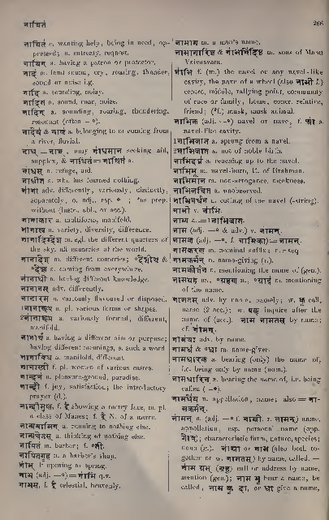
nādá ·m. loud sound, cry, roaring, thunder, sound or noise i.g.
Monier-Williams 1872 substantive masculine
Original text · English · substantive masculine
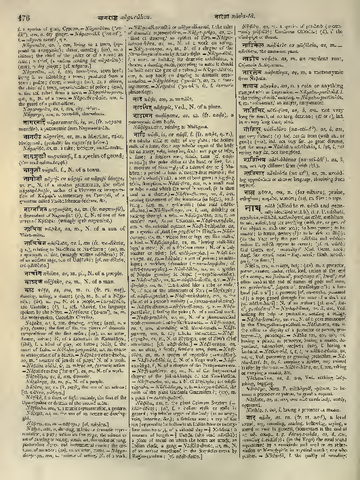
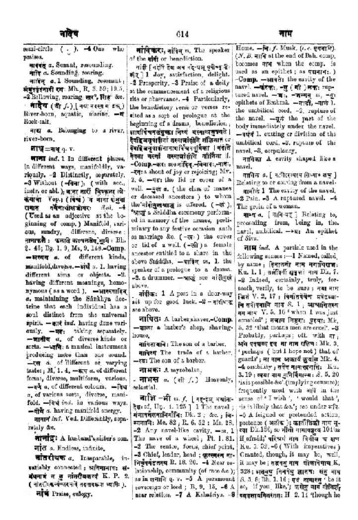
nāda nāda, as, m. (fr. rt. nad), a loud sound, cry, sounding, roaring, bellowing, crying, a sound or tone in general, (sometimes at the end of an adj. comp., e. g. dāruṇa-nāda, as, ā, am, sounding dreadfully); (in the Yoga) the nasal sound represented by a semicircle and used as an abbre- viation or hieroglyphic in mystical words; one who praises.
Petersburger 1855 substantive masculine · Word type unspecified
Original text · German · substantive masculine
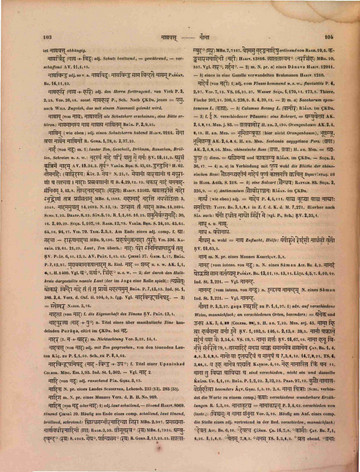
nādá (von nad) m. 1〉 lauter Ton, Geschall, Dröhnen, Rauschen, Brüllen, Schreien u. s. w.: na̱dasyà nā̱de parì pātu me̱ manàḥ ṚV. 10,11,2. a̱ra̱saṃ kṛ̱trimàṃ nā̱dam AV. 19,34,3. tūrya˚ VARĀH. BṚH. S. 45,62. dundubhi˚ H. 62. bhīmanādaiḥ (vāridasya) CĀT. 3. megha˚ N. 21,7. meghānāṃ vāraṇānāṃ ca mayūrāṇāṃ ca lakṣmaṇa . nādāḥ prasravaṇānāṃ ca R. 4,29,12. R. 4,29,13 cakāra nādaṃ ghananādasaṃnibham R. 5,42,8. toyadanādanādāḥ (marutaḥ) HARIV. 13162. athāntarīkṣe nādo 'bhūddroṇaṃ tatra praśaṃsatām MBH. 4,1885. mahānādaṃ nadanti bhayapīḍitāḥ MBH. 5,3548. nādamamuñcat MBH. 14,2693. N. 13,12. utsṛjya taṃ nādam MBH. 14,2694. SUND. 1,33. DRAUP. 8,22. SĀV. 5,75. R. 1,1,66. R. 1,16,25. śakunairvalgunādaiḥ R. 30,16. R. 2,40,29. SUŚR. 1,107,10. RAGH. 12,79. VARĀH. BṚH. S. 24,25. VARĀH. BṚH. S. 45,64. VARĀH. BṚH. S. 64,10. VARĀH. BṚH. S. 94,17. VID. 79. TRIK. 2,5,2. Am Ende eines adj. comp. f. āḥ gadayā — dāruṇanādayā MBH. 9,586. praharṣamuktanādā (purī) VID. 336. KATHĀS. 19,65. KATHĀS. 21,29. Laut, Ton überh.: nādaḥ paro 'bhinidhānāddhruvaṃ tat ṚV. PRĀT. 6,11. ṚV. PRĀT. 13,2. AV. PRĀT. 1,13. AV. PRĀT. 1,43. ŚIKṢĀ 37. JAIM. 1,17. BHĀG. P. 7,12,27. śṛṇvanrāmakathānādam R. Einl. nāda = śabda u. s. w. AK. 1,1,6,1. H. 1400. Vgl. a˚, karṇa˚, siṃha˚ u. s. w. — 2〉 der durch den Halbkreis dargestellte nasale Laut (der im Yoga eine Rolle spielt): (nyaset) oṃkāraṃ vindau nāde taṃ taṃ tu prāṇe mahatyamum BHĀG. P. 7,15,53. Ind. St. 1,386. Ind. St. 2,4. Verz. d. Oxf. H. 104,b,9. fgg. Vgl. nādavindūpaniṣad. — 3〉 = stotar NAIGH. 3,16.
Original text · German · Word type unspecified
nāda 1〉 hṛtkaṇṭhamūrdhanādāḥ kramādamī mandramadhyatārākhyāḥ Laute, Töne Verz. d. Oxf. H. 200,b,3. — 2〉 WEBER, RĀMAT. UP. 311. fg. WEBER, RĀMAT. UP. 314. fg. WEBER, RĀMAT. UP. 333. fgg. KATHĀS. 46,116. — Vgl. mahā˚.
Böhtlingk 1879 substantive masculine
Original text · German · substantive masculine
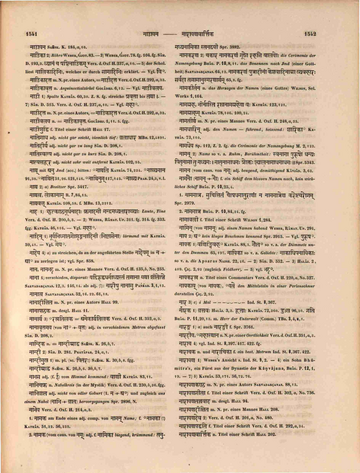
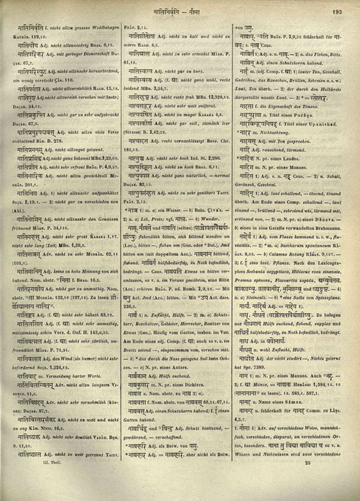
nādá m. (adj. Comp. f. ā) — 1〉 lauter Ton, Geschall, Gedröhne, das Rauschen, Brüllen, Schreien u. s. w. Laut, Ton überh. — 2〉 der durch den Halbkreis dargestellte nasale Laut. — 3〉 *= stotar.
Apte 1890 substantive masculine
Original text · English · substantive masculine
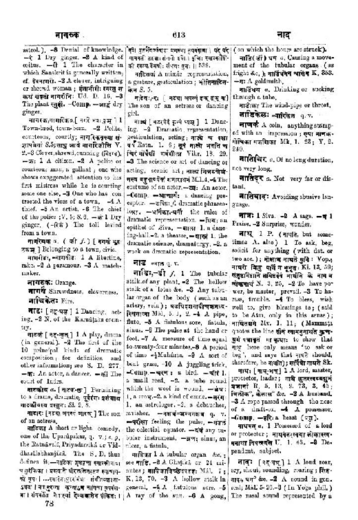
nādaḥ [nad-ghañ] 1 A loud roar, ery, shout, sounding, roaring; siṃhanādaḥ, ghana˚ &c. 2 A sound in general; Māl. 5. 20. 3 (In Yoga phil.) The nasal sound represented by a ([Page 0614-a]) semi-circle ( ◡ ). 4 One who praises.
Cappeller 1887 substantive masculine
Original text · German · substantive masculine
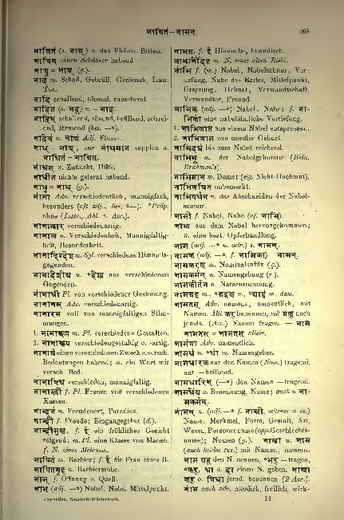
nādá m. Schall, Gebrüll, Geräusch, Laut, Ton.
Burnouf 1866 substantive masculine
Original text · French · substantive masculine
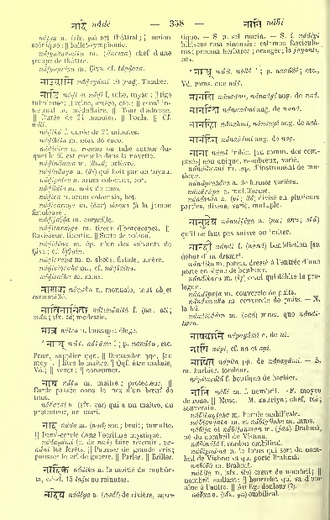
nāda nāda m. (nad) son; bruit; tumulte. Demi-cercle dans l'écriture mystique. nādayāmi (c. de nad) faire retentir: vanāni les forêts. Pousser de grands cris; pousser le cri de guerre. Parler. Briller.
Occurrences in source texts (59)
DYS 2 occurrences
HP 44 occurrences
8 more source pages
HP 4.12-4.19: Path of Nāda 8 occurrences
Direct occurrences
HP 4.27*1-4.35: Rājayoga and Haṭha 3 occurrences
Direct occurrences
HP 4.35*1-4.36: Signs of Samādhi 2 occurrences
Direct occurrences
HP 4.37-4.46: Listening to Nāda 7 occurrences
Direct occurrences
HP 4.47-4.55*4: Nāda Binds the Mind 14 occurrences
Direct occurrences
HTK 3 occurrences
SiSa 6 occurrences
SiSa 5.38-5.47: Nāda-Laya 4 occurrences
Direct occurrences
VBT 4 occurrences
Continue with AYI Free
Image source: AYI archive.