

ātman आत्मन् – self; essence; soul; individual self; body
substantive masculine · Word type unspecified
Dictionary sources
AYI dictionary substantive masculine
self; essence; soul; individual self; body
Cappeller 1891 substantive masculine
Original text · English · substantive masculine
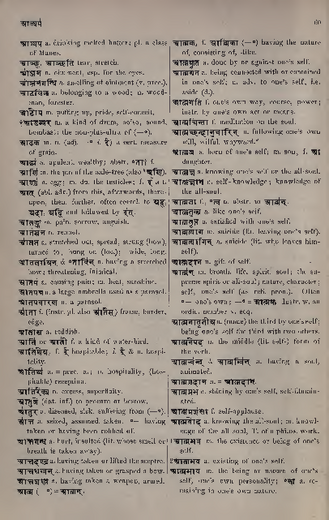
ātmán ·m. breath, life, spirit, soul; the supreme spirit or all-soul; nature, character; self, one's self (as refl. pron.). Often °-- one's own; --° = ātmaka. Instr. w. an ordin. number -> seq.
Monier-Williams 1872 substantive masculine
Original text · English · substantive masculine
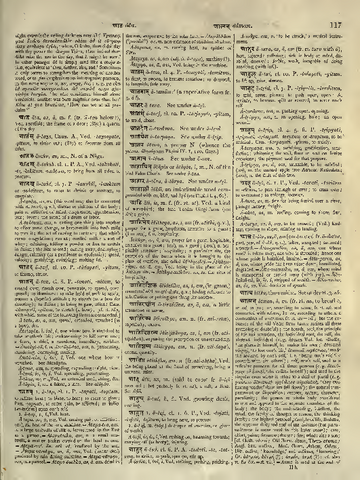
ātman ātman, ā, m. (fr. rt. an, to breathe, or at, to go; or, according to some, fr. rt. ah and connected with aham, I; or, according to others, a contraction of avatman fr. rt. av = vā; but the ex- istence of the old Vedic form tman makes all these etymologies doubtful); the breath, soul, the principle of life and sensation, the individual soul, the self, the abstract individual (e. g. ātman Ved. loc. dhatte, ‘he places in himself, he makes his own;’ ātmanā vi-yuj, ‘to lose one's life;’ ātmanā saptamas, ‘made the seventh by one's self,’ i. e. ‘being one's self the seventh with six others’); self, one's self, used as a reflexive pronoun for all three persons (e. g. ātmā- naṃ sā hanti, ‘she strikes herself’); and used in the singular even when it refers to a dual or plural (e. g. putram ātmanaḥ spṛṣṭvā nipetatuḥ, ‘they two having touched their son fell down’); the natural tem- perament or disposition; essence, nature, character, peculiarity; the person or whole body considered as one and opposed to the separate members of the body; the body; the understanding, intellect, the mind, the faculty of thought or reason, the thinking faculty; the highest personal principle of life, Brahma, the supreme deity and soul of the universe (but para- mātman is more usual in this latter sense); care, effort, pains; firmness; the sun; fire; wind; air; a son; [cf. Goth. ahma; Old Germ. ātum, Them. ātuma; Angl. Sax. œdhm; Mod. Germ. Athem, Odem; Hib. adhm, ‘knowledge,’ and adhma, ‘knowing;’ Gr. ἀϋτμήν, ἀϋτμή (?); ἀτμός, ἀτμή (?): cf. also rt. ἄω &c. = rt. vā.]
Petersburger 1855 substantive masculine · Word type unspecified
Original text · German · substantive masculine
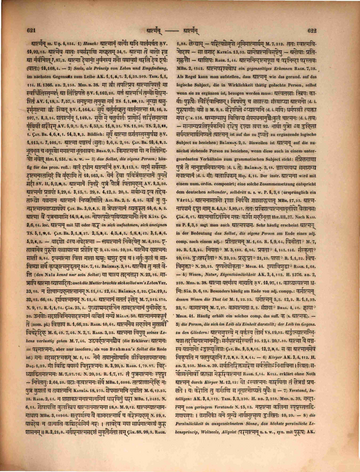
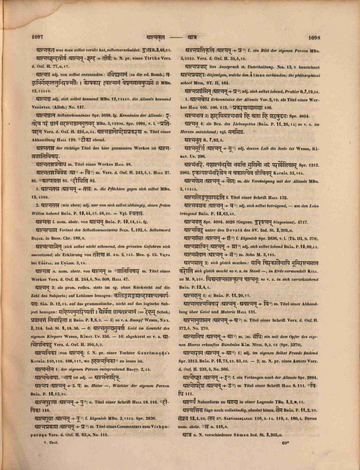
ātmán m. Uṇ. 4,154. 1〉 Hauch: ā̱tmāna̱ṃ vasyò a̱bhi vātàmarcata ṚV. 10,92,13. ā̱tmeva̱ vāta̱ḥ svasàrāṇi gacchatam ṚV. 10,34,7. ā̱tmā te̱ vāto̱ raja̱ ā nàvīnot ṚV. 7,87,2. ā̱tmā de̱vānā̱ṃ bhuvànasya̱ garbhò yathāva̱śaṃ carati de̱va eṣàḥ (vātaḥ) ṚV. 10,168,4. — 2〉 Seele, als Princip von Leben und Empfindung, im nächsten Gegensatz zum Leibe AK. 1,1,4,7. AK. 1,3,4,35. AK. 1,1,4,209. TRIK. 1,1,114. H. 1366. H. an. 2,258. MED. n. 38. mā tvā̀ tapatpri̱ya ā̱tmāpi̱yanta̱ṃ mā svadhìtista̱nva1̱̀ ā tìṣṭhipatte ṚV. 1,162,20. yattà ā̱tmanì ta̱nvā̀ṃ gho̱ramastì AV. 1,18,3. AV. 7,57,1. samā̱tmā ta̱nuvā̱ mamà TS. 1,1,10,12. bhūmyā̱ asu̱rasṛ̀gā̱tmā kvà svit ṚV. 1,164,4. sūrya̱ṃ cakṣùrgacchatu̱ vātàmā̱tmā ṚV. 10,16,3. ṚV. 10,107,7. ṚV. 8,3,24. śa̱tātmàn ṚV. 1,149,3. sūryò me̱ cakṣu̱rvātàḥ prā̱ṇo̱3̱̀ ntarìkṣamā̱tmā pṛ̀thi̱vī śarī̀ram AV. 5,9,7. AV. 5,5,7. AV. 6,53,2. AV. 11,8,31. VS. 11,20. TS. 2,3,11,1. ŚAT. BR. 4,6,1,1. ŚAT. BR. 14,3,2,5. Bildlich: sūryà ā̱tmā jagàtasta̱sthuṣàśca ṚV. 1,115,1. ṚV. 7,101,7. ā̱tmā ya̱jñasyà (sutaḥ) ṚV. 9,6,8. ṚV. 9,2,10. ŚAT. BR. 10,4,2,3. bhūtabhṛnna ca bhatūstho mamātmā bhūtabhāvanaḥ BHAG. 9,5. kimātmanā yo na jitendriyo bhavet HIT. I, 151. u. s. w. — 3〉 das Selbst, die eigene Person; häufig für das pron. refl.: balaṃ dadhā̀na ā̱tmanì ṚV. 9,113,1. yakṣma̱ṃ sarvàsmādā̱tmana̱stami̱daṃ vi vṛ̀hāmi te ṚV. 10,163,5. yenà de̱vā pa̱vitrèṇā̱tmānàṃ puna̱te sadā̀ SV. II, 5,2,8,5. ā̱tmānàṃ pi̱taràṃ pu̱traṃ pautràṃ pitāma̱ham AV. 9,5,30. ā̱tmanā̀ pra̱jayā̀ AV. 5,29,6. AV. 3,15,7. AV. 3,29,8. AV. 4,12,2. AV. 4,20,5. sarvābhya eva taddevatābhyo yajamāna ātmānaṃ niṣkrīṇīte AIT. BR. 2,3. AIT. BR. 6,35. kathaṃ nu punarātmānamāpyāyayeya ŚAT. BR. 3,9,1,3. sa tredhātmānaṃ vyakuruta ŚAT. BR. 10,6,5,3. ātmā vai putranāmāsi ŚAT. BR. 14,9,4,26. nopaspṛśetpṛthivyātmānau tena KĀTY. ŚR. 2,6,14. loc. ātman mit dhā oder kar in sich aufnehmen, sich aneignen TS. 5,1,9,6. ŚAT. BR. 3,1,3,27. ŚAT. BR. 2,5,3,4. ŚAT. BR. 4,5,4,5. ŚAT. BR. 1,8,1,42. ŚAT. BR. 3,1,4,6. ŚAT. BR. 5,2,1,2. — yādṛśo 'sya bhavedātmā — tathātmānaṃ nivedayet M. 4,254. etāvāneva puruṣo yajjāyātmā prajeti ha M. 9,45. M. 9,130. M. 10,28. ātmaiva hyātmanaḥ sākṣī M. 8,84. evamātmā pitā mātā śvaśrūḥ śvaśura eva ca . bhartuḥ kulaṃ ca sāvitryā sarvaṃ kṛcchātsamuddhṛtam SĀV. 7,14. BRĀHMAṆ. 3,11. ātmaiva tu nalaṃ vetti (den Nala kennt nur sein Selbst) yā cāsya tadanantarā N. 22,16. mātrāpi ātmā vyāpāditaḥ auch die Mutter brachte sich selbstumʼs Leben VET. 33,10. na śocāmyahamātmānam N. 11,11. N. 12,64. BRĀHMAṆ. 1,32. ŚĀK. 19,1. ŚĀK. 32,12. ŚĀK. 66,18. darśayātmānam N. 11,8. ātmānaṃ satataṃ rakṣet M. 7,213. M. 7,170. N. 9,17. R. 1,1,74. ŚĀK. 25,4. puṇyāśramadarśanena tāvadātmānaṃ punīmahe ŚĀK. 7,20. ubhayoḥ sadṛśavinimayādātmānaṃ vañcitaṃ manye MĀLAV. 50. ātmānamavadhūtaṃ te (nom. pl.) vijñāya R. 1,66,22. RAGH. 10,61. ātmanaiva sahāyena sukhārthī vicarediha M. 6,49. M. 7,46. N. 2,7. RAGH. 3,35. ātmanā viyuj seines Lebens verlustig gehen M. 7,46. udvavarhātmanaścaiva (die Erklärer: ātmanaḥ = paramātmanaḥ, aber nur insofern, als von Brahmanʼs Selbst die Rede ist) manaḥ sadasadātmakam M. 1,14. nemaṃ tathānuśocāmi jīvitakṣayamātmanaḥ DAŚ. 1,29. māṃ viddhi vayasyaṃ piturātmanaḥ R. 3,20,2. RAGH. 1,79. RAGH. 1,87. vidadhyāddhitamātmanaḥ M. 7,57. M. 7,76. N. 20,31. R. 1,7,17. taṃ putramātmanaḥ spṛṣṭvā — nipetatuḥ R. 2,64,28. jaṭāḥ kṛtvātmanaḥ sarve MBH. 1,6086. tatprāṇāndehi naḥ putra kuśalaṃ ca tavātmani KATHĀS. 18,275. śeṣamātmani yuñcīta M. 6,12. M. 6,25. M. 6,38. RAGH. 2,41. na śaśākātmanātmānamiyaṃ dhārayituṃ dharā MBH. 1,2485. N. 6,11. gopāyanti kulastriya ātmānamātmanā N. 18,8. M. 9,12. ātmanyātmānamādhāya MBH. 3,10966. ṛtuparṇasya vai kāmamātmārthaṃ ca karomyaham N. 19,8. yāvadeva na jānāti kaścidarthamimaṃ naraḥ . tāvadeva mayā sārdhamātmasthaṃ kuru śāsanam .. R. 2,21,8. bhartāramātmasadṛśaṃ sukṛtairgatā tvam ŚĀK. 88. ŚĀK. 98,9. RAGH. 1,88. kṣemyām — parityajennṛpo bhūmimātmārtham M. 7,212. tataḥ svātmavinodāya — sā jagāda KATHĀS. 13,52. grāmeṣvātmavisṛṣṭeṣu — amoghāḥ pratigṛhṇantau — āśiṣaḥ RAGH. 1,44. ātmanindātmapūjā ca paranindā parastavaḥ MBH. 2,1542. ātmaparāvabodha ein gegenseitiges Erkennen RAGH. 7,38. Als Regel kann man aufstellen, dass ātman wie das gerund. auf das logische Subject, die in Wirklichkeit thätig gedachte Person, selbst wenn sie zu ergänzen ist, bezogen werden muss: asvatantrāḥ striyaḥ kāryāḥ puruṣaiḥ svairdivāniśam . viṣayeṣu ca sajjantyaḥ saṃsthāpyā ātmano (d. i. puruṣāṇāṃ) vaśe .. M. 9,2. saṃropite 'pyātmani (d. i. mayi) dharmapatnī tyaktā mayā ŚĀK. 151. asmānsādhu vicintya saṃyamadhanānuccaiḥkulaṃ cātmanaḥ (d. i. tava) - sāmānyapratipūrvakamiyaṃ dāreṣu dṛśyā tvayā ŚĀK. 92. bhāryā putro 'tha duhitā sarvamātmārthamiṣyate (ātman ist auf das zu iṣyate zu ergänzende logische Subject zu beziehen) BRĀHMAṆ. 2,3. Bisweilen ist ātman auf die zunächst stehende Person zu beziehen, wenn diese auch in einem untergeordneten Verhältniss zum grammatischen Subject steht: saṃprekṣamāṇā putraṃ te nānurūpamivātmanaḥ (d. i. te) BRĀHMAṆ. 2,18. jñāsyasyadya samāgamya mayātmānaṃ (d. i. māṃ) balādhikam HIḌ. 4,14. Der instr. ātmanā wird mit einem num. ordin. componirt; eine solche Zusammensetzung entspricht dem deutschen selbander, selbdritt u. s. w. P. 6,3,6 (ursprünglich ein Vārtt.). ātmanāsaptamo rājā niryayau gajasāhvayāt MBH. 17,25. ātmanāpañcamaṃ dṛṣṭvā mām R. 4,5,9. R. 5,89,47. tataḥ praviśatyātmanānṛtīyo vaikhānasaḥ ŚĀK. 6,17. ātmanādvitīyena mantraḥ kāryo mahībhṛtā HIT. III, 37. Nach KAIY._zu_P. 6,3,5 sagt man auch ātmapañcama. Sehr häufig erscheint ātman in der Bedeutung das Selbst, die eigene Person am Ende eines adj. comp. nach einem adj.: prītātman M. 1,60. R. 1,9,64. vinītā˚ M. 7,39. R. 1,2,24. niyatā˚ M. 3,188. M. 6,86. prayatā˚ M. 4,145. M. 4,146. saṃskṛtā˚ M. 10,110. duḥkhaparītā˚ N. 23,23. prahṛṣṭā˚ N. 21,25. pāpā˚ R. 1,1,32. viṣavimuktā˚ N. 20,25. puṣpameghīkṛtā˚ MEGH. 44. ijyāviśuddhā˚ RAGH. 1,68. — 4〉 Wesen, Natur, Eigenthümlichkeit AK. 3,4,112. H. 1376. H. an. 2,259. MED. n. 38. ā̱tmā yakṣmàsya naśyati ṚV. 10,97,11. kāvyasyātmā dhvaniḥ SĀH. D. 6,18. Besonders häufig am Ende von adj. compp.: karmātman dessen Wesen die That ist M. 1,22. M. 1,53. dharmātman M. 5,3. M. 12,2. R. 1,1,29. R. 1,23,7. kāmātman M. 7,27. kāmātmatā M. 2,2. saṃśayā˚ BHAG. 4,40. chāyā˚ MEGH. 41. Häufig erhält ein solches comp. das suff. ka (s. ātmaka). — 5〉 die Person, die sich im Leib als Einheit darstellt; der Leib im Gegens. zu den Gliedern: ā̱tmannu̱pasthe̱ na vṛkàsya̱ lomà VS. 19,92. aṅgā̀nyā̱tmanbhi̱ṣajā̱ tada̱śvinā̱tmāna̱maṅgaiḥ samàdhā̱tsaràsvatī VS. 19,93. VS. 12,4. VS. 20,7. VS. 19,10. ātmā vai yajñasya yajamāno 'ṅgānyṛtvijaḥ ŚAT. BR. 9,5,2,16. ŚAT. BR. 12,2,3,6. sa vā ātmānameva vikṛpati na pakṣapucchāni ŚAT. BR. 7,2,2,8. ŚAT. BR. 7,3,1,44. — 6〉 Körper AK. 3,4,112. H. an. 2,258. MED. n. 39. sarvātiriktasāreṇa sarvatejo'bhibhāvinā . sthitaḥ sarvonnatenorvīṃ krāntvā merurivātmanā RAGH. 1,14. KULL. erklärt ohne Noth ātman durch Körper M. 12,12: yo 'syātmanaḥ kārayitā taṃ kṣetrajñaṃ pracakṣate . yaḥ karoti tu karmāṇi sa bhūtātmocyate budhaiḥ .. — 7〉 Verstand, Intelligenz AK. 3,4,112. TRIK. 3,3,230. H. an. 2,258. MED. n. 39. mandātman von geringem Verstande N. 15,13. naṣṭātmā kalinā spṛṣṭastattadvigaṇayannṛpaḥ . jagāmaikāṃ vane śūnye bhāryāmutsṛjya duḥkhitaḥ N. 10,29. — 8〉 die Persönlichkeit in ausgezeichnetem Sinne, das höchste persönliche Lebensprincip, Weltseele, Allgeist (paramātman u. s. w., syn. mit puruṣa) AK. 3,4,112. H. an. 2,258. MED. n. 39. tame̱va vi̱dvānna bìbhāya mṛ̱tyorā̱tmāna̱ṃ dhīràma̱jara̱ṃ yuvā̀nam AV. 10,8,44. ā̱tmanā̱tmānàma̱bhi saṃ vìveśa VS. 32,11. sa vā ayamātmā sarveṣāṃ bhūtānāmadhipatiḥ sarveṣāṃ bhūtānāṃ rājā ŚAT. BR. 14,5,5,15 (= BṚH. ĀR. UP. 2,5,15). katama ātmeti yo 'yaṃ vijñānamayaḥ prāṇeṣu hṛdyantarjyotiḥ puruṣaḥ ŚAT. BR. 14,7,1,6 (= BṚH. ĀR. UP. 4,3,7.) mahābhāgyāddevatāyā eka ātmā bahudhā stūyate NIR. 7,4. NIR. 14,1. mahāntameva cātmānam (vgl. mahātman) M. 1,15. sattvaṃ rajastamaścaiva trīnvidyādātmano guṇān M. 12,24. Eine Menge Stellen aus den UPANIṢAD findet man in Ind. St. zusammengestellt. — Die Lexicographen haben noch folgende Bedeutungen: — 9〉 Fürsorge (yatna, prayatna) AK. 3,4,112. H. an. 2,258. MED. n. 38. — 10〉 Festigkeit AK. H. an. MED. — 11〉 Sonne. — 12〉 Feuer. — 13〉 Wind H. an. — 14〉 Sohn ŚABDAR._im_ŚKDR. — 15〉 paravyāvartana DHAR._im_ŚKDR. — In den ältern Schriften findet man das ā von ātman nicht selten nach e und go gleich einem kurzen a abgeworfen: eṣu sarveṣu bhūteṣu gūḍho tmā (Bed. 8.) na prakāśate KAṬHOP. 3,12. abhāvāya na bhūtaye tmanaḥ DRAUP. 5,9. kṛtārthaṃ manyate tmānam MBH. 1,7537. MBH. 2,2113. MBH. 2,2521. MBH. 3,12526. so tmakāraṇāt MBH. 1,4016. antardhāya tato tmānam MBH. 1,6713. Im Veda ist der Gebrauch von tman (s. d.) nicht auf diesen Fall beschränkt. — Wohl von an athmen mit suff. man.
Original text · German · Word type unspecified
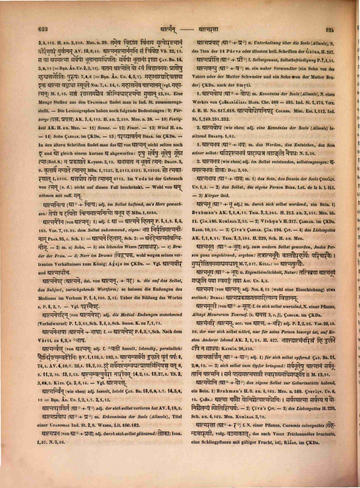
ātman 3〉 als pron. reflex. stets im sg. ohne Rücksicht auf die Zahl des Subjects; auf Lebloses bezogen: kaliṅgagaṅgāśabdāvātmānamarpayataḥ SĀH. D. 12,12. auf das grammatische, nicht auf das logische Subject bezogen: mahiṣyanumariṣyatī . aurveṇa jānatātmānaṃ (= deham Schol.) prajāvantaṃ nivāritā .. BHĀG. P. 9,8,3. — 5〉 so v. a. Rumpf WEBER, Nax. 2,314. Ind. St. 9,18. Ind. St. 9,36. — 6〉 ātmatulyasuvarṇa Gold im Gewicht des eigenen Körpers WEBER, RĀMAT. UP. 356. — 16〉 abgekürzt so v. a. ātmopaniṣad Verz. d. Oxf. H. 394,b,3.
Böhtlingk 1879 substantive masculine · Word type unspecified
Original text · German · substantive masculine
ātmán m. — 1〉 Hauch. — 2〉 Seele (als Princip von Leben und Empfindung). — 3〉 das Selbst, die eigene Person. Häufig in der Function eines Pron. reflex. ātmanā — akarot ipse fecit KĀD. 27,21. KĀD. II,112,18. saṃstambhayātmānamātmanā ipsum ipse R. GORR. 2,53,38. ātmán Loc. mit dhā oder kar in sich aufnehmen, sich aneignen. — 4〉 Wesen, Natur, Eigenthümlichkeit. — 5〉 der Leib im Gegensatz zu den Gliedern, Rumpf. — 6〉 Leib, Körper. — 7〉 Verstand, Intelligenz. — 8〉 die Allseele, Weltseele. — 9〉 abgekürzt für ātmopaniṣad. — 10〉 *Anstrengung. — 11〉 *= dhṛti. — 12〉 *die Sonne. — 13〉 *Feuer. — 14〉 *Sohn. — In Epos wird der Anlaut nach e und o nicht selten elidirt.
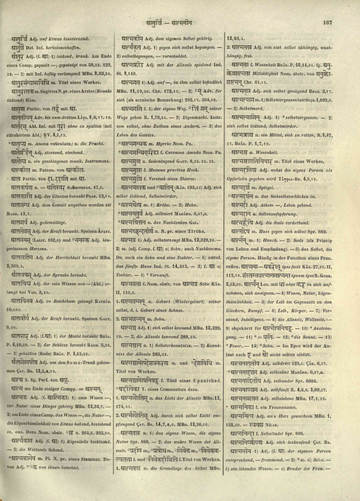
Original text · German · Word type unspecified
ātman , zu 10〉 11〉 14〉 vgl. ZACH. Beitr. [Nachtrag, Band 5]
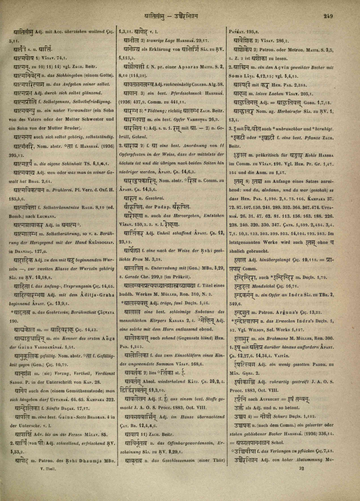
Original text · German · Word type unspecified
ātman I. 5. [Nachtrag, Band 7]
Apte 1890 substantive masculine
Original text · English · substantive masculine
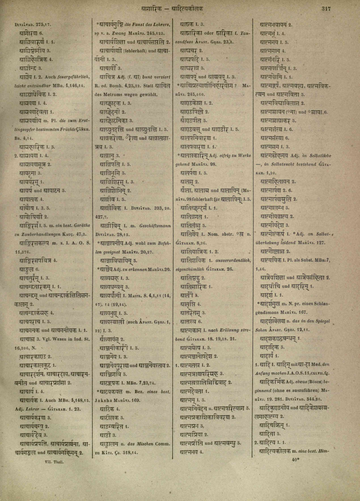
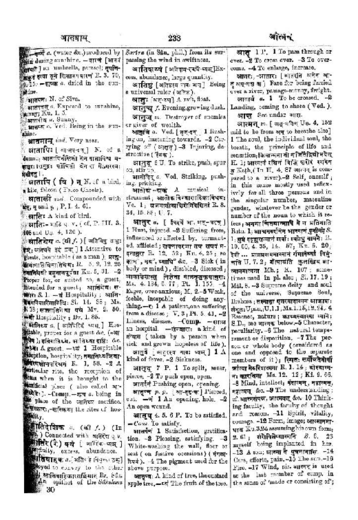
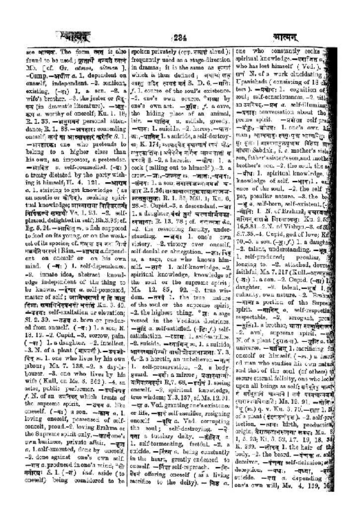
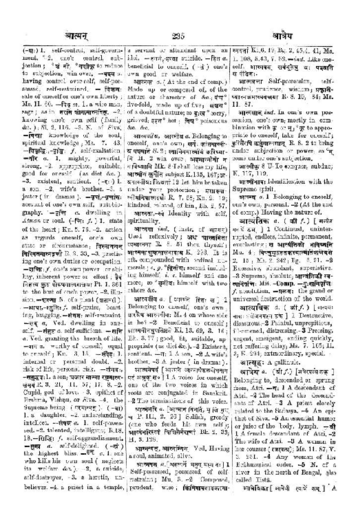
ātman m. [at-maniṇ Uṇ. 4. 152 said to be from an to breathe also] 1 The soul, the individual soul, the breath, the principle of life and sensation; kimātmanā yo na jiteṃdriyo bhavet H. 1; ātmānaṃ rathinaṃ viddhi śarīraṃ rathameva tu Kaṭh. (In H. 4. 87 ātman is compared to a river). 2 Self, oneself; in this sense mostly used reflexively for all three persons and in the singular number, masculine gender, whatever be the gender or number of the noun to which it refers; anayā ciṃtayātmāpi me na pratibhāti Ratn. 1; āśramadarśanena ātmānaṃ punīmahe Ś. 1; guptaṃ dadṛśurātmānaṃ sarvāḥ svapteṣu vāmanaiḥ R. 10. 60, R. 4. 35, R. 14. 57; Ku. 6. 20; devī… prāptaprasavamātmānaṃ gaṃgādevyāṃ vimuṃcati U. 7. 2; gopāyaṃti kulastriya ātmānamātmanā Mb.; K. 107; sometimes used in pl. also; Śi. 17. 19; Māl. 8. 3 Supreme deity and soul of the universe, Supreme Soul, Brahma; tasmādvā etasmādātmana ākāśaḥ saṃbhūtaḥ Up.; U. 1. 1; Ms. 1. 15, Ms. 12. 24. 4 Essence, nature; kāvyasyātmā dhvaniḥ S. D., see ātmaka below. 5 Character, peculiarity. 6 The natural temperament or disposition. 7 The person or whole body (considered as one and opposed to the separate members of it); sthitaḥ sarvonnatenorvī krāṃtvā merurivātmanā R. 1. 14; yosyātmanaḥ kārayitā Ms. 12. 12; Ki. 9. 66. 8 Mind, intellect; maṃdātman, naṣṭātman, mahātman &c. 9 The understanding; cf. ātmasaṃpanna, ātmavat &c. 10 Thinking faculty, the faculty of thought and reason. 11 Spirit, vitality, courage. 12 Form, image; ātmānamādhāya Ku. 3. 24 assuming his own form; Ku. 2. 61; saṃropitepyātmani Ś. 6. 23 myself being implanted in her. 13 A son; ātmā vai putranāmāsi. 14 Care, efforts, pain. 15 The sun. 16 Fire. 17 Wind, air. ātman is used as the last member of comp. in the sense of ‘made or consisting of’; ([Page 0234-a]) see ātmaka. The form tman is also found to be used; kṛtārthaṃ manyate tnānaṃ Mb. [cf. Gr. atmos, aitmen] Comp. — adhīna a. 1 dependent on oneself, independent. 2 sentient. existing. — (naḥ) 1 a son. 2 a wife's brother. 3 the jester or vidūṣaka (in dramatic literature). — anurūpa a. worthy of oneself; Ku. 1. 18; R. 1. 33. — anugamanaṃ personal attendance; R. 1. 88. — apahāra. concealing oneself; kathaṃ vā ātmāpahāraṃ karoti Ś. 1. — apahārakaḥ one who pretends to belong to a higher class than his own, an impostor, a pretender. — ādiṣṭa a. self-counselled. — (ṣṭaḥ) a treaty dictated by the party wishing it himself; H. 4. 121. — ārāma a. 1 striving to get knowledge (as an ascetic or yogin), seeking spiritual knowledge; ātmārāmā vihitaratayāṃ nirvikalpe samādhau Ve. 1. 23. 2 self-pleased, delighted in self; Bh. 3. 93; cf. Bg. 5. 24. — āśin m. a fish supposed to feed on its young, or on the weakest of its species; cf. matsyā iva janā nityaṃ bhakṣayaṃtiparasparaṃ . Rām. — āśraya a. dependent on oneself or on his own mind. — (yaḥ) 1 self dependence. 2 innate idea, abstract knowledge independent of the thing to be known. — īśvara a. self-possessed, master of self; ātmeśvarāṇāṃ na hi ja nu vighnāḥ samādhibhedaprabhavo bhavaṃti Ku. 3. 40. — udayaḥ self-exaltation or elevation; Śi. 2. 30. — udbhava a. born or produced from oneself. — (vaḥ) 1 a son; R. 18. 12. 2 Cupid. 3 sorrow, pain. — (vā) 1 a daughter. 2 intellect. 3 N. of a plant (māṣparṇī.) — upajīvit m. 1 one who lives by his own labour; Ms. 7. 138. 2 a day-labourer. 3 one who lives by his wife (Kull. on Ms. 8. 362). 4 an actor, public performer. — upaniṣad f. N. of an upaniṣad which treats of the supreme spirit. — upama a. like oneself. — (maḥ) a son. — kāma a. 1 loving oneself, possessed of selfconceit, proud. 2 loving Brahma or the Supreme spirit only. — kāryaṃ one's own business, private affair. — kṛta a. 1 self-executed, done by oneself. 2 done against one's own self. — gata a. produced in one's mind; ˚to manorathaḥ Ś. 1. — (taṃ) ind. aside (to oneself) being considered to be ([Page 0234-b]) spoken privately (opp. prakāśaṃ aloud); frequently used as a stage-direction in dramas; it is the same as syagataṃ which is thus defined; aśrāvyaṃ khalu padvastu tadiha syagataṃ mataṃ S. D. 6. — gatiḥ f. 1 course of the soul's existence. 2 one's own course. ˚gatyā by one's own act. — guptiḥ f. a cave, the hiding place of an animal, lair. — grāhin a. selfish, greedy. — ghātaḥ 1 suicide. 2 heresy. — ghātakaḥ, ghātin 1 a suicide, a self-destroyer; K. 174; vyāpādayet vṛthātmānaṃ svayaṃ yo' gnyudakādibhiḥ . avaidhenaiva mārgeṇa ātmaghātī sa ucyate ... 2 a heretic. — ghaṣaḥ 1 a cock (calling out to himself). 2 a crow. — jaḥ, -janman m. — jātaḥ, prabhavaḥ, saṃbhavaḥ 1 a son; tamātmajanmānamajaṃ cakāra R. 5. 36: tatyāmātmānurūpāyāmātmajanmasamutmukaḥ R. 1. 33; Māl. 1; Ku. 6. 28. 2 Cupid. 3 a descendant. — jā 1 a daughter; vaṃdyaṃ yugaṃ caraṇayorjanakātmajāyāḥ R. 13. 78; cf. nagātmajā &c. 2 the reasoning faculty, understanding. — jayaḥ 1 one's own victory. 2 victory over oneself, self-denial or abnegation. — jñaḥ, vid m. a sage, one who knows himself. — jñānaṃ 1 self-knowledge. 2 spiritual knowledge, knowledge of the soul or the supreme spirit; Ms. 12. 85, Ms. 12. 92. 3 true wisdom. — tattvaṃ 1 the true nature of the soul or the supreme spirit. 2 the highest thing. ˚jñaḥ a sage versed in the Vedānta doctrines. — tuṣṭi a. self-satisfied. ( — ṣṭiḥ f.) self. satisfaction. — tyāgaḥ 1 self-sacrifice. 2 suicide. — tyāgin m. 1 a suicide; ātmatyāgityo nāśaucodakabhājanāḥ Y. 3. 6. 2 a heretic, an unbeliever. — trāṇaṃ 1 self-preservation. 2 a bodyguard. — darśaḥ a mirror; prasādamātmīyamivātmadarśaḥ R. 7. 68. — darśanaṃ 1 seeing oneself. 2 spiritual knowledge, true wisdom; Y. 3. 157; cf. Ms. 12. 91. — dā a. Ved. granting one's existence or life. — dānaṃ self-sacrifice, resigning oneself — dūṣi a. Ved. corrupting the soul; self-destroying. — devatā a tutelary deity. — drohin a. 1 self-tormenting, fretful. 2 a suicide. — niṃtya a. being constantly in the heart, greatly endeared to oneself. — niṃdā self-reproach. — nivedanaṃ offering oneself (as a living sacrifice to the deity). — niṣṭha a. ([Page 0234-c]) one who constantly seeks for spiritual knowledge. — parājita a. one who has lost himself (Ved.). — purāṇaṃ N. of a work elucidating the Upaniṣads (consisting of 18 chapters). — prabodhaḥ 1 cognition of the soul; self-consciousness. 2 title of an upaniṣad. — prabha a. self-illuminated. — pravādaḥ conversation about the supreme spirit. — praśaṃsā self-praise. — baṃdhuḥ, -bāṃdhavaḥ 1 one's own kinsman; ātmamātuḥ svamuḥ putrā ātmapituḥ svasuḥ sutāḥ . ātmamātulaputrāśca vijñeyā hyātmabāṃdhavaḥ Śabdak., i. e. mother's sister's son, father's sister's son, and mother's brother's son. 2 the soul, the self. — bodhaḥ 1 spiritual knowledge. 2 knowledge of self. — bhāvaḥ 1 existence of the soul. 2 the self proper, peculiar nature. 3 the body. — bhū a. self-born, self-existent. — (bhūḥ) — yoniḥ 1 N. of Brahmā; vacasyavasite tasmin sasarja giramātmabhūḥ Ku. 2. 53, Ku. 3. 16, Ku. 5. 81. 2 N. of Viṣṇu. 3 of Śiva; Ś. 7. 35. 4 Cupid, god of love; Ku. 3. 70. 5 a son ( — bhūḥ f.) 1 a daughter. 2 talent, understanding. — bhūta a. 1 self-produced; peculiar, belonging to. 2 attached, devoted, faithful; Ms. 7. 217 (Kull. = ātmatulya). — (taḥ) 1 a son. 2 Cupid. — (tā) 1 a daughter. 2 talent. — bhūyaṃ 1 peculiarity, own nature. 2 Brahma. — mātrā a portion of the Supreme spirit. — mānin a. self respecting, respectable. 2 arrogant, proud. — mūrtiḥ 1 a brother; bhrātā svamūrtirātmanaḥ 2 soul, supreme spirit. — mūlī N. of a plant (durālabhā). — mūli n. the universe. — yājin 1 sacrificing for oneself or himself. ( — m.) a learned man who studies his own nature and that of the soul (of others) to secure eternal felicity, one who looks upon all beings as self; sarvabhūteṣu cātmānaṃ sarvabhūtāni cātmani . samaṃ paśyannātmayājī svārājyamadhigachati; Ms. 12. 91. — yoniḥ = ˚bhū (m.) q. v. Ku. 3. 70. — rakṣā 1 N. of a plant (iṃdravāruṇīvṛkṣa). 2 self-protection. — lābhaḥ birth, production, origin; yairātmalābhastvayā labdhaḥ Mu. 3. 1. Mu. 5. 23; Ki. 3. 32, Ki. 17. 19, Ki. 18. 34; K. 239. — loman 1 the hair of the body. 2 the beard. — vaṃcaka a. selfdeceiver. — vaṃcanā self-delusion; selfdeception. — vadhaḥ, -vadhyā, -hatyā. suicide. — vaśa a. depending on one's own will; Ms. 4. 159, Ms. 4. 160 ([Page 0235-a]) — (śaḥ) 1 self-control, self-government. 2 one's control, subjection; ˚śaṃ nī, ˚vaśīkṛ to reduce to subjection, win over. — vaśya a. having control over self, self-possessed, self-restrained. — vikrayaḥ sale of oneself or one's own liberty; Ms. 11. 60. — vid m. 1 a wise man, sage; as in tarati śokamātmavit. 2 knowing one's own self (family &c.); Śi. 2. 116. 3 N. of Śiva. — vidyā knowledge of the soul, spiritual knowledge; Ms. 7. 43. — vivṛddhiḥ, -vṛddhiḥ f. self-exaltation. — vīra a. 1 mighty, powerful, strong. 2 appropriate, suitable, good for oneself (as diet &c.). 3 existent, sentient. — (raḥ) 1 a son. 2 wife's brother. 3 a jester (in dramas). — vṛttaṃ, -vṛttāṃtaḥ account of one's own self, autobiography. — vṛtti a. dwelling in Ātman or soul. ( — ttiḥ f.) 1 state of the heart; Ku. 5. 76. 2 action as regards oneself, one's own state or circumstance; vismāyayan vismitamātmavṛttau R. 2. 33. 3 practising one's own duties or occupation. — śaktiḥ f. one's own power or ability, inherent power or effort; daivaṃ nihatya kuru pauruṣamātmaśaktyā Pt. 1. 361 to the best of one's power. 2 illusion. — śalyā N. of a plant (śatāvarī). — ślāghā, -stutiḥ f. self-praise, boasting, bragging. — saṃyamaḥ self-restraint. — sad a. Ved. dwelling in oneself. — saṃtuṣṭa a. self-sufficient. — sani a. Ved. granting the breath of life. — sama a. worthy of oneself, equal to oneself; Ku. 3. 13. — saṃdehaḥ 1 internal or personal doubt. 2 risk of life, personal risk. — saṃbhavaḥ, — samudbhavaḥ 1 a son; cakāra nāmnā raghumātmasaṃbhavaṃ R. 3. 21, R. 11. 57, R. 17. 8. 2 Cupid, god of love. 3 epithet of Brahmā, Viṣṇu, or Śiva. 4 the Supreme being (paramātman). — (vā) 1 a daughter. 2 understanding, intellect. — saṃpanna a. 1 self-possessed. 2 talented, intelligent; R. 18. 18. — siddhiḥ f. self-aggrandizement. — mukha a. self-delighted. — (khaṃ) the highest bliss. — han a. 1 one who kills his own soul (neglects its welfare &c.). 2 a suicide, self-destroyer. 3 a heretic, unbeliever. 4 a priest in a temple, ([Page 0235-b]) a servant or attendant upon an idol. — hananaṃ, -hatyā suicide. — hita a. beneficial to oneself. — (taṃ) one's own good or welfare.
Cappeller 1887 substantive masculine
Original text · German · substantive masculine
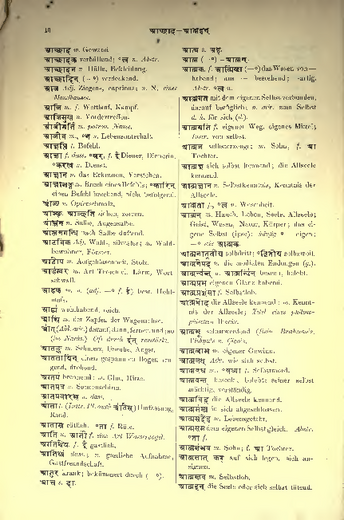
ātmán m. Hauch, Leben, Seele, Allseele; Geist, Wesen,Natur, Körper; das eigene Selbst (ipse); häufig ˚— eigen; —˚ wie ātmaka.
Burnouf 1866 substantive masculine
Original text · French · substantive masculine
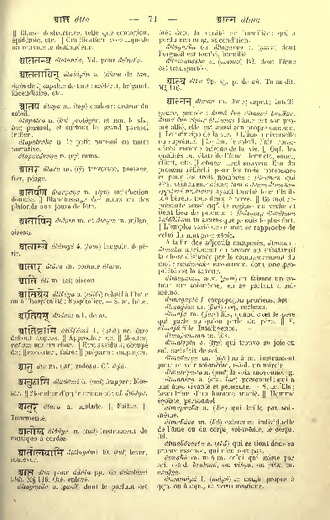
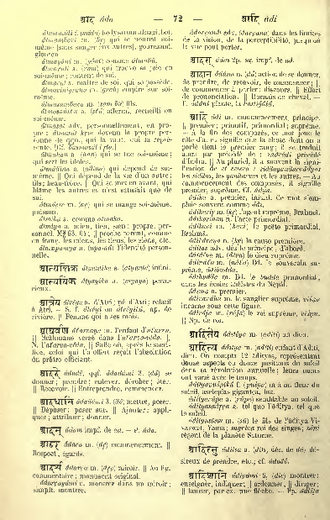
ātman ātman m. âme; esprit; intelligence, pensée: ātmā eva ātmano bandhur, ātmā eva ripur ātmanas l'âme est son propre allié, elle est aussi son propre ennemi. Le principe de la vie. L'âme universelle ou suprême. Le feu, le soleil, l'air, considérés comme origine de la vie. Qqf. les qualités ou états de l'âme: fermeté, souci, effort, etc. ātman tient souvent lieu du pronom réfléchi pour les trois personnes et pour les trois nombres: jitātman qui s'est vaincu soi-même; tam putram ātmanas spṛṣṭvā nipetatus ayant touché leur fils ils tombèrent tous deux à terre. Ce mot représente aussi qqf. le régime du verbe et tient lieu de pronom: jñāsyasy ātmānam balādhikam tu sauras que je suis le plus fort. L'emploi varié de ce mot se rapproche de celui du mot grec αὐτός. A la fin des adjectifs composés, ātman et ātmaka attribuent en propre au substantif la chose désignée par le commencement du mot: rasātmaka savoureux, dont une propriété est la saveur. ātmagatam adv. (gam) en faisant un retour sur soi-même, en se parlant à soimême. ātmaguptā f. carpopogon pruriens, bot. ātmaghoṣa m. (ghuṣ) coq, corbeau. ātmaja m. (jan) fils, quand c'est le père qui parle ou qu'on parle du père. F. ātmajā fille. Intelligence. ātmajanman m. fils. ātmatṛpta a. (tṛp) qui trouve sa joie en soi, satisfait de soi. ātmadarśa m. (dṛś) m à m. instrument pour se voir soi-même, c-à-d. un miroir. ātmanepada n. (pad) la voix moyenne, tg. ātmanīna a. (sfx. īna) personnel; qui a une âme vivante et pensante. — S. m. fils; beau-frère d'un homme marié. Homme égoïste, personnel. ātmaprabha a. (bhā) qui brille par soimême. ātmabhāva m. (bhū) existence individuelle de l'âme ou du corps, soi-même, le corps, Bd. ātmabhāvastha a. (sthā) qui se tient dans sa propre essence, qui n'en sort pas. ātmabhū m. m à m. celui qui existe par soi, c-à-d. brahmā, ou viṣṇu, ou śiva, ou anaṅga. ātmamāyā f. (māyā) la magie propre à qqn. ou à qqc., sa vertu magique. [Page072-1] ātmamūlī f. (mūla) hedysarum alhagi, bot. ātmambhari m. (bhṛ) qui se nourrit soimême [sans songer aux autres], gourmand, glouton. ātmayoni m. (yoni) comme ātmabhū. ātmarati a. (ram) qui trouve sa joie en soi-même; content de soi. ātmavat a. maître de soi, qui se possède. ātmavinigraha m. (grah) empire sur soimême. ātmasambhava m. (sam-bhū) fils. ātmasaṃstha a. (sthā) affermi, recueilli en soi-même. ātmasāt adv. personnellement, en propre: ātmasāt kṛta devenu la propre personne de qqn., qui la vaut, qui la représente. [Cf. bhasmasāt kṛta.] ātmahan a. (han) qui se tue soi-même; qui sert les idoles. ātmādhīna a. (adhīna) qui dépend de soimême. Qui dépend de la vie d'un autre; fils; beau-frère. Qui se met en avant, qui blâme les autres et n'est satisfait que de soi. ātmāśin m. (aś) qui se mange soi-même, poisson. ātmika a. comme ātmaka. ātmīya a. mien, tien, sien; propre, personnel. M§ 63, 64; proche parent, comme en franç. les miens, les tiens, les siens, etc. ātmaupamya n. (upamā) l'identité personnelle.
Derived words
Occurrences in source texts (183)
DYS 9 occurrences
DYS 94–97: Pratyāhāra 4 occurrences
Direct occurrences
GoS 5 occurrences
HP 14 occurrences
HP 4.0*1-4.0*14: Samādhi and Laya 4 occurrences
Direct occurrences
HP 4.11*15-4.11*28: Space and Laya 3 occurrences
Direct occurrences
-
HP 4.11*20 Segment 5
-
HP 4.11*20 Segment 6
-
HP 4.11*20 Segment 12
HP 4.11*29-4.11*31: Transition to Nāda 2 occurrences
Direct occurrences
-
HP 4.11*29 Segment 16
-
HP 4.11*30 Segment 13
HTK 1 occurrence
IVU 4 occurrences
MAN 2 occurrences
MandUp 8 occurrences
MandUp 3-7: Four modes of awareness 2 occurrences
Direct occurrences
PJH 6 occurrences
PJH 3-4: Perceiver and Perceived; Microcosm and Macrocosm 1 occurrence
Direct occurrences
-
PJH 4 Segment 3
PJH 7-8: Tantric Cosmology and the Revelation of Divine Awareness 1 occurrence
Direct occurrences
-
PJH 7 Segment 9
PJH 15-16: Attaining Power, the Joy of Awareness (cidānanda), and Liberation While Living (jīvanmukti) 2 occurrences
Occurrences through derived words
PYS 9 occurrences
SiSa 60 occurrences
SiSa 1.1-1.3: Das eine Wissen 2 occurrences
Direct occurrences
SiSa 1.35-1.44: Täuschungs-Gleichnisse 8 occurrences
Direct occurrences
SiSa 1.45-1.50: Rückkehr zum Bewusstsein 4 occurrences
Direct occurrences
Occurrences through derived words
-
SiSa 1.49 Segment 7
SiSa 1.51-1.64: Selbst als Licht 21 occurrences
Direct occurrences
-
SiSa 1.51 Segment 9
-
SiSa 1.52 Segment 10
-
SiSa 1.53 Segment 5
-
SiSa 1.54 Segment 14
-
SiSa 1.55 Segment 9
-
SiSa 1.55 Segment 12
-
SiSa 1.56 Segment 11
-
SiSa 1.57 Segment 17
-
SiSa 1.58 Segment 15
-
SiSa 1.59 Segment 9
-
SiSa 1.60 Segment 15
-
SiSa 1.61 Segment 11
-
SiSa 1.62 Segment 22
-
SiSa 1.63 Segment 1
-
SiSa 1.63 Segment 2
-
SiSa 1.63 Segment 5
-
SiSa 1.64 Segment 1
-
SiSa 1.64 Segment 2
-
SiSa 1.64 Segment 4
Occurrences through derived words
14 more source pages
SiSa 1.65-1.70: Māyā-Aufhebung 2 occurrences
Direct occurrences
-
SiSa 1.68 Segment 10
Occurrences through derived words
-
SiSa 1.66 Segment 17
SiSa 1.82-1.90: Guṇas und Gegenstände 2 occurrences
Direct occurrences
SiSa 2.49-2.54: Befreiungswissen 2 occurrences
Direct occurrences
SiSa 3.55-3.60: Ghaṭāvasthā 3 occurrences
Direct occurrences
SiSa 4.1-4.8: Yonimudrā-Kreislauf 2 occurrences
Direct occurrences
-
SiSa 4.3 Segment 13
Occurrences through derived words
-
SiSa 4.7 Segment 8
SiSa 5.94-5.101: Mūlādhāra-Siddhis 2 occurrences
Direct occurrences
SiSa 5.144-5.155: Ājñā und Khecarī 2 occurrences
Direct occurrences
-
SiSa 5.152 Segment 14
-
SiSa 5.152 Segment 16
SiSa 5.208-5.222: Rājayoga 2 occurrences
Direct occurrences
-
SiSa 5.212 Segment 17
-
SiSa 5.214 Segment 7
SS 7 occurrences
SVU 30 occurrences
SVU 1.1-1.3: The Search for the Cause 4 occurrences
Direct occurrences
SVU 1.7-1.12: Triad and Freedom 4 occurrences
Direct occurrences
SVU 1.13-1.16: The Hidden Fire 4 occurrences
Direct occurrences
SVU 2.12-2.13: Signs of the Fire of Yoga 1 occurrence
Occurrences through derived words
-
SVU 2.12 Segment 8
SVU 2.14-2.16: Self-Luminous and Unbound 2 occurrences
Direct occurrences
10 more source pages
SVU 3.19-3.21: Beyond the Senses 2 occurrences
Direct occurrences
SVU 5.7–5.11: The Wandering Self 2 occurrences
Direct occurrences
SVU 6.1–6.6: Lord of Cosmic Unfolding 2 occurrences
Direct occurrences
SVU 6.7–6.13: Lord of All Lords 2 occurrences
Direct occurrences
VBT 28 occurrences
VBT 1–3: Devī’s Question 2 occurrences
Direct occurrences
-
VBT 3 Segment 4
Occurrences through derived words
-
VBT 3 Segment 19
VBT 11–13: Fixations Rejected 2 occurrences
Direct occurrences
-
VBT 11 Segment 4
Occurrences through derived words
-
VBT 11 Segment 21
10 more source pages
VBT 93–100: Pain and Desire 2 occurrences
Direct occurrences
-
VBT 98 Segment 8
Occurrences through derived words
-
VBT 99 Segment 6
VBT 101–109: Śiva-Identity 2 occurrences
Direct occurrences
-
VBT 108 Segment 9
Occurrences through derived words
-
VBT 108 Segment 11
VBT 130–138: Name and Fourfoldness 4 occurrences
Direct occurrences
VBT 146–155: Inner Rituals 3 occurrences
Direct occurrences
Continue with AYI Free
Image source: AYI archive.