

etad एतद् – this; this one
adverb · particle · pronoun · pronoun dem · substantive neuter · Word type unspecified
Dictionary sources
AYI dictionary pronoun · pronoun dem
Cappeller 1891 Word type unspecified
Original text · English · Word type unspecified
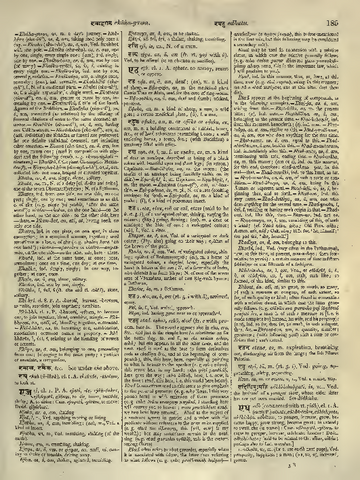
etád ·(n. sgl. of etá) adv. thus, in this manner.

Monier-Williams 1872 particle · Word type unspecified
Original text · English · particle
Etad, ind. in this manner, thus, so, here, at this time, now (e. g. etat suptaḥ, asleep in this manner; na vā u etad mriyase, not at this time dost thou die).
Original text · English · Word type unspecified
etad etad, eṣas, eṣā, etad (fr. e with pro- nom. base ta. The vowel e appears also in eka, eva, &c.; and just as the simple base ta substitutes sa for the nom. sing. m. and f., so eta makes eṣas, eṣā; but eta appears in all the other cases, and the neut. etad is used as the base to form derivatives such as etadīya &c., and at the beginning of com- pounds), this, this here, here, especially as pointing to what is nearest to the speaker (e. g. eṣa vāṇaḥ, this arrow here in my hand; eṣa yāti panthāḥ, here goes the way; eṣa kālaḥ, here, i. e. now, is the time; etad, this here, i. e. this world here below). Etad is sometimes used in this sense to give emphasis to the personal pronouns (e. g. eṣo 'ham, I this very person here) or with omission of those pronouns (e. g. eṣa tvāṃ svargaṃ nayāni, I standing here will convey you to heaven; etau praviṣṭau svaḥ, we two here have entered). Etad as the subject of a sentence agrees in gender and number with the predicate without reference to the noun to be supplied (e. g. etad me dhanam, this [scil. cow] is my wealth); but may sometimes remain in the neut. sing. (e. g. etad guruṣu vṛttiḥ, this is the custom among Gurus).
Original text · English · Word type unspecified
Etad often refers to what precedes, especially when it is associated with idam, the latter then referring to what follows (e. g. eṣa prathamaḥ kalpaḥ — anukalpas to ayaṃ jñeyaḥ, this before-mentioned is the first rule, but this following may be considered a secondary rule).
Original text · English · Word type unspecified
Etad may be used in connection with a relative clause, in which case the relative generally follows (e. g. eṣa caiva gurur dharmo yam pravakṣ- yāmy ahaṃ tava, this is the important law, which I will proclaim to you).
Original text · English · Word type unspecified
Etad appears at the beginning of compounds, as in the following examples.
Petersburger 1855 adverb · Word type unspecified
Original text · German · adverb
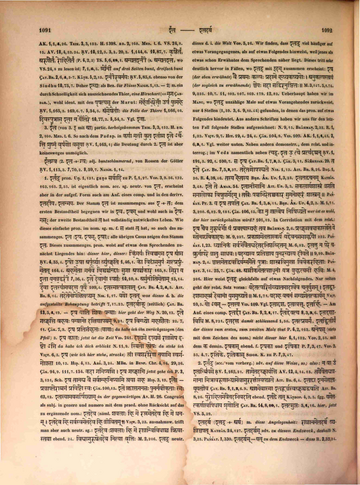
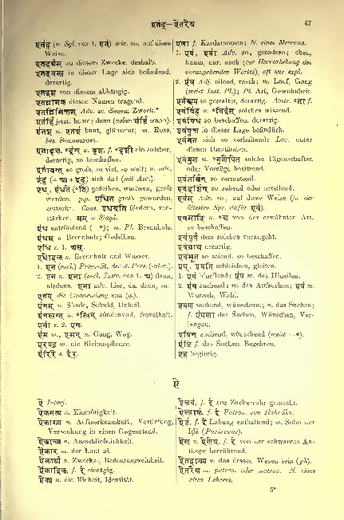
2. etád (acc. vom vorherg.) adv. auf diese Weise, so; also: na vā ù e̱tanmrìyase ṚV. 1,162,21. tāme̱tada̱cchāyànti AV. 12,4,14. AV. 12,4,15. tathaivaitadyajamānā mitrāvaruṇābhyāmevāsurarakṣāṃsyapaghnate AIT. BR. 6,4. etadvā enametallaghūyatīva ŚAT. BR. 9,1,2,6. ŚAT. BR. 9,1,2,9. annamevāsmā etadūrjasvacchaśvadbhavati AIT. BR. 8,26. purohitamevaitadabhivadati ebend. etadvai tat KAṬHOP. 4,3. KAṬHOP. 4,5. fgg. yametatkarṇāvapidhāya śṛṇoti ŚAT. BR. 14,8,10,1. etatsuptaḥ ŚAT. BR. 14,5,1,16. hier, jetzt VS. 5,39.
Original text · German · Word type unspecified
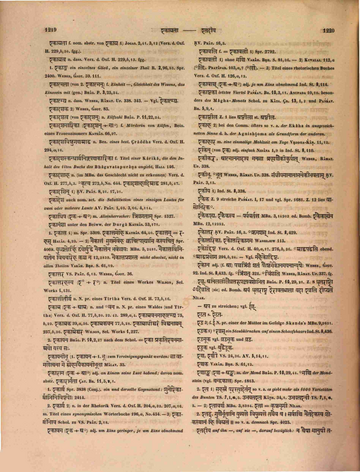
1. etád pron. Uṇ. 1,131. gaṇa sarvādi zu P. 1,1,27. VOP. 3,9. VOP. 3,56. VOP. 3,132. VOP. 3,163. VOP. 3,165. VOP. 2,55. ist eigentlich nom. acc. sg. neutr. von eta, erscheint aber in der aufgef. Form auch am Anf. eines comp. und in den derivv. etadīya, etanmaya. Der Stamm eta ist zusammenges. aus e + ta; dem ersten Bestandtheil begegnen wir in eva, evam und wohl auch in aiṣamas; der zweite Bestandtheil ta hat vollständig entwickeltes Leben. Wie dieses einfache pron. im nom. sg. m. f. sa statt ta hat, so auch das zusammenges. eta (eṣa, eṣas, eṣā); alle übrigen Casus zeigen den Stamm eta. Dieses zusammenges. pron. weist auf etwas dem Sprechenden zunächst Liegendes hin: dieser hier, dieser: ki̱ṃmayàḥ sviccama̱sa e̱ṣa ā̀sa ṚV. 4,35,4. e̱ṣo u̱ṣā apū̀rvyā̱ vyùcchati ṚV. 1,46,1. ko vi̱dvāṃsa̱mupà gā̱tpraṣṭùme̱tat ṚV. 1,164,4. a̱hame̱tā manàve vi̱śvaścàndrāḥ su̱gā a̱paścàkāra ṚV. 1,165,8. gi̱rā ya e̱tā ya̱naja̱ddharī̀ ṚV. 7,36,4. e̱te de̱vānā̱ṃ spaśàḥ ṚV. 10,10,8. asùnītime̱tām ṚV. 10,15,14. de̱vā e̱tasyā̀mavadanta̱ pūrvè ṚV. 10,109,4. etasmātkālāt ŚAT. BR. 4,2,4,5. AIT. BR. 8,14. tadetenopekṣitavyam NIR. 1,17. yatho etat was dieses d. h. die aufgestellte Behauptung betrifft NIR. 7,17. NIR. 7,23. etadarvāk (zeitlich) ŚAT. BR. 13,5,4,19. — eṣa yāti śivaḥ panthāḥ hier geht der Weg N. 20,12. ete gacchanti bahavaḥ panthāno dakṣiṇāpatham N. 9,21. eṣa vindhyo mahāśailaḥ N. 22. N. 7,11. ŚĀK. 7,9. eṣa pratisaṃhṛtaḥ (vāṇaḥ) da habe ich ihn zurückgezogen (den Pfeil) 3. eṣa kālaḥ jetzt ist die Zeit VID. 241. dṛśyase dṛśyase rājanneṣa dṛṣṭo 'si da habe ich dich erblickt N. 11,9. sthito hyeṣaḥ da stehe ich VIŚV. 6,3. eṣa (wie ich hier stehe, stracks) tvāṃ svaśarīreṇa nayāmi svargamojasā VIŚV. 10,13. HIḌ. 4,15. ARJ. 3,24. MBH._in_BENF. Chr. 4,16. BENF. Chr. 29,26. ŚĀK. 94,9. ŚĀK. 111,7. ŚĀK. 111,154. kadā gamiṣyasi . eṣa gacchāmi jetzt gehe ich P. 3,3,131, Sch. eṣa tānadya vai sarvānhaniṣyāmi tvayā saha HIḌ. 3,19. etau — prajāpaterāśramaṃ praviṣṭau svaḥ ŚĀK. 100,15. ete klāntamanasaḥ punarnavīkṛtāḥ smaḥ ŚĀK. 62,12. etasyāmavasarpiṇyām in der gegenwärtigen AV. H. 26. Congruirt als subj. in genere und numero mit dem praed. ohne Rücksicht auf das zu ergänzende nom.: etadeva (näml. śavalā) hi me ratnametadeva hi me dhanam . etadeva hi sarvasvametadeva hi jīvitam .. VIŚV. 3,23. ausnahmsw. trifft man aber auch neutr. sg.: etadeva (śavalā) hi me rājanvividhāśca kriyāstathā ebend. 24. vidyāguruṣvetadeva nityā vṛttiḥ M. 2,206. etad neutr. dieses d. i. die Welt VOP. 5,26. Wir finden, dass etad viel häufiger auf etwas Vorangegangenes, als auf etwas Folgendes hinweist, weil jenes als etwas schon Erwähntes dem Sprechenden näher liegt. Dieses tritt sehr deutlich hervor in Fällen, wo etad mit idam zusammen erscheint: eṣa (der eben erwähnte) vai prathamaḥ kalpaḥ pradāne havyakavyayoḥ . anukalpastvayaṃ (der sogleich zu erwähnende) jñeyaḥ sadā sadbhiranuṣṭhitaḥ .. M. 3,147. M. 5,1. M. 5,74. M. 9,325. M. 10,7. M. 11,102. M. 11,107. M. 11,169. M. 11,179. M. 12,82. Ueberhaupt haben wir im MANU, wo etad unzählige Male auf etwas Vorangehendes zurückweist, nur 4 Stellen (M. 1,59. M. 3,6. M. 9,10. M. 9,45) gefunden, in denen das pron. auf etwas Folgendes hindeutet. Aus andern Schriften haben wir uns für den letzten Fall folgende Stellen aufgezeichnet: N. 9,15. BRĀHMAṆ. 2,22. R. 1,1,22. VIŚV. 9,7. HIT. 19,4. HIT. 24,4. ŚĀK. 104,9. VID. 109. AK. 1,1,1,45. AK. 2,6,3,1. Vgl. weiter unten. Neben andern demonstrr., dem relat. und interrog.; im Veda namentlich neben tyad. e̱ta u̱ tye pratyàdṛśran ṚV. 1,191,5. ṚV. 1,92,1. ṚV. 1,100,7. sa eṣa ŚAT. BR. 1,7,3,3. ŚĀK. 5,11. SĀṂKHYAK. 29. ta ete ŚAT. BR. 7,5,2,37. tadetannopapadyate NIR. 1,13. AIT. BR. 8,26. DAŚ. 1,30. R. 4,38,46. tasya haitasya BṚH. ĀR. UP. 1,3,25. etattadvacanam KATHĀS. 3,48. ete te AMAR. 54. etānīmāni AIT. UP. 5,3. sakalārthaśāstraṃ jagati samālokya viṣṇuśarmedam . tantraiḥ pañcabhiretaccakāra sumanoharaṃ śāstram .. PAÑCAT. Pr. 3. ya eṣa tapati ŚAT. BR. 1,3,5,11. BṚH. ĀR. UP. 4,2,3. M. 1,71. M. 3,200. M. 6,82. M. 9,181. ŚĀK. 106,15. ko nu khalveṣa niṣidhyate wer ist es wohl, der hier zurückgehalten wird? ŚĀK. 101,19. In Correlation mit dem relat.: eṣa caiva gururdharmo yaṃ pravakṣyāmyahaṃ tava BRĀHMAṆ. 2,6. pracchannavañcakāstvete ye stenāṭavikādayaḥ M. 9,257. prakāśametattāskaryaṃ yaddevanasamāhvayau M. 222. PAÑCAT. I, 23. dhyānikaṃ sarvamevaitadyadetadabhiśabditam M. 6,82. etattu na pare cakrurnāpare jātu sādhavaḥ . yadanyasya pratijñāya punaranyasya dīyate .. M. 9,99. BRĀHMAṆ. 2,4. jñātametadbhavadbhiryanmamaite putrāḥ śāstravimukhā vivekarahitāḥ PAÑCAT. 3,14. PAÑCAT. 25,7. ŚĀK. 48. aślīkametatsādhūnāṃ yatra juhvatyamī haviḥ M. 4,206. Hier weist etad gleichfalls auf etwas Nachfolgendes. Nur selten geht der relat. Satz voran: yadetatparisaṃkhyātamādāveva caturyugam . etaddvādaśasāhasraṃ devānāṃ yugamucyate .. M. 1,71. yadāha vacanaṃ samyagetatkāryam VIŚV. 10,5. yo 'yam — etasya VID. 109. Vgl. etādṛśa, etāvant, etarhi. — Am Anf. eines comp. etaddā́ ŚAT. BR. 9,2,1,17. étaddevatya ŚAT. BR. 8,3,3,6. etaddaṇḍavidhi M. 8,221. etadanta damit schliessend M. 1,50. etatprathamá, etaddvitīyá der dieses zum ersten, zum zweiten Male thut P. 6,2,162. aneṣas (stets mit dem Zeichen des nom.) nicht dieser hier P. 6,1,132. VOP. 2,55. mit dem ka demin. eṣakas ebend. f. eṣakā und eṣikā P. 7,3,47. VOP. 2,55. VOP. 4,7. etike, etikās SIDDH. K._zu_P. 7,3,47.
Original text · German · Word type unspecified
2. etad , guṇairbhūtāni yujyante viyujyante tathaiva ca . sarvāṇi naitadekasya śokasthānaṃ hi vidyate .. so v. a. demnach Spr. 4025.
Original text · German · Word type unspecified
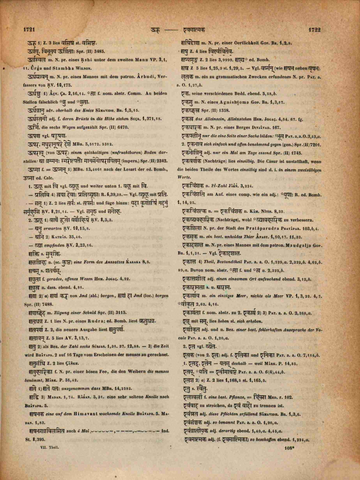
1. etad , etena — yatas deshalb — weil MĀRK. P. 14,85.
Böhtlingk 1879 adverb
Original text · German · adverb
etád — 1〉 Nom. Acc. Sg. n. von 1. eta — 2〉 Adv. auf diese Weise, so, also Chr. 35,22. Chr. 36,2. Spr. 2163.
Apte 1890 particle · pronoun
Original text · English · particle · pronoun
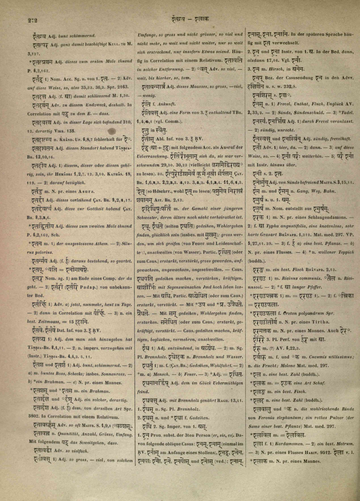
etad pron. a. (m. eṣaḥ, f. eṣā, n. etad) 1 This, this here, yonder (referring to what is nearest to the speaker) (samīpataravarti caitado rūpaṃ); the Nom. forms are used like those of idaṃ in the sense of ‘here’; eṣa pṛcchāmi -eṣa kathayāmi Mu. 3 here I ask &c.; kadā gamiṣyasi-eṣa gacchāmi Sk.; eṣosmi ([Page 0356-b]) kāmaṃdakī saṃvṛttaḥ Māl. 1; ete navīkṛtāḥ smaḥ Ś. 5. In this sense etad is sometimes used to give emphasis to the personal pronouns; eṣohaṃ kāryavaśādāyodhyikastadānīṃtanaśca saṃvṛttaḥ U. 1. 2 As the subject of a sentence it agrees in gender and number with the predicate without reference to the noun to which it refers; etad ( śavalā) me dhanaṃ; but may sometimes remain in the neuter; etadeva guruṣu vṛttiḥ Ms. 2. 206. 3 It often refers to what precedes, especially when it is joined with idaṃ or any other pronoun; eṣa vai prathamaḥ kalpaḥ Ms. 3. 147; iti yaduktaṃ tadetacciṃtyaṃ; etānīmāni, ete te &c. 4 It is used in connection with a relative clause, in which case the relative generally follows; pracchannavaṃcakāstvete ye stenāṭavikādayaḥ Ms. 9. 257. — ind. In this manner, thus, so, here, at this time, now. Note. etad appears as the first member of compounds which are mostly self-explaining; e. g. ˚anaṃ tara immediately after this; ˚aṃta ending thus; ˚arthaḥ this matter; ˚arthe on this account, therefore; ˚avadhi to this limit, so far; ˚ava tha a. of such a state or condition. Comp. — kālaḥ the present time. — kālīna a. belonging to the present time. — kṣaṇāt ind. hence-forth. — dvitīya a. one who does anything for the second time. — prathama a. one who does anything for the first time. — yonin a. having one's origin in that.
Cappeller 1887 substantive neuter
Original text · German · substantive neuter
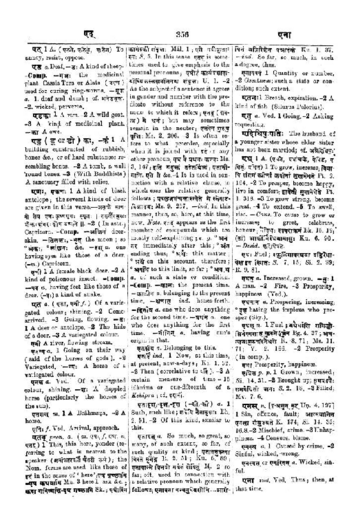
etád (n. Sgl. von 1. etá) adv. so, auf diese Weise.
Occurrences in source texts (163)
DYS 11 occurrences
5 more source pages
GoS 2 occurrences
HP 11 occurrences
HP 3.33-3.48*1: Khecarī and Soma 2 occurrences
Direct occurrences
4 more source pages
HTK 9 occurrences
HTK 10.26–29*1: Cakra, Śaṅkha, Vāmāvartta, Vartmagati and Gadā 2 occurrences
Direct occurrences
MAN 1 occurrence
MandUp 6 occurrences
PJH 1 occurrence
PYS 4 occurrences
SiSa 86 occurrences
SiSa 1.10-1.16: Lehrmeinungen 3 occurrences
Direct occurrences
SiSa 1.45-1.50: Rückkehr zum Bewusstsein 3 occurrences
Direct occurrences
SiSa 1.71-1.81: Avidyā und Elemente 2 occurrences
Direct occurrences
44 more source pages
SiSa 2.6-2.12: Mond und Sonne 2 occurrences
Direct occurrences
SiSa 3.21-3.31: Nāḍī-Reinigung 2 occurrences
Direct occurrences
SiSa 4.9-4.20: Yonimudrā-Geheimnis 2 occurrences
Direct occurrences
SiSa 4.31-4.36: Mahāmudrā-Wirkung 2 occurrences
Direct occurrences
SiSa 4.43-4.50: Mahāvedha 3 occurrences
Direct occurrences
SiSa 4.51-4.59: Khecarīmudrā 3 occurrences
Direct occurrences
SiSa 4.69-4.71: Viparītakṛti 2 occurrences
Direct occurrences
SiSa 5.10-5.14: Subtile Hindernisse 3 occurrences
Direct occurrences
SiSa 5.17-5.20: Madhya und Layayoga 3 occurrences
Direct occurrences
SiSa 5.21-5.23: Adhimātra und Haṭhayoga 2 occurrences
Direct occurrences
SiSa 5.48-5.71: Innere Meditation 5 occurrences
Direct occurrences
SiSa 5.82-5.89: Mūlādhāra 3 occurrences
Direct occurrences
SiSa 5.113-5.120: Anāhata 2 occurrences
Direct occurrences
-
SiSa 5.116 Segment 1
-
SiSa 5.120 Segment 1
SiSa 5.132-5.143: Innere Vārāṇasī 2 occurrences
Direct occurrences
-
SiSa 5.133 Segment 1
-
SiSa 5.134 Segment 12
SiSa 5.144-5.155: Ājñā und Khecarī 2 occurrences
Direct occurrences
-
SiSa 5.150 Segment 13
-
SiSa 5.154 Segment 5
SiSa 5.156-5.181: Sahasrāra 2 occurrences
Direct occurrences
-
SiSa 5.169 Segment 5
-
SiSa 5.180 Segment 1
SiSa 5.191-5.207: Kailāsa und Mahāśūnya 2 occurrences
Direct occurrences
-
SiSa 5.203 Segment 1
-
SiSa 5.206 Segment 1
SiSa 5.208-5.222: Rājayoga 4 occurrences
Direct occurrences
-
SiSa 5.209 Segment 14
-
SiSa 5.211 Segment 1
-
SiSa 5.213 Segment 12
-
SiSa 5.214 Segment 12
SiSa 5.234-5.252: Tripurā-Mantra 2 occurrences
Direct occurrences
-
SiSa 5.236 Segment 10
-
SiSa 5.237 Segment 1
SVU 22 occurrences
SVU 1.7-1.12: Triad and Freedom 5 occurrences
Direct occurrences
9 more source pages
SVU 3.10-3.12: The Formless Light 2 occurrences
Direct occurrences
SVU 4.17-4.22: Knowledge and Protection 2 occurrences
Direct occurrences
SVU 5.1–5.6: The Lord of Cosmic Origins 2 occurrences
Direct occurrences
VBT 10 occurrences
Continue with AYI Free
Image source: AYI archive.