

idam इदम् – this; this one
adjective · adverb · particle · pronoun · pronoun dem · substantive neuter · Word type unspecified
Dictionary sources
AYI dictionary pronoun · pronoun dem
Cappeller 1891 Word type unspecified
Original text · English · Word type unspecified
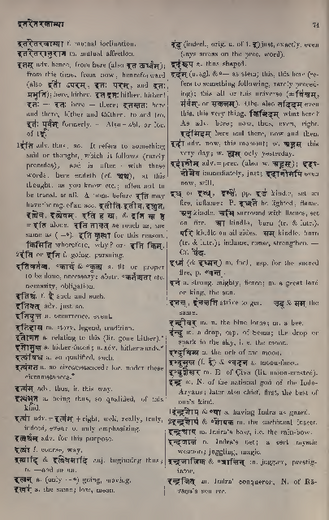
idám ·(n. sgl. & °-- as stem) this, this here (refers to something following, rarely preceding); this all or this universe (±víśvam, sárvam, or sakalam). Obs. also tadidam even this, this very thing, kimidam what here? As adv. here; now, thus, even, right. idámidam here and there, now and then.
Monier-Williams 1872 particle · Word type unspecified
Original text · English · particle
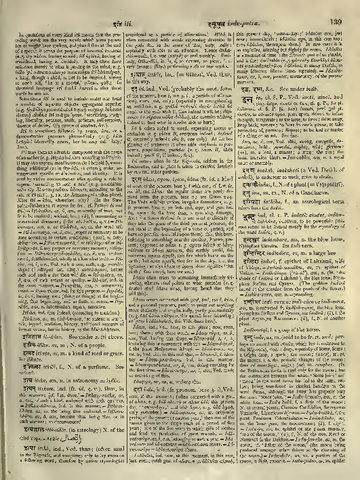
Idam, ind., Ved. here, to this place; now, even, just; there; with these words.
Original text · English · Word type unspecified
idam idam, ayam, iyam, idam (fr. id, a kind of neut. of the pronom. base 3. i with am; cf. Lat. is, ea, id, and idem; the regular forms are partly de- rived from the pronom. base a; see Gram. 224. The Veda exhibits various irregular formations, e. g. fr. pronom. base a, an inst. enā, ayā, and gen. loc. du. ayos; fr. the base ima, a gen. sing. imasya, &c.; the forms derived fr. a are used enclitically if they take the place of the third personal pronoun, do not stand at the beginning of a verse or period, and have no peculiar stress laid upon them), this, this here, referring to something near the speaker; known, pre- sent; (opposed to adas, e. g. ayaṃ lokaḥ or idaṃ viśvam or idaṃ sarvam, this earthly world, this universe; ayam agniḥ, this fire which burns on the earth; but asāv agniḥ, that fire in the sky, i. e. the lightning: so also idam or iyam alone signifies ‘this earth;’ ime smaḥ, here we are.)
Original text · English · Word type unspecified
Idam often refers to something immediately fol- lowing, whereas etad points to what precedes (e. g. śrutvā etad idam ūcuḥ, having heard that they said this).
Original text · English · Word type unspecified
Idam occurs connected with yad, tad, etad, kim, and a personal pronoun, partly to point out anything more distinctly and emphatically, partly pleonastically (e. g. tad idam vākyam, this speech here following; so'yaṃ Vidūṣakaḥ, this Vidūṣaka here).
Petersburger 1855 adverb · Word type unspecified
Original text · German · adverb
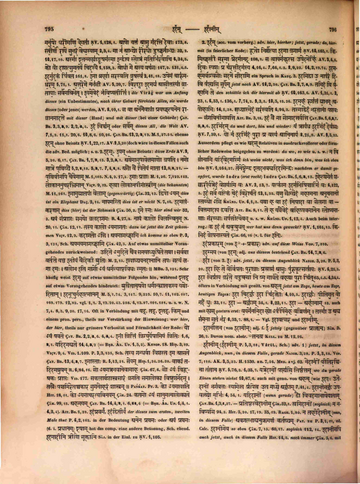
2. idám (acc. vom vorherg.) adv. hier, hierher; jetzt, gerade; da, hiermit (in feierlicher Rede): dū̱to nirṛ̀tyā i̱damā ja̱gāmà ṚV. 10,165,1. kimi̱cchantī̀ sa̱ramā̱ predamā̀naṭ ṚV. 10,108,1. sa tvā̱yamàhva̱tsa upe̱damehì AV. 3,4,5. di̱vaḥ spaśa̱ḥ pra càrantī̱damàsya AV. 4,16,4. AV. 7,64,1. AV. 7,64,2. AV. 8,9,22. AV. 14,2,19. AV. 14,2,74. idamahamarvāgvasoḥ sadane sīdāmi ein Spruch in KAUŚ. 3. i̱damidvā u̱ nāpàraṃ di̱vi pàśyasi̱ sūryàm jetzt noch AV. 18,2,50. ŚAT. BR. 3,7,4,9. tami̱daṃ vi vṛ̀hāmi te den schüttle ich dir hiermit ab ṚV. 10,163,6. AV. 1,31,1. AV. 3,23,1. AV. 6,53,1. AV. 6,136,1. AV. 7,74,2. AV. 9,3,5. AV. 10,5,15. AV. 10,5,36. i̱dama̱haṃ ruśàntaṃ grā̱bham (apohāmi) AV. 14,1,38. ṛ̱dhyāsme̱daṃ saràsvati AV. 6,94,3. tasmāddhedaṃ bharatānāṃ paśavaḥ — saṃgavinīmāyanti AIT. BR. 3,18. idaṃ vai mā somādantaryanti ŚAT. BR. 1,6,3,7. ŚAT. BR. 1,8,3,6. i̱damìdam da und dort, hin und wieder: yaṃ trāyàdhva i̱damìdaṃ devā̀saḥ ṚV. 7,59,1. yo nà i̱damìdaṃ pu̱rā pra vasyà āni̱nāyà ṚV. 8,21,9. AV. 9,5,23. Ausserdem pflegt es wie adas Relativen in ausdrucksvollerer oder förmlicher Redeweise beigegeben zu werden: da wo, so wie u. s. w.: na vi jā̀nāmi̱ yadìve̱damasmì ich weiss nicht, was ich denn bin, was ich eben bin ṚV. 1,164,37. teneṣṭvendra etadabhavadyadidamindraḥ nachdem er damit geopfert, wurde Indra (erst recht) Indra ŚAT. BR. 1,6,3,15. i̱hetthametà śakvarī̱ryatre̱daṃ ve̱śayā̀mi vaḥ AV. 3,13,7. yatkā̀ma i̱damàbhiṣi̱ñcāmì vaḥ AV. 6,122,5. i̱daṃ sarva̱ṃ yatkiṃ ce̱daṃ vi̱rocàte AV. 13,1,55. yannu saumyedaṃ mahāmanā anūcamānī stabdho 'si CHĀND. UP. 6,1,3. yathā ha vā idaṃ niṣādā vā selagā vā — vittamādāya dravanti AIT. BR. 8,11. te ha yathaivedaṃ bahiṣpavamānena stoṣyamāṇāḥ saṃrabdhāḥ sarpantītyevam u. s. w. CHĀND. UP. 1,12,4. Auch beim interrog.: ka i̱daṃ nà abūbudhat wer hat uns denn geweckt? ṚV. 1,161,13. kimidaṃ joṣamāsyate ŚĀK. 66,16 (v. l. für iti).
Original text · German · Word type unspecified
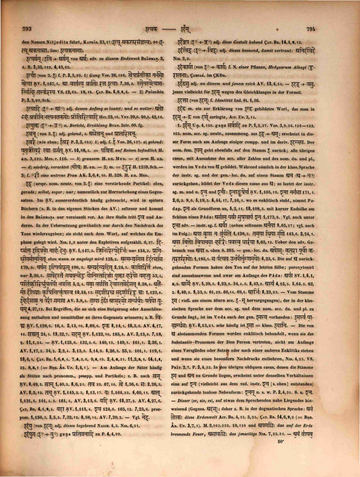
1. idám Uṇ. 4,158. gaṇa sarvādi zu P. 1,1,27. VOP. 3,9. VOP. 3,56. VOP. 3,126—VOP. 3,132. VOP. 3,163. nom. acc. sg. neutr., zusammeng. aus id + am; erscheint in dieser Form auch am Anfange einiger compp. und im deriv. idammaya. Der nom. fem. iyam geht ebenfalls auf den Stamm i zurück; alle übrigen casus, mit Ausnahme des acc. aller Zahlen und des nom. du. und pl., werden im Veda von a gebildet. Während nämlich in der klass. Sprache der instr. sg. und der gen.-loc. du. auf einen Stamm ana (a + na?) zurückgehen, bildet der Veda diesen casus aus a; so lautet der instr. sg. m. und n. e̱na̱ und enā́ḥ e̱nāṅgū̱ṣeṇà ṚV. 1,105,19. e̱nā namàsā ṚV. 171,1. ṚV. 2,6,2. ṚV. 9,6. ṚV. 5,19,3. ṚV. 6,44,17. ṚV. 7,16,1. wo es enklitisch steht, nimmt Padapāṭha padap. ena als Grundform an, ṚV. 5,2,11. ṚV. 10,108,3. mit kurzer Endsilbe am Schluss eines Pāda: asā̀ma̱ yathā̀ suṣa̱khāyà ena ṚV. 1,173,9. Vgl. auch unter enā adv. — instr. sg. f. ayā́ (neben seltenem anáyā ṚV. 9,65,27.; vgl. auch im Folg.): a̱yā kṛ̱pā na jū̀ryati ṚV. 1,128,2. tama̱yā dhi̱yā gṛ̀ṇe ṚV. 143,6. ṚV. 2,24,1. a̱yā ci̱tto vi̱pānayā̱ harìḥ pavasva̱ dhāràyā ṚV. 9,65,12. Ueber den adv. Gebrauch von ayā s. oben S. 395. — gen.-loc. du. ayos: ka̱ta̱rā pūrvā̀ kata̱rāpàrā̱yoḥ ṚV. 1,185,1. sa pàtyata u̱bhayòrnṛ̱mṇama̱yoḥ ṚV. 6,25,6. Die auf a zurückgehenden Formen haben den Ton auf der letzten Silbe; poroxytonirt sind ausnahmsweise und zwar am Anfange des PādaH ayā̀ SV. I, 6,1,5,9. asmaì ṚV. 5,39,5. ṚV. 6,23,5. ṚV. 6,34,4. ṚV. 6,23,5. ṚV. 8,43,2. asyà ṚV. 4,15,5. ṚV. 5,64,3. ṚV. 5,82,2. ṚV. 6,40,2. ṚV. 9,53,3. ṚV. 9,61,29. ṚV. 9,66,14. ṚV. 9,69,1. ābhìḥ ṚV. 8,23,23. — Vom Stamme ima (viell. aus einem ältern acc. i-m hervorgegangen), der in der klassischen Sprache nur dem acc. sg. und dem nom. acc. du. und pl. zu Grunde liegt, ist im Veda auch der gen. imasya vorhanden: i̱masyà pā̱hyandhàsaḥ ṚV. 8,13,21. sehr häufig ist imā = klass. imāni. — Die von a abstammenden Formen werden enklitisch behandelt, wenn sie das Substantiv-Pronomen der 3ten Person vertreten, nicht am Anfange eines Versgliedes oder Satzes oder nach einer anderen Enklitika stehen und wenn sie eines besondern Nachdrucks entbehren, NIR. 4,25. VS. PRĀT. 2,7. P. 2,4,32. In den übrigen obliquen casus, denen die Stämme ima und ana zu Grunde liegen, erscheint unter denselben Verhältnissen eine auf ena (vielleicht aus dem ved. instr. ena [s. oben] entstanden) zurückgehende tonlose Nebenform: enam u. s. w. P. 2,4,34. S. u. ena. — Dieser (er, sie, es), auf etwas dem Sprechenden nahe Liegendes hinweisend (Gegens. adas); daher z. B. in der dogmatischen Sprache: ayaṃ lokaḥ diese Erdenwelt AIT. BR. 4,15. AIT. BR. 5,25. ŚAT. BR. 14,6,7,2 (= BṚH. ĀR. UP. 3,7,1). M. 2,163. M. 2,233. M. 10,128 und ayamagniḥ das auf der Erde brennende Feuer, asāvagniḥ das jenseitige NIR. 7,23. NIR. 7,31. — a̱yaṃ jā̀yata̱ manùṣo̱ dharī̀maṇi̱ hotā̀ ṚV. 1,128,1. ā̱po yattà ā̱su màdanti de̱vāḥ ṚV. 1,173,8. stī̱rṇaṃ rā̱ye su̱bhara̱ṃ vedya̱syām ṚV. 2,3,4. mā nà ā̱bhyo rī̀radho du̱cchunā̀bhyaḥ ṚV. 32,2. ṚV. 10,17,10. asmā̀ e̱tanmahyā̀ṅgū̱ṣamàsmā̱ indrā̀ya sto̱traṃ ma̱tibhìravāci ṚV. 6,34,5. ko vā̀ṃ dāśatsuma̱tayè cida̱syai ṚV. 1,158,2. bodhā̀ me a̱sya vacàsaḥ ṚV. 147,2. ṚV. 131,4. ṚV. 1,5. i̱damùda̱kaṃ pìbata ṚV. 1,161,8. i̱mā brahmā̀ sarasvati ju̱ṣasvà ṚV. 2,41,18. u̱pemaṃ cārùmadhva̱ram ṚV. 5,71,1. a̱nta̱reme nabhàsī AV. 5,20,7. vi̱rāḍvā i̱damagrà āsī̱ttasyā̀ jā̱tāyā̱ḥ sarvàmabibhet . i̱yame̱vedaṃ bhàvi̱ṣyatītì . die Virāj war am Anfang dieses (ein Unbestimmtes), nach ihrer Geburt fürchtete Alles, sie werde dieses (oder jenes) werden, AV. 8,10,1. sa vā anenaivājāṃ prayacchatyanena rājānamādatte mit dieser (Hand) und mit dieser (bei einer Gebärde) ŚAT. BR. 3,3,3,9. ŚAT. BR. 2,2,4,4. i̱daṃ viśvàm oder sarvàm dieses All, die Welt AV. 7,1,2. AV. 7,11,1. AV. 7,20,6. AV. 10,8,6. AV. 10,10,26. ŚAT. BR. 13,2,2,13. M. 1,27. M. 1,51. ebenso idam ohne Beisatz ṚV. 1,22,17. AV. 9,5,20 (doch wäre in diesen Fällen auch die adv. Bed. möglich; s. u. 2. idam). i̱yam ohne Beisatz: diese Erde AV. 9,5,20. AV. 9,6,17. ŚAT. BR. 1,7,2,15. ŚAT. BR. 3,2,3,1. athemāmupāvekṣamāṇo japati . namo mātre pṛthivyai ŚAT. BR. 5,2,1,18. ŚAT. BR. 5,5,3,7. ŚAT. BR. 7,4,1,8. asau vai piteyaṃ mātā ŚAT. BR. 12,8,1,21. — pṛthivīmapi caivemām M. 1,105. N. 4,9. N. 17,4. imāḥ prajāḥ M. 1,26. M. 7,123. M. 7,142. lokānanucarantvimān VIŚV. 9,19. hatvā lokānapīmāṃstrīn (die bekannten) M. 11,261. imāmugrātapāṃ velām (gegenwärtig) ŚĀK. 32,13. dvipo 'yam dies ist ein Elephant DAŚ. 2,14. nāyamasti dies ist er nicht N. 7,16. idamalaṃkaraṇam dies (hier) ist der Schmuck ŚĀK. 50,2. ime smaḥ hier sind wir ŚĀK. 52,3. ayaṃ saṃprāptaḥ samayo jaladāgamaḥ R. 4,27,2. nāyaṃ kālo vilambitum N. 20,11. ŚĀK. 12,11. tasya kālo 'yamāgataḥ dazu ist jetzt die Zeit gekommen VIŚV. 12,9. kadāgato 'si . ayamāgacchāmi ich komme so eben P. 3,3,131, Sch. ayamayamāgacchāmi ŚĀK. 42,5. Auf etwas unmittelbar Vorangehendes zurückweisend: udite 'nudite caiva samayādhyuṣite tathā . sarvathā vartate yajña itīyaṃ vaidikī śrutiḥ M. 2,15. ijyādhyayanadānāni tapaḥ satyaṃ kṣamā damaḥ . alobha iti mārgo 'yaṃ dharmasyāṣṭavidhaḥ smṛtaḥ .. MBH. 3,121. Sehr häufig weist idam auf etwas unmittelbar Folgendes hin, während etad auf etwas Vorangehendes hindeutet: śrutvaitānṛṣayo dharmānsnātakasya yathoditān . idamūcurmahātmānam M. 5,1. M. 5,74. M. 3,147. M. 9,325. M. 10,7. M. 11,102. M. 11,107. M. 11,169. M. 11,179. M. 12,82. vgl. M. 1,1. M. 3,12. M. 3,20. M. 3,43. M. 3,258. M. 4,13. M. 4,87. M. 4,101. M. 4,181. u. s. w. N. 7,4. N. 8,3. N. 9,20. N. 17,16. Oft in Verbindung mit yad, tad, etad, kim und einem pron. pers., theils zur Verstärkung der Hinweisung: wer hier, der hier, theils nur grössere Verbosität und Förmlichkeit der Rede: yo 'yaṃ pavate ŚAT. BR. 2,2,4,6. ŚAT. BR. 2,4,4,4. imāṃ jitiṃ jigyuryaiṣāmiyaṃ jitiḥ ŚAT. BR. 1,6,2,1. yadidamadyate ŚAT. BR. 14,4,3,2 (= BṚH. ĀR. UP. 1,5,2.) KENOP. 18. HIḌ. 3,19. VIŚV. 9,4. VID. 1. VID. 109. P. 3,3,135, Sch. tasya gandharvā viśasta ima āsate ŚAT. BR. 13,4,3,7. imāstāḥ R. 5,13,31. seyam HIḌ. 1,34. HIḌ. 1,36. HIḌ. 1,38. vākyaṃ tadidamabruvan R. 6,84,16. so 'yamatrabhavānevāmāha ŚĀK. 67,6. so 'yaṃ vidūṣakaḥ prāptaḥ VID. 177. sakalārthaśāstrasāraṃ jagati samālokya viṣṇuśarmedam . tantraiḥ pañcamiretaccakāra sumanoharaṃ śāstram .. PAÑCAT. Pr. 3. ko 'yamāyāti HIT. 18,11. ko 'yamācaratyavinayam ŚĀK. 24. katamo 'yaṃ sānumānālokyate ŚĀK. 99,15. ahamayam ŚAT. BR. 14,4,2,1. ŚAT. BR. 14,6,11,6 (= BṚH. ĀR. UP. 1,4,1. BṚH. ĀR. UP. 4,2,4). AIT. BR. 1,28. idaṃprathamá, idaṃdvitīyá der dieses zum ersten, zweiten Male thut P. 6,2,162. in der Bedeutung anena prathamaḥ oder ayaṃ prathamaḥ (d. i. pradhānam) eṣām hat das comp. eine andere Betonung, Sch. ebend. idamādīni trīṇi sūktāni SĀY. in der Einl. zu ṚV. 1,105.
Original text · German · Word type unspecified
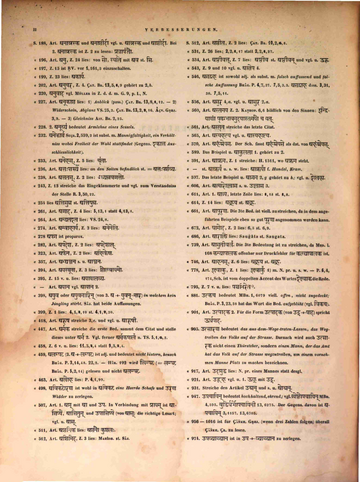
idám [vgl. [1:795]] Z. 7 v. u. lies: pañcabhireta˚. (revision)
Original text · German · Word type unspecified
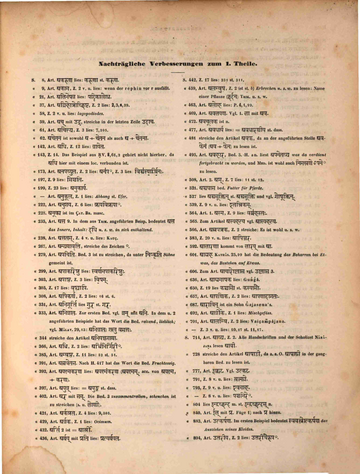
idám [vgl. [1:795]] Z. 9 v. u. lies: evamāha. (revision)
Original text · German · Word type unspecified
idám [vgl. [1:795]] Z. 7 v. u. lies: pañcabhire˚. (revision)
Original text · German · Word type unspecified
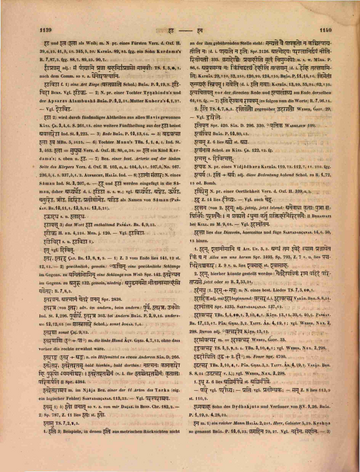
1. idam , etānīmāni ca AIT. UP. 5,3. andhaṃ tama ivedaṃ syānna prajñāyeta kiṃ ca na Alles um uns herum Spr. 3495. Sp. 795, Z. 7 v. u. lies pañcabhiretaccakāra; Z. 9 v. u. lies evamāha st. evāmāha.
Original text · German · Word type unspecified
2. idam , hierher könnte gestellt werden: naitadaupayikaṃ rāma yadidaṃ paritapyase jetzt oder so R. 2,53,31.
Original text · German · Word type unspecified
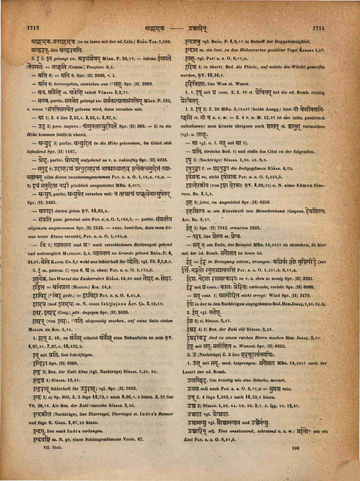
1. idam Z. 16, zu ayós scheint avós eine Nebenform zu sein ṚV. 6,67,11. ṚV. 7,67,4. ṚV. 10,132,5.
Böhtlingk 1879 adverb
Original text · German · adverb
idám Nom. Acc. Sg. n. — 1〉 dieses, es. idamasmadīyaṃ gṛham dies ist unser Haus Chr. 290,27. Dieses sagen, diese Worte, so v. a. Folgendes s., folgende W.; dagegen auf etwas Vorangehendes hinweisend Chr. 231,12. Chr. 237,3. ídaṃ víśvam, viśvamidam (Chr. 76,13), idáṃ sárvam, sakalamidam (Chr. 105,3) und ídam allein dieses Alles, Alles um uns her. tadidam eben dieses Chr. 51,15. Chr. 171,15. Chr. 177,2. da ist es Chr. 101,21. kimidaṃ kuruṣe was thust du da? Chr. 55,8. kimidaṃ te cikīrṣitam Chr. 73,16. Chr. 127,32. yádidáṃ kíṃ ca (Chr. 31,20. Chr. 33,15. Chr. 33,16) und yátkíṃ cedám (Chr. 31,25) so v. a. jeglich. — 2〉 Adv. — a〉 hier. idám — idám hier — dort. — b〉 hierher. — c〉 jetzt. — d〉 hiermit, da (in feierlicher Rede). — e〉 gerade, recht, eben. — f〉 so, in dieser Weise R. 2,53,31. ŚĀK. 66,16 v. l.
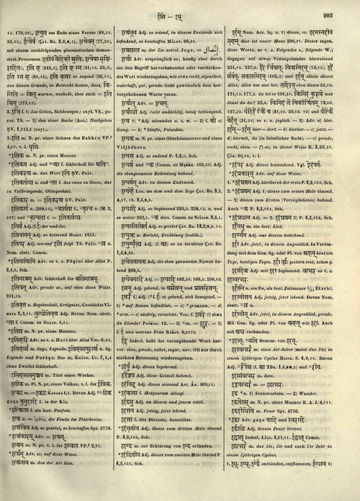
Cappeller 1887 substantive neuter
Original text · German · substantive neuter
idám n. (Nom. Acc. Sgl.) dies, folgendes; dies alles d.h. die ganze Welt (oft mit sárvam, víśvam, sakalam); adv. hier, hierher, da, jetzt, eben, so.
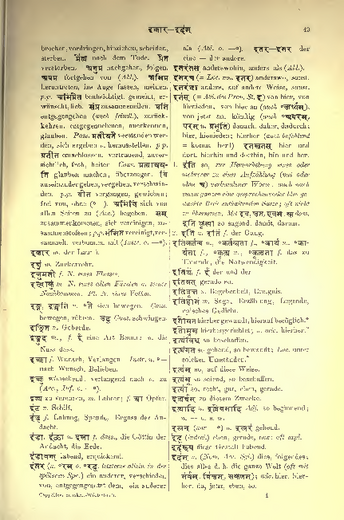
Burnouf 1866 adjective
Original text · French · adjective
idam idam a. (sfx. dam) M§ 53. M. ayam, f. iyam, n. idam. Celui-ci, celle-ci, ceci; opposé à etat et à etāvat: āha idam ihi il dit ceci: va; ayam asmi c'est moi, me voici. Lat. idem.
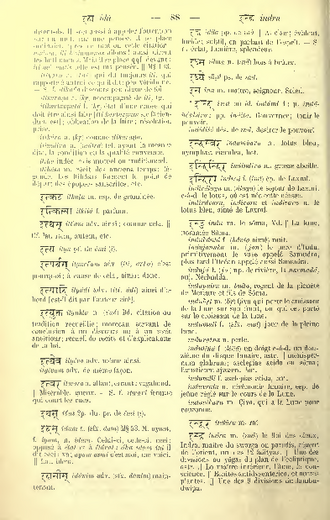
Occurrences in source texts (246)
DYS 21 occurrences
7 more source pages
DYS 112–121: Five Elements 3 occurrences
Direct occurrences
DYS 168–179*1: Vajrolī for the Yoginī 5 occurrences
Direct occurrences
GoS 7 occurrences
GoS 34–41: Sun, Sound and Cooling 2 occurrences
Direct occurrences
HP 54 occurrences
HP 1.17-1.32: Āsana 4 occurrences
Direct occurrences
HP 1.33-1.43: Siddhāsana 3 occurrences
Direct occurrences
HP 1.50–54: Siṃhāsana and Bhadrāsana 3 occurrences
Direct occurrences
-
HP 1.50–52 Segment 38
-
HP 1.53–54 Segment 21
-
HP 1.53–54 Segment 31
27 more source pages
HP 3.19-3.25: Mahābandha 3 occurrences
Direct occurrences
HP 3.26-3.31: Mahāvedha 3 occurrences
Direct occurrences
HP 3.66-3.72: Jālandhara and the Bandhas 4 occurrences
Direct occurrences
HP 3.87-3.93*7: Sahajolī and Amarolī 4 occurrences
Direct occurrences
HP 3.103-3.107*2: Conclusion of the Mudrā Teaching 1 occurrence
Direct occurrences
-
HP 3.107*2 Segment 13
HP 4.9-4.11*4: Gaze and Lunar Nectar 2 occurrences
Direct occurrences
HTK 11 occurrences
HTK 10.14*2–17*1: Śītalī and Antaraṅgaka-kumbha 1 occurrence
Direct occurrences
-
HTK 10.15 Segment 16
HTK 10.26–29*1: Cakra, Śaṅkha, Vāmāvartta, Vartmagati and Gadā 5 occurrences
Direct occurrences
-
HTK 10.27 Segment 2
-
HTK 10.27 Segment 12
-
HTK 10.27*1 Segment 12
-
HTK 10.27*2 Segment 5
-
HTK 10.29*1 Segment 13
HTK 10.42–43: Meru: Three stages of breath retention 1 occurrence
Direct occurrences
-
HTK 10.43 Segment 10
1 more source page
IVU 6 occurrences
IVU 4-5: The Unmoving Self 3 occurrences
Direct occurrences
MAN 1 occurrence
MandUp 6 occurrences
PJH 1 occurrence
PYS 1 occurrence
SiSa 100 occurrences
SiSa 1.1-1.3: Das eine Wissen 2 occurrences
Direct occurrences
SiSa 1.10-1.16: Lehrmeinungen 2 occurrences
Direct occurrences
SiSa 1.17-1.19: Geheime Yoga-Lehre 4 occurrences
Direct occurrences
SiSa 1.35-1.44: Täuschungs-Gleichnisse 5 occurrences
Direct occurrences
47 more source pages
SiSa 1.45-1.50: Rückkehr zum Bewusstsein 3 occurrences
Direct occurrences
SiSa 1.65-1.70: Māyā-Aufhebung 3 occurrences
Direct occurrences
SiSa 1.71-1.81: Avidyā und Elemente 2 occurrences
Direct occurrences
SiSa 3.95-3.97: Svastikāsana 2 occurrences
Direct occurrences
SiSa 4.31-4.36: Mahāmudrā-Wirkung 2 occurrences
Direct occurrences
SiSa 4.37-4.42: Mahābandha 3 occurrences
Direct occurrences
SiSa 4.51-4.59: Khecarīmudrā 2 occurrences
Direct occurrences
SiSa 4.60-4.63: Jālandharabandha 2 occurrences
Direct occurrences
SiSa 4.64-4.68: Mūlabandha 3 occurrences
Direct occurrences
SiSa 4.72-4.77: Uḍḍyānabandha 2 occurrences
Direct occurrences
SiSa 4.81-4.90: Bindu-Bewahrung 2 occurrences
Direct occurrences
SiSa 4.91-4.94: Vajrolī-Siddhi 3 occurrences
Direct occurrences
SiSa 4.95-4.100: Sahajolī und Amarolī 3 occurrences
Direct occurrences
SiSa 5.6-5.9: Dharma-Hindernisse 3 occurrences
Direct occurrences
SiSa 5.48-5.71: Innere Meditation 2 occurrences
Direct occurrences
SiSa 5.144-5.155: Ājñā und Khecarī 2 occurrences
Direct occurrences
-
SiSa 5.144 Segment 3
-
SiSa 5.149 Segment 1
SiSa 5.156-5.181: Sahasrāra 5 occurrences
Direct occurrences
-
SiSa 5.163 Segment 4
-
SiSa 5.164 Segment 10
-
SiSa 5.166 Segment 4
-
SiSa 5.179 Segment 1
-
SiSa 5.180 Segment 7
SiSa 5.191-5.207: Kailāsa und Mahāśūnya 3 occurrences
Direct occurrences
-
SiSa 5.193 Segment 2
-
SiSa 5.193 Segment 7
-
SiSa 5.197 Segment 1
SiSa 5.208-5.222: Rājayoga 2 occurrences
Direct occurrences
-
SiSa 5.212 Segment 15
-
SiSa 5.217 Segment 2
SiSa 5.234-5.252: Tripurā-Mantra 5 occurrences
Direct occurrences
-
SiSa 5.236 Segment 3
-
SiSa 5.240 Segment 4
-
SiSa 5.241 Segment 8
-
SiSa 5.241 Segment 10
-
SiSa 5.248 Segment 5
SiSa 5.253-5.260: Haushalter-Abschluss 3 occurrences
Direct occurrences
-
SiSa 5.253 Segment 12
-
SiSa 5.255 Segment 2
-
SiSa 5.256 Segment 6
SVU 26 occurrences
SVU 4.6-4.10: Two Birds and Māyā 4 occurrences
Direct occurrences
7 more source pages
SVU 4.11-4.16: The Hidden Creator 3 occurrences
Direct occurrences
SVU 6.1–6.6: Lord of Cosmic Unfolding 3 occurrences
Direct occurrences
SVU 6.7–6.13: Lord of All Lords 2 occurrences
Direct occurrences
VBT 12 occurrences
VBT 130–138: Name and Fourfoldness 4 occurrences
Direct occurrences
Continue with AYI Free
Image source: AYI archive.