

eva एव – just; exactly; indeed; only; even
adjective · adverb · Conjunction · particle · substantive masculine · Word type unspecified
Dictionary sources
AYI dictionary particle
just; exactly; indeed; only; even
Cappeller 1891 adjective · adverb
Original text · English · adverb
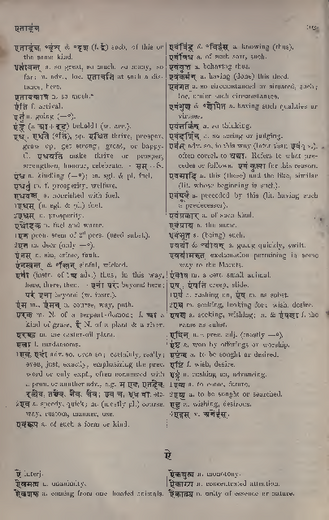
evá ·adv. so, even so; certainly, really; even, just, exactly, emphasizing the prec. word or only expl., often connected with a pron. or another adv., e.g. sa eva, etadeva, ityeva, tathaiva, naiva, caiva; eva ca, eva vā, etc.
Original text · English · adjective
éva2 ·a. speedy, quick; m. (mostly pl.) course, way, custom, manner, use.
Monier-Williams 1872 adjective · Word type unspecified
Original text · English · adjective
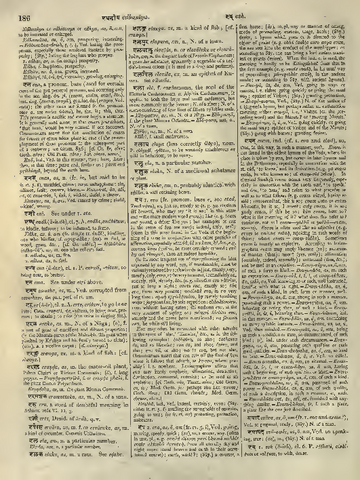
eva 2 . eva, as, ā, am (fr. rt. 5. i), Ved. going, moving, speedy, quick; (as), m. a course, way, (often in inst. pl., e. g. sanād divam pari bhumā svebhir evair aktoṣā carataḥ, from all eternity day and night move round heaven and earth in their accus- tomed course); earth, world?; (Sāy.) a courser, a fleet horse; (ās), m. pl. way or manner of acting, mode of proceeding, custom, usage, habit; (Sāy.) desire, a hymn which goes or is directed to the object of praise (e. g. abhi caṣṭe sūro arya evān, the sun sees into the conduct of the worshipper; or according to Sāy. the sun being a lord makes mani- fest or grants desires). When the inst. c. is used, the meaning is hardly to be distinguished from that in the first example (e. g. svair evaiḥ, in his usual way of proceeding; pūrvyebhir evaiḥ, in the ancient mode; or according to Sāy. with ancient hymns).
Original text · English · Word type unspecified
eva 1 . eva (fr. pronom. base e, see etad, Zend aiva), so, just so, exactly so (e. g. ya evedam iti bravat, who may say ‘it is so;’ in this sense eva = the more modern word evam); like (e. g. tvam eva yantā, a driver like you; but examples of eva in the sense of iva are rare); indeed, truly, really (often in this sense found in the Veda at the begin- ning of a verse in conjunction with other particles of affirmation, especially with id, id nu kam, hi, &c., e. g. evennu kaṃ tatāra, he most certainly crossed; evā hy asi vīrayuḥ, thou art indeed hero-like. (In its most frequent use of strengthening the idea expressed by any word, eva, if translateable, must be variously rendered by such adverbs as) just, exactly, very, merely, only, even, at the very moment, immediately on, scarcely, still, already, &c. (e. g. tāvatīm eva rātrim, just so long a night; evam eva, exactly so; tān eva, these very persons; nacirād eva, in no very long time; apaḥ spṛṣṭvaiva, by merely touching water; japyenaiva, by sole repetition; abhuktvaiva, even without having eaten; iti vadann eva, at the very moment of saying so; nāmni kīrtita eva, scarcely had the name been mentioned; sa jīvann eva, he while still living.
Original text · English · Word type unspecified
Eva may often be connected with other adverbs in the sense of ‘also,’ ‘likewise,’ &c., as in the fol- lowing examples: tathaiva, so also; tathaiva ca, and so likewise; eva ca, and also; caiva, and also; eva vā, or also; na tv eva, but not also. Grammarians assert that eva cuts off the final of kva when it follows that adverb, as kv-eva, where pos- sibly ? i. e. nowhere. Lexicographers affirm that eva may imply emphasis, affirmation, detraction, diminution, command, restraint; or be used as an expletive; [cf. Goth. aiv, Them. aiva; Old Germ. eo, io; Mod. Germ. je: perhaps also Lat. œvum; Goth. ibus; Old Germ. ebanêr; Mod. Germ. ebener, eben.]
Petersburger 1855 adjective · adverb · substantive masculine · Word type unspecified
Original text · German · adjective · substantive masculine
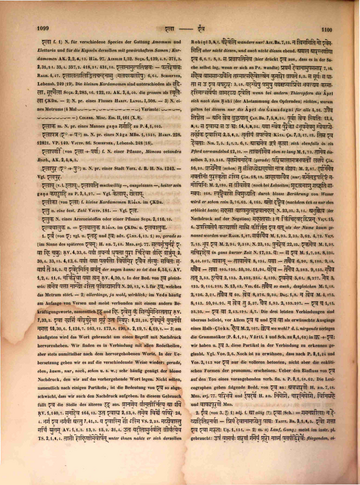
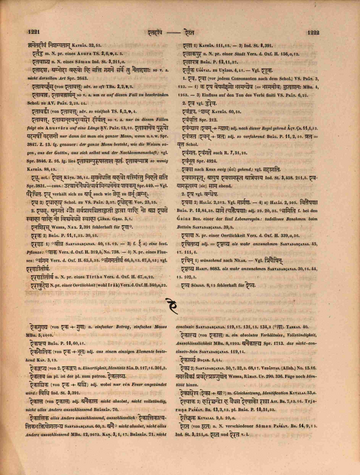
2. éva (von 3. i) 1〉 adj. f. ā eilig (?): evā (Sch.: = gamanaśīlā) na devyaditiranarvā — priyaṃ devānāmapyetu pāthaḥ TAITT. BR. 3,1,1,5. evo gantā eva evā marutaḥ Uṇ. 1,151. — 2〉 m. a〉 Lauf, Gang; meist im instr. pl. gebraucht: upà vā̱mavàḥ śara̱ṇaṃ gàmeya̱ṃ śūro̱ nājmà pa̱tayàdbhi̱revaìḥ fliegenden, eiligen Laufes ṚV. 1,158,3. ta̱raṇìbhi̱revaìḥ ṚV. 4,33,1. tu̱jayàdbhi̱revaìḥ ṚV. 7,104,7. (ramadhvam) upà muhū̱rtamevaìḥ ṚV. 3,33,5. evèna sa̱dyaḥ paryèti̱ pārthìvam ṚV. 1,128,3. ā gàta̱ṃ kacci̱devaìḥ ṚV. 3,54,8. sa̱nāddiva̱ṃ pari̱ bhūmā̱ virū̀pe̱ svebhi̱revaìḥ (carataḥ) Tag und Nacht umwandeln in gewohntem Gange den Himmel und die Erde ṚV. 1,62,8. pra va̱ evā̀sa̱ḥ svayàtāsa adhrajan ṚV. 1,166,4. — b〉 pl. das Gebaren, Handlungsweise, Gewohnheit; daher evais so v. a. more suo, wie es hergebracht ist u. s. w.: abhi càṣṭe̱ sūrò a̱rya evā̀n ṚV. 6,51,2. svaiḥ ṣa evaì ririṣīṣṭa̱ yurjanàḥ durch sein eigenes Thun ṚV. 8,18,13. ṚV. 8,86,3. yu̱vaṃ tugrā̀ya pū̱rvyebhi̱revaìḥ punarma̱nyāvàbhavatam in alter Weise ṚV. 1,117,14. kī̱riṃ ciddhyavàtha̱ svebhi̱revaìḥ in eurer gewohnten Weise ṚV. 10,67,11. ṚV. 1,100,2. ye pā̀kaśa̱ṃsaṃ vi̱harànta̱ evaìḥ die den Verständigen zu plagen pflegen ṚV. 7,104,7. yasya̱ śarma̱nnupa̱ viśve̱ janā̀sa̱ evaìsta̱sthuḥ sùma̱tiṃ bhikṣàmāṇāḥ aufzusuchen pflegen ṚV. 6,6. ṚV. 1,95,6. ṚV. 100,11. ṚV. 7,18. ṚV. 7,62,2. ṛ̱taṃ sàpanto a̱mṛta̱mevaìḥ ṚV. 1,64,4. (2) ata̱stvaṃ dṛśyā̀m̐ agna e̱tānpa̱ḍbhiḥ pàśye̱radbhùtām̐ a̱rya evaìḥ ṚV. 4,2,12. mā te rìṣa̱nye acchòktibhirva̱so 'gne̱ kebhìści̱devaìḥ auf was immer für Weisen ṚV. 8,92,13. vi̱dā ci̱nnu màhānto̱ ye va̱ evā̀ḥ ṚV. 5,41,13. Vgl. allewege. — c〉 VS. 15,4. VS. 15,5 soll eva nach MAHĪDH. so v. a. pṛthivī, loka sein.
Original text · German · adverb
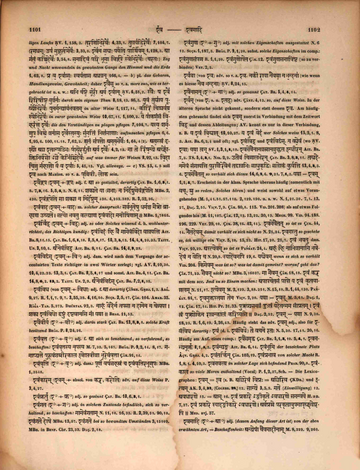
1. evá (von e; vgl. u. etad und iva) adv. ŚĀNT. 4,13. 1〉 so, gerade so (im Sinne des späteren evam) H. an. 7,48. MED. avy. 77. sa̱tyamū̀cu̱rnarà e̱vā hi ca̱kruḥ ṚV. 4,33,6. yathā̀ ja̱ghanthà dhṛṣa̱tā pu̱rā cìde̱vā jàhi̱ śatrùm ṚV. 2,30,4. ṚV. 2,33,15. ṚV. 4,12,6. yathā̀ yathā pa̱tayànto viyomi̱ra evaiva tàsthuḥ savitaḥ sa̱vāyà te ṚV. 4,54,5. ya e̱veda̱miti̱ bravàt der sagen kann: so ist das ṚV. 6,54,1. AV. 1,2,4. AV. 1,11,6. nakìre̱vā yathā̱ tvam ṚV. 4,30,1. In der Bed. von iva gleichwie: tvameva yantā nānyo 'sti pṛthivyāmapi N. 20,13, v. l. für iva, welches das Metrum stört. — 2〉 allerdings, ja wohl, wirklich; im Veda häufig am Anfange von Versen und meist verbunden mit einem andern Bekräftigungsworte, namentlich id und hi. e̱vennu ka̱ṃ sindhùbhebhistatāra ṚV. 7,33,2. e̱vā hyasì vīra̱yure̱vā śūrà u̱ta sthi̱raḥ ṚV. 8,21,28. e̱vedyūnè yuva̱tayò namanta ṚV. 10,30,6. ṚV. 1,124,7. ṚV. 1,165,12. ṚV. 1,173,8. ṚV. 1,190,8. ṚV. 2,19,7. ṚV. 4,19,1. — 3〉 am häufigsten wird das Wort gebraucht um einen Begriff mit Nachdruck hervorzuheben. Wir finden es in Verbindung mit allen Redetheilen, aber stets unmittelbar nach dem hervorgehobenen Worte. In der Uebersetzung geben wir es auf die verschiedenste Weise wieder: gerade, eben, kaum, nur, noch, schon u. s. w.; sehr häufig genügt der blosse Nachdruck, den wir auf das vorhergehende Wort legen. Nicht selten, namentlich nach einigen Partikeln, ist die Bedeutung von eva so abgeschwächt, dass wir auch den Nachdruck aufgeben. In diesem Gebrauch füllt eva die Stelle des älteren id aus. jā̱nanne̱va jā̀na̱tīrnitya̱ ā śàye ṚV. 1,140,7. sa̱nāde̱va ṚV. 1,164,13. u̱ta evādya ṚV. 2,13,8. tame̱va viśvè papire ṚV. 2,24,4. bhagà e̱va bhagàvām̐ astu ṚV. 7,41,5. ya e̱vāsmi̱ sò 'smi VS. 2,28. mayye̱vāstu̱ mayì śru̱tam AV. 1,1,2. AV. 1,13,3. AV. 1,15,2. AV. 1,31,4. u̱ta yadī̱tāsu̱rbhavàti̱ jīvàtye̱va TS. 2,1,1,4. tāsā̀ṃ rohi̱ṇīme̱vopaìt unter ihnen nahte er sich derselben Rohiṇī TS. 3,5,1. caraiveti wandere nur! AIT. BR. 7,15. na tvimamiti no evemamiti aber nicht diesen, und auch nicht diesen ebend. athāta ārambhaṇīyā eva AIT. BR. 6,6. AIT. BR. 6,7. AIT. BR. 8,5. sa prajāpatimeva (hier drückt eva aus, dass es in der Sache selbst lag, wenn er sich an Pr. wandte) prathamaṃ devānāmupasasāra AIT. BR. 7,16. sahaiva vāsasābhyavaiti tasmātsahaivolbena kumāro jāyate AIT. BR. 1,3. sa sūryaḥ sa dhātā sa u eva vaṣaṭkāraḥ AIT. BR. 3,48. yadanyeṣu paśuṣu yathaṛṣyāpriyo bhavantyatha kasmādasmintsarveṣāṃ jāmadagnya eveti wenn bei andern Thieropfern die Āprī sich nach dem Ṛṣi (der Abstammung des Opfernden) richten, warum gelten bei diesem nur die Āprī des Jamadagni für alle AIT. BR. 4,26. upaiva tiṣṭheta — abhi tveva juhuyāt ŚAT. BR. 7,5,1,34. pūrvā tveva sthitiḥ ŚAT. BR. 13,4,3,4. sa evādya sa u śvaḥ ŚAT. BR. 14,4,3,34. yathā nveva puraiko 'bhūvamevamu nvevāpyetarhyeka evāsmi ŚAT. BR. 2,5,1,2. tṛtīyaṃ japatyeva KĀTY. ŚR. 7,3,17. KĀTY. ŚR. 7,3,19. tisra eva devatāḥ NIR. 7,5. NIR. 1,1. NIR. 1,2. NIR. 6,1. āśvameva rūpaṃ kṛtvā sich ebenfalls in ein Pferd verwandelnd NIR. 12,10. — tāvatīmeva eben so lang M. 1,73. tāneva dieselben M. 3,23. M. 3,248. vṛkṣasecanādeva (gerade) pariśrāntāmatrabhavatīṃ lakṣaye ŚĀK. 16,20. japyenaiva (schon) tu saṃsidhyedbrāhmaṇo nātra saṃśayaḥ M. 2,87. darśanenaiva bhavatīnāṃ puraskṛto 'smi ŚĀK. 18,18. brāhmaṇasyaiva (nur) karmaitadupadiṣṭaṃ manīṣibhiḥ M. 2,190. sa jīvanneva (noch bei Lebzeiten) śūdratvamāśu gacchati sānvayaḥ M. 168. spṛṣṭvaivāpo viśudhyati durch blosse Berührung von Wasser wird er schon rein M. 5,76. M. 5,63. M. 4,165. ato dṛṣṭvaiva (nachdem ich es nur eben erblickt hatte) sahasā vāṣpamutsṛṣṭavānaham N. 23,25. N. 3,14. abhuktvaiva (der Nachdruck auf der Negation) mahātapāḥ . na kiṃcidavadadvipram VIŚV. 15,6. upasthiteyaṃ kalyāṇī nāmni kīrtita eva yat als der Name kaum genannt worden war RAGH. 1,87. sarvasyaiva M. 1,93. M. 2,35. M. 3,62. M. 4,72. VIŚV. 7,15. bhūya eva M. 2,94. M. 9,318. N. 23,15. punareva N. 22,23. ekameva M. 1,91. nacirādeva in ganz kurzer Zeit N. 17,23. yaḥ — sa eva M. 1,7. M. 1,28. M. 8,334. M. 9,40. M. 9,107. yāvān — tāvāneva M. 8,194. yathā — tathaiva M. 6,90. M. 8,180. M. 9,48. yathaiva — tathā M. 105. M. 130. M. 10,30. M. 11,94. yadeva — tenaiva M. 3,283. M. 9,155. mṛṣaiva tat M. 3,53. ityeva M. 2,153. M. 3,252. M. 3,254. M. 4,139. evameva M. 5,61. M. 8,277. naiva M. 5,123. M. 9,144. M. 9,318. N. 13,42. VID. 61. tathaiva so auch, desgleichen M. 1,48. M. 2,126. M. 3,21. tathaiva ca M. 60. tveva M. 8,276. M. 9,34. DAŚ. 1,8. na tveva M. 4,173. M. 8,143. M. 10,94. M. 10,95. na tveva tu M. 5,37. caiva M. 1,93. M. 2,159. M. 2,207. — eva ca M. 1,15. M. 1,25. M. 1,35. — eva vā M. 2,43. M. 2,191. M. 4,7. Die drei letzten Verbindungen sind überaus beliebt, vor Allem eva ca und eva vā als erwünschte Ausgänge eines Halb-Śloka. haiva M. 2,167. kveva wo wohl? d. i. nirgends zerlegen die Grammatiker (P. 6,1,94, Vārtt. 4 und Sch. zu P. 8,1,62) in kva + eva; wir haben u. iva 3. diese Partikel in der Verbindung zu erkennen geglaubt. Vgl. VOP. 2,6. Noch ist zu erwähnen, dass nach P. 8,1,24 und VOP. 3,143 vor eva nur die volleren betonten, nicht aber die enklitischen Formen der pronomm. erscheinen. Ueber den Einfluss von eva auf den Ton eines vorangehenden verb. fin. s. P. 8,1,58. P. 8,1,62. Die Lexicographen geben folgende Bedd. von eva an: avadhāraṇe H. an. 7,48. MED. avy. 77. paribhave und īṣadarthe H. an. niyoge, cāraniyoge, vinigrahe und vākyapūraṇe MED.
Original text · German · Word type unspecified
1. eva , evā (vor jedem Consonanten nach dem Schol.) VS. PRĀT. 3,123. — 1〉 ka eṣa veṣasaṃchanno bhasmanyeva (= bhasmanīva) hutāśanaḥ MBH. 4,1263. — 3〉 Einfluss auf den Ton des Verbi finiti VS. PRĀT. 6,22.
Original text · German · Word type unspecified
2. eva vgl. dureva.
Böhtlingk 1879 adjective · adverb · substantive masculine
Original text · German · adjective · substantive masculine
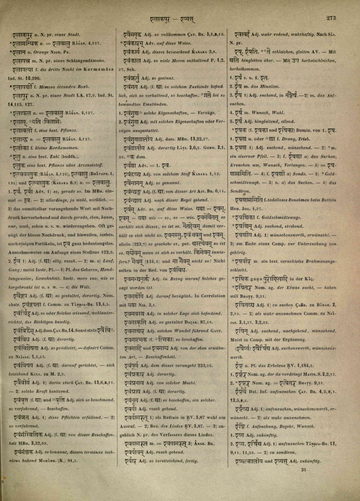
2. éva — 1〉 Adj. (f. ā) eilig, rasch. — 2〉 m. — a〉 Lauf, Gang; meist Instr. Pl. — b〉 Pl. das Gebaren, Handlungsweise, Gewohnheit. Instr. more suo, wie es hergebracht ist u. s. w. — c〉 die Welt.
Original text · German · adverb
1. evá, evā́ Adv. — 1〉 so, gerade so. Im MBH. einmal = iva. — 2〉 allerdings, ja wohl, wirklich. — 3〉 das unmittelbar vorangehende Wort mit Nachdruck hervorhebend und durch gerade, eben, kaum, nur, noch, schon u. s. w. wiederzugeben. Oft genügt der blosse Nachdruck, und bisweilen, insbes. nach einigen Partikeln, ist eva ganz bedeutungslos. Ausnahmsweise am Anfange eines Stollens. Chr. 122,9.
Apte 1890 adjective · particle · substantive masculine
Original text · English · adjective · substantive masculine
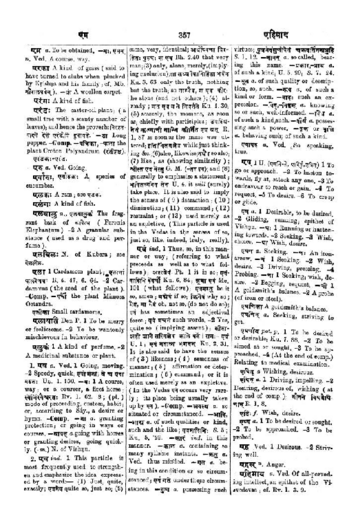
1 eva a. Ved. 1 Going, moving. 2 Speedy, quick, evogaṃtā; ye ca evā marutaḥ Uṇ. 1. 150. — vaḥ A course, way; or a courser, a fleet horse; svebhirevaiścarataḥ Rv. 1. 62. 8; (pl.) mode of proceeding, custom, habit; or, according to Sāy., a desire or hymn. Comp. — yā a. granting protection; or going in ways or courses. — yāvan a. going with horses or granting desires, going quickly. ( — m.) N. of Viṣṇu.
Original text · English · particle
2 eva ind. This particle is most frequently used to strengthen and emphasize the idea expressed by a word:- (1) Just, quite, exactly; evameva quite so, just so; (2) ([Page 0357-b]) same, very, identical; arthoṣmaṇā virahitaḥ puruṣaḥ sa eva Bh. 2. 40 that very man; (3) only, alone, merely, (implying exclusion); sā tathyamevābhihitā bhavena Ku. 3. 63 only the truth, nothing but the truth; so nāmnaiva, sa eva vīraḥ he alone (and not others); (4) already; gata eva nate nivartate Ku. 4. 30; (5) scarcely, the moment, as soon as; chiefly with participles; upasthiteyaṃ kalyāṇī nāmni kīrtita eva yat R. 1. 87 as soon as the name was uttered; iti cintayanneva while just thinking &c.; (6) also, likewise; tathaiva so also; (7) like, as (showing similarity); śrīsta eva mestu G. M. (= tava iva); and (8) generally to emphasize a statement; bhavitavyameva tena U. 4. it will (surely) take place. It is also said to imply the senses of (9) detraction; (10) diminution; (11) command; (12) restraint; or (13) used merely as an expletive. (This particle is used in the Vedas in the senses of so, just so, like, indeed, truly, really).
Cappeller 1887 adjective · Word type unspecified
Original text · German · adjective
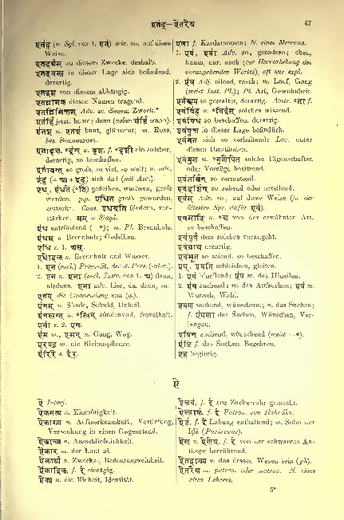
2. éva Adj. eilend, rasch; m. Lauf, Gang (meist Inst. Pl); Pl; Pl. Art, Gewohnheit.
Original text · German · Word type unspecified
1. evá evā́ Adv. so, geradeso; eben, kaum, nur, noch (zur Hervorhebung des vorangehenden Wortes), oft nur expl.
Burnouf 1866 adjective · Conjunction
Original text · French · adjective
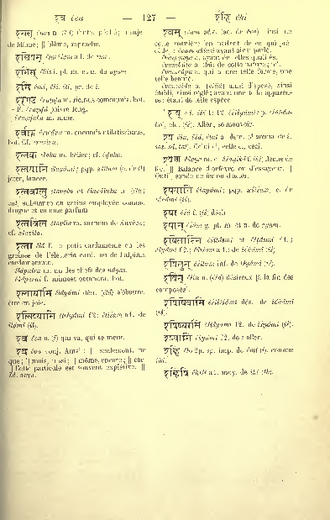
eva eva a. (i) qui va, qui se meut.
Original text · French · Conjunction
eva eva conj. Ainsi; seulement, ne que; mais, aussi; même, encore; car. Cette particule est souvent explétive. Zd. aeva.
Occurrences in source texts (318)
DYS 48 occurrences
27 more source pages
DYS 43–49: False Yogis 3 occurrences
Direct occurrences
DYS 150–153*3: Vajrolī: Secret Teaching 2 occurrences
Direct occurrences
DYS 154–167: Vajrolī for the Male Yogi 2 occurrences
Direct occurrences
DYS 168–179*1: Vajrolī for the Yoginī 3 occurrences
Direct occurrences
DYS 180–183*1: Amarolī and Sahajolī 2 occurrences
Direct occurrences
DYS 189–191: Transmission 3 occurrences
Direct occurrences
GoS 25 occurrences
GoS 1–8: Learning and Liberation 3 occurrences
Direct occurrences
GoS 16–19: The Coiled Power 3 occurrences
Direct occurrences
GoS 29–33: Four Forms of Breath Retention 3 occurrences
Direct occurrences
GoS 42–49: Breath as Bellows 3 occurrences
Direct occurrences
5 more source pages
GoS 81–88: Moon, Fluid and Union 3 occurrences
Direct occurrences
HP 85 occurrences
HP 1.15-1.16*2: Factors of Practice 2 occurrences
Direct occurrences
HP 1.33-1.43: Siddhāsana 4 occurrences
Direct occurrences
HP 2.1-2.6: Introduction to Prāṇāyāma 2 occurrences
Direct occurrences
32 more source pages
HP 2.37-2.43: Path to Manonmanī 2 occurrences
Direct occurrences
HP 2.60-2.68: Bhastrikā 3 occurrences
Direct occurrences
HP 3.58-3.65: Uḍḍiyāna Bandha 3 occurrences
Direct occurrences
HP 3.66-3.72: Jālandhara and the Bandhas 2 occurrences
Direct occurrences
HP 3.87-3.93*7: Sahajolī and Amarolī 5 occurrences
Direct occurrences
HP 3.94-3.102*1: Śakti Cālana 3 occurrences
Direct occurrences
-
HP 3.95*1 Segment 2
-
HP 3.100 Segment 10
-
HP 3.101*1 Segment 3
HP 3.103-3.107*2: Conclusion of the Mudrā Teaching 2 occurrences
Direct occurrences
-
HP 3.107*1 Segment 9
-
HP 3.107*1 Segment 15
HP 4.0*1-4.0*14: Samādhi and Laya 2 occurrences
Direct occurrences
HP 4.9-4.11*4: Gaze and Lunar Nectar 2 occurrences
Direct occurrences
HP 4.11*5-4.11*14: Khecarī in Space 2 occurrences
Direct occurrences
-
HP 4.11*8 Segment 6
-
HP 4.11*11 Segment 3
HP 4.11*15-4.11*28: Space and Laya 3 occurrences
Direct occurrences
-
HP 4.11*18 Segment 10
-
HP 4.11*22 Segment 6
-
HP 4.11*23 Segment 4
HP 4.12-4.19: Path of Nāda 4 occurrences
Direct occurrences
HP 4.27*1-4.35: Rājayoga and Haṭha 3 occurrences
Direct occurrences
HP 4.35*1-4.36: Signs of Samādhi 3 occurrences
Direct occurrences
HP 4.37-4.46: Listening to Nāda 3 occurrences
Direct occurrences
HP 4.47-4.55*4: Nāda Binds the Mind 4 occurrences
Direct occurrences
HP 4.56-4.66: The Middle Path 6 occurrences
Direct occurrences
HTK 3 occurrences
IVU 6 occurrences
MAN 2 occurrences
MandUp 4 occurrences
PJH 2 occurrences
PYS 6 occurrences
SiSa 86 occurrences
SiSa 1.4-1.9: Begrenzte Wege 2 occurrences
Direct occurrences
SiSa 1.20-1.31: Karma und Erkenntnis 2 occurrences
Direct occurrences
44 more source pages
SiSa 1.51-1.64: Selbst als Licht 2 occurrences
Direct occurrences
SiSa 1.65-1.70: Māyā-Aufhebung 3 occurrences
Direct occurrences
SiSa 1.71-1.81: Avidyā und Elemente 2 occurrences
Direct occurrences
SiSa 1.82-1.90: Guṇas und Gegenstände 2 occurrences
Direct occurrences
SiSa 2.13-2.20: Suṣumṇā und Citrā 3 occurrences
Direct occurrences
SiSa 2.41-2.43: Māyā-Projektion 2 occurrences
Direct occurrences
SiSa 3.1-3.10: Herzlotus und Prāṇa 2 occurrences
Direct occurrences
SiSa 3.21-3.31: Nāḍī-Reinigung 2 occurrences
Direct occurrences
SiSa 3.41-3.48: Atemkraft und Hindernisse 3 occurrences
Direct occurrences
SiSa 3.51-3.54: Prāṇāyāma-Siddhis 2 occurrences
Direct occurrences
SiSa 3.61-3.67: Paricaya und Niṣpatti 3 occurrences
Direct occurrences
SiSa 3.81-3.83: Freiheit von Wiederkehr 2 occurrences
Direct occurrences
SiSa 4.1-4.8: Yonimudrā-Kreislauf 2 occurrences
Direct occurrences
SiSa 5.29-5.35: Pratīka-upāsanā 2 occurrences
Direct occurrences
SiSa 5.48-5.71: Innere Meditation 2 occurrences
Direct occurrences
SiSa 5.144-5.155: Ājñā und Khecarī 2 occurrences
Direct occurrences
-
SiSa 5.155 Segment 7
-
SiSa 5.155 Segment 14
SiSa 5.156-5.181: Sahasrāra 6 occurrences
Direct occurrences
-
SiSa 5.159 Segment 12
-
SiSa 5.162 Segment 12
-
SiSa 5.163 Segment 7
-
SiSa 5.164 Segment 2
-
SiSa 5.166 Segment 3
-
SiSa 5.167 Segment 13
SiSa 5.182-5.190: Sahasrāra-Mond 2 occurrences
Direct occurrences
-
SiSa 5.186 Segment 14
-
SiSa 5.189 Segment 10
SiSa 5.191-5.207: Kailāsa und Mahāśūnya 5 occurrences
Direct occurrences
-
SiSa 5.192 Segment 4
-
SiSa 5.193 Segment 10
-
SiSa 5.204 Segment 15
-
SiSa 5.207 Segment 2
-
SiSa 5.207 Segment 13
SiSa 5.208-5.222: Rājayoga 3 occurrences
Direct occurrences
-
SiSa 5.211 Segment 6
-
SiSa 5.212 Segment 18
-
SiSa 5.213 Segment 23
SiSa 5.234-5.252: Tripurā-Mantra 2 occurrences
Direct occurrences
-
SiSa 5.243 Segment 21
-
SiSa 5.246 Segment 14
SVU 25 occurrences
SVU 1.13-1.16: The Hidden Fire 2 occurrences
Direct occurrences
SVU 2.14-2.16: Self-Luminous and Unbound 2 occurrences
Direct occurrences
9 more source pages
SVU 4.1-4.5: The One in Every Form 2 occurrences
Direct occurrences
SVU 5.7–5.11: The Wandering Self 4 occurrences
Direct occurrences
SVU 6.7–6.13: Lord of All Lords 2 occurrences
Direct occurrences
VBT 26 occurrences
VBT 57–64: Intervals and Equality 2 occurrences
Direct occurrences
VBT 65–74: Joy and Enjoyment 3 occurrences
Direct occurrences
8 more source pages
VBT 86–92: Light and Darkness 3 occurrences
Direct occurrences
VBT 93–100: Pain and Desire 3 occurrences
Direct occurrences
VBT 121–129: Devotion and Release 2 occurrences
Direct occurrences
VBT 146–155: Inner Rituals 3 occurrences
Direct occurrences
Continue with AYI Free
Image source: AYI archive.