

ati अति – over; beyond; past
adjective · adverb · particle · previx · Word type unspecified
Dictionary sources
AYI dictionary previx
over; beyond; past
Cappeller 1891 adverb
Original text · English · adverb
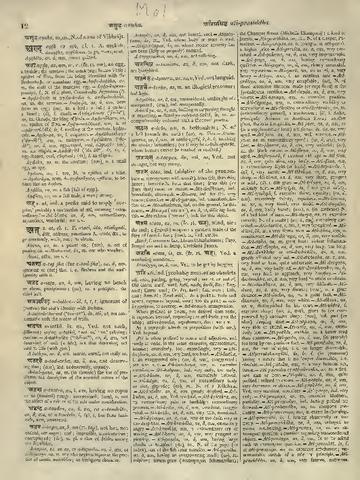
áti ·adv. (mostly °--) across, beyond, past, over, excessively, quite, most; as prep. beyond, over (w. acc., r. gen.).
Monier-Williams 1872 particle · Word type unspecified
Original text · English · particle
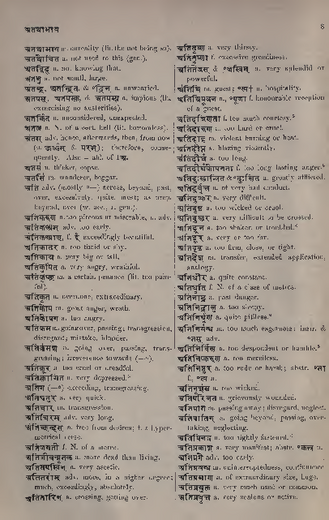
ati ati, ind. [probably neut. of an obsolete adj. atin, passing, going, beyond; see rt. at and cf. Old Germ. anti, unti, inti, unde, indi, &c.; Eng. and; Germ. und; Gr. ἔτι, ἀντί Lat. ante; Lith. ant; Arm. ti; Zend aiti]. As a prefix to verbs and nouns, expresses beyond, over; too far past; as ati- kramitum, to overstep.
Original text · English · Word type unspecified
Ati is often prefixed to nouns and adjectives, and rarely to verbs, in the sense excessive, extraordinary, intense; excessively, too; exceedingly, very.
Petersburger 1855 adverb · Word type unspecified
Original text · German · adverb
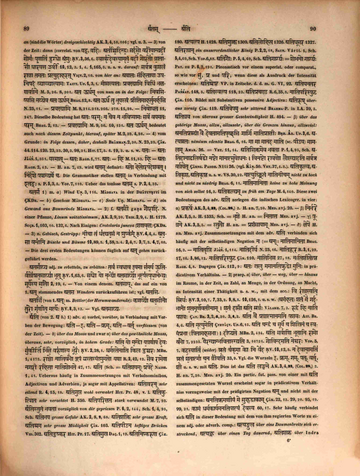
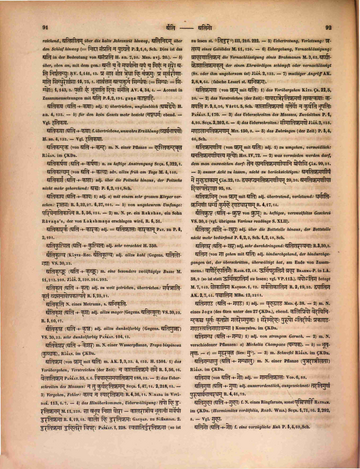
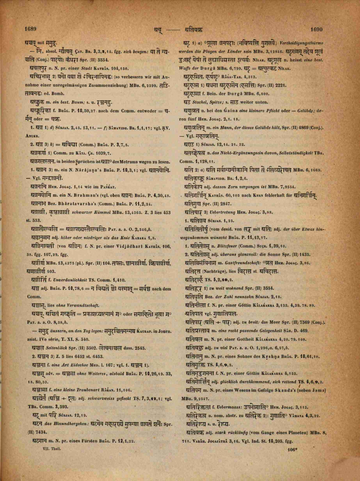
áti (von 2. a b.) 1〉 adv. a〉 vorbei, vorüber, in Verbindung mit Verben der Bewegung: ati — i, ati — kram, ati — vart verfliessen (von der Zeit). — b〉 über das Maass und zwar α〉 über das gewöhnliche Maass, überaus, sehr, vorzüglich, in hohem Grade: ati̱ yo ma̱ndro ya̱jathā̀ya de̱vaḥ sùkī̱rtiṃ bhìkṣe̱ varùṇasya̱ bhūrèḥ ṚV. 2,28,1. dharmastenāti kila duścaraḥ MBH. 1,4173. rājño nātibabhau rūpaṃ grastasyāṃśumato yathā R. 2,42,12. saiva rāmeṇa nagarī rahitā nātiśobhate R. 2,47,17. ati (Sch. = atiśayam) prapede NAIṢ. 1,41. Ueberaus häufig in Zusammensetzungen mit Verbalnominibus, Adjectiven und Adverbien, ja sogar mit Appellativen: atitvaran sehr eilend R. 4,15,18. atigupta wohl verwahrt HIT. Pr. 48, v. l. atikutsita sehr verachtet H. 350. atiparikṣata stark verwundet M. 7,93. átistutaṃ bhavatā vorzüglich von dir gepriesen P. 6,2,144, Sch. P. 1,4,95, Sch. atibhaya grosse Gefahr AK. 2,8,2,68. atiśakti sehr grosse Kraft, atiśrama sehr grosse Müdigkeit ŚĀK. 103. atipīḍana heftiges Drücken VID. 302. atiduṣkara HIT. Pr. 17. atisukha DAŚ. 1,19. atiniṣkaruṇa ŚĀK. 180. atyalpa H. 1428. atiśukla H. 1309. atilohita H. 1326. atidhūsara H. 1327. atirājan ein ausserordentlicher König P. 2,2,18 SAUN. Vārtt. 1, Sch. P. 5,4,69, Sch. VOP. 6,88. atigauḥ P. 5,4,69, Sch. atigārgyaḥ = śobhano gārgyaḥ PAT._zu_P. 6,2,191. Pleonastisch vor einem superlat. oder comparat., so wie vor su, pra und pari, wenn diese als Ausdruck der Intensität erscheinen: atiśreṣṭha VP._in_Zeitschr. d. d. m. G. VI, 92. atighanatara PAÑCAT. 148,5. atisvalpa PAÑCAT. 118,23. atipracaṇḍa R. 6,35,5. nātipariṣphuṭa ŚĀK. 110. Bildet mit Substantiven possessive Adjectiva: atiruṣ überaus zornig ŚĀK. 119. ativepathu sehr zitternd BRAHMA-P. in LA. 59,5. atijava von überaus grosser Geschwindigkeit H. 494. — β〉 über das gehörige Maass, allzu, allzusehr, über die Grenzen hinaus, allzuviel: anatipraśnyāṃ vai devatāmatipṛcchasi gārgi mātiprākṣīḥ BṚH. ĀR. UP. 3,6. atyaśnataḥ nimium edentis BHAG. 6,16. mā mā mānada māti (sc. pīḍaya) māmalam AMAR. 36. = VET. 11,14. atisiktameva bhavatā P. 1,4,95, Sch. atidānādbalirbaddho naṣṭo mānātsuyodhanaḥ . vinaṣṭo rāvaṇo laulyādati sarvatra varjayet ŚĀRṄG. PADDH. Nīti 26. (vgl. CĀṆ. 50. VET. 37,4. VET. 37,5.). atikulva, atikṛśa, atikṛṣṇa u. s. w. VS. 30,22. nātyucchritaṃ nātinīcam nicht zu hoch und nicht zu niedrig BHAG. 6,11. nātimānitā keine zu hohe Meinung von sich selbst BHAG. 16,3. atikalyam zu früh am Tage M. 4,140. Diese zwei Bedeutungen des adv. ati zerlegen die indischen Lexicogrr. in vier: α〉 prakarṣe AK. 3,4,32,3. (COL. 3,4,28,3). H. an. 7,20. MED. avy. 20.⫽print_change — β〉 nirbhare AK. 3,5,2. H. 1535, Sch. = bhṛśe H. an. = nitānta MED. avy. — γ〉 pūjane AK. 3,5,5. = stutau H. an. = praśaṃsāyām MED. avy. — δ〉 kṣepe H. an. MED. avy. Zusammensetzungen mit dem adv. ati verbinden sich häufig mit der selbständigen Negation na (= an): nātimānitā BHAG. 16,3. — nātitṛpti YĀJÑ. 1,114. nātidīrgha N. 25,16. nātidūra R. 3,1,29. R. 3,17,16. R. 5,86,12. nātiparisphuṭa ŚĀK. 110. nātibhinna ŚĀK. 27,18. nātiśītoṣṇa RAGH. 4,8. Dagegen ŚĀK. 112,9: ataḥ khalu mamānatikruddho muniḥ in prädicativem Verhältniss. — 2〉 praep. a〉 über, über — weg, über — hinaus im Raume, in der Zeit, an Zahl, an Menge, in der Ordnung, an Macht, an Intensität einer Thätigkeit u. s. w., mit dem acc.: vi rā̀ja̱syati̱ sridhàḥ ṚV. 3,10,7. ṚV. 7,33,2. ṚV. 9,8,5. ṚV. 10,126,1. u. s. w. (amaṃhata) śa̱taṃ mè garda̱bhānā̀ṃ śa̱tamūrṇàvatīnām . śa̱taṃ dāsām̐ ati̱ srajàḥ VĀLAKH. 7,3. rudraṃ hi nāti paśavaḥ ŚAT. BR. 3,2,4,20. ŚAT. BR. 3,3,1,2. ati vai prajātmānamati paśavaḥ AIT. BR. 4,6. ati mṛtyumeti ŚVETĀŚV. UP. 6,15. ati candraṃ ca sūryaṃ ca śikhinaṃ ca svayaṃprabhā (pitāmahasabhā) . dīpyate MBH. 2,434. ati sarvāṇi bhūtāni rāmo babhau MBH. 7,2235. yairanyānbhavitāsmyati MBH. 3,10731. govindamati neśvaraḥ VOP. 5,7. kasyātì (wider) vra̱taṃ càkṛmā̱ ko ni vèda ṚV. 10,12,5. na de̱vānā̱matì vra̱taṃ śa̱tātmā̀ ca̱na jī̀vati ṚV. 10,33,9. Vgl. die Wurzeln i, kram, gam, pat, vart, śī u. s. w. mit ati. Dies ist das ati laṅghane AK. 3,4,32,3. (COL. 3,4,28,3). H. an. 7,20. MED. avy. 20. Ein partic. fut. pass. von einer mit ati zusammengesetzten Wurzel erscheint sogar in prädicativem Verhältniss vorzugsweise mit der präfigirten Negation an und nicht mit der selbständigen: anatikramaṇīyaṃ me suhṛdvākyam ŚĀK. 22,12. ŚĀK. 29,20. ŚĀK. 95,19. ŚĀK. 99,21. kāmaṃ dharmakāryamanatipātyaṃ devasya ŚĀK. 60,17. Sehr häufig verbindet sich ati in dieser Bedeutung mit dem von ihm regierten Worte zu einem adj. oder adverb. comp.: atyaṅgula über eine Daumenbreite sich erstreckend, atyahna über einen Tag dauernd, atiśakra über Indra reichend, atiśītam über die kalte Jahreszeit hinweg, atinidram über den Schlaf hinweg (= nidrā saṃprati na yujyate P. 2,1,6, Sch. Dies ist das ati in der Bedeutung von asaṃprati H. an. 7,20. MED. avy. 20.).⫽print_change — b〉 über, oben an, mit dem gen.: a̱mī ca̱ ye ma̱ghavā̀no va̱yaṃ ca̱ miha̱ṃ na sūro̱ ati̱ niṣṭàtanyuḥ ṚV. 1,141,13. pra sa̱pta sàpta tre̱dhā hi càkra̱muḥ pra sṛtvàrīṇā̱mati̱ sindhu̱rojàsā ṚV. 10,75,1. bhātvàkṣasa̱ atya̱kturna sindhàvaḥ (= sindhvaḥ = sindhoḥ) ṚV. 1,143,3. pa̱kṣī hà bhū̱tvāti̱ diva̱ḥ samèti AV. 4,34,4. — Accent in Zusammensetzungen mit ati P. 6,2,191. gaṇa kāṣṭhādi.
Original text · German · Word type unspecified
ati 1〉b〉α〉 nachstehend: krodhāviṣṭeṣu pārtheṣu dhārtarāṣṭreṣu cāpyati MBH. 2,2417. — 2〉a〉 Z. 9 füge MBH. 9,1146 nach MBH. 7,2235 hinzu; ebendas. nach MBH. 3,10731 ist hinzuzufügen: mānuṣānati gandharvānsarvāngandharva lakṣaye MBH. 1,6463. — c〉 mit folgendem abl. über: ati dharmādbalaṃ manye balāddharmaḥ pravartate Gewalt, meine ich, geht über Recht MBH. 12,4840. Vielleicht fehlerhaft für adhi.

Original text · German · Word type unspecified
ati 2〉a〉 ati sarvānyanīkāni pitā te 'tivyarocata MBH. 6,1669.
Böhtlingk 1879 adjective · adverb · particle
Original text · German · adjective · adverb · particle
áti — 1〉 Adv. — a〉 vorbei, vorüber. — b〉 über das gewöhnliche oder gehörige Maass; überaus, sehr, vorzüglich, in hohem Grade (Chr. 2,18); allzu, allzusehr, allzuviel. — 2〉 Praep. mit Acc. über, über — weg, über — hinaus (im Raume, in der Zeit, an Zahl, an macht, an Intensität einer Thätigkeit u. s. w.) Chr. 1,16. Chr. 4,25. Chr. 5,14. Mit Gen. (selten) über, oben an. — Mit Abl. (?) über. — 3〉 Adj. darüber hinausgehend ŚAT. BR. 6,6,1,1.
Apte 1890 particle
Original text · English · particle
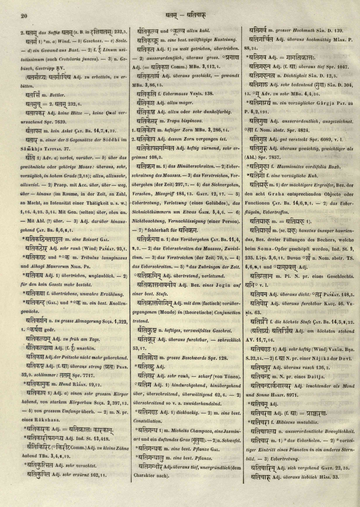
ati ind. [at-i] 1 A prefix used with adjectives and adverbs, meaning ‘very’, ‘too’, ‘exceedingly’, ‘excessively’, ‘very much,’ and showing utkarṣa; nātidūre not very far from; ˚kṛśa very lean; ˚bhṛśaṃ very much; also with verbs or verbal forms; ˚siktameva bhavatā Sk.; svabhāvo hyatiricyate &c. 2 (With verbs) Over, beyond; ati-i go beyond, overstep; so ˚kram, ˚car, ˚vah &c. In this case ati is regarded as a preposition upasarga. 3 (a) (With nouns or pronouns) Beyond, past, surpassing, superior to, eminent, respectable, distinguished, higher, above, (used with acc. as a karmapravacanīya, or as first member of Bah. or Tat. Comp.; in which last case it has usually the sense of eminence or higher degree: atigo, ˚gārgyaḥ, = praśastā gauḥ, śobhano, gārgyaḥ; ˚rājan an excellent king; or the sense of atikrāṃta must be understood with the latter member which will then stand in the accusative case; atimartyaḥ = martyamatikrāṃtaḥ; ˚mālaḥ, atikrāṃto mālāṃ; so atikāya, ˚keśara, q. v.); ati devān kṛṣṇaḥ Sk.; mānuṣānatigaṃdharvān sarvāngaṃdharva lakṣaye Mb; ˚mānuṣaṃ karma a deed ([Page 0029-c]) which is beyond human power, i. e. a superhuman action; ˚kaśaḥ past the whip (as a horse), unmanageable; ˚tyad surpassing that; ˚tvāṃ, ˚tvān him or them that surpasses or surpass thee, so ˚māṃ, ˚yūyaṃ &c. (b) (With nouns derived from roots) Extravagant, exaggerated, inordinate, excessive, extraordinary; e. g. ˚ādaraḥ excessive regard; ˚āśā extravagant hope; so ˚bhayaṃ, ˚tṛṣṇā, ˚ānaṃdaḥ &c. &c.; atidānāt balirbaddho naṣṭo mānātsuyodhanaḥ . vinaṣṭo rāvaṇo laulyādati sarvatra varjayet; cf. ‘extremes are ever bad.’ (c) Unfit, idle, improper, in the sense of asaṃprati or kṣepa ‘censure’; atinidraṃ = nidrā saṃprati na yujyate Sk. The gaṇaratnamahodadhi gives the following senses of atiḥ - vikramātikramābuddhibhṛśārthātiśayeṣvati . e. g. atirathaḥ rathādhikaṃ vikramavān; ˚matiḥ buddhyatikramaḥ; ˚gahanaṃ buddheraviṣayaḥ; ˚taptaṃ bhṛśataptaṃ; ˚vegaḥ atiśayito vegaḥ.
Cappeller 1887 Word type unspecified
Original text · German · Word type unspecified
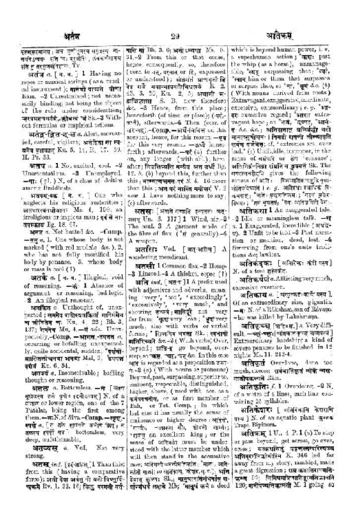
áti vorbei, vorüber, überaus, sehr, zu sher, gar, höchst; meist ˚—. Praep. mit Acc. über, ultra,trans.
Burnouf 1866 previx
Original text · French · previx
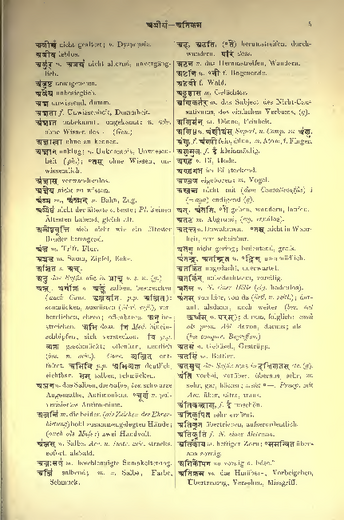
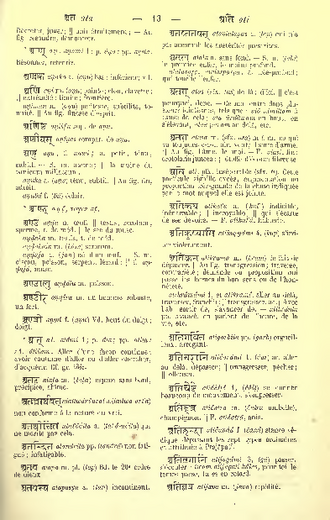
ati ati, pfx. inséparable (sfx. ti). Cette particule signifie excès, augmentation ou proportion très-grande de la chose indiquée par le mot auquel elle est jointe.
Derived words
Occurrences in source texts (46)
DYS 7 occurrences
GoS 4 occurrences
HP 7 occurrences
HP 3.87-3.93*7: Sahajolī and Amarolī 1 occurrence
Occurrences through derived words
-
HP 3.92 Segment 10
1 more source page
HTK 2 occurrences
IVU 1 occurrence
MandUp 1 occurrence
PYS 4 occurrences
PYS 3.15–16: Sequence of Transformation 1 occurrence
Occurrences through derived words
-
PYS 3.16 Segment 4
PYS 3.35–37: Knowledge of Puruṣa and Siddhis 1 occurrence
Occurrences through derived words
-
PYS 3.35 Segment 3
PYS 4.12–14: Real Objects in Transformation 1 occurrence
Occurrences through derived words
-
PYS 4.12 Segment 1
SiSa 8 occurrences
SiSa 1.35-1.44: Täuschungs-Gleichnisse 1 occurrence
Occurrences through derived words
-
SiSa 1.44 Segment 17
2 more source pages
SVU 8 occurrences
SVU 3.13-3.18: In the Heart and in the World 2 occurrences
Direct occurrences
SVU 4.11-4.16: The Hidden Creator 2 occurrences
Direct occurrences
VBT 4 occurrences
Continue with AYI Free
Image source: AYI archive.