

para पर – higher; beyond; other; supreme; intent on
adjective · substantive masculine · substantive neuter · Word type unspecified
Dictionary sources
AYI dictionary adjective
higher; beyond; other; supreme; intent on
Cappeller 1891 adjective
Original text · English · adjective
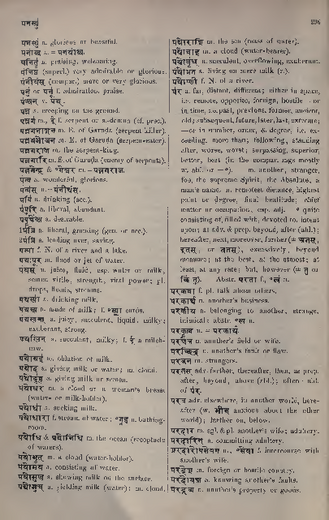
pára ·a. far, distant, different; either in space, i.e. remote, opposite, foreign, hostile -- or in time, i.e past, previous, former, ancient, old; subsequent, future, later, last, extreme; -- or in number, order, & degree, i.e. exceeding, more than; following, standing after, worse, worst; surpassing, superior, better, best (in the compar. mgs mostly w. abl. or --°). --m. another, stranger, foe, the supreme Spirit, the Absolute, a man's name. n. remotest distance, highest point or degree, final beatitude; chief matter or occupation, esp. adj. --° quite consisting of, filled with, devoted to, intent upon; as adv. & prep. beyond, after (abl.); hereafter, next, moreover, further (±atas, itas, or tatas), excessively, beyond measure; at the best, at the utmost; at least, at any rate; but, however (±tu or kiṃ tu). -- Abstr. paratā f., °tvá n.
Original text · English · adjective
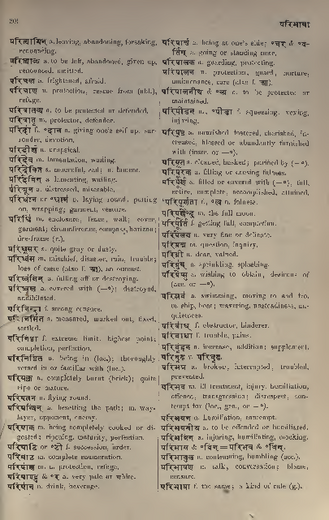
pa°ra ·a. very pale or white.
Monier-Williams 1872 adjective · Word type unspecified
Original text · English · adjective
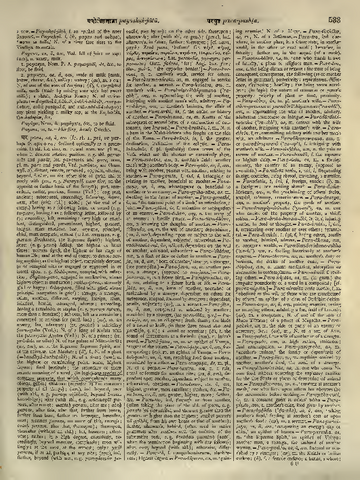
para para, as, ā, am (fr. rt. 1. pṛ, or per- haps fr. apa + ra; declined optionally as a prono- minal in abl. loc. sing. m. n. and nom. voc. pl. m., when it denotes relative position, e. g. abl. paras- māt and parāt, loc. parasmin and pare, nom. pl. m. pare and parās, Ved. parāsas, see Gram. 238. a), distant, remote, removed; opposite, ulterior, beyond, further, on the other side of (with abl. or rarely with gen., e. g. Sarayvāḥ pare tīre, on the opposite or further bank of the Sarayū); past, ante- cedent, earlier, previous, former (Ved.); long past, ancient; subsequent, succeeding, following, future, next, after (with abl.); added; (at the end of a comp.) having as a following letter or sound (e. g. ta-para, having t as a following letter, followed by t); exceeding, left, remaining; very high or excel- lent, distinguished, pre-eminent, highest, greatest, longest, most excellent, best, supreme, principal, chief, most complete, utmost (= Lat. summus, e. g. param Brahman, the Supreme Spirit); highest, latest (e. g. paraḥ kālaḥ, the highest or latest times; param āyuḥ, the highest or last stage of human life; used at the end of comps. to denote hav- ing anything as the highest object, completely devoted to or occupied with or engaged or engrossed in or intent upon, e. g. cintā-para, occupied with reflec- tion; dhyāna-para, engaged in meditation, whose highest object is meditation; sukha-para, extremely glad or happy; śoka-para, filled with grief, whose principal occupation is grief); strange, a stranger, other, another, different, varying, foreign, alien, inimical, hostile, estranged, adverse; exceeding, having a remainder or surplus (e. g. paraṃ śatam, more than a hundred); left over, left as a remainder; concerned or anxious for (with loc.); (as), m. an enemy, foe, adversary; (sc. graha) a subsidiary Soma-graha (Ved.); N. of a king of Kośala with the patronymic Āṭṇāra (Ved.); N. of a prince; (sc. prāsāda or vāsa) N. of the palace of Mitra-vindā; (as, am), m. n. the Supreme, Supreme Spirit, soul of the universe, the Absolute; (ā), f., N. of a plant (= bandhyā-karkoṭakī); N. of a river; (am), n. the highest or culminating point, acme, highest degree; final beatitude; the secondary or more remote meaning of a word; (in logic) one species of common property, that which comprehends many objects, genus; existence (regarded as the common property of all things); (am), ind. beyond, over (with abl., e. g. paraṃ vijñānāt, beyond human knowledge); after (with abl., e. g. astamayāt pa- ram, after sunset; mattaḥ param, after me; ataḥ param, after this, after that, farther from hence, farther from here, farther on, hereupon, hereafter, next; nāsmāt param, no more of this, enough; tataḥ param, after that, thereupon); thereupon, thereafter (without an abl.); but, however; other- wise; rather; in a high degree, excessively, ex- ceedingly, beyond measure, completely; most wil- lingly; at the most, at the utmost; only; yadi param, if at all, perhaps, at any rate; (eṇa), ind. farther, beyond (with acc., e. g. pareṇāsmān pa- raihi, pass by us); on the other side, thereupon; afterwards; after (with abl. or gen.); (pare), ind. afterwards, in future, farther; thereupon; [cf. pāra, parā; Zend para, ‘before;’ Gr. πέρᾱ, πέρας, πέρᾱν, περαίνω, περαῖο-ς, περά-τη, Πειραιεύ-ς, πεῖ-ραρ, ἀ-περείσ-ιο-ς; Lat. peren-die, per-egre, per- per-a-m; Goth. fairra, ‘far;’ Angl. Sax. far; Slav. pol-ŭ, ‘the opposite border.’]
Original text · English · Word type unspecified
Para; (at the end of comps.) sometimes to be translated by ‘another word, another equivalent ex- pression,’ e. g. jīva-śabdo mahat-paraḥ, the word jīva is an equivalent expression or another word for mahat.
Petersburger 1855 adjective · substantive masculine · substantive neuter · Word type unspecified
Original text · German · adjective · substantive masculine · substantive neuter
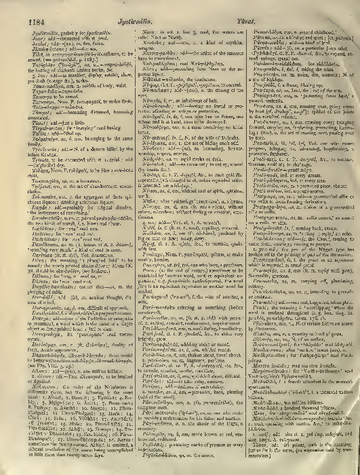
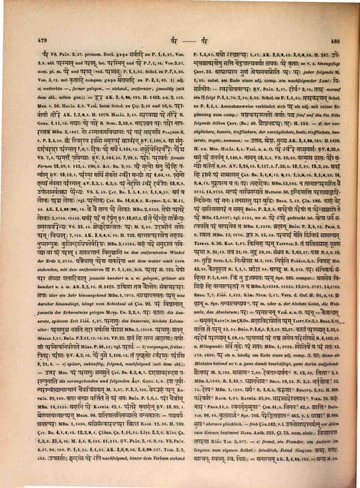
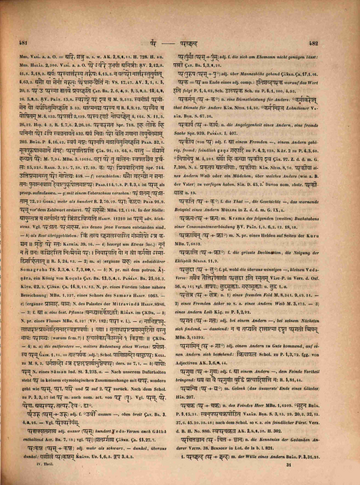
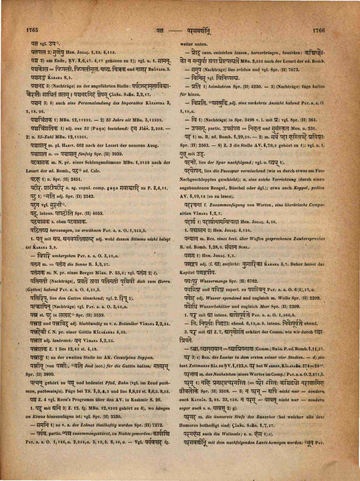
pára VS. PRĀT. 2,27. pronom. Decl. gaṇa sarvādi zu P. 1,1,27. VOP. 3,9. abl. parasmāt und parāt, loc. parasmin und pare P. 7,1,16. VOP. 3,37. nom. pl. m. pare und parās (ved. parāsas) P. 1,1,34. Schol. zu P. 7,1,50. VOP. 3,12. mit kṛtādi compon. gaṇa śreṇyādi zu P. 2,1,59. 1〉 adj. a〉 weiterhin —, ferner gelegen, — stehend, entfernter, jenseitig (mit dem abl., selten gen.); = dūra AK. 3,4,25,193. H. 1452. H. an. 2,435. MED. r. 56. HALĀY. 4,8. VAIJ. beim Schol. zu ŚIŚ. 2,29 und 16,6. parārvācī tīre AK. 1,2,3,8. H. 1079. HALĀY. 3,45. sarayvāśca pare tīre R. GORR. 1,11,19. nadyāḥ pare pāre R. SCHL. 2,55,6. nādṛśyata paraḥ pāro nāparastatra MBH. 2,1807. yo 'smākamavidyāyāḥ paraṃ pāraṃ tārayasi PRAŚNOP. 6,8. P. 3,4,20. kvà svida̱sya rajàso ma̱haspara̱ṃ kvāvàram ṚV. 1,168,6. ā sàmu̱drādàvarā̱dā paràsmāt ṚV. 7,6,7. di̱vaḥ pare̱ arghè ṚV. 1,164,12. sa̱jūrde̱vebhi̱ravàrai̱ḥ paraìśca VS. 7,5. para̱mantàṃ pṛthi̱vyāḥ ṚV. 1,164,34. ṚV. 7,99,2. parā̀ḥ parā̱vatàḥ fernste Fernen ṚV. 10,58,8. ṚV. 10,145,4. ṚV. 10,180,2. AIT. BR. 3,15. paràṃ mṛtyo̱ anu̱ parèhi̱ panthā̀m ṚV. 10,18,1. paràsyā̱ adhì sa̱ṃvato 'vàrā̀m̐ a̱bhyā̀ tara ṚV. 8,64,15. śye̱no ha̱vyaṃ nàya̱tvā paràsmāt AV. 3,3,4. AV. 4,3,2. para̱ṃ nedī̱yo 'vàra̱ṃ davī̀yaḥ AV. 10,8,8. upā̀gāma̱rvāktvā̱ parèbhyaḥ VS. 5,42. ŚAT. BR. 3,5,1,31. ŚAT. BR. 5,1,5,21. ayaṃ ca lokaḥ paraśca lokaḥ (vgl. paraloka) ŚAT. BR. 14,6,7,2. KAṬHOP. 2,6. M. 11,26. AK. 3,4,32 (28), 16. ke vai tasya pare lokāḥ MBH. 2,2322. teṣāṃ paratare lokāḥ MBH. 3,1108. MBH. 3,15459. avàra̱ṃ paràṃ ca daṃṣṭràm ṚV. 10,87,3. śaṃ te̱ parèbhyo̱ gātrèbhya̱ḥ śama̱stvavàrebhyaḥ VS. 23,44. mlecchadeśastvataḥ paraḥ M. 2,23. udāsīnaṃ tayoḥ param (vidyāt) M. 7,158. AK. 2,8,1,9. AK. 2,8,1,10. H. 732. asmātparastveṣa mahādhanuṣmānputraḥ kulindādhipatervariṣṭhaḥ MBH. 3,15594. ahaṃ pāre samudrasya pṛthivyā vā paraṃ parāt . gatvātmānaṃ vimuñcāmi in den entferntesten Winkel der Erde MBH. 5,3745. atraivāṇ pareṇa ṇakāreṇa mit dem weiter nach vorn stehenden, mit dem entfernteren ṇa P. 1,1,69, Sch. paratara H. 732. yeṣāṃ parā saṃkhyā śatādikāt jenseits hundert u. s. w. gelegen, grösser als hundert u. s. w. AK. 3,2,13. H. 1425. uṣitvā tatra kaunteyaḥ saṃvatsaraparāḥ kṣapāḥ über ein Jahr hinausgehend MBH. 1,7975. bhāgyāyattamataḥ param was darüber hinausliegt, hängt vom Schicksal ab ŚĀK. 92. paraṃ vijñānāt jenseits der Erkenntniss gelegen MUṆḌ. UP. 2,2,1. paraḥ kālaḥ die äusserste, späteste Zeit YĀJÑ. 1,37. paramāyuḥ das äusserste, höchste Lebensalter: paramāyuśca bhavati tadā varṣāṇi ṣoḍaśa MBH. 3,13056. paramāyuḥ śatam SŪRYAS. 1,21. BHĀG. P. 3,11,12. BHĀG. P. 3,11,16. BHĀG. P. 3,11,32. VP. 22. śataṃ hi tasya (brahmaṇaḥ) varṣāṇāṃ paramityabhidhīyate MĀRK. P. 46,42; vgl. parārdha. — b〉 vergangen, früher: pi̱tara̱ḥ parā̀saḥ ṚV. 4,2,16. parè yu̱ge ṚV. 1,166,13. taṃ pṛ̱cchanto 'vàrāsa̱ḥ parā̀ṇi ṚV. 6,21,6. — c〉 später, zukünftig, folgend, nachfolgend (mit dem abl.); = uttara MED. paraṃ paramāyuḥ samaśnute ŚAT. BR. 4,2,4,7. dvādaśāvarāndaśa parānpunāti die vorangehenden und folgenden ĀŚV. GṚHY. 1,6. daśa pūrvānparānvaṃśyānātmānaṃ caikaviṃśakam M. 3,37. P. 3,3,138. vedmyahaṃ param KATHĀS. 39,109. kayā vṛttyā vartitaṃ te paraṃ vayaḥ BHĀG. P. 1,6,3. parāṃ caitrīm MBH. 14,2425. ahani pare KATHĀS. 42,1. paràtare ca̱nāhàn ṚV. 10,95,1. śroṣyasyasmātparam MEGH. 98. pratipālayitavyaste janmakālaḥ — pañcavarṣaśatātparaḥ MBH. 1,1090. agnisaṃskārātparā kriyā RAGH. 12,56. H. 789. ŚAT. BR. 4,1,1,13. ŚAT. BR. 12,2,3,1. ŚĀṄKH. ŚR. 1,14,24. LĀṬY. 2,3,8. KĀTY. ŚR. 1,3,9. KĀTY. ŚR. 23,4,18. M. 4,8. M. 8,121. M. 11,211. ṚV. PRĀT. 2,16. ṚV. PRĀT. 9,18. VS. PRĀT. 4,47. VS. PRĀT. 4,98. VS. PRĀT. 4,101. P. 1,1,54. P. 6,1,84. AK. 2,6,2,30. AK. 3,4,29,227. TRIK. 3,3,463. (upasargāḥ) chandasi pare 'pi nachfolgend, hinter dem Verbum stehend P. 1,4,81. aco 'ntyātparaḥ P. 1,1,47. AK. 2,6,2,49. AK. 3,6,3,26. H. 247. upendavajrācaraṇeṣu santi cedupāntyavarṇā laghavaḥ pare kṛtāḥ so v. a. hinzugefügt ŚRUT. 33. ādyādyasya guṇaṃ tveṣāmavāpnoti paraḥ paraḥ jeder folgende M. 1,20. subst. am Ende eines adj. comp. ein nachfolgender Laut: visarjanīyaḥ — svaraghoṣavatparaḥ ṚV. PRĀT. 1,17. dīrgha˚ ṚV. PRĀT. 2,10. tapara worauf ein ta folgt P. 1,1,70. P. 1,2,40. P. 1,4,62. Schol. zu P. 1,1,51. taparakaraṇam Schol. zu P. 6,1,4. Ausnahmsweise verbindet sich para als adj. mit seiner Ergänzung zum comp.: ṣaṣṭhakaparāstato varṇāḥ pañca fünf auf die 6te Silbe folgende Silben ŚRUT. (BR.) 40. prauṣṭhabhadraparaḥ padaḥ H. 154. — d〉 der vorzüglichere, bessere, trefflichere, der vorzüglichste, beste, trefflichste, äusserste, ärgste, summus; = uttama, śreṣṭha, mukhya AK. 3,4,25,193. H. 1439. H. an. MED. HALĀY. 4,4. VAIJ. a. a. O. pare 'vàre madhya̱māsàḥ ṚV. 4,25,8. asu̱ṃ paràṃ ja̱nayàn ṚV. 1,140,8. nāman ṚV. 10,5,2. VS. 10,20. yasmā̱nna jā̱taḥ parò a̱nyo astì VS. 8,36. AV. 5,24,15. AV. 6,117,3. AV. 7,35,3. AV. 10,7,31. AV. 18,2,32. avaraṃ hi rājyaṃ paraṃ sāmrājyam ŚAT. BR. 5,1,1,13. ŚAT. BR. 5,1,3,11. ŚAT. BR. 1,9,3,10. ŚAT. BR. 9,1,1,29. ŚAT. BR. 14,9,4,11. puruṣasya ca yaḥ paraḥ (mahādevaḥ) MBH. 13,592. na tasmātparamasti vai MBH. 13,2114. MBH. 14,2783. matparaṃ nādhigamyate MATSYOP. 50. indriyāṇi parāṇyāhurindriyebhyaḥ paraṃ manaḥ . manasastu parā buddhiḥ BHAG. 3,42. ŚĀK. 186. nāhaṃ veda paraṃ hyasminnāparaṃ na samam BHĀG. P. 2,5,6. apareṣāṃ pareṣāṃ ca parebhyaścāpi ye pare MBH. 13,3037; vgl. MBH. 13,2134, wo st. pare 'pare gedruckt ist. vettha dharmaṃ satyavati paraṃ cāparameva ca MBH. 1,4258. brahman BHĀG. P. 2,4,10. PRAB. 2,9. sthāna MBH. 13,1870. rūpa N. 12,52. paramaparaṃ ceti dvividhaṃ sāmānyam TARKAS. 4,56. KAP. 1,87. kimiha param TATTVAS. 2. taṃ pratijagrāha pūjayā parayā N. 21,19. java N. 21,19. mud N. 19,29. saṃbhrama R. 1,63,27. yatna N. 1,6. N. 19,29. tuṣṭi SUND. 4,2. niḥśreyasa M. 1,106. nirvṛti PAÑCAT. 5,9. viṣāda HIT. 42,10. kautūhala R. 1,1,7. vrīḍā 80. āpad M. 9,313. paraḥ saṃnikarṣaḥ saṃhitā P. 1,4,109. kiṃ nu duḥkhamataḥ param Spr. 935. compar.: annameva viśiṣṭaṃ hi yasmātparataraṃ na ca MBH. 3,13386. MBH. 3,15534. MBH. 13,602. MBH. 13,3797. MBH. 14,2783. BHAG. 7,7. YĀJÑ. 1,322. KĀM. NĪTIS. 5,47. Verz. d. Oxf. H. 91,a,18. brahman n. Spr. nanvātmanyava˚. para m. oder n. der höchste Geist, die Weltseele, das Absolutum; paraḥ = paramātman VAIJ. a. a. O. param = kaivalyam = amṛtam RATNĀV._im_ŚKDR. brahmavidāpnoti param TAITT. UP. 2,1. BHAG. 3,19. yānti te param BHAG. 13,34. BHĀG. P. 3,6,5. BHĀG. P. 9,2,15. BHĀG. P. 9,22,37. kālaṃ parākhyam BHĀG. P. 3,32,9. naradevaṃ parākhyam BHĀG. P. 1,18,42. paramākhyaṃ paraṃ yacca tvameva parigīyase R. 6,102,29. n. Höhepunkt: sarve buddheḥ paraṃ gatāḥ MBH. 1,2025. jyotiṣe ca paraṃ gataḥ MBH. 13,470. MBH. 13,4680. para als n. häufig am Ende eines adj. comp. (f. ā) dieses als Höchstes habend so v. a. ganz damit beschäftigt, ganz darin aufgehend: śaucapara M. 3,192. āmnāya˚ M. 7,80. devatābhyarcana˚ N. 12,58. cintā˚ N. 2,2. MBH. 5,7010. R. 1,43,7. dhyānayoga˚ BHAG. 18,52. N. 2,3. bhartṛśoka˚ N. 12,74. doṣa˚ MBH. 1,1200. dharma˚ R. 1,6,2. karuṇā˚ BHARTṚ. 2,63. H. 368. paricaryā˚ RAGH. 1,91. KATHĀS. 43,60. dhārāsāropanayana˚ VIKR. 76. ahaṃkāra˚ PRAB. 14,2. svabhartṛśuśrūṣā˚ ŚUK. 41,3. vinaya˚ ŚUK. 42,4. śānti˚ DHŪRTAS. 96,10. kulamārga˚ Spr. 705. peraṅgitajñāna˚ Spr. 463, v. l. yācñā˚ H. 860. sukha˚ überaus glücklich, — froh ŚĀK. 162, v. l. upabhogaparānarthān vor Allem zum Genuss bestimmt HAEB. Anth. 223, Śl. 73. nom. abstr.: vipathāvapā taparatā RĀJA-TAR. 5,377. — e〉 fremd, ein Fremder, ein Anderer (im Gegens. zum eigenen Selbst); feindlich, Feind (Gegens. avara, antara, ātman, svayam, sva, nija); = anātman AK. 3,4,25,193. = anya H. an. MED. VAIJ. a. a. O. = ari, śatru u. s. w. AK. 2,8,1,11. H. 728. H. an. MED. HALĀY. 2,300. VAIJ. a. a. O. pare 'vàre u̱bhayā̀ a̱mitrā̀ḥ ṚV. 2,12,8. ṚV. 2,41,8. ṚV. 3,18,2. a̱ryaḥ para̱syāntàrasya̱ tarùṣaḥ ṚV. 6,15,3. na yatparo̱ nāntàrastutu̱ryāt ṚV. 6,63,2. a̱sau yā senā̀ maruta̱ḥ parèṣāma̱bhyaitì naḥ VS. 17,47. AV. 3,1,1. AV. 5,20,3. para u parasmā ṛtave prayacchati ŚAT. BR. 2,6,4,9. ŚAT. BR. 9,5,2,3. ŚAT. BR. 10,4,2,26. ŚAT. BR. 10,5,2,5. ṚV. PRĀT. 15,8. svarāṣṭre para eva ca M. 9,312. svamāṃsaṃ paramāṃsena yo vardhayitumicchati M. 5,52. ātmanaśca parasya ca R. 6,9,12. parasyaiva ca yoṣitam M. 4,133. parapatnī M. 2,129. parasya daṇḍaṃ nodyacchet M. 4,164. N. 11,5. N. 26,22. HIḌ. 4,3. R. 1,7,6. R. 2,26,36. parakaragata Spr. 718. iha loke hi dhanināṃ paro 'pi svajanāyate Spr. 432. ayaṃ nijaḥ paro veti gaṇanā laghucetasām Spr. 203. BHĀG. P. 6,16,42. svayaṃ naṣṭaḥ parānapi nāśayitumicchasi PRAB. 52,1. mūlapuruṣāvasāne saṃpadaḥ paramupatiṣṭhanti ŚĀK. 91,13. ŚĀK. 64,8. yastu — saṃgrāme hanyate paraiḥ M. 7,94. MBH. 3,15694. yadā pare tu balinaḥ svapakṣaścaiva durbalaḥ MBH. 15,221. RAGH. 3,21. RAGH. 7,38. RAGH. 17,59. kaḥ paraḥ priyavādinām Spr. 744. uttiṣṭhamānastu paro nopekṣyaḥ Spr. 448. — f〉 verschieden: asau tvadanyo na sanātanaḥ pumānbhavānna devātpuruṣottamātparaḥ PRAB. 114,7. PRAB. 114,8. P. 8,3,4 ist paras als praep. aufzufassen. — g〉 mit einem Ueberschuss versehen: paraṃ śatam (paraḥśatān P. 8,72,25 GORR.) mehr als hundert R. 2,70,29. parāḥ koṭayaḥ PRAB. 91,9. param vor dem Zahlwort erstarrt. paraṃ sahasraiḥ MBH. 12,1416. In der Stellé: āyustatra ca martyānāṃ paraṃ triṃśadbhaviṣyati HARIV. 11210 ist param adv. höchstens. Vgl. paraḥśata. paraḥsahasra, aus denen jene Formen entstanden sind. — h〉 als Rest übriggeblieben: kiṃ tasya cchagalasyāsti māṃsaśeṣo 'tra kaścana .. śṛṅge pare staḥ KATHĀS. 39,16. — i〉 besorgt um Etwas (loc.): nūnaṃ na te janaḥ kaścidasti niḥśreyase paraḥ . nivārayati yo na tvāṃ karmaṇo 'smādvigarhitāt .. R. 5,24,13. — 2〉 m. a〉 (ergänze graha) ein subsidiärer Somagraha TS. 3,3,6,1. TS. 7,3,10,1. — b〉 N. pr. mit dem patron. Āṭṇāra, ein König von Kośala ŚAT. BR. 13,5,4,4. PAÑCAV. BR. 25,16,3. KĀṬH. 22,3. ŚĀṄKH. ŚR. 16,9,11. ŚĀṄKH. ŚR. 16,9,13. N. pr. eines Fürsten (ohne nähere Bezeichnung) MBH. 1,227. eines Sohnes des Samara HARIV. 1063. — c〉 (ergänze prāsāda, vāsa) N. des Palastes der Mitravindā HARIV. 8986. — 3〉 f. ā a〉 eine best. Pflanze (bandhyākarkoṭakī) RĀJAN._im_ŚKDR. — b〉 N. pr. eines Flusses MBH. 6,327 (VP. 182; pārā v. l.). — c〉 nābhirūpamūlādhārātprathamoditanādasvarūpavarṇaḥ . yathā . mūlādhārātprathamamudito yastu bhāvaḥ parākhyaḥ (warum fem.?) . ityalaṃkārakaustubhe 1 kiraṇaḥ .. ŚKDR. — 4〉 n. a〉 die entferntere —, weitere Bedeutung eines Wortes: prayogasya param JAIM. 1,14. = tātparyaka (adj.!) Schol. pāṇiśabdo bāhuparaḥ KULL._zu_M. 8,2. dharmaśabdo 'tra dṛṣṭādṛṣṭārthānuṣṭheyaparaḥ ders. zu M. 7,1. — b〉 vāyoḥ param N. eines Sāman Ind. St. 3,235,a. — Nach unserem Dafürhalten steht para in keinem etymologischen Zusammenhange mit apara, sondern geht wie paras, parā, pari und pra auf 2. par zurück. Nach dem Schol. zu P. 3,3,57 ist para m. auch nom. act. von par (pṝ). Vgl. param, pare pareṇa, avaraspara, tatpara, daiva dvā˚.
Original text · German · Word type unspecified
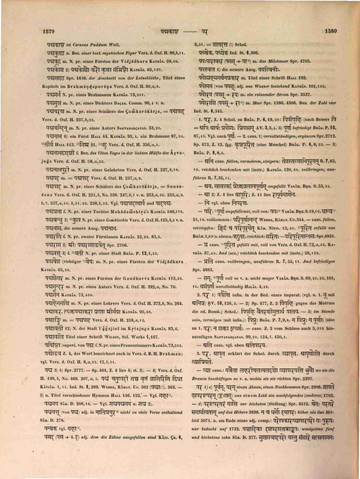
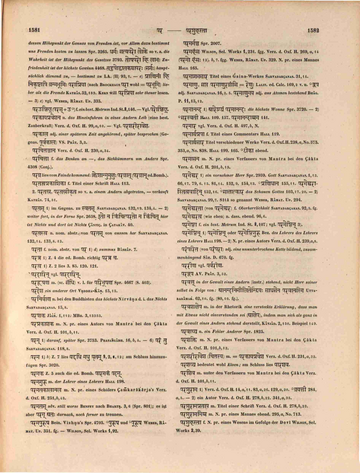
para 1〉c〉 pūrvam, param einen Ahnen, einen Nachkommen Spr. 2906. jāyate hyaparātparam (duḥkham) aus einem Leid ein nachfolgendes (anderes) Spr. 1702. — d〉 parātparataraṃ yānti zur höchsten (Stellung) Spr. 4512. cetaḥ paratare samādhīyatām auf das Höhere Spr. 3836. na ca dharmo dayāparaḥ höher als das Mitleid Spr. 5071. n. am Ende eines adj. comp.: paropakāravyāpāraparo yaḥ puruṣaḥ nur bedacht auf Spr. 1732. pañcādikā daśaparāstatrāṅkāḥ wenigstens fünf und höchstens zehn SĀH. D. 277. sukhāsvādaparo yastu saṃsāre satsamāgamaḥ dessen Höhepunkt der Genuss von Freuden ist, vor Allem dazu bestimmt uns Freuden kosten zu lassen Spr. 3265. dharmaḥ satyaparo loke so v. a. die Wahrheit ist der Höhepunkt des Gesetzes Spr. 3793. toṣaparo hi lābhaḥ Zufriedenheit ist der höchste Gewinn Spr. 4468. tadupodghātakathāparaḥ (sargaḥ) hauptsächlich dienend zu, — bestimmt zu LA. (II) 93,1. — e〉 prāṇināṃ hi nikṛṣṭāpi janmabhūmiḥ parāpriyā (nach BROCKHAUS parā wohl = parabhūmi) lieber als die Fremde KATHĀS. 52,189. KERN will parapriyā sehr theuer lesen. — 3〉c〉 vgl. WEBER, RĀMAT. UP. 335.
Original text · German · Word type unspecified
para 3〉c〉 Bez. des Lautes in dem ersten seiner vier Stadien. — d〉 ein best. Zeitmaass SĀY._zu_ṚV. 1,123,8. para bei WARREN, KĀLASAṂK. 374 = 24.
Böhtlingk 1879 adjective · substantive masculine · substantive neuter · Word type unspecified
Original text · German · adjective · substantive masculine · substantive neuter
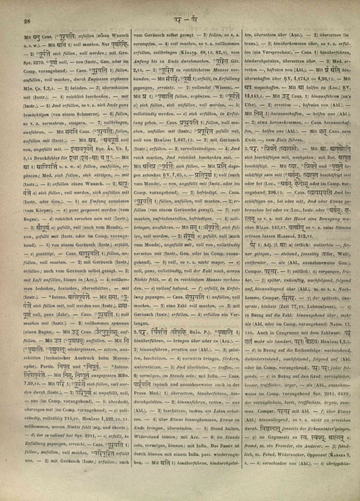
pára — 1〉 Adj. (f. ā) — a〉 örtlich; weiterhin —, ferner gelegen, — stehend, jenseitig (Ufer, Welt), entfernter, — als (Abl., ausnahmsweise Gen.). Compar. paratara. — b〉 zeitlich — α〉 vergangen, früher. — β〉 später, zukünftig, nachfolgend, folgend auf, hinausliegend über (Abl.) m. so v. a. Nachkomme. Compar. páratara. — γ〉 der späteste, äusserste, höchste (Zeit Chr. 77,28. Lebensdauer). — c〉 in Bezug auf die Zahl; hinausgehend über, mehr als (Abl. oder im Comp. vorangehend) NAIṢ. 12,106. auch in Congruenz mit dem Zahlwort; paraṃśataṃ mehr als hundert, parāḥ koṭayaḥ HEMĀDRI 1,2,5. — d〉 in Bezug auf die Reihenfolge; nachstehend, dahinterstehend, nachfolgend, folgend auf (Abl. oder im Comp. vorangehend). paraḥ paraḥ jeder folgende. — e〉 in Bezug auf den Grad; vorzüglicher, besser, trefflicher, ärger, — als (Abl., ausnahmsweise im Comp. vorangehend Spr. 2011. Spr. 6439), der vorzüglichste, beste, trefflichste, ärgste, summus. Compar. paratara mit Abl. — f〉 über Etwas (Abl.) hinausliegend, so v. a. nicht zu erreichen durch. vijñānāt jenseits der Erkenntniss gelegen. — g〉 im Gegensatz zu sva, svayam, ātman — α〉 fremd m. ein Fremder, ein Anderer. — β〉 feindlich, m. Feind, Widersacher, Opponent (CARAKA. 3,8). — h〉 verschieden von (Abl.). — i〉 übriggeblieben. [Page4-029-a] — k〉 besorgt um Etwas (Loc.) — 2〉 m. — a〉 ein nachfolgender Laut. Nur am Ende eines adj. Comp. — b〉 ein subsidiärer Somagraha. — c〉 das höchste Wesen Gott, die Allseele. — d〉 N. pr. — a〉 verschiedener Fürsten. — b〉 eines Palastes der Mitravindā. — 3〉 f. ā — a〉 die Fremde (!) KATHĀS. 52,189. KERN möchte parapriyā über Alles lieb lesen. — b〉 *eine best. Pflanze = vandhyākarkoṭakī RĀJAN. 3,50. — c〉 Bez. des Lautes in dem ersten seiner vier Stadien. — d〉 ein best. Zeitmaass. — e〉 N. pr. eines Flusses. v. l. pārā, veṇa und veṇṇā. — 4〉 n. — a〉 die weiteste Ferne. pṛthivyāḥ paraṃparāt — gatvā so v. a. in den entferntesten Winkel der Erde gehend MBH. 5,107,5. — b〉 Höhepunct. paraṃ gataḥ auf der Höhe von — (Gen.), in Bezug auf (Loc.) auf der Höhe stehend. — c〉 das Höchste in metaphysischem Sinne, der höchste Zustand nach dem Tode, vollkommene Erlösung. Auch parataram und parātparataram — d〉 die Zahl 10,000,000,000 VP. 2,5,188. als Bez. des vollen Lebensalters Brahmanʼs VP. 1,3,4. — e〉 Bez. bestimmter Sāman KĀṬH. 33,6. — f〉 am Ende eines adj. Comp. (f. ā) — α〉 Höhepunct, die äusserste Grenze. daśa˚ höchstens zehn. — β〉 Hauptziel, Hauptzweck, Hauptsache, Hauptbeschäftigung. Wiederzugeben durch ganz beschäftigt mit, ganz aufgehend in, nur bedacht auf (sukha˚ ŚĀK. 162, v. l.); vor Allem bestimmt zu, hauptsächlich dienend zu; vor Allem bestehend in, ganz beruhend auf (JAIM. 1,1,17). — γ〉 die weitere Bedeutung eines Wortes. pāṇiśabdo bāhuparaḥ so v. a. das Wort Hand bezeichnet in weiterer Bedeutung den Arm. — 5〉 param Adv. — a〉 darauf, später Chr. 176,20. — b〉 mit einem vorangehenden Abl. hinaus über, jenseits, nach (zeitlich). nāsmātparam (man hätte māsmā˚ erwartet) nicht mehr davon! genug! ataḥ param (einmal paramataḥ) weiter von hier, von hier an, hierauf, darauf, von nun an, ferner, darüber hinaus, nach immer (Chr. 291,8). itaḥ param weiter von hier, von nun an. tataḥ param darauf, tataśca param dass. Chr. 108,6 Compar. parataram. — c〉 in hohem Grade, über die Maassen. auch para˚ — d〉 höchstens, nur, nur noch, nichts als MBH. 13,102,15. Spr. 1070. BĀLAR. 79,6. 94,19. na param — āpi nicht nur —, sondern auch, paraṃ na — api na (BĀLAR. 77,10) nicht nur nicht —, sondern auch nicht na param — yāvat nicht nur, sondern sogar auch. — e〉 na — param nicht — sondern PRASANNAR. 16,2 = — f〉 yadi param wenn überhaupt allenfalls. — g〉 jedoch, allein. paraṃ tu und paraṃ kiṃ tu dass.
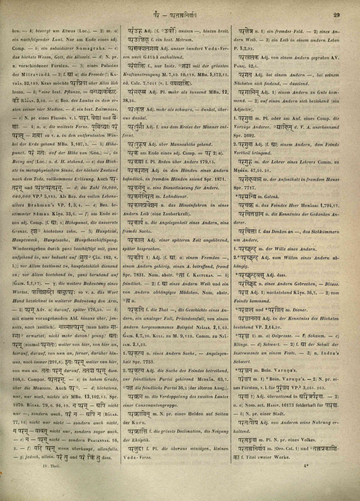
Original text · German · Word type unspecified
para IV. 5〉 param gut, so soll es sein (als Antwort) DIVYĀVAD. 293,16. DIVYĀVAD. 294,24. DIVYĀVAD. 295,27. [Nachtrag, Band 7]
Apte 1890 adjective · substantive masculine · substantive neuter
Original text · English · adjective · substantive masculine · substantive neuter
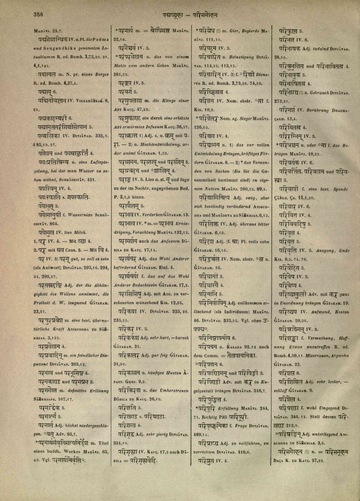
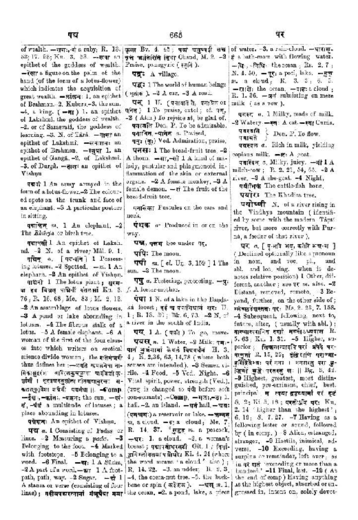
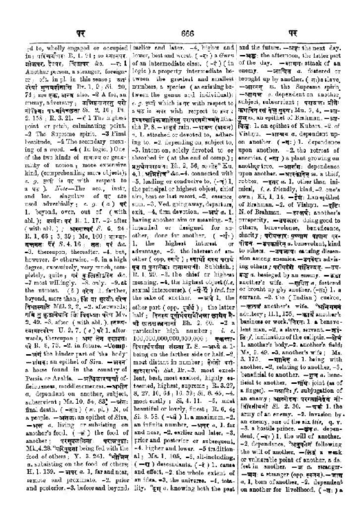
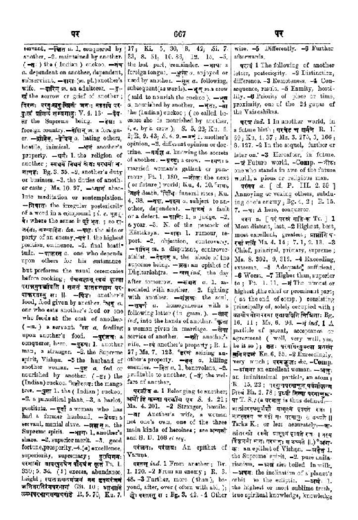
para a. [pṝ-bhāve ap, kartari ac-vā] (Declined optionally like a pronoun in nom. and voc. pl., and abl. and loc. sing. when it denotes relative position) 1 Other, different, another; see para m. also. 2 Distant, removed, remote. 3 Beyond, further, on the other side of; mlecchadeśastataḥ paraḥ Ms. 2. 23, Ms. 7. 158. 4 Subsequent, following, next to, future, after, (usually with abl.); bālyātparāmiva darśā madano'dhyuvāsa R. 5. 63; Ku. 1. 31. 5 Higher, superior; sikatātvādapi parāṃ prapede paramāṇutāṃ R. 15. 22; iṃdriyāṇi parāṇyāhuriṃdriyebhyaḥ paraṃ manaḥ . manasastu parā buddhiryo buddheḥ paratastu saḥ .. Bg. 3. 42. 6 Highest, greatest, most distinguished, pre-eminent, chief, best, principal, na tvayā draṣṭhavyānāṃ paraṃ dṛṣṭaṃ Ś. 2; Ki. 5. 18; parato'pi paraḥ Ku. 2. 14 ‘higher than the highest’; Ku. 6. 19; Ś. 7. 27. 7 Having as a following letter or sound, followed by (in comp.) 8 Alien, estranged, stranger. 9 Hostile, inimical, adverse. 10 Exceeding, having a surplus or remainder, left over; as in paraṃ śataṃ ‘exceeding or more than a hundred.’ 11 Final, last. 12 (At the end of comp) Having anything as the highest object, absorbed or engrossed in, intent on, solely ([Page 0666-a]) devoted to, wholly engaged or occupied in; paricaryāparaḥ R. 1. 91; so dhyānapara, śokapara, daivapara, ciṃtāpara &c. — raḥ 1 Another person, a stranger, foreigner; oft. in pl. in this sense; yataḥ pareṣāṃ guṇagrahītāsi Bv. 1. 9; Śi. 20. 74; see eka, anya also. 2 A foe, an enemy, adversary; uttiṣṭhamānastu paro nopekṣyaḥ pathyamicchatā Śi. 2. 10; Pt. 2. 158; R. 3. 21. — raṃ 1 The highest point or pitch, culminating point. 2 The Supreme spirit. 3 Final beatitude. 4 The secondary meaning of a word. 5 (In logic.) One of the two kinds of sāmānya or generality of notion; more extensive kind, (comprehending more objects); e. g. pṛthvī is para with respect to a ghaṭa. Note-The acc., instr. and loc. singulars of para are used adverbially; e. g. (a) paraṃ 1 beyond, over, out of (with abl.); vartmanaḥ paraṃ R. 1. 17. 2 after (with abl.); asmātparaṃ Ś. 6. 24; R. 1. 66; R. 3. 39; Me. 100; bhāgyāyattamataḥ paraṃ Ś. 4. 16; tataḥ paraṃ &c. 3 thereupon, thereafter. 4 but, however. 5 otherwise. 6 in a high degree, excessively, very much, completely, quite; paraṃ duḥkhito'smi &c. 7 most willingly. 8 only. 9 at the utmost. (b) pareṇa 1 farther, beyond, more than; kiṃ vā mṛtyoḥ pareṇa vidhāsyati Māl. 2. 2. 2 afterwards; mayi tu kṛtanidhāne kiṃ vidadhyāḥ pareṇa Mv. 2. 49. 3 after (with abl.) stanyatyāgātpareṇa U. 2, U. 7. (c) pare 1 afterwards, thereupon; atha tena daśāhataḥ pare R. 8. 73. 2 in future. Comp. — aṃgaṃ the hinder part of the body. — aṃgadaḥ an epithet of Śiva. — adanaṃ a horse found in the country of Persia or Arabia. — adhikāracarcā officiousness, meddlesomeness. — adhīna a. dependent on another, subject, subservient; Ms. 10. 54, Ms. 10. 83. — aṃtaḥ final death. — (tāḥ) (m. pl.) N. of a people. — aṃtakaḥ an epithet of Śiva. — anna a. living or subsisting on another's food. — (nnaṃ) the food of another; paragṛhalalitāḥ parānnapuṣṭāḥ Mk. 4. 28. ˚paripuṣṭatā being fed with the food of others; Y. 3. 241. ˚bhojin a. subsisting on the food of others; H. 1. 139. — apara a. 1 far and near, remote and proximate. 2 prior and posterior. 3 before and beyond, ([Page 0666-b]) earlier and later. 4 higher and lower, best and worst. — (raḥ) a Guru of an intermediate class. — (raṃ) (in logic) a property intermediate between the greatest and smallest numbers, a species (as existing between the genus and individual); e. g. pṛthvī which is para with respect to a ghaṭa is apara with respect to dravya; dravyatvādikajātistu parāparatayocyate Bhashā P. 8 — amṛtaṃ rain. — ayaṇa (ayana) a. 1 attached or devoted to, adhering to. 2 depending on, subject to. 3 intent on, solely devoted to or absorbed in (at the end of comp.); prabhurdhanaparāyaṇaḥ Bh. 2. 56; so moha˚ Ku. 4. 1; agnihotra˚ &c. 4 connected with 5 leading or conducive to. — (ṇaṃ) 1 the principal or highest object, chief aim, best or last resort. 2 essence, sum. 3 Ved. going away, departure, exit. 4 firm devotion. — artha a. 1 having another aim or meaning. 2 intended or designed for another, done for another. — (rthaḥ) 1 the highest interest or advantage. 2 the interest of another (opp. svārtha); svārtho yasya parārtha eva sa pumānekaḥ satāmagraṇīḥ Subhāṣ.; R. 1. 29. 3 the chief or highest meaning. 4 the highest object (i. e. sexual intercourse). — (rthaṃ -rthe) ind. for the sake of another. — ardhaṃ 1 the other part (opp. pūrvārdha); the latter half; dinasya pūrvārdhaparārdhabhinnā chāyeva maitrī khalasajjanānāṃ Bh. 2. 60. 2 a particular high number; i. e. 100,000,000,000,000,000; ekatvādiparārdhaparyaṃtā saṃkhyā T. S. — ardhya a. 1 being on the farther side or half. 2 most distant in number; hemaṃto vasaṃtātparārdhyaḥ Śat. Br. 3 most excellent, best, most exalted, highly esteemed, highest, supreme; R. 3. 27, R. 8. 27, R. 10. 64; R. 16. 39; Śi. 8. 45. 4 most costly; Śi. 4. 11. 5 most beautiful or lovely, finest; R. 6. 4; Śi. 3. 58. — (rdhyaṃ) 1 a maximum. 2 an infinite number. — avara a. 1 far and near. 2 earlier and later. 3 prior and posterior or subsequent. 4 higher and lower. 5 traditional; Ms. 1. 105. 6 all-including. — (rā) descendants. — (raṃ) 1 cause and effect. 2 the whole extent of an idea. 3 the universe. 4 totality. ˚dṛś a. knowing both the past ([Page 0666-c]) and the future. — ahaḥ the next day. — ahṇaḥ the afternoon, the latter part of the day. — āgamaḥ attack of an enemy. — ācita a. fostered or brought up by another. — (taḥ) a slave. — ātman m. the Supreme spirit. — āyatta a. dependent on another, subject, subservient; parāyattaḥ prīteḥ kathamiva rasaṃ vettu puruṣaḥ Mu. 3. 4. — āyus m. an epithet of Brahman. — āviddhaḥ 1 an epithet of Kubera. 2 of Viṣṇu. — āśraya a. dependent upon another. — (yaḥ) 1 dependence upon another. 2 the retreat of enemies. — (yā) a plant growing on another tree. — āsaṃgaḥ dependence upon another. — āskaṃdin m. a thief, robber. — itara a. 1 other than inimical, i. e. friendly, kind. 2 one's own; Ki. 1. 14. — īśaḥ 1 an epithet of Brahman. 2 of Viṣṇu. — iṣṭiḥ N. of Brahman. — utkarṣaḥ another's prosperity. — upakāraḥ doing good to others, benevolence, beneficence, charity; paropakāraḥ puṇyāya pāpāya parapīḍanaṃ. — upakārin a. benevolent, kind to others. — upajāpaḥ causing dissension among enemies. — upadeśaḥ advising others; paropadeśe pāṃḍityam. — uparuddha a. besieged by an enemy. — ūḍhā another's wife. — edhita a. fostered or brought up by another. — (taḥ) 1 a servant. 2 the (Indian) cuckoo. — kalatraṃ another's wife. ˚abhigamanaṃ adultery; H. 1. 135. — kāryaṃ another's business or work. ˚nirataḥ 1 a benevolent man. 2 a slave, servant. — krāṃtiḥ f. inclination of the ecliptic. — kṣetraṃ 1 another's body. 2 another's field; Ms. 9. 49. 3 another's wife; Ms. 3. 175. — gāmin a. 1 being with another. 2 relating to another. 3 beneficial to another. — guṇa a. beneficial to another. — graṃthiḥ joint (as of a finger). — glāniḥ f. subjugation of an enemy; ātmodayaḥ paraglānirdvayaṃ nītiritīyatī Śi. 2. 30. — cakraṃ 1 the army of an enemy. 2 invasion by an enemy, one of the six ītis, q. v. 3 a hostile prince. — chaṃda a. dependent. — (daḥ) 1 the will of another. 2 dependence. ˚anuvartanaṃ following the will of another. — chidraṃ a weak or vulnerable point of another, a defect in another. — ja a. stranger. — janaḥ a stranger (opp. svajana). — jāta a. 1 born of another. 2 dependent on another for livelihood. — (taḥ) a ([Page 0667-a]) servant. — jita a. 1 conquered by another. 2 maintained by another. — (taḥ) the (Indian) cuckoo. — taṃtra a. dependent on another, dependent, subservient. — dārāḥ (m. pl.) another's wife. — dārin m. an adulterer. — duḥkhaṃ the sorrow or grief of another; viralaḥ paraduḥkhaduḥkhito janaḥ; mahadapi paraduḥkhaṃ śītalaṃ samyagāhuḥ V. 4. 13. — devatā the Supreme being. — deśaḥ a foreign country. — deśin m. a foreigner. — drohin, -dveṣin a. hating others, hostile, inimical. — dhanaṃ another's property. — dharmaḥ 1 the religion of another; svadharme nidhanaṃ śreyaḥ paradharmo bhayāvahaḥ Bg. 3. 35. 2 another's duty or business. 3 the duties of another caste; Ms. 10. 97. — dhyānaṃ absolute meditation or contemplation. — nipātaḥ the irregular posteriority of a word in a compound; i. e. bhūtapūrvaḥ where the sense is pūrvaṃ bhūtaḥ; so rājadaṃtaḥ, agnyāhitaḥ &c. — pakṣaḥ the side or party of an enemy. — padaṃ 1 the highest position, eminence. 2 final beatitude. — pākarata a. one who depends upon others for his sustenance but performs the usual ceremonies before cooking; paṃcayajñān svayaṃ kṛtvā parānnamupajīvati . satataṃ prātarutthāya parapākaratastu saḥ ... — piṃḍaḥ another's food, food given by another. ˚ad a. one who eats another's food or one who feeds at the cost of another. ( — m.) a servant. ˚rata a. feeding upon another's food. — puraṃjayaḥ a conqueror, hero. — puruṣaḥ 1 another man, a stranger. 2 the Supreme spirit, Viṣṇu. 3 The husband of another woman. — puṣṭa a. fed or nourished by another. — (ṣṭaḥ) the (Indian) cuckoo. ˚mahotsavaḥ the mango tree. — puṣṭā 1 the (Indian) cuckoo. 2 a parasitical plant. 3 a harlot, prostitute. — pūrvā a woman who has had a former husband. — preṣyaḥ a servant, menial slave. — brahman n. the Supreme spirit. — bhāgaḥ 1 another's share. 2 superior merit. 3 good fortune, prosperity. 4 (a) excellence, superiority, supremacy; duradhigamaḥ parabhāgo yāvatpuruṣeṇa pauruṣaṃ na kṛtaṃ Pt. 1. 330; Pt. 5. 34. (b) excess, abundance, height; sthalakamalagaṃjanaṃ mama hṛdayaraṃjanaṃ janitaratiraṃgaparabhāgaṃ Gīt. 10; ābhāti labdhaparabhāgatayādharoṣṭhe R. 5. 70; ([Page 0667-b]) Ku. 7. 17; Ki. 5. 30, Ki. 8. 42; Śi. 7. 33, Śi. 8. 51; Śi. 10. 86, Śi. 12. 15. 5 the last part, remainder. — bhāṣā a foreign tongue. — bhukta a. enjoyed or used by another. — bhūta a. following, subsequent (as words). — bhṛt m. a crow (said to nourish the cuckoo). — bhṛta a. nourished by another. — bhṛtaḥ, -tā the (Indian) cuckoo; (so called because she is nourished by another, i. e. by a crow); Ś. 5. 22; Ku. 6. 2; R. 9. 43; Ś. 4. 9. — mataṃ 1 another's opinion. 2 different opinion or doctrine. — marmajña a. knowing the secrets of another. — mṛtyuḥ a crow. — ramaṇaḥ a married woman's gallant or paramour; Pt. 1. 180. — lokaḥ the next (or future) world; Ku. 4. 10. ˚gamaḥ, ˚yānaṃ death. ˚vidhiḥ funeral rites; Ku. 4. 38. — vaśa, -vaśya a. subject to another, dependent. — vācyaṃ a fault or a defect. — vāṇiḥ 1 a judge. 2 a year. 3 N. of the peacock of Kārtikeya. — vādaḥ 1 rumour, report. 2 objection, controversy. — vādin m. a disputant, controversialist. — veśman n. the abode of the supreme being. — vrataḥ an epithet of Dhṛtarāṣṭra. — śvas ind. the dayafter tomorrow. — saṃgata a. 1 associated with another. 2 fighting with another. — saṃjñakaḥ the soul. — savarṇa a. homogeneous with a following letter (in gram.). — sāt ind. into the hands of another. ˚kṛtā a woman given in marriage. — sevā service of another. — strī another's wife. — svaṃ another's property; R. 1. 27; Ms. 7. 123. ˚haraṇaṃ seizing another's property. — han a. killing enemies. — hita a. 1 benevolent. 2 profitable to another. — (taṃ) the welfare of another.
Cappeller 1887 Word type unspecified
Original text · German · Word type unspecified
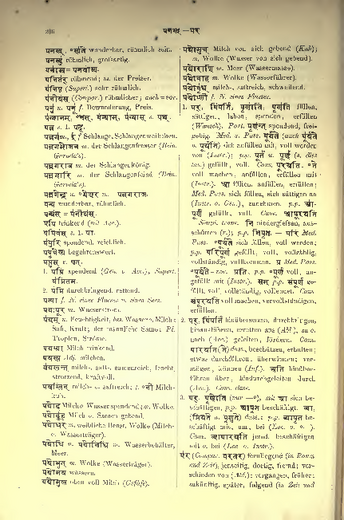
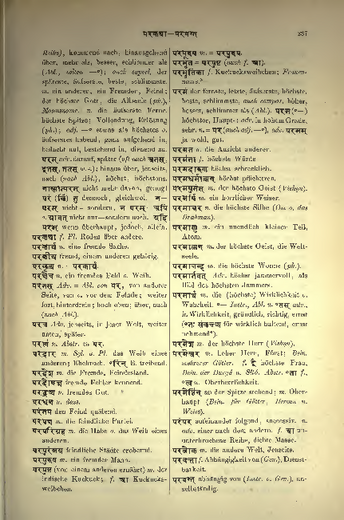
pára (Compar. páratara) fernliegend (in Raum und Zeit), jenseitig, dortig, fremd; verschieden von (Abl.); vergangen, früher; zukünftig, später, folgend (in Zeit und [Page237-1] Reihe, kommend nach, hinausgehend über, mehr als, besser, schlimmer als (Abl., selten —˚); auch superl. der späteste, äußerste, beste, schlimmste. m. ein anderer, ein Fremder, Feind; der höchste Gott, die Allseele (ph.), Mannsname. n. die äußerste Ferne, höchste Spitze; Vollendung, Erlösung (ph.); adj. —˚ etwas als höchstes o. äußerstes habend, ganz aufgehend in, bedacht auf, bestehen in, dienend zu. param adv. darauf, später (oft nach atas, itas, tatas w. s.); hinaus über, jenseits, nach (nach Abl.), höchst, höchstens. nāsmātparam nicht mehr davon, genug! paraṃ (kiṃ) tu dennoch, gleichwol. na— param nicht—sondern, na param—api o. yāvat nicht nur—sondern auch. yadi param wenn überhaupt, jedoch, allein.
Burnouf 1866 adjective
Original text · French · adjective
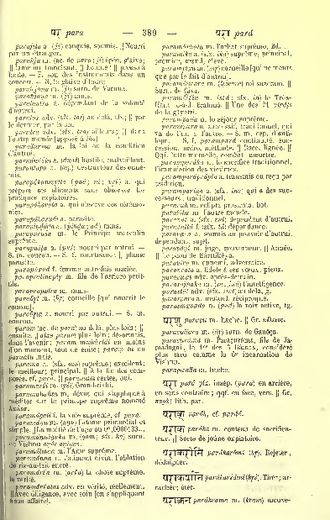
para para a. autre. Antérieur [selon le temps]; postérieur [selon l'espace]. Ultérieur, plus éloigné. Qui dépasse, excessif, extrême. Suprême: parā gati la voie qui conduit au ciel ou à Brahmā; puissant; plus fort, avec l'ab. Oppose, adverse; étranger; ennemi. À la fin des composés possessifs: regardant comme chose principale: cintāpara livré à la méditation. — S. n. la béatitude suprême; l'Etre suprême. parakīya a. autre; d'autrui. — S. f. la femme ou la maîtresse d'un autre. parakrama m. redoublement de la seconde consonne, tg. parakṣetra n. [m à m. le champ d'autrui] la femme d'autrui. paragranthi m. nom d'une période grammaticale. paracitlajñāna n. la connaissance des pensées des autres, Bd. parachanda a. dépendant de la volonté d'autrui. parajāta a. né pour autrui, dépendant, sujet; nourri ou adopté par un autre. [Page389-1] parajita a. (ji) conquis, soumis. Nourri par un étranger. parañja m. (ac. de para; ji) épée, glaive; lame ou tranchant. Écume; presse à huile. — F. son des instruments dans un concert. — N. le glaive d'Indra. parañjana m. (ji) surn. de Varuṇa. parañjaya m. (ji) mms. paratantra a. dépendant de la volonté d'autrui. paratas adv. (sfx. tas) au delà, ab.; par le dernier, par la fin. paratra adv. (sfx. tra) ailleurs; dans l'autre monde [opposé à iha]. paradharma m. la loi ou la condition d'autrui. paradveṣin a. (dviṣ) hostile, malveillant. paranlapa a. (tap) destructeur des ennemis. parapākanivṛtta (pac; ni; vṛt) a. qui prépare ses aliments sans observer les pratiques expiatoires. parapākarala a. qui observe ces cérémonies. parapākaruci a. parasite. parapiṇḍāda a. (piṇḍa; ad) mms. parapuruṣa m. le Principe masculin suprême. parapuṣṭa a. (puṣ) nourri par autrui. — S. m. coucou. — S. f. courtisane; plante parasite. parapūrvā f. femme autrefois mariée. parapratinaptṛ m. fils de l'arrière petit fils. paraprapautra m. mms. parabhṛt m. (bhṛ) corneille [qui nourrit le coucou]. parabhṛta a. nourri par autrui. — S. m. coucou. param (ac. de para) au delà, plus loin; ensuite. atas param plus loin; désormais, dans l'avenir; param muhūrlāt en moins d'un moment, lout de suite; paraṃ tu ou parantu mais. parama a. (sfx. ma) suprême; excellent; le meilleur; principal. À la fin des composés, cf. para. paramam certes, oui. paramarṣi m. (ṛṣi) Grand-rishi. paramahaṃsa m. dévot qui s'applique à méditer sur le principe suprême nommé haṃsa. paramāgati f. la voie suprême, cf. para. paramāṇu m. (aṇu) l'atome primordial et simple. La moitié de l'aṇu ou 0'',0000133... paramāṇuṅgaka m. (gam; sfx. ka) surn. de Viṣṇu aṇoṛ aṇīyas. paramātman m. l'Ame suprême. paramānna n. l'aliment divin, l'oblation de riz-au-lait sucrê. paramārtha m. (artha) la chose suprême, la vérité. paramārthatas adv. en vérité, réellement. Avec diligence; avec soin [en s'appliquant à son affaire]. [Page389-2] paramārhata m. l'arhat suprême, Bd. paramika a. (sfx. ika) suprême, principal, premier, grand, élevé. paramṛtyu m. (mṛ) corneille [qui ne meurt que par le fait d'autrui]. parameśvara m. (īśvara) roi suzerain. Surn. de Śiva. parameṣṭhin m. (sthā; sfx. in) le Très Haut, c-à-d. Brahmā. Une des 21 virāṭs de la gāyatrī. parampada n. le séjour suprême. parampara a. successif, traditionnel, qui va de l'un à l'autre. — S. m. esp. d'antilope. — S. f. paramparā continuité, succession, ordre, méthode. Race, lignée. Qqf. lutte mutuelle, combat, meurtre. paramparāka n. le sacrifice traditionnel, l'immolation des victimes. paramparāprāpta a. transmis ou reçu par tradition. parampariṇa a. (sfx. īna) qui a des successeurs; traditionnel. pararuh m. eclipta prostrata, bot. paraloka m. l'autre monde. paravat a. (sfx. vat) dépendant d'autrui. paravattā f. (sfx. tā) dépendance. paravaśa a. soumis au pouvoir d'autrui, dépendant, sujet. paravāṇi m. juge, gouverneur. Année. Le paon de Kārttikeya. paravira m. ennemi, adversaire. paravrata a. fidèle à ses vœux, pieux. paravas adv. après-demain. parasajñaka m. (sa. jñā) l'intelligence. parastāt adv. (sfx. stāt) au delà, g. paraspara a. mutuel, réciproque. parasmaipada n. (pad) la voix active, tg.

Derived words
Further derivatives (1)
Occurrences in source texts (139)
DYS 5 occurrences
GoS 2 occurrences
HP 20 occurrences
HP 3.103-3.107*2: Conclusion of the Mudrā Teaching 1 occurrence
Direct occurrences
-
HP 3.107*2 Segment 3
HP 4.0*1-4.0*14: Samādhi and Laya 2 occurrences
Direct occurrences
-
HP 4.0*2 Segment 15
Occurrences through derived words
-
HP 4.0*4 Segment 7
HP 4.9-4.11*4: Gaze and Lunar Nectar 2 occurrences
Direct occurrences
-
HP 4.11*3 Segment 25
Occurrences through derived words
-
HP 4.11*3 Segment 31
7 more source pages
HP 4.11*15-4.11*28: Space and Laya 1 occurrence
Occurrences through derived words
-
HP 4.11*19 Segment 15
HP 4.27*1-4.35: Rājayoga and Haṭha 2 occurrences
Direct occurrences
-
HP 4.32–33 Segment 21
Occurrences through derived words
-
HP 4.34 Segment 10
HP 4.47-4.55*4: Nāda Binds the Mind 5 occurrences
Occurrences through derived words
PJH 2 occurrences
PYS 9 occurrences
PYS 1.40–41: Mastery 2 occurrences
Occurrences through derived words
SiSa 52 occurrences
SiSa 1.10-1.16: Lehrmeinungen 2 occurrences
Direct occurrences
SiSa 1.35-1.44: Täuschungs-Gleichnisse 1 occurrence
Occurrences through derived words
-
SiSa 1.38 Segment 16
SiSa 1.45-1.50: Rückkehr zum Bewusstsein 1 occurrence
Occurrences through derived words
-
SiSa 1.48 Segment 18
31 more source pages
SiSa 1.71-1.81: Avidyā und Elemente 1 occurrence
Occurrences through derived words
-
SiSa 1.81 Segment 22
SiSa 1.82-1.90: Guṇas und Gegenstände 1 occurrence
Occurrences through derived words
-
SiSa 1.87 Segment 6
SiSa 3.1-3.10: Herzlotus und Prāṇa 1 occurrence
Occurrences through derived words
-
SiSa 3.9 Segment 14
SiSa 3.55-3.60: Ghaṭāvasthā 2 occurrences
Direct occurrences
-
SiSa 3.55 Segment 7
Occurrences through derived words
-
SiSa 3.56 Segment 7
SiSa 4.1-4.8: Yonimudrā-Kreislauf 3 occurrences
Direct occurrences
-
SiSa 4.7 Segment 12
Occurrences through derived words
SiSa 4.21-4.25: Zehn Mudrās 2 occurrences
Occurrences through derived words
SiSa 5.1-5.2: Hindernisse der Befreiung 1 occurrence
Occurrences through derived words
-
SiSa 5.2 Segment 17
SiSa 5.48-5.71: Innere Meditation 3 occurrences
Direct occurrences
-
SiSa 5.59 Segment 3
Occurrences through derived words
SiSa 5.113-5.120: Anāhata 2 occurrences
Direct occurrences
-
SiSa 5.114 Segment 11
-
SiSa 5.119 Segment 3
SiSa 5.144-5.155: Ājñā und Khecarī 1 occurrence
Occurrences through derived words
-
SiSa 5.152 Segment 15
SiSa 5.156-5.181: Sahasrāra 3 occurrences
Direct occurrences
-
SiSa 5.169 Segment 14
Occurrences through derived words
-
SiSa 5.172 Segment 15
-
SiSa 5.178 Segment 15
SiSa 5.191-5.207: Kailāsa und Mahāśūnya 3 occurrences
Direct occurrences
-
SiSa 5.194 Segment 2
Occurrences through derived words
-
SiSa 5.195 Segment 7
-
SiSa 5.198 Segment 14
SiSa 5.234-5.252: Tripurā-Mantra 2 occurrences
Occurrences through derived words
-
SiSa 5.251 Segment 6
-
SiSa 5.252 Segment 6
SS 1 occurrence
SVU 21 occurrences
SVU 1.7-1.12: Triad and Freedom 3 occurrences
Direct occurrences
Occurrences through derived words
-
SVU 1.7 Segment 3
SVU 1.13-1.16: The Hidden Fire 2 occurrences
Direct occurrences
SVU 3.7-3.9: The Supreme Puruṣa 3 occurrences
Direct occurrences
3 more source pages
SVU 6.1–6.6: Lord of Cosmic Unfolding 2 occurrences
Direct occurrences
SVU 6.7–6.13: Lord of All Lords 4 occurrences
Direct occurrences
-
SVU 6.8 Segment 15
Occurrences through derived words
VBT 27 occurrences
VBT 36–42: Sound and Bindu 3 occurrences
Direct occurrences
-
VBT 41 Segment 13
Occurrences through derived words
10 more source pages
VBT 49–56: Heart and Dissolution 3 occurrences
Direct occurrences
-
VBT 56 Segment 11
Occurrences through derived words
VBT 65–74: Joy and Enjoyment 2 occurrences
Direct occurrences
-
VBT 65 Segment 15
Occurrences through derived words
-
VBT 67 Segment 13
VBT 101–109: Śiva-Identity 2 occurrences
Occurrences through derived words
Continue with AYI Free
Image source: AYI archive.