

ānanda आनन्द – bliss; joy; happiness; Ānanda
adjective · substantive masculine · substantive neuter · Word type unspecified
Dictionary sources
AYI dictionary substantive masculine
bliss; joy; happiness; Ānanda
Derived from
Cappeller 1891 substantive masculine
Original text · English · substantive masculine
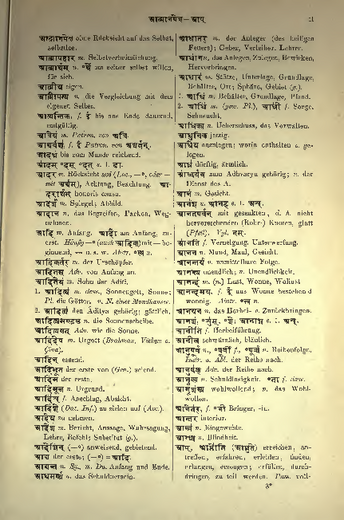
ānandá ·m. (n.) joy, pleasure, bliss.
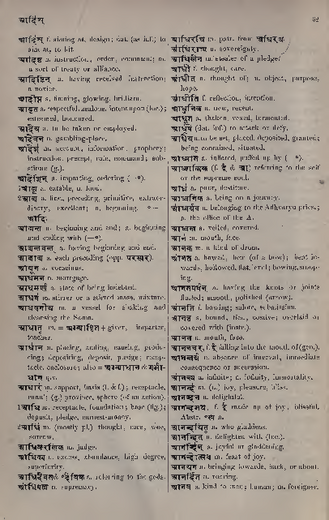
Monier-Williams 1872 substantive masculine
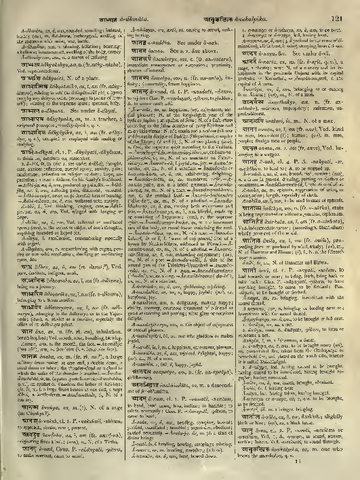
Original text · English · substantive masculine
Ā-nanda, as, m. happiness, joy, enjoyment, sen- sual pleasure; N. of the forty-eighth year of the cycle of Jupiter; an epithet of Śiva; N. of a Bala-rāma according to the Jaina doctrine of many Kṛṣṇas and many Bala-rāmas; N. of a cousin and a zealous follower and favourite disciple of Buddha Śākya-muni, compiler of the Sūtras; (ā and ī), f., N. of two plants; (am), n. God, the supreme spirit according to the Vedānta.
Petersburger 1855 substantive masculine · substantive neuter
Original text · German · substantive masculine · substantive neuter
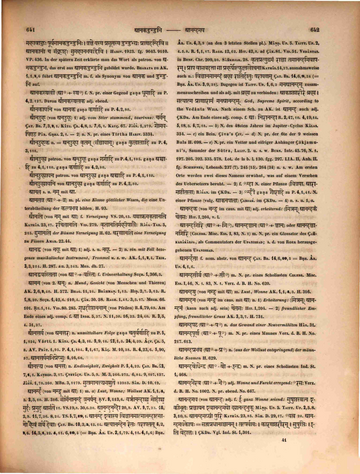
ānandá (von nand mit ā) 1〉 m. a〉 Lust, Wonne; Wollust AK. 1,1,4,3. AK. 1,3,5,10. H. 316. somènāna̱ndaṃ ja̱nayàn ṚV. 9,113,6. yatrā̀na̱ndāśca̱ modā̀śca̱ mudàḥ pra̱muda̱ āsàte ṚV. 9,113,11. VS. 19,8. VS. 30,6. VS. 30,20. ā̱na̱nda̱na̱ndau VS. 20,9. AV. 9,7,23. AV. 10,2,9. AV. 11,7,26. AV. 11,8,24. TS. 5,7,19,1. ānanda evāsya vijñānamātmānandātmāno haivaṃ sarve devāḥ ŚAT. BR. 10,3,5,13. ŚAT. BR. 10,3,5,14. atyānandena retaḥ parāpatat ŚAT. BR. 6,2,2,6. ŚAT. BR. 14,5,1,22. ŚAT. BR. 14,5,4,11. ŚAT. BR. 14,6,10,5 (= BṚH. ĀR. UP. 2,1,79. BṚH. ĀR. UP. 2,4,11. BṚH. ĀR. UP. 4,1,6) BṚH. ĀR. UP. 4,3,9 (an den 3 letzten Stellen pl.). MĀṆḌ. UP. 5. TAITT. UP. 2,4. TAITT. UP. 2,5. TAITT. UP. 2,8. R. 1,1,17. RAGH. 12,62. HIT. 42,8. ad ŚĀK. 81. VID. 51. VEDĀNTAS._in_BENF. Chr. 209,20. SĀṂKHYAK. 28. kṛtapratyudgamaṃ rājñā tamānandamivāparam . prāpa vāsavadattā sā praharṣotphullalocanā KATHĀS. 14,23. ausnahmsweise auch n.: vijñānamānandaṃ brahma rātirdātuḥ parāyaṇam ŚAT. BR. 14,6,9,34 (= BṚH. ĀR. UP. 3,9,28.) Dagegen ist TAITT. UP. 1,6,2 manaānandam zusammenzuschreiben und als adj. mit brahma zu verbinden: ākāśaśarīraṃ brahma . satyātma prāṇārāmaṃ manaānandam. God, Supreme Spirit, according to the Vedānta WILS. Nach einem Sch. zu AK. ist ānanda auch adj. ŚKDR. Am Ende eines adj. comp. f. āḥ nirānandā R. 2,47,10. R. 4,19,14. R. 5,18,3. R. 6,7,18. — b〉 N. des 48sten Jahres im Jupiter — Cyclus KĀLAS. 354. — c〉 ein Bein. Śivaʼs ŚIV. — d〉 N. pr. der 6te der 9 weissen Bala H. 698. — e〉 N. pr. ein Vetter und eifriger Anhänger Śākyamuniʼs, Sammler der Sūtra, LALIT. 2. u. s. w. BURN. Intr. 45. BURN. Intr. 76, N. 1. BURN. Intr. 197. BURN. Intr. 205. BURN. Intr. 392. BURN. Intr. 535. BURN. Intr. 578. Lot. de la b. l. 130. fgg. Lot. de la b. l. 297. LIA. II, Anh. II. fg. SCHIEFNER, Lebensb. 237 (7). 245 (15). 264 (34) u. s. w. Am ersten Orte werden zwei dieses Namens erwähnt, was auf einem Versehen des Uebersetzers beruht. — 2〉 f. ˚ndā N. einer Pflanze (vijayā, ārāmaśītalā) RĀJAN._im_ŚKDR. — 3〉 ˚ndī́ gaṇa gaurādi zu P. 4,1,41. N. einer Pflanze (vulg. ākanapātā) ŚABDAC._im_ŚKDR. — 4〉 n. s. u. 1,a.
Original text · German · substantive masculine
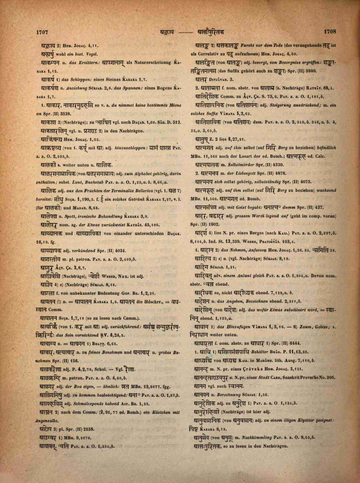
ānanda m. N. pr. eines Śrāvaka HEM. YOGAŚ. 3,151.
Original text · German · substantive neuter
ānanda 1〉a〉 als n. MBH. 13,1092. surā śaktiḥ śivo māṃsaṃ tadbhoktā bhairavaḥ svayam . tayoraikyaṃ samutpannamānando mokṣa ucyate .. ānando brahmaṇo rūpaṃ tacca dehe vyavasthitam . KULĀRṆAVAT._in_Verz. d. Oxf. H. 91,b,5. fgg. In der Dramatik das Eintreffen des Gewünschten, = vāñchitāgama SĀH. D. 399. — b〉 Verz. d. Oxf. H. 332,a,5. — e〉 N. pr. eines der 5 Lokeśvara bei den Buddhisten WILSON, Sel. Works 2,23. — f〉 N. pr. eines Lehrers (fehlerhaft für ānandabhairava) WILSON, Sel. Works 1,214. eines Dichters Verz. d. Oxf. H. 167,a,37. Verfassers des Mādhavānala Verz. d. Oxf. H. 157,b, No. 340. — h〉 N. pr. einer Oertlichkeit Verz. d. Oxf. H. 339,a,3.
Böhtlingk 1879 substantive masculine · substantive neuter · Word type unspecified
Original text · German · substantive masculine · substantive neuter
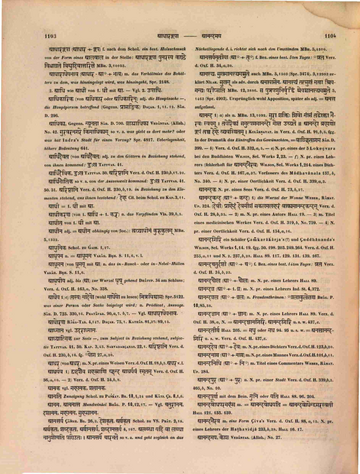
ānandá — 1〉 m. Lust, Wonne; Wollust. Häufig Pl. bisweilen auch n. Am Ende eines adj. Comp. f. ā — 2〉 m. in der Dramatik Eintritt des Erwünschten. — 3〉 m. eine Art Flöte S. S. S. 196. — 4〉 n. eine Art Haus GAL. — 5〉 m. n. das 48te Jahr im Jupiter-Cyclus VARĀH. BṚH. S. 8,45. — 6〉 m. der 16te Muhūrta Ind. St. 10,296. — 7〉 m. Bein. Śivaʼs. — 8〉 N. pr. — a〉 eines der 5 Lokeśvara bei den Buddhisten. — b〉 *des 6ten der 9 weissen Bala bei den Jaina. — c〉 verschiedener Männer. — d〉 einer Oertlichkeit. — 9〉 *f. ā eine best. Pflanze. — 10〉 *f. ī desgl.
Original text · German · Word type unspecified
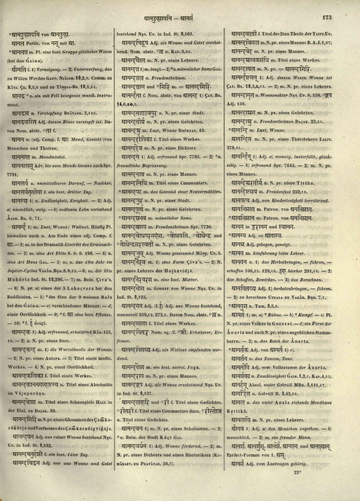
ānanda 9〉 auch ein Name der Gaurī HEMĀDRI 1,395,16. [Nachtrag, Band 1]
Original text · German · Word type unspecified
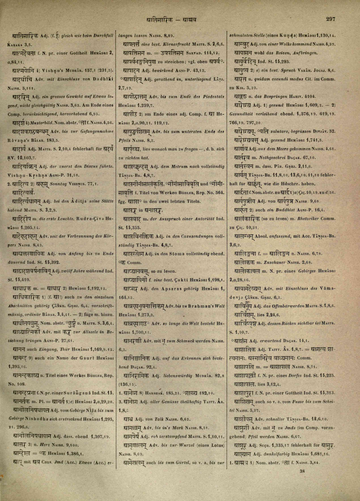
ānanda I. 1. f. ī Freude DIVYĀVAD. 37,24. [Nachtrag, Band 7]
Cappeller 1887 substantive masculine · substantive neuter
Original text · German · substantive masculine · substantive neuter
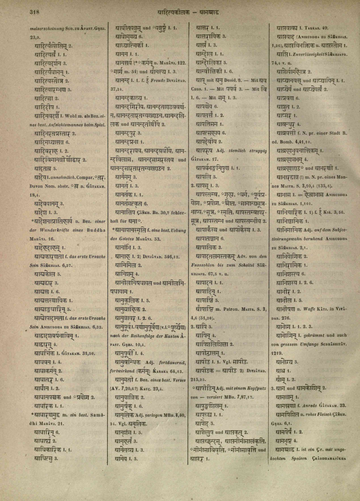
ānandá m. (n.) Lust, Wonne, Wollust
Burnouf 1866 adjective
Original text · French · adjective
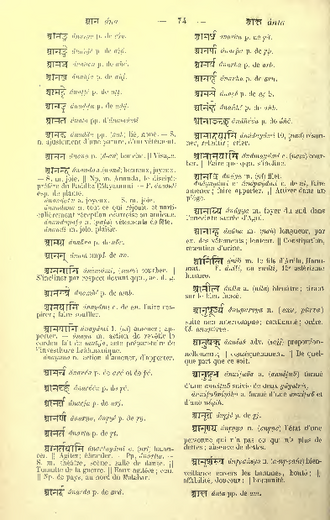
ānanda ānanda a. (nand) heureux, joyeux. — S. m. joie. Np. m. Ananda, le disciple préféré du Buddha Śākyamuni — F. ānandī esp. de plante. ānandathu a. joyeux. — S. m. joie. ānandana n. tout ce qui réjouit, et particulièrement réception courtoise ou amicale. ānandapaṭa n. (paṭa) vêtements de fête. ānandi m. joie, plaisir.
Derived words
Occurrences in source texts (41)
GoS 1 occurrence
HP 11 occurrences
HP 4.20-4.27: Four Stages of Nāda 4 occurrences
Direct occurrences
HTK 1 occurrence
MAN 1 occurrence
MandUp 2 occurrences
PJH 5 occurrences
PJH 15-16: Attaining Power, the Joy of Awareness (cidānanda), and Liberation While Living (jīvanmukti) 1 occurrence
Direct occurrences
-
PJH 16 Segment 2
PYS 1 occurrence
SiSa 5 occurrences
SS 1 occurrence
VBT 13 occurrences
VBT 65–74: Joy and Enjoyment 9 occurrences
Direct occurrences
Continue with AYI Free
Image source: AYI archive.