

nir निर् – Präfix nir-: hinaus; fort; ohne
Partikel · Präfix · Worttyp nicht bestimmt
Wörterbuchquellen
AYI Wörterbuch Präfix
Präfix nir-: hinaus; fort; ohne
Monier-Williams 1872 Worttyp nicht bestimmt
Originaltext · Englisch · Worttyp nicht bestimmt
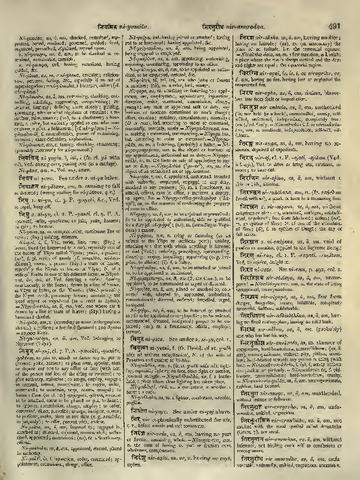
nir nir euphonically substituted for nis, q. v., before vowels and soft consonants.
Apte 1890 Partikel
Originaltext · Englisch · Partikel
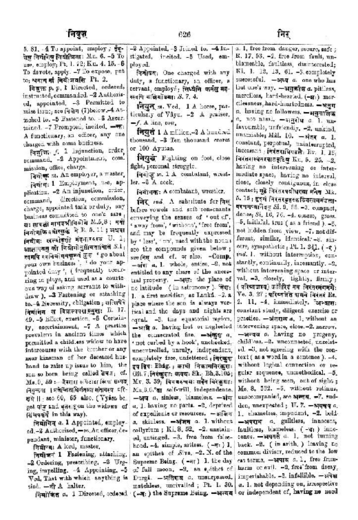
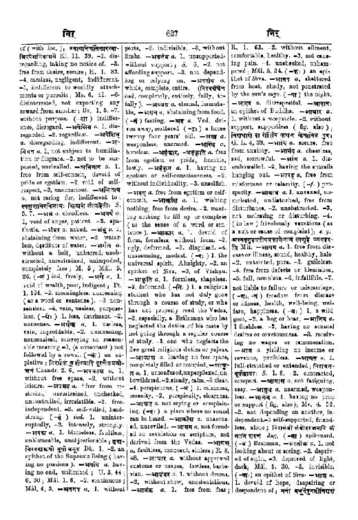
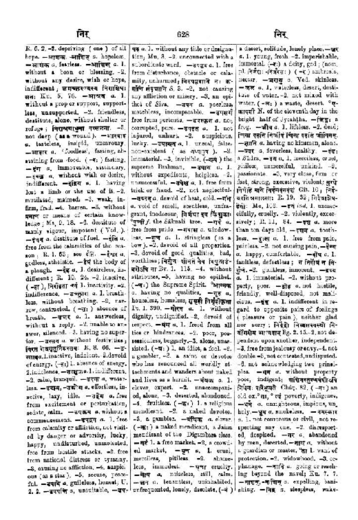
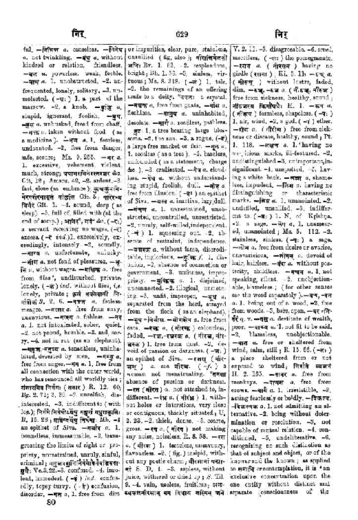
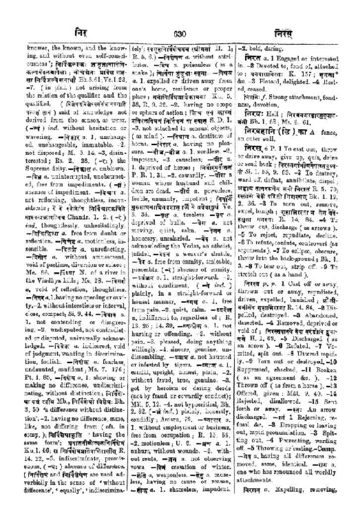
nir ind. A substitute for nis before vowels and soft consonants conveying the senses of ‘out of’, ‘away from’, ‘without’, ‘free from’, and may be frequently expressed by ‘less’, ‘un’, used with the noun; see the compounds given below; see nis and cf. a also. Comp. — aṃśa a. 1 whole, entire. 2 not entitled to any share of the ancestral property. — akṣaḥ the place of no latitude (in astronomy). ˚deśaḥ 1 a first meridian, as Laṅkā. 2 a place where the sun is always vertical and the days and nights are equal. 3 the equatorial region. — agni a. having lost or neglected the consecrated fire. — aṃkuśa a. ‘not curbed by a hook’, unchecked, uncontrolled, unruly, independent, completely free, unfettered; niraṃkuśa iva dvipaḥ Bhāg.; kāmo nikāmaniraṃkuśaḥ Gīt. 7; niraṃkuṃśāḥ kavayaḥ Sk.; Bh. 3. 105; Mv. 3. 39; vinayarucayaḥ sadaiva niraṃkuśāḥ Mu. 3. 6. ˚tā self-will, independence. — agha a. sinless, blameless. — aṃga a. 1 having no parts. 2 deprived of expedients or resources. — ajina a. skinless. — aṃjana a. 1 without collyrium; Ki. 8. 52. 2 unstained, untinged. 3 free from falsehood. 4 simple, artless. — (naḥ) 1 an epithet of Śiva. 2 N. of the Supreme Being. — (nā) 1 the day of full moon. 2 an epithet of Durgā. — atiśaya a. unsurpassed, matchless, unrivalled; Pt. 1. 30. — (yaḥ) the Supreme Being. — atyaya ([Page 0626-c]) a. 1 free from danger, secure, safe; R. 17. 53. 2 free from fault, unblameable, faultless, disinterested; Ki. 1. 12, Ki. 13. 61. 3 completely successful. — adhva a. one who has lost one's way. — anukrośa a. pitiless, merciless, hard-hearted. — (śaḥ) mercilessness, hard-heartedness. — anuga a. having no followers. — anunāsika a. not nasal. — anurodha a. 1 unfavourable, unfriendly. 2 unkind, unamiable; Māl. 10. — aṃtara a. 1 constant, perpetual, uninterrupted, incessant; niraṃtarādhipaṭalaiḥ Bv. 1. 16; niraṃtarāsvaṃtaravātavṛṣṭiṣu Ku. 5. 25. 2 having no intervening or intermediate space, having no interval, close, closely contiguous, in close contact; mūḍhe niraṃtarapayodharayā mayaiva Mk. 5. 15; hṛdayaṃ niraṃtarabṛhatkaṭhinastanamaṃḍalāvaraṇamapyabhidan Śi. 9. 66. 3 compact, dense; Śi. 16. 76. 4 coarse, gross. 5 faithful, true (as a friend). 6 not hidden from view. 7 not different, similar, identical. 8 sincere, sympathetic; Pt. 1. 341. — (raṃ) ind. 1 without interruption, constantly, continually, incessantly. 2 without intervening space or interval. 3 closely, tightly, firmly; (pariṣvajasva) kāṃtairidaṃ mama niraṃtaramaṃgamaṃgaiḥ Ve. 3. 27; pariṣvajete śayane niraṃtaraṃ Rs. 2. 11. 4 immediately. ˚abhyāsaḥ constant study, diligent exercise or practice. — aṃtarāla a. 1 without an intervening space, close. 2 narrow. — anvaya a. having no progeny, childless. 2 unconnected, unrelated. 3 not agreeing with the context (as a word in a sentence). 4 without logical connection or regular sequence, unmethodical. 5 without being seen, out of sight; Ms. 8. 332. 6 without retinue, unaccompanied, see anvaya. 7 sudden, unexpected; U. 7. — apatrapa a. 1 shameless, impudent. 2 bold. — aparādha a. guiltless, innocent, faultless, blameless. — (dhaḥ) innocence. — apavarta a. 1 not turning back. 2 (in arith.) leaving no common divisor, reduced to the low est terms. — apāya a. 1 free fromharm or evil. 2 free from decay, imperishable. 3 infallible. — apekṣa a. 1 not depending on, irrespective or independent of, having no need ([Page 0627-a]) of (with loc.); nyāyanirṇītasāratvānnirapekṣamivāgame Ki. 11. 39. 2 disregarding, taking no notice of. 3 free from desire, secure; H. 1. 83. 4 careless, negligent, indifferent. 5 indifferent to worldly attachments or pursuits; Ms. 6. 41. 6 disinterested, not expecting any reward from another; Bv. 1. 5. 7 without purpose. — (kṣā) indifference, disregard. — apekṣita a. 1 disregarded. 2 regardless. — apekṣin a. disregarding, indifferent. — abhibhava a. 1 not subject to humiliation or disgrace. 2 not to be surpassed, unrivalled. — abhimāna a. 1 free from self-conceit, devoid of pride or egotism. 2 void of selfrespect. 3 unconscious. — abhilāṣa a. not caring for, indifferent to; svasukhanirabhilāṣaḥ khidyase lokahetoḥ Ś. 5. 7. — abhra a. cloudless. — amarṣa a. 1 void of anger, patient. 2 apathetic. — aṃbara a. naked. — aṃbu a. 1 abstaining from water. 2 waterless, destitute of water. — argala a. without a bolt, unbarred, unobstructed, unrestrained, unimpeded, completely free; M. 5; Māl. 5. 26. — (laṃ) ind. freely. — artha a. 1 void of wealth, poor, indigent; Pt. 1. 194. 2 meaningless, unmeaning (as a word or sentence). 3 nonsensical. 4 vain, useless, purposeless. — (rthaḥ) 1 loss, detriment. 2 nonsense. — arthaka a. 1 useless, vain, unprofitable. 2 unmeaning, nonsensical, conveying no reasonable meaning 3 (a consonant) not followed by a vowel. — (kaṃ) an expletive; nirarthakaṃ tu hītyādi pūraṇaikaprayojanaṃ Chandr. 2. 6. — avakāśa a. 1 without free space. 2 without leisure. — avagraha a. ‘free from restraint,’ unrestrained, unchecked, uncontrolled, irresistible. 2 free, independent. 3 self-willed, headstrong. — (haṃ) ind. 1 uninterruptedly, 2 intensely, strongly. — avadya a. 1 blameless, faultless, unblameable, unobjectionable; hṛdyaniravadyarūpo bhūpo babhūva Dk. 1. 2 an epithet of the Supreme Being (having no passions). — avadhi a. having no end, unlimited; U. 3. 44; U. 6. 30; Māl. 1. 6. 2 continuous; Māl. 4. 3. — avayava a. 1 without ([Page 0627-b]) parts. 2 indivisible. 3 without limbs. — avalaṃba a. 1 unsupported, without support; Ś. 6. 2 not affording support. 3 not depending or relying on. — avaśeṣa a. whole, complete, entire. (niravaśeṣeṇa ind. completely, entirely, fully, totally). — avyaya a. eternal, immutable. — aśana a. abstaining from food. — (naṃ) fasting. — aṣṭa a. Ved. driven away, scattered — (ṣṭaḥ) a horse twenty four years' old. — astra a. weaponless, unarmed. — asthi a. boneless. — ahaṃkāra, -ahaṃkṛti a. free from egotism or pride, humble, lowly. — ahaṃkṛta a. 1 having no egotism or self-consciousness. 2 without individuality. 3 unselfish. — aham a. free from egotism or selfconceit. — ākāṃkṣa a. 1 wishing nothing, free from desire. 2 wanting nothing to fill up or complete (as the sense of a word or sentence). — ākāra a. 1 devoid of form, formless, without form. 2 ugly, deformed. 3 disguised. 4 unassuming, modest. — (raḥ) 1 the universal spirit, Almighty. 2 an epithet of Śiva. 3 of Viṣṇu. — ākṛti a. 1 formless, shapeless. 2 deformed. — (tiḥ) 1 a religious student who has not duly gone through a course of study, or who has not properly read the Vedas. 2 especially, a Brāhmaṇa who has neglected the duties of his caste by not going through a regular course of study. 3 one who neglects the five great religious duties or yajṇas. — ākāśa a. leaving no free space, completely filled or occupied. — ākula a. 1 unconfused, unperplexed, unbewildered. 2 steady, calm. 3 clear. 4 perspicuous. — (laṃ) 1 calmness, serenity. 2 perspicuity, clearness. — ākraṃda a. not crying or complaining. — (daḥ) a place where no sound can be heard. — ākrośa a. unaccused, unreviled. — āgama a. not founded on revelation or scripture, not derived from the Vedas. — āgas a. faultless, innocent, sinless; R. 8. 48. — ācāra a. without approved customs or usages, lawless, barbarian. — āḍaṃbara a. 1 without drums. 2 without show, unostentatious. — ātaṃka a. 1 free from fear; ([Page 0627-c]) R. 1. 63. 2 without ailment, comfortable, healthy. 3 not causing pain. 4 unchecked, unhampered; Māl. 5. 34. — (kaḥ) an epithet of Śiva. — ātapa a. sheltered from heat, shady, not penetrated by the sun's rays. — (pā) the night. — ādara a. disrespectful. — ādānaḥ an epithet of Buddha. — ādhāra a. 1 without a receptacle. 2 without support, supportless (fig. also); nirādhāro hā rodimi kathaya keṣamiha puraḥ G. L. 4, G. L. 39. — ādhi a. secure, free from anxiety. — ānaṃda a. cheerless, sad, sorrowful. — āṃtra a. 1 disembowelled. 2 having the entrails hanging out. — āpad a. free from misfortune or calamity. ( — f.) prosperity. — ābādha a. 1 unvexed, unmolested, undisturbed, free from disturbance. 2 unobstructed. 3 not molesting or disturbing. 4 (in law) frivolously vexatious (as a suit or cause of complaint); e. g. asmadgṛhapradīpaprakāśenāyaṃ svagṛhe vyavaharati Mit. — āmaya a. 1 free from disease or illness, sound, healthy, hale 2 untainted, pure. 3 guileless. 4 free from defects or blemishes. 5 full, complete. 6 infallible. 7 not liable to failure or miscarriage. — (yaḥ, -yaṃ) freedom from disease or illness, health, well-being, welfare, happiness. — (yaḥ) 1 a wild goat. 2 a hog or boar. — āmiṣa a. 1 fleshless. 2 having no sensual desires or covetousness. 3 receiving no wages or remuneration. — āya a. yielding no income or revenue, profitless. — āyata a. 1 full-stretched or extended; nirāyatapūrvakāyāḥ Ś. 1. 8. 2 contracted, compact. — āyāsa a. not fatiguing, easy. — āyudha a. unarmed, weaponless. — ālaṃba a. 1 having no prop or support (fig. also); Mv. 4. 53. 2 not depending on another, independent. 3 self-supported, friendless, alone; nirālaṃbo laṃbodarajanani kaṃ yāmi śaraṇaṃ Jag. — (bā) spikenard. — (baṃ) Brahman. — āloka a. 1 not looking about or seeing. 2 deprived of sight. 3 deprived of light, dark; Māl. 5. 30. 5 invisible. — (kaḥ) an epithet of Śiva. — āśa a. 1 devoid of hope, despairing or despondent of; mano babhūrvedumatīnirāśaṃ ([Page 0628-a]) R. 6. 2. 2 depriving (one) of all hope. — āśaka, -āśin a. hopeless, — āśaṃka a. fearless. — āśis a. 1 without a boon or blessing. 2 without any desire, wish or hope, indifferent; jagaccharaṇyasya nirāśiṣaḥ sataḥ Ku. 5. 76. — āśraya a. 1 without a prop or support, supportless, unsupported. 2 friendless, destitute, alone, without shelter or refuge; nirāśrayādhunā vatsalatā. 3 not deep (as a wound). — āsvāda a. tasteless, insipid, unsavoury. — āhāra a. ‘foodless’, fasting, abstaining from food. — (raḥ) fasting. — iṃga a. immovable, stationary. — iccha a. without wish or desire, indifferent. — iṃdriya a. 1 having lost a limb or the use of it. 2 mutilated, maimed. 3 weak, infirm, frail. 4 barren. 5 without pramāṇa or means of certain knowledge; Ms. 9. 18. 6 destitute of manly vigour, impotent (Ved.). — iṃdhana a. destitute of fuel. — īti a. free from the calamities of the season; R. 1. 63; see īti. — īśvara a. godless, atheistic. — īṣaṃ the body of a plough. — īha a. 1 desireless, indifferent; R. 10. 24. 2 inactive. (-hā), nirīhatā -tvaṃ 1 inactivity. 2 indifference. — ucchlāsa a. 1 breathless, without breathing. 2 narrow, contracted. — (saḥ) absence of breath. — uttara a. 1 answerless, without a reply. 2 unable to answer, silenced. 3 having no superior. — utsava a. without festivities; virataṃ geyamṛturnirutsavaḥ R. 8. 66. — utsāha a. 1 inactive, indolent. 2 devoid of energy. — (haḥ) 1 absence of energy. 2 indolence. — utsuka a. 1 indifferent. 2 calm, tranquil. — udaka a. waterless. — udyama, -udyoga a. effortless, inactive, lazy, idle. — udvega a. free from excitement or perturbation, sedate, calm. — upakrama a. without a commencement. — upadrava a. 1 free from calamity or affliction, not visited by danger or adversity, lucky, happy, undisturbed, unmolested, free from hostile attacks. 2 free from national distress or tyranny. 3 causing no affliction. 4 auspicious (as a star). 5 secure, peaceful. — upadhi a. guileless, honest; U. 2. 2. — upapatti a. unsuitable. ([Page 0628-b]) — upapada a. 1 without any title or designation; Mu. 3. 2 unconnected with a subordinate word. — upaplava a. 1 free from disturbance, obstacle or calamity, unharmed; nirupaplavāni naḥ karmāṇi saṃvṛttāni Ś. 3. 2 not causing any affliction or misery. 3 an epithet of Śiva. — upama a. peerless, matchless, incomparable. — upasarga free from portents. — upaskṛta a. not corrupted, pure. — upahata a. 1 not injured, unhurt. 2 auspicious, lucky. — upākhya a. 1 unreal, false, non-existent (as vaṃdhyāputra). 2 immaterial. 3 invisible. — (khyaṃ) the supreme Brahman. — upāya a. 1 without expedients, helpless. 2 unsuccessful. — upekṣa a. 1 free from trick or fraud. 2 not neglectful. — uṣman a. devoid of heat, cold. — gaṃdha a. void of smell, scentless, unfragrant, inodorous; nirgaṃdhā iva kiṃśukāḥ ˚puṣpī f. the Śālmali tree. — garva a. free from pride. — gavākṣa a. windowless. — guṇa a. 1 stringless (as a bow). 2 devoid of all properties. 3 devoid of good qualities, bad, worthless; nirguṇaḥ śobhate naiva vipulāḍaṃbaro'pi nā Bv. 1. 115. 4 without attributes. 5 having no epithet. — (ṇaḥ) the Supreme Spirit. ˚ātmaka a. having no qualities. — gṛha a. houseless, homeless; sugṛhī nirgṛhīkṛtā Pt. 1. 390. — gaurava a. 1 without dignity, undignified. 2 devoid of respect. — graṃtha a. 1 freed from all ties or hindrances. 2 poor, possessionless, beggarly. 3 alone, unassisted. — (thaḥ) 1 an idiot, a fool. 2 a gambler. 3 a saint or devotee who has renounced all worldly attachments and wanders about naked and lives as a hermit. — graṃthaka a. 1 clever, expert. 2 unaccompanied, alone. 3 deserted, abandoned. 4 fruitless. — (kaḥ) 1 a religious mendicant. 2 a naked devotee. 3 a gambler. — graṃthika a. clever. — (kaḥ) a naked mendicant, a Jaina mendicant of the Digambara class. — ghaṭaṃ 1 a free market. 2 a crowded market. — ghṛṇa a. 1 cruel, merciless, pitiless. 2 shameless, immodest. — ghṛṇā cruelty. — ghoṣa a. noiseless, still, calm. — jana a. tenantless, uninhabited, unfrequented, lonely, desolate. — (naṃ) ([Page 0628-c]) a desert, solitude, lonely place. — jara a. 1 young, fresh. 2 imperishable, immortal. — (raḥ) a deity, god; (nom. pl. nirjarāḥ-nirjarasaḥ) — (raṃ) ambrosia, nectar. — jarāyu a. Ved. skinless. — jala a. 1 waterless, desert, destitute of water. 2 not mixed with water. — (laḥ) a waste, desert. ˚ekādaśī N. of the eleventh day in the bright half of Jyeṣṭha. — jihvaḥ a frog. — jīva a. 1 lifeless. 2 dead; citā dahati nirjīvaṃ ciṃtā dahati jīvitam. — jñāti a. having no kinsmen, alone. — jvara a. feverless, healthy. — daṃḍaḥ a Śūdra. — daya a. 1 merciless, cruel, pitiless, unmerciful, unkind. 2 passionate. 3 very close, firm or fast, strong, excessive, violent; mugdhe vidhohi mayi nirdayadaṃtadaṃśaṃ Gīt. 10; nirdayaratiśramālasāḥ R. 19. 32; nirdayāśleṣahetoḥ Me. 106. — dayaṃ ind. 1 unmercifully, cruelly. 2 violently, excessively; R. 11. 84. — daśa a. more than ten days old. — daśana a. toothless. — duḥkha a. 1 free from pain, painless. 2 not causing pain. — dainya a. happy, comfortable. — doṣa a. 1 faultless, defectless; na nirdoṣaṃ na nirguṇaṃ. 2 guiltless, innocent. — dravya a. 1 immaterial. 2 without property, poor. — droha a. not hostile, friendly, well-disposed, not malicious. — dvaṃdva a. 1 indifferent in regard to opposite pairs of feelings (pleasure or pain), neither glad nor sorry; niṃrdvadvo nityasattvastho niryogakṣema ātmavān Bg. 2. 45. 2 not dependent upon another, independent. 3 free from jealousy or envy. 4 not double. 5 not contested, undisputed. 6 not acknowledging two principles. — dhana a. without property poor, indigent; śaṃśinastulyavaṃśo'pi nirdhanaḥ paribhūyate Chāṇ. 82. — (naḥ) an old ox. ˚tā, ˚tvaṃ poverty, indigence, — dharma a. unrighteous, impious, unholy. — dhūma a. smokeless. — namaskāra a. 1 not courteous or civil, not respecting any one. 2 disrespected, despised. — nara a. abandoned by men, deserted. — nātha a. without a guardian or master. ˚tā 1 want of protection. 2 widowhood. 3 orphanage. — nābhi a. going or reaching beyond the navel; Ku. 7. 7. — nāśan, -nāśin a. expelling, banishing. — nidra a. sleepless, ([Page 0629-a]) wakeful. — nimitta a. causeless. — nimeṣa a. not twinkling. — baṃdhu a. without kindred or relation, friendless. — bala n. powerless, weak, feeble. — bādha a. 1 unobstructed. 2 unfrequented, lonely, solitary. 3 unmolested. — (dhaḥ) 1 a part of the marrow. 2 a knob. — buddhi a. stupid, ignorant, foolish. — buṣa, — busa a. unhusked, freed from chaff. — bhakta a. taken without food (as a medicine). — bhaya a. 1 fearless, undaunted. 2 free from danger, safe, secure; Ms. 9. 255. — bhara a. 1 excessive, vehement, violent, much, strong; trapābharanirbharasmaraśara &c. Gīt. 12; Amaru. 42. 2 ardent. 3 fast, close (as embrace); kucakuṃbhanirbharaparīraṃbhāmṛtaṃ vāṃchati Gīt. 5; parirabhya nirbharaṃ Gīt. 1. 4 sound, deep (as sleep). 5 full of, filled with (at the end of comp.); ānaṃda˚, garva˚ &c. — (raḥ) a servant receiving no wages. — (raṃ) excess. ( — raṃ ind.) 1 excessively, exceedingly, intensely. 2 soundly. — bhāgya a. unfortunate, unlucky. — bhoga a. not fond of pleasures. — bhṛti a. without wages. — makṣika a. ‘free from flies’, undisturbed, private, lonely. — (kaṃ) ind. without flies, i. e. lonely, private; kṛtaṃ bhavatedānīṃ nirmākṣikaṃ Ś. 2, Ś. 6. — majja a. fatless, meagre. — matsara a. free from envy, unenvious. — matsya a. fishless. — mada a. 1 not intoxicated, sober, quiet. 2 not proud, humble. 3 sad, sorry. 4 not in rut (as an elephant). — manuja, -manuṣya a. tenantless, uninhabited, deserted by men. — manyu a. free from anger. — mama a. 1 free from all connection with the outer world, who has renounced all worldly ties; saṃsāramiva nirmamaḥ (tatāra) R. 12. 60; Bg. 2. 71; Bg. 3. 30. 2 unselfish, disinterested. 3 indifferent to (with loc.); nirmame nirmamo'rtheṣu mathurāṃ madhurākṛtiḥ R. 15. 28; prāpteṣvartheṣu nirmamāḥ Mb. 4 an epithet of Śiva. — maryāda a. 1 boundless, immeasurable. 2 transgressing the limits of right or propriety, unrestrained, unruly, sinful, criminal; manujapaśubhirnirmaryādairbhavadbhirudāyudhaiḥ Ve. 3. 22. 3 confused. 4 insolent, immodest. — (daṃ) ind. confusedly, topsy-turvy. — (daṃ) confusion, disorder. — mala a. 1 free from dirt ([Page 0629-b]) or impurities, clear, pure, stainless, unsullied (fig. also); nīrānnirmalato janiḥ Bv. 1. 63. 2 resplendent, bright; Bh. 1. 56. 3 sinless, virtuous; Ms. 8. 318. — (laṃ) 1 talc. 2 the remainings of an offering made to a deity. ˚upalaḥ a crystal. — maśaka a. free from gnats. — māṃsa a. fleshless. — mānuṣa a. uninhabited, desolate. — mārga a. roadless, pathless. — muṭaḥ 1 a tree bearing large blossoms. 2 the sun. 3 a rogue. — (ṭaṃ) a large free market or fair. — mūla a. 1 rootless (as a tree). 2 baseless, unfounded (as a statement, charge &c.). 3 eradicated. — megha a. cloudless. — medha a. without understanding, stupid; foolish, dull. — moha a. free from illusion. — (haḥ) an epithet of Śiva. — yatna a. inactive, lazy, dull. — yaṃtraṇa a. 1 unrestrained, unobstructed, uncontrolled, unrestricted. 2 unruly, self-willed, independent. — (ṇaṃ) 1 squeezing out. 2 absence of restraint, independence. — yaśaska a. without fame, discreditable, inglorious. — yukti f. 1 disunion. 2 absence of connection or government. 3 unfitness, impropriety. — yuktika a. 1 disjoined, unconnected. 2 illogical, unmeaning. 3 unfit, improper. — yūtha a. separated from the herd, strayed from the flock (as an elephant). — yūṣa = niryāsa, -yogakṣema a. free from care. — rakta a. (nīrakta) colourless, faded. — raja, -rajaska a. (nīraja, nīrajaska) 1 free from dust. 2 devoid of passion or darkness. — (jaḥ) an epithet of Śiva. — rajas ( nīrajas) a. see nīraja. ( — f.) a woman not menstruating. ˚tamasā absence of passion or darkness. — rata (nīrata) a. not attached to, indifferent. — raṃdhra a. (nīraṃdhra) 1 without holes or interstices, very close or contiguous, thickly situated; U. 2. 23. 2 thick, dense. 3 coarse, gross. — rava a. (nīrava) not making any noise, noiseless. R. 8. 58. — rasa a. (nīrasa) 1 tasteless, unsavoury, flavourless. 2 (fig.) insipid, without any poetic charm; nīrasānāṃ padyānāṃ S. D. 1. 3 sapless, without juice, withered or dried up; Ś. Til. 9. 4 vain, useless, fruitless; alabdhaphalanīrasān mama vidhāya tasmin jane ([Page 0629-c]) V. 2. 11. 5 disagreeable. 6 cruel, merciless. — (saḥ) the pomegranate. — rasana a. (nīrasana) having no girdle (rasanā); Ki. 5. 11. — ruc a. (nīruc) without lustre, faded, dim. — ruj, -ruja a. (nīruj, nīruja) free from sickness, healthy, sound; nīrujasya kimauṣadhaiḥ H. 1. — rūpa a. (nīrūpa) formless, shapeless. — (paḥ) 1 air, wind. 2 a god. — (paṃ) ether. — roga a. (nīrogaṃ) free from sickness or disease, healthy, sound; Pt. 1. 118. — lakṣaṇa a. 1 having no auspicious marks, ill-featured. 2 undistinguished. 3 unimportant, insignificant. 4 unspotted. 5 having a white back. — lajja a. shameless, impudent. — liṃga a. having no distinguishing or characteristic marks. — lipta a. 1 unanointed. 2 undefiled, unsullied. 3 indifferent to. — (ptaḥ) 1 N. of Kṛṣṇa. 2 a sage. — lepa a. 1 unsmeared, unanointed; Ms. 5. 112. 2 stainless, sinless. — (paḥ) a sage. — lobha a. free from desire or avarice, unavaricious. — loman a. devoid of hair, hairless. — vaṃśa a. without posterity, childless. — vacana a. 1 not speaking, silent. 2 unobjectionable, blameless; (for other senses see the word separately). — vaṇa, -vana a. 1 being out of a wood. 2 free from woods. 3 bare, open. — vara = nirdaraṃ q. v. — vasu a. destitute of wealth, poor. — vācya a. 1 not fit to be said. 2 blameless, unobjectionable. — vāta a. free or sheltered from wind, calm, still; R. 15. 66. — (taḥ) a place sheltered from or not exposed to wind; nirvāte vyajanaṃ H. 2. 165. — vānara a. free from monkeys. — vāyasa a. free from crows. — vārya a. 1 irresistible. 2 acting fearlessly or boldly. — vikalpa, — vikalpaka a. 1 not admitting an alternative. 2 being without determination or resolution. 3 not capable of mutual relation. 4 conditioned. 5 undeliberative. 6 recognizing no such distinction as that of subject and object, or of the knower and the known; as applied to samādhi or contemplation, it is ‘an exclusive concentration upon the one entity without distinct and separate consciousness of the ([Page 0630-a]) knower, the known, and the knowing, and without even self-consciousness’; nirvikalpakaḥ jñatṛjñānādivikalpamedalayāpekṣaḥ; nocaccetaḥ praviśa sahasā nirvikalpesamādhau Bh. 3. 61; Ve. 1. 23. 7 (in phil.) not arising from the relation of the qualifier and the qualified, (viśeṣaṇaviśeṣyasaṃbaṃdhānavagāhi pratyakṣaṃ jñānaṃ) said of knowledge not derived from the senses, as ghaṭatva. — (lpaṃ) ind. without hesitation or wavering. — vikāra a. 1 unchanged, unchangeable, immutable. 2 not disposed; M. 5. 14. 3 disinterested; Rs. 2. 28. — (raḥ) the Supreme deity. — vikāsa a. unblown. — vighna a. uninterrupted, unobstructed, free from impediments. — (ghnaṃ) absence of impediment. — vicāra a. not reflecting, thoughtless, inconsiderate; re re svairiṇi nirvicārakavite māsmatprakāśībhava Chandr. 1. 2. — (raṃ) ind. thoughtlessly, unhesitatingly. — vicikitsa a. free from doubt or reflection. — viceṣṭa a. motionless, insensible. — vitarka a. unreflecting. — vinoda a. without amusement, void of pastime, diversion or solace; Me. 86. — viṃdhyā N. of a river in the Vindhya hills; Me. 28. — vimarśa a. void of reflection, thoughtless. — vivara a. 1 having no opening or cavity. 2 without interstices or interval, close, compact; Śi. 9. 44. — vivāda a. 1 not contending or disagreeing. 2 undisputed, not contradicted or disputed, universally acknowledged. — viveka a. indiscreet, void of judgment, wanting in discrimination, foolish. — viśaṃka a. fearless, undaunted, confident; Ms. 7. 176; Pt. 1. 85. — viśeṣa a. 1 showing or making no difference, undiscriminating, without distinction; nirviśeṣā vayaṃ tvayi Mb., nirviśeṣo viśeṣaḥ Bh. 3. 50 ‘a difference without distinction’. 2 having no difference, same, like, not differing from (oft. in comp.); nirviśeṣākṛti ‘having the same form’; pravātanīlotpalanirviśeṣaṃ Ku. 1. 46; sa nirviśeṣapratipattirāsīt R. 14. 22. 3 indiscriminate, promiscuous. — (ṣaḥ) absence of difference. (nirviśaṣaṃ and nirviśeṣeṇa are used adverbially in the sense of ‘without difference’, ‘equally’, ([Page 0630-b]) ‘indiscriminately’; svagṛhanirviśeṣamatra sthīyatāṃ H. 1; R. 5. 6.). — viśeṣaṇa a. without attributes. — viṣa a. poisonless (as a snake); nirviṣā ḍuṃḍubhāḥ smṛtāḥ. — viṣaya a. 1 expelled or driven away from one's home, residence or proper place; manonirviṣayārthakāmayā Ku. 5. 38, R. 9. 32. 2 having no scope or sphere of action; kiṃca evaṃ kāvyaṃ praviralaviṣayaṃ nirviṣayaṃ vā syāt S. D. 1. 3 not attached to sensual objects, (as mind). — viṣāṇa a. destitute of horns. — vihāra a. having no pleasure. — vīja, -bīja a. 1 seedless. 2 impotent. 3 causeless. — vīra a. 1 deprived of heroes; nirvīramurvītalaṃ P. R. 1. 31. 2 cowardly. — vīrā a woman whose husband and children are dead. — vīrya a. powerless, feeble, unmanly, impotent; nirvīryaṃ guruśāpabhāṣitavaśāt kiṃ me tavevāyudhaṃ Ve. 3. 34. — vṛkṣa a. treeless. — vṛṣa a. deprived of bulls. — vega a. not moving, quiet, calm. — vetana a. honorary, unsalaried. — veda a. not acknowledging the Vedas, an atheist, infidel. — veṣṭanaṃ a weaver's shuttle. — vaira a. free from enmity, amicable, peaceable. — (raṃ) absence of enmity. — vyaṃjana a. 1 straight-forward. 2 without condiment. ( — ne ind.) plainly, in a straight-forward or honest manner. — vyatha a. 1 free from pain. 2 quiet, calm. — vyapekṣa a. indifferent to, regardless of; R. 13. 25; R. 14. 39. — vyalīka a. 1 not hurting or offending. 2 without pain. 3 pleased, doing anything willingly. 4 sincere, genuine, undissembling. — vyāghra a. not haunted or infested by tigers. — vyāja a. 1 candid, upright, honest, plain. 2 without fraud, true, genuine. 3 got by heroism or daring deeds (not by fraud or cowardly conduct); Māl. 5. 12. 4 not hypocritical; Bh. 2. 82. ( — jaṃ ind.) plainly, honestly, candidly; Amaru. 79. — vyāpāra a. 1 without employment or business, free from occupation; R. 15. 56. 2 motionless; U. 6. — vraṇa a. 1 unhurt, without wounds. 2 without rents. — vrata a. not observing vows. — himaṃ cessation of winter. — heti a. weaponless. — hetu a. causeless, having no cause or reason. — hnīka a. 1 shameless, impudent. ([Page 0630-c]) 2 bold, daring.
Burnouf 1866 Präfix
Originaltext · Französisch · Präfix
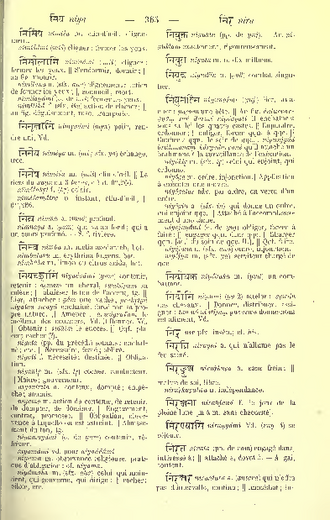
nir nir pfx. insép.; cf. nis.
Quelltextfundstellen (22)
DYS 5 Fundstellen
GoS 2 Fundstellen
HP 12 Fundstellen
Weitere 4 Quelltextseiten
SiSa 3 Fundstellen
SiSa 5.29-5.35: Pratīka-upāsanā 2 Fundstellen
Direkt belegt
Mit AYI Free weitermachen
Bildquelle: AYI Archiv.