

sthira स्थिर – stabil
Adjektiv · Substantiv Maskulin · Substantiv Neutrum · Worttyp nicht bestimmt
Wörterbuchquellen
AYI Wörterbuch Adjektiv
Cappeller 1891 Adjektiv
Originaltext · Englisch · Adjektiv
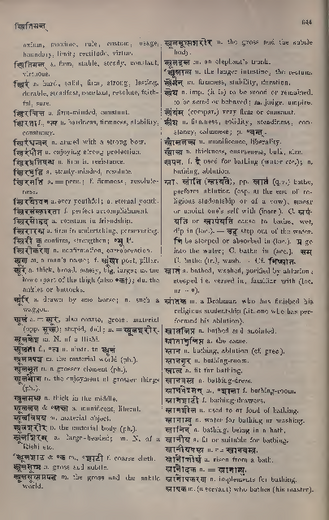
sthirá ·a. hard, solid, firm, strong, lasting, durable, steadfast, constant, resolute, faithful, sure.
Monier-Williams 1872 Adjektiv · Worttyp nicht bestimmt
Originaltext · Englisch · Adjektiv
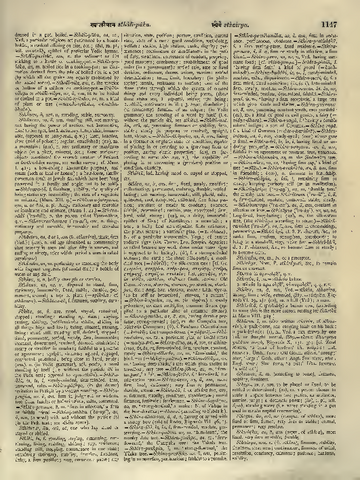
Sthira, as, ā, am, firm, fixed, steady, steadfast; unfluctuating, permanent, enduring, durable, settled, lasting; not moving, immovable, still, placid, calm, quiescent, cool, composed, collected, free from pas- sion; steadfast or steady in conduct; constant, faithful, determined; certain, sure, convinced; firm, hard, solid, strong; (as), m. a deity, immortal; epithet of Śiva; of Kārttikeya; a mountain; a tree; a bull; final emancipation from existence; the planet Saturn; a particular plant (= 1. dhava); N. of a particular astronomical Yoga; of certain zodiacal signs (viz. Taurus, Leo, Scorpio, Aquarius; so called because any work done under these signs is supposed to be lasting); (ā), f. a strong-minded woman; the earth; the shrub Śāla-parṇī; a medi- cinal root (= kākolī); the silk-cotton tree; [cf. Gr. στερεό-ς, στεῤῤό-ς, στέρι-φο-ς, στερίφη, στεῖρα, στήρ-ιγξ, στηρίζ-ω, στελεόν: Lat. steri-li-s, stīr- ia, stilla, stolidus, stultus: Goth. stairo: Old Germ. staren, storren, stornen, ga-starken, starh- jan, &c.: Angl. Sax. starian, starc: Lith. styr-u, ‘to be stiff or benumbed;’ ster-va, ‘a carcass.’]
Originaltext · Englisch · Worttyp nicht bestimmt
sthira sthira, &c. See p. 1147, col. 2.
Petersburger 1855 Adjektiv · Substantiv Maskulin
Originaltext · Deutsch · Adjektiv · Substantiv Maskulin
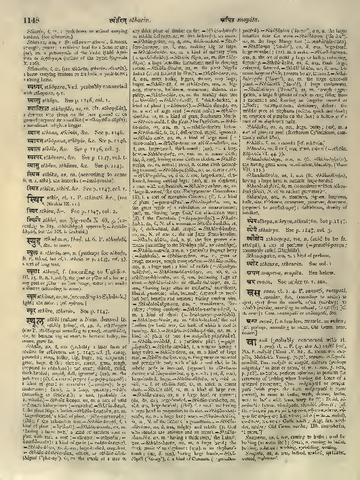
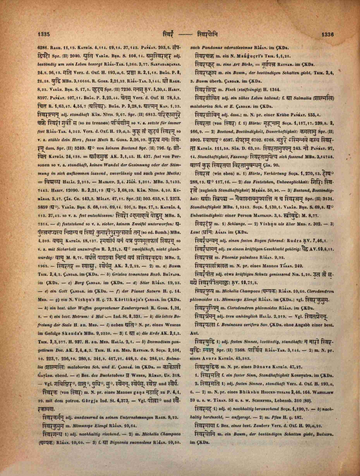
sthirá (von 1. sthā) UṆĀDIS. 1,54. 1〉 adj. (f. ā) a〉 hart, fest, straff: anna ṚV. 4,7,10. BHAG. 17,8. aṅga ṚV. 1,89,8. āyudha ṚV. 1,39,2. dhanvan ṚV. 8,20,12. ratha ṚV. 1,38,12. ṚV. 3,35,4. sthi̱rā cinnàmayiṣṇavaḥ ṚV. 8,20,1. ru̱jatì sthi̱rāṇì ṚV. 10,89,6. sthi̱ramā tànuṣva ṚV. 120,4. ṚV. 1,37,9. ṚV. 127,3. ṚV. 6,24,8. ṚV. 8,14,19. ṚV. 45,41. bhū harter —, fester Boden KĀM. NĪTIS. 19,10. KĀM. NĪTIS. 19,13. ˚liṅga (st. dessen sthita˚ KĀM. NĪTIS. 7,9625) MBH. 13,7512. ˚śukra verhärtet SUŚR. 2,154,14. sthirāghātam festgestampft GOBH. 4,7,5. kināṭaṃ snāva tatsthiram fest so v. a. nicht leicht zerreissend ŚAT. BR. 14,6,9,32. nīlasūkṣmasthirālakā MĀRK. P. 21,18. ˚bandhana H. 84. jāla Spr. (II) 2478. prāṇāḥ UTTARAR. 22,10 (30,2). Die Redensart avà sthi̱rā tànuhi yātu̱jūnā̀m brich den Widerstand ṚV. 4,4,5. śardhàtām ṚV. 8,19,20. ṚV. 10,134,2 (vgl. ṚV. 10,116,6). avà sthi̱rā ma̱ghavàdbhyastanuṣva entweder brich den Widerstand (der Feinde) für oder sei nachgiebig gegen ṚV. 2,33,4. alpaṃ darpabalaṃ daitya sthiramakrodhajaṃ balam so v. a. widerstandsfähig HARIV. 2729. — b〉 fest so v. a. unbeweglich AK. 3,6,1,5. H. an. 2,467. MED. r. 98. ŚAT. BR. 8,2,1,14. sthiro bhava mamāgrataḥ R. 3,35,16. ŚĀK. 94,9, v. l. druma R. 1,16,23. sthāṇu R. 1,63,24 (R. 1,65,29 GORR.). Berg Spr. (II) 503. pradīpa KUMĀRAS. 2,38. ˚bālārka adj. (udayācala) KATHĀS. 9,64. carasthireṣu lakṣeṣu KĀM. NĪTIS. 14,25. VARĀH. BṚH. S. 46,5. fgg. VARĀH. BṚH. S. 46,62. VARĀH. BṚH. S. 96,1. fgg. VARĀH. BṚH. S. 99,6. ˚jaṅgamānām BHĀG. P. 1,17,34. BHĀG. P. 3,31,16. BHĀG. P. 3,32,12. BHĀG. P. 4,28,39. BHĀG. P. 4,31,15. BHĀG. P. 6,16,43. BHĀG. P. 7,8,8. BHĀG. P. 11,7,42. sthiraṃ sukhaṃ cāsanam BHĀG. P. 2,2,15. BHĀG. P. 4,28,45 (su˚). BHĀG. P. 7,15,31. SARVADARŚANAS. 174,5. in der Nativitätslehre Bez. best. Häuser und Theile derselben VARĀH. BṚH. S. 60,20. VARĀH. BṚH. S. 98,18. BṚH. 5,13. BṚH. 5,25. BṚH. 8,8. LAGHUJ. 1,7. sthirataradṛś Spr. (II) 4560. á˚ ŚAT. BR. 8,2,1,14. dṛṣṭi R. 3,73,20. sthirasthāyin fest stehend AMṚTAN. UP._in_Ind. St. 9,32. vikrama ein fester, nicht schwankender Schritt VARĀH. BṚH. S. 86,8. asthira = cala H. 1455. — c〉 fest so v. a. keinem Wandel —, keinen Schwankungen unterworfen, dauerhaft, anhaltend, ausdauernd, bleibend: vṛṣan Indra ṚV. 3,30,2. ṚV. 2,41,10. ṚV. 8,33,9. ṚV. 8,81,28. AV. 6,65,3. karmàṇi ṚV. 1,101,4. ṚV. 1,167,7. ṚV. 10,61,20. gāvaù ṚV. 3,53,17. AV. 10,4,11. śavas ṚV. 5,52,2. ṚV. 7,56,7. ŚAT. BR. 9,1,2,5. KAUŚ. 4. sthirendriya SUŚR. 1. SUŚR. 124,16. deha SARVADARŚANAS. 98,8. maryādā R. 4,4,13. RĀJA-TAR. 5,119. hṛdaye tatsthiraṃ mama R. 3,3,7. tamas GĪT. 11,10. jalamucaḥ MĀLATĪM. 175,6. sthiti BHAG. 6,33. saṃgara MBH. 3,1811. pratijñā R. 2,109,25. ˚pratijñatva R. 2,106,32. prasāda HARIV. 1007. ārambha M. 7,209. Spr. (II) 269. Spr. (II) 3842. prīti R. 2,75,19 (R. 2,79,2 GORR.). sattva R. 2,83,8. anurāga R. 3,3,4. dharmapauruṣa R. 2,31,49. sauhṛda R. 4,38,19. VARĀH. BṚH. S. 15,13. H. 476. bhāvasthirāṇi jananāntarasauhṛdāni ŚĀK. 99. ˚saṃskāratā MṚCCH. 139,14. udyama KĀM. NĪTIS. 10,41. upadeśa KUMĀRAS. 1,30. niścaya KUMĀRAS. 5,5. gaṇapadaprāpti MEGH. 56. pratibandha ŚĀK. 23,13. bhakti VIKR. 1. kārya KAP. 1,34. karman Spr. (II) 797. maitrī Spr. (II) 3678. bhoga Spr. (II) 4629. Spr. (II) 6495. mantra (so v. a. geheim bleibend) Spr. (II) 6603. vibhava Spr. (II) 7160. sthirāpāyaḥ kāyaḥ Spr. (II) 7231. śailī Spr. (II) 7232. śrī, lakṣmī Spr. (II) 172. Spr. (II) 963. Spr. (II) 6281. RAGH. 11,19. KATHĀS. 4,114. KATHĀS. 19,14. KATHĀS. 37,142. PAÑCAT. 203,5. saṃpadvipadau Spr. (II) 2040. dyuti VARĀH. BṚH. S. 104,14. asusthirādara adj. beständig um sein Leben besorgt RĀJA-TAR. 1,360. RĀJA-TAR. 3,77. SARVADARŚANAS. 24,5. SARVADARŚANAS. 56,15. mati Verz. d. Oxf. H. 193,a,6. prajñā R. 2,1,18. BHĀG. P. 8,21,28. buddhi MBH. 3,16686. R. GORR. 2,21,23. RĀJA-TAR. 3,144. dhī RAGH. 8,22. VARĀH. BṚH. S. 17,5. hṛdaya Spr. (II) 7230. manas ṚV. 5,30,4. HARIV. 8597. PAÑCAT. 107,11. BHĀG. P. 3,25,44. cetas Verz. d. Oxf. H. 78,b,2. citta R. 1,63,47. R. 4,54,7 (asthira) BHĀG. P. 3,28,9. ātman KAP. 1,33. sthirātman adj. standhaft KĀM. NĪTIS. 9,67. Spr. (II) 6813. parihāsapure cakre sthirāṃ gurvīṃ sa (so zu trennen) parviṇīm so v. a. setzte für immer fest RĀJA-TAR. 4,242. Verz. d. Oxf. H. 19,a,5. kuru tvaṃ hṛdayaṃ sthiram so v. a. stähle dein Herz, fasse Muth R. GORR. 2,26,29. kuruṣva manaḥ sthiram dass. Spr. (II) 5249. a˚ von keinem Bestand Spr. (II) 796. fg. jīvita KATHĀS. 24,138. = asaṃkasuka AK. 3,1,43. H. 437. fest von Personen so v. a. standhaft, keinen Wandel der Gesinnung oder der Stimmung in sich aufkommen lassend, zuverlässig und auch gutes Muths; = viśrabdha HALĀY. 2,215. — MAITRYUP. 2,4. YĀJÑ. 1,311. MBH. 5,7433. MBH. 5,7443. HARIV. 12090. R. 2,21,19 (a˚). R. 3,68,39. KĀM. NĪTIS. 4,20. KUMĀRAS. 5,47. ŚĀK. CH. 143,3. MĀLAV. 47,11. Spr. (II) 503. Spr. (II) 655, v. l. Spr. (II) 2375. Spr. (II) 5859 (a˚). VARĀH. BṚH. S. 68,109. VARĀH. BṚH. S. 69,14. VARĀH. BṚH. S. 101,2. BṚH. 17,2. KATHĀS. 4,113. KATHĀS. 37,42. so v. a. fest entschlossen: sthiro 'hamāhave yoddhum MBH. 5,7318. — d〉 feststehend so v. a. sicher, keinem Zweifel unterworfen: apuṃstvamapyasya niśamya ca sthiraṃ kumārīpuramutsasarja tam (so ed. Bomb.) MBH. 4,309. vacas KATHĀS. 18,137. ramaṇīyaṃ vanaṃ yatra puṣpamūlaphalaṃ sthiram so v. a. mit Sicherheit anzutreffen R. 3,21,2. a˚ zweifelhaft, nicht glaubwürdig: vāc M. 8,71. vardhante pāṇḍavā nityaṃ vayaṃ tvasthiravṛddhayaḥ MBH. 2,1965. — sthiratara = sthāsnu, stheyaṃs AK. 3,2,22. — 2〉 m. a〉 Baum TRIK. 2,4,2. ŚABDAR._im_ŚKDR. — b〉 Grislea tomentosa Roxb. BHĀVAPR._im_ŚKDR. — c〉 Berg ŚABDAR._im_ŚKDR. — d〉 Stier RĀJAN. 19,23. — e〉 ein Gott ŚABDAR._im_ŚKDR. — f〉 der Planet Saturn H. ś. 14. MED. — g〉 ein N. Viṣṇuʼs H. ś. 73. Kārttikeyaʼs ŚABDAR._im_ŚKDR. — h〉 ein best. über Waffen gesprochener Zauberspruch R. GORR. 1,31,8. — i〉 ein best. Metrum: 4 Mal ⏑ – Ind. St. 8,331. — k〉 die letzte Befreiung der Seele H. an. MED. — l〉 neben ati˚ N. pr. eines Wesens im Gefolge Skandaʼs MBH. 9,2550. — 3〉 f. ā a〉 die Erde AK. 2,1,2. TRIK. 3,3,377. H. 937. H. an. MED. HALĀY. 2,1. — b〉 Desmodium gangeticum Dec. AK. 2,4,4,3. TRIK. H. an. MED. RATNAM. 9. SUŚR. 2,101,10. SUŚR. 2,223,7. SUŚR. 2,256,10. SUŚR. 2,280,5. SUŚR. 2,341,8. SUŚR. 2,417,21. SUŚR. 2,448,3. du. SUŚR. 2,284,21. Salmalia (śālmali) malabarica Sch. und E. ŚABDAC._im_ŚKDR. = kākolī JAṬĀDH. ebend. — c〉 Bez. des Buchstabens ja WEBER, RĀMAT. UP. 318. — Vgl. gaviṣṭhira˚, jātū˚, yudhi˚, su˚, stheman, stheyaṃs, stheṣṭha und sthairya.
Böhtlingk 1879 Adjektiv · Substantiv Maskulin · Substantiv Neutrum
Originaltext · Deutsch · Adjektiv · Substantiv Maskulin · Substantiv Neutrum
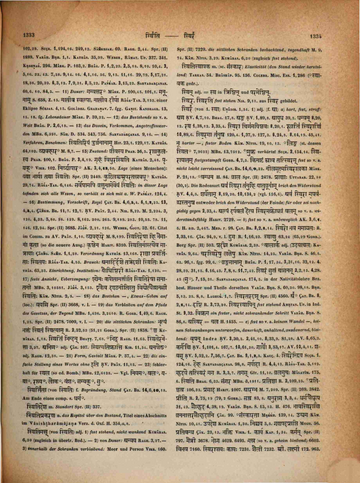
sthirá — 1〉 Adj. (f. ā́) — a〉 hart, verhärtet, fest, straff, nicht leicht zerreissend, widerstandsfähig. — b〉 fest, so v. a. unbeweglich. sthiratara ŚIŚ. 17,28. — c〉 fest, nicht schwankend (Schritt, Gang). — d〉 fest, so v. a. keinem Wandel —, keinen Schwankungen unterworfen, dauerhaft, anhaltend, aus dauernd, bleibend. manaḥ oder hṛdayaṃ sthiraṃ kar so v. a. sein Herz stählen, Muth fassen. — e〉 fest, so v. a. sich nicht weiter verbreitend, geheim bleibend mantra — f〉 fest von Personen, so v. a. standhaft, keinen Wandel der Gesinnung oder der Stimmung in sich aufkommen lassend, zuverlässig Chr. 210,13. Chr. 211,11. — g〉 gutes Muthes. — h〉 fest entschlossen zu (Infin.). — i〉 feststehend, so v. a. sicher, keinem Zweifel unterworfen. — k〉 mit Sicherheit anzutreffen. — 2〉 m. — a〉 Baum. — b〉 Grislea tomentosa. — c〉 Berg. — d〉 Stier. — e〉 ein Gott. — f〉 der Planet Saturn. — g〉 Bein. — α〉 Viṣṇuʼs. — β〉 Kārttikeyaʼs. — h〉 ein best. über Waffen gesprochener Zauberspruch. — i〉 ein best. Metrum. — k〉 die letzte Befreiung der Seele. — l〉 N. pr. eines Wesens im Gefolge Skandaʼs. — 3〉 f. sthirā — a〉 die Erde. — b〉 Desmodium gangeticum. — c〉 Salmalia malabarica. — d〉 = kakolī — e〉 Bez. des Lautes ja. — 4〉 n. Sg. und Pl. Widerstand. Acc. mit ava, tan Act. Jmds (Gen.) Widerstand brechen ṚV. 4,4,5. 8,19,20. 10,134,2. Med. seinen Widerstand brechen, sich nachgiebig zeigen ṚV. 2,33,14. Mit ā, tan Med. Widerstand entgegensetzen [Page7-215-b] ṚV. 10,120,4.

Apte 1890 Adjektiv · Substantiv Maskulin
Originaltext · Englisch · Adjektiv · Substantiv Maskulin
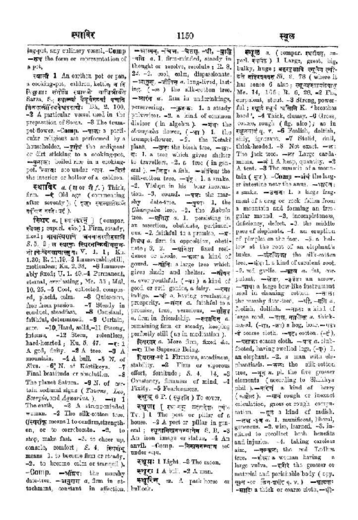
sthira a. [sthā-kirac] (compar. stheyas; superl. stheṣṭha) 1 Firm, steady, fixed; bhāvasthirāṇi jananāṃtarasauhṛdāni Ś. 5. 2; sa sthāṇuḥ sthirabhaktiyogasulabho niḥśreyasāyāstu vaḥ V. 1. 1; Ku. 1. 30; R. 11. 19. 2 immovable, still, motionless; Ku. 2. 38. 3 Immoveably fixed; U. 1. 40. 4 Permanent, eternal, everlasting, Me. 55; Māl. 10. 25. 5 Cool, collected, composed, placid, calm. 6 Quiescent, free from passion. 7 Steady in conduct, steadfast. 8 Constant, faithful, determined. 9 Certain, sure. 10 Hard, solid. 11 Strong, intense. 12 Stern, relentless, hard-hearted; Ku. 5. 47. — raḥ 1 A god, deity. 2 A tree. 3 A mountain. 4 A bull. 5 N. of Śiva. 6 N. of Kārtikeya. 7 Final beatitude or absolution. 8 The planet Saturn. 9 N. of certain zodiacal signs (Taurus, Leo, Scorpio, and Aquarius.). — rā 1 The earth. 2 A strong-minded woman. 3 The silk-cotton tree. (sthirīkṛ means 1 to confirm, strengthen, or to corroborate. 2 to stop, make fast. 3 to cheer up, console, comfort; Ś. 4. sthirībhū means 1 to become firm or steady. 2 to become calm or tranquil). Comp. — aṃghripaḥ the marshy date-tree. — anurāga a. firm in attachment, constant, in affection. ([Page 1150-b]) — ātman, -citta, -cetas, -dhī, -buddhi — mati a. 1 firm-minded, steady in thought or resolve, resolute; R. 8. 22. 2 cool, calm, dispassionate. — āyus, -jīvin a. long-lived, lasting. ( — m.) the silk-cotton tree. — āraṃbha a. firm in undertakings, persevering. — kuṭṛkaḥ 1 a steady pulverizer. 2 a kind of common divisor (in algebra). — gaṃdhaḥ the champaka flower. — (dhā) 1 the trumpet-flower. 2 the Ketakī plant. — chadaḥ the birch tree. — chāyaḥ 1 a tree which gives shelter to travellers. 2 a tree (in general). — jihvaḥ a fish. — jīvitā the silk-cotton tree. — daṃṣṭraḥ 1 a snake. 2 Viṣṇu in his boar incarnation. 3 sound. — patraḥ the marshy date-tree. — puṣpaḥ 1 the Campaka tree. 2 the Bakula tree. — pratijña a. 1 persisting in an assertion, obstinate, pertinacious. 2 faithful to a promise. — pratibaṃdha a. firm in opposition, obstinate; Ś. 2. — pratiṣṭhā fixed residence or abode. — phalā a kind of gourd. — yoniḥ a large tree which gives shade and shelter. — yauvana a. ever youthful. — (naḥ) a kind of good or evil genius, a fairy. — raṃgā indigo. — śrī a. having everlasting prosperity. — saṃgara a. faithful to a promise, true, veracious. — sauhṛda a. firm in friendship. — sthāyin a. remaining firm or steady, keeping perfectly still (as in meditation).
Cappeller 1887 Worttyp nicht bestimmt
Originaltext · Deutsch · Worttyp nicht bestimmt
sthirá fest, unheweglich, hart, stark, dauerhaft, beständig, standhaft, besonnen, sicher, zuverlässig.

Burnouf 1866 Adjektiv
Originaltext · Französisch · Adjektiv
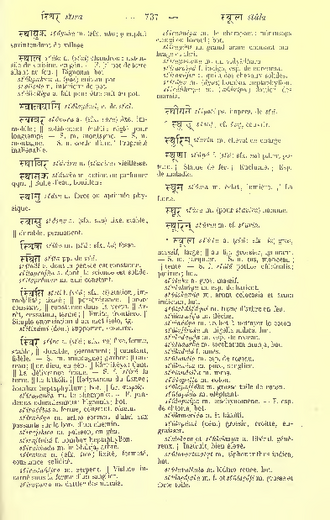
sthira sthira a. (sthā; sfx. ra) fixe, ferme, stable, durable, permanent; constant, fidèle. — S. m. montagne; arbre; taureau; un dieu, en gén. Kārttikeya; Śani. La délivrance finale. — S. f. sthirā la terre. La kākolī. Hedysarum du Gange; bombax heptaphyllum; bot. Gr. στερεός. sthiragandha m. le champaka. — F. pandanus odoratissimus; bignonia; bot. sthiracetas a. ferme, constant, résolu. sthirachāya m. arbre servant d'abri aux passants sur le bord d'un chemin. sthirajihva m. poisson, en gén. sthirajīvitā f. bombax heptaphyllon. sthirañchada m. le bhūrja, arbre. sthiratva n. (sfx. tva) fixité, fermeté, constance, solidité. sthiradaṃṣṭra m. serpent. Viṣṇu incarné sous la forme d'un sanglier. sthirapatra m. dattier des marais. [Page737-2] sthirapuṣpa m. le champaca; mimusops elengi ou bacoul; bot. sthirayoni m. grand arbre donnant ombrage et abri. sthirayauvana m. un vidyādhara. sthiraraṅgā f. indigo, esp. de curcuma. sthiravājin a. qui a des chevaux solides. sthirāyu m. (āyus) bombax heptaphyllon. sthirāṃhripa m. (aṃhrīpa) dattier des marais.
Abgeleitete Wörter
Quelltextfundstellen (32)
DYS 1 Fundstelle
GoS 2 Fundstellen
HP 15 Fundstellen
HTK 2 Fundstellen
MAN 1 Fundstelle
MandUp 1 Fundstelle
PYS 3 Fundstellen
SiSa 3 Fundstellen
Mit AYI Free weitermachen
Bildquelle: AYI Archiv.