

śūnya शून्य – devoid; empty; without
adjective · substantive neuter · Word type unspecified
Dictionary sources
AYI dictionary adjective · substantive neuter
adjective
devoid; empty; without
Derived from
- śūna शून substantive neuter — emptiness; absence; lack
substantive neuter
void; empty space
Cappeller 1891 adjective
Original text · English · adjective
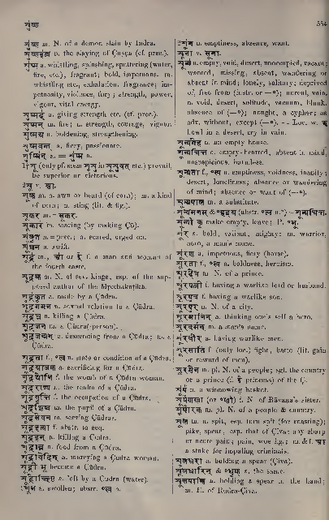
śūnyá ·a. empty, void, desert, unoccupied, vacant; wanted, missing, absent, wandering or absent in mind; lonely, solitary; deprived of, free from (instr. or --°); unreal, vain. n. void, desert, solitude, vacuum, blank, absence of (--°); nought, a cypher; as adv. without, except (--°). -- Loc. w. ru howl in a desert, cry in vain.
Monier-Williams 1872 adjective
Original text · English · adjective
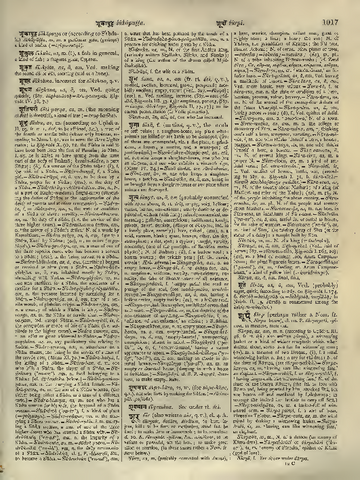
śūnya śūnya, as, ā, am (probably connected with śūna above, fr. rt. śvi), empty, void, hollow; vacant, barren, non-existent; utterly destitute or de- prived of, without (with inst.); ruined; nonsensical, un- meaning; guileless, unsuspicious; indifferent; lonely, private, desert, desolate, (śūnye or śūnyam, ind. in a lonely place, secretly); bare, naked; (am), n. a void, vacuum, blank; space, heaven, ether, the sky, atmosphere; a dot, spot; a cypher; naught, vacuity, nonentity, (one of the principles of Bauddha meta- physics); N. of Brahma; (ā), f. a hollow reed; a barren woman; the prickly pear; [cf. Gr. κενός, κενεός; Æol. κέννος.]
Petersburger 1855 adjective · substantive neuter
Original text · German · adjective · substantive neuter
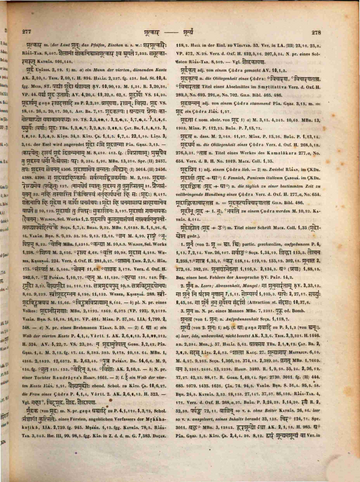
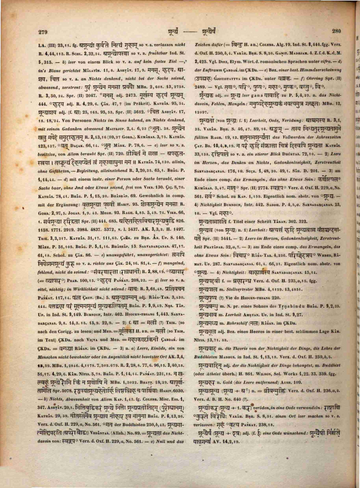
śūnyá (von 2. śūna) 1〉 adj. (f. ā) gaṇa gavādi zu P. 5,1,2 (von śvan!). a〉 leer, öde, unbewohnt, nicht besetzt AK. 3,2,6. TRIK. 3,3,321. H. 1446. H. an. 2,384. MED. y. 57. HALĀY. 5,62. āvasatha TBR. 2,1,2,12. ŚAT. BR. 2,3,1,9. sadas LĀṬY. 2,4,13. ˚śālā KAUŚ. 27. śūnyāgāra MAITRYUP. 6,10. M. 4,57. M. 9,265. SUŚR. 1,366,20. SUŚR. 1,374,18. SUŚR. 2,389,20. jagat MBH. 1,7669. vana MBH. 3,2361. MBH. 3,2401. MBH. 13,2298. HARIV. 3489. R. 1,9,58. R. 1,55,24. R. 2,36,12. R. 2,37,27. R. 2,42,23. R. 2,88,17. R. GORR. 1,49,14. Spr. 2730. Spr. 3011. fg. Spr. (II) 444. Spr. 685. Spr. 1079. Spr. 1435. Spr. 1631. ŚĀK. 74. ŚĀK. 94,5. VARĀH. BṚH. S. 51,4. VARĀH. BṚH. S. 95,5. VARĀH. BṚH. S. 95,58. BṚH. 24,8. KATHĀS. 3,33. KATHĀS. 18,158. KATHĀS. 27,147. KATHĀS. 37,57. KATHĀS. 86,108. RĀJA-TAR. 4,171. Verz. d. Oxf. H. 268,a,37. BHĀG. P. 3,24,28. BHĀG. P. 5,14,20. ratha R. 2,52,38. paryaṅka R. 2,72,11. vājin so v. a. ohne Reiter KATHĀS. 26,86. leer so v. a. ausgeleert, seines Inhalts beraubt KATHĀS. 33,138. cira˚ KATHĀS. 124,71. Spr. 3011. bahu˚ MBH. 3,12842. dūraśūnyo 'dhvā AK. 2,1,18. H. 985. a˚ PĀR. GṚHY. 1,5. KĀTY. ŚR. 2,4,4. KĀTY. ŚR. 2,4,30. KĀTY. ŚR. 2,8,12. dvāraṃ śūnyamaśūnyaṃ vā VET. in LA. (III) 23,11. fg. aśūnyāṃ kurvate nityaṃ guhām so v. a. verlassen nicht R. 4,44,113. R. SCHL. 2,32,24. aśūnyopasthā so v. a. fruchtbar Ind. St. 5,315. — b〉 leer von einem Blick so v. a. auf kein festes Ziel —, inʼs Blaue gerichtet MĀLATĪM. 11,8. AṢṬĀV. 17,9. manas, hṛdaya, āśaya, citta so v. a. an Nichts denkend, nicht bei der Sache seiend, abwesend, zerstreut: puraṃ śūnyena manasā prayayau MBH. 2,608. MBH. 13,2758. R. 3,50,24. Spr. (II) 2047. ˚manas adj. Spr. (II) 2473. mūrkhasya hṛdayaṃ śūnyam Spr. (II) 444. ˚hṛdaya adj. R. 4,29,6. ŚĀK. 47,7 (im Prākrit). KATHĀS. 95,54. śūnyāśaya adj. (f. ā) KATHĀS. 25,165. KATHĀS. 95,53. Spr. (II) 5612. ˚citta AṢṬĀV. 17,18. AṢṬĀV. 18,24. Von Personen Nichts im Sinne habend, an Nichts denkend, mit seinen Gedanken abwesend MAITRYUP. 2,4. MAITRYUP. 6,23 (˚bhūta). MAITRYUP. 6,28. śūnyena khalu mayedaṃ samudāhṛtam R. 2,13,16 (R. 2,10,27 GORR.). KUMĀRAS. 3,75. KATHĀS. 123,137. ˚vat DAŚAK. 66,14. ˚bhūta MĀRK. P. 78,6. — c〉 leer so v. a. besitzlos, von Allem beraubt Spr. (II) 720. jīvitaṃ me sakhā — apahṛtastvayā . tacchūnyaṃ dehamapyetaṃ tvaṃ gṛhāṇādhunā mama .. KATHĀS. 74,130. allein, ohne Gefährten, — Begleitung, alleinstehend R. 3,20,35. R. 3,65,1. BHĀG. P. 1,14,44. — d〉 mit einem instr. einer Person oder Sache beraubt, einer Sache baar, ohne Jmd oder Etwas seiend, frei von VIKR. 130. ŚIŚ. 8,70. KATHĀS. 78,41. BHĀG. P. 1,15,20. BHĀṢĀP. 69. Gewöhnlich in comp. mit der Ergänzung: vṛkṣaśūnyā pṛthvī HARIV. 95. śokaśūnyena manasā R. GORR. 2,97,5. YOGAS. 1,9. YOGAS. 1,43. MEGH. 93. RAGH. 4,85. RAGH. 5,49. RAGH. 5,74. VIKR. 66,1. sarvaśūnyā daridratā Spr. (II) 444. Spr. (II) 685. ahitahitavicāraśūnyabuddhi Spr. (II) 826. Spr. (II) 1158. Spr. (II) 1771. Spr. (II) 2919. Spr. (II) 3984. Spr. (II) 4837. Spr. (II) 5372, v. l. Spr. (II) 5437. AK. 3,3,2. H. 1497. TRIK. 3,3,217. KATHĀS. 31,17. KATHĀS. 111,63. ŚAṂK._zu_BṚH. ĀR. UP. S. 140. MĀRK. P. 51,105. BHĀG. P. 5,1,16. BHĀṢĀP. 15. SARVADARŚANAS. 47,17. SARVADARŚANAS. 61,18. Schol. zu ŚĀK. 86. — e〉 unausgeführt, unausgerichtet: tvamapi niyogamaśūnyaṃ kuru so v. a. richte aus ŚĀK. 24,16. ŚĀK. 81,4. — f〉 mangelnd, fehlend, nicht da seiend: ˚saṃvaraṇārakṣā (rājadhānī) R. 2,88,19. ˚vyāpāra (= vyāpāra˚) PRAB. 100,15. ˚hṛdaya PAÑCAT. 208,22. — g〉 leer so v. a. eitel, nichtig; in Wirklichkeit nicht seiend: vācaḥ R. 3,61,48. prativacana PAÑCAT. 117,14. phala ŚRUT. (BR.) 5. aśūnyajanman adj. RĀJA-TAR. 3,430. RĀJA-TAR. 3,444. yattadbrahma paraṃ sūkṣmamaśūnyaṃ śūnyakalpitam BHĀG. P. 9,9,49. NṚS. TĀP. UP._in_Ind. St. 9,149. BURNOUF, Intr. 462. HIOUEN-THSANG 1,443. SARVADARŚANAS. 9,8. SARVADARŚANAS. 14,3. SARVADARŚANAS. 14,15. SARVADARŚANAS. 15,9. SARVADARŚANAS. 22,9. — 2〉 f. ā = malī (?) TRIK. (so nach den Corigg. zu lesen) und MED. = tūlikā H. an. = nalī (so TRIK. im Text) ŚKDR. nach VIŚVA und MED. = mahākaṇṭakinī ŚABDAC._im_ŚKDR. = vandhyā RĀJAN._im_ŚKDR. — 3〉 n. a〉 Leere, Einöde, ein von Menschen nicht bewohnter oder im Augenblick nicht besetzter Ort AK. 3,4,13,59. MBH. 1,2846. MBH. 4,1178. MBH. 7,302. MBH. 7,679. R. 2,28,8. R. 2,77,6. R. 2,96,15. R. 3,40,28. R. 3,51,17. R. 4,29,6. KĀM. NĪTIS. 5,78. BHĀG. P. 1,14,14. PAÑCAT. 231,18. na khalvahaṃ śūnye raumi kiṃ na śṛṇoṣi me MBH. 1,3022. BHAṬṬ. 18,29. āpūrṇatāmeti Spr. 5078. raṅgasyāśūnyahetorhi tiṣṭhantviha ca pārthivāḥ HARIV. 6030. — b〉 Nichts, Abwesenheit von Allem KAP. 1,43. fg. COLEBR. Misc. Ess. 1,347. AṢṬĀV. 20,1. bhittibuddhikaraṃ śūnye bhittau śūnyapratītidam (purodyānam) KATHĀS. 29,59. nītastenaiva śūnyāya nīhāra iva bhānunā BHĀG. P. 6,13,20. Verz. d. Oxf. H. 229,a, No. 561. ˚mata der Buddhisten Verz. d. Oxf. H. 250,b,43. śūnyamātmetivadati (aparo bauddhaḥ) VEDĀNTAS. (Allah.) No. 89. = śūnyatā das Nichtdasein von: svarūpa˚ Verz. d. Oxf. H. 229,a, No. 561. — c〉 Null und das Zeichen dafür (= bindu H. an.) COLEBR. Alg. 19. Ind. St. 8,444. fgg. Verz. d. Oxf. H. 250,b,4. VARĀH. BṚH. S. 8,20. GAṆIT. MADHYAM. 4. Z. f. d. K. d. M. 2,425. Vgl. DIEZ, Etym. Wört. d. romanischen Sprachen unter cifra. — d〉 der Luftraum ŚABDAC._im_ŚKDR. — e〉 Bez. einer best. Himmelserscheinung (upagraha) JYOTISTATTVA_im_ŚKDR. unter vajraka. — f〉 Ohrring Spr. (II) 2489. — Vgl. tṛṇa˚, pari˚, puṣpa˚, mahā˚, muṣka˚, vastu˚, vi˚.
Böhtlingk 1879 adjective · substantive neuter
Original text · German · adjective · substantive neuter
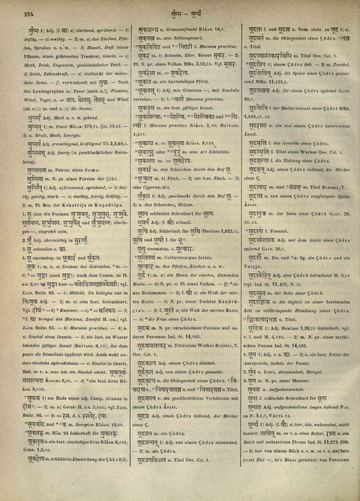
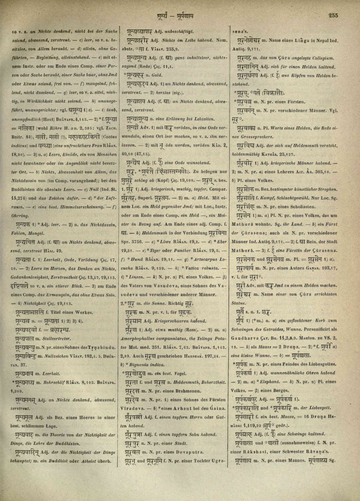
śūnyá — 1〉 Adj. (f. ā) — a〉 leer, öde, unbewohnt, nicht besetzt. vājin m. so v. a. ohne Reiter, rājya n. ein Reich mit unbesetztem Throne Ind. St. 15,273. 299. — b〉 leer von einem Blick u. s. w. so v. a. auf kein festes Ziel —, inʼs Blaue gerichtet; von Personen [Page6-255-a] so v. a. an Nichts denkend, nicht bei der Sache seiend, abwesend, zerstreut. — c〉 leer, so v. a. besitzlos, von Allem beraubt. — d〉 allein, ohne Gefährten, — Begleitung, alleinstehend. — e〉 mit einem Instr. oder am Ende eines Comp. einer Person oder Sache beraubt, einer Sache baar, ohne Jmd oder Etwas seiend, frei von. — f〉 mangelnd, fehlend, nicht daseiend. — g〉 leer, so v. a. eitel, nichtig, in Wirklichkeit nicht seiend. — h〉 unausgeführt, unausgerichtet; vgl. aśūnya 1〉c〉. — i〉 taub, unempfindlich (Haut) BHĀVAPR. 4,145. — 2〉 *f. śūnyā = nalikā (wohl Röhre H. an. 2,385; vgl. ZACH. Beitr. 84), nalī, malī (!), mahākaṇṭakinī (Cactus indicus) und vandhyā (eine unfruchtbare Frau RĀJAN. 18,20). — 3〉 n. — a〉 Leere, Einöde, ein von Menschen nicht bewohnter oder in Augenblick nicht besetzter Ort. — b〉 Nichts, Abwesenheit von Allem, das Nichtdasein von (im Comp. vorangehend); bei den Buddhisten die Zeichen Leere. — c〉 Null (Ind. St. 15,274) und das Zeichen dafür. — d〉 *der Luftraum. — e〉 eine best. Himmelserscheinung. — f〉 Ohrring.
Apte 1890 adjective · substantive neuter
Original text · English · adjective · substantive neuter
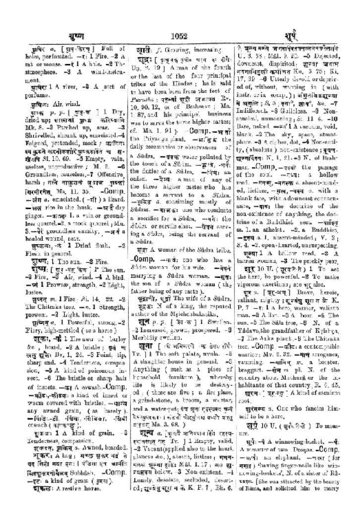
śūnya a. [śūnāyai prāṇivadhāya hiṃtaṃ rahasyasthānatvāt yat Tv.] 1 Empty, void. 2 Vacant (applied also to the heart, glances &c.), absent, listless; gamanamalasaṃ śūnyā dṛṣṭiḥ Māl. 1. 17; see śūnyahṛdaya below. 3 Non-existent. 4 Lonely, desolate, secluded, deserted; śūnyeṣu śūrā na ke K. P. 7; ([Page 1052-c]) Bk. 6. 9; śūnyaṃ manye jagadaviratajvālamaṃtarjvalāmi U. 3. 38; Māl. 9. 20. 5 Dejected, downcast, dispirited; śūnyā jagāma bhavanābhimukhī kathaṃcita Ku. 3. 75; Ki. 17. 39 6 Utterly devoid or deprived of, without, wanting in (with instr. or in comp.); aṃgulayikaśūnyā me aṃguli; Ś. 5; dayā˚, jñāna˚, &c. 7 Indifferent. 8 Guileless. 9 Nonsensical, unmeaning; Śi. 11. 4. 10 Bare, naked. — nyaṃ 1 A vacuum, void, blank. 2 The sky, space, atmosphere. 3 A cipher, dot. 4 Non-entity, (absolute) non-existence; dūṣaṇaśūnyabiṃdavaḥ N. 1. 21. 5 N. of Brahman. Comp. — padavī the passage of the soul. — madhyaḥ a hollow reed. — manas, -manaska a. absent-minded, listless. — mukha, -vadana a. with a blank face, with a downcast countenance. — vādaḥ the doctrine of the non-existence of anything, the doctrine of a Buddhist sect. — vādin m. 1 an atheist. 2 a Buddhist. — hṛdaya a. 1 absent-minded; V. 2; Ś. 4. 2 open-hearted, unsuspecting.
Cappeller 1887 Word type unspecified
Original text · German · Word type unspecified
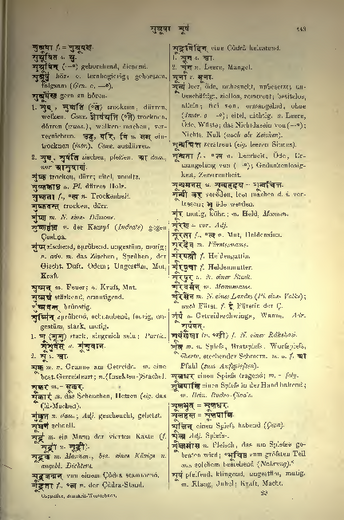
śūnyá leer, öde, unbesucht, unbesetzt; unbeschäftigt, ziellos, zerstreut; besitzlos, allein; frei von, ermangelnd, ohne (Instr. o. —˚); eitel, nichtig, n. Leere, Öde, Wüste; das Nichtdasein von (—˚); Nichts, Null (auch als Zeichen).
Burnouf 1866 adjective
Original text · French · adjective
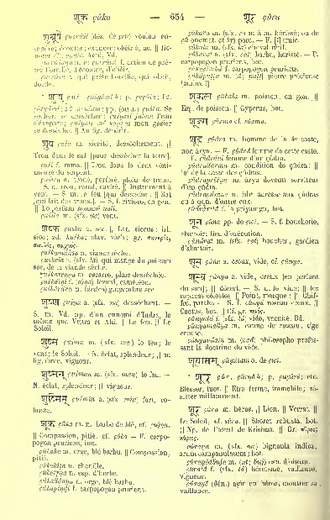
śūnya śūnya a. vide; creux [en parlant du son]; désert. — S. n. le vide; les espaces célestes. Point, marque; Chiffre, parafe. — S. f. śūnyā roseau creux. Cactus, bot. Cf. gr. ϰενός. śūnyatā f. (sfx. tā) vide, vacuité, Bd. śūnyamadhya m. canne de roseau, tige creuse. śūnyavādin m. (vad) philosophe professant la doctrine du vide.
Derived words
Occurrences in source texts (54)
DYS 2 occurrences
GoS 1 occurrence
HP 15 occurrences
HP 3.1-3.5: Foundation of Kuṇḍalinī 2 occurrences
Direct occurrences
HP 4.0*1-4.0*14: Samādhi and Laya 2 occurrences
Direct occurrences
HP 4.11*5-4.11*14: Khecarī in Space 3 occurrences
Direct occurrences
-
HP 4.11*5 Segment 12
-
HP 4.11*8 Segment 4
-
HP 4.11*14 Segment 12
HP 4.11*15-4.11*28: Space and Laya 3 occurrences
Direct occurrences
-
HP 4.11*21 Segment 2
-
HP 4.11*21 Segment 4
-
HP 4.11*21 Segment 5
HP 4.20-4.27: Four Stages of Nāda 3 occurrences
Direct occurrences
1 more source page
PYS 4 occurrences
SiSa 6 occurrences
SiSa 5.191-5.207: Kailāsa und Mahāśūnya 2 occurrences
Direct occurrences
-
SiSa 5.201 Segment 12
-
SiSa 5.202 Segment 4
VBT 26 occurrences
VBT 32–35: Emptiness and Nāḍī 3 occurrences
Direct occurrences
VBT 36–42: Sound and Bindu 7 occurrences
Direct occurrences
-
VBT 39 Segment 6
-
VBT 39 Segment 9
-
VBT 40 Segment 9
-
VBT 40 Segment 10
-
VBT 40 Segment 13
-
VBT 42 Segment 14
Occurrences through derived words
-
VBT 39 Segment 12
VBT 43–48: Body as Space 7 occurrences
Direct occurrences
-
VBT 44 Segment 2
-
VBT 44 Segment 4
-
VBT 44 Segment 13
-
VBT 45 Segment 2
-
VBT 45 Segment 4
-
VBT 45 Segment 6
Occurrences through derived words
-
VBT 46 Segment 3
4 more source pages
VBT 121–129: Devotion and Release 3 occurrences
Direct occurrences
Occurrences through derived words
-
VBT 122 Segment 6
Continue with AYI Free
Image source: AYI archive.