

catur चतुर् – vier
Adverb · Zahlwort · Partikel · Substantiv Maskulin · Substantiv Neutrum · Worttyp nicht bestimmt
Wörterbuchquellen
AYI Wörterbuch Zahlwort
vier
Cappeller 1891 Worttyp nicht bestimmt
Originaltext · Englisch · Worttyp nicht bestimmt
catur ·(°--) -> catvār.
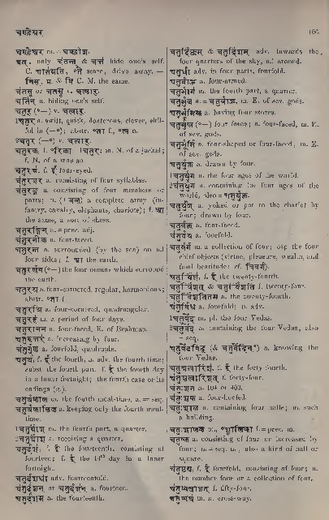
Monier-Williams 1872 Worttyp nicht bestimmt
Originaltext · Englisch · Worttyp nicht bestimmt
catur catur, catvāras m. pl., catvāri n. pl. (said to be fr. rt. cat), four. In Vedic Sanskrit the inst., dat., abl., and loc. have the accent on the penultimate; in the later language either on the penultimate or on the last syllable. A Vedic form of the gen. pl. fem. catasṝṇām for catasṛṇām occurs sometimes in Epic poetry; [cf. Gr. τέσσαρες, τέτταρες; Æol. πίσυρες; Goth. fidvor; Cambro- Brit. pedwar, pedair; Lat. quatuor; Lith. keturi; Slav. cetyrje; Hib. ceathair, ceteora; Zend cathru.]
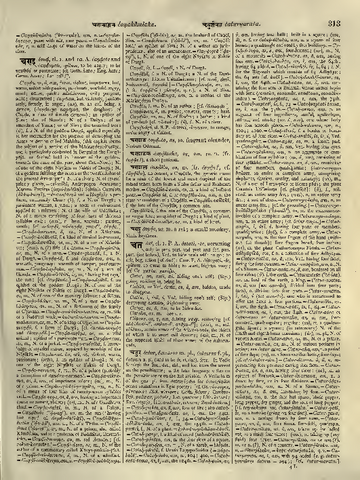
Petersburger 1855 Adverb
Originaltext · Deutsch · Adverb
catur erscheint als geschwächtes Thema in der Declination und in Ableitungen von catvar, so wie auch am Anfange von compp.; s. catvar. Das adv. s. u. catus.
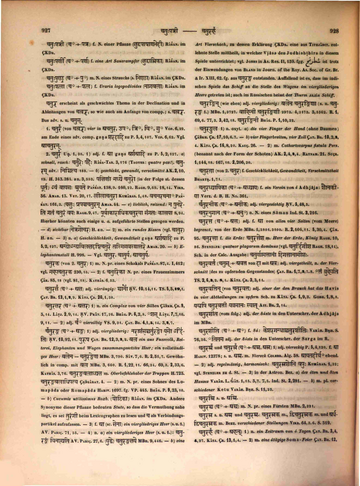
Böhtlingk 1879 Substantiv Maskulin · Substantiv Neutrum · Worttyp nicht bestimmt
Originaltext · Deutsch · Substantiv Maskulin · Substantiv Neutrum
catvár (schwach catúr) m. n. Pl. vier. Vgl. catasar. Bisweilen ungenau auch mit einem Fem. verbunden.
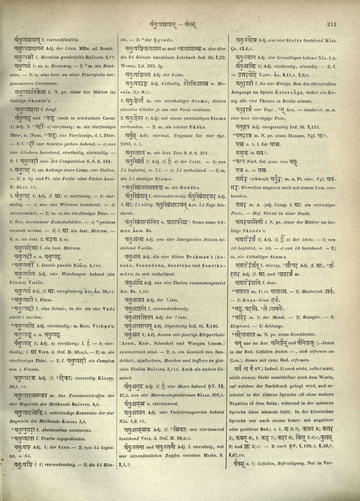
Originaltext · Deutsch · Worttyp nicht bestimmt
catur s. catvar.
Apte 1890 Partikel
Originaltext · Englisch · Partikel
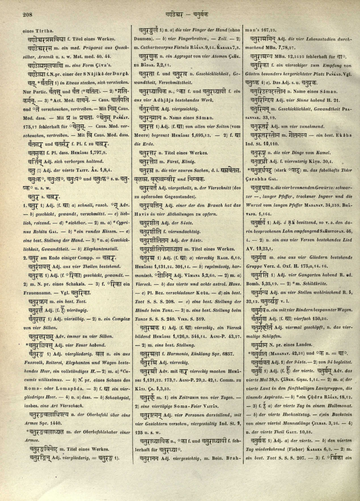
catur num. a. [cat-uran Uṇ. 5. 58] (always in pl.; catvāraḥ m.; catasraḥ f.; catvāri n.) Four; catvāro vayamṛtvijaḥ Ve. 1. 25; catasro'vasthā bālyaṃ kaumāraṃ yauvanaṃ vārdhakaṃ ceti; catvāri śṛṃgā trayo asya pādāḥ &c.; śeṣān māsān gamaya caturo locane mīlayitvā Me. 110. — ind. Four times. [cf. Zend chathru; Gr. tessares; L. quatuor]. [In comp. the r of catura is changed to a visarga (which in some cases becomes ś, ṣ or s, or remains unchanged) before words beginning with hard consonants]. Comp. — aṃśaḥ a fourth part. — aṃga a. having 4 members, quadripartite. — (gaṃ) 1 a complete army consisting of elephants, chariots, cavalry, and infantry; eko hi khaṃjanavaro nalinīdalastho dṛṣṭaḥ karoti caturaṃgabalādhipatyaṃ Ś. Til. 4; caturaṃgabalo rājā jagatīṃ vaśamānayet . ahaṃ paṃcāṃgabalavānākāśaṃ vaśamānaye Subhāṣ. 2 a sort of chess. — aṃgin a. having four parts. — (nī) a complete army, see caturaṃga. — agulaṃ 1 the four fingers of the hand. 2 four fingers broad. — aṃta a. bordered on all sides; bhūtvā cirāya caturaṃtamahīsapatnī Ś. 4. 19. — aṃtā the earth. — aśīta a. eighty-fourth. — aśīti a. or f. eighty four. — aśra, — asra a. (for aśri-sri) 1 four cornered, quadrangular; R. 6. 10. 2 symmetrical, regular or handsome in all parts; babhūva tasyāścaturasraśobhi vapuḥ Ku. 1. 32. — (śraḥ, -sraḥ) 1 a square. ([Page 0483-a]) 2 a quadrangular figure. 3 (in astr.) N. of the fourth and eighth lunar mansions. — ahaṃ a period of four days. — ātman m. N. of Viṣṇu. — ānanaḥ, -mukhaḥ an epithet of Brahmā; itaratāpaśatāni yathecchayā vitara tāni sahe caturānana Udb. — āśramaṃ the four orders or stages of the religious life of a Brāhmaṇa. — uttara a. increased by four. — uṣaṇaṃ the four hot spices, i. e. black pepper, long pepper, dry ginger, and the root of long pepper. — karṇa ( catuṣkarṇa) a. heard by two persons only; Pt. 1. 99. — koṇa (catuṣkoṇa) a. square, quadrangular. — (ṇaḥ) a square, tetragon, any quadrilateral figure. — gatiḥ 1 the Supreme Soul. 2 a tortoise. — gavaḥ a carriage drawn by four oxen. — guṇa a. four times, four-fold, quadruple. — catvāriṃśata (catuścatvāriṃśat) a. forty-four; ˚riṃśa — śattama forty-fourth. — ṇavata(caturnavata) a. ninety-fourth, or with ninety-fouradded; caturṇavataṃ śataṃ ‘one hundred and ninety-four’. — daṃtaḥ an epithet of Airāvata, the elephant of Indra. — daśa a. fourteenth. — daśan a. four teen. ˚ratnāni (pl.) the fourteen ‘jewels’ churned out of the ocean; (their names are contained in the following popular Maṅgalāṣṭaka: -lakṣmīḥ kaustubhapārijātakasurā dhanvaṃtariścaṃdramā gāvaḥ kāmadughāḥ sureśvaragajo raṃbhādidevāṃganāḥ . aśvaḥ saptamukho viṣaṃ haridhanuḥ śaṃkho'mṛtaṃ cābudhe ratnānīha caturdaśa pratidinaṃ kuryuḥ sadā maṃgalaṃ ..). ˚vidyā (pl.) the fourteen lores; (they are: -ṣaḍaṃgamiśritā vedā dharmaśāstraṃ purāṇakaṃ . mīmāṃsā tarkamapi ca etā vidyāścaturdaśa ..). — daśī the fourteenth day of a lunar fortnight. — diśaṃ the four quarters taken collectively. — diśaṃ ind. towards the four quarters, on all sides. — dolaḥ -laṃ a royal litter. — dvāraṃ 1 a house with four entrances on four sides. 2 four doors taken collectively. — navati a. or f. ninety-four. — paṃca a. ( catuḥpaṃca or catuṣpaṃca) four or five. — paṃcāśat f. (catu paṃcāśat or catuṣpaṃcāśat) fifty-four. — pathaḥ (catuḥpathaḥ or catuṣpathaḥ) ( — thaṃ also) a place where four roads meet, a crossway; Ms. 4. 39, Ms. 9. 264. — (thaḥ) a Brāhmaṇa. — pada a. (catuṣpada) 1 having four feet. 2 consisting of four limbs. — (daḥ) a quadruped. — (dī) ([Page 0483-b]) a stanza of four lines; padya catuṣpadī tacca vṛttaṃ jātiriti dvidhā Chand. M. 1. — pāṭhī (catuṣpāṭhī) a school for Brāhmaṇas in which the four Vedas are taught and repeated. — pāṇiḥ (canuṣpāṇiḥ) an epithet of Viṣṇu. — pād -da (catuṣya d-da) a. 1 quadruped. 2 consisting of four members or parts. ( — m.) 1 a quadruped. 2 (in law.) a judicial procedure (trial of suits) consisting of four processes; i. e. plea, defence, rejoinder, and judgment. — pārśvaṃ the four sides of a square. — bāhuḥ an epithet of Viṣṇu. ( — hu n.) a square. — bhadraṃ the aggregate of the four ends of human life (puruṣārtha); i. e. dharma, artha, kāma and mokṣa. — bhāgaḥ the fourth part, a quarter. — bhāvaḥ N. of Viṣṇu. — bhuja a. 1 quadrangular. 2 having four arms, Bg. 11. 46. — (jaḥ) 1 an epithet of Viṣṇu; R. 16. 3. 2 a quadrangular figure. 3 square. — (jaṃ) a square. — māsaṃ a period of four months. (reckoned from the 11th day in the bright half of āṣāḍha to the 11th day in the bright half of kārtika). — mukha having four faces. — (khaḥ) an epithet of Brahmā; tvattaḥ sarvaṃ caturmukhāt R. 10. 22. — (khaṃ) 1 four faces; Ku. 2. 17. 2 a house with four entrances. — maṃḍalaṃ a four-fold arrangement (of troops &c.). — yugaṃ the aggregate of the four Yugas or ages of the world. — rātraṃ (catūrātraṃ) an aggregate of four nights. — vaktraḥ an epithet of Brahmā. — vargaḥ the four ends of human life taken collectively (puruṣārtha); i. e. dharma, artha, kāma and mokṣa; R. 10. 22. — varṇaḥ 1 the four classes or castes of the Hindus; i. e. brāhmaṇa, kṣatriya, vaiśya and śūdra; caturvarṇamayo lokaḥ R. 10. 22. 2 four principal colours. — varṣikā a cow four years old. — viṃśa a. 1 twenty-fourth. 2 having twenty-four added; as caturviṃśaṃ śataṃ (124). — viṃśati a. or f. twenty-four. — viṃśatika a. consisting of twenty-four. — vidya a. one who has studied the four Vedas. — vidyā the four Vedas. — vidha a. of four sorts or kinds, four-fold. — veda a. familiar with the four Vedas. — (daḥ) the Supreme Soul. — vyūhaḥ N. of Viṣṇu. — (haṃ) medical science. — śālaṃ (catuḥśālaṃ, catuśśālaṃ, catuḥśālī, catuśśālī) a square of four buildings, ([Page 0483-c]) a quadrangle enclosed by four buildings; alaṃ catuḥśālamimaṃ pravaṃśya Mk. 3. 7. — ṣaṣṭi a. or f. 1 sixty-four. 2 N. for the Ṛgveda containing 64 Adhyāyas. ˚kalāḥ (pl.) the sixtyfour arts. — saptati a. or f. seventyfour. — samaṃ an unguent of four things, sandal, agallochum, saffron and musk. — sīmā the boundaries on all four sides. — hāyana, -ṇa a. four years old; (the f. of this word ends in ā if it refers to an inanimate object, and in ī if it refers to an animal). — hotrakaṃ the four priests taken collectively.

Cappeller 1887 Worttyp nicht bestimmt
Originaltext · Deutsch · Worttyp nicht bestimmt
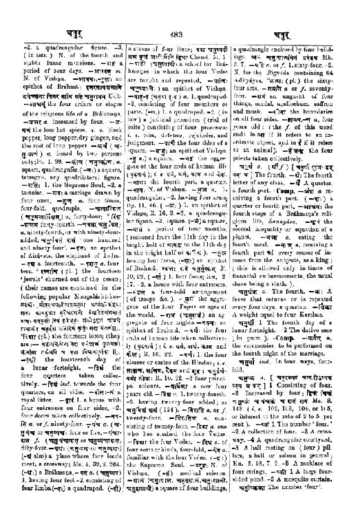
catur (˚—) = catvār.
Burnouf 1866 Worttyp nicht bestimmt
Originaltext · Französisch · Worttyp nicht bestimmt
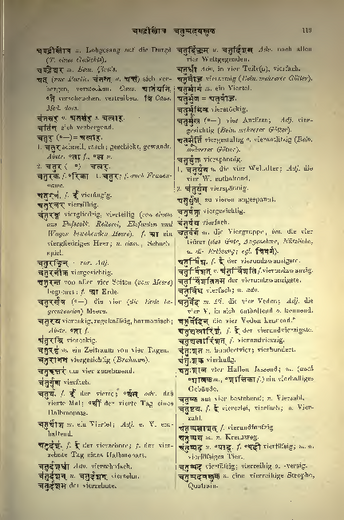
catur catur [m. catvāras; f. catasras; n. catvāri] quatre. Zd. catvāro; lat. quatuor; lith. keturi; irland. ceathair; gr. [Page237-2] τέτταρες. — Au n. catur advt. quatre fois; lat. quater; zd. cathrus.
Quelltextfundstellen (29)
DYS 3 Fundstellen
GoS 2 Fundstellen
HP 5 Fundstellen
HTK 2 Fundstellen
HTK 10.26–29*1: Cakra, Śaṅkha, Vāmāvartta, Vartmagati und Gadā 1 Fundstelle
Direkt belegt
-
HTK 10.29*1 Segment 9
HTK 10.30–33*1: Nāḍī-viśudhy-ākhyaka-kumbha und Nāḍīśuddhi 1 Fundstelle
Direkt belegt
-
HTK 10.33*1 Segment 2
MandUp 1 Fundstelle
PJH 1 Fundstelle
PJH 7-8: Tantrische Kosmologie und Offenbarung des göttlichen Bewusstseins 1 Fundstelle
Direkt belegt
-
PJH 7 Segment 8
SiSa 14 Fundstellen
Weitere 7 Quelltextseiten
SVU 1 Fundstelle
Mit AYI Free weitermachen
Bildquelle: AYI Archiv.