

pavana पवन – wind; breath; breath current
adjective · substantive masculine · substantive neuter · Word type unspecified
Dictionary sources
AYI dictionary substantive masculine
wind; breath; breath current
Cappeller 1891 substantive masculine
Original text · English · substantive masculine
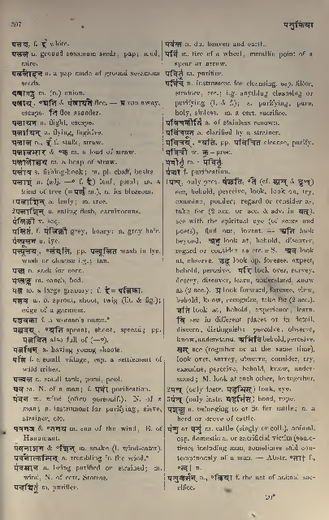
pávana ·m. wind (often personif.), N. of a man; n. instrument for purifying, sieve, strainer, etc.
Monier-Williams 1872 substantive neuter
Original text · English · substantive neuter
Pavana, am, n. the act of purifying, purification; winnowing; an instrument for purifying, sieve, strainer, &c.; water; (as), m. ‘the purifier,’ wind, air, the wind of the body; Wind personified (as regent of the Nakṣatra Svāti and of the North-west region); a N. of the number five (Ved.); a house- holder's sacred fire; N. of a son of Manu Uttama; of the author of a Gāndharva-veda; (as, am), m. n. a potter's kiln; (ī), f. a broom; N. of a river; (as, ā, am), clean, pure.
Petersburger 1855 adjective · substantive masculine · substantive neuter · Word type unspecified
Original text · German · adjective · substantive masculine · substantive neuter
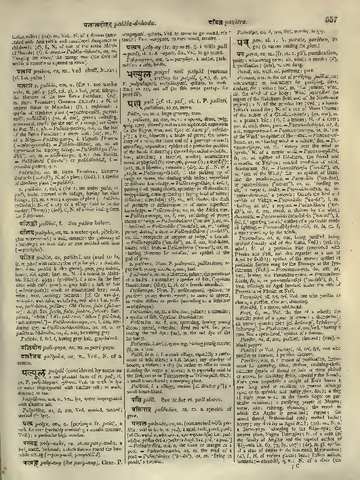
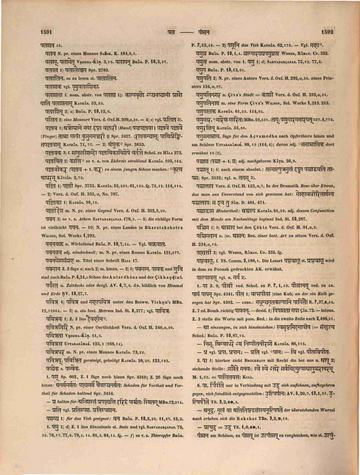
pávana (wie eben) 1〉 das Reinigen (des Getraides) AK. 3,3,24. n. H. 1017. H. 1521. m. (!) H. an. 3,389. MED. n. 84. — 2〉 n. Werkzeug zum Reinigen, Sieb, Seihe und dergl. NIR. 6,9. a̱na̱sthāḥ pū̱tāḥ pavànena śu̱ddhāḥ śucàya̱ḥ śuci̱mapì yanti lo̱kam AV. 4,34,2. syo̱nā māpa̱ḥ pavànaiḥ punantu AV. 18,3,11. asthīni pavanena saṃpūya ĀŚV. GṚHY. 4,5. Vgl. danta˚. — 3〉 m. Wind (der Reiniger), auch im medic. Begriff, AK. 1,1,1,58. TRIK. 3,3,247. H. 1106. H. an. MED. HALĀY. 1,75. N. 24,35. pavanaḥ pavatāmasmi BHAG. 10,31. MBH. 7,4740. MBH. 13,337. R. 2,41,15. R. 6,112,62. BHARTṚ. 1,39. BHARTṚ. 3,93. MEGH. 8. MEGH. 14. RAGH. 1,42. RAGH. 2,13. RAGH. 3,30. ŚĀK. 55. ŚĀK. 86. VARĀH. BṚH. S. 5,63. VARĀH. BṚH. S. 34,1. RĀJA-TAR. 2,124. tadāsya˚ Spr. 1265. niśvāsa˚ MĀRK. P. 62,16. nītimantrapavanaiḥ HIT. III, 147. SUŚR. 1,20,13. SUŚR. 1,47,2. SUŚR. 1,135,2. SUŚR. 1,152,14. pavanādhika SUŚR. 181,18. ˚prabhavā rogāḥ SUŚR. 2,323,10. die drei Winde prāṇa, apāna, samāna SUŚR. 1,128,20. Personif.: pavanasya hrade snātvā MBH. 3,6075. Regent des Nakṣatra Svāti VARĀH. BṚH. S. 98,1. statt dieses VARĀH. BṚH. S. 9,2. Regent von Nordwest VARĀH. BṚH. S. 85,76. Am Ende eines adj. comp. f. ā MBH. 7,6676. HARIV. 2663. VARĀH. BṚH. S. 46,27 (28). der Wind als Bez. der Zahl fünf VARĀH. BṚH. 1,7. — 4〉 das im Hause gepflegte heilige Feuer (āvasathyāgni) HĀRITA_bei_KULL._zu_M. 3,185. — 5〉 Töpferofen, m. TRIK. n. H. an. MED. yaḥ kumbhakārapavanopari paṅkalepastāpāya kevalamasau na tu tāpaśāntyai Spr. 117. Die hier auftretende v. l. payana erwähnt auch ŚKDR., aber als fehlerhaft; vgl. vulg. poyān. — 6〉 n. Wasser ŚABDAM._im_ŚKDR. — 7〉 m. N. pr. a〉 eines Sohnes des Manu Uttama BHĀG. P. 8,1,23. — b〉 des Verfassers eines Gāndharvaveda WEBER, Ind. Lit. 240. — 8〉 f. ī a〉 Besen H. 1015, Sch. — b〉 N. pr. eines Flusses VP. 171, N. 12. — 9〉 adj. = prayata rein ŚABDAR._im_ŚKDR.
Original text · German · substantive neuter
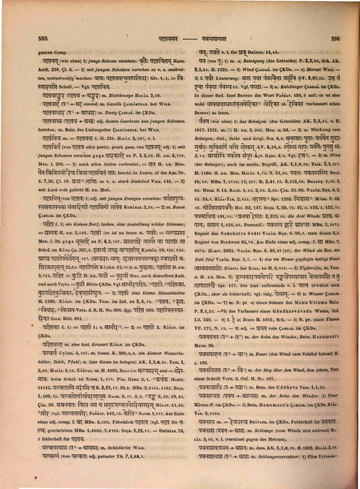
pavana n. das Blasen: vāyostiryakpavanam KAṆ. 5,2,13.
Original text · German · Word type unspecified
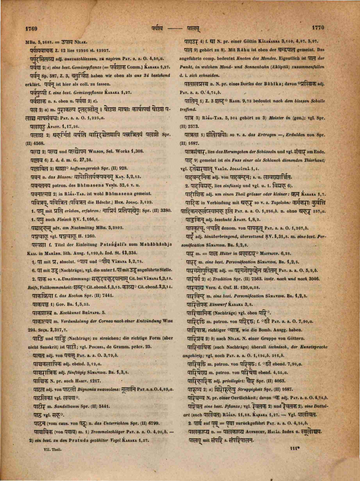
pavana 3〉 so v. a. Athem SARVADARŚANAS. 178,1. — 5〉 die richtige Form ist vielleicht pacana. — 10〉 N. pr. eines Landes in Bharatakṣetra WILSON, Sel. Works 1,293.
Böhtlingk 1879 adjective · substantive masculine · substantive neuter
Original text · German · adjective · substantive masculine · substantive neuter
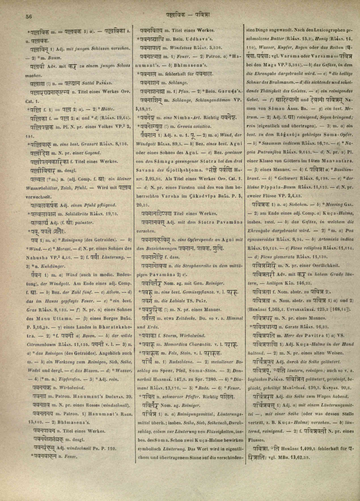
pávana — 1〉 m. — a〉 Wind (auch in medic. Bedeutung), der Windgott. Am Ende eines adj. Comp. f. ā. — b〉 Bez. der Zahl fünf. — c〉 Athem. — d〉 das im Hause gepflegte Feuer. — e〉 *ein best. Gras RĀJAN. 8,132. — f〉 N. pr. — α〉 eines Sohnes des Manu Uttama. — β〉 eines Berges BHĀG. P. 5,16,28. — γ〉 eines Landes in Bharatakṣetra. — 2〉 *f. pavanī — a〉 Besen. — b〉 der wilde Citronenbaum RĀJAN. 11,155. pacanī v. l. — 3〉 n. — a〉 *das Reinigen (des Getraides). Angeblich auch m. — b〉 ein Werkzeug zum Reinigen, Sieb, Seihe, Wedel und dergl. — c〉 das Blasen. — d〉 *Wasser. — 4〉 (*m. n.) Töpferofen. — 5〉 *Adj. rein.
Apte 1890 adjective · substantive masculine · substantive neuter
Original text · English · adjective · substantive masculine · substantive neuter
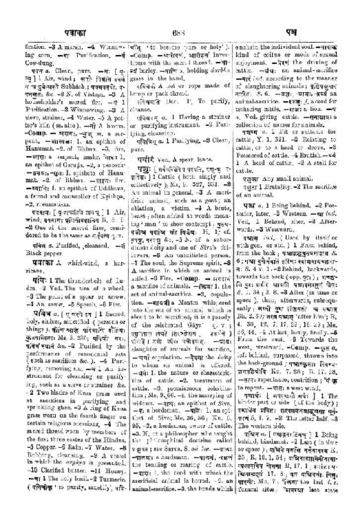
pavana a. Clean, pure. — naḥ [ pūlyu] 1 Air, wind; sarpāḥ pibaṃti pavana na ca durbalāste Subhāṣ.; pavanapadavī, pavanasutaḥ &c. 2 N. of Viṣṇu. 3 A householder's sacred fire. — naṃ 1 Purification. 2 Winnowing. 3 A sieve, strainer. 4 Water. 5 A potter's kiln (m. also). — nī A broom. Comp. — aśanaḥ, -bhuj m. a serpent. — ātmajaḥ 1 an epithet of Hanumat. 2 of Bhīma. 3 fire. — āśaḥ a serpent, snake. ˚nāśaḥ 1 an epithet of Garuḍa. 2 a peacock. — tanayaḥ, -sutaḥ 1 epithets of Hanumat. 2 of Bhīma. — vāhanaḥ fire. — vyādhiḥ 1 an epithet of Uddhava, a friend and counsellor of Kṛṣṇa. 2 rheumatism.
Cappeller 1887 substantive masculine
Original text · German · substantive masculine
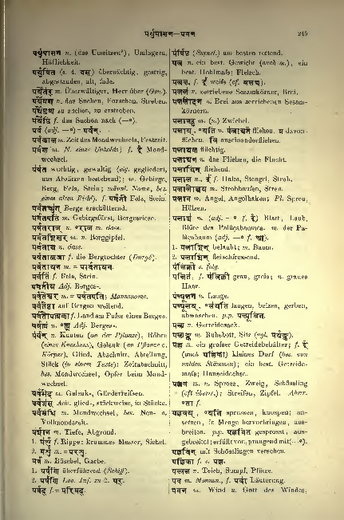
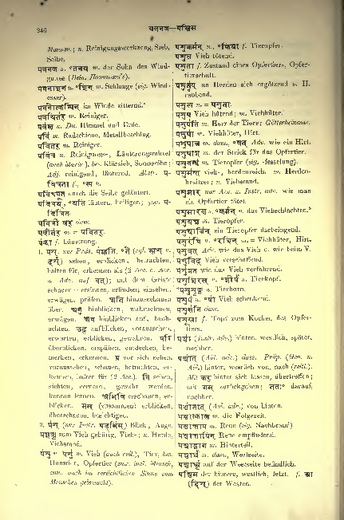
pávana m. Wind u. Gott des Windes, [Page246-1] Mannsn. n. Reinigungswerkzeug, Sieb, Seihe.
Burnouf 1866 adjective
Original text · French · adjective
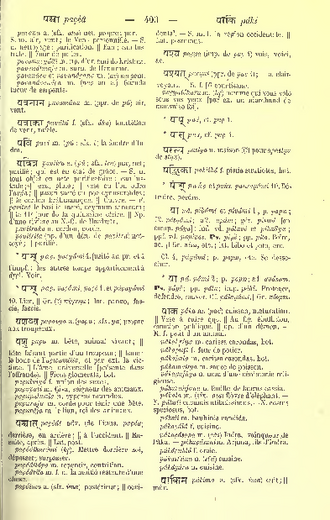
pavana a. (sfx. ana) net, propre; pur. — S. m. air, vent; le Vent personnifié. — S. n. nettoyage; purification. Eau; eau lustrale. Four de potier.
Occurrences in source texts (41)
DYS 4 occurrences
GoS 6 occurrences
GoS 34–41: Sun, Sound and Cooling 3 occurrences
Direct occurrences
HP 19 occurrences
HP 2.37-2.43: Path to Manonmanī 2 occurrences
Direct occurrences
7 more source pages
HTK 6 occurrences
HTK 10.5*1–6*1: Sūryabhedana / Sūryabheda 2 occurrences
Direct occurrences
HTK 10.6*2–9*1: Ujjāyī / Ujjāyikā and Sūryabheda 1 occurrence
Direct occurrences
-
HTK 10.7 Segment 27
SiSa 6 occurrences
Continue with AYI Free
Image source: AYI archive.