

pūrva पूर्व – früher; vorhergehend; vorangegangen
Adjektiv · Substantiv Maskulin · Substantiv Neutrum · Worttyp nicht bestimmt
Wörterbuchquellen
AYI Wörterbuch Adjektiv
früher; vorhergehend; vorangegangen
Cappeller 1891 Adjektiv
Originaltext · Englisch · Adjektiv
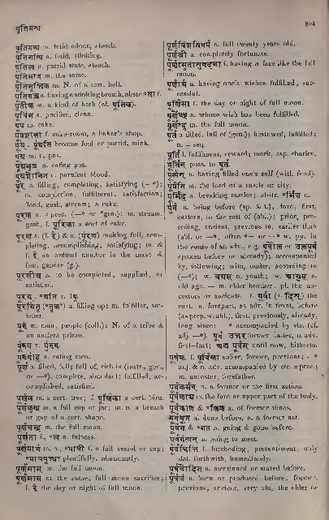
pū́rva ·a. being before (sp. & t.), fore, first, eastern, to the east of (abl.); prior, preceding, ancient, previous to, earlier than (abl. or --°, often °-- or --° w. pp. in the sense of an adv., e.g. pūrvokta or uktapūrva spoken before or already); accompanied by, following; with, under, according to (--°); w. vayas n. youth; w. āyus n. old age. --m. elder brother, pl. the ancestors or ancients. f. pūrvā (±diś) the east. n. forepart, as adv. in front, before (as prep. w. abl.), first, previously, already, long since; --° accompanied by etc. (cf. adj. --°). pūrva uttara former-latter, n. adv. first-last; adya pūrvam until now, hitherto.
Monier-Williams 1872 Worttyp nicht bestimmt
Originaltext · Englisch · Worttyp nicht bestimmt
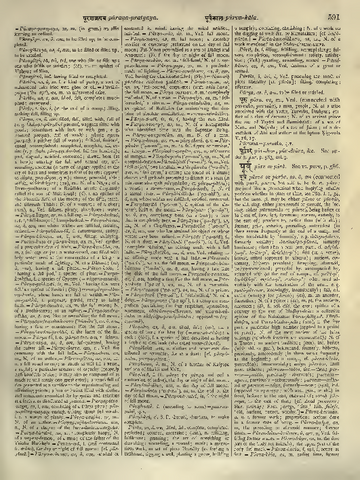
pūrva pūrva or pūrba, as, ā, am, (connected with purā, puras, but said to be fr. rt. pūrv; declined like a pronominal when implying relative position whether in place or time, see Pāṇ. I. 1, 34, but the nom. pl. may be either pūrve or pūrvās, the abl. sing. either pūrvasmāt or pūrvāt, the loc. sing. either pūrvasmin or pūrve), being before or in front of, fore, first, foremost; eastern, easterly, to the east of; previous to, earlier than (with abl.); former, prior, anterior, preceding, antecedent (in these senses frequently at the end of a comp. and then translatable by ‘formerly,’ e. g. āḍhya-pūrva, formerly wealthy; darśanīya-pūrva, formerly handsome; often after a past pass. part., cf. adṛṣ- ṭa-p˚, kṛta-p˚, dṛṣṭa-p˚); first (in a series), lowest, initial (opposed to uttara); ancient, cus- tomary, hitherto prevalent; foregoing, aforesaid, before-mentioned; preceded by, accompanied by, attended with (at the end of comps., cf. prīti-p˚, buddhi-p˚, mṛdu-p˚, smita-p˚; often used ad- verbially with the termination of the neut., e. g. mati-pūrvam, knowingly, intentionally); full, all, entire (wrongly for pūrṇa); (as), m. an ancestor, forefather; N. of a prince; (ās), m. pl. the ancients, ancestors; (ā), f., scil. diś, the east; epithet of a country to the east of Madhya-deśa; a collective epithet of the Nakṣatras Pūrva-phālgunī, Pūrvā- ṣāḍha, and Pūrva-bhadra-padā; (am), n. the fore part, a particular high number (applied to a period of years); N. of the most ancient of the Jaina writings (of which fourteen are enumerated); N. of a Tantra; an ancient tradition; (am), ind. before (with abl. or gen.), beforehand, formerly, hitherto, previously, antecedently (in these senses frequently at the beginning of a comp., cf. pūrva-kārin, pūrvokta); immemorially; adya pūrvam, until now, hitherto; pūrvam — tatas, first — then; pūr- vam — paścāt, previously — afterwards; pūrvam — upari, previously — subsequently; pūrvam — adhu- nā or pūrvam — adya, formerly — now; (eṇa), ind. (opposed to apareṇa; with acc., gen., or abl.) in front, before; to the east, eastward of; tataḥ pūr- veṇa, to the east of that; [cf. Zend panurva; Slav. prŭvüj; Russ. pervyi, ‘first;’ Hib. foirfe, ‘old, ancient, perfect, worthy.’]
Petersburger 1855 Adjektiv · Substantiv Maskulin · Substantiv Neutrum · Worttyp nicht bestimmt
Originaltext · Deutsch · Adjektiv · Substantiv Maskulin · Substantiv Neutrum
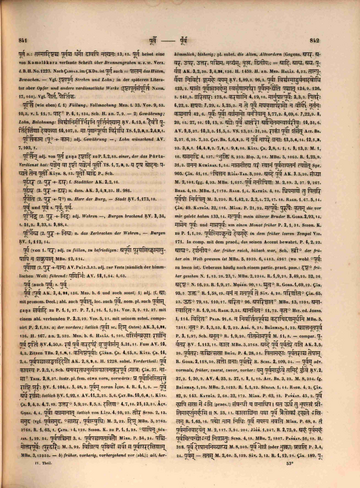
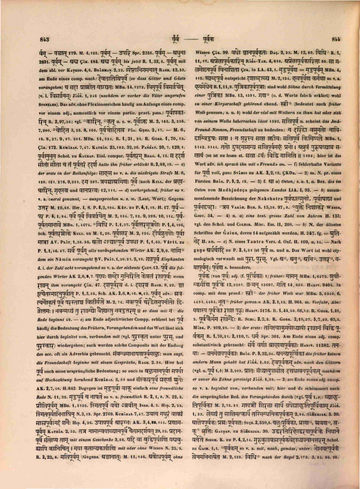
pū́rva (pūrba AK. 3,4,21,136. MED. b. 6 und auch sonst) 1〉 adj. (f. ā) mit pronom. Decl.; abl. auch pūrvāt, loc. auch pūrve, nom. pl. auch pūrvās gaṇa sarvādi zu P. 1,1,27. P. 7,1,16. P. 1,1,34. VOP. 3,9. VOP. 3,12. VOP. 3,37. mit einem abl. verbunden P. 2,3,29. VOP. 5,21. mit seinem subst. componirt P. 2,1,58. a〉 der vordere; östlich (pūrvā sc. diś Osten) AK. 3,4,21,136. H. 167. H. an. 2,532. MED. b. 6. HALĀY. 1,101. yasmìnbra̱hmā rājàni̱ pūrva̱ etì ṚV. 4,50,8. ratha̱ṃ pūrvàṃ kara̱dapàraṃ jūju̱vāṃsàm ṚV. 5,31,11. Fuss AV. 10,4,3. Zitzen TBR. 2,1,8,1. kaniṣṭhapūrvāḥ ŚĀṄKH. ŚR. 4,15,8. KĀTY. ŚR. 16,2,4. pūrvapaścājjaṅghādideśau AK. 2,8,2,8. H. 1228. subst. Vordertheil: pūrvaṃ kāyasya P. 2,2,1, Sch. anavaratadhanurjyāsphālanakrūrapūrva (gātra) ŚĀK. 37. nāsā˚ TRIK. 2,8,37. instr. pl. fem. etwa vorn, vorwärts: pra pūrvā̀bhistirate̱ rāṣṭi̱ śūràḥ ṚV. 1,104,4. ṚV. 5,48,2. pūrvam voran ĪŚOP. 4, R. 6,1,8. — pūrve̱ ardhe̱ rajàsaḥ östlich ṚV. 1,92,1. AV. 11,2,25. AV. 11,5,6. ŚAT. BR. 10,6,4,1. KĀTY. ŚR. 9,4,3. KĀTY. ŚR. 4,7,19. uttara˚ KĀTY. ŚR. 5,9,20. KĀTY. ŚR. 8,5,5. dakṣiṇa˚ KĀTY. ŚR. 4,7,10. KĀTY. ŚR. 25,13,31. ĀŚV. GṚHY. 4,4. pūrvo yajamānāt östlich von LĀTY. 4,10,25. tīra SUND. 2,12. samudra (vgl. pūrvasamudra, ˚sāgara, pūrvāmbudhi) M. 2,22. diś MBH. 5,3762. MBH. 5,3768. R. 1,65,1. ŚATR. 14,128. SIDDH. K._zu_P. 1,1,28. ˚yāyin SŪRYAS. 1,29. SŪRYAS. 1,54. pūrvapaścimā SŪRYAS. 3,4. pūrvapaścāyatāvetau MĀRK. P. 54,24. paścimottarapūrvaiḥ (puradvāraiḥ) M. 5,92. vijitya pṛthivīṃ sarvāṃ sa pūrvāparadakṣiṇām MBH. 3,15255. — b〉 früher, vorherig, vorhergehend vor (abl.); all, herkömmlich, bisherig; pl. subst. die Alten, Altvordern (Gegens. apara, avara, upara, uttara, paścima, navyaṃs, nūtna, dvitīya); = ādi, ādya, agra, pūrvaja AK. 3,2,30. AK. 3,4,21,136. H. 1459. H. an. MED. HALĀY. 4,22. tānpūrvàyā ni̱vidā̀ hūmahe va̱yam ṚV. 1,89,3. ṚV. 1,96,2. pūrvā̱ viśvàsmā̱dbhuvànādabodhi ṚV. 1,123,2. ā̱sāṃ pūrvā̀sā̱mahàsu̱ svasṝ̀ṇā̱mapàrā̱ pūrvā̀ma̱bhyèti pa̱ścāt ṚV. 124,9. ṚV. 126,5. ṚV. 141,5. jaritāraḥ ṚV. 1,175,6. karaṇāni ṚV. 4,19,10. mānùṣā̱tpūrvàḥ ṚV. 2,3,3. pi̱taràḥ ṚV. 6,22,2. ṛṣayaḥ ṚV. 7,29,4. ṚV. 5,25,2. na te̱ pūrvè madhava̱nnāpàrāso̱ na vī̱ryaṃ1̱̀ nūtàna̱ḥ kaśca̱nāpà ṚV. 5,42,6. pūrvàḥ pūrvo̱ yajàmāno̱ vanī̀yān ṚV. 5,77,2. ṚV. 6,69,6. ṚV. 7,22,9. ṚV. 8,20,15. ṚV. 8,27,10. ṚV. 10,15,2. a̱gneḥ pūrve̱ bhrātàro̱ arthàme̱tamanvāvàrīvuḥ ṚV. 10,51,6. AV. 9,5,27. AV. 10,3,3. AV. 11,5,5. VS. 13,31. VS. 31,20. rākāṃ pūrvāṃ śaṃset AIT. BR. 3,37. AIT. BR. 6,20. AIT. BR. 7,33. ŚAT. BR. 1,6,1,3. na pūrve nāpare janāḥ ŚAT. BR. 13,5,4,14. ŚAT. BR. 12,1,3,23. ŚAT. BR. 12,3,5,1. ŚAT. BR. 14,4,2,2. ŚAT. BR. 14,7,1,1. ŚAT. BR. 14,9,1,10. KĀTY. ŚR. 2,8,1. KĀTY. ŚR. 2,1,1. KĀTY. ŚR. 9,13,3. M. 1,10. asamṛddhi M. 4,137. ˚bhukti M. 8,252. HIḌ. 3,18. MBH. 5,1063. R. 1,25,9. R. 1,31,3. janana KUMĀRAS. 1,54. nāsamīkṣya paraṃ sthānaṃ pūrvamāyatanaṃ tyajet Spr. 905. ŚĀK. 41,11. ˚cintana RĀJA-TAR. 5,200. abde pūrve AK. 3,5,20. saṃdhyā M. 2,101. fgg. M. 4,93. MBH. 1,657. pūrve manīṣiṇaḥ M. 2,89. M. 3,37. M. 9,267. BHAG. 4,15. MBH. 1,7178. RAGH. 1,4. KATHĀS. 4,10. dhriyamāṇe tu pitari pūrveṣāṃ nirvapet M. 3,220. R. 1,42,2. R. 2,2,4. R. 2,73,17. R. 2,2,18. RAGH. 1,67. RAGH. 5,14. ŚĀK. 49. KATHĀS. 32,116. MĀRK. P. 21,92. matpūrvaiḥ puruṣaiḥ kṛtam die vor mir gelebt haben MĀRK. P. 133,14. matpūrvaḥ mein älterer Bruder R. GORR. 2,93,14. māsena pūrvaḥ und māsapūrvaḥ um einen Monat früher P. 2,1,31. SIDDH. K._zu_P. 1,1,30. pūrvasmiñchūnye devagṛhe in dem früher leeren Tempel VID. 171. In comp. mit dem praed., das seinen Accent bewahrt, P. 6,2,22. āḍhya˚, darśanīya˚ der früher reich, hübsch war, Sch. strī˚ der früher ein Weib gewesen ist MBH. 5,5939. MBH. 6,4483. MBH. 6,4967 (wo wohl ˚pūrvaḥ zu lesen ist). Ueberaus häufig nach einem partic. praet. pass.: dṛṣṭa˚ früher gesehen N. 1,13. N. 1,28. N. 23,7. MBH. 2,2344. R. 1,9,21. R. 3,49,25. R. 3,52,36. adṛṣṭa˚ N. 16,22. R. 1,9,27. MṚCCH. 90,11. śruta˚ R. GORR. 1,69,22. ŚĀK. 95,5. ukta˚ R. 1,58,19. vanaṃ na gatapūrvaṃ te SĀV. 4,20. pariṇīta˚ ŚĀK. 65,23. ūḍha˚ ŚĀK. 79,15. ŚĀK. 110,17. carita˚ 96. aparijñāta˚ MBH. 13,1591. anāsvādita˚ R. 1,9,36. RAGH. 3,54. ānamita˚ RAGH. 11,72. kṛta˚ HIT. ed. JOHNS. I, 114. vidita˚ PRAB. 91,6. na nivartitapūrvaśca kadācidraṇamūrdhani MBH. 5,7311. bhūta˚ P. 5,3,53. P. 6,2,22. ARJ. 8,21. BRĀHMAṆ. 1,22. ajantabhūtapūrva P. 3,1,97, Sch. abhūta˚ R. 1,9,20. pītasomapūrva M. 11,8. — compar. pūrvatara ṚV. 1,113,11. kāla MBH. 5,3768. abde pūrve pūrvatare yati AK. 3,5,20. pūrvataraḥ kaścitsakhā BHĀG. P. 4,28,51. pitāmahāḥ pūrvatarāśca teṣām R. GORR. 2,118,30. tvatto janāḥ pūrvatare R. SCHL. 2,109,34. — pūrvam adv. vormals, früher, zuerst, zuvor, vorher: yamu̱ pūrva̱māhùve̱ tami̱daṃ hùve ṚV. 2,37,2. ṚV. 1,30,9. AV. 4,35,2. AV. 4,37,1. AV. 8,1,10. AIT. BR. 3,32. M. 8,354. fg. BRĀHMAṆ. 1,20. MBH. 2,1423. R. 1,1,22. SŪRYAS. 1,44. RAGH. 4,2. ŚĀK. 82,9. ŚĀK. 82,143. KATHĀS. 2,68. KATHĀS. 32,172. MĀRK. P. 62,15. PAÑCAT. 45,2. pūrvaṃ hyapi sakhā me 'si (praes. !) saṃbandhī ca janādhipa . ata ūrdhvaṃ tu bhūyastvaṃ prītimāhartumarhasi .. N. 25,11. kālāgninā yathā pūrvaṃ trailokyaṃ dahyate 'khilam R. 1,65,16. padmo nāma nidhiḥ pūrvaṃ mayasya bhavati MĀRK. P. 68,8. taṃ pūrvamabhivādayet M. 2,117. M. 3,94. M. 3,204. YĀJÑ. 1,247. R. 2,72,9. ahaṃ pūrvamahaṃ pūrvamityanyo'nyaṃ nijaghnatuḥ SUND. 4,18. MBH. 7,1807. PAÑCAT. 51,18. H. 318. pūrvaṃ doṣānabhikhyāpya M. 8,205. pūrvaṃ bhojaṃ (oder bhuktvā) vrajati P. 3,4,24. pūrvam — tatas M. 2,60. M. 5,139. SĀV. 3,13. R. 1,12,21. ŚĀK. 189. pūrvam — paścāt ŚĀK. 179. M. 4,125. pūrvam — upari Spr. 2351. pūrvam — adhunā Spr. 2831. pūrvam — adya ŚĀK. 184. adya pūrvam bis jetzt R. 1,32,8. pūrvam mit dem abl. vor KAṬHOP. 4,6. BRĀHMAṆ. 2,22. jyeṣṭhābhigamanāt RAGH. 12,35. am Ende eines comp. nach: devatātithipūrvaṃ (so dass Götter und Gäste vorangehen) ca sadā prāśnīta vāgyataḥ MBH. 14,1272. pitṛpūrvaṃ visarjayet (v. l. visarjanam) YĀJÑ. 1,246 (nachdem er vorher die Väter angerufen STENZLER). Das adv. ohne Flexionszeichen häufig am Anfange eines comp. vor einem adj., namentlich vor einem partic. praet. pass.: pūrvāpakārin R. 2,97,25; vgl. ˚kārin, ˚kṛt u. s. w. pūrvokta M. 2,185. M. 3,256. M. 7,200. ˚codita M. 3,26. M. 8,160. pūrvacoditatva PĀR. GṚHY. 2,17. — M. 6,15. M. 8,37. M. 9,87. M. 9,281. MBH. 14,524. R. 1,31,21. R. GORR. 1,70,13. ŚĀK. 172. KUMĀRAS. 7,47. KATHĀS. 25,182. KATHĀS. 32,26. PAÑCAT. 20,7. PAÑCAT. 129,1. pūrvānubhūta Schol. zu CAURAP. Einl. compar. pūrvataram BHAG. 4,15. sa dadarśa sītāṃ sītā ca taṃ pūrvataraṃ dadarśa hatte ihn früher erblickt R. 3,48,19. — c〉 der erste in der Reihenfolge: sāhasa so v. a. die niedrigste Strafe M. 8,120. M. 8,121. M. 8,276. M. 9,281. dama M. 287. trayaścāśramiṇaḥ pūrve (nach KULL. der brahmacārin, gṛhastha und vānaprastha) M. 12,114. — d〉 vorhergehend, früher so v. a. zuerst genannt, — ausgesprochen u. s. w. (Laut, Wort); Gegens. uttara M. 10,68. HIT. I, 8. P. 8,2,104. Kār. zu P. 4,1,18. H. 17. pūrva — para P. 6,1,84. pūrvaṃ pūrvaṃ vivarjayet M. 2,184. M. 7,52. M. 9,295. M. 10,114. pūrvapūrvatamābhāve MBH. 1,4674. ˚vidhi P. 1,1,57. pūrvottarasūtrayoḥ P. 1,4,106, Sch. pūrvataraśloke KULL._zu_M. 1,20. pūrvākṣara M. 2,125. dīrghaplutayoḥ pūrvā mātrā AV. PRĀT. 1,38. AV. PRĀT. 1,56. alo 'ntyātpūrva upadhā P. 1,1,65. Vārtt. zu P. 1,1,46. P. 1,1,47. sarvaṃ pūrvam alle vorangehenden Wörter AK. 2,9,9. nāmi˚ dem ein Nāmin vorangeht ṚV. PRĀT. 1,20. ṚV. PRĀT. 1,21. ṚV. PRĀT. 2,10. gajapūrva Elephanten d. i. der Zahl acht vorangehend so v. a. der siebente ŚRUT. 13. pūrve die folgenden Wörter AK. 2,6,2,7. puṇyaḥ śabdo muniriti kevalaṃ rājapūrvaḥ wenn rājan ihm vorangeht ŚĀK. 47. daśapūrvaratha d. i. daśaratha RAGH. 8,29. jñā ityetasmādanupūrvāt P. 1,3,58, Sch. AK. 3,6,2,16. AK. 3,6,8,43 pūrvam adv.: sravatyanoṃkṛtaṃ pūrvaṃ parastācca viśīryate M. 2,74. bhavatpūrvaṃ caredbhaikṣamupanīto dvijottamaḥ . bhavanmadhyaṃ tu rājanyo vaiśyastu bhavaduttaram .. so dass mit bha˚ die Rede beginnt 49. — e〉 am Ende adjectivischer Compp. erblasst bei pūrva häufig die Bedeutung des Frühern, Vorangehenden und das Wort lässt sich hier durch begleitet von, verbunden mit (vgl. puraskṛta unter puras, und puraskāra) wiedergeben; auch werden solche Composita mit der Endung des acc. oft als Adverbia gebraucht. saṃbandhamābhāṣaṇapūrvamāhuḥ man sagt, die Freundschaft beginne mit einem Gespräche, RAGH. 2,58. Hier hat pūrva noch seine ursprüngliche Bedeutung; so auch in bahumānapūrvā saparyā auf Hochachtung beruhend KUMĀRAS. 5,31 und saṃskārapūrvaṃ grahaṇaṃ śruteḥ AK. 2,7,40. H. 842. Dagegen ist mṛdupūrvā vāk einfach eine freundliche Rede N. 11,32. mṛdupūrvaṃ ca bhāṣate so v. a. freundlich R. 2,1,8. N. 22,2. prītipūrvam MBH. 1,5135. smitapūrvaṃ vaco 'bravīt INDR. 4,5. HIḌ. 2,23. smitapūrvābhibhāṣin N. 3,19. Spr. 2769. KUMĀRAS. 7,47. uvāca madhuraṃ vākyaṃ sāntvapūrvāmadaṃ śanaiḥ HIḌ. 4,26. upāyapūrva ārambhaḥ AK. 3,4,23,142. praṇāmapūrvam KATHĀS. 2,52. tatra nāmānvayākhyānapūrvaṃ caitāmadarśayat KATHĀS. 29,32. pradānapūrvaṃ saṃtoṣya tām mit einem Geschenke KATHĀS. 3,56. yadi vā buddhipūrvāṇi yadyabuddhyāpi kānicit . mayā kṛtānyakāryāṇi mit oder ohne Wissen N. 25,9. R. 2,22,8. matipūrvam (Gegens. ajñānāt) M. 11,146. abodhapūrvam ohne Wissen ŚĀK. 99. vadho jñānapūrvakṛtaḥ DAŚ. 2,22. M. 12,89. vidhi˚ R. 1,11,17. aprekṣāpūrvakārin RĀJA-TAR. 4,610. aprekṣāpūrvakāritā 58. sā galamoṭanapūrvaṃ vināśitā ŚUK. in LA. 43,1. mṛdupūrveṇa = mṛdupūrvam MBH. 4,119. tryabdapūrva entspricht daśābdākhya M. 2,134. hayapūrveṇa karmaṇā so v. a. hayamedhena R. 1,11,9. putrikāpūrvapūtrāḥ sind wohl Söhne durch Vermittelung einer putrikā MBH. 13,1591. gaṇa˚ (u. d. Worte falsch erklärt) wohl zu einer Körperschaft gehörend ebend. strī˚ (bedeutet auch früher Weib gewesen; s. u. b) wohl der viel mit Weibern zu thun hat oder sich von seinem Weibe beherrschen lässt MBH. 13,1593. sakhipūrva n. scheint das Jmd-Freund-Nennen, Freundschaft zu bedeuten: na daridro vasumato nāvidvānviduṣaḥ sakhā . na śūrasya sakhā klīvaḥ sakhipūrvaṃ kimiṣyate MBH. 1,5142. MBH. 1,5144. tato drupadamāgamya sakhipūrvamahaṃ prabho . abruvaṃ puruṣavyāghra sakhāyaṃ (so ist zu lesen st. sakhā 'yaṃ) viddhi māmiti .. MBH. 1,5194; hier ist das Wort adv. ich sprach ihn mit «Freund» an. — f〉 fehlerhafte Variante für pūrṇa voll, ganz SVĀMIN_zu_AK. 3,2,15. ŚKDR. — 2〉 m. N. pr. eines Fürsten BHĀG. P. 9,2,19. — 3〉 f. ā a〉 Osten; s. u. 1,a. Bez. des im Osten von Madhyadeśa gelegenen Landes LIA. I, 93. — b〉 zusammenfassende Bezeichnung der Nakṣatra pūrvaphālgunī, pūrvāṣāḍhā und pūrvabhadrapadāḥ ˚traya VARĀH. BṚH. S. 15,28. VARĀH. BṚH. S. 97,8. ˚yukte niśākare WEBER, JYOT. 34. — 4〉 n. a〉 eine best. grosse Zahl von Jahren H. 133; vgl. den Schol. und COLEBR. Misc. Ess. II, 208. — b〉 N. der ältesten Schriften der Jaina, deren 14 aufgezählt werden, H. 247. fg. = śrutibheda H. an. — c〉 N. eines Tantra Verz. d. Oxf. H. 109,a,14. — Nach gaṇa ardharcādi zu P. 2,4,31 ist pūrva m. und n. Das Wort ist wohl etymologisch verwandt mit purā, puras. Vgl. a˚, anu˚, abhi˚, uttara˚, yathāpūrvam; pūrveṇa s. besonders.
Originaltext · Deutsch · Worttyp nicht bestimmt
pūrva 1〉e〉 Sp. 843, Z. 3 v. u. vgl. janaughaṃ vipramukhyānāṃ vittapūrvaṃ (reich beschenkt) visṛjya R. 7,99,5. Sp. 844, Z. 5. fgg. NĪLAK._zu_MBH. 13,1591. fgg.: asyāmutpannaḥ putro madīya iti niyamena yā dīyate tasyāṃ ca yo jātaḥ sa putrikāpūrvaputraḥ; gaṇapūrvā grāmaṇyaḥ (vgl. oben u. gaṇapūrva); strīpūrvāḥ strījitāḥ strīpaṇyopajīvino vā. Z. 9. fg. NĪLAK.: pūrvaṃ sakhā iti sakhipūrvaṃ jīrṇaṃ sakhyam. — 4〉b〉 vgl. WILSON, Sel. Works 1,285. WILSON, Sel. Works 1,303.
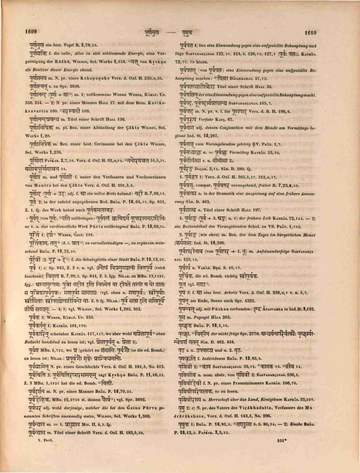
Böhtlingk 1879 Adjektiv · Substantiv Maskulin · Substantiv Neutrum
Originaltext · Deutsch · Adjektiv · Substantiv Maskulin · Substantiv Neutrum
pū́rva — 1〉 Adj. (f. ā) — a〉 der vordere, voranseiend, — stehend. — b〉 östlich, — von (Abl.) — c〉 früher, vorherig, vorangegangen, vorhergehend vor (Abl. oder im Comp. vorangehend), alt, herkömmlich, bisherig. *māsena pūrvaḥ oder *māsapūrva um einen Monat früher, strī˚ früher Weib gewesen; besonders beliebt ist diese Stellung des Wortes nach einem Partic. praet. pass. (dṛṣṭa˚ früh gesehen). pū́rvatara steigernd und auch = pūrva. — d〉 der erste in der Reihenfolge, vorangehend. dama m. so v. a. die niedrigste Strafe, pūrve vayasi in der Jugend Chr. 179,1 gajapūrva Elephanten-. d. i. der Zahl acht vorangehend, der siebente. — e〉 vorangehend, früher so v. a. vorher erwähnt, zuerst genannt, — aufgeführt, — ausgesprochen, aufgeführt vor (Abl. AK. 2,6,2,7) purvatara in derselben Bed. — f〉 *fehlerhafte Variante für purṇa voll, ganz. — 2〉 Adv. pū́rvam — a〉 voran. — b〉 vormals, ehemals, früher (auch mit Praes. statt Praet.); zuerst, zuvor, vorher. adyapūrvam bis jetzt. Mit Abl. vor (zeitlich). Ohne Flexionszeichen häufig im Comp. vor einem Adj. insbes. [Page4-112-b] vor einem Partic. praet. pass. pūrvataram früher. — c〉 vorn, am Anfange einer Rede. — 3〉 am Ende eines adj. Comp. (f. ā) — als Vorangehendes habend, so v. a. folgend auf ˚pūrvam Adv. mit Vorangehung von —, so dass — vorangeht. Häufig ist die Bedeutung des Früheren, Vorangehenden so erblasst, dass das Adj. durch begleitet von, verbunden mit, das Adv. (st. ˚pūrvam auch ˚pūrveṇa) durch mit unter, gemäss (bei einer vorangehenden Negation durch ohne) wiedergegeben werden kann. — 4〉 m. — a〉 Pl. die Alten, Altvordern, Vorfahren. Auch pūrvatara (pitāmahāḥ pūrvatarāśca teṣām) in derselben Bed. — b〉 ein älterer Bruder. — c〉 N. pr. eines Fürsten. — 5〉 f. pūrvā — a〉 Osten. — b〉 Bez. der mit pūrva Zusammengesetzten Mondhäuser. — 6〉 n. — a〉 Vordertheil. — b〉 *eine best. grosse Zahl von Jahren. — c〉 Pl. Bez. der 14 ältesten Schriften der Jaina. — d〉 Titel eines Tantra.
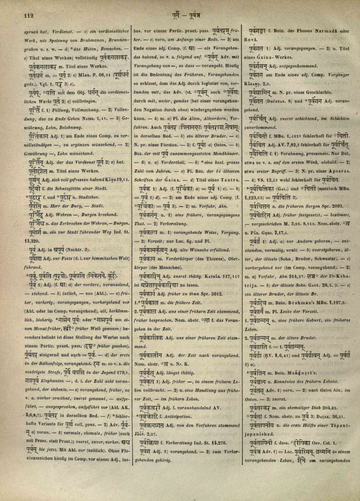
Apte 1890 Adjektiv · Substantiv Maskulin · Substantiv Neutrum
Originaltext · Englisch · Adjektiv · Substantiv Maskulin · Substantiv Neutrum
pūrva a. (Declined like a pronoun when it implies relative position in time or space, but optionally so in nom. pl.; and abl. and loc. sing.) 1 Being in front of, first, foremost. 2 Eastern, easterly, to the east of; grāmātparvataḥ pūrvaḥ Sk. 3 Previous to, earlier than. 4 Old, ancient; pūrvasūribhiḥ R. 1. 4; idaṃ kavibhyaḥ pūrvebhyo namovākaṃ praśāsmahe U. 1. 1. 5 Former, previous, interior, prior, antecedent (opp. uttara); in this sense often at the end of comp. and translated by ‘formerly’ or ‘before’; śrutapūrva &c. 6 Aforesaid, before-mentioned. 7 Initial. 8 Established, customary, of long standing. 9 Early, prime. pūrve vayasi Pt. 1. 165 ‘in early age or prime of life.’ 10 (At the end of comp.) Preceded by, accompanied by, attended with; saṃbaṃdhamābhāṣaṇapūrvamāhuḥ R. 2. 58; puṇyaḥ śabdo muniriti muhuḥ kevalaṃ rājapūrvaḥ Ś. 2. 14; tānsmitapūrvamāha Ku. 7. 47; bahumānapūrvayā Ku. 5. 31; daśapūrvarathaṃ yamākhyayā daśakaṃṭhāriguruṃ vidurbudhāḥ R. 8. 29; so matipūrvaṃ Ms. 11. 147 ‘intentionally’, ‘knowingly’; Ms. 12. 89; abodhapūrvaṃ ‘unconsciously’, Ś. 5. 2 &c. — rvaḥ An ancestor, a forefather; pūrvaiḥ kilāyaṃ parivardhito naḥ R. 13. 3; payaḥ pūrvaiḥ saniśvāsaiḥ kavoṣyamupabhujyate R. 1. 67; R. 5. 14; anukāriṇi pūrveṣā yuktarūpamidaṃ tvāyi Ś. 2. 16. — rvaṃ The forepart; anavaratadhanurjyāsphālanakrūrapūrvaṃ (gātraṃ) Ś. 2. 4. — rvā 1 The east 2 N. of a country to the east of Madhyadeśa. — rvaṃ ind. 1 Before (with abl.); māsātpūrvaṃ. 2 Formerly, previously, at first, antecedently, before-hand; taṃ pūrvamabhivādayet Ms. 2. 117; Ms. 3. 94; Ms. 8. 205; R. 12. 35; praṇipātapūrvaṃ K.; bhūtapūrvakharālayaṃ U. 2. 17 ‘which formerly was the abode’, &c.; samayapūrvaṃ Ś. 5 ‘after a formal agree ment.’ 3 Immemorially. (pūrveṇa ‘in front, before’, to the east of’, with gen. or acc.); adya pūrvaṃ ‘tillnow’, hitherto’; pūrvaṃḥ -tataḥ -paścāta ([Page 0716-c]) upari ‘first-then, first-afterwards’, ‘previously, subsequently’, pūrvaṃadhutā or adya ‘formerly-now.’ Comp. — agniḥ the sacred fire kept in the house (āvasathā). — acalaḥ, -adriḥ the eastern mountain behind which the sun and moon are supposed to rise. — adhikārin m. the first occupant, a prior owner. — aṃtaḥ the end of a preceding word. — apara a. 1 eastern and western. katamo'yaṃ pūrvāparasamudrāvagāḍhaḥsānumānālokyata Ś. 7; pūrvāparau toyanidhī vagāhya Ku. 1. 1. 2 first and last. 3 prior and subsequent, preceding and following. 4 connected with another. — (raṃ) 1 what is before and behind. 2 connection. 3 the proof and the thing to be proved. ˚virodhaḥ inconsistency, incongruity. — abhimukha a. turned towards or facing the east. — abhyāsaḥ former practice or experience. — aṃbudhiḥ the eastern ocean. — arjita a. attained by former works. — (taṃ) ancestral property. — ardhaḥ -rdhaṃ 1 the first half; dinasya pūrvārdhaparārdhabhinnā chāyeva naitrī khalasajjanānāṃ Bh. 2. 60; samāptaṃ pūrva rdhaṃ &c. 2 the upper part (of the body); śakuṃtalā pūrvārdhena śayanādutthāya Ś. 3; R. 16. 6. 3 the first half of a hemistich. — ahṇa; the earlier part of the day, forenoon, Ms. 4. 96; Ms. 4. 152. (pūrvāhṇatana, pūrvāhṇikaḥ pūrvāhṇatana a. relating to the forenoon). — āvedakaḥ a plaintiff. — āṣāḍhā N. of the 20th lunar mansion consisting of two stars. — itara a, western. — ukta, -udita a. beforementioned, aforesaid. — uttara a. northeastern. — (rā) the northeast. ( — re dual) the preceding and following, antecedent and subsequent. — karman n. 1 a former act or work. 2 the first thing to be done, a prior work. 3 actions done in a former life. 4 preparations, preliminary arrangements. — kalpaḥ former times. — kāyaḥ 1 the forepart of the body of animals; paścārdhena praviṣṭaḥ śarapatanabhayādbhūyasā pūrvakāyaṃ Ś. 1. 7. 2 the upper part of the body of men; spṛśan kareṇānatapūrvakāyaṃ R. 5. 32; paryaṃkabaṃdhasthirapūrvakāyaṃ Ku. 3. 45. — kāla a. belonging to ancient times. — (laḥ) former or ancient times. — kālika, -kālīna a. ancient. — kāṣṭhā the ([Page 0717-a]) east, eastern quarter. — kṛta a. previously done. — (taṃ) an act done in a former life. — koṭiḥ f. the starting point of a debate, the first statement or pūrvapakṣa q. v. — gaṃgā N. of the river Narmadā. — codita a. 1 aforesaid, above-mentioned. 2 previously stated or advanced (as an objection). — ja a. 1 born or produced before or formerly, first-produced, firstborn. 2 ancient, old. 3 eastern. — (jaḥ) 1 an elder brother; Śi. 6. 44; R. 15. 36. 2 the son of the elder wife. 3 an ancestor, a forefather: sa pūrvajānāṃ kapilena roṣāt R. 16. 34. 4 (pl.) the progenitors of mankind. 5 the Manes living in the world of the moon. — (jā) an elder sister. — janman n. a former birth. ( — m.) an elder brother; R. 14. 44; R. 15. 95. — jātiḥ f. a former birth. — jñānaṃ knowledge of a former life. — dakṣiṇa a. south-eastern. — (ṇā) the south-east. — dikpatiḥ Indra, the regent of the east. — dina the forenoon. — diś f. the east. — diśya a. situated towards the east, eastern. — diṣṭaṃ the award of destiny. — devaḥ 1 an ancient deity. 2 a demon or Asura. 3 a progenitor (pitṛ). 4 (dual) an epithet of Nara-Nārāyaṇa. — devatā a progenitor (pitṛ) of gods or of men: akrodhanāḥ śaucaparāḥ satataṃ brahmacāriṇaḥ . nyastaśastrā mahābhāgāḥ pitaraḥ pūrvadevatāḥ ... — deśaḥ the eastern country, or the eastern part of India. — nipātaḥ the irregular priority of a word in a compound; cf. paranipāta — pakṣaḥ 1 the forepart or side. 2 the first half of a lunar month. 3 the first part of an argument, the prima facie argument or view of a question. 4 the first objection to an argument. 5 the statement of the plaintiff. 6 a suit at law. 7 an assertion, a proposition. ˚pādaḥ the plaint, the first stage of a legal proceeding. — padaṃ the first member of a compound or sentence. — parvataḥ the eastern mountain behind which the sun is supposed to rise. — pāṃcālaka a. belonging to the eastern Pañcālas. — pāṇinīyāḥ (m. pl.) the disciples of Pāṇini living in the east. — pālin m. an epithet of Indra. — pitāmahaḥ a ([Page 0717-b]) forefather, an ancestor. — puruṣaḥ 1 an epithet of Brahmā. 2 any one of the first three ancestors, beginning with the father (pitṛ, pitāmaha, and prapitāmaha); Pt. 1. 89. 3 an ancestor in general. — pūrva a. each preceding one. — (rvāḥ) m. pl. forefathers. — phalgunī the eleventh lunar mansion containing two stars ˚bhavaḥ an epithet of the planet Jupiter. — bhāgaḥ 1 the forepart. 2 the upper part. — bhā (bha) drapadā the twenty fifth lunar mansion containing two stars. — bhāvaḥ 1 priority. 2 prior or antecedent existence; yena sahaiva yasya yaṃ prati pūvabhāvo'vagamyate Tarka K. 3 (Rhet.) disclosing an inten tion. — bhāṣin a. willing to speak first; hence polite, courteous. — bhuktiḥ f. prior occupation or possession. — bhūta a. preceding, previous. — mīmāṃsā ‘the prior or first Mīmāmsā’, an inquiry into the first or ritual portion of the Veda, as opposed to the uttaramīmāṃsā or vedāṃta; see mīmāṃsā. — raṃgaḥ the commencement or prelude of a drama, the prologue; yannāṭyavastunaḥ pūrvaṃ raṃgavighnopaśāṃtaye . kuśīlavāḥ prakurvaṃti pūrvaraṃgaḥ sa ucyate .. D. R.; pūrvaragaṃ vidhāyaiva sūtradhāro nivartate S. D. 283; pūrvaraṃgaḥ prasaṃgāya nāṭakīyasya vastunaḥ Śi. 2. 8 (see Malli. thereon). — rāgaḥ the dawning or incipient love, love between two persons which springs (from some previous cause) before their meeting; śravaṇāddarśanādvāpi mithaḥ saṃrūḍharāgayoḥ . daśāviśeṣo'yo prāptau pūrvarāga sa ucyate ... S. D. 214. — rātraḥ the first part of the night. — rūpaṃ 1 indication of an approaching change. 2 a symptom of occurring disease. 3 the first of two concurrent vowels or consonants that is retained. 4 (in Rhet.) a figure of speech which consists in describing anything as suddenly resuming its former state. — lakṣaṇaṃ a symptom of coming sickness. — vayas a. young. ( — n.) youth. — vartin a. existing before, prior, previous. — vādaḥ the first plea or commencement of an action at law. — vādin m. the complainant or plaintiff. — vṛttaṃ 1 a former event; R. 11. 10. 2 previous conduct. — vairin a. one who first commences hostilities, an aggressor. — śārada a. relating to the first half ([Page 0717-c]) of autumn. — śailaḥ see pūrvaparvata. — sakthaṃ the upper part of the thigh. — saṃdhyā daybreak, dawn; Śi. 11. 40. — sara a. going in front. — sāgaraḥ the eastern ocean; R. 4. 32. — sāhasaḥ the first or heaviest of the three fines. — sthitiḥ f. former or first state.
Cappeller 1887 Worttyp nicht bestimmt
Originaltext · Deutsch · Worttyp nicht bestimmt
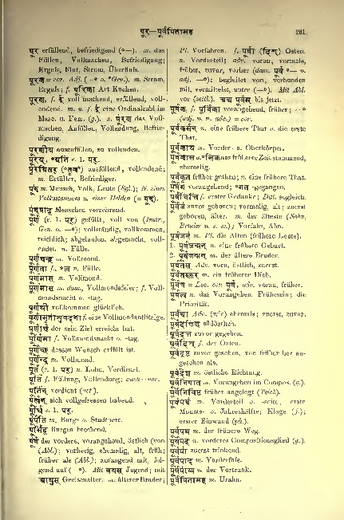
pūŕva der vordere, vorangehend, östlich (von (Abl.); vorherig, ehemalig, alt, früh; früher als (Abl.); anfangend mit, folgend auf (—˚). Mit vayas Jugend; mit āyus Greisenalter. m. älterer Bruder; [Page261-2] Pl. Vorfahren. f. pūrvā (diś) Osten. n. Vorderteil; adv. voran, vormals, früher, zuvor, vorher (dass. pūrva ˚— u. adj. —˚); begleitet von, verbunden mit, vermittelst, unter (—˚). Mit Abl. vor (zeitl.) adya pūrvam bis jetzt.
Burnouf 1866 Adjektiv
Originaltext · Französisch · Adjektiv
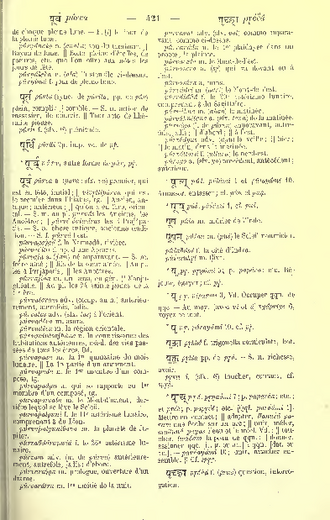
pūrva pūrva a. (para; sfx. va) premier, qui est en tête, initial; vivṛttipūrva qui est le premier dans l'hiatus, tg. Ancien, antique; antérieur; qu'on a en face, oriental. — S. m. au pl. pūrvās les Anciens, les Ancêtres; pūrve catvāras les 4 Prajāpatis. — S. n. chose antique, ancienne tradition. — S. f. pūrvā l'est. pūrvagaṅgā f. la Narmadā, rivière. pūrvacitti f. np. d'une Apsaras. pūrvaja a. (jan) né auparavant. — S. m. frère aîné; fils de la sœur aînée. Au pl. les 4 Prajāpatis; les Ancêtres. pūrvajina m. un jaina, en gén. Mañjughoṣa. Au pl. les 24 saints jainas de la 1ʳᵉ ère. pūrvataram adv. (comp. au n.) antérieurement. antérieurement, autrefois, jadis. pūrvatas adv. (sfx. tas) à l'orient. pūrvadeva m. asura. pūrvadeśa m. la région orientale. pūrvanivāsajñāna n. la connaissance des habitations antérieures, c-à-d. des vies passées de tous les êtres, Bd. pūrvapakṣa m. la 1ʳᵉ quinzaine du mois lunaire. La 1ʳᵉ partie d'un argument. pūrvapada n. le 1ᵉʳ membre d'un composé, tg. pūrvapadya a. qui se rapporte au 1ᵉʳ membre d'un composé, tg. pūrvaparvata m. le Mont-d'orient, derrière lequel se lève le Soleil. pūrvaphalgunī f. le 11ᵉ astérisme lunaire, comprenant δ du Lion. pūrvaphalgunībhava m. la planète de Jupiter. pūrvabhādrapadā f. le 26ᵉ astérisme lunaire. pūrvam adv. (n. de pūrva) antérieurement, autrefois, jadis; d'abord. pūrvaraṅga m. prologue, ouverture d'un drame. pūrvarātra m. 1ʳᵉ moitié de la nuit. [Page421-2] pūrvavat adv. (sfx. vat) comme auparavant, comme ci-dessus. pūrvavāda n. le 1ᵉʳ plaidoyer dans un procès; la plainte. pūrvaśaila m. le Mont-de-l'est. pūrvasara a. (sṛ) qui va devant ou à l'est. pūrvasāra a. mms. pūrvādri m. (adri) le Mont-de-l'est. pūrvāṣādhā f. le 20ᵉ astérisme lunaire, comprenant δ du Sagittaire. pūrvāhna m. (ahan) la matinée. pūrvāhnetana a. (sfx. tana) de la matinée. pūrveṇa (i. de pūrva) auparavant, autrefois, jadis; d'abord; à l'est. pūrvedyus adv. (dyu) la veille; hier; le matin, dans la matinée. pūrvottarā f. (uttara) le nord-est. pūrvya a. (sfx. ya) précédent, antécédent; antérieur.
Abgeleitete Wörter
Quelltextfundstellen (31)
AsS1 1 Fundstelle
DYS 6 Fundstellen
GoS 4 Fundstellen
HP 2 Fundstellen
HTK 1 Fundstelle
PYS 6 Fundstellen
SiSa 9 Fundstellen
SiSa 1.93-1.99: Karmische Verkörperung 2 Fundstellen
Direkt belegt
1 weitere Quelltextseite
SVU 1 Fundstelle
VBT 1 Fundstelle
Mit AYI Free weitermachen
Bildquelle: AYI Archiv.