

artha अर्थ – purpose; object; thing; meaning; goal
substantive masculine · substantive neuter · Word type unspecified
Dictionary sources
AYI dictionary substantive masculine · substantive neuter
substantive masculine
purpose; object; thing; meaning; goal
substantive neuter
meaning; purpose; object
Cappeller 1891 substantive masculine · substantive neuter
Original text · English · substantive masculine · substantive neuter
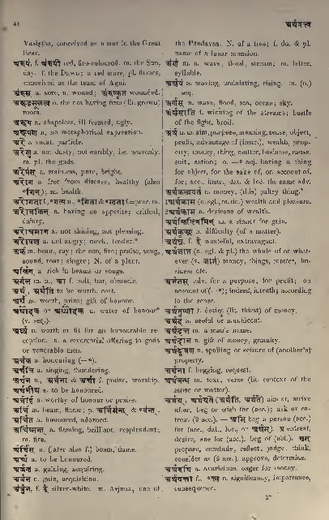
ártha ·n. m. aim, purpose, meaning, sense, object, profit, advantage of (instr.), wealth, property, money, thing, matter, business, cause, suit, action; o. --° adj. having a thing for object, for the sake of, on account of, for; acc., instr., dat. & loc. the same adv.
Monier-Williams 1872 substantive masculine · substantive neuter
Original text · English · substantive masculine · substantive neuter
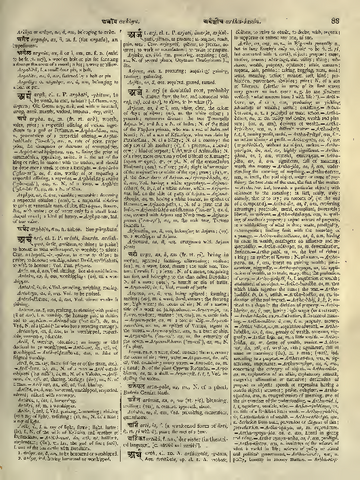
Artha, as, am, m. n., in Ṛg-veda generally n., but in later Sanskrit only m. (said to be fr. rt. ṛ, but connected with rt. arth), object; purpose; cause, motive, reason; advantage, use, utility; thing; sub- stance, wealth, property, opulence; affair, concern; request, suit, petition; asking, begging, want, need; sense, meaning, notion; manner, sort, kind; pro- hibition, prevention, abolition; price; N. of a son of Dharma. (Artha in some of its first senses may govern an inst. case; e. g. ko me jīvitena arthaḥ, ‘what concern have I with life?’).
Petersburger 1855 substantive masculine · Word type unspecified
Original text · German · substantive masculine
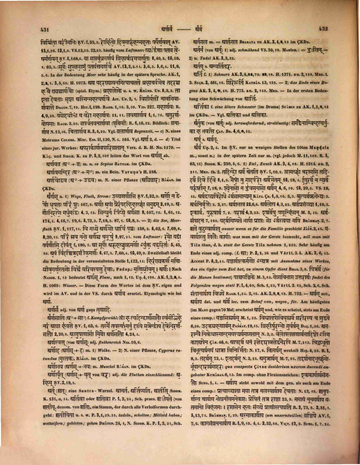
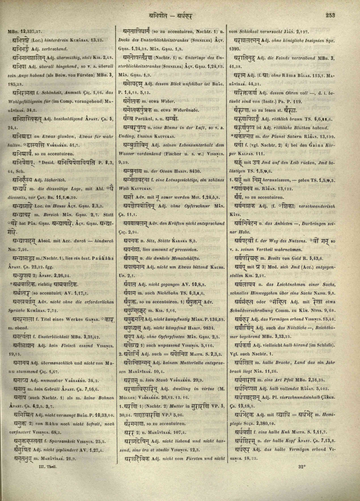
ártha Uṇ. 2,4. Im ṚV. nur an wenigen Stellen des 10ten Maṇḍala m., sonst n.; in der spätern Zeit nur m. (vgl. jedoch M. 11,189. R. 5,63,15) SIDDH. K. 250,b,6. 1〉 Ziel, Zweck AK. 3,4,88. H. 1514. H. an. 2,211. MED. th. 2. tadindro̱ arthàṃ cetati ṚV. 1,10,2. tvāmacchā̀ carāmasi̱ tadidarthàṃ di̱ve dìve ṚV. 9,1,5. maiṣā̱ṃ nu gā̱dapàro̱ arthàme̱tam ṚV. 10,18,4. ī̱yurartha̱ṃ na nya̱rthaṃ parùṣṇīm ṚV. 7,18,9. śye̱nāso̱ na dùvasa̱nāso̱ arthàm ṚV. 4,6,10. ṚV. 10,29,5. VS. 18,15. arthadravyavirodhe 'rthasāmānyam KĀTY. ŚR. 1,4,16. KĀTY. ŚR. 1,5,5. śrutyarthakramebhyaḥ 3. arthanirvṛtteḥ KĀTY. ŚR. 2. KĀTY. ŚR. 3,27. arthābhāva KĀTY. ŚR. 22,6,6. arthalopa KĀTY. ŚR. 4,3,22. arthaprasaṃkhyā KĀTY. ŚR. 1,10,3. ekārtha, puruṣārtha KĀTY. ŚR. 7,2. parārtha KĀTY. ŚR. 4,3,23. eṣvartheṣu paśūnhiṃsan M. 5,42. arthasaṃpādana M. 7,168. yadarthamiṣyate bhāryā prāptaḥ so 'rthastvayā mayi BRĀHMAṆ. 2,7. ṛte kuṭumbārthāt ausser wenn es für die Familie geschieht YĀJÑ. 2,46. yavārthāstu tilaiḥ kāryāḥ was man mit der Gerste bezweckt, soll man mit Tila thun, d. h. statt der Gerste Tila nehmen YĀJÑ. 1,233. Sehr häufig am Ende eines adj. comp. (f. ā) P. 2,1,36 und Vārtt. 3. 4. AK. 3,6,43. Accent P. 6,2,44. yajñārthātkarmaṇo 'nyatra mit Ausnahme eines Werkes, das ein Opfer zum Ziel hat, zu einem Opfer dient BHAG. 3,9. pitrarthe (für die Manen bestimmt) pāñcayajñike M. 3,83. yogavibhāga uttarārthaḥ findet des Folgenden wegen statt P. 1,4,60, Sch. P. 1,23, Vārtt. P. 1, 2,62, Sch. P. 1,2,6, Sch. saṃtānārthāya vidhaye RAGH. 1,34. RAGH. 2,16. AK. 2,8,2,19. H. 752. — artham acc., arthāya dat. und arthe loc. zum Behuf von, wegen, für. Am häufigsten (im MANU gegen 70 Mal) erscheint artham und, wie es scheint, stets am Ende eines comp.: yajñasiddhyartham M. 1,23. vidyātapovivṛddhyarthaṃ śarīrasya ca śuddhaye M. 6,30. udakagrahaṇārtham PAÑCAT. 19,15. jihīrṣurambho gurvartham DAŚ. 1,36. amarānvai nibodhāsmāndamayantyarthamāgatān N. 3,3. velopalakṣaṇārthamādiṣṭo 'smi kāśyapena ŚĀK. 46,6. āpadarthaṃ dhanaṃ rakṣeddārānrakṣeddhanairapi M. 7,213. cihnabhūto vibhūtyarthamayaṃ dhātrā vinirmitaḥ N. 17,6. kimartham weshalb HIḌ. 4,28. R. 1,8,2. tadartham R. 1,73,4. etadartham N. 3,25. amutrārtham M. 7,95. taddarśanādabhūcchaṃbhorbhūyāndārārthamādaraḥ qua conspecta Śivae desiderium uxorem ducendi augebatur KUMĀRAS. 6,13. Im comp. ohne Flexionszeichen: ekakāryārthasaṃgatau SUND. 1,4. — arthāya steht sowohl mit dem gen. als auch am Ende eines comp.: pratyākhyātā mayā tatra nalasyārthāya devatāḥ N. 13,19. ṛtuparṇasya cārthāya bhojanīyamanekaśaḥ preṣitaṃ tatra rājñā N. 23,9. mamāyaṃ nūnamarthāya yatamāno vihaṃgamaḥ . rākṣasena hataḥ saṃkhye prāṇāṃstyajati R. 3,73,2. R. 2,51,1. R. 5,13,71. BRĀHMAṆ. 1,29. a̱smākārthā̀ya (um unserntwillen) jajñiṣe AV. 1,7,6. kāmasaṃjananārthāya R. 1,9,19. R. 1,4,4. R. 2,52,88. VIŚV. 12,9. SUND. 1,7. SUND. 1,24. eka eva hitārthāya — bahavo 'tra vipattaye PAÑCAT. III, 77. PAÑCAT. III,IV, 19. asmadarthāya R. 3,73,32. — arthe gerade so verbunden: gobrāhmaṇasya caivārthe M. 5,95. M. 7,14. BHAG. 1,33. BRĀHMAṆ. 1,27. PAÑCAT. 220,19. HIT. I, 62. ŚĀK. 88. rāmalakṣmaṇayorarthe tvatsute varaye R. 1,70,44. R. 1,72,6. etāstisrastu bhāryārthe nopayacchettu buddhimān nehme nicht zur Frau M. 11,172. vikrīṇīṣe sutaṃ yadi paśorarthe (als Opferthier) VIŚV. 11,13. kuṭumbārthe M. 8,166. M. 8,167. M. 8,169. M. 10,62. M. 11,79. BHAG. 1,9. DRAUP. 1,4. N. 1,6. N. 4,16. N. 12,20. N. 19,4. R. 3,73,35. PAÑCAT. I, 230. HIT. I, 38. VID. 272. jananyā rākṣasendro 'dya mokṣārthe (um Befreiung) tava yācitaḥ R. 6,10,27. Nach VOP. 5,36 haben arthena (mit dem instr.) und arthasya (mit dem gen.) dieselbe Bedeutung. Vgl. arthatas. — 2〉 Grund, Veranlassung, Ursache H. an. 2,211. MED. th. 2. ato 'rthāt aus diesem Grunde M. 2,213. kenacidarthena aus irgend einer Veranlassung N. 15,13. aluptaśca muneḥ kriyārthaḥ Mittel zum Opfer RAGH. 2,55. — 3〉 Vortheil, Nutzen: arthānarthau M. 8,24. kṣetriṇāmarthaḥ M. 9,52. M. 9,51. yāvānartha udapāne sarvataḥ saṃplutodake BHAG. 2,46. parārtha RAGH. 1,29. Häufig in Verbindung mit kāma Begierde und dharma Tugend. Diese drei Motive der Handlungen bilden den trivarga AK. 2,7,57. H. 1382. M. 12,38. BRĀHMAṆ. 1,16. dharmakāmārthān M. 7,151. M. 7,26. R. 1,5,4. kāmārthau M. 2,224. R. 1,7,12. = arthakāmau P. 2,2,34, Vārtt. 8 (vgl. gaṇa rājadantādi). M. 4,176. KUMĀRAS. 5,38. arthakāmeṣvasaktānām M. 2,13. dharmāvāptiṃ ca vipulāmarthakāmaṃ ca kevalam R. 2,86,6. dharmārthau M. 2,112. M. 2,224. M. 4,92. M. 8,74. = arthadharmau P. 2,2,34, Vārtt. 8 (vgl. gaṇa rājadantādi). M. 7,46. Dazu gesellt sich bisweilen noch mokṣa die letzte Befreiung AK. 2,7,57. H. 1382. HIT. Pr. 25. HIT. Pr. I, 37. Bei einem Glückwunsch (āśiṣi) mit dem dat. oder gen. P. 2,3,73. artho devadattāya oder devadattasya Sch. — 4〉 Sache, Gegenstand, Ding, Object AK. 3,4,88. TRIK. 3,3,195. H. 1384, Sch. H. an. 2,211. MED. th. 2. adha̱ cyavā̀na̱ uttàvī̱tyarthàm vermag Etwas ṚV. 10,59,1. na nirbaddhā upasargā arthānnirāhuḥ NIR. 1,3. NIR. 1,11. NIR. 1,15. NIR. 1,16. NIR. 1,19. sa na manyetāgantūnivārthāndevatānām N. 7,4. indriyebhyaḥ parā hyarthā arthebhyaḥ paraṃ manaḥ KAṬHOP. 3,10. ĪŚOP. 8. na — sūkṣmamapyarthamutsṛjet M. 8,170. arthaṃ bhikṣitvā M. 11,25. M. 11,42. M. 8,180. M. 8,187. artho hi kanyā parakīya eva ŚĀK. 97. sukhārtheṣu M. 6,26. indriyārtheṣu M. 4,16. M. 11,44. BHAG. 2,58. R. 1,9,4. abhīpsitānāmarthānām M. 7,204. M. 8,53. ŚĀK. 61,17. KUMĀRAS. 7,71. tamevārtham (dasselbe) abhāṣateva RAGH. 2,51. saṃgītārtha musikalischer Apparat MEGH. 57. Euphemistisch für den penis: tasyāmarthaṃ niṣṭhāpya ŚAT. BR. 14,9,4,8. ŚAT. BR. 14,9,4,20 = BṚH. ĀR. UP. 6,4,9. BṚH. ĀR. UP. 6,4,21 (an beiden Stellen: niṣṭhāya). — 5〉 Gut, Besitz, Reichthum, Vermögen, Geld AK. 2,9,91. AK. 3,4,88. H. 192. H. an. 2,211. MED. th. 2. arthasya saṃgrahe ca — vyaye caiva M. 9,11. M. 4,18. M. 5,106. M. 7,124. M. 7,157. M. 8,47. fgg. samyagarthasamāhartar M. 7,60. arthe (bei den Finanzen) niyuñjīta 62. yasyārthāstasya mitrāṇi PAÑCAT. I, 3. sarvānparityajedarthānsvādhyāyasya virodhinaḥ M. 4,17. M. 4,15. M. 7,106. RAGH. 1,7. arthalābha PAÑCAT. 7,10. HIT. Pr. 15. arthavyaya H. 387. arthānāṃ prayogaḥ (vgl. arthaprayoga) das Ausleihen von Geld TRIK. 2,9,1. — 6〉 Sache, Angelegenheit AK. 3,4,88. H. an. 2,211. MED. th. 2. yena haivārthena puruṣaścarettaṃ haiva vadet CHĀND. UP. 5,11,6. gṛhārthaḥ M. 2,67. te sarveṣvartheṣvamīmāṃsye M. 2,10. svārthasādhanatatpara M. 4,196. M. 2,100. RAGH. 1,19. KATHĀS. 15,59. svārthacintaka M. 7,121. arthasiddhi M. 7,215. R. 2,50,5. RAGH. 2,21. KATHĀS. 2,63. sarvasiddhārtha M. 1,83. siddhārtha R. 1,6,7. samṛddhārtha R. 44,60. R. 3,24,10. R. 4,44,105. HIḌ. 1,42. samāpte 'rthe YĀJÑ. 2,86. durāpe 'rthe RAGH. 1,72. svārthaṃ kariṣyāmi N. 4,17. avaśyabhāvinyarthe BRĀHMAṆ. 2,2. tameva cintayannartham R. 1,2,23. arthasaṃdeha ein zweifelhafter Fall HIT. 10,11, v. l. Steht bisweilen ziemlich müssig da: deśakālārthadarśin M. 8,157. dharmārthaprabhavaḥ neben adharmaprabhavaḥ M. 6,64. saṃdeśārthāḥ Botschaften MEGH. 5. putrārthakāraṇāt R. 1,15,22. apatyārthakāraṇāt R. 3,4,19. gurvagnihotrārthakṛte SĀV. 4,25. — enasvibhiranirṇiktairnārthaṃ kiṃcitsahācaret er habe auch nicht die geringste Gemeinschaft mit u. s. w. M. 11,189. Geschäft, Arbeit; in der Regel mit i, gam (einem Geschäft nachgehen, eine Arbeit treiben): de̱vo no̱ atrà savi̱tā nvartha̱ṃ prāsā̀vīddvi̱paccatùṣpadi̱tyai ṚV. 1,124,1. kvà nū̱naṃ kadvo̱ artha̱ṃ gantā̀ di̱vo na pṛ̀thi̱vyāḥ habt ihr Etwas zu thun im Himmel, nicht auf Erden? ṚV. 1,38,1. nū̱naṃ ja̱nāḥ sūryèṇa̱ prasū̀tā̱ aya̱nnarthā̀ni kṛ̱ṇava̱nnapā̀ṃsi ṚV. 7,63,4. di̱ve dìve̱ dhunàyo ya̱ntyarthàm tagtäglich treiben die Rauschenden (Flüsse) ihre Arbeit ṚV. 2,30,2. artha̱ṃ hyàsya ta̱raṇì ṚV. 3,11,3. ṚV. 1,105,2. ṚV. 1,113,6. ṚV. 1,130,5. ṚV. 1,144,3. ṚV. 2,39,1. ṚV. 3,53,3. ṚV. 3,61,3. ṚV. 4,13,3. ṚV. 6,32,5. ṚV. 8,58,17. ṚV. 8,68,5. ṚV. 10,106,7. ṚV. 10,143,1. AV. 15,17,8. m.: e̱tamartha̱ṃ ca cìketā̱hama̱gniḥ ṚV. 10,51,4. arthàme̱taṃ ra̱thīvādhvā̀na̱manvā vàrībuḥ ṚV. 10,51,6. VS. 18,15. aharahararthāntsādhayante ŚAT. BR. 11,5,7,1. tasmādyadyadhvaryoḥ śālāyāmarthaḥ syāt wenn der A. in der śā˚ Etwas zu thun hat ŚAT. BR. 3,6,2,20. gṛtsamadamarthamabhyutthitam NIR. 9,4. tenādakārthānkurvanti KAUŚ. 75. — Bemerkenswerth ist die Verbindung mit dem instr.: no hyavarcaso vyāptyā canārtho 'sti der ava˚ hat nichts mit der vyā˚ zu thun ŚAT. BR. 5,2,5,12. etairhyatrobhayairartho bhavati (man hat mit Beiden zu thun, man bedarf Beider) yaddevaiśca brāhmaṇaiśca ŚAT. BR. 3,3,4,20. yadi prāṇairihārtho vo nivartadhvam wenn es Euch umʼs Leben zu thun ist, so kehret um R. 3,26,10. na hi me jīvitenārtho nāpyarthairna vibhūṣaṇaiḥ R. 5,26,23. ko nu me jīvitenārthaḥ N. 12,65. BHAG. 3,18. HIT. Pr. 11. acetanagrahaṇena nārthaḥ PAT._zu_P. 3,1,7, Vārtt. 1. satāmarthaḥ śivārcayā VOP. 5,10. Es findet mit diesem instr. auch comp. statt P. 2,1,30, Sch. Accent eines solchen comp. P. 6,2,153, Sch. Vgl. arthin 1. — 7〉 Begehr, Verlangen, Bedarf MED. th. 2. yāvadartha soviel als nöthig ist M. 2,51 (v. l.: yāvadanna). M. 2,182. — 8〉 Sinn, Bedeutung, Begriff, Inhalt AK. 3,4,88. H. an. 2,211. MED. th. 2. tasyaite kathitā hyarthāḥ prakāśante mahātmanaḥ ŚVETĀŚV. UP. 6,23. te tamarthamapṛcchanta devān M. 2,152. vedārthavid M. 3,186. udāravṛttārthapadaiḥ ślokaśataiḥ R. 1,2,45. vicitrārthapadam (ākhyānam) R. 1,4,28. viśrutārtha R. 1,2,29. vāgarthau RAGH. 1,1. arthaśabdau = śabdārthau gaṇa rājadantādi; vispaṣṭārtha M. 2,33. arthayukta KUMĀRAS. 1,19. parokṣārtha HIT. Pr. 9. śruterivārthaṃ smṛtiranvagacchat RAGH. 2,2. P. 1,2,56. īṣadarthe in der Bedeutung von ī˚ P. 1,1,14, Kār. RAGH. 3,21. In Verbindung mit tattva vorang. oder folg.: vedaśāstrārthatattvajña M. 12,102. R. 1,1,16. arthārthatattvajña R. 3,76,1. vedatattvārthavid M. 5,42. M. 3,96. asya sarvasya vidhānasya — kāryatattvārthavit M. 1,3. Am Ende eines adj. comp. häufig durch ka verstärkt AK. 2,8,2,62. AK. 2,3,2,59. AK. 2,8,3,32. H. 4. — 9〉 Art und Weise H. an. 2,211. — 10〉 Verbot (nivṛtti) AK. 3,4,88. H. an. 2,211. MED. th. 2. — 11〉 Preis H. 868. Offenbar ein Fehler für argha. — 12〉 personif. ein Sohn Dharmaʼs BHĀG. P._in_VP. 55, N. 13. — Vielleicht von ar, also: was man erreicht.
Original text · German · Word type unspecified
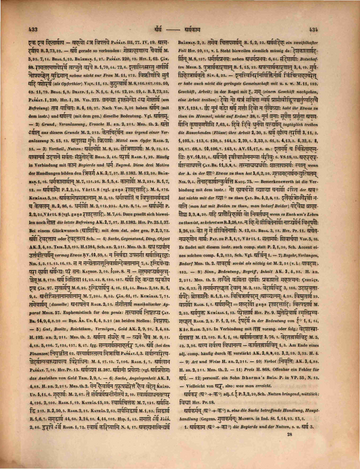
artha 1〉 kastavārtho yatparasya hetormāmākrośasi DAŚAK. 80,1. arthena wegen, mit gen.: kuṇḍalayorarthenābhyāgato 'smi MBH. 1,767. teṣāmarthena yācāmi tvāham MBH. 3,9939. — 3〉 arthānarthānubandhasaṃśayavicāra Verz. d. Oxf. H. 216,a,7. DAŚAK._in_BENF. Chr. 181,1. BENF. Chr. 181,2. patiṃ putraṃ bhrātaraṃ vā ghnantyarthe ghātayanti ca eines Vortheils wegen Spr. 4371. — 4〉 = viṣaya Object der Sinne: svārthena (saha) — indriyam (eti) VARĀH. BṚH. S. 75,3. — 6〉 yo 'bhyarthitaḥ sadbhirasajjamānaḥ karotyartham wer ihre Sache —, ihre Angelegenheit vollbringt Spr. 4909. ko 'rthasteṣāṃ pārthivopāśrayeṇa Spr. 318. — 8〉 arthāt dem Sinne nach so v. a. das ist, nämlich, scilicet: anantaramadhigataṃ prāptam arthātkaṇvena ŚAṂK._zu_ŚĀK. 41. SĀH. D. 332,19. śabdakalpadrumaḥ arthāt etaddeśasthasamastakoṣāśeṣaśāstra˚ ŚKDR. auf dem Titelblatte. — 10〉 lies das Aufhören, Unterbleiben st. Verbot. Als Beispiel führt KṢĪRASVĀMIN (bei AUFRECHT, UṆĀDIS. Ind. u. artha) maśakārtho dhūmaḥ Rauch zur Vertreibung der Mücken (gehört natürlich zu 1.) an. — 13〉 Bez. der Zahl fünf WEBER, Nax. 2,382. — 14〉 in der Astrol. Bez. des zweiten Hauses, des Hauses des Reichthums (vgl. dhana) VARĀH. BṚH. S. 40,6. VARĀH. BṚH. S. 40,9. VARĀH. BṚH. S. 41,9. BṚH. 4,10. BṚH. 9,5.
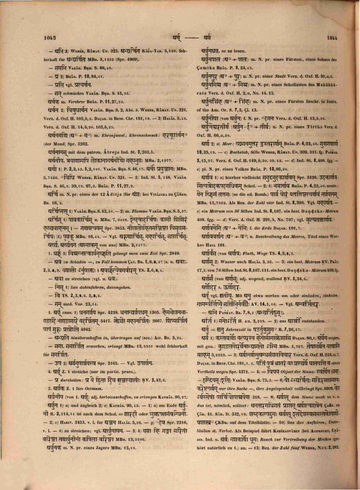
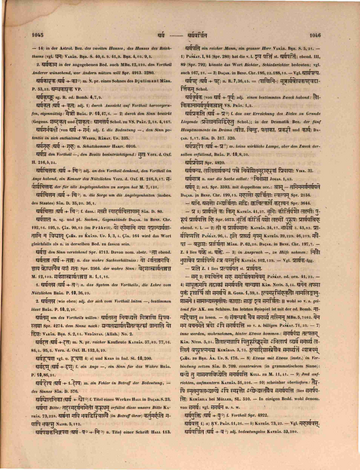
Original text · German · Word type unspecified
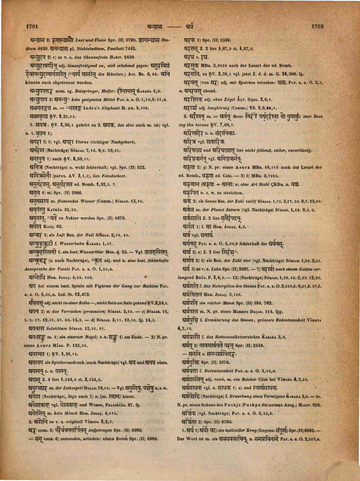
artha 3〉 so v. a. Lohn Spr. (II) 3587. — 7〉 varārthā nach einem Gatten verlangend BHĀG. P. 3,8,5. — 13〉 (Nachträge) SŪRYAS. 1,38. SŪRYAS. 1,42. SŪRYAS. 2,23. SŪRYAS. 12,86.
Böhtlingk 1879 substantive masculine · substantive neuter · Word type unspecified
Original text · German · substantive masculine · substantive neuter
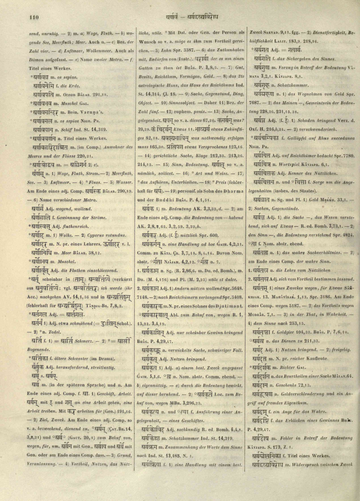
artha m. (in der späteren Sprache) und n. Am Endes eines adj. Comp. f. ā. — 1〉 Geschäft, Arbeit. artham mit i und gam an eine Arbeit gehen, eine Arbeit treiben. Mit kar arbeiten für (Gen.) Chr. 191,16. — 2〉 Ziel, Zweck. Am Ende eines adj. Comp. so v. a. bezweckend, dienend zu. ˚artham (ŚAT. BR. 14,3,2,21) und ˚artha˚ (GAUT. 20,1) zum Behuf von, wegen, für, um. arthena mit Gen., arthāya und arthe mit Gen. oder am Ende eines Comp. dass. — 3〉 Grund, Veranlassung. — 4〉 Vortheil, Nutzen, das Nützliche, [Page1-110-b] utile. *Mit Dat. oder Gen. der Person als Wunsch so v. a. möge es ihm zum Vortheil gereichen. — 5〉 Lohn Spr. 3587. — 6〉 das Zuthunhaben mit, Bedürfen von (Instr.). varārthā der es um einen Gatten zu thun ist BHĀG. P. 3,8,5. — 7〉 Gut, Besitz, Reichthum, Vermögen, Geld. — 8〉 das 2te astrologische Haus, das Haus des Reichthums Ind. St. 14,314, Śl. 18. — 9〉 Sache, Gegenstand, Ding, Object. — 10〉 Sinnesobject. — Daher — 11〉 Bez. der Zahl fünf. — 12〉 euphem. penis. — 13〉 Sache, Angelegenheit. ayam so v. a. dieses Chr. 67,26. akartham was? Chr. 39,28. kaṃ cidartham Etwas Chr. 39,11. bhāvyartha etwas Zukünftiges Chr. 82,18. avaśyabhāvin was nothwendig erfolgen muss Chr. 165,30. pratipanna etwas Versprochenes Chr. 123,16 — 14〉 gerichtliche Sache, Klage Chr. 212,33. Chr. 213,26. Chr. 214,12. — 15〉 Sinn, Bedeutung. arthāt so v. a. nämlich, scilicet. — 16〉 *Art und Weise. — 17〉 *das Aufhören, Unterbleiben. — 18〉 Preis (fehlerhaft für argha). — 19〉 personif. als Sohn des Dharma und der Buddhi BHĀG. P. 4,1,51.
Original text · German · Word type unspecified
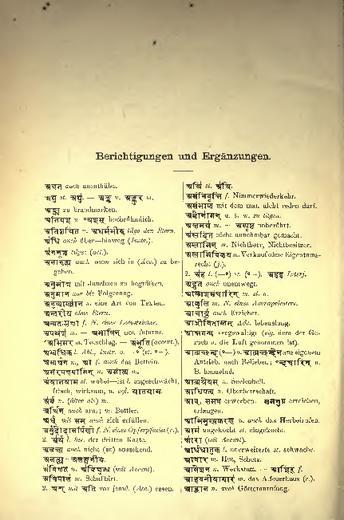
ártha , so zu accentuiren. [Nachtrag, Band 3]
Original text · German · Word type unspecified
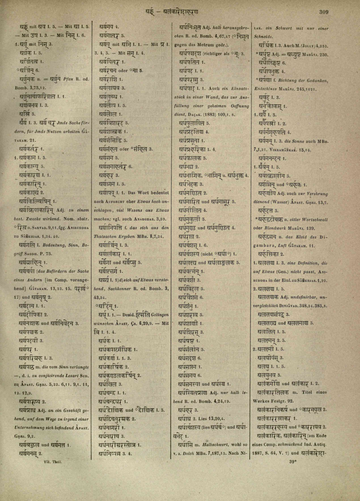
ártha I. 3. arthaṃ car Jmds Sache fördern, für Jmds Nutzen arbeiten JĀTAKAM. 21. [Nachtrag, Band 7]
Apte 1890 substantive masculine
Original text · English · substantive masculine
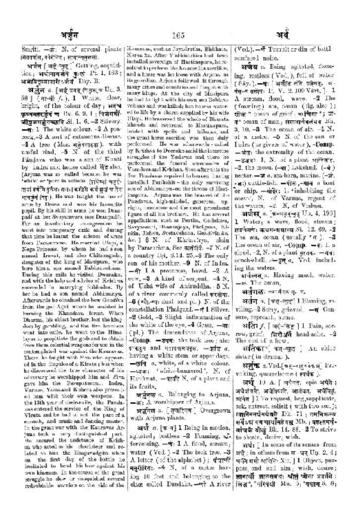
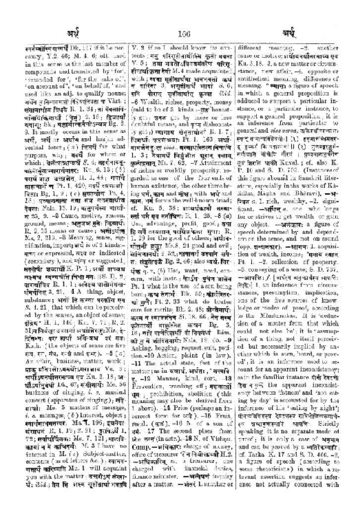
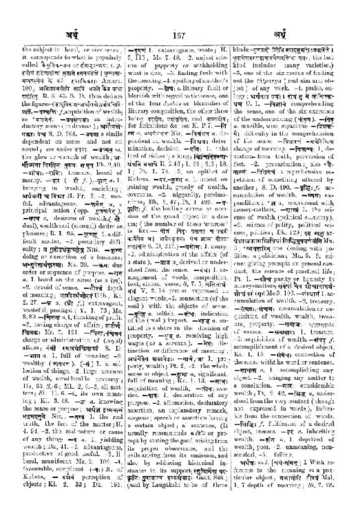
arthaḥ [In some of its senses from arth; in others from ṛ-than Uṇ. 2. 4; aryate hyasau arthibhiḥ Nir.] 1 Object, purpose, end and aim; wish, desire; jñātārtho jñātasaṃbaṃdhaḥ śrotuṃ śrotā pravartate; siddha˚, ˚paripaṃthī Mu. 5; ˚vaśāt Mu. 5. 8; ([Page 0166-a]) smartavyosmi satyarthe Dk. 117 if it be necessary; Y. 2. 46; M. 4. 6; oft. used in this sense as the last member of compounds and translated by ‘for’, ‘intended for’, ‘for the sake of’, ‘on account of’, ‘on behalf of,’ and used like an adj. to qualify nouns; arthena tu nityasamāso viśeṣyanighnatā ca Vārt.; saṃtānārthāya vidhaye R. 1. 34; tāṃ devatāpitratithikriyārthāṃ (dhenuṃ) R. 2. 16; dvijārthāṃ yavāgūḥ Sk.; yajñārthātkarmaṇo'nyatra Bg. 3. 9. It mostly occurs in this sense as arthaṃ, arthe or arthāya and has an adverbial force; (a) kimarthaṃ for what purpose, why; yadarthaṃ for whom or which; velopalakṣaṇārthaṃ Ś. 4; taddarśanādabhūcchaṃbhorbhūyāndārārthamādaraḥ Ku. 6. 13; (b) parārthe prājña utsṛjet H. 1. 44; gavārthe brāhmaṇārthe ca Pt. 1. 420; madarthe tyaktajīvitāḥ Bg. 1. 9; (c) sukhārthāya Pt. 4. 18; pratyākhyātā mayā tatra nalasyārthāya devatāḥ Nala. 13. 19; ṛtuparṇasya cārthāya Nala. 23. 9. 2 Cause, motive, reason, ground, means; aluptaśca muneḥ kriyārthaḥ R. 2. 55 means or cause; ato'rthāt Ms. 2. 213. 3 Meaning, sense, signification, import; artha is of 3 kinds: vācya or expressed, lakṣya or indicated (secondary), and vyaṃgya or suggested; tadadoṣau śabdārthau K. P. 1; artho vācyaśca lakṣyaśca vyaṃgyaśceti tridhā mataḥ .. S. D. 2; vāgarthāviva R. 1. 1; avekṣya dhātorgamanārthamarthavit R. 3. 21. 4 A thing, object, substance; artho hi kanyā parakīya eva Ś. 4. 21; that which can be perceived by the senses, an object of sense; iṃdriya˚ H. 1. 146; Ku. 7. 71; R. 2. 51; na nirbaddhā upasargā arthānnirāhuḥ Nir.; iṃdriyebhyaḥ parā hyarthā arthebhyaśca paraṃ manaḥ Kaṭh. (the objects of sense are five rūpa, rasa, gaṃdha, sparśa and śabda). 5 (a) An affair, business, matter, work; prāk pratipanno'yamarthoṃ'garājāya Ve. 3; artho'yamarthāṃtarabhāvya eva Ku. 3. 18; artho'rthānubaṃdhī Dk. 67; saṃgītārthaḥ Me. 56 business of singing, i. e. musical concert (apparatus of singing); saṃdeśārthāḥ Me. 5 matters of message, i. e. messages; (b) Interest, object; svārthasādhanatatparaḥ Ms. 4. 196; dvayamevārthasādhanaṃ R. 1. 19; R. 2. 21; durāpe'rthe R. 1. 72; sarvārthāciṃtakaḥ Ms. 7. 121; mālavikāyāṃ na me kaścidarthaḥ M. 3 I have no interest in M. (c) subject matter, contents (as of letters &c.); tvāmavagatārthaṃ kariṣyati Mu. 1 will acquaint you with the matter; uttaro'yaṃ lekhārthaḥ ibid.; tena hi asya gṛhītārthā bhavāmi ([Page 0166-b]) V. 2 if so I should know its contents; nanu parigṛhītārthosmi kṛto bhavatā V. 5; tayā bhavato'vinayamaṃtareṇa parigṛhītārthākṛtā devī M. 4 made acquainted with; tvayā gṛhītārthayā atrabhavatī kathaṃ na vāritā M. 3; agṛhītārthe āvāṃ Ś. 6; iti paurān gṛhītārthān kṛtvā ibid. 6 Wealth, riches, property, money (said to be of 3 kinds: — śukla honestly got; śabala got by more or less doubtful means, and kṛṣṇa dishonestly got;) tyāgāya saṃbhṛtārthānāṃ R. 1. 7; dhigarthāḥ kaṣṭasaṃśrayāḥ Pt. 1. 163; arthānāmarjane duḥkhaṃ ibid.; yasyārthāstasya mitrāṇi Pt. 1. 3; teṣāmarthe niyuṃjīta śūrān dakṣān kulodgatān Ms. 7. 62. 7 Attainment of riches or worldly prosperity, regarded as one of the four ends of human existence, the other three being dharma, kāma and mokṣa; with artha and kāma, dharma forms the well-known triad; cf. Ku. 5. 38; apyarthakāmau tasyāstāṃ dharma eva manīṣiṇaḥ R. 1. 25. 8 (a) Use, advantage, profit, good; tathā hi sarve tasyāsan parārthaikaphalā guṇāḥ R. 1. 29 for the good of others; arthānarthāvubhau buddhvā Ms. 8. 24 good and evil; kṣetriṇāmarthaḥ Ms. 9. 52.; yāvānartha udapāne sarvataḥ saṃplutodake Bg. 2. 46; also vyartha, nirarthaka q. v. (b) Use, want, need, concern, with instr.; ko'rthaḥ putreṇa jātena Pt. 1 what is the use of a son being born; kaśca tenārthaḥ Dk. 59; korthastiraścāṃ guṇaiḥ Pt. 2. 33 what do brutes care for merits; Bh. 2. 48; yogyenārthaḥ kasya na syājjanena Śi. 18. 66; naiva tasya kṛtenārtho nākṛteneha kaścana Bg. 3. 18; yadi prāṇairihārtho vo nivartadhvaṃ Rām. ko nu me jīvitenārthaḥ Nala. 12. 65. 9 Asking, begging; request, suit, petition. 10 Action, plaint (in law). 11 The actual state, fact of the matter; as in yathārtha, arthataḥ, ˚tattvavid. 12 Manner, kind, sort. 13 Prevention, warding off; maśakārtho dhūmaḥ; prohibition, abolition (this meaning may also be derived from 1 above). 14 Price (perhaps an incorrect form for argha). 15 Fruit, result (phalaṃ). 16 N. of a son of dharma. 17 The second place from the lagna (in astr.). 18 N. of Viṣṇu. Comp. — adhikāraḥ charge of money, office of treasurer ˚re na niyoktavyau H. 2. — adhikārin m. a treasurer, one charged with financial duties, finance minister. — anveṣaṇaṃ inquiry after a matter. — aṃtaraṃ 1 another or ([Page 0166-c]) different meaning. 2 another cause or motive; arthoyamarthāṃtarabhāvya eva Ku. 3. 18. 3 a new matter or circumstance, new affair. 4 opposite or antithetical meaning, difference of meaning. ˚nyāsaḥ a figure of speech in which a general proposition is adduced to support a particular instance, or a particular instance, to support a general proposition; it is an inference from particular to general and vice versa; uktirarthāṃtaranyāsaḥ syāt sāmānyaviśeṣayoḥ . (1) hanumānabdhimatarad duṣkaraṃ kiṃ mahātmanāṃ .. (2) guṇavadvastusaṃsargādyāti nīcopi gauravaṃ . puṣpamālānuṣaṃgeṇa sūtraṃ śirasi dhāryate Kuval.; cf. also K. P. 10 and S. D. 709. (Instances of this figure abound in Sanskrit literature, especially in the works of Kālidāsa, Māgha and Bhāravi). — anvita a. 1 rich, wealthy. 2 significant. — arthin a. one who longs for or strives to get wealth or gain any object. — alaṃkāraḥ a figure of speech determined by and dependent on the sense, and not on sound (opp. śabdālaṃkāra). — āgamaḥ 1 acquisition of wealth, income; ˚gamāya syāta Pt. 1. 2 collection of property. 3 conveying of a sense; S. D. 737. — āpattiḥ f. [arthasya anuktārthasya āpāttiḥ siddhiḥ] 1 an inference from circumstances, presumption, implication, one of the five sources of knowledge or modes of proof, according to the Mīmāṃsakas. It is ‘deduction of a matter from that which could not else be’; it is ‘assumption of a thing, not itself perceived but necessarily implied by another which is seen, heard, or proved’; it is an inference used to account for an apparent inconsistency; as in the familiar instance pīno devadatto divā na bhukteṃ the apparent inconsistency between ‘fatness’ and ‘not eating by day’ is accounted for by the inference of his ‘eating by night’; pīnatvaviśiṣṭasya devadattasya rātribhojitvarūpārthasya śabdānuktasyāpi āpattiḥ. Strictly speaking it is no separate mode of proof; it is only a case of anumāna and can be proved by a vyatirekavyāpti; cf. Tarka K. 17 and S. D. 460. 2 a figure of speech (according to some rhetoricians) in which a relevant assertion suggests an inference not actually connected with ([Page 0167-a]) the subject in hand, or vice versa; it corresponds to what is popularly called kaimutikanyāya or daṃḍāpūpanyāya; e. g. hāroyaṃ hariṇākṣīṇāṃ luṭhati stanamaṃḍale . muktānāmapyavastheyaṃ ke vayaṃ smarakiṃkarāḥ Amaru. 100; abhitaptamayopi mārdavaṃ bhajate kaiva kathā śarīriṣu R. 8. 43. S. D. thus defines the figure: -daṃḍāpūpikayānyārthāgamo' rthāpattiriṣyate. — utpattiḥ f. acquisition of wealth; so ˚upārjanaṃ. — upakṣepakaḥ an introductory scene (in dramas); arthopakṣepakāḥ paṃca S. D. 308. — upamā a simile dependent on sense and not on sound; see under upamā. — uṣman m. the glow or warmth of wealth; arthoṣmaṇā virahitaḥ puruṣaḥ sa eva Bh. 2. 40. — oghaḥ, -rāśiḥ treasure, hoard of money. — kara ( — rī f.), — kṛt a. 1 bringing in wealth, enriching; arthakarī ca vidyā H. Pr. 3. 2 useful, advantageous. — karman n. a principal action (opp. guṇakarman). — kāma a. desirous of wealth. ( — mau dual), wealth and (sensual) desire or pleasure; R. 1. 25. — kṛcchraṃ 1 a difficult matter. 2 pecuniary difficulty; na muhyedarthakṛcchreṣu Nīti. — kṛtyaṃ doing or execution of a business; abhyupetārthakṛtyāḥ Me. 38. — kramaḥ due order or sequence of purpose. — gata a. 1 based on the sense (as a doṣa). 2 devoid of sense. — gauravaṃ depth of meaning; bhāraverarthagauravaṃ Udb., Ki. 2. 27. — ghna a. (ghnī f.) extravagant, wasteful, prodigal; Y. 1. 73; Ms. 9. 80. — ciṃtaka a. 1 thinking of profit. 2 having charge of affairs; sarvārthaciṃtakaḥ Ms. 7. 121. — ciṃtā, -ciṃtanaṃ charge or administration of (royal) affairs; maṃtrī syādarthaciṃtāyāṃ S. D. — jāta a. 1 full of meaning. 2 wealthy (jātadhana). — (taṃ) 1 a collection of things. 2 large amount of wealth, considerable property; Dk. 63, Ś. 6; Mk. 2. 6. 3 all matters; Śi. 11. 6. 4 its own meaning; Ki. 3. 48. — jña a. knowing the sense or purpose; arthajña itsakalaṃ bhadramaśnute Nir. — tatvaṃ 1 the real truth, the fact of the matter; H. 4. 94. 2 the real nature or cause of any thing. — da a. 1 yielding wealth; Dk. 41. 2 advantageous, productive of good, useful. 3 li beral, munificent Ms. 2. 109. 4 favourable, compliant. — (daḥ) N. of Kubera. — darśanaṃ perception of objects; Ki. 2. 33; Dk. 155. ([Page 0167-b]) — dūṣaṇaṃ 1 extravagance, waste; H. 3. 115; Ms. 7. 48. 2 unjust seizure of property or withholding what is due. 3 finding fault with the meaning. 4 spoiling of another's property. — doṣaḥ a literary fault or blemish with regard to the sense, one of the four doshas or blemishes of literary composition, the other three being padadoṣa, padāṃśadoṣa, and vākyadoṣa; for definitions &c. see K. P. 7. — nitya a. = aṃrthapradhāna Nir. — nibaṃdhana a. dependent on wealth. — niścayaḥ determination, decision. — patiḥ 1 ‘the lord of riches’; a king; kiṃcidvihasyārthapatiṃ babhāṣe R. 2. 46; R. 1. 59; R. 9. 3; R. 18. 1; Pt. 1. 74. 2 an epithet of Kubera. — para, -lubdha a. 1 intent on gaining wealth, greedy of wealth, covetous. 2 niggardly, parsimonious; Bh. 2. 47; Pt. 1. 425. — prakṛtiḥ f. the leading source or occasion of the grand object in a drama; (the number of these ‘sources’ is five: -bījaṃ biṃduḥ patākā ca prakarī kāryameva ca . arthaprakṛtayaḥ paṃca jñātvā yojyā yathāvidhi S. D. 317.) — prayogaḥ 1 usury. 2 administration of the affairs (of a state). — prāpta a. derived or understood from the sense. — baṃdhaḥ 1 arrangement of words, composition, text; stanza, verse; Ś. 7. 5; lalitārthabaṃdhaṃ V. 2. 14 put or expressed in elegant words. 2 connection (of the soul) with the objects of sense. — buddhi a. selfish. — bodhaḥ indication of the (real) import. — bhāj a. entitled to a share in the division of property. — bhṛt a. receiving high wages (as a servant). — bhedaḥ distinction or difference of meaning; arthabhedena śabdabhedaḥ. — mātraṃ, -trā 1 property, wealth; Pt. 2. 2 the whole sense or object. — yukta a. significant, full of meaning; Ku. 1. 13. — lābhaḥ acquisition of wealth. — lobhaḥ avarice. — vādaḥ 1 declaration of any purpose. 2 affirmation, declaratory assertion, an explanatory remark, exegesis; speech or assertion having a certain object; a sentence. It usually recommends a vidhi or precept by stating the good arising from its proper observance, and the evils arising from its omission, and also by adducing historical instances in its support; stutirnidā parakṛtiḥ purākalpa ityarthavādaḥ Gaut. S.; (said by Laugākṣi to be of three ([Page 0167-c]) kinds: -guṇavādo virodhe syādanuvādo'vadhārite . bhūtārthavādastaddhānādarthavādastridhā mataḥ; the last kind includes many varieties.) 3 one of the six means of finding out the tātparya (real aim and object) of any work. 4 praise, eulogy; arthavāda eṣaḥ . doṣaṃ tu me kaṃcitkathaya U. 1. — vijñānaṃ comprehending the sense, one of the six exercises of the understanding (dhīguṇa). — vid a. sensible, wise, sagacious. — viprakarṣaḥ difficulty in the comprehension of the sense. — vikaraṇaṃ = arthavikriyā change of meaning. — vikalpaḥ 1 deviation from truth, perversion of fact. 2 prevarication; also ˚vaikalyaṃ. — viśeṣaṇaṃ a reprehensive repetition of something uttered by another; S. D. 490. — vṛddhiḥ f. accumulation of wealth. — vyayaḥ expenditure; ˚jña a. conversant with money-matters. — śāstraṃ 1 the science of wealth (political economy). 2 science of polity, political science, politics; Dk. 120; iha khalu arthaśāstrakārāstrividhāṃ siddhimupavarṇayaṃti Mu. 3; ˚vyavahārin one dealing with politics, a politician; Mu. 5. 3 science giving precepts on general conduct, the science of practical life; Pt. 1. — śaucaṃ purity or honesty in money-matters; sarveṣāṃ caiva śaucānāmarthaśaucaṃ paraṃ smṛtaṃ Ms. 5. 106. — saṃsthānaṃ 1 accumulation of wealth. 2 treasury. — saṃgrahaḥ, -saṃcayaḥ accumulation or acquisition of wealth, wealth, treasure, property. — samājaḥ aggregate of causes. — samāhāraḥ 1 treasure. 2 acquisition of wealth. — saṃpad f. accomplishment of a desired object; Ki. 1. 15. — saṃbaṃdhaḥ connection of the sense with he word or sentence. — sādhaka a. 1 accomplishing any object. 2 bringing any matter to a conclusion. — sāraḥ considerable wealth; Pt. 2. 42. — siddha a. understood from the very context (though not expressed in words), inferable from the connection of words. — siddhiḥ f. fulfilment of a desired object, success. — hara a. inheriting wealth. — hīna a. 1 deprived of wealth, poor. 2 unmeaning, nonsensical. 3 failing.
Cappeller 1887 substantive masculine · substantive neuter
Original text · German · substantive masculine · substantive neuter
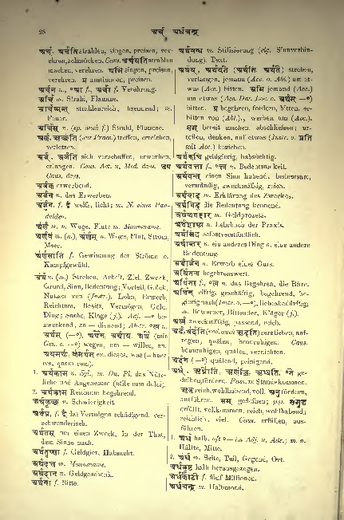
ártha n. (m.) Streben, Arbeit, Ziel, Zweck, Grund, Sinn, Bedeutung; Vorteil, Glück, Nutzen von (Instr.), Lohn, Erwerb, Reichtum, Besitz, Vermögen, Geld, Dind; Sache, Klage (j.) Adj. —˚ bezweckend, zu — dieneud; Abstr. ˚tva n. artham (—˚), arthena, arthāya, arthe (mit Gen.o. —˚) wegen, um — willen, zu. ayamartha;, kámartham etc. dieses, was (= haec res quam rem).
Original text · German · substantive neuter
ártha n. (älter als)m.
Burnouf 1866 substantive masculine
Original text · French · substantive masculine
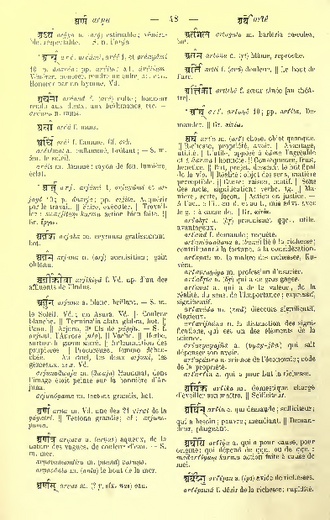
artha artha m. (arth) chose, objet qconque. Richesse, propriété, avoir. Avantage, utilité. L'utile, opposé à kāma l'agréable et à dharma l'honnête. Conséquence, fruit, bénéfice. But, projet, dessein; le but final de la vie. Réalité; objet des sens, matière perceptible. Cause; raison, motif. Sens des mots, signification; verbe, tg. Manière; sorte, façon. Action en justice. — À l'ac., à l'i., au d. et au l., mis advt. avec le g.: à cause de. Gr. αἰτία. arthakṛt a. (kṛ) produisant qqc., utile, avantageux. arthanā f. demande; requête. arthanibandhana a. (bandh) lié à la richesse; contribuant à la fortune, à la considération. arthapati m. le maître des richesses, Kuvera. arthaprayoga m. profession d'usurier. arthabhṛta a. (bhṛ) qui a de gros gages. arthavat a. qui a de la valeur, de la réalité, du sens, de l'importance; expressif, significatif. arthavāda m. (vad) discours significatif, élogieux. arthavijñāna n. la distinction des significations, qui est un des éléments de la science. arthavyayajña a. (vyay-jña) qui sait dépenser son avoir. arthaśāstra n. science de l'économie; code de la propriété. arthārthin a. qui a pour but la richesse.
Derived words
Further derivatives (1)
Occurrences in source texts (53)
DYS 5 occurrences
GoS 1 occurrence
HP 2 occurrences
HTK 1 occurrence
IVU 1 occurrence
PJH 1 occurrence
PYS 20 occurrences
PYS 1.42–43: Gross Samāpatti 2 occurrences
Direct occurrences
-
PYS 1.42 Segment 3
Occurrences through derived words
-
PYS 1.43 Segment 6
9 more source pages
PYS 2.20–22: Puruṣa and the Seen 2 occurrences
Direct occurrences
PYS 3.35–37: Knowledge of Puruṣa and Siddhis 2 occurrences
Direct occurrences
PYS 3.44–46: Mastery over the Elements 1 occurrence
Occurrences through derived words
-
PYS 3.44 Segment 5
PYS 3.47–48: Mastery over the Senses 1 occurrence
Occurrences through derived words
-
PYS 3.47 Segment 5
SiSa 13 occurrences
SiSa 2.6-2.12: Mond und Sonne 2 occurrences
Direct occurrences
5 more source pages
SiSa 5.144-5.155: Ājñā und Khecarī 1 occurrence
Occurrences through derived words
-
SiSa 5.146 Segment 14
SiSa 5.223-5.233: Praxis im Leben 2 occurrences
Direct occurrences
-
SiSa 5.223 Segment 11
-
SiSa 5.225 Segment 11
SVU 4 occurrences
VBT 5 occurrences
Continue with AYI Free
Image source: AYI archive.